Tradition guide
Pre-Columbian
Pre-Columbian sites connect places through shared lineage, practice, story, and pilgrimage across the global atlas.
93 sacred places share this lineage. Use the country links to narrow in.
Atlas summary
Pre-Columbian sacred sites overview
Pre-Columbian sacred sites connect places through shared lineage, ritual use, memory, and pilgrimage practice across the Pilgrim Map atlas.
Use this page to compare country clusters, common place types, UNESCO-tagged landmarks, and the map distribution before exploring individual site pages.
| Coverage | 93 Pre-Columbian sacred places in the current atlas. |
|---|---|
| Country clusters | |
| UNESCO heritage | 4 UNESCO-tagged Pre-Columbian sites appear in this browse view. |
Refine the atlas
Related Pre-Columbian guides
Showing 49-93 of 93 sites in this tradition guide

Nasca - El Astronauta
Part of Líneas de Nazca
Nazca, Ica, Peru
The Astronaut is a humanoid figure etched into a hillside rather than the flat desert floor, making it unusual among Nazca geoglyphs....

Nasca - El Caracol
Part of Líneas de Nazca
Nazca, Ica, Peru
The Caracol depicts a spiral form approximately sixty metres across.

Nasca - El Colibrí
Part of Líneas de Nazca
Nazca, Ica, Peru
The Hummingbird is perhaps the most iconic of all Nazca geoglyphs. At ninety-three metres long, its pointed beak, well-defined wings, and elegant tail are rendered with...

Nasca - El Cóndor
Part of Líneas de Nazca
Nazca, Ica, Peru
At one hundred and thirty-four metres, the Condor is one of the largest figurative geoglyphs in the Nazca corpus....
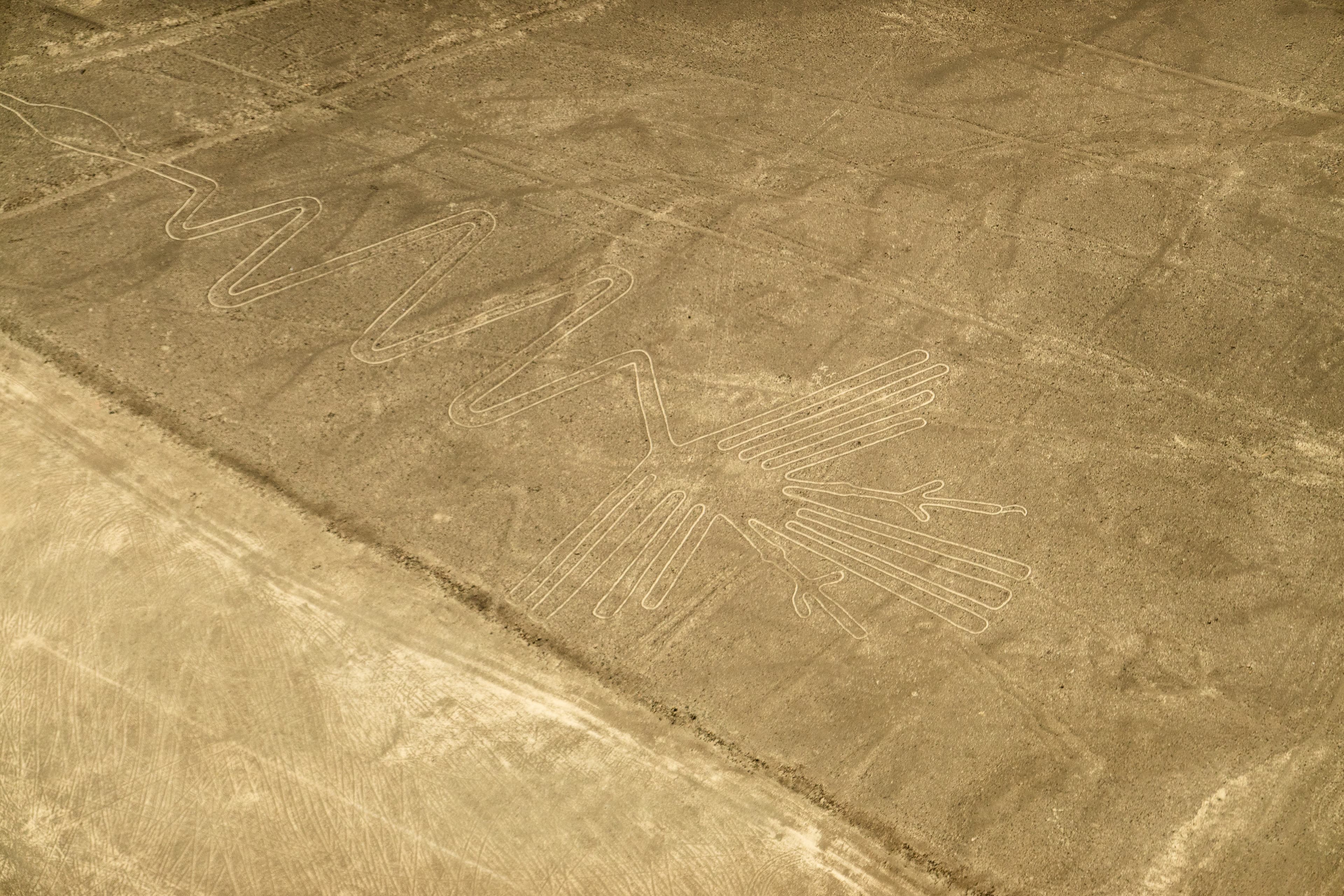
Nasca - El Garza
Part of Líneas de Nazca
Nazca, Ica, Peru
The Heron geoglyph depicts a long-necked wading bird stretching across the desert floor, approximately three hundred metres in length.

Nasca - El Loro
Part of Líneas de Nazca
Nazca, Ica, Peru
The Parrot depicts a tropical bird with head, beak, and crest visible. Lower portions partially erased.

Nasca - El Manos
Part of Líneas de Nazca
Nazca, Ica, Peru
The Hands geoglyph depicts two human hands reaching upward, one with four fingers and one with five. Visible from the Mirador alongside the Tree.

Nasca - El Mono
Part of Líneas de Nazca
Nazca, Ica, Peru
The Monkey geoglyph measures ninety-three by fifty-eight metres and is instantly recognisable by its spiralling tail and distinctive nine-fingered hands....

Nasca - El Pelícano
Part of Líneas de Nazca
Nazca, Ica, Peru
At approximately two hundred and eighty-five metres, the Pelican is one of the longest figurative geoglyphs....

Nasca - El Perro
Part of Líneas de Nazca
Nazca, Ica, Peru
The Dog geoglyph depicts a canine figure approximately fifty-one metres in length with straight parallel legs, an open mouth, and upright ears and tail.
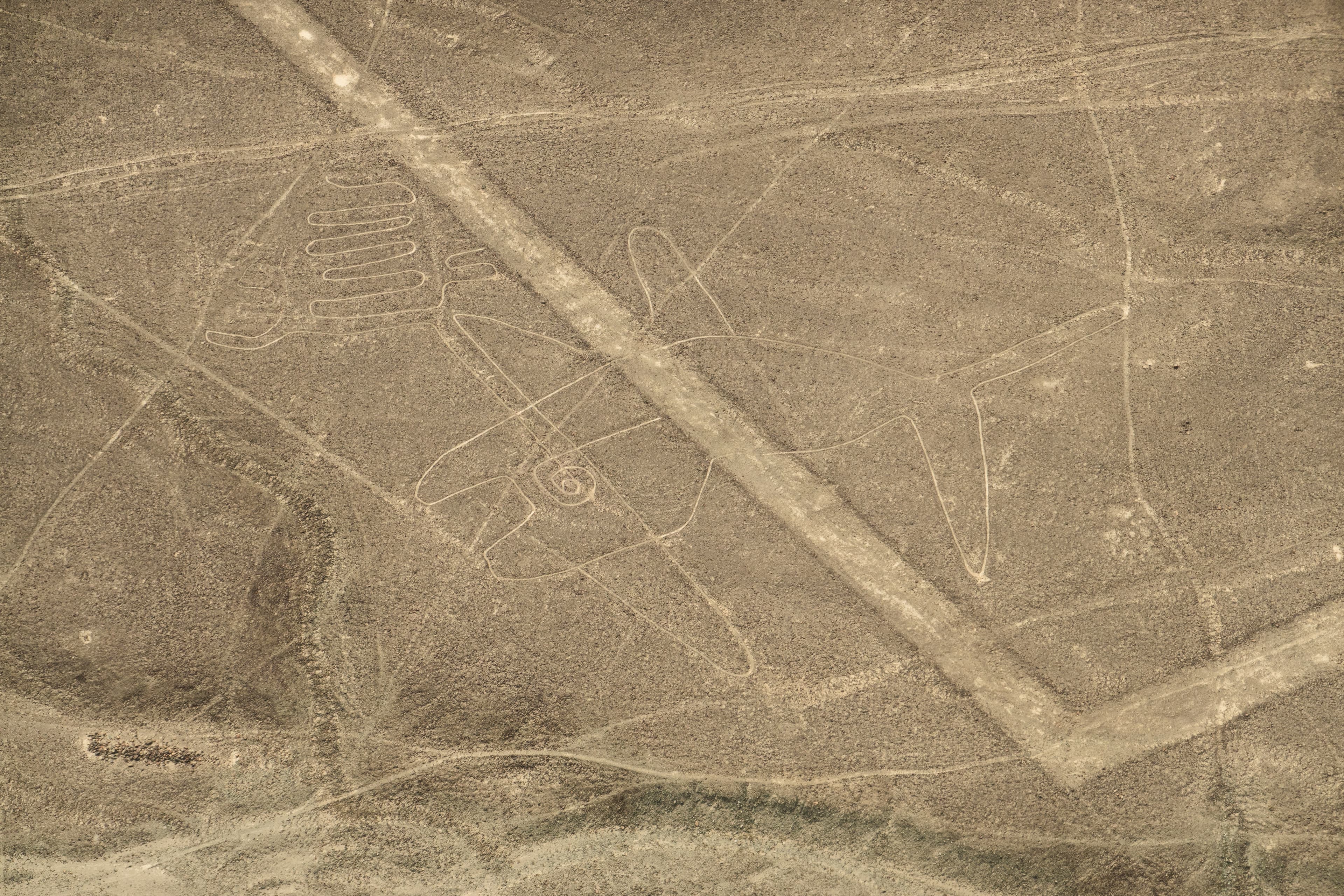
Nasca - La Ballena
Part of Líneas de Nazca
Nazca, Ica, Peru
The Whale geoglyph depicts a marine creature approximately twenty-seven metres in length on the desert floor....

Nasca - La Flor
Part of Líneas de Nazca
Nazca, Ica, Peru
The Flower — petals radiating from a centre, approximately eighty metres across.
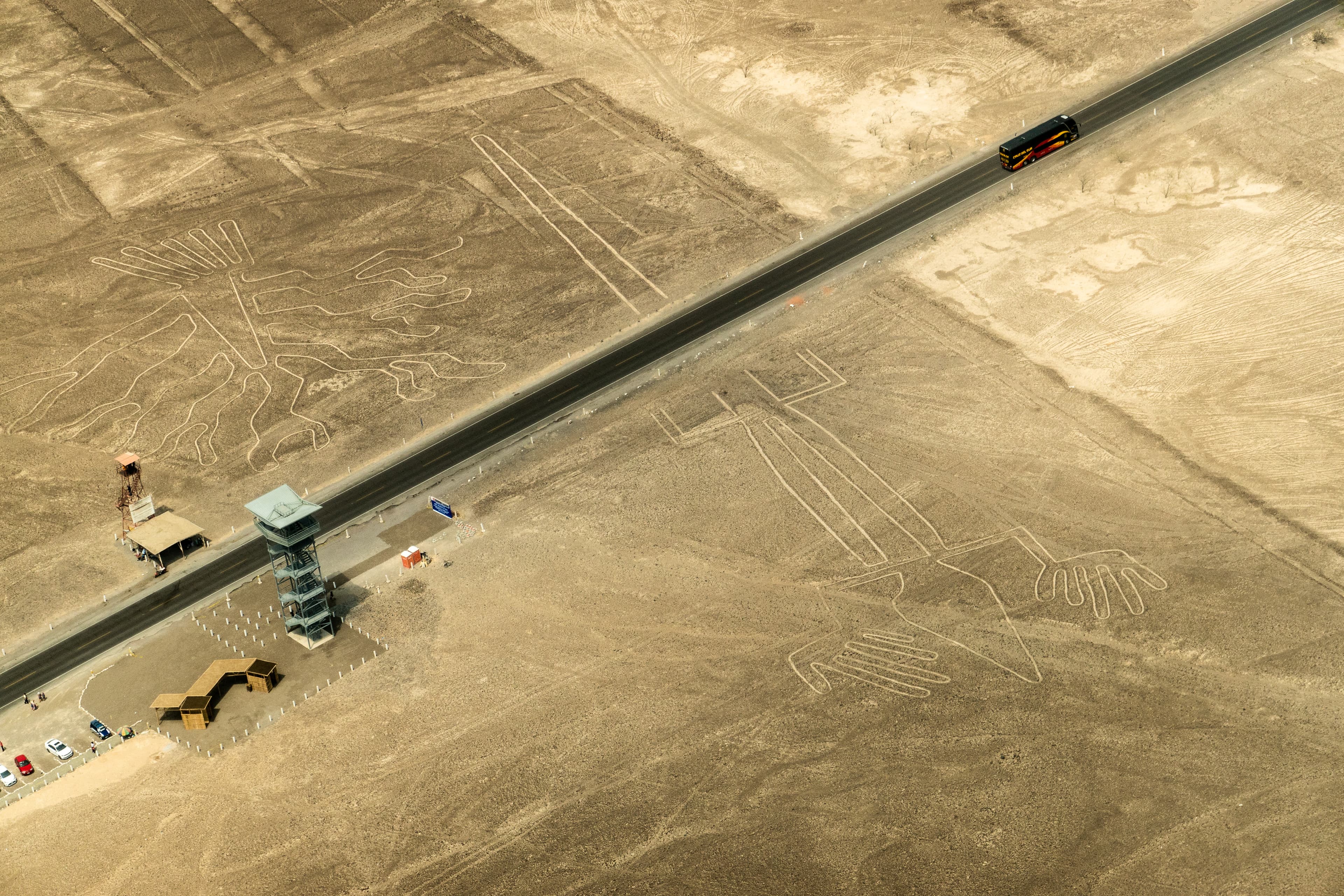
Nasca - La Lagartija
Part of Líneas de Nazca
Nazca, Ica, Peru
The Lizard, approximately 188 metres, is bisected by the Panamericana Sur highway. Upper portion visible from the Mirador.
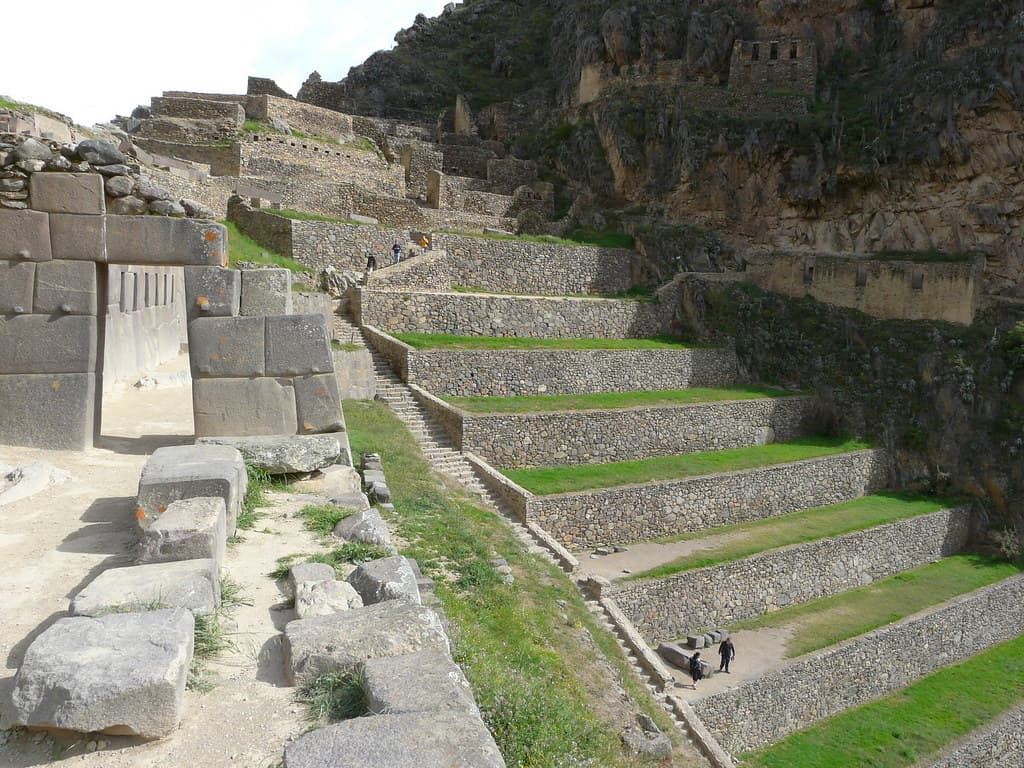
Ollantaytambo Archeological Site
Compone, Cusco, Peru
At Ollantaytambo, terraces rise like stairs for giants, and six colossal stone blocks mark an unfinished Temple of the Sun that will never be completed....

Palenque
Palenque, Chiapas, Mexico
The jungle encloses Palenque like a living wall, howler monkeys calling from the canopy as mist rises through ancient temples....
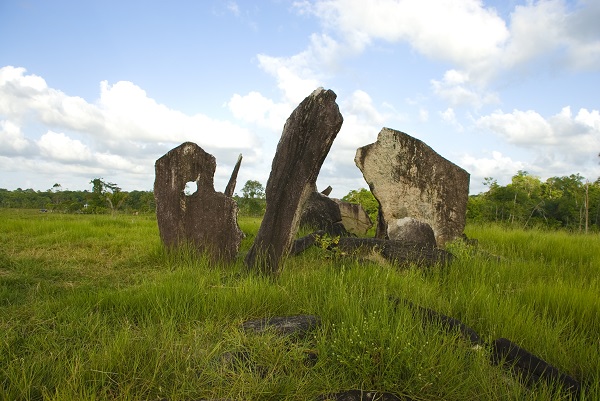
Parque Arqueológico do Solstício
Calçoene, Amapá, Brazil
On a hilltop above the Rego Grande river in Brazil's far north, 127 granite megaliths stand in a circle that has tracked solstices and equinoxes for up to two millennia....

Pedra do Ingá
Ingá, Paraíba, Brazil
In the bed of the Ingá River in northeastern Brazil, a massive gneiss wall bears more than four hundred petroglyphs carved over thousands of years....
Pisac Incan Archaeological Complex
Pisac, Cusco, Peru
Pisac sprawls across a mountain ridge at the entrance to the Sacred Valley, its terraces forming an inverted triangle that descends toward the Urubamba River....

Pucara de Tilcara, Argentina
Tilcara, Jujuy, Argentina
On a hill above the confluence of two rivers in Jujuy Province, the Pucará de Tilcara held over 2,000 people....
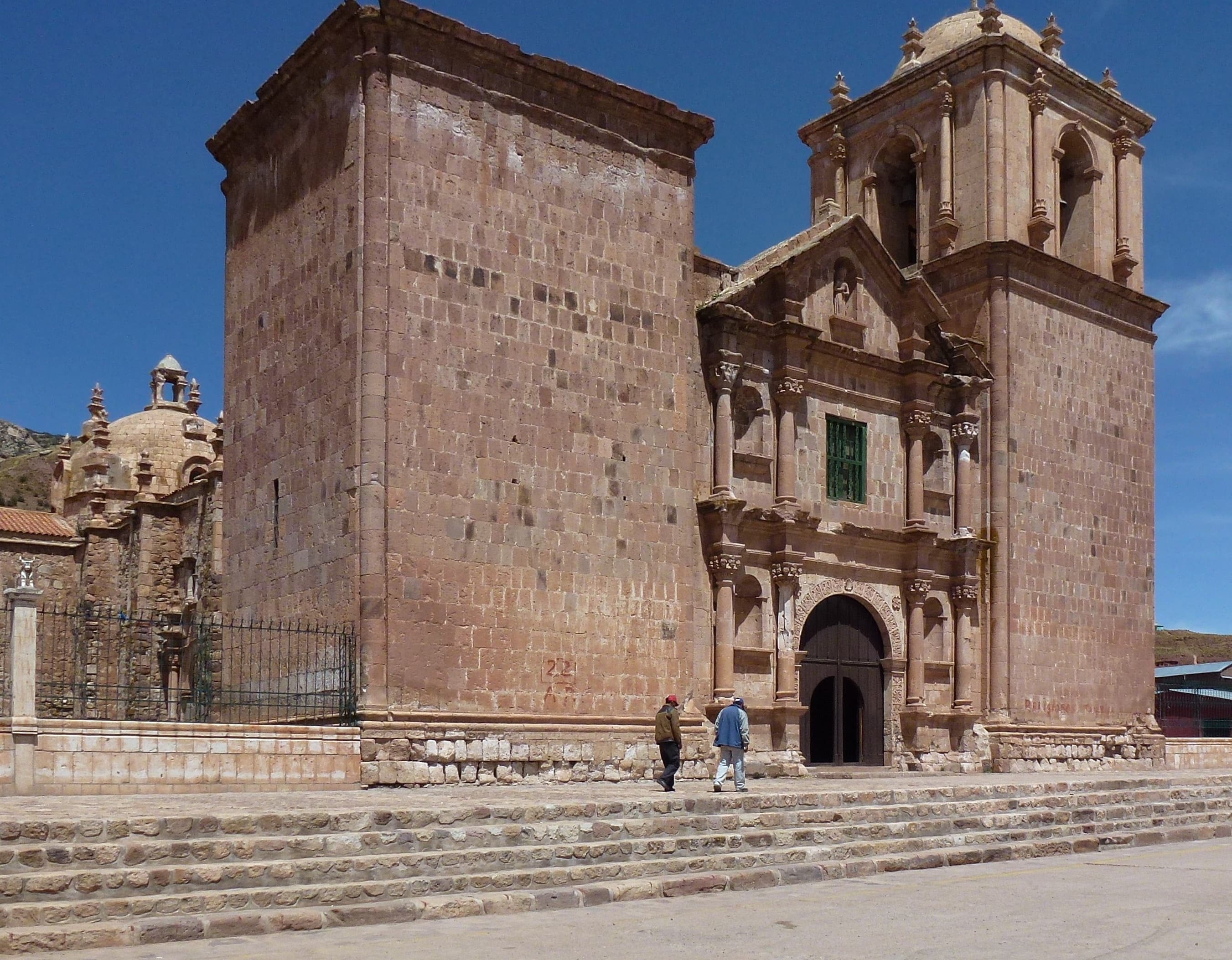
Pukara, Templo Santa Isabel
Pukara, Puno, Peru
Long before the Inca, Pukara dominated the northern Lake Titicaca basin. Beginning around 1,800 BCE, this was the region's first large urban center, with a ceremonial...

Puma Punku
Part of Tiwanaku Archaeological Site
Tiwanaku, La Paz, Bolivia
Puma Punku is the unfinished masterwork of the Tiwanaku civilization, a 6th-century platform mound in the Bolivian altiplano whose stonework defies easy explanation....

Pyramid of the Moon, Teotihuacán
San Juan Teotihuacan, Mexico, Mexico
The Pyramid of the Moon stands at the northern terminus of the Avenue of the Dead, the visual and ritual culmination of Teotihuacan's processional way....

Pyramid of the Sun, Teotihuacán
San Juan Teotihuacan, Mexico, Mexico
The Pyramid of the Sun rises like a man-made mountain from the ancient city of Teotihuacan....
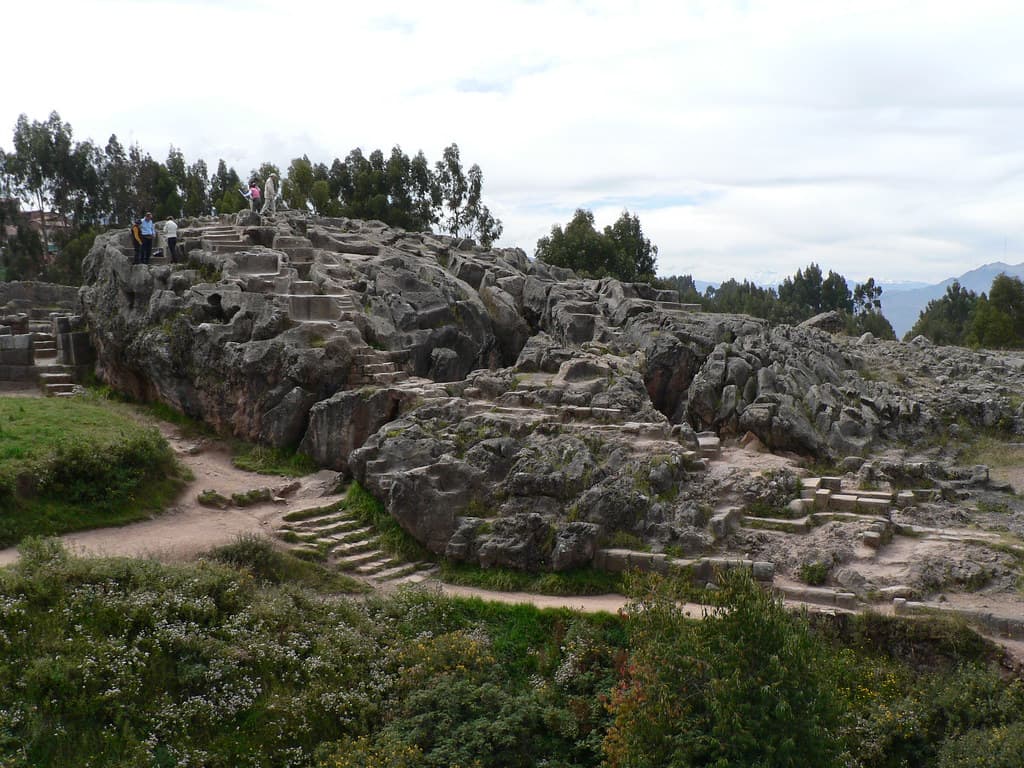
Q'enco Archeological Complex
Cuzco, Cusco, Peru
Q'enco rises from Socorro hill, four kilometers from Cusco—a huaca carved entirely from living rock....

Quirigua
Finca Quirigua D.M., Izabal, Guatemala
Quiriguá, in Guatemala's lower Motagua valley, holds the tallest carved stone monuments of the ancient Maya world....
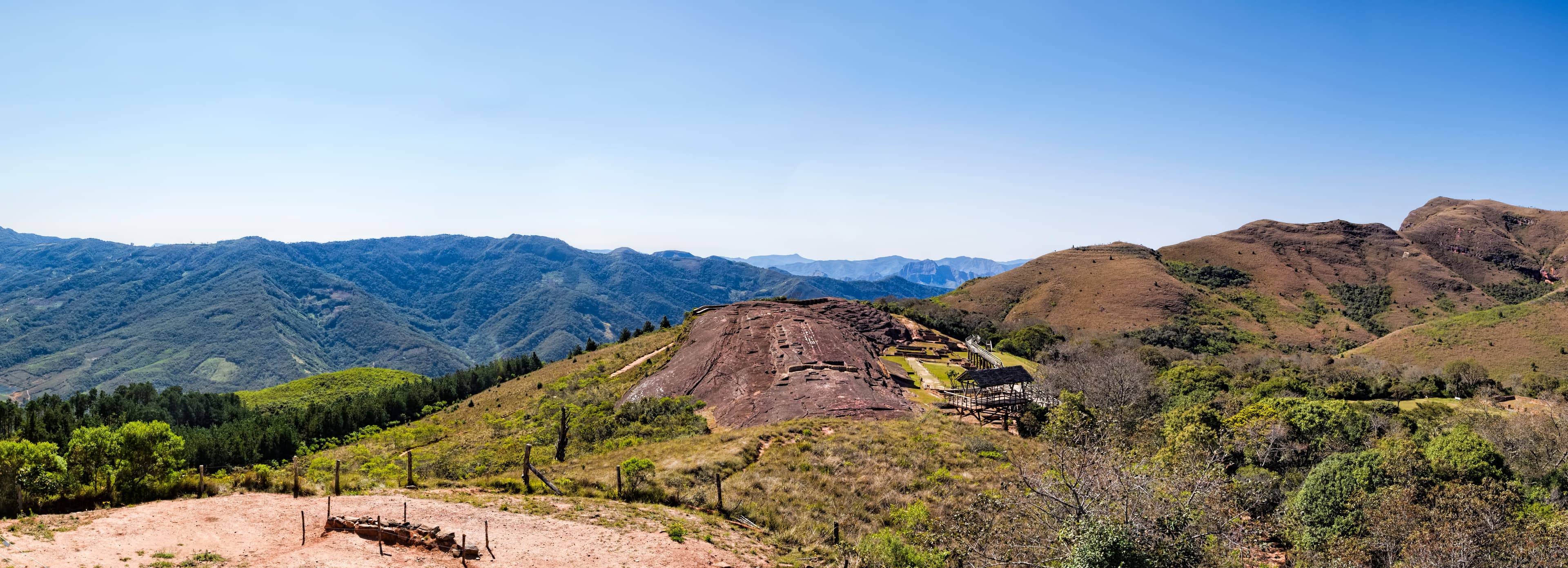
Ruins of El Fuerte ceremonial site, Samaipata
Municipio Samaipata, Santa Cruz, Bolivia
Rising from Bolivia's eastern foothills where the Andes descend toward Amazonia, El Fuerte de Samaipata is a single enormous sandstone outcrop carved by the Chane people...
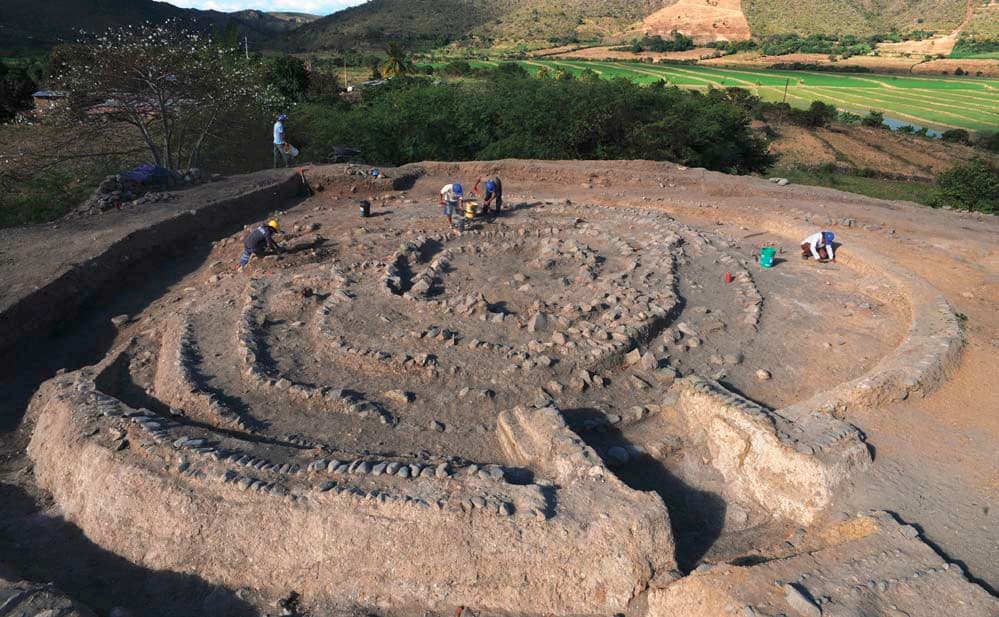
Ruins of Montegrande
Jaén, Cajamarca, Peru
Rising from the rice paddies outside Jaén, a mound as tall as a five-story building conceals one of Peru's most ancient mysteries: a spiral temple built around 3000 BCE by...

Salar de Uyuni
Municipio Colcha K, Potosí, Bolivia
The world's largest salt flat spreads across the Bolivian Altiplano at 3,656 metres, a white expanse so vast and level that during the rains the sky reflects in it...
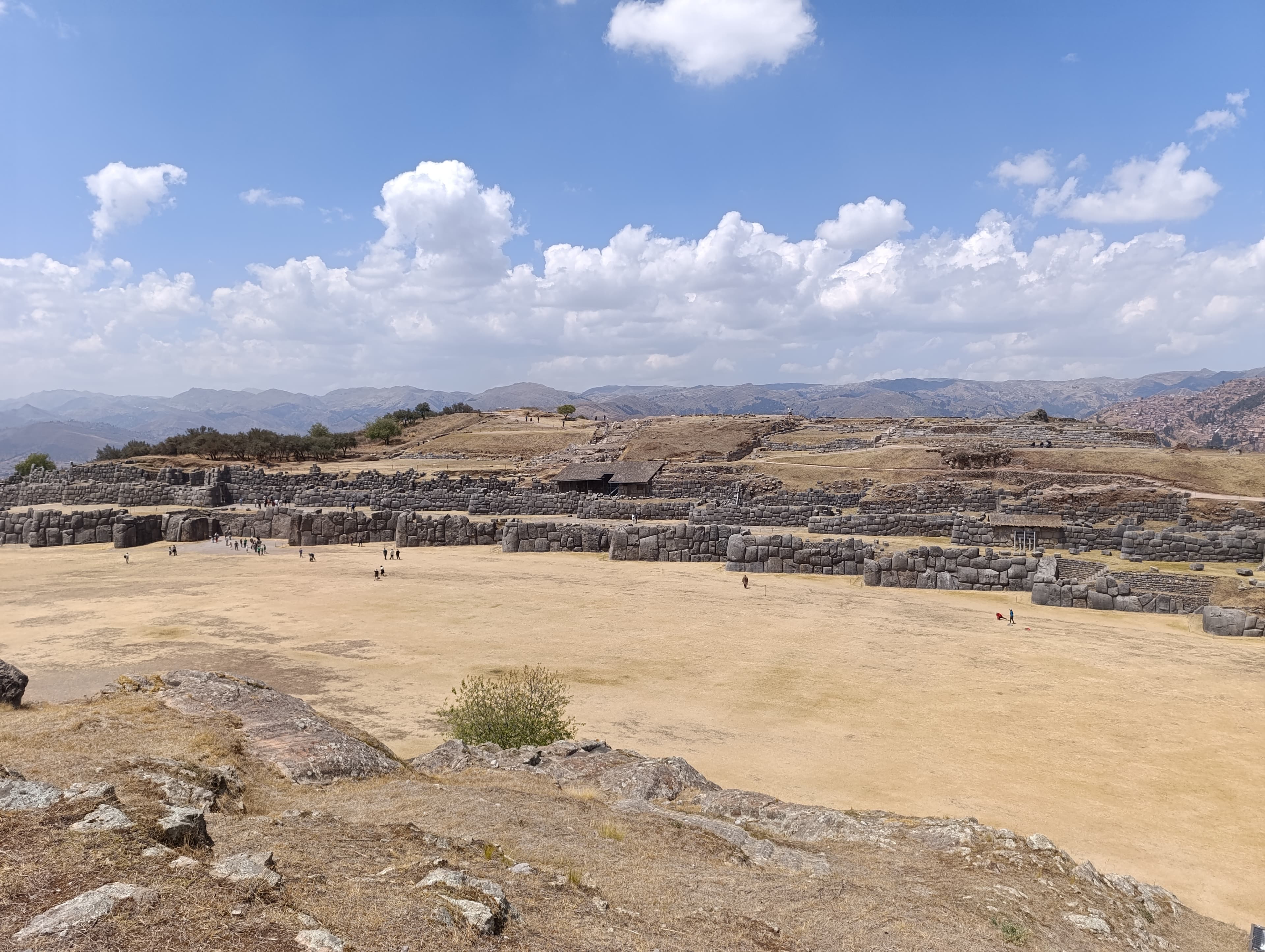
Saqsaywaman
Cuzco, Cusco, Peru
If Cusco was laid out by the Inca in the shape of a puma, Sacsayhuaman represents the head....
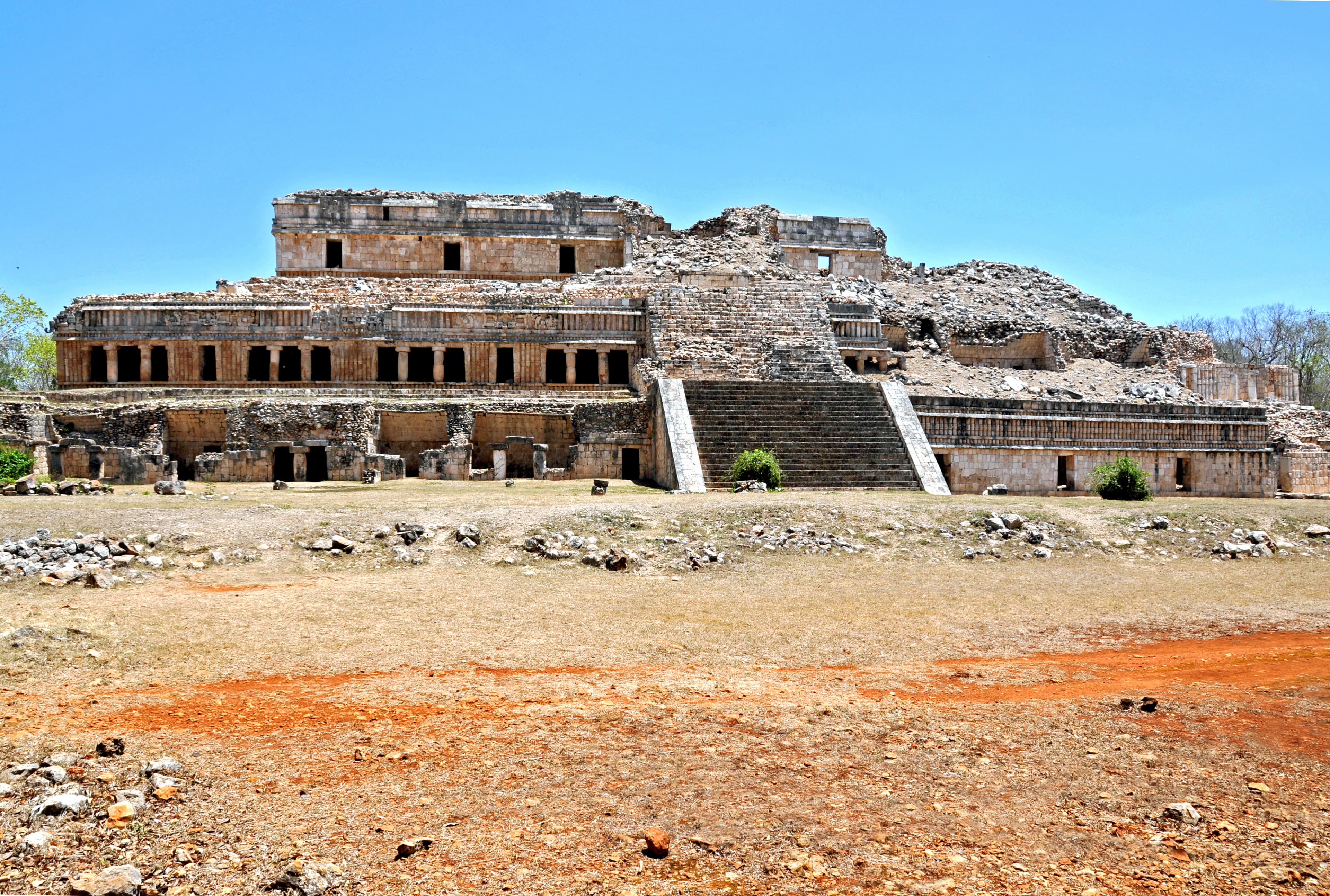
Sayil Archaeological Zone
Santa Elena, Yucatán, Mexico
Sayil—Place of the Leafcutter Ants—was once home to 10,000 people in a region with no surface water....
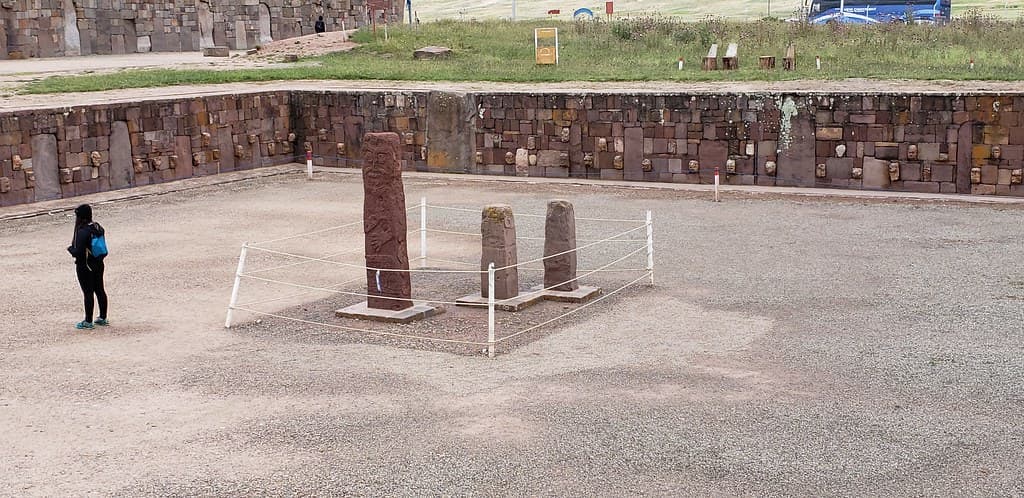
Semi-subterranean Temple at Tiwanaku
Part of Tiwanaku Archaeological Site
Tiwanaku, La Paz, Bolivia
Sunk two metres into the Altiplano at 3,870 metres, this court is the oldest monumental structure at Tiwanaku....

Sillustani
Atuncolla, Puno, Peru
On a peninsula jutting into Lake Umayo, funeral towers rise against the altiplano sky....

Tambomachay Archaeological Complex
Cuzco, Cusco, Peru
At 3,700 meters above Cusco, water emerges from underground springs and flows through channels carved five centuries ago by Inca engineers....

Templo de la Luna
Part of Complejo Arqueológico Q'enqo
Cusco, Cusco, Peru
The Temple of the Moon is a natural cavern near Q'enqo containing a ceremonial table illuminated by an aperture above.
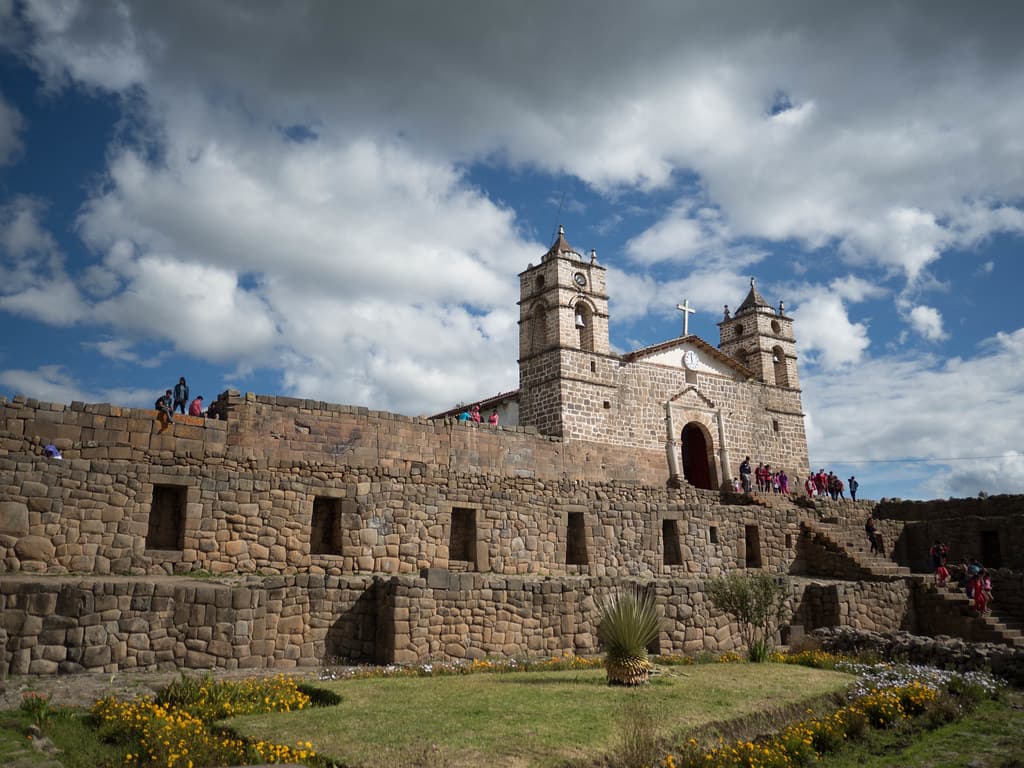
Templo del Sol y la Luna
Vilcashuaman, Ayacucho, Peru
At Vilcashuamán, the Spanish did not destroy the Inca Temple of the Sun so much as build on top of it....

Teotihuacan
Teotihuacán, Mexico, Mexico
We do not know who built Teotihuacan. This is the first mystery that greets visitors to what was once one of the largest cities in the ancient world....
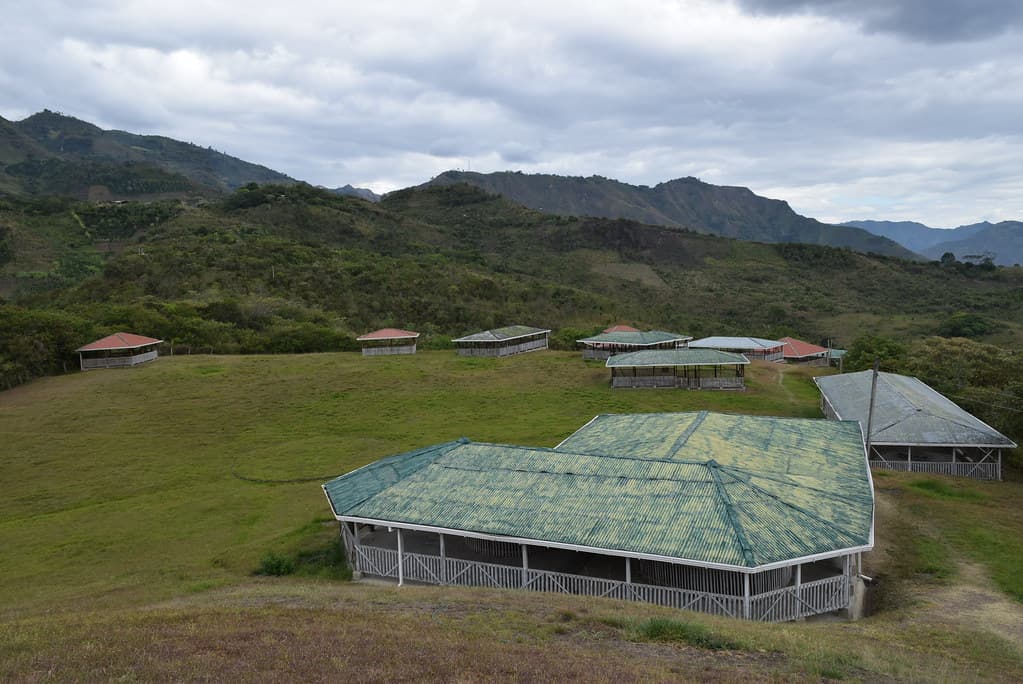
Tierradentro
Inzá, Cauca, Colombia
In the mountains of the Cauca department, on territory still inhabited by the Nasa indigenous people, over one hundred underground burial chambers were carved into...

Tikal
Flores, Petén, Guatemala
In the Petén jungle, the towering pyramids of Tikal — Yax Mutal to the Maya — break through an immense canopy....
Tiwanaku Archaeological Site
Tiwanaku, La Paz, Bolivia
Tiwanaku rises from the Altiplano at nearly 4,000 meters, the spiritual and political capital of a pre-Inca civilization that unified architecture, astronomy, and worship...

Tulum
Tulum, Quintana Roo, Mexico
Tulum rises above turquoise waters at the edge of the Maya world, a walled city that once welcomed both trading canoes and the first light of morning....

Uaxactun
Flores, Petén, Guatemala
North of Tikal in the Maya Biosphere Reserve lies Uaxactún — Siaan K'aan, 'Born in Heaven'....

Uxmal
Santa Elena, Yucatán, Mexico
Uxmal rises from the dry Puuc hills of Yucatan as a prayer made visible in stone. Unlike other Maya cities built near cenotes or rivers, Uxmal had no natural water source....
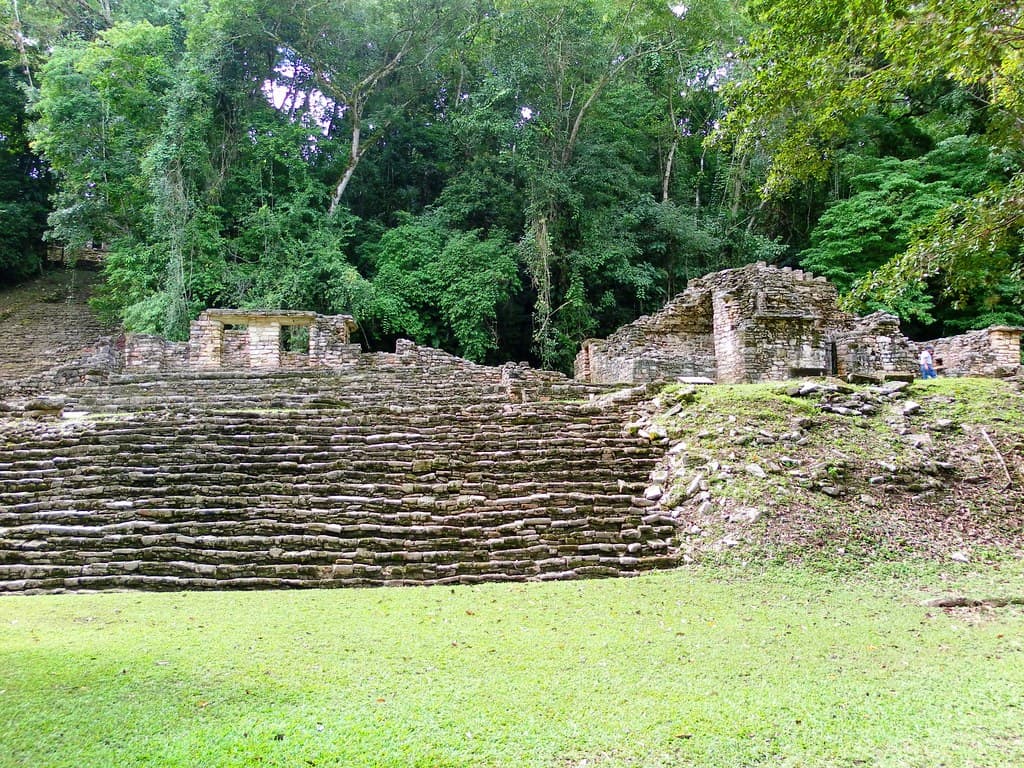
Yaxchilan Archaeological Zone
Ocosingo, Chiapas, Mexico
The Usumacinta River still guards Yaxchilan as it has for fifteen centuries. Reachable only by boat, this jungle-shrouded city preserves the most extraordinary Maya...

Yaxha
Flores, Petén, Guatemala
Yaxhá — 'blue-green water' — was a major Classic Maya city set between two lakes in the Petén....

Zona Arqueologica Moray
Maras, Cusco, Peru
Three groups of concentric circular terraces sink into the high plateau northwest of Cusco, each one descending through a temperature gradient of up to 15 degrees Celsius...
Showing 49-93 of 93 sites
Previous pageKey questions
Pre-Columbian sacred-site questions
What are Pre-Columbian sacred sites?
Pre-Columbian sacred sites are places connected by shared lineage, practice, memory, ritual use, or pilgrimage tradition.
Where can I find Pre-Columbian sacred sites?
The strongest country clusters in this guide include Peru, Mexico, Bolivia, Guatemala, Brazil, Colombia.
What kinds of places are included?
The guide includes sacred landscapes, pilgrimage places, and ritual or historical sites where available.
Can I map Pre-Columbian sacred sites?
Yes. Compare country clusters and physical forms first, then open individual pages for coordinates, historical context, and visitor guidance.