Salar de Uyuni
Where a goddess's tears became ten thousand square kilometres of salt, and the sky descends to walk among the living
Understand sacred places, explore living traditions, and learn how to engage respectfully with Pilgrim Map.
Access has not been verified. Check current local guidance before planning a visit.
Municipio Colcha K, Potosí, Bolivia
Read the sources
Image of Salar de Uyuni. Image source · CC-BY-SA-4.0
Visit essentials
A quick read before you go
- Duration
- One day for a standard tour from Uyuni covering Colchani, the salt flat, and Isla Incahuasi.
- Access
- The Salar is accessed from the town of Uyuni in southwestern Bolivia.
Overview
There is a place in southwestern Bolivia where the earth becomes a mirror and the sky comes down. Ten thousand square kilometres of salt, flat to within a metre across its entire breadth, stretching to the horizon in every direction. During the dry months, the surface cracks into hexagonal patterns as precise as mathematics.
During the rains, a film of water transforms it into the largest natural mirror on the planet, and the distinction between above and below ceases to hold.
The Aymara people, who have inhabited the surrounding Altiplano for millennia, do not call this place by the name the maps give it. They call it the Salar de Tunupa, after the mountain-goddess whose grief created it. In the oldest versions of the story, Tunupa married Kusku, but Kusku betrayed her, fleeing with another. Tunupa wept while nursing her child, and her tears mixed with her breast milk and flowed across the high plateau, hardening into the vast white plain.
The salt is the residue of divine sorrow. The landscape is a love story that ended badly.
The volcano that bears her name rises to 5,321 metres on the Salar's northern shore, red-flanked and solitary, watching over the expanse she made. In caves on its slopes, partially mummified bodies from the Chullpa period sit with their magical-religious objects, the dead keeping company with the deity.
On Isla Incahuasi, a rocky outcrop near the Salar's centre, seven Tiwanaku archaeological sites and two Inca ruins testify that successive civilisations recognised this landscape as significant long before anyone thought to mine its lithium.
But the Salar's deepest power is not historical. It is perceptual. Standing on it, especially when the water is present, the ordinary coordinates of experience dissolve. The horizon vanishes. Clouds appear beneath your feet. At night, the Milky Way wraps around you from every direction, reflected in the wet salt, and you stand suspended among the stars at the roof of the world.
The Andean cosmology that reads mountains as gods and the earth as mother does not feel like metaphor here. It feels like description.
Why this place is sacred
The Salar does not require belief to register as extraordinary. Its thinness operates at the level of perception itself.
During the wet season, when a shallow film of water covers the salt, the mirror effect erases the horizon line entirely. Sky and earth merge into a single continuous plane. Visitors walk among reflected clouds. The boundary between above and below, between the world one stands on and the world one looks up at, dissolves so completely that the body's spatial orientation falters. This is not a metaphor for a thin place.
It is a literal dissolution of the boundary between realms, achieved by water, salt, and light without any human intervention.
The immensity amplifies the effect. Ten thousand square kilometres of unbroken white creates a visual void with no landmarks, no trees, no buildings, no reference points. The mind, deprived of its ordinary spatial anchors, loosens. Time becomes difficult to track. Distance becomes impossible to judge. The featureless expanse produces, naturally and without effort, conditions that many contemplative traditions spend years cultivating: emptiness, silence, the suspension of the ego's habitual orientation.
At night, the thinness deepens. At 3,656 metres, with virtually no light pollution and exceptionally dry, clear air, the Salar offers some of the most transparent skies on Earth. The Milky Way is not a faint suggestion but a blazing river of light overhead. When water is present on the surface, the stars reflect below as well, and the observer stands within a sphere of stars. The cosmos ceases to be distant. It becomes immediate, surrounding, overwhelming.
The Aymara creation story adds a layer that geological explanation alone cannot provide. The salt is not merely an evaporite deposit from ancient lakes. It is the trace of a goddess's grief, the physical residue of divine emotion spread across the earth. Tunupa's volcano stands on the northern shore as a permanent witness, red and solitary, the deity herself made stone and mountain. The Chullpa mummies in caves on her slopes connect the living to the dead across centuries.
Isla Incahuasi's Tiwanaku and Inca ruins demonstrate that this recognition of sacred significance extends back through multiple civilisations over more than a millennium.
Perhaps the deepest factor is the silence. Far from the Salar's edges, on the open salt, there is nothing to generate sound. No wind in trees, no water on rocks, no animal calls. The silence is not the absence of noise. It is a positive presence, a quality of the air, a weight. In that silence, at that altitude, under that sky, surrounded by that whiteness, the ordinary barriers between self and world become very thin indeed.
The Salar de Uyuni is a natural geological formation, not a constructed sacred site. Its sacred significance to the Aymara people derives from its place within a living cosmology in which the landscape itself is the creation narrative made physical. The volcano Tunupa is the deity; the salt flat is her tears; the earth beneath is Pachamama.
Isla Incahuasi served Tiwanaku and Inca civilisations as a waypoint or ceremonial site within this sacred geography, and the Chullpa caves on Tunupa volcano were used for funerary ancestor-veneration rites.
The Salar has existed in its present form for roughly ten to twelve thousand years, since the final desiccation of the prehistoric Lake Coipasa. The cult of Tunupa, associated with the volcano on its northern shore, predates even the Tiwanaku civilisation and may originate in the pre-puquina period. Tiwanaku peoples established at least seven archaeological sites on Isla Incahuasi, and the Inca later added two more, naming the island 'House of the Inca' in Quechua.
The Chullpa funerary tradition left partially mummified remains in caves on Tunupa's slopes.
In the modern era, the Salar became economically significant through traditional salt extraction at Colchani, a practice passed down through generations of Aymara families who mine approximately 25,000 tonnes annually by hand. The International Union of Geological Sciences recognised it as a globally significant geoheritage site in 2019. Today, the discovery of the world's largest lithium reserves beneath the salt crust has introduced an acute tension between economic development and the preservation of the landscape's ecological and cultural integrity.
Indigenous communities have expressed concern about environmental contamination and lack of consultation. The Salar's future as a sacred landscape is not assured.
Experience and orientation
You arrive from Uyuni in a 4x4, and the transition is abrupt. One moment there is scrubby Altiplano, dry earth, scattered rocks. The next, there is nothing but white. The salt stretches ahead, behind, in every direction, flat and featureless, blazing under the high-altitude sun. Your eyes water. Your sense of scale collapses. A vehicle a kilometre away could be a toy at arm's length.
During the dry season, the surface reveals its structure: hexagonal salt crystals, each polygon roughly thirty centimetres across, tessellating to the horizon with a regularity that seems designed rather than natural. The patterns are hypnotic. Walking on them, you hear the faint crunch of crystalline salt beneath your feet, and nothing else. The silence of the open Salar is not gentle. It is immense, a silence proportional to the space, and it presses on the ears.
During the wet season, the experience transforms entirely. A thin layer of water — sometimes only a few centimetres deep — covers the salt, and the sky descends. Clouds appear below your feet. The horizon line vanishes. You walk on the sky, or the sky walks on you; it becomes difficult to say which. Photographs from this period look manipulated, impossible, but they are simply recording what the eyes see: a world in which up and down have been abolished.
Isla Incahuasi provides a vertical counterpoint. Rising from the salt like a ship's hull, its slopes bristle with giant Trichocereus cacti, some twelve metres tall and over a thousand years old. Fossil coral formations on the island's surface are remnants of the prehistoric lake that once covered this plain. From the island's summit, the view of the Salar stretching to the mountain-rimmed horizon in every direction is one of the great panoramas of the continent.
The Tiwanaku ruins here are modest but eloquent: people were here, long ago, and they too looked out over this whiteness.
The Chullpa mummy cave on Tunupa volcano offers a more intimate and sobering encounter. Accessible via a hike from Coqueza village, the cave contains four partially mummified individuals and their ritual objects, sitting in the position they were placed in centuries ago. The dead gaze out from the mountain of a goddess, overlooking the salt flat born from her tears. The mythological and the material are not separate categories here.
At night, on a clear evening, the Salar becomes something else again. The Milky Way at this altitude and in this air is not the pale smudge visible from lower elevations. It is a dense, structured, three-dimensional river of light that arches from horizon to horizon. When the salt is wet, it reflects below as well, and you stand inside the galaxy.
The scale of the experience — the feeling of being a single point of awareness inside an infinite sphere of stars — is one that many visitors describe as the most profound of their lives.
If you can, visit during both seasons or at the transition between them. The dry Salar and the wet Salar are almost different places, and each reveals something the other conceals.
During the wet season, insist on a sunrise or sunset visit if your tour allows it. The mirror effect is present all day, but at the edges of daylight, when colour floods the sky, the reflections become extraordinary.
At night, if conditions are right, ask your guide to stop the vehicle far from any settlement and turn off the lights. Give your eyes twenty minutes to adapt. What happens next does not require description.
At Isla Incahuasi, climb to the summit. The cacti, the fossil coral, and the panoramic view all reward the effort. Take time with the archaeological remains. The Tiwanaku and Inca peoples who used this island lived within a cosmology that read this landscape as sacred. Their ruins are not incidental.
If your itinerary includes Tunupa volcano, visit the Chullpa mummy cave with respect and attention. These are human remains, treated by their community as important enough to be placed in the mountain of a goddess. They deserve more than a quick photograph.
Context and lineage
In the beginning, there were the mountains, and the mountains were alive.
Tunupa was the greatest among them, a goddess of volcanoes, thunder, and lightning. She married Kusku, and they lived on the high plateau. But Kusku was unfaithful. He fled with Kusina, another mountain, abandoning Tunupa and their nursing child.
Tunupa wept. She wept while breastfeeding, and her tears mixed with her breast milk and flowed out across the Altiplano. The streams of grief and nourishment, mingled together, spread and spread until they covered ten thousand square kilometres of the high plateau. They hardened into salt. The Salar was made.
A variant of the story involves the mountain Yana Pollera, the nearest peak to the salt flat, entangled with both Thunupa and Q'osqo. The details shift between communities, but the core remains: divine love, divine betrayal, and the transformation of grief into landscape. The salt is not a geological curiosity. It is an emotion made mineral.
The geological account tells its own version: ancient Lake Minchin covered this area 30,000 to 42,000 years ago. It became Paleo Lake Tauca, reaching 140 metres deep. Then Lake Coipasa, the youngest, 11,500 to 13,400 years ago. Each lake shrank. Each left behind evaporite deposits of salt. The layers accumulated over millennia, creating the thick halite crust that constitutes the present-day Salar.
Both accounts — the mythological and the geological — describe the same transformation: a vast body of water that existed and is gone, leaving behind a white mineral trace of its former presence.
The sacred significance of this landscape has been recognised by successive Andean cultures across millennia. The cult of Tunupa originated in the pre-puquina period, predating the Tiwanaku civilisation. Tiwanaku peoples established seven archaeological sites on Isla Incahuasi. The Inca named the island 'House of the Inca' and added two ruins of their own. The Chullpa people placed their honoured dead in caves on Tunupa's slopes.
Aymara communities continue to practice Pachamama ceremonies and maintain the oral tradition of the creation myth. Traditional salt extraction at Colchani, passed down through generations, sustains an economic and spiritual relationship with the land that persists to this day.
Tunupa
deity
The central deity associated with the Salar. Goddess of volcanoes, thunder, and lightning, whose cult predates the Tiwanaku civilisation. The volcano bearing her name (5,321 m) rises from the Salar's northern shore. Some scholars identify Tunupa with the figure carved on the Gate of the Sun at Tiwanaku. She has been associated or conflated with Viracocha, the Andean creator god. Local Aymara communities argue the Salar should bear her name.
Pachamama
deity
Earth Mother, honoured across the Andes through offerings of coca leaves, alcohol, and sweets. The salt extracted from the Salar is understood as a gift from Pachamama, taken with gratitude and reciprocal ceremony.
Traditions and practice
The primary spiritual practices in this landscape are Aymara in origin and living in continuation.
Pachamama ceremonies involve the offering of coca leaves, alcohol, and sweets to Mother Earth, expressing gratitude for the resources the land provides and asking for continued protection. These ceremonies are practiced by local communities around the Salar, particularly during August and on the first Friday of each month. The K'intu ceremony involves holding three coca leaves and making a personal request to Pachamama while breathing intention into the leaves.
The ch'alla ritual — the act of pouring a small amount of a beverage onto the ground before drinking — is a widespread Andean practice of reciprocity, feeding and giving drink to the earth that sustains life. It is simple, ubiquitous, and profound in its implications: every act of nourishment is shared with the land.
The cult of Tunupa is expressed through the preservation and retelling of the creation myth, the continued assertion that the Salar should bear the deity's name rather than the colonial-era town name of Uyuni, and the reverent approach to the volcano itself. The Chullpa funerary tradition, evidenced by the mummies in caves on Tunupa, involved the burial of important individuals with magical-religious objects as part of ancestor-veneration practices.
Traditional salt extraction at Colchani continues as it has for generations. Workers harvest approximately 25,000 tonnes annually using manual techniques. The salt is understood not merely as a commodity but as a gift from the earth, taken within a framework of spiritual reciprocity.
Aymara communities around the Salar continue to practice Pachamama ceremonies and ch'alla rituals. The oral tradition of the Tunupa creation myth is actively shared within communities and increasingly with visitors through culturally engaged tour guides. The naming debate — Salar de Tunupa versus Salar de Uyuni — remains a live cultural and political assertion of indigenous identity and sacred geography.
The broader region observes the Andean agricultural-astronomical calendar, connecting celestial observation to sowing and harvesting rhythms. Winter solstice marks preparation for the growing season; summer solstice indicates harvest time. This calendrical knowledge, which integrates spiritual cosmology with practical agriculture, is part of an unbroken tradition stretching back through pre-Inca civilisations.
If you wish to engage respectfully with the spiritual dimension of this landscape, begin with the simplest gesture: the ch'alla. Before drinking water or any beverage on the Salar, pour a small amount onto the ground. This is not a performance. It is a practice of acknowledgement — that the land sustains you, and you recognise it.
Listen to the creation story when it is offered. Ask your guide about Tunupa. The myth is not a quaint tale; it is the framework through which the people who have lived here longest understand what they see when they look at this landscape.
Visit Colchani and observe the salt extraction. Buy locally made salt souvenirs. This is not tourism; it is participation in an economy that has been sustained by the Salar for generations.
Finally, spend time in silence on the open salt. No photographs, no conversation. Let the landscape work on you directly. The emptiness, the whiteness, the silence, and the sky are their own form of practice.
Aymara Cosmology and Tunupa Veneration
ActiveThe cult of Tunupa is among the oldest spiritual traditions of the Andean Altiplano, originating in the pre-puquina period and predating the Tiwanaku civilisation. Tunupa is revered as a deity of volcanoes, thunder, and lightning. The volcano bearing her name (5,321 m) is her physical embodiment. The Salar itself, in the most widespread version of the creation myth, was formed from her tears and breast milk after her partner Kusku's betrayal. Local Aymara communities argue the site should properly be called Salar de Tunupa, asserting the deity's primacy in the landscape's identity.
Veneration of Tunupa through the preservation and retelling of the creation myth. Pachamama ceremonies with offerings of coca leaves, alcohol, and sweets, expressing gratitude for the earth's resources. The ch'alla ritual of pouring libations to feed the land. The K'intu ceremony with three coca leaves for personal petitions. Traditional salt extraction at Colchani as a sacred economic relationship with the earth. Andean astronomical-agricultural observation linking celestial phenomena to sowing and harvesting cycles.
Tiwanaku and Inca Sacred Landscape Use
HistoricalSeven Tiwanaku archaeological sites and two Inca ruins on Isla Incahuasi demonstrate that the Salar was part of a sacred and administrative landscape for both civilisations. The island's Quechua name means 'House of the Inca.' The thirty caves and twelve natural tunnels may have held ritual significance. The Chullpa funerary cave on Tunupa volcano, containing four partially mummified individuals and ritual objects, connects the Salar to pre-Columbian ancestor-veneration traditions. The Chullpa people's closest living descendants are the Chipaya.
Archaeological evidence suggests ceremonial and administrative use of Isla Incahuasi. The Chullpa funerary tradition involved cave burial of honoured individuals with magical-religious objects. Specific rituals conducted at these sites are not fully documented but are inferred from material culture and regional ethnographic parallels.
Perspectives and open questions
The Salar de Uyuni invites contemplation from many directions: as one of the Earth's most extraordinary geological formations, as a living sacred landscape within Aymara cosmology, as a place where perceptual boundaries dissolve with unusual immediacy, and as a site where deep time, human meaning, and contemporary resource extraction collide.
Scholarly perspective
Geologists and earth scientists recognise the Salar de Uyuni as the world's largest salt flat, approximately 10,000 square kilometres, formed through the progressive desiccation of Late Pleistocene lakes over tens of thousands of years. The International Union of Geological Sciences designated it a significant geoheritage site in 2019, recognising it as a reference site for evaporite deposits and the source of the world's largest lithium reserves, estimated at 9 to 21 million tonnes depending on the study.
The Salar's exceptional flatness — elevation variation of less than one metre across its 129-kilometre width — makes it an ideal calibration surface for satellite altimeters. Its halite crust, interlayered with clay-rich lacustrine sediments, records the climatic evolution of the Andean Altiplano during the Quaternary.
Archaeological evidence on Isla Incahuasi and the Chullpa mummy caves confirms sustained human engagement with the landscape across multiple pre-Columbian civilisations. Ethnohistorians identify the cult of Tunupa as predating the Tiwanaku civilisation and trace the deity's syncretism with Viracocha across colonial-period sources. The naming debate — Salar de Tunupa versus Salar de Uyuni — has been documented as a significant cultural and political assertion by indigenous communities.
The environmental impacts of lithium extraction, including arsenic contamination and groundwater depletion, are an active area of concern documented in academic and investigative journalism.
Living and traditional perspectives
In the Aymara understanding, the Salar de Tunupa is not a geological formation. It is a creation. The landscape was born from Tunupa's grief, and the deity's presence has not departed. She stands on the northern shore, a mountain of red rock and snow, watching over the expanse her tears made.
The Andean worldview does not separate sacred from secular, landscape from deity, or economic activity from spiritual practice. The salt extracted at Colchani is a gift from Pachamama, taken with reciprocal gratitude expressed through ch'alla offerings. The astronomical knowledge that connects celestial observation to agricultural timing is not science set apart from religion. It is a single, integrated way of being within a cosmos understood as alive, responsive, and morally ordered.
Tunupa is revered as one of the oldest deities in Andean cosmology, with a cult predating the Tiwanaku civilisation itself. Some scholars identify her with the figure carved on the Gate of the Sun at Tiwanaku. She has been associated with Viracocha, the creator god. Whether she is mother, father, or both varies across communities and time periods.
What does not vary is the conviction that this landscape is her body and her expression, and that those who live upon it exist within her continuing story.
Alternative interpretations
Some spiritual seekers describe the Salar de Uyuni as one of the most powerful energy sites on Earth, interpreting the vast white expanse as a natural amplifier of consciousness. The mirror effect, in which the boundary between earth and sky disappears entirely, is interpreted as evidence that the veil between dimensions is naturally thin here. The extreme altitude, pristine atmospheric conditions, and reflective salt surface are said to create conditions for heightened awareness, vivid dreams, and profound meditation.
While these interpretations operate outside both scientific and traditional Aymara frameworks, they reflect a genuine response to a landscape whose perceptual effects are extraordinary by any measure.
Open questions
Genuine mysteries persist at the Salar de Uyuni. The full extent and nature of the Tiwanaku presence on Isla Incahuasi remains unexcavated and unpublished. The identity and significance of the Chullpa mummies on Tunupa volcano are understood only in outline. The precise relationship between the Tunupa deity cult and the carved figure on the Gate of the Sun at Tiwanaku is debated.
The thirty caves and twelve natural tunnels on Isla Incahuasi and their potential role in pre-Columbian ritual have never been systematically studied.
The most urgent unknown is the future. Beneath the salt lies the world's largest lithium reserve, and Bolivia is actively pursuing extraction. The environmental consequences — arsenic contamination, groundwater depletion, ecological disruption — are still unfolding. Indigenous communities report inadequate consultation and growing concern. Whether the Salar will survive the century as a landscape of spiritual and ecological integrity, or be transformed into an industrial extraction zone, is a question that has not been answered.
Plan your visit
Access and arrival
The Salar is accessed from the town of Uyuni in southwestern Bolivia. By air: Joya Andina Airport (UYU) has limited flights from La Paz. By bus: overnight services from La Paz (10-12 hours), Sucre (7 hours), or Potosi (5 hours). By train: Ferroviaria Andina operates service from Oruro to Uyuni. All tours depart from Uyuni in 4x4 vehicles. Independent access is not recommended due to navigation hazards, variable surface conditions, and the absence of landmarks.
Isla Incahuasi charges a small entrance fee.
Uyuni offers a range of hotels and hostels at various price points. Within the Salar, several 'salt hotels' built from salt blocks provide unique accommodation, including the Luna Salada Salt Hotel and the Palacio de Sal. Basic refugios are available on multi-day tours. Colchani village at the Salar's edge has modest options. On 3-day circuits, nights are typically spent in basic hostels near the colored lagoons. ATMs in Uyuni are unreliable; bring cash in Bolivianos.
Respectful visit
No formal requirements. Practical necessities are significant: the Altiplano sun at this altitude is intense and the reflective white salt amplifies UV exposure. Sunscreen, a broad-brimmed hat, and UV-blocking sunglasses are essential. Temperatures can swing from hot midday sun to well below freezing at night. Warm layers, wind protection, and sturdy footwear are necessary. Lip balm and moisturiser are important in the extremely dry air.
Photography is freely permitted across the Salar and is one of the primary reasons visitors come. The mirror effect, hexagonal salt patterns, Isla Incahuasi cacti, and night sky all offer extraordinary opportunities. At the Chullpa mummy cave, photograph with respect for the deceased. When visiting Colchani or interacting with local communities, ask permission before photographing people. A UV filter is recommended, and careful exposure management is necessary given the intense light reflecting off white salt.
Visitors are not expected to make offerings. The most culturally appropriate gesture of respect is the ch'alla: pouring a small amount of a beverage onto the ground before drinking, acknowledging Pachamama. The most meaningful way to honour the site's significance is to support local communities: hire local guides, buy salt souvenirs in Colchani, and choose tour operators that employ and benefit indigenous communities.
Do not leave any litter on the Salar. Do not touch or disturb remains or artefacts at the Chullpa mummy cave or Incahuasi ruins. Do not drive on the Salar without experienced guidance. Respect that the landscape holds living spiritual significance for Aymara communities. Be mindful of altitude sickness at 3,656 metres and above.
The Salar is at 3,656 metres. Altitude sickness is a genuine risk. Acclimatise before visiting, ideally spending a day or two at elevation in La Paz, Sucre, or Potosi. Drink coca tea. Stay hydrated. Move slowly.
Temperatures swing dramatically. Daytime sun at this altitude is intense, and the reflective white salt amplifies UV exposure. Sunscreen, a hat, and UV-blocking sunglasses are not optional. Nights can drop well below zero, especially from May to August.
During the rainy season (December to April), parts of the Salar may be inaccessible. Roads can become muddy or impassable. Some tour routes are modified. The mirror effect is most reliable from December through February but is never guaranteed.
Do not attempt to drive on the Salar without experienced guidance. The surface can be dangerously soft in some areas, and the absence of landmarks makes navigation treacherous.
Location
Map loads as you approach this section.
Pilgrim reflections
A portrait of encounter, not a score
Pilgrims describe what they felt, how present they could become, and whether the place would shape a journey. There are no stars and no ranking of traditions.
No reviewed reflections yet
The first pilgrims can help describe the character of being here.
Share a reflection
Available after an account-backed “Been there.” Every reflection is reviewed before publication.
Nearby sacred places
Explore other sacred places in the region. Proximity does not establish access or travel time; check each place’s guidance.

Iglesia de La Tirana
Pozo Almonte, Tarapacá, Chile
214.5 km away
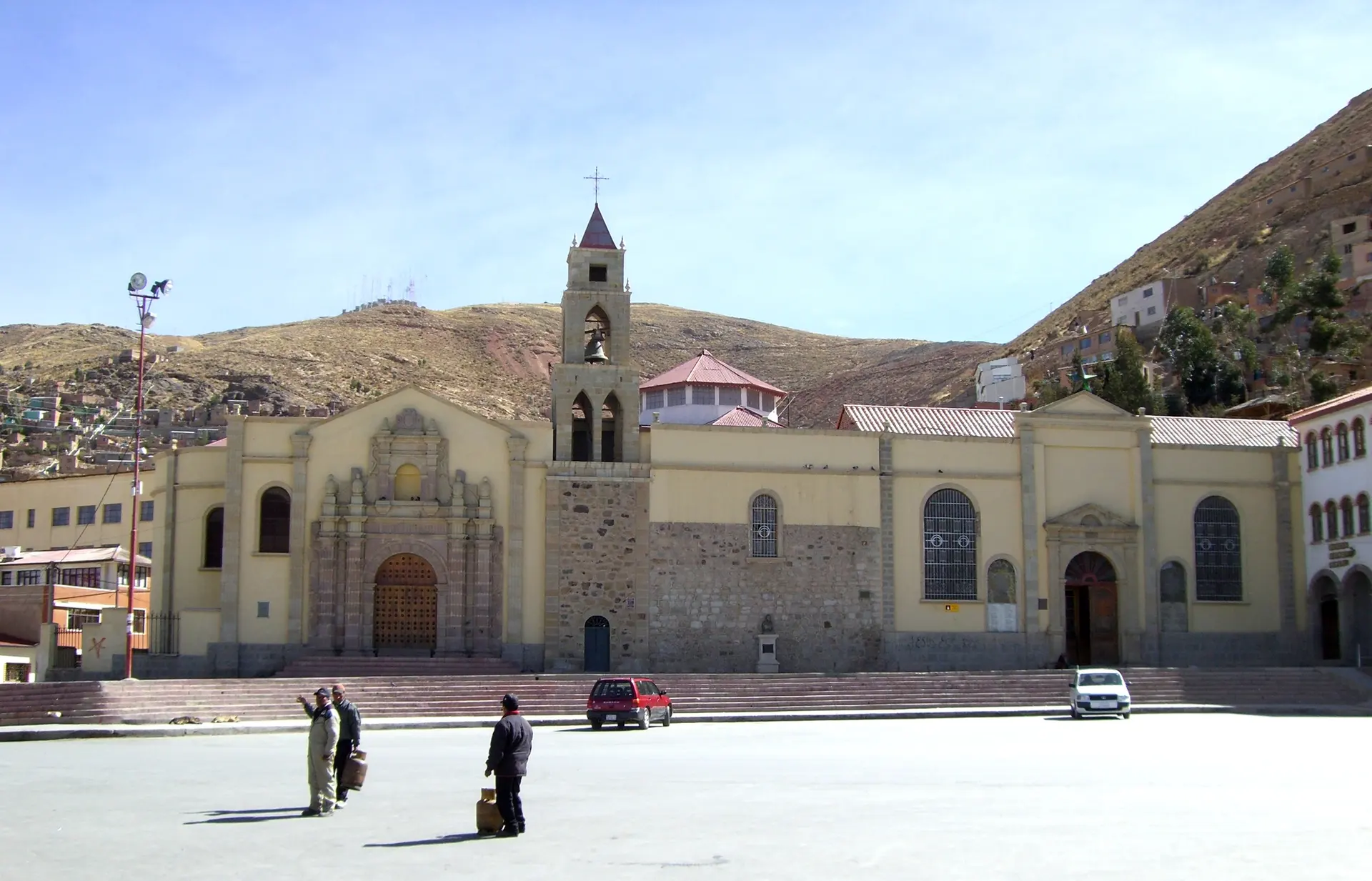
Oruro, Santuario de Virgen de Socavón
Oruro, Oruro, Bolivia
248.0 km away

Quillacollo, Iglesia de San Ildefonso, Virgen of Urkupina
Quillacollo, Cochabamba, Bolivia
336.3 km away
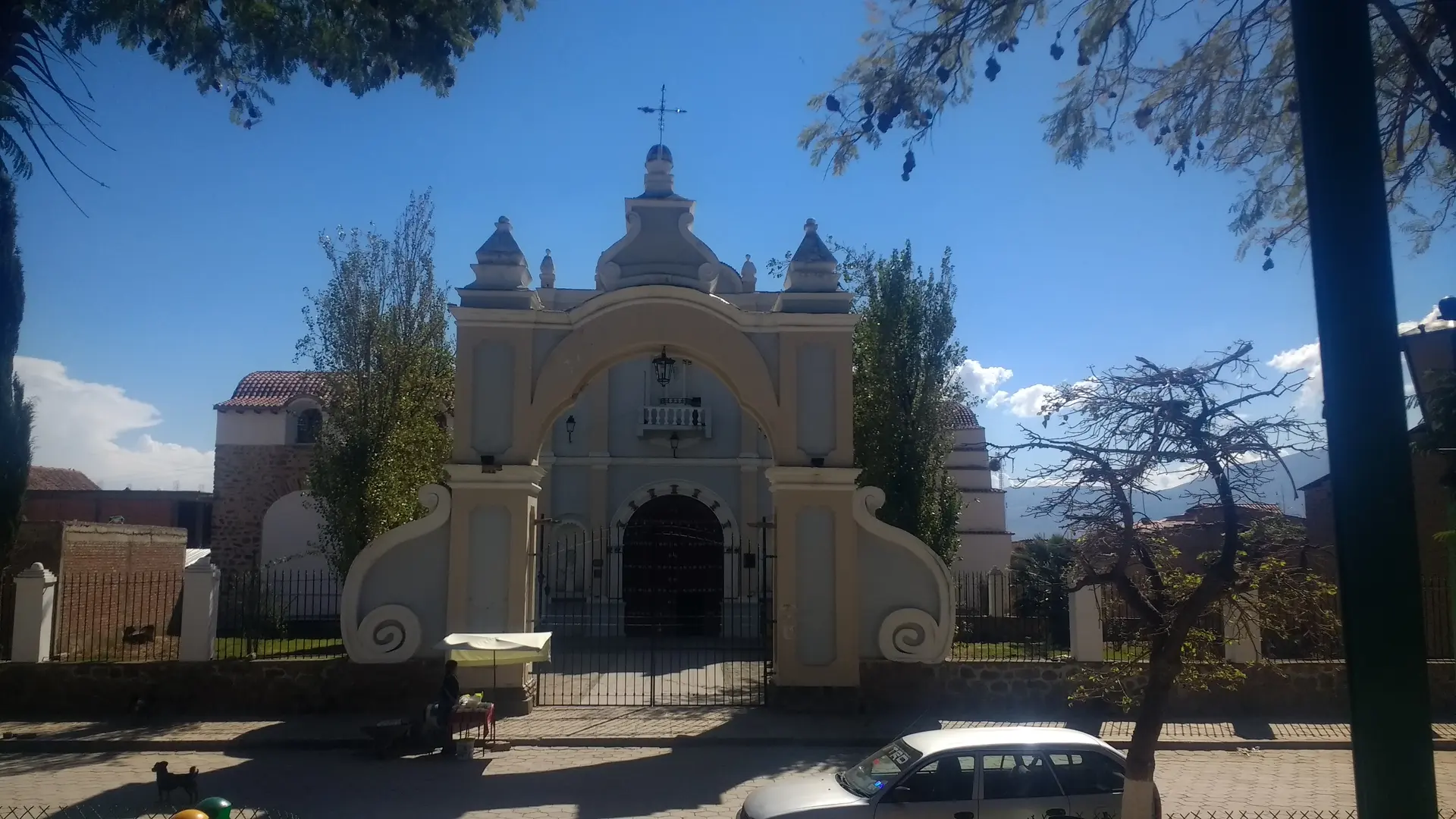
Arani, Church of San Bartolomé, Nuestra Señora La Bella
Municipio Arani, Cochabamba, Bolivia
345.8 km away
References
Sources consulted for this page. Source categories describe the publication, not a guarantee that every claim is verified. Traditional accounts and outside interpretations may differ.
- 01Uyuni Salt Flat - IUGS Geoheritage — International Union of Geological SciencesofficialOfficial IUGS recognition of the Salar as a globally significant geoheritage site. Covers geological formation, evaporite significance, and lithium deposits.
- 02Uyuni Salt Flat | Map, Facts, & Elevation — BritannicaacademicAuthoritative encyclopedic entry with geographic, geological, and economic data.
- 03The Myth of Tunupa - The Bolivia Reader — Duke University PressacademicAcademic publication from Duke University Press covering the Tunupa myth within broader Bolivian cultural studies.
- 04The Salar de Uyuni Will Be Mined for Lithium — JSTOR DailyacademicAcademic journalism covering the environmental and cultural implications of lithium mining on the Salar.
- 05Rapid growth of Bolivia's lithium industry creating new problems for local communities — MongabayacademicInvestigative environmental journalism on the impact of lithium extraction on indigenous communities near the Salar.
- 06Salar de Uyuni - Wikipedia — Wikipedia contributorsacademicWell-referenced encyclopedia article covering geology, formation history, mythology, economics, and tourism. Cross-referenced against other sources.
- 07Salar de Uyuni and Mt. Tunupa, Bolivia - World Pilgrimage Guide — Martin Gray / Sacred SitesspiritualPilgrimage-focused resource covering the sacred significance of the Salar and Mt. Tunupa, including Aymara mythology and spiritual practices.
- 08Tunupa - Wikipedia — Wikipedia contributorsacademicOverview of the Tunupa deity, the cult's pre-Tiwanaku origins, and the volcano's sacred significance in Aymara cosmology.
- 09History of the Salar de Uyuni: Geology, Salt Formations, and Bolivian Culture — MundoWanderlustguideCultural history overview covering traditional salt extraction, Aymara heritage, and geological formation.
- 10The Uyuni Salt Flat: A confluence of history, geology and mind-bending landscapes — ExploraguideCultural and geological overview from a reputable travel operator.
- 11The Gods and an Ancient Andean Calendar at the Salar de Uyuni — Ancient OriginsacademicCovers the Andean astronomical calendar preserved in the Salar de Uyuni region, linking agricultural cycles to celestial observation.
- 12Salar de Tunupa (Uyuni): Myths, Majesty, and a Practical Guide — Lola AppguideCovers Aymara mythology, the Tunupa naming debate, and practical visitor information.
- 13Tunupa: God of Nature — MythlokacademicMythological overview of Tunupa as Aymara deity of volcanoes, thunder, and lightning.
- 14Coqueza Mummies (Cementerio de Chullpas) — Atlas ObscuraguideDetailed description of the Chullpa mummies in caves on Tunupa volcano, including the archaeological context.
- 15Flamingos near Salar de Uyuni — Ruta Verde ToursguideDetails on the three flamingo species found near the Salar and optimal viewing seasons.
- 16Stargazing on the Salar de Uyuni — The World In A WeekendguideDescribes the Salar's exceptional conditions for stargazing and night-sky photography.
- 17Isla Incahuasi - Wikipedia — Wikipedia contributorsguideDetails on the archaeological remains, Tiwanaku and Inca ruins, caves, and giant cacti on Incahuasi island.
- 18Salar de Uyuni - Official Information Website — SalardeUyuni.comofficialTourism information portal with practical visitor guidance, tour options, and seasonal recommendations.
- 19Bolivia: The environmental impact of lithium extraction in the Uyuni Salt Flat — Noticias AmbientalesacademicEnvironmental reporting on lithium mining impacts including water contamination and groundwater depletion concerns.
Photo gallery
3 curated photos
Share a photo
Help visitors recognize Salar de Uyuni. Every submission is reviewed before publication.