Teotihuacan
The cosmic city where unknown builders created the birthplace of the gods
Understand sacred places, explore living traditions, and learn how to engage respectfully with Pilgrim Map.
Access has not been verified. Check current local guidance before planning a visit.
Teotihuacán, Mexico, Mexico
Read the sources
Visit essentials
A quick read before you go
- Duration
- 4-5 hours for thorough exploration including museums
- Etiquette
- UNESCO World Heritage Site managed as archaeological zone.
Overview
Teotihuacan was built by an unknown people whose city influenced all subsequent Mesoamerican cultures. They left no readable writing, certainly identified rulers, or explanation for the valley and cosmic geometry they chose. Their pyramids rank among Earth's largest ancient structures; the Avenue of the Dead runs 2.5 kilometers; and apartment compounds housed perhaps 200,000 people in what may have been the pre-modern world's most planned urban environment.
The avenue runs 15.5 degrees east of true north, aligned with the Pleiades' setting point in the first century CE. The Pyramid of the Sun, the world's third largest by volume, stands over a natural cave that may have represented Chicomoztoc, the Place of Seven Caves from which humanity emerged in Mesoamerican cosmology. On August 13 and April 29, exactly 260 days apart — the sacred calendar's length — the sun sets before the pyramid.
The layout was intentional cosmological architecture.
The later Aztec interpretation placed the gods' creation of the current sun here, even if that differed from the builders' meaning. Teotihuacan remained sacred after they vanished; people still gather at every equinox in its plazas and raise their arms toward the sun.
Why this place is sacred
Teotihuacan's power derives from multiple sources, each reinforcing the others. Begin with the mystery of origins. We do not know who these people were, what they called themselves, what language they spoke, or how their society was organized. The absence of clear royal imagery, so different from contemporary Maya cities, suggests governance may have been collective or priestly rather than dynastic. This means Teotihuacan presents itself without the usual frames of historical understanding.
We cannot reduce it to the achievements of particular rulers or the expression of a known culture. It simply exists, demanding response on its own terms. The scale creates awe that photographs cannot convey. The Pyramid of the Sun is not merely large but massive, 225 meters at the base, originally 75 meters high, built from over a million cubic meters of material.
To stand before it is to feel small, not in the diminishing sense but in the clarifying sense. The human perspective adjusts. The Pyramid of the Moon, at the northern terminus of the Avenue of the Dead, creates a visual culmination that draws the eye and the body forward. The avenue itself, 2.5 kilometers of processional space, induces the contemplative walking that pilgrimage traditions worldwide recognize as transformative. The astronomical alignments add another dimension.
This was not arbitrary construction but intentional encoding. The orientations serve the calendar, the calendar serves agriculture and ceremony, ceremony serves the cosmic order that sustains everything. To walk here is to walk inside a diagram of the universe as its builders understood it. That their understanding cannot be fully recovered adds to rather than diminishes the site's power. The Aztec recognition matters too.
When they arrived, centuries after the city's abandonment, they did not see ruins but recognized sacred space. Their mythology of the Fifth Sun's creation here represents genuine encounter with the site's atmosphere, not mere invention. Something about Teotihuacan communicated divinity to people who had never known its builders. That communication continues.
Cosmic city embodying astronomical and religious principles. Center of a civilization that influenced all subsequent Mesoamerican cultures.
Initial settlement c. 100 BCE. Major construction 1-200 CE. Peak influence 200-450 CE. Evidence of burning and destruction c. 550 CE. Abandoned by c. 650 CE. Aztec pilgrimage tradition 14th-16th centuries. Modern excavation began 1905. UNESCO inscription 1987. Contemporary equinox gatherings draw tens of thousands.
Experience and orientation
Entering Teotihuacan, you enter a scale of human construction that recalibrates expectations. The site extends beyond what any single visit can fully absorb. Most visitors begin near the Pyramid of the Sun, the magnetic center that draws the eye. Climbing was once permitted and formed the emotional climax of many visits; conservation concerns now restrict this, but the pyramid's power remains accessible from its base, where the scale becomes visceral rather than abstract.
The avenue stretches northward toward the Pyramid of the Moon. Walking this 2.5-kilometer processional way activates something the builders intended: the body participates in the approach, time passes, the destination grows larger. Along the avenue, what the Aztecs called tombs, actually residential compounds, line both sides. These apartment complexes housed thousands, their walls once covered in murals depicting deities, paradise, and ritual.
The Pyramid of the Moon, though smaller than the Pyramid of the Sun, occupies the more powerful position: at the avenue's terminus, backed by the sacred mountain Cerro Gordo whose profile it mirrors. The platform atop its first level offers the most comprehensive view of the city's layout. Here you can see what the builders intended: a designed landscape connecting earth and sky.
The Ciudadela complex at the avenue's southern end contains the Temple of the Feathered Serpent, whose elaborate sculptural program features 365 stone serpent heads, the same number as days in the solar year. Beneath this temple, excavations discovered a tunnel containing over 50,000 ritual offerings, evidence of concentrated sacred power. Multiple sacrificial burials around the temple confirm the intensity of dedication that created this place. Throughout the visit, the sun tracks across the sky that the builders studied so carefully.
In the right season, you might witness the solar alignments that mark this place as calendar as well as temple. At any time, you walk among the accumulated weight of two thousand years of human encounter with something extraordinary.
Five main gates provide access. Gate 1 is near the Ciudadela and Temple of the Feathered Serpent. Gate 2 is near the Pyramid of the Sun. Gates 3 and 4 access the northern areas including the Pyramid of the Moon. The Avenue of the Dead connects major structures. Museums near Gates 1 and 2 provide archaeological context. The site covers 21 square kilometers; allow significant time.
Context and lineage
According to Aztec mythology, after the destruction of the Fourth Sun the world was plunged into darkness. The gods gathered at Teotihuacan to create a new cosmic era. Two deities, Nanahuatzin (humble and diseased) and Tecuciztecatl (wealthy and proud), volunteered to sacrifice themselves by leaping into a sacred fire. When the moment came, the proud god hesitated, but humble Nanahuatzin leaped without fear and emerged as the sun. Shamed, Tecuciztecatl then jumped and became the moon.
But the celestial bodies hung motionless in the sky until all the other gods sacrificed themselves to set them in motion. This is why humans must continue to offer sacrifice: to keep the cosmic order moving. The name Teotihuacan, 'the place where the gods were created' or 'the place where one becomes a god,' captures this Aztec understanding of the site as the birthplace of the current cosmic age.
Teotihuacan's influence extended throughout Mesoamerica, affecting art, architecture, religion, and politics from the Maya lowlands to the highlands of central Mexico. Later civilizations including the Toltecs and Aztecs consciously imitated Teotihuacan's forms and claimed inheritance from its legacy. The site represents the first great urban experiment in the Americas and set patterns that would endure until the Spanish conquest.
Unknown builders
Moctezuma II
Leopoldo Batres
Traditions and practice
Archaeological evidence reveals religious practices including human and animal sacrifice, particularly at the Pyramid of the Moon and Temple of the Feathered Serpent. Offerings included obsidian blades, jade, pyrite mirrors, shells, and ceramic figurines. Evidence suggests the Ciudadela plaza was periodically flooded for water-related ceremonies. The 260-day sacred calendar appears to have governed ceremonial timing based on architectural alignments. Aztec rulers later made regular pilgrimages to the site, treating it as the location of cosmic creation.
The spring equinox (March 20-21) has become Mexico's largest spiritual gathering, with over 12,000 visitors wearing white, often with red accessories, raising their arms to receive energy from the sun. Copal incense is burned, drums sound, Concheros dancers perform traditional indigenous dance. Similar but smaller gatherings occur at the fall equinox. Year-round, spiritual seekers visit for meditation and energy work. These contemporary practices are reconstructed rather than continuous but represent genuine engagement with the site's sacred character.
Arrive early (8 AM opening) to experience the site in relative quiet and cooler temperatures. Allow the Avenue of the Dead to work on you as processional space; walk its length rather than only stopping at major structures. At the Pyramid of the Sun, imagine the cave beneath your feet and what it may have meant to the builders. From the Pyramid of the Moon's platform, absorb the designed landscape. Visit the site museum for archaeological context.
If attending an equinox gathering, participate with openness but recognize this is a modern ceremony rather than ancient tradition.
Teotihuacano Religion
HistoricalThe original religion of Teotihuacan remains partially mysterious because no deciphered writing survives. Archaeological evidence reveals a complex religious system centered on agricultural fertility, cosmic cycles, warfare, and human sacrifice. The civilization developed sophisticated religious concepts that influenced all subsequent Mesoamerican cultures.
Human and animal sacrifice. Offerings of obsidian, jade, pyrite, shells. Ritual flooding of the Ciudadela plaza. Ceremonies connected to the 260-day sacred calendar. Burial of warriors and captives as foundation offerings.
Aztec Pilgrimage Tradition
HistoricalThe Aztecs recognized Teotihuacan as sacred centuries after its abandonment, naming it the birthplace of the gods and the Fifth Sun. Aztec emperor Moctezuma II made pilgrimages every 20 days.
Pilgrimage to the site. Offerings made by rulers. Recognition of the site as cosmic origin point.
Contemporary Spiritual Practice
ActiveTeotihuacan has become one of Mexico's most important sites for contemporary spiritual gatherings. The spring equinox celebration combines elements of New Age spirituality, neo-Mesoamerican practice, and Mexican cultural identity.
Spring equinox gatherings with participants dressed in white. Burning of copal incense. Drumming and chanting. Ceremonies in plazas near the pyramids. Year-round visits for meditation and energy work.
Perspectives and open questions
Teotihuacan exists at the intersection of archaeology, mystery, Mexican national identity, and ongoing spiritual pilgrimage.
Scholarly perspective
Archaeological consensus recognizes Teotihuacan as one of the most important urban centers of ancient Mesoamerica. At its peak it was the largest city in the pre-Columbian Americas and one of the largest in the world. The identity of its builders remains unknown, and the absence of clear dynastic imagery suggests possibly non-monarchical governance. The city's layout encodes astronomical and calendrical information. Human sacrifice was integral to religious practice.
The city's collapse around 550-650 CE involved extensive burning of elite structures, possibly from internal revolt. UNESCO inscription (1987) recognizes artistic achievement, cultural influence, and association with creation mythology.
Living and traditional perspectives
For contemporary indigenous communities in Mexico, Teotihuacan represents ancestral heritage of pan-Mesoamerican significance. While no direct descendants of the original builders can be identified, the site is honored as part of Mexico's pre-Hispanic legacy. The Aztec interpretation as the birthplace of the gods continues to inform Mexican understanding. Indigenous dance groups perform at equinox gatherings, maintaining traditions that blend pre-Hispanic and colonial-era elements.
Alternative interpretations
Teotihuacan has attracted significant New Age and alternative interpretations. The pyramids are widely believed to function as energy centers capable of transmitting cosmic forces. Equinox gatherings focus on receiving and absorbing solar energy. Some interpret the astronomical alignments as evidence of advanced knowledge from lost civilizations or extraterrestrial contact. The city's mysterious builders and unknown fate encourage speculation. These interpretations are not supported by academic archaeology but are experientially significant to many visitors.
Open questions
Who built Teotihuacan? What was their ethnic identity, what language did they speak? How was the city governed? Why does so little evidence of individual rulers exist? What caused the Great Fire and the city's collapse? What was the original name of the city? What secrets remain in unexplored tunnels? What was the relationship between the Great Goddess, the Feathered Serpent, and Tlaloc in Teotihuacano religion? Where did the population go after abandonment?
What is the significance of the 15.5-degree orientation?
Plan your visit
Access and arrival
Most visitors stay in Mexico City and day-trip. Limited accommodations available in San Juan Teotihuacan town.
Respectful visit
Light, comfortable clothing for hot, sunny conditions. Hat and sunscreen essential. Comfortable walking shoes for extensive grounds and uneven terrain. For equinox gatherings, white clothing is traditional.
Personal photography permitted throughout. Tripods and drones prohibited without INAH permission. Professional or commercial photography requires advance permits. Be respectful of other visitors and ceremony participants.
Personal spiritual practice including meditation, prayer, and copal offerings is generally acceptable in designated areas. No offerings should be left on monuments. During equinox events, ceremonies are restricted to plazas.
Climbing all pyramids is prohibited. Stay on designated paths. Do not touch, climb on, or deface structures. Exit by 4:30 PM as site closes at 5 PM. During equinox events, expect crowd control measures.
Climbing pyramids is now prohibited. Stay on designated paths. The site is exposed with little shade; bring sun protection and water. Avoid Sundays when free admission for Mexican nationals creates extreme crowding.
Current practical details
Address
San Juan Teotihuacán, State of Mexico, Mexico
Hours, fees, and access can change — verify on the official source before you travel. Practical details last checked Jun 2026.
Location
Map loads as you approach this section.
Pilgrim reflections
A portrait of encounter, not a score
Pilgrims describe what they felt, how present they could become, and whether the place would shape a journey. There are no stars and no ranking of traditions.
No reviewed reflections yet
The first pilgrims can help describe the character of being here.
Share a reflection
Available after an account-backed “Been there.” Every reflection is reviewed before publication.
Watch deeper
Films, episodes, and recorded talks for visitors who want more context before or after a visit. Speculative and alternative-history entries are labelled as perspectives, not as sources for established claims.
Streaming episode
Alternative-history media
Ancient Apocalypse: Legacy of the Sages
Graham Hancock's Giza/Sphinx-focused episode in Ancient Apocalypse season 1.
Perspective note: Highly contested by mainstream archaeology; included as a perspective, not as evidence.
Open on NetflixVideo resource
Alternative-history media
The Revelation of the Pyramids (La Revelation des Pyramides)
Influential 2010 French documentary on pyramid geometry, alignments, and ancient-site pattern claims.
Perspective note: Controversial and not a source for established archaeological claims.
Open on JustWatch MegalithomaniaUK / YouTube
Alternative-history media
Revelations Beneath Khafre's Pyramid FULL UPDATE
Gaia panel discussion connected to Ancient Civilizations and claims beneath Khafre's Pyramid.
Perspective note: Very speculative; pair with mainstream context before treating any claim as factual.
Open on MegalithomaniaUK / YouTubeNearby sacred places
Explore other sacred places in the region. Proximity does not establish access or travel time; check each place’s guidance.

Pyramid of the Sun, Teotihuacán
San Juan Teotihuacan, Mexico, Mexico
0.6 km away

Pyramid of the Moon, Teotihuacán
San Juan Teotihuacan, Mexico, Mexico
1.0 km away
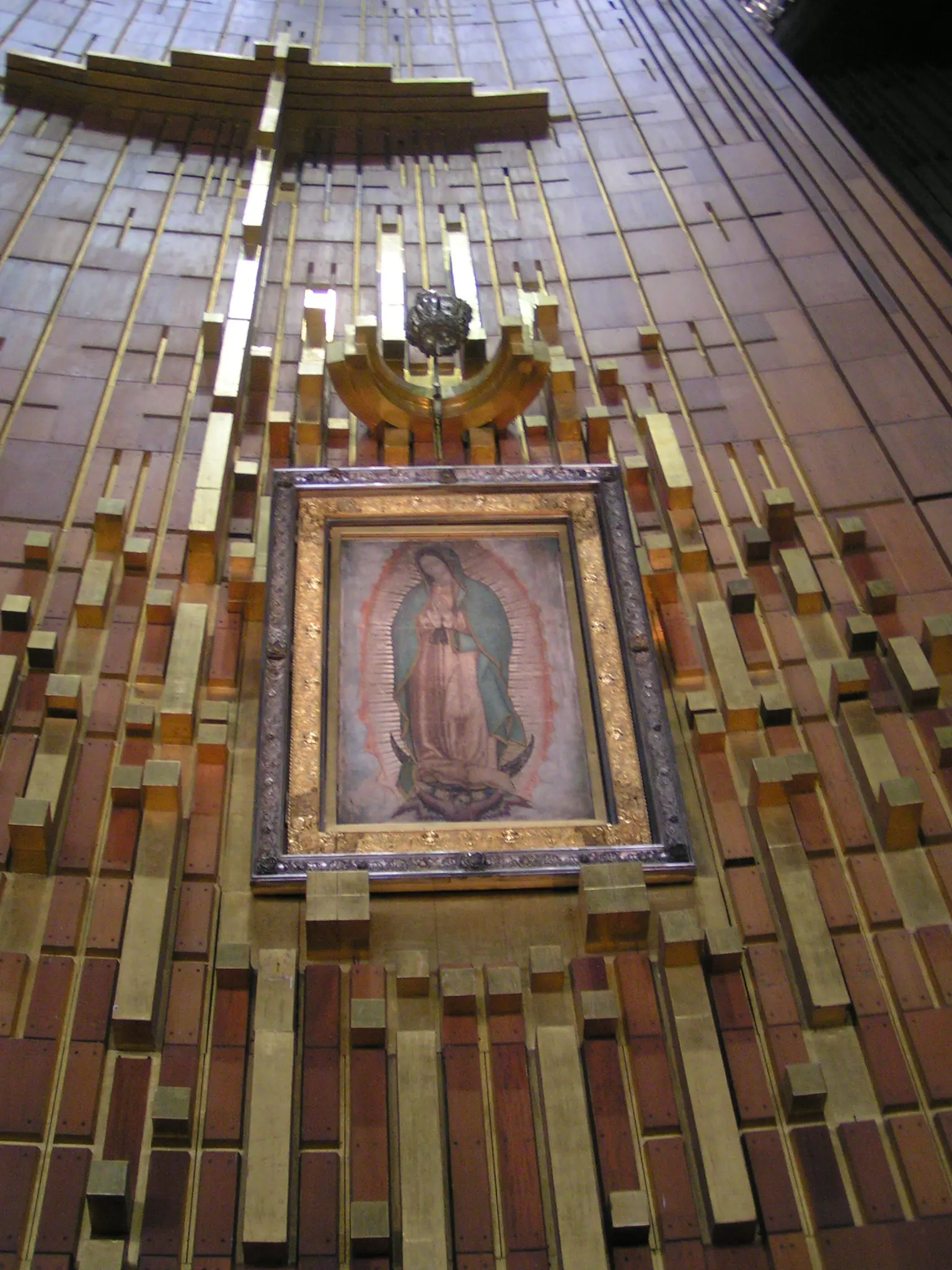
Our Lady of Guadalupe, Mexico
Mexico City, Mexico City, Mexico
36.9 km away
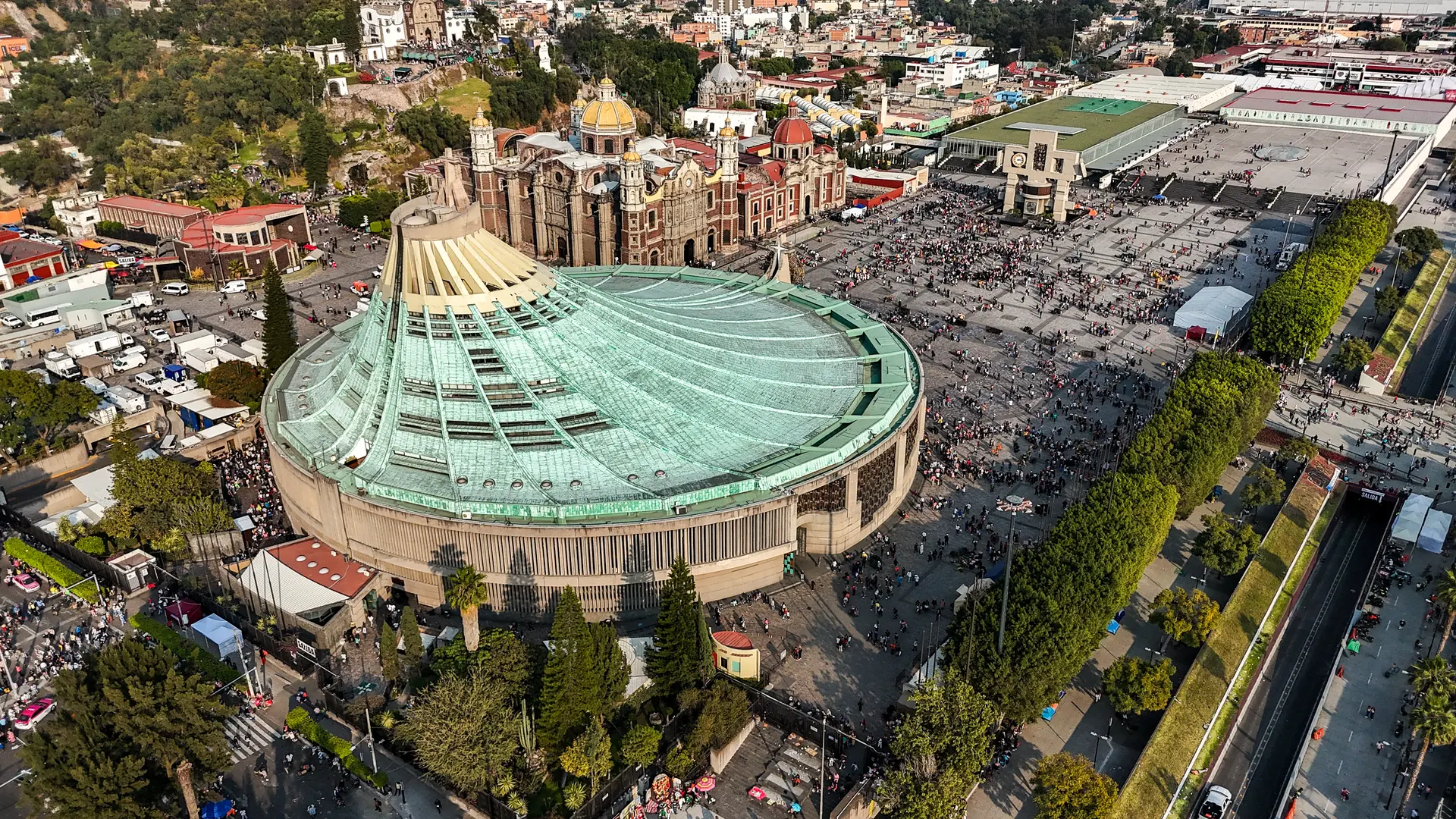
Basilica of Our Lady of Guadalupe
Mexico City, Mexico City, Mexico
36.9 km away
References
Sources consulted for this page. Source categories describe the publication, not a guarantee that every claim is verified. Traditional accounts and outside interpretations may differ.
- 01Pre-Hispanic City of Teotihuacan — UNESCO World Heritage CentreofficialOfficial UNESCO documentation and heritage criteria
- 02Who built the great city of Teotihuacan? — National GeographicacademicAnalysis of builder mysteries and recent archaeological findings
- 03Unearthing the Mysteries of Teotihuacan — UC Riverside MagazineacademicAcademic research on sacrificial chambers and animal remains
- 04Teotihuacan — SmarthistoryacademicArt historical analysis of architecture and iconography
- 05Teotihuacan: Ciudadela — The Metropolitan Museum of ArtacademicScholarly analysis of the Temple of the Feathered Serpent
- 06Teotihuacán civilization — Encyclopaedia BritannicaacademicScholarly overview of the civilization
- 07Teotihuacan — Wikipedia contributorsacademicComprehensive historical overview with archaeological citations
- 08Temple of the Feathered Serpent, Teotihuacan — Wikipedia contributorsacademicDetailed information on the temple and tunnel discoveries
- 09Pyramid of the Sun — Wikipedia contributorsacademicArchitectural and archaeological information
- 10Pyramid of the Moon — Wikipedia contributorsacademicArchaeological findings including sacrificial burials
- 11Spring equinox in Teotihuacán — Wikipedia contributorsacademicModern equinox ceremony documentation
- 12Great Goddess of Teotihuacan — Wikipedia contributorsacademicAnalysis of the proposed Spider Woman deity
- 13Teotihuacan — World Pilgrimage GuidespiritualPilgrimage and spiritual perspective
- 14Aztec Pilgrimage: Teotihuacan, the City of the Gods — PilgrimapsspiritualAztec pilgrimage traditions and cosmological significance
- 15Grisly Sacrifices Found in Pyramid of the Moon — Live ScienceacademicArchaeological discoveries of human sacrifice
- 16A first-time guide to Teotihuacán — Lonely PlanetguideVisitor information and practical guidance
Photo gallery
3 curated photos
Share a photo
Help visitors recognize Teotihuacan. Every submission is reviewed before publication.