Tierradentro
Where the dead were given painted underground chambers as elaborate as the houses of the living
Understand sacred places, explore living traditions, and learn how to engage respectfully with Pilgrim Map.
Access has not been verified. Check current local guidance before planning a visit.
Inzá, Cauca, Colombia
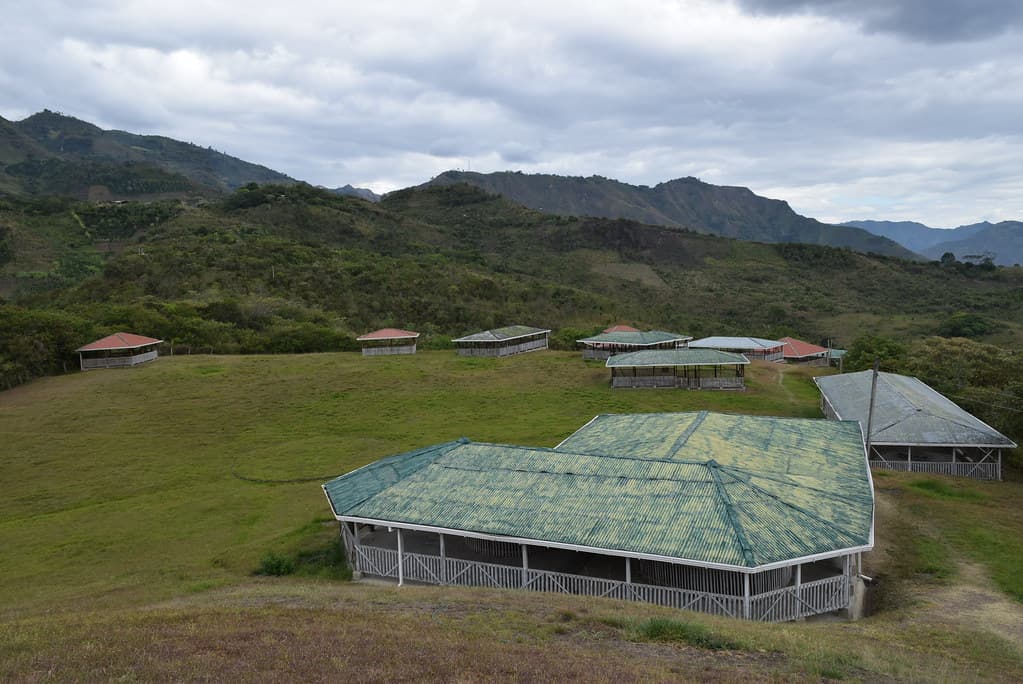
Image of Tierradentro. Image source
Visit essentials
A quick read before you go
- Duration
- Minimum one full day to visit the main sites.
- Access
- Located near the town of Inza in Cauca Department, Colombia.
Overview
The descent is the beginning.
To enter a hypogeum at Tierradentro is to do what the ancient builders intended: to leave the world of light and air and descend into the earth. Carved stone steps lead down a shaft into volcanic rock, and as the daylight narrows above, the chamber opens below. Columns appear. Niches recede into the walls.
The ceiling vaults upward, and on every surface, geometric patterns painted a thousand years ago, diamonds, circles, zigzags, human and animal figures, emerge from the stone in red, black, and white.
These are not caves. They were carved, every surface shaped by human tools, the volcanic tuff giving way under sustained effort. Some chambers reach seven meters below the surface. Some span twelve meters across. The architectural details replicate the structures of the living: columns, niches, vaulted ceilings, as if the builders understood the dead to require the same spatial dignities as the living.
Tierradentro, the Land Within, was named by the Spanish for its remoteness, the mountain terrain that made it so difficult to access. The name inadvertently captures the site's essence: a place where the sacred lies within, below the visible surface of the world.
Over one hundred hypogea are distributed across five main sites scattered through the mountain landscape: Alto de San Andres, Alto de Segovia, Alto del Duende, El Tablon, and Alto del Aguacate, the last containing sixty to seventy chambers on a single ridge. The distances between sites require significant walking, and the terrain is steep. This is not a site for the casual visitor. The physical effort of reaching the chambers mirrors the intentionality of the builders who carved them.
The Nasa people, the current inhabitants of the territory, maintain a living relationship with this landscape. Whether or not they are direct descendants of the tomb builders, a question scholars continue to debate, they recognize the hypogea as part of their ancestral territory. Tierradentro is both an archaeological site and a living indigenous homeland, and this dual identity gives it a quality that purely archaeological sites lack: the past is not isolated here but embedded in an ongoing community.
UNESCO inscribed Tierradentro as a World Heritage Site in 1995, recognizing it as the only known site in the Americas containing monumental underground tombs of this type and scale.
Why this place is sacred
The hypogea at Tierradentro are not graves in any ordinary sense. They are rooms. Underground rooms with columns, niches, and vaulted ceilings, painted on every surface, furnished with the care that the living would take with their own dwellings. The builders of these chambers did not simply dispose of their dead; they housed them.
The architectural replication of domestic space underground suggests that the dead were understood to continue some form of existence. The columns are not structural necessities in rock-cut chambers; they are symbolic elements, carrying the language of the living world into the world below. The niches held ceramic urns containing the bones of the dead, placed in these carved recesses after the body had decomposed elsewhere.
This secondary burial practice, the collection and re-interment of skeletal remains, indicates a multi-stage funerary process in which the dead were attended to repeatedly rather than buried once and forgotten.
The paintings are what survive most powerfully. Red from iron oxide, black from manganese, white from calcium: mineral pigments drawn from the earth and returned to the earth, applied to underground walls where no sunlight reaches. These colors have survived because the chambers sealed them from the elements. Diamonds, circles, zigzags, anthropomorphic and zoomorphic figures, a vocabulary of shapes whose meanings have been lost but whose aesthetic power has not.
Standing underground, surrounded by painted geometry, the visitor occupies a space that was designed to hold the dead and the designs that accompanied them into whatever came next.
The remoteness of Tierradentro amplifies the experience. The winding mountain road from Popayan takes approximately five hours. The sites are scattered across hilly terrain requiring substantial walking. The distances mirror the original conditions: whoever came here to bury their dead also traveled far, also walked difficult terrain, also understood the effort as part of the purpose.
The Nasa presence adds the dimension of continuity. Their agricultural terraces, their community life, their governance through traditional cabildos, all take place on and around the same landscape that holds the hypogea. The past and the present share ground here in a way that is not metaphorical but literal.
The hypogea served as secondary burial chambers: the dead were first interred elsewhere, then their skeletal remains were collected, placed in ceramic urns, and deposited in the painted underground chambers. The architectural elaboration of the chambers, with their columns, niches, and painted walls, indicates that the chambers were understood as permanent dwellings for the dead.
The hypogea were primarily constructed between the sixth and tenth centuries CE, though some evidence suggests earlier construction from the first century. The painting tradition developed alongside the architectural practice, with the most elaborate chambers showing sophisticated geometric programs. After the construction period, the chambers passed out of active use. The Spanish colonial period brought the name Tierradentro and the beginning of outside awareness. First systematic archaeological investigations were conducted in 1936-1937. The archaeological park was established in 1945.
UNESCO inscription in 1995 recognized the site's singular significance. Today the site functions simultaneously as an archaeological park and as Nasa indigenous territory.
Experience and orientation
Tierradentro asks more of its visitors than most archaeological sites. The winding mountain road from Popayan takes approximately five hours and passes through terrain that earns its name: the Land Within. Accommodation is basic, centered on the village of San Andres de Pisimbala near the park entrance. The distances between the five main sites require substantial walking through hilly terrain. None of this is accidental in its effect.
The two on-site museums provide essential context before entering the chambers. Artifacts from the hypogea, ceramic urns, gold ornaments, stone tools, and food offerings, ground the visitor in the material reality of the funerary practices. The Nasa cultural display adds the dimension of living indigenous presence.
Alto de San Andres and Alto de Segovia contain the most accessible and elaborately painted chambers. The descent into a hypogeum is the transformative moment. Stone steps carved into the volcanic tuff lead downward through a narrowing shaft. The light changes. The air changes. The temperature drops. Then the chamber opens, and the painted walls surround you.
The geometric patterns demand attention. Diamonds repeat in precise rows. Circles nest within circles. Zigzag borders frame the compositions. Red, black, and white pigments, still vivid after a millennium, cover surfaces that were never meant to see sunlight. In the more elaborate chambers, anthropomorphic and zoomorphic figures join the geometric program, adding figurative elements to the abstract designs.
Some chambers are naturally illuminated through their shaft entrances. Others require flashlights, and the act of sweeping a beam across painted walls a thousand years old has its own quality: revelation in the most literal sense, light entering darkness to show what darkness has preserved.
Alto del Aguacate, the most remote of the five sites, contains sixty to seventy chambers along a ridgeline. The walk there is steep and the site is rarely crowded. For visitors with the stamina and the time, it offers the most solitary encounter with the hypogea.
Throughout, the Nasa agricultural landscape surrounds the archaeological sites. Their terraced fields, their houses, their daily activity create a context that is not archaeological but alive. The dead are underground. The living are above. Both occupy the same territory.
Begin at the museums near the park entrance for context. Then visit Alto de San Andres and Alto de Segovia, which contain the most accessible and elaborately painted chambers. If time and energy permit, visit Alto del Aguacate for the most remote and concentrated experience. El Tablon contains stone statuary rather than hypogea. Allow a minimum of a full day; two days are recommended to visit all five sites without rushing.
Morning visits offer cooler temperatures for the hilly walking and better light entering the shaft chambers.
Context and lineage
The builders of the Tierradentro hypogea remain unnamed. They carved over one hundred underground chambers into the volcanic tuff of the Cauca mountains, creating the only monumental underground funerary architecture in the Americas. Their practice was distinctive: the dead were first buried elsewhere, then their bones were collected, placed in ceramic urns, and deposited in elaborately painted underground chambers.
The effort of carving these chambers, some seven meters deep and twelve meters across, indicates a society with significant organizational capacity and deep investment in the afterlife.
The Spanish named the region Tierradentro for its inaccessibility. The name captures, inadvertently, the essence of the site's cosmology: a culture that placed its most sacred architecture underground, within the earth, in chambers that replicated the domestic spaces of the living.
The lineage at Tierradentro is layered. The tomb builders' tradition, active from the first through the tenth centuries CE, produced the hypogea and their paintings. The Nasa presence, documented since at least the sixteenth century, maintains a living relationship with the territorial landscape. The archaeological tradition, from the 1936-1937 investigations through UNESCO inscription, provides the framework for contemporary understanding.
These three lineages coexist without fully resolving into a single narrative: the builders, the inhabitants, and the scholars each hold part of the story.
Tierradentro tomb builders
original builders
The unnamed culture that created the only monumental underground funerary architecture in the Americas. Their ethnic identity and language remain subjects of scholarly debate. Their cosmological vision, expressed in painted underground chambers, survives in the pigments they applied to walls that no sunlight reaches.
Nasa (Paez) people
current territorial inhabitants
The indigenous people who currently inhabit the Tierradentro territory. Their cosmovision holds the land as a living entity requiring reciprocal relationship. Whether they descend from the tomb builders is debated; their territorial and spiritual connection to the landscape is not.
ICANH
conservation steward
Manages the archaeological park, balancing conservation of the hypogea with respect for Nasa territorial sovereignty and visitor access.
Traditions and practice
The tomb builders practiced secondary burial: the dead were first interred elsewhere, their bones later collected, placed in ceramic urns, and deposited in painted underground chambers. Funerary goods including pottery, gold ornaments, stone tools, and food offerings accompanied the remains. The painting of chamber walls with geometric, anthropomorphic, and zoomorphic designs in mineral pigments was an integral part of the funerary process.
The carving of the chambers themselves, using stone tools to excavate volcanic tuff to depths of seven meters, was a monumental undertaking likely accompanied by communal ceremony.
The archaeological park offers guided and self-guided access to the hypogea. The two on-site museums provide context. Nasa community events and cultural celebrations continue in the broader territory. Archaeological research and conservation by ICANH are ongoing. Visitors descend into accessible chambers via original or reconstructed stone steps. Some chambers are illuminated for viewing; others benefit from flashlights.
The descent into a hypogeum is the essential experience. Descend slowly, letting the narrowing of the shaft and the dimming of the light register as a physical transition. In the chamber, stand still and let your eyes adjust. The paintings will emerge gradually, pattern by pattern, color by color. The geometric precision will become apparent: these are not rough markings but carefully composed designs. Notice the mineral colors: red from iron oxide, black from manganese, white from calcium.
Earth pigments returned to earth walls. If visiting multiple chambers, note how the painting programs vary between them. Some are primarily geometric; others include figurative elements. The variation suggests either different periods, different communities, or different purposes. Between sites, walk the Nasa agricultural landscape with attention. The terraced fields and the daily rhythms of indigenous life are not backdrop but context: this is a place where the past and the present share the same ground.
Pre-Columbian Painted Tomb Culture
HistoricalThe builders of Tierradentro's hypogea created the only monumental underground funerary architecture in the Americas. Over one hundred chambers, carved to depths of seven meters and painted with mineral pigments, demonstrate a culture that invested extraordinary effort in creating permanent underground dwellings for the dead.
Secondary burial with bone collection and re-interment in ceramic urns within painted chambers. Carving of shaft tombs into volcanic tuff. Painting with mineral pigments in geometric and figurative designs. Deposition of funerary goods. Possible communal ceremonies at chamber entrances.
Nasa (Paez) Indigenous Spirituality
ActiveThe Nasa are the living inhabitants of the Tierradentro territory. Their cosmovision holds the land as a living entity requiring reciprocal relationship. Their governance through cabildos includes stewardship of sacred sites within their territory.
Territorial governance through traditional cabildos. Ritual offerings to earth and mountain spirits. Agricultural ceremonies linked to seasonal cycles. Community gatherings and decision-making at significant sites.
Archaeological Research and Conservation
ActiveFrom the 1936-1937 investigations through UNESCO inscription in 1995 and ongoing ICANH management, the archaeological tradition provides the framework for understanding and preserving the hypogea.
Systematic investigation, conservation of painted surfaces, management of visitor access, and educational programs including on-site museums.
Perspectives and open questions
Tierradentro exists at the intersection of the unknown and the palpable. The builders are unnamed, their beliefs unwritten, their language lost. But their painted chambers survive, and descending into them, the visitor encounters a cosmological statement as direct as any text: the dead deserve beauty, even underground, even in darkness.
Scholarly perspective
Archaeologists recognize Tierradentro as singular in the Americas for its monumental underground tomb architecture. The hypogea date primarily to the sixth through tenth centuries CE, though earlier phases may extend to the first century. The secondary burial practice, the collection and re-interment of bones in painted chambers, has parallels in other pre-Columbian cultures but nowhere else at this architectural scale. The iconography shows influences from multiple traditions, and the builders' exact cultural affiliation remains debated.
UNESCO recognizes the Outstanding Universal Value as the only known example of this type of monumental underground funerary architecture.
Living and traditional perspectives
The Nasa people recognize Tierradentro as part of their ancestral territory. Their cosmovision holds the land as a living entity with which humans must maintain reciprocal relationships. While they may not claim direct descent from the tomb builders, the landscape holds deep significance in Nasa cosmology. The mountains, rivers, and underground spaces are understood as interconnected elements of a living territory that demands respect and reciprocity. The Nasa governance through cabildos includes stewardship of sacred sites.
Alternative interpretations
The geometric patterns inside the tombs have drawn comparisons to similar designs in other pre-Columbian cultures, leading some to suggest a shared symbolic language. The underground orientation of the sacred spaces invites comparison with initiation chambers and underworld descent traditions found in cultures worldwide. The diamond and circular motifs have been interpreted by some visitors as encoding astronomical or mathematical knowledge, though these interpretations remain speculative.
Open questions
The ethnic and cultural identity of the tomb builders remains unresolved. The full meaning of the geometric and figurative paintings has not been deciphered. How the secondary burial ceremonies were organized and who was eligible for interment in the hypogea is unknown. The relationship between the five main tomb clusters, whether they represent different communities, time periods, or social hierarchies, is debated.
Whether the underground chambers were ever used for purposes beyond burial, such as initiation or ceremony, remains an open question.
Plan your visit
Access and arrival
Located near the town of Inza in Cauca Department, Colombia. From Popayan: approximately five-hour bus ride on a winding mountain road with daily services. From Bogota: fly or bus to Popayan, then overland to Tierradentro. Basic accommodation available in San Andres de Pisimbala near the park entrance. Entry fee approximately 65,000 COP for foreign visitors, 25,000 COP for nationals. Park open Tuesday through Sunday, eight in the morning to five in the afternoon. Closed Mondays.
Two on-site museums included with entry. Mobile phone signal is limited in the area; do not rely on it for navigation. The nearest town with reliable signal and services is Inza, approximately thirty minutes by road.
Basic accommodation is available in San Andres de Pisimbala near the park entrance, including simple hostels and guesthouses. Facilities are basic: hot water may be intermittent. Inza offers slightly more options. Visitors seeking more comfortable accommodation can base in Popayan and make Tierradentro a two-day excursion.
Respectful visit
Comfortable hiking clothes and sturdy footwear essential. The terrain is hilly and paths between sites are unpaved. Rain gear recommended. Layered clothing for variable mountain weather.
Photography is generally permitted in the park and at tomb entrances. Any permitted photography inside the hypogea must be without flash to protect the painted surfaces. Check with park staff for current policies.
Do not leave offerings or objects in the tombs. The hypogea are protected archaeological sites.
Do not touch painted walls inside the hypogea. Do not remove stones, pottery fragments, or other objects. Stay on designated paths. Respect areas closed for conservation. Do not enter indigenous reserves outside the park without invitation or permission.
Do not touch the painted walls inside the hypogea. The mineral pigments are fragile and irreplaceable. The terrain between sites is hilly and paths are unpaved; sturdy footwear is essential. Rain gear is recommended as the region receives significant rainfall. Some chamber shafts are steep and may be slippery. Exercise caution descending and ascending. Do not enter indigenous reserves outside the park without invitation or permission.
Current practical details
Address
Inza, Cauca, Colombia
Hours
Hours, fees, and access can change — verify on the official source before you travel. Practical details last checked Jun 2026.
Location
Map loads as you approach this section.
Pilgrim reflections
A portrait of encounter, not a score
Pilgrims describe what they felt, how present they could become, and whether the place would shape a journey. There are no stars and no ranking of traditions.
No reviewed reflections yet
The first pilgrims can help describe the character of being here.
Share a reflection
Available after an account-backed “Been there.” Every reflection is reviewed before publication.
Nearby sacred places
Explore other sacred places in the region. Proximity does not establish access or travel time; check each place’s guidance.

Share a photo
Help visitors recognize Tierradentro. Every submission is reviewed before publication.