Pukara, Templo Santa Isabel
The first urban center of Lake Titicaca—where pyramid temples rose 3,400 years ago and Toritos still guard Peruvian homes
Understand sacred places, explore living traditions, and learn how to engage respectfully with Pilgrim Map.
Access has not been verified. Check current local guidance before planning a visit.
Pukara, Puno, Peru
Read the sources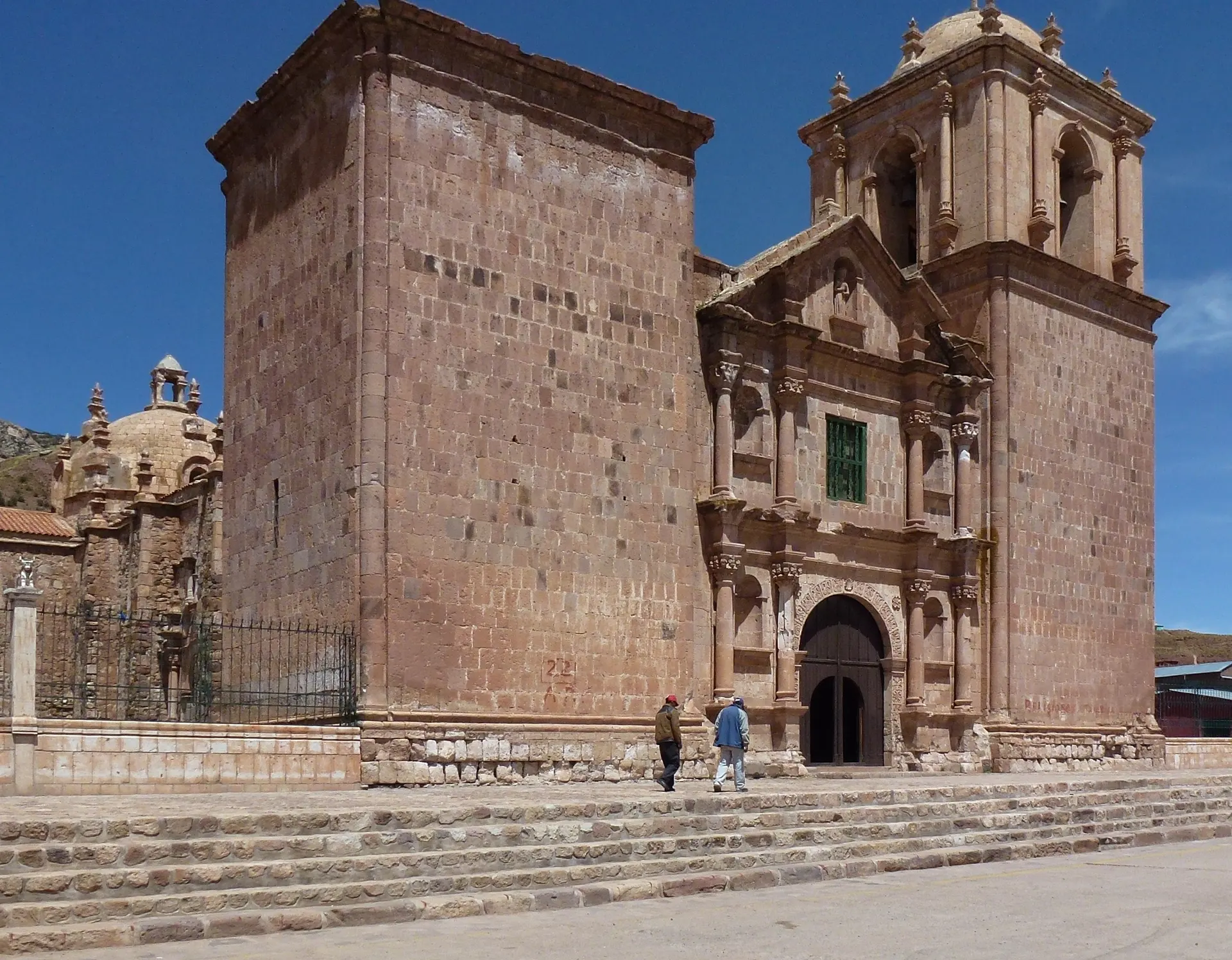
Image of Pukara, Templo Santa Isabel. Image source · CC-BY-SA-4.0
Visit essentials
A quick read before you go
- Duration
- Two to three hours for site and museum; additional time for ceramic shopping.
- Etiquette
- Approach the archaeological site with reverence for its status as the first major ceremonial…
Overview
Pukara rises from the northern Lake Titicaca basin at 3,850 meters, 106 kilometers from Puno on the road between that city and Cusco. The site looks unremarkable from the highway, but what lies here fundamentally shaped Andean civilization. This was the first large urban center in the entire Titicaca region, dated as early as 1,800 BCE.
The Pukara culture developed between 1,400 and 550 BCE, building a ceremonial center with nine pyramids of various shapes and sizes. The site spreads across approximately 4.2 square kilometers, with a ceremonial sector distinct from an urban residential zone. Beneath the main temples, archaeologists found occupations from the earlier Qaluyu culture (1400-500 BCE), suggesting this ground was sacred before the Pukara formalized it.
The architecture sets Pukara apart. The unusual horseshoe-shaped temple, built of stone masonry, is unique in Andean architecture. Sunken courtyards—some fully excavated, others still buried—characterize the site. The sunken courtyard style developed here would later become important in subsequent Andean ceremonial centers, including possibly Tiwanaku.
The sculptures and monoliths of Pukara depict supernatural beings and deities central to the culture's religious belief. The small museum adjacent to the main plaza houses these beautifully carved works—evidence of a sophisticated artistic tradition that influenced later cultures. The Pukara style of religious iconography can be traced in civilizations that followed.
The town of Pukara maintains an artistic tradition that may trace back millennia. The 'Toritos de Pucara'—ceramic bulls placed on rooftops throughout Peru for good luck—originate here. The potters of Pukara continue creating these figures alongside other ceramics, maintaining a craft economy that connects the modern town to its ancient predecessor.
The site was declared National Cultural Heritage (Patrimonio Cultural) by Peru's National Institute of Culture, recognizing both the archaeological importance and the living ceramic tradition that makes Pukara unique among Andean sacred sites.
Why this place is sacred
To be first is to create the pattern that others follow. Pukara was the first large urban center in the Lake Titicaca basin, the place where scattered settlements first organized into something more. The ceremonies conducted in the nine pyramids established traditions that would influence Andean religion for centuries. This priority creates thin-place power: the accumulated weight of being the origin.
The Qaluyu culture beneath the main temples extends this thinness deeper into time. Before Pukara formalized this ground, the Qaluyu recognized something sacred here. The continuity suggests that certain locations attract religious attention across different cultures—that thin places can precede any single tradition's recognition of them.
The horseshoe-shaped temple adds architectural uniqueness to temporal priority. This form appears nowhere else in Andean architecture, suggesting that what happened here required a space unlike any other. The architects of Pukara created a form specifically suited to ceremonies we can only partially reconstruct.
The sunken courtyards developed here would become central to Andean ceremonial architecture—adopted by Tiwanaku and other successor cultures. To walk in Pukara's sunken courts is to experience the prototype of a form that would shape sacred space throughout the region for centuries.
The living ceramic tradition extends the thin place into the present. The potters who create Toritos de Pucara work within a tradition that may trace back to the artisans who carved the stone monoliths now displayed in the museum. The creative act connects across millennia; the hands that shape clay today may replicate gestures that sacred artists made three thousand years ago.
Pukara's thinness thus spans from archaeological priority through architectural uniqueness to living tradition—a place where ancient sacredness continues to manifest through ongoing creative practice.
First major religious and administrative center in the Lake Titicaca basin. The horseshoe temple and nine pyramids served ceremonial functions. Sunken courtyards developed here influenced later Andean architecture.
From Qaluyu sacred site through Pukara urban center to modern town with living ceramic tradition. Archaeological recognition and heritage protection preserve the ancient while craftsmanship continues the legacy.
Experience and orientation
Pukara lies 106 kilometers from Puno on the road toward Cusco, making it a natural stop on journeys between these cities. The archaeological site is located to the west of the modern town at 3,850 meters elevation.
Begin at the archaeological site, spread across approximately 4.2 square kilometers. The ceremonial sector contains the nine pyramids that characterized Pukara's religious life. Some sunken courtyards have been fully excavated, revealing the architectural style that would influence later Andean sacred centers. Others await future investigation, their contents still buried.
Find the remains of the horseshoe-shaped temple—the unique architectural form that appears nowhere else in the Andes. Consider what ceremonies required this specific shape, what practices the Pukara developed that demanded space unlike any other.
Visit the small museum adjacent to the Plaza de Armas in Pukara town. The collection displays pre-Inca artifacts including beautifully carved monoliths and ceramics. These sculptures depict supernatural beings and deities—evidence of a religious imagination that influenced cultures for centuries. The artistic sophistication testifies to Pukara's importance as a center of cultural development.
Explore the town's ceramic tradition. Pukara is the source of the famous 'Toritos de Pucara'—ceramic bulls placed on rooftops throughout Peru for good luck. Local potters continue creating these figures alongside other traditional ceramics. The shops around the plaza offer authentic Pukara pieces, supporting an economy that may trace back to the ancient artisans.
On clear days, views extend toward Lake Titicaca, connecting the site visually to the body of water that gave the region its sacred character.
The archaeological site is located to the northwest of the modern town of Pukara, in Lampa Province, Puno Region. The museum is adjacent to the Plaza de Armas in town.
Context and lineage
The northern Lake Titicaca basin attracted human settlement early. By 1400 BCE, the Qaluyu culture had established presence here—their traces survive beneath the main temples at Pukara. This was already recognized as significant ground.
Between 1400 and 550 BCE, the Pukara culture transformed scattered settlements into the region's first large urban center. The site grew to cover 4.2 square kilometers, with a ceremonial sector distinguished from a residential zone. Nine pyramids of various shapes and sizes served religious functions.
The architects of Pukara developed distinctive forms. The horseshoe-shaped temple, unique in Andean architecture, served ceremonies whose specifics are lost but whose importance is evident. Sunken courtyards became the ceremonial prototype that later cultures would adopt and adapt.
Pukara sculptors created stone monoliths depicting supernatural beings and deities. Their artistic style influenced subsequent cultures; the iconographic vocabulary they developed can be traced through later Andean religious art. Some scholars see Pukara as an influence on Tiwanaku, the great civilization that would later dominate the southern Titicaca basin.
The Pukara culture declined around 550 BCE, but the artistic tradition persisted. The potters of modern Pukara continue creating ceramics in styles that may descend from ancient practice. The Toritos de Pucara—bulls placed on rooftops for good luck—are the most famous products of this ongoing tradition, but the craft extends to many forms.
The site's declaration as National Cultural Heritage recognizes both the archaeological importance and the living tradition that makes Pukara unique.
Qaluyu culture (1400-500 BCE), Pukara culture (1400-550 BCE), possible influence on Tiwanaku, living ceramic tradition in modern Pukara town.
Pukara culture rulers and priests
Founders
Traditions and practice
Temple ceremonies at horseshoe sanctuary. Worship at sunken courtyards. Sculptural arts and religious iconography. Pottery rituals and offerings. Astronomical observations from ceremonial pyramids.
Archaeological tourism and education. Museum visitation. Purchase of traditional ceramics, especially Toritos de Pucara for household blessing. Continuation of ancient craft traditions by local potters.
Visit both the archaeological site and the town museum to understand Pukara's cultural achievement. Purchase authentic Toritos from local artisans to support the living tradition. Consider the influence this site had on later Andean civilizations.
Pukara Ceremonial Tradition
HistoricalThe Pukara developed the first major ceremonial center in the Lake Titicaca basin, creating architectural forms (sunken courtyards) and artistic styles that influenced Andean religion for centuries.
Temple ceremonies, worship at sunken courtyards, sculptural depiction of deities. Specific practices inferred from archaeological evidence.
Pukara Ceramic Tradition
ActiveThe potters of modern Pukara continue creating ceramics including the famous Toritos de Pucara—bulls placed on rooftops throughout Peru for good luck.
Traditional ceramic production using local materials and ancestral techniques. Creation of Toritos and other figures. Sale of ceramics to support the local economy.
Perspectives and open questions
Pukara can be understood as the first major urban and ceremonial center of the Lake Titicaca region, as the source of architectural innovations that influenced later cultures, as the origin of artistic traditions that persist today, or as a living craft community that connects ancient and contemporary practice.
Scholarly perspective
Archaeological research has established Pukara's priority in the Titicaca basin and its influence on subsequent cultures. The relationship to Tiwanaku continues to be investigated.
Living and traditional perspectives
The Pukara created the prototypes for Andean ceremonial architecture and religious iconography. Their achievements set patterns that shaped religious life for centuries.
Alternative interpretations
The living ceramic tradition suggests that ancient sacred practices can survive through craft—that making sacred objects maintains connection to the powers the objects represent.
Open questions
Specific ceremonies conducted in the horseshoe temple and sunken courtyards. The extent of Pukara's influence on Tiwanaku. The origins of the Torito tradition.
Plan your visit
Access and arrival
Basic accommodations in Pukara. More options in Puno or on the route to Cusco.
Respectful visit
Comfortable clothing for altitude and archaeological exploration. Sun protection for the high plateau.
Photography permitted at the site and museum. Ask permission before photographing artisans at work.
Support the living tradition by purchasing authentic Pukara ceramics from local artisans.
Do not damage or disturb archaeological features. Respect museum guidelines.
Altitude at 3,850 meters requires acclimatization. The site is spread across 4.2 km—allow adequate time for exploration.
Current practical details
Address
XJ5J+3HJ, 3S, Pucará 21137, Peru
Hours, fees, and access can change — verify on the official source before you travel. Practical details last checked Jun 2026.
Location
Map loads as you approach this section.
Pilgrim reflections
A portrait of encounter, not a score
Pilgrims describe what they felt, how present they could become, and whether the place would shape a journey. There are no stars and no ranking of traditions.
No reviewed reflections yet
The first pilgrims can help describe the character of being here.
Share a reflection
Available after an account-backed “Been there.” Every reflection is reviewed before publication.
Nearby sacred places
Explore other sacred places in the region. Proximity does not establish access or travel time; check each place’s guidance.


References
Sources consulted for this page. Source categories describe the publication, not a guarantee that every claim is verified. Traditional accounts and outside interpretations may differ.
- 01Pucará, Puno - WikipediaSource context
- 02Pucará - BritannicaSource context
- 03Pucara Puno - Archaeological CenterSource context
- 04Pucara Lampa: Archaeological Site in PunoSource context
- 05Archeological Site of Pukara - Puno, PeruSource context
- 06Pukara Archaeological Site - TripadvisorSource context
Share a photo
Help visitors recognize Pukara, Templo Santa Isabel. Every submission is reviewed before publication.