Saqsaywaman
The puma's head—where 125-ton stones fit without mortar and the Inti Raymi sun festival has burned for centuries
Understand sacred places, explore living traditions, and learn how to engage respectfully with Pilgrim Map.
Access has not been verified. Check current local guidance before planning a visit.
Cuzco, Cusco, Peru
Read the sources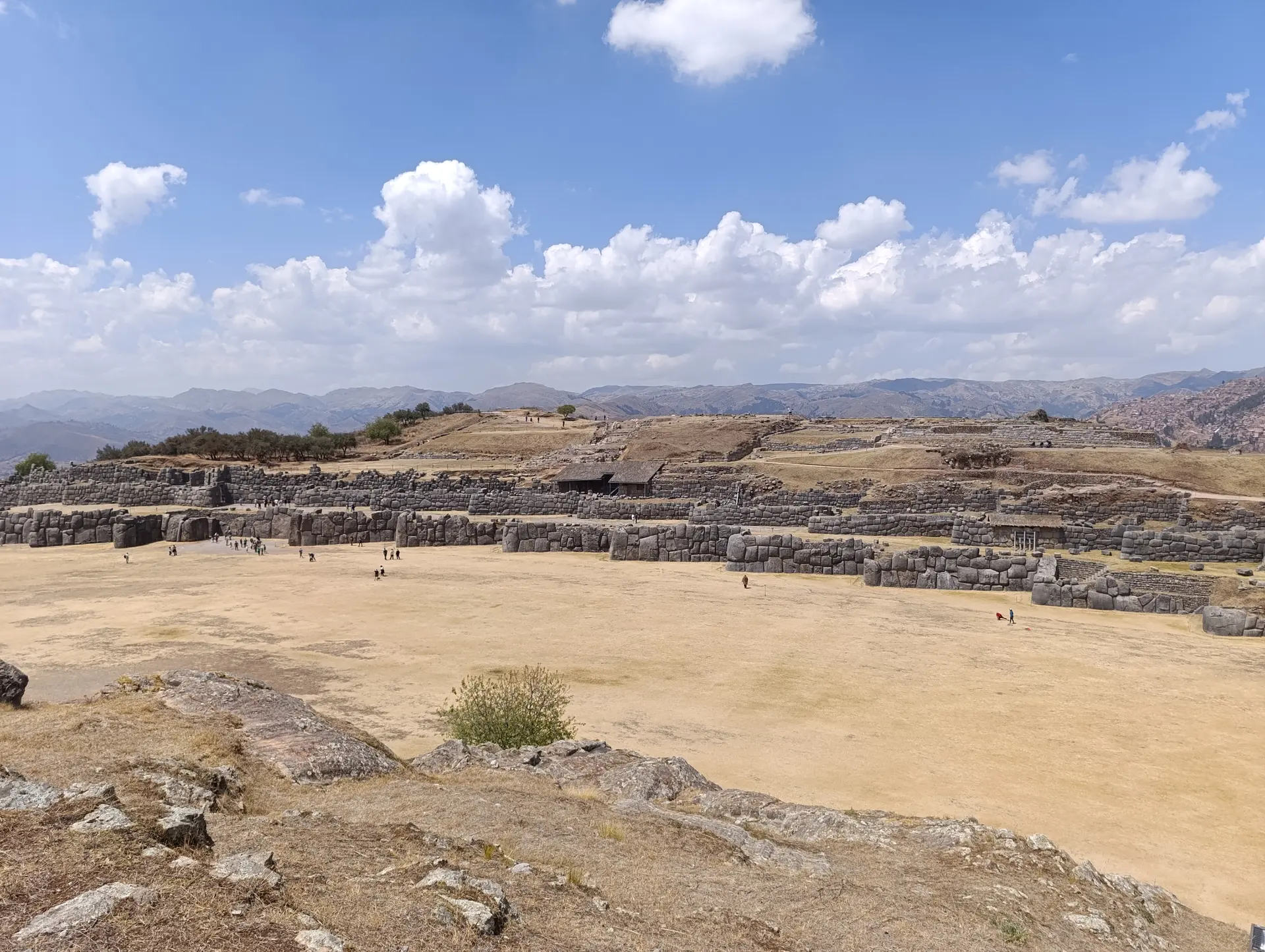
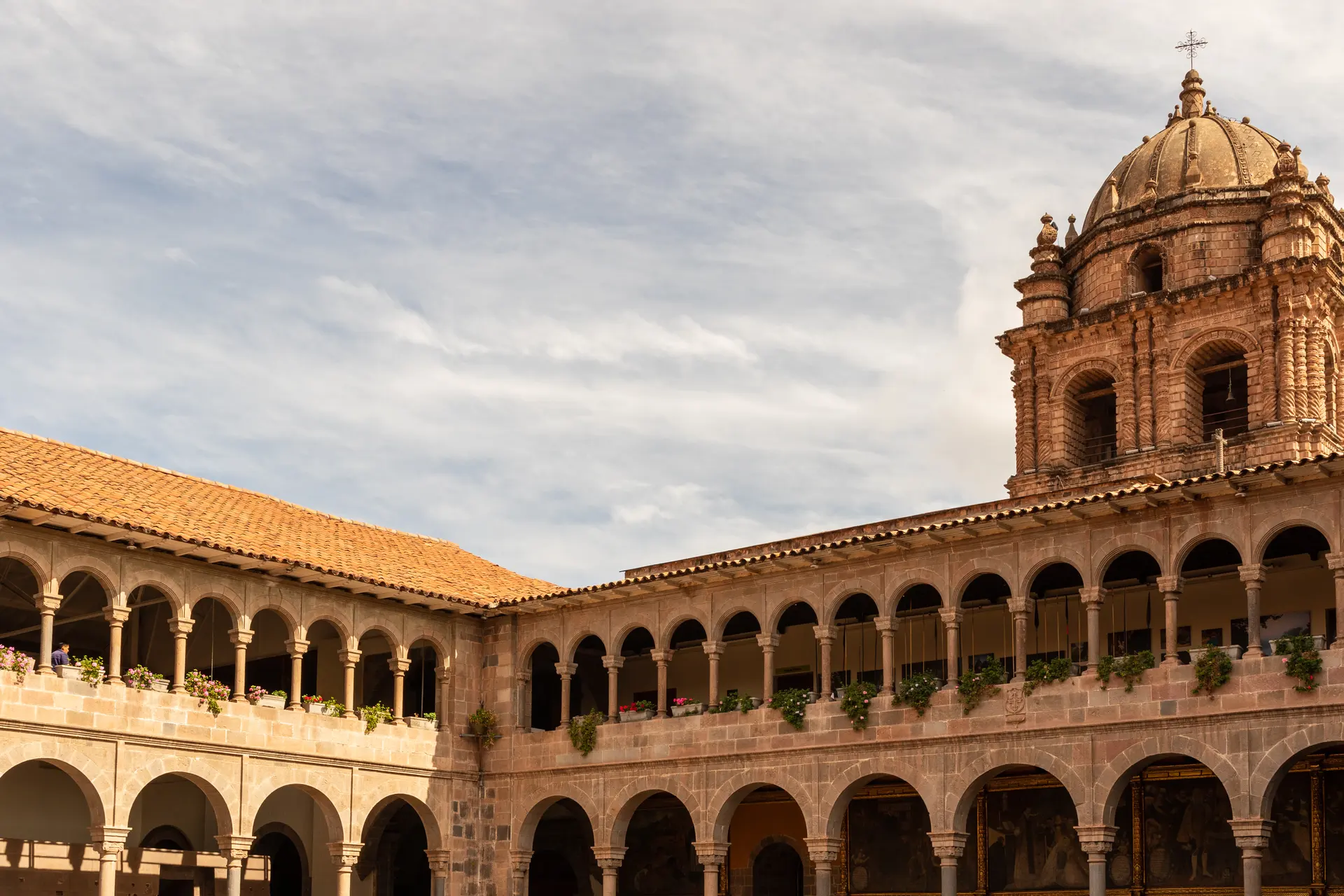
Image of Saqsaywaman. Image source · CC-BY-SA-4.0
Visit essentials
A quick read before you go
- Duration
- Two to four hours; longer if exploring the full archaeological park.
- Etiquette
- Approach with reverence for both the engineering achievement and the sacred purposes the site…
Overview
Sacsayhuaman—Quechua for 'fortress of the royal falcon or hawk'—stands north of Cusco at 3,701 meters, overlooking its valley and the peaks of Ausangate, Pachatusan, and Cinca. The Killke culture built here before the Inca; Pachacuti transformed the site beginning around 1438 CE.
Construction took a century and over 20,000 workers. Without wheel, lever, or draft animals, they moved stones up to 125 tons and 5 meters high. Dry-stone walls zigzag for over 540 meters, rise 18 meters, and contain up to 40 segments. Their fit is so precise that paper cannot slide between stones.
The zigzags may represent lightning, sacred to the god Illapa, or may have served defense during the fierce 1536 battle between Manco Inca's forces and Spanish invaders. Spaniards soon dismantled buildings for Cusco's churches, palaces, and homes; only a fifth survives.
Though called a fortress, Sacsayhuaman also held temples, including one to the sun god Inti, and stored sacred textiles, ceremonial objects, precious metals, and offerings. Its scale demonstrated Inca state divinity and connection to the gods.
UNESCO designated Cusco and Sacsayhuaman together as World Heritage Sites in 1983. Each June 24, thousands fill the site for Inti Raymi, the Festival of the Sun, reenacting the Inca calendar's most important ceremony where it was first performed.
Why this place is sacred
The stones of Sacsayhuaman create a thin place through sheer impossibility. 125 tons moved without wheel or lever, fitted without mortar so precisely that paper cannot pass between them. Whatever explanation archaeology offers—ramps, slides, thousands of workers—something transcendent seems to have occurred here. The walls themselves become a kind of miracle, a demonstration that human devotion can achieve what human logic cannot explain.
The puma's head adds cosmological dimension. The Inca understood Cusco as a sacred city laid out in the shape of a puma—the animal representing the earthly realm in their tripartite cosmology. Sacsayhuaman was the head of that puma, the highest and most sacred point of an already sacred city. To stand here is to occupy the animal's intelligence, the point where the city-as-body thought its thoughts.
The zigzag walls may encode their own meaning. If they represent lightning—the weapon of Illapa, the thunder god—then the entire site becomes a claim on celestial power. The walls flash like the god's weapon, defending Cusco from threats both physical and spiritual.
The Inti Raymi creates annual intensification. Since 1944, the festival has been revived each June 24, bringing thousands to witness or participate in the re-enactment of Inca sun worship. For one day, Sacsayhuaman becomes again what it was designed to be: the stage for communion between humans and the sun. The actors are modern; the ritual follows historical accounts; but something authentic persists in the gathering of Peruvians to honor their ancestors' greatest ceremony.
The 1536 battle adds the blood of resistance to the site's thin quality. When Manco Inca's forces defended these walls against the Spanish, they sanctified Sacsayhuaman with sacrifice. The Spanish prevailed, but the memory of resistance persists.
Ceremonial center and temple complex, including a temple to the sun god Inti. Also served as a storage depot for sacred objects and a demonstration of Inca imperial power.
From Killke sacred site through Inca ceremonial center and fortress to Spanish quarry for colonial building materials to UNESCO World Heritage Site and venue for Inti Raymi.
Experience and orientation
Sacsayhuaman lies just 2 kilometers north of Cusco's main square, at 3,701 meters—high enough to provide spectacular views of the valley and surrounding peaks, high enough to test lungs not yet acclimatized to altitude. Begin with a moment of adjustment: breathe, let the elevation settle in your body, then approach the walls.
The zigzag walls demand attention. Walk along them, noting how stones weighing up to 125 tons fit together without mortar. Find the places where a piece of paper genuinely cannot slide between blocks. Let the impossibility of what you're seeing work on your understanding. However the Inca achieved this—and scholars continue to debate the techniques—the result approaches miraculous.
Explore the site with awareness that you're seeing only a fifth of the original complex. The Spanish needed building materials for their colonial city; Sacsayhuaman provided them. Every colonial church, palace, and residence in Cusco contains stones that were once part of this sacred site. What remains testifies both to what was and what was lost.
Find the locations where temples stood, including the Temple of the Sun. The storage areas that held sacred textiles, ceremonial objects, and precious metals are largely gone, but the foundations indicate the scale of what was kept here.
If you can time your visit for June 24, witness the Inti Raymi. Thousands gather to re-enact the most important Inca ceremony: the Festival of the Sun at the winter solstice. Actors in traditional costume perform rituals based on historical accounts. The crowd includes tourists but also Peruvians reconnecting with their Inca heritage. The sun, if it cooperates, illuminates the proceedings as it did for Pachacuti and his descendants.
Even without the festival, the site offers encounter with ancient achievement and ongoing devotion.
Located 2 km north of Cusco's Plaza de Armas at 3,701 meters. Accessible by foot, taxi, or tour. Part of the Sacsayhuaman Archaeological Park including Q'enco, Puca Pucara, and Tambomachay.
Context and lineage
Before the Inca, the Killke culture recognized the sacred significance of this promontory overlooking the Valley of Cusco. They built structures that would later be incorporated into Inca construction.
Around 1438 CE, Pachacuti began the transformation of Sacsayhuaman into the ceremonial center that would crown his sacred capital. Construction continued under his successors for approximately one hundred years, employing more than 20,000 workers at a time.
The engineering defies easy explanation. Without wheel, lever, or draft animals, workers moved stones weighing up to 125 tons from quarries to building site. They fitted these massive blocks so precisely that mortar was unnecessary. The zigzag walls—perhaps representing lightning, perhaps serving defensive purposes—stretched over 540 meters with walls reaching 18 meters high.
In 1536, Sacsayhuaman became a battlefield. Manco Inca, leading the Inca resistance, fortified the site against Hernando Pizarro's forces. The battle was fierce and bloody—one of the last major engagements of the Inca resistance. The Spanish prevailed, and soon began dismantling the complex, using its perfectly shaped stones to build colonial Cusco.
By the modern era, only a fifth of the original complex remained. In 1983, UNESCO recognized both Cusco and Sacsayhuaman as World Heritage Sites. Since 1944, the Inti Raymi has been revived each June 24, returning sun worship to the site where it was practiced for centuries before the conquest.
Killke pre-Inca culture, Inca imperial expansion under Pachacuti and successors, Spanish colonial dismantling, modern heritage preservation and Inti Raymi revival.
Pachacuti (Inca Yupanqui)
Builder
Manco Inca
Defender
Traditions and practice
Sun worship at Temple of the Sun. State ceremonies and royal rituals. Storage and distribution of sacred textiles, ceremonial objects, and precious offerings.
Inti Raymi (Festival of the Sun) held June 24, drawing thousands for re-enactment of Inca sun worship. Year-round visitation for education and contemplation. Modern solstice celebrations continuing ancient traditions.
Walk the zigzag walls slowly, contemplating the engineering achievement. If possible, visit for Inti Raymi on June 24 to experience the site in ceremonial use. Otherwise, time your visit for morning when crowds are smaller.
Inca Solar Religion / Inti Raymi
ActiveSacsayhuaman served as the ceremonial heart of Inca sun worship, containing a temple to Inti. The Inti Raymi has been revived since 1944 as Peru's most important connection to its Inca spiritual heritage.
Sun worship at Temple of the Sun. Modern Inti Raymi on June 24 with thousands of participants. Solstice observations. State ceremonies at the winter solstice.
Perspectives and open questions
Sacsayhuaman can be understood as an engineering miracle that defies explanation, as the puma's head in Cusco's sacred zoomorphic layout, as the site of the Inti Raymi sun festival, or as a symbol of both Inca achievement and Spanish destruction.
Scholarly perspective
Archaeological research continues to investigate construction techniques for the massive walls. Debate continues over the site's primary functions and the meaning of the zigzag pattern.
Living and traditional perspectives
Within Inca tradition, Sacsayhuaman crowned the sacred capital with a temple to the sun and a demonstration of divine imperial power. The annual Inti Raymi continues this tradition.
Alternative interpretations
The engineering achievement has attracted alternative explanations suggesting lost technologies or non-human assistance—theories that mainstream archaeology rejects but that speak to the genuine wonder the walls inspire.
Open questions
Precisely how the massive stones were moved and fitted without modern technology. The full extent and specific functions of the destroyed portions of the complex.
Plan your visit
Access and arrival
Full range of accommodations in Cusco city. Book far in advance for Inti Raymi.
Respectful visit
Comfortable clothing and sturdy shoes for the extensive grounds. Sun protection essential at altitude. Warm layers for Inti Raymi, which occurs during winter.
Photography welcomed. Be respectful during Inti Raymi ceremonies.
No offerings at archaeological structures.
Do not climb on walls or damage stones. Stay on designated paths. Purchase Boleto Turístico for entry.
Altitude at 3,701 meters requires acclimatization. Inti Raymi is extremely crowded; book tickets and accommodations far in advance. The site is extensive; allow several hours.
Current practical details
Address
Cusco 08002, Peru
Hours
Hours, fees, and access can change — verify on the official source before you travel. Practical details last checked Jun 2026.
Location
Map loads as you approach this section.
Pilgrim reflections
A portrait of encounter, not a score
Pilgrims describe what they felt, how present they could become, and whether the place would shape a journey. There are no stars and no ranking of traditions.
No reviewed reflections yet
The first pilgrims can help describe the character of being here.
Share a reflection
Available after an account-backed “Been there.” Every reflection is reviewed before publication.
Nearby sacred places
Explore other sacred places in the region. Proximity does not establish access or travel time; check each place’s guidance.
References
Sources consulted for this page. Source categories describe the publication, not a guarantee that every claim is verified. Traditional accounts and outside interpretations may differ.
- 01Sacsayhuamán - WikipediaSource context
- 02Sacsayhuaman - World History EncyclopediaSource context
- 03Understanding the mighty walls of SacsayhuamanSource context
- 04Sacsayhuamán - BritannicaSource context
- 05Sacsayhuaman Fortress: Everything You Need to KnowSource context
- 06Everything you need to know about Sacsayhuaman FortressSource context
Share a photo
Help visitors recognize Saqsaywaman. Every submission is reviewed before publication.