Nasca - El Cóndor
Part ofLíneas de Nazca
One hundred and thirty-four metres of outstretched flight, drawn on the ground for the sky to see
Understand sacred places, explore living traditions, and learn how to engage respectfully with Pilgrim Map.
Access has not been verified. Check current local guidance before planning a visit.
Nazca, Ica, Peru
Read the sources
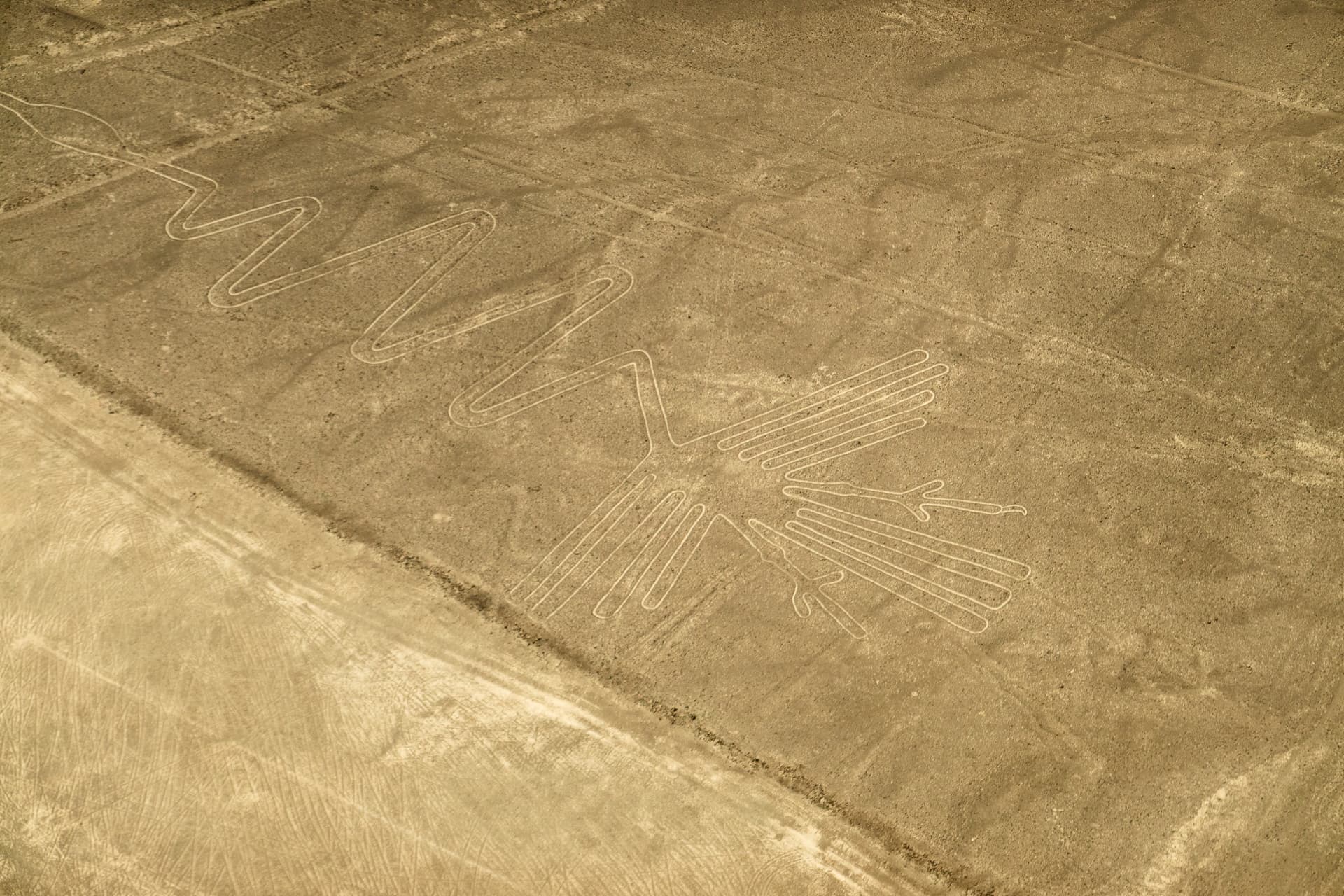
Image of Nasca - El Cóndor. Image source · CC-BY-SA-4.0
Visit essentials
A quick read before you go
- Duration
- Part of 30-35 minute flight.
- Access
- Nazca airport.
Overview
At one hundred and thirty-four metres, the Condor is one of the largest figurative geoglyphs in the Nazca corpus. Its outstretched wings and distinctive profile are unmistakable from the air. Some scholars have argued it may represent a chaucato (long-tailed mockingbird) rather than a condor, though the condor identification remains dominant.
The Andean condor is one of the most powerful symbols in South American cosmology, representing the upper world (Hanan Pacha) in the Inca tripartite division of the cosmos. For the Nazca people, the condor's ability to soar to extreme altitudes without visible effort may have symbolised the connection between human and divine realms. The condor geoglyph, drawn on the ground but addressed to the sky, embodies this vertical axis.
Why this place is sacred
The condor is the only creature that naturally occupies the perspective from which the Nazca Lines were meant to be seen. It soars above the pampa, looking down at the desert floor from the altitude at which the geoglyphs resolve into form. To draw a condor on the ground for the condor to see from above is an act of circular devotion — the image and its audience meeting at the same threshold between earth and sky.
Created as part of Nazca sacred landscape connected to sky worship and the upper world.
Created between 500 BC and 500 AD. Now part of UNESCO World Heritage Site.
Experience and orientation
The Condor's scale makes it one of the most impressive figures visible during scenic flights. Its wingspan stretches across the desert floor, and the pilot typically circles to give passengers a full view. The figure's proportions — broad wings tapering to defined feather tips — convey the power and grace of the living bird even at this enormous scale.
Let the wings anchor your perception first. The spread is extraordinary. Then notice how the figure sits within the desert: a creature of the sky, inscribed on the earth, visible only from the sky again.
Context and lineage
Part of Nazca cosmic and water worship.
Created by Nazca and Paracas cultures.
Paul Kosok
First aerial researcher
Maria Reiche
Conservator (1946-1998)
Traditions and practice
Ritual processions.
Conservation.
Contemplate the circularity of sky-creature drawn for the sky.
Nazca culture religion
HistoricalThe condor symbolises the upper world and divine connection.
Ritual processions and offerings.
Perspectives and open questions
The Condor embodies the vertical axis of Andean cosmology.
Scholarly perspective
Represents the upper world. Part of water worship landscape.
Living and traditional perspectives
The condor remains a powerful symbol in contemporary Andean cultures.
Alternative interpretations
Alternative theories lack support.
Open questions
Condor vs chaucato identification debated.
Plan your visit
Access and arrival
Nazca airport.
Nazca town.
Respectful visit
Sun protection.
From aircraft.
None.
Walking prohibited
Ground access prohibited.
Current practical details
Address
8V3F+2GF, Estudiantes 11350, Peru
Hours
Hours, fees, and access can change — verify on the official source before you travel. Practical details last checked Jun 2026.
Location
Map loads as you approach this section.
Pilgrim reflections
A portrait of encounter, not a score
Pilgrims describe what they felt, how present they could become, and whether the place would shape a journey. There are no stars and no ranking of traditions.
No reviewed reflections yet
The first pilgrims can help describe the character of being here.
Share a reflection
Available after an account-backed “Been there.” Every reflection is reviewed before publication.
Nearby sacred places
Explore other sacred places in the region. Proximity does not establish access or travel time; check each place’s guidance.


References
Sources consulted for this page. Source categories describe the publication, not a guarantee that every claim is verified. Traditional accounts and outside interpretations may differ.
- 01UNESCO Nasca and Palpa — UNESCOofficialOfficial listing
- 02Nazca Lines | Britannica — BritannicaencyclopediaMeasurements and context
- 03Nazca lines - Wikipedia — Wikipedia contributorsencyclopedia134m measurement
Share a photo
Help visitors recognize Nasca - El Cóndor. Every submission is reviewed before publication.