Pisac Incan Archaeological Complex
Sacred terraces shaped like a partridge, where the Intihuatana tethers the sun and ten thousand dead rest in cliff-face tombs
Understand sacred places, explore living traditions, and learn how to engage respectfully with Pilgrim Map.
Access has not been verified. Check current local guidance before planning a visit.
Pisac, Cusco, Peru
Read the sources
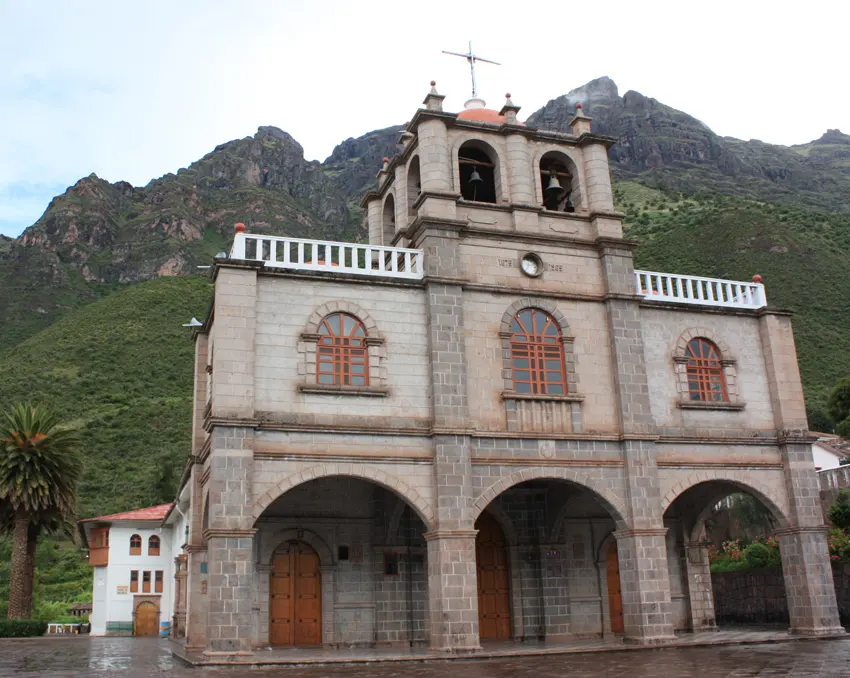
Image of Pisac Incan Archaeological Complex. Image source · CC-BY-SA-3.0
Visit essentials
A quick read before you go
- Duration
- Two to four hours for the archaeological site; additional time for the town market.
- Etiquette
- Approach Pisac with reverence for both its ceremonial functions and its role as a cemetery where…
Overview
Pisac is a partridge-shaped Inca complex extending approximately one kilometer along the ridge between the Kitamayu and Chongo rivers at 3,446–3,514 meters. That partridge form belongs to the animal-shaped Inca urban plans described for puma-shaped Cusco and perhaps another animal-shaped plan at Ollantaytambo. Its forty terraces supported potatoes, corn, and quinoa; its Intihuatana ordered astronomical ritual; its cliff burials carried funerary meaning; and more than twenty watchtowers facing Cusco joined sacred and defensive purpose.
Why this place is sacred
At Pisac, the thin places multiply. The Intihuatana stands at the center of one: the carved stone that catches the sun's first rays at solstice, when priests performed rituals to ensure the sun's return from its furthest wandering. To place your hands on this stone is to touch an instrument of cosmic connection, a tool for tethering the sun itself.
The cemetery carved into the cliffs creates another layer of thinness. Ten thousand dead once occupied chambers looking out over the valley they had worked in life. The boundary between living and dead was permeable to the Inca—ancestors were not gone but present, requiring offerings, influencing affairs, watching from their rock-cut tombs. Though Spanish looting emptied most chambers, the presence of those ten thousand persists in the empty spaces.
The terraces add agricultural sacredness to solar and funerary dimensions. These were not merely farms but offerings—each harvest dedicated, each planting ceremonial. The inverted triangle shape suggests meanings lost to modern interpretation but clearly important to those who built it.
The watchtowers that protected Cusco from this ridge remind visitors that sacred and strategic merged in Inca thought. The same heights that connected priests to the sun also connected warriors to the defense of the capital. Sacred geography was military geography; spiritual power and political power shared the same landscape.
Pisac's thinness is thus comprehensive: sun, death, agriculture, and defense all converge on this ridge, creating a place where multiple boundaries between worlds grew thin simultaneously.
Built as part of Pachacutec's imperial expansion, serving as agricultural center, solar observatory, cemetery for elite burials, and defensive position protecting Cusco.
From functioning Inca ceremonial and agricultural center through Spanish conquest and looting to modern archaeological park (established 1983). Cemetery destroyed but site preserved.
Experience and orientation
Pisac lies 32 kilometers from Cusco, often the first stop on Sacred Valley tours. The ruins wait 3.5 kilometers above the modern town, accessible by road or hiking trail. Choose the trail if fitness permits—the climb recreates the pilgrimage that Inca worshippers would have made.
The National Archaeological Park covers four square kilometers, divided into seven zones: Qantus Raqay, Qallaq'asa, Inca Qonqorina, Intiwatana, P'isaqa, Hospitalniyoc, and Kanchis Racay. Each served specific functions, from residential to ceremonial.
Begin with the Intihuatana sector, where the carved stone solar clock dominates. This 'sun tether' aligned with the sunrise during June solstice, marking the year's most important astronomical moment. Imagine priests gathered here as the first rays struck the carved surface, performing rituals that ensured the sun's continued journey. Let the stone speak of time measured in ways modern calendars cannot capture.
Move to the Temple of the Sun, built from massive stone blocks with the precision that characterizes Inca sacred architecture. The temple oriented toward astronomical events, connecting earthly worship to celestial cycles.
Find the burial chambers carved into the cliffs—empty now, after Spanish looting, but still testifying to the ten thousand dead who once rested here. These chambers faced east, toward the sunrise that daily renewed the world and, symbolically, renewed the dead.
Descend through the forty terraces, noting how the inverted triangle descends toward the valley. These were agricultural terraces, but agriculture was never merely utilitarian to the Inca. Each planting and harvest carried ceremonial weight.
Time permitting, explore the watchtowers that once protected Cusco. From these heights, the entire Sacred Valley unfolds below.
The archaeological site is located 3.5 km from Pisac town, at 3,300 meters. Access by vehicle or hiking trail. The famous Pisac market in town makes a complementary visit.
Context and lineage
Before the Inca, the Ayarmaka and Pinaguas peoples occupied the slopes between the Vilcanota River's tributaries, around the 1200s. When Pachacutec expanded the Inca empire in the mid-15th century, he incorporated this area into his vision, ordering the construction of what would become one of the most important sites in the Sacred Valley.
The name Pisac derives from pisaca, the Quechua word for partridge—the Inca liked to shape their most important cities into animal forms, and Pisac originally took the shape of this bird. The geometry served both symbolic and practical purposes: the partridge shape encoded meaning while the terraces maximized agricultural production.
The Intihuatana at the site's heart was carved with precision to serve as solar observatory and ceremonial focus. During solstices and equinoxes, the stone aligned with celestial events, allowing priests to mark time and conduct rituals that bound the empire to cosmic cycles.
The cliff-face cemetery held elite burials—over 10,000 mummies accompanied by offerings of ceramics, textiles, and precious objects. The Spanish conquest brought destruction: looters emptied the chambers, scattering mummies and offerings in search of gold. What remains are the empty tombs and the memory of desecration.
In 1983, the Pisac National Archaeological Park was established to recognize and protect what survived. The site now forms part of the Boleto Turístico circuit that includes other Sacred Valley locations.
Pre-Inca occupation by Ayarmaka and Pinaguas peoples. Inca imperial construction by Pachacutec. Modern archaeological park management since 1983.
Pachacutec (Inca Yupanqui)
Builder
Traditions and practice
Sun worship at Temple of the Sun. Astronomical observations and ceremonies using the Intihuatana, especially at June solstice. Agricultural rituals on sacred terraces. Elite burial practices with offerings for the afterlife.
The site functions as an archaeological park for education and reflection. The Pisac market in town maintains traditional craft and agricultural commerce. No active ceremonial use of the Intihuatana.
Visit the Intihuatana and contemplate its astronomical function. Explore the burial chambers to honor those who once rested there. Walk the terraces to understand the integration of agriculture and ceremony. Visit the town market for contemporary connection to Andean traditions.
Inca Solar Religion
HistoricalThe Intihuatana at Pisac served as one of the empire's solar observatories, marking solstices and equinoxes through precise stone carving aligned with celestial events.
Solar observation, solstice ceremonies, sacrifices to the sun god. Specific practices inferred from archaeological evidence and Spanish chronicles.
Perspectives and open questions
Pisac can be understood as an astronomical observatory where priests tethered the sun, as the largest Inca cemetery, as an agricultural marvel demonstrating terrace farming at altitude, or as a defensive position protecting the approaches to Cusco.
Scholarly perspective
Archaeological research has documented the site's multiple functions while raising questions about the specific ceremonies conducted at the Intihuatana and the social organization of elite burial practices.
Living and traditional perspectives
Within Inca cosmology, Pisac integrated solar observation, agricultural production, ancestor veneration, and territorial defense—dimensions that modern Western thought separates but Inca practice unified.
Alternative interpretations
The destroyed cemetery invites reflection on colonial violence and the loss of knowledge that accompanied the looting of sacred sites.
Open questions
The specific ceremonies conducted at the Intihuatana, the meanings encoded in the partridge shape, and the identities of those buried in the cliff chambers remain largely unknown.
Plan your visit
Access and arrival
Accommodations available in Pisac town. Full range in Cusco and throughout the Sacred Valley.
Respectful visit
Comfortable hiking clothing and sturdy shoes. Sun protection essential at altitude. Layers for temperature changes.
Photography permitted throughout the site. Be respectful at burial chamber areas.
No offerings at archaeological structures. Support local economy through market purchases.
Do not touch or climb on the Intihuatana or other carved stones. Stay on marked paths. Purchase Boleto Turístico for entry.
The site is extensive; allow several hours and pace yourself at altitude (3,300 meters).
Current practical details
Address
H5R4+X8X, Pisac 08105, Peru
Hours
Hours, fees, and access can change — verify on the official source before you travel. Practical details last checked Jun 2026.
Location
Map loads as you approach this section.
Pilgrim reflections
A portrait of encounter, not a score
Pilgrims describe what they felt, how present they could become, and whether the place would shape a journey. There are no stars and no ranking of traditions.
No reviewed reflections yet
The first pilgrims can help describe the character of being here.
Share a reflection
Available after an account-backed “Been there.” Every reflection is reviewed before publication.
Nearby sacred places
Explore other sacred places in the region. Proximity does not establish access or travel time; check each place’s guidance.


References
Sources consulted for this page. Source categories describe the publication, not a guarantee that every claim is verified. Traditional accounts and outside interpretations may differ.
- 01Inca complex at Písac - WikipediaSource context
- 02The Inca site of PisacSource context
- 03Pisac Archaeological ParkSource context
- 04Exploring Pisac Ruins in the Sacred Valley of the IncasSource context
- 05Pisac: Andean Treasures, Inca Ruins, and Living CultureSource context
- 06Pisac Archaeological Site: Inca Ruins in the Sacred ValleySource context
Share a photo
Help visitors recognize Pisac Incan Archaeological Complex. Every submission is reviewed before publication.