Ollantaytambo Archeological Site
The Living Inca City—where colossal sun temple stones meet a town that never stopped being Inca
Understand sacred places, explore living traditions, and learn how to engage respectfully with Pilgrim Map.
Access has not been verified. Check current local guidance before planning a visit.
Compone, Cusco, Peru
Read the sources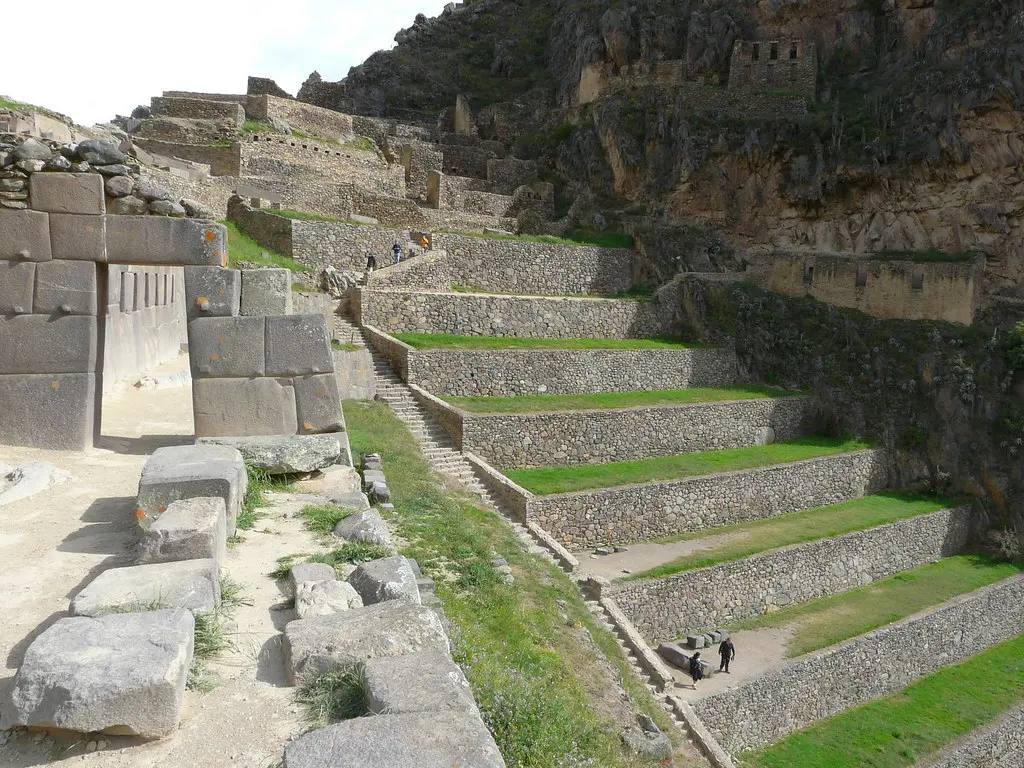
Image of Ollantaytambo Archeological Site. Image source
Visit essentials
A quick read before you go
- Duration
- Two to four hours for the archaeological site; additional time for exploring the town.
- Etiquette
- Remember that Ollantaytambo is both archaeological site and living community.
Overview
Ollantaytambo—from the Quechua Ullantaytampu—stands at 2,792 meters in the Sacred Valley, approximately 72 kilometers northwest of Cusco. Around the mid-15th century, Inca emperor Pachacuti conquered and razed a pre-existing settlement, then rebuilt its town and temple complex as his personal estate in one of Inca history's most ambitious construction projects.
Terraces rise from the valley floor, with approximately 200 steps reaching the Temple of the Sun. Six colossal rectangular blocks stand there, the largest over two meters wide and four meters high. Quarried from Cachicata mountain across the valley and moved by ramps and slides, the monoliths and temple remained unfinished when conquest interrupted construction.
Though commonly called a 'fortress,' Ollantaytambo was primarily religious. The Temple of the Sun honored Inti; fountains and channels expressed Inca reverence for water as a sacred element; and carved walls, stairs, and niches served ceremony. In January 1537, Manco Inca used the same natural defenses to defeat Hernando Pizarro's forces, one of the few Inca victories against Spanish arms. Though temporary, it consecrated the site as a place of resistance.
Below, residents still inhabit buildings on original Inca foundations, follow the original street plan, and use ancient waterways. Ollantaytambo remains not only an archaeological site but a living Inca city.
Why this place is sacred
Most Inca sites are ruins. Ollantaytambo is a pause in time that never fully ended. The town below the archaeological zone preserves the Inca layout because it was never abandoned—people continued living in the original buildings, walking the original streets, drinking from the original waterways. To walk through Ollantaytambo's narrow alleys is to occupy Inca space, not merely to view it.
This continuity creates a thin place of unusual character. The sacred has not departed; it simply waits. The Temple of the Sun's six massive blocks stand incomplete not because builders tired but because conquest interrupted the offering. Every stone placed was meant to honor Inti; every stone not placed remains an unfinished prayer.
The 1537 battle adds another dimension. When Manco Inca flooded the fields below the terraces and used the high ground to defeat Hernando Pizarro, he transformed Ollantaytambo from temple to sanctuary. The Spanish would later prevail, but for one moment, the sacred site proved defensible. That memory persists in the stones.
The water channels that still flow through site and town carry accumulated blessing. The Inca understood water as sacred—its movement through channels was not merely irrigation but consecration. These channels still function, still move water from sacred springs through ancient courses. To place your hands in that water is to touch continuity.
Ollantaytambo's thinness is thus less about dramatic transcendence than about persistence—the slow accumulation of presence in a place that simply never stopped being Inca.
Rebuilt by Pachacuti as part of his personal estate, with religious functions centered on the Temple of the Sun. The site also served as a major storage depot for ceremonial objects and precious materials.
From Pachacuti's estate through brief role as Inca resistance capital (1537) to continuous habitation. The temple was never completed; the town never abandoned.
Experience and orientation
Arrive in Ollantaytambo and find yourself already within Inca space. The town's grid of narrow streets follows the original plan; the buildings rise from Inca foundations. Water flows through channels cut five centuries ago. This is not the approach to ruins but entry into a living pattern.
Begin at the base of the terraces and look up. The scale becomes apparent: this was construction intended to honor gods, not merely house humans. Begin the ascent of approximately 200 steps, pacing yourself at 2,792 meters elevation. The terraces served agricultural purposes—this was one of the empire's great food production sites—but they also created a ceremonial procession from valley floor to temple summit.
At the top, the six colossal blocks of the Temple of the Sun dominate. Each is over two meters wide and four meters high, fitted with the precision that makes Inca stonework unmistakable. These were quarried from Cachicata mountain across the valley and transported using an elaborate system of ramps and slides that scholars are still working to understand. The incomplete state speaks volumes: this was work in progress when the empire fell.
Explore the fountains and water channels that brought sacred water to the summit. Find the carved niches that held offerings. Look for the solar alignments that connected architecture to astronomical observation.
Descend and spend time in the town itself. Walk the streets that have been walked since Pachacuti's time. Note how modern life unfolds within ancient structures. The waterways still function; the layout still organizes daily movement. This is what continuity looks like.
The archaeological site rises above the town of Ollantaytambo in the Urubamba Province, Sacred Valley. The train station for Machu Picchu departures is located here, making Ollantaytambo a common stopping point on Sacred Valley itineraries.
Context and lineage
Before Pachacuti, a settlement existed at this strategic location where the Urubamba Valley narrows. Around the mid-15th century, the great Inca emperor conquered this area and razed the existing town. What he built in its place was one of the most ambitious undertakings in Inca history.
Pachacuti incorporated the town and temple complex into his personal estate. The terraces were designed for maximum agricultural production in the Sacred Valley's fertile soil. The Temple of the Sun at the summit would honor Inti with a scale appropriate to imperial devotion. Quarries at Cachicata produced the rose rhyolite blocks that would form the temple walls.
The construction employed thousands of workers and an elaborate transportation system. Blocks weighing up to 50 tons moved from quarry to building site using ramps, slides, and carefully engineered routes. The work was still underway when the Spanish arrived.
In 1537, Manco Inca—leading the Inca resistance from Ollantaytambo—faced Hernando Pizarro's forces. Using the terrain brilliantly, flooding the approaches and defending from the terraces, Manco achieved what few Inca commanders managed: victory against the Spanish. The triumph was temporary—Manco eventually retreated to Vilcabamba—but it marked Ollantaytambo as a site of successful resistance.
Unlike other Inca towns abandoned after conquest, Ollantaytambo's inhabitants never left. The Spanish never rebuilt the town in their colonial style. The Inca patterns simply continued, modified but not replaced, until the present day.
Inca imperial, specifically Pachacuti's personal estate. Continuous habitation through colonial and republican periods to present. The town remains home to descendants who maintain Inca customs.
Pachacuti (Inca Yupanqui)
Builder
Manco Inca
Defender
Traditions and practice
Sun worship at Temple of the Sun. Water veneration through sacred fountains and channels. Agricultural rituals on terraces. Storage of sacred textiles, ceremonial objects, and precious materials.
Town inhabitants continue practices inherited from Inca ancestors. Modern Inti Raymi (Festival of the Sun) celebrations occur in June. The site receives visitors as part of Sacred Valley tourism while maintaining its living character.
Visit both the archaeological site and the living town. Spend time in the town's streets and alleys to experience continuity rather than merely observing ruins. If possible, visit during Inti Raymi celebrations.
Inca Imperial Religion / Sun Worship
ActiveThe Temple of the Sun at Ollantaytambo served worship of Inti. Modern Inti Raymi celebrations continue this tradition, and town inhabitants maintain customs inherited from Inca ancestors.
Sun worship at temple summit. Water veneration through fountains and channels. Agricultural rituals. Modern Inti Raymi celebrations.
Perspectives and open questions
Ollantaytambo can be understood as Pachacuti's interrupted masterwork, as a site of rare Inca military victory, as the only continuously inhabited Inca town, or as a demonstration of how water engineering served sacred purposes.
Scholarly perspective
Archaeological research has revealed the sophisticated logistics of construction—quarrying, transportation, and fitting of massive blocks—while raising questions about the cosmological significance of the unfinished temple.
Living and traditional perspectives
Within Inca tradition, Ollantaytambo embodied the integration of agricultural productivity, water reverence, and sun worship that characterized imperial religion. The continuity of habitation suggests ongoing connection to ancestral patterns.
Alternative interpretations
The unfinished temple invites meditation on what was lost with conquest—not just political power but a relationship between architecture and cosmos that was being actively created when history intervened.
Open questions
The full intended form of the Temple of the Sun remains unknown. How the massive blocks were transported is still debated. The extent to which current inhabitants maintain specifically Inca religious practices is not fully documented.
Plan your visit
Access and arrival
Hotels and hostels available in Ollantaytambo town. Full range of accommodations in Cusco and throughout the Sacred Valley.
Respectful visit
Comfortable clothing suitable for climbing and altitude. Sturdy shoes for the terraces and cobblestone streets.
Photography welcomed at the archaeological site. In the town, be respectful of residents—ask permission before photographing people or private spaces.
No offerings at archaeological structures. Support local economy through purchases and services.
Stay on designated paths at the archaeological site. Respect private property in the town. Purchase the Boleto Turístico for entry.
The town is a living community, not merely a tourist attraction. Respect residents' privacy. The archaeological site's 200 steps can be challenging at altitude; pace yourself.
Current practical details
Address
PPVM+6J7, Ollantaytambo 08676, Peru
Phone
Hours
Hours, fees, and access can change — verify on the official source before you travel. Practical details last checked Jun 2026.
Location
Map loads as you approach this section.
Pilgrim reflections
A portrait of encounter, not a score
Pilgrims describe what they felt, how present they could become, and whether the place would shape a journey. There are no stars and no ranking of traditions.
No reviewed reflections yet
The first pilgrims can help describe the character of being here.
Share a reflection
Available after an account-backed “Been there.” Every reflection is reviewed before publication.
Nearby sacred places
Explore other sacred places in the region. Proximity does not establish access or travel time; check each place’s guidance.

References
Sources consulted for this page. Source categories describe the publication, not a guarantee that every claim is verified. Traditional accounts and outside interpretations may differ.
- 01Ollantaytambo - WikipediaSource context
- 02Ollantaytambo Ruins - The Only Peru GuideSource context
- 03The archaeological site of Ollantaytambo in the Sacred ValleySource context
- 04Archaeological Fortress of OllantaytamboSource context
- 05Archaeological Park OllantaytamboSource context
- 06Ollantaytambo Fortress, PeruSource context
Photo gallery
3 curated photos
Share a photo
Help visitors recognize Ollantaytambo Archeological Site. Every submission is reviewed before publication.