Nasca - El Astronauta
Part ofLíneas de Nazca
A humanoid figure on a hillside — the only Nazca geoglyph that faces the horizontal world
Understand sacred places, explore living traditions, and learn how to engage respectfully with Pilgrim Map.
Access has not been verified. Check current local guidance before planning a visit.
Nazca, Ica, Peru
Read the sources
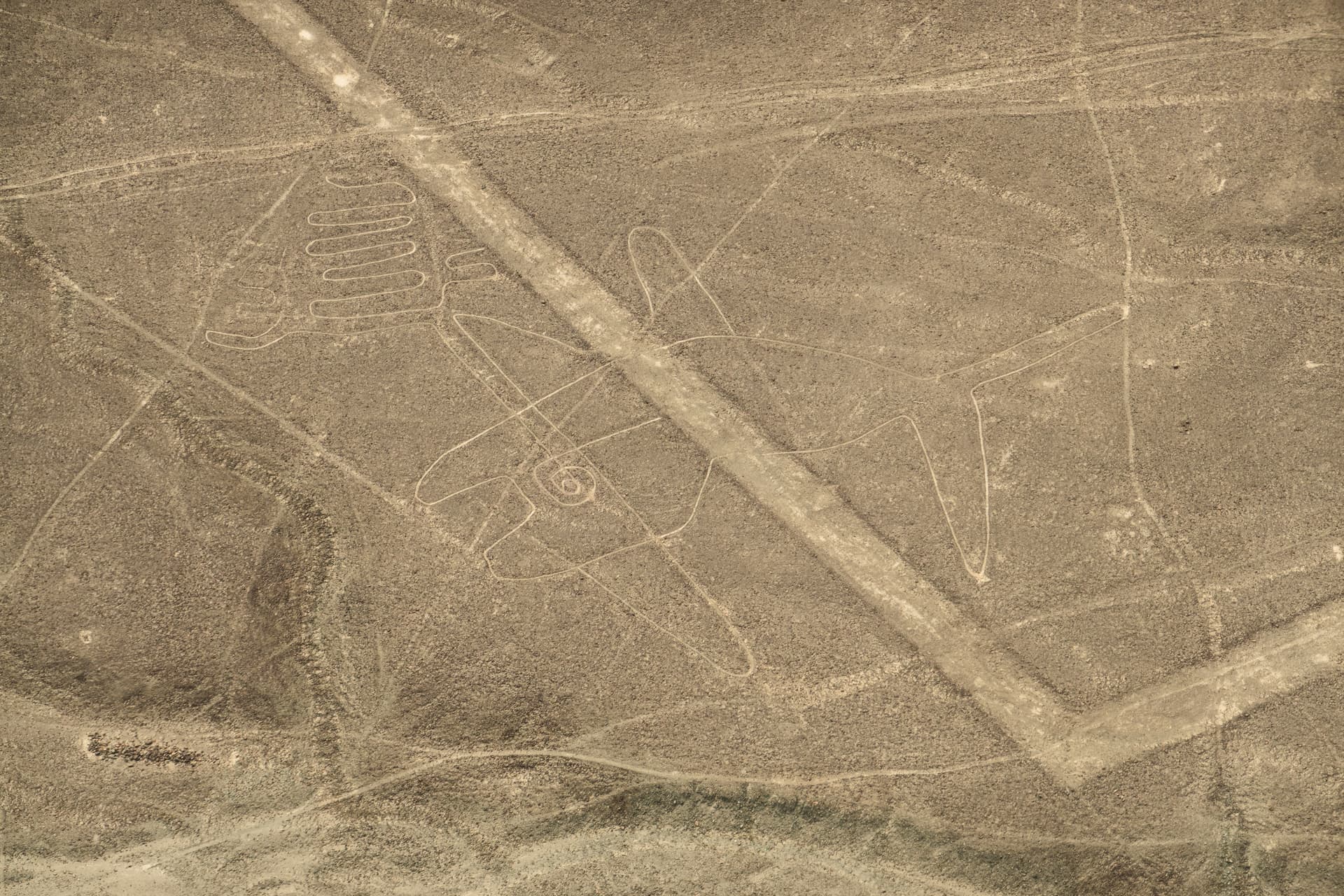
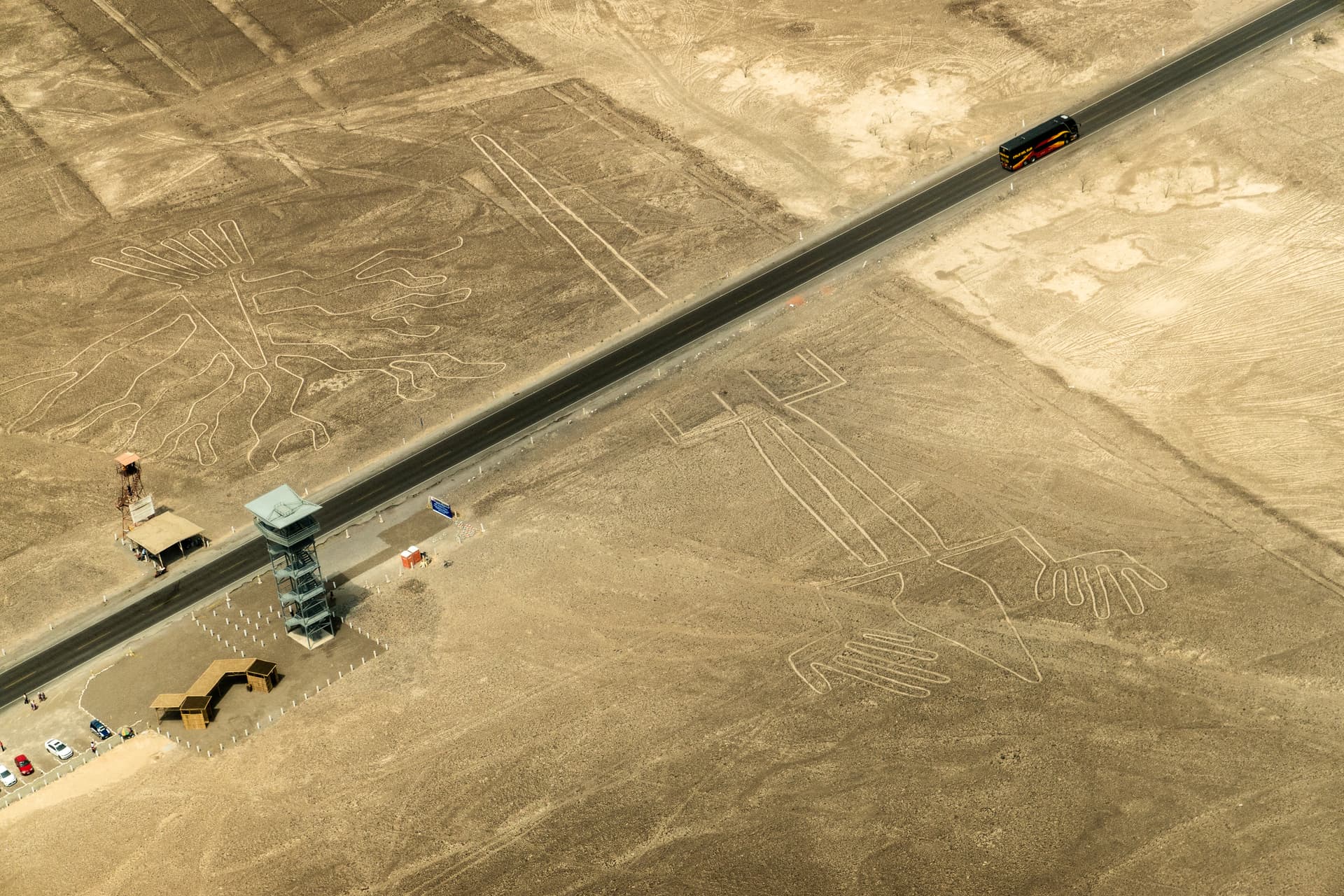
Image of Nasca - El Astronauta. Image source · CC-BY-SA-4.0
Visit essentials
A quick read before you go
- Duration
- Part of flight.
- Access
- Nazca airport; ground viewing from road.
Overview
The Astronaut is a humanoid figure etched into a hillside rather than the flat desert floor, making it unusual among Nazca geoglyphs. Its round head and simple body have drawn comparisons to a space-suited figure, though scholars generally interpret it as a fisherman, owl-man, or ceremonial figure. It is one of the few Nazca geoglyphs partially visible from ground level.
The figure's position on a hillside — visible from the ground, unlike most geoglyphs — suggests it may have served a different function from the flat-desert figures. Its popular name derives from alternative theories about the lines but has no scholarly support. Whatever it depicts — fisherman, priest, guardian — it stands at the edge of the pampa, the most human presence among the Nazca geoglyphs.
Why this place is sacred
The Astronaut is the most human figure among the Nazca geoglyphs, and therefore the most unsettling. A round head, raised arms, simple legs — it could be anyone. Its position on a hillside means it looks outward rather than upward, the only figure that seems to address the horizontal world rather than the sky.
Whatever it depicts — fisherman, priest, guardian — it stands at the edge of the pampa like a sentinel, watching the desert where the other figures lie flat and silent.
Function debated. Hillside position suggests different purpose from flat-desert geoglyphs.
Created between 500 BC and 500 AD. Became famous under the name 'Astronaut' through popular culture.
Experience and orientation
Unlike most Nazca geoglyphs, the Astronaut is partially visible from ground level due to its hillside position. It is also visible during scenic flights. The figure's simplicity — a round head, extended arms, boot-like feet — makes it the most immediately human presence among the geoglyphs.
Note how the figure differs from flat-desert geoglyphs. It occupies a slope, facing outward. The Astronaut asks the most basic question the Nazca Lines pose: who was this meant for?
Context and lineage
Identity debated.
Created by Nazca and Paracas cultures.
Paul Kosok
First aerial researcher
Maria Reiche
Conservator
Traditions and practice
Part of ritual landscape.
Conservation.
Consider what it means to be the only human figure among animals.
Nazca culture religion
HistoricalThe only humanoid figure among major geoglyphs.
Ritual practices.
Perspectives and open questions
The most debated figure in the Nazca corpus.
Scholarly perspective
Likely fisherman or ceremonial figure.
Living and traditional perspectives
No living tradition.
Alternative interpretations
Ancient astronaut theories popular but unsupported.
Open questions
True identity remains open.
Plan your visit
Access and arrival
Nazca airport; ground viewing from road.
Nazca town.
Respectful visit
Sun protection.
From aircraft and distance.
None.
Do not approach hillside
Ground access to geoglyph prohibited.
Current practical details
Address
Peru
Hours, fees, and access can change — verify on the official source before you travel. Practical details last checked Jun 2026.
Location
Map loads as you approach this section.
Pilgrim reflections
A portrait of encounter, not a score
Pilgrims describe what they felt, how present they could become, and whether the place would shape a journey. There are no stars and no ranking of traditions.
No reviewed reflections yet
The first pilgrims can help describe the character of being here.
Share a reflection
Available after an account-backed “Been there.” Every reflection is reviewed before publication.
Nearby sacred places
Explore other sacred places in the region. Proximity does not establish access or travel time; check each place’s guidance.


References
Sources consulted for this page. Source categories describe the publication, not a guarantee that every claim is verified. Traditional accounts and outside interpretations may differ.
- 01Nazca lines - Wikipedia — Wikipedia contributorsencyclopediaMultiple identifications noted
- 02SA Vacations - Nazca Geoglyphs — SA VacationsguideFisherman interpretation
Share a photo
Help visitors recognize Nasca - El Astronauta. Every submission is reviewed before publication.