Mt. Olympus
The throne of Zeus, where mythology's greatest mountain meets the mortal world
Understand sacred places, explore living traditions, and learn how to engage respectfully with Pilgrim Map.
Access has not been verified. Check current local guidance before planning a visit.
Dion - Olympos Municipality, Thessaly, Greece
Read the sources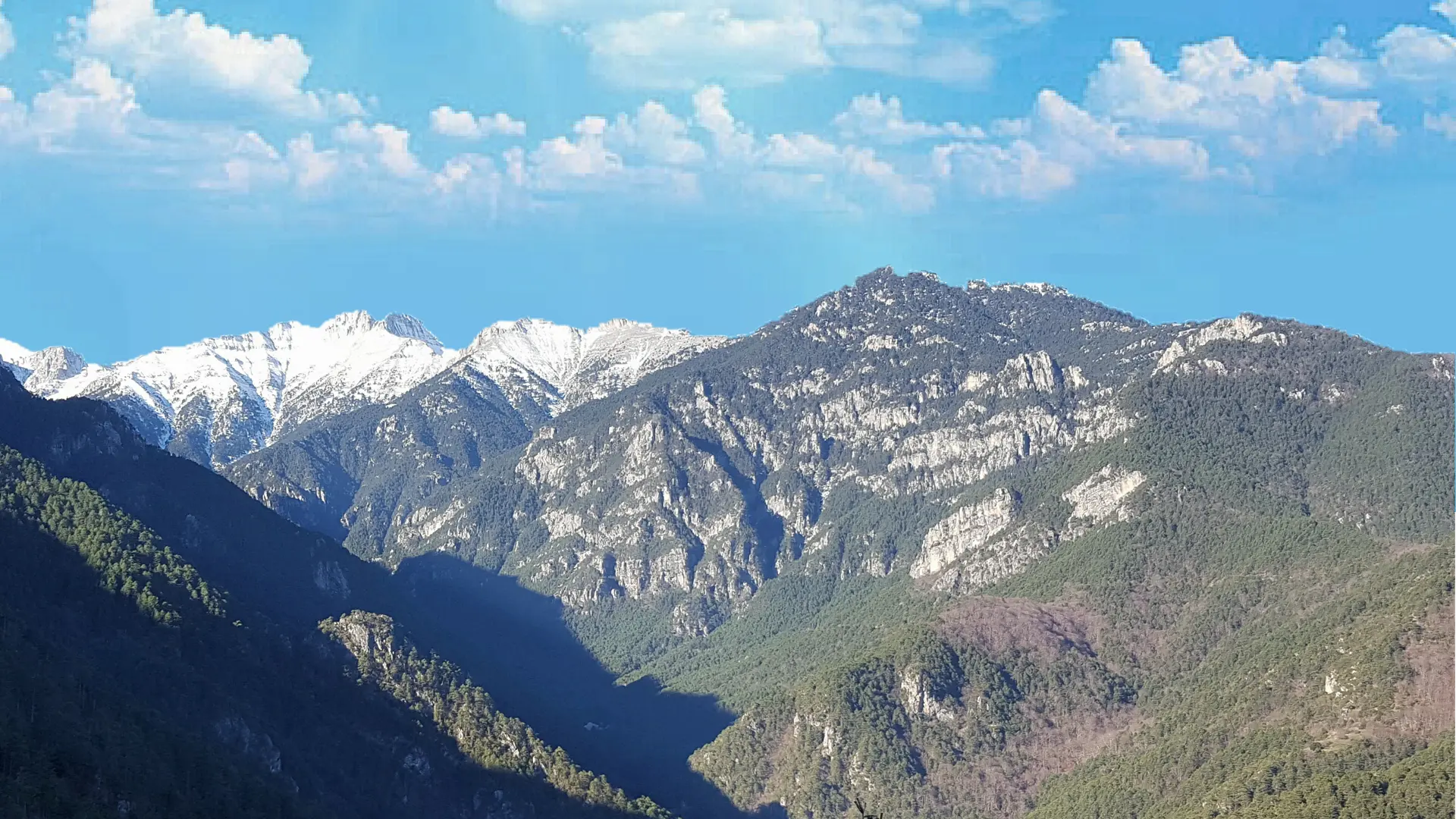
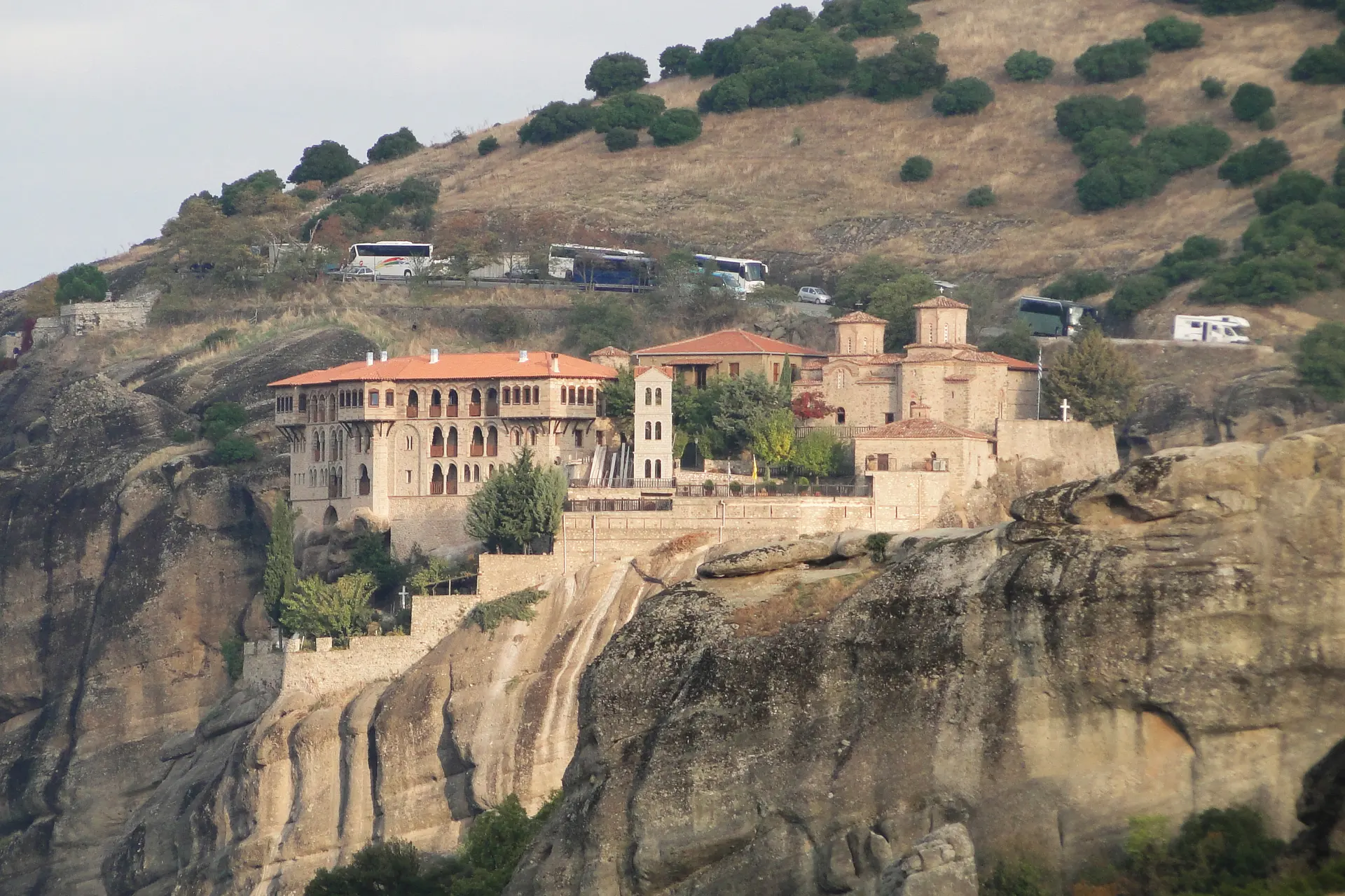
Image of Mt. Olympus. Image source · CC-BY-SA-3.0
Visit essentials
A quick read before you go
- Duration
- Summit climb: Two days minimum.
- Access
- Base town: Litochoro, 100 km south of Thessaloniki on the E75 motorway.
Overview
Mount Olympus rises abruptly from Pieria's coastal lowlands to 2,917 meters, carrying ancient Greek understandings of the divine. Zeus held court here; the Twelve Olympians feasted in halls Homer described as untouched by wind, rain, or snow; the Muses sang on the slopes; and storms forged thunderbolts.
Organized worship has receded: Dion's temples are ruins and the Agios Antonios summit sanctuary survives as archaeological fragments. Yet clouds still gather dramatically, Stefani resembles a throne, and violent storms make Zeus traditions feel like meteorology seen through other eyes.
Olympus is now Greece's first national park, a UNESCO Biosphere Reserve, and a World Heritage Tentative List site. More than 1,700 plant species grow here, including unique endemics. From Litochoro, the 'City of Gods,' the summit route passes ancient forests and alpine meadows to Mytikas's exposed rock, offering a mountain pilgrimage to anyone willing to walk.
Why this place is sacred
The thinness of Mount Olympus operates on a scale different from most sacred sites. This is not a monastery where centuries of prayer have saturated the walls, or a spring where the water carries local legend. This is a landscape that shaped an entire civilization's theology. For the ancient Greeks, the mountain was not a symbol of the divine — it was the divine address. The gods did not live somewhere like Olympus. They lived on Olympus.
The mountain cooperates with the mythology. Olympus generates its own weather. Clouds form around the summit with startling regularity, sometimes obscuring the peaks entirely, sometimes parting to reveal them with theatrical precision. Electrical storms gather and discharge with a frequency and intensity that, to a pre-scientific mind, would require no interpretation beyond the obvious: someone up there is angry, or celebrating, or making a point.
The transition from green forest slopes to exposed grey stone feels like crossing a boundary — from the realm of growing things to a realm that belongs to something else entirely.
The Stefani peak is the physical anchor for much of this feeling. Known as the Throne of Zeus, it rises as a near-vertical crown of rock just south of Mytikas. Its profile genuinely resembles a throne. Standing on Mytikas and looking across at Stefani, it is difficult not to see what the ancients saw — a seat built for something larger than human.
Olympus is the highest point in Greece. In a landscape of islands and peninsulas where the sea is never far, this mountain's vertical reach creates a unique relationship with the sky. The ancients understood the summit's proximity to the heavens literally. We may understand it differently, but the experience of standing at 2,917 meters with the whole of Thessaly and the Aegean spread below still carries an unmistakable charge.
Mount Olympus served as the axis mundi of ancient Greek religion — the cosmic pillar connecting the earthly and divine realms. It was understood as the literal dwelling place of the Twelve Olympian Gods, with Zeus presiding from his throne at the summit.
The sacred city of Dion at the mountain's base functioned as the primary site of organized worship, hosting the Olympia of Zeus festival — a nine-day celebration with theatrical performances and athletic competitions honoring Zeus and the nine Muses. An open-air sanctuary on the summit of Agios Antonios (south of the highest peak Mytikas) provided a place for offerings at the gods' own doorstep.
The organized worship of the Olympian gods at the mountain faded with the Christianization of the Roman Empire in the 4th century. The temples at Dion fell into ruin, and early Christian basilicas were built over or near the pagan sanctuaries. The mountain itself, however, never lost its hold on the Greek imagination.
A chapel to Saint Anthony (Agios Antonios) was eventually built near the ancient summit sanctuary, continuing the tradition of sacred presence at the heights in a new theological framework. The Monastery of Saint Dionysios, founded in the 16th century at 820 meters on the eastern slope, maintained a Christian monastic presence on the mountain until it was destroyed and rebuilt multiple times.
In 1913, Christos Kakkalos — a local hunter and guide — led the first confirmed ascent to the summit of Mytikas, accompanied by Swiss photographers Frederic Boissonnas and Daniel Baud-Bovy. This event transformed Olympus from a mythological abstraction into a physical destination. In 1938, Greece declared it the country's first national park. In 1981, UNESCO designated it a Biosphere Reserve.
The mountain now stands on the UNESCO Tentative List for World Heritage status, recognized not only for its natural significance but for its incomparable role in the cultural imagination of Western civilization.
Experience and orientation
The experience of Olympus begins in Litochoro, whose name means 'City of Gods.' It is a town that lives in the mountain's shadow, oriented toward the massif that fills the western sky. From here, the road climbs to Prionia at 1,100 meters, where the forest trail begins and the driving ends.
The trail from Prionia to the Spilios Agapitos refuge at 2,100 meters takes roughly three hours through one of the most beautiful forests in Greece. Beech, black pine, and Bosnian pine create a canopy that filters light into green-gold columns. The path climbs steadily through switchbacks. The air cools. The trees thin. At the refuge, forest gives way to alpine meadows and the first clear views of the summit zone.
The second day begins before dawn. The trail climbs above the treeline into an increasingly stark landscape of scree, rock, and sky. The Zonaria couloir — a steep gully of loose rock — leads to a ridge where the route narrows and exposure increases. The final approach to Mytikas involves a Class 3 scramble: hands on rock, route-finding through marked sections, a few moves that require both confidence and care. This is not a hiking trail.
It is a mountain climb.
On the summit, the reward is absolute. Views extend in every direction: east to the Aegean, north toward Thessaloniki, south across the Thessalian plain, west to the peaks of Pindus. Stefani — the Throne of Zeus — rises just across the gap, its crown-like profile now at eye level. The clarity of the air at this altitude produces a luminosity that feels almost architectural, as though the sky itself has structure.
For those who do not climb, the archaeological site of Dion at the mountain's base offers a different but complementary encounter. Walking among the foundations of Zeus's temple, the sanctuary of Demeter, the theater where the Olympia festival was performed — with the mountain rising directly behind — you stand where Alexander the Great stood before marching to conquer the known world.
Begin at Litochoro with full services and mountain guides. Drive or taxi to Prionia for the trailhead. The summit climb is a two-day undertaking with an overnight at Spilios Agapitos refuge (reservation essential in summer). The Mytikas scramble requires good fitness, hiking boots, layers, and comfort with exposed rock. If the scramble is beyond your experience, the Skolio summit (2,911 meters) is reachable without scrambling and offers nearly identical views.
Carry water, sun protection, and rain gear regardless of forecast — the mountain makes its own weather. Start the summit day before dawn to avoid afternoon thunderstorms, which are common and dangerous above the treeline. Treat the ascent as the ancients would have understood it: an approach to something greater than yourself.
Context and lineage
The origin of Olympus as a sacred mountain reaches beyond recorded history into the Mycenaean period and likely earlier. The mountain's mythology begins with the Titanomachy — the cosmic war in which the younger Olympian gods, led by Zeus, overthrew the Titans who had ruled the universe. After their victory, the Olympians established their court on Mount Olympus, with Zeus as king.
Homer's descriptions in the Iliad and Odyssey fixed the mountain's place in the Western imagination. He described the gods' dwelling as a place where 'it is not shaken by wind nor ever wet with rain, nor does snow fall upon it, but the air is outspread clear and cloudless, and over it hovers a radiant whiteness.'
This paradox — a mountain known for its violent storms described as a place of eternal calm — suggests that the poets understood Olympus as existing on two planes simultaneously: the physical peak where weather raged, and the metaphysical summit where the gods lived above all weather.
The sacred city of Dion, at the mountain's northeastern base, was the primary site of organized worship. Established by at least the 5th century BC as the sacred city of the ancient Macedonians, Dion hosted the Olympia of Zeus — a nine-day festival honoring Zeus and the nine Muses with theatrical performances, athletic competitions, and sacrifice.
King Archelaus of Macedon reorganized the festival in the late 5th century BC, and it continued for centuries as one of the great religious celebrations of the ancient Greek world.
The religious lineage of Mount Olympus begins with pre-Greek traditions likely associating the mountain with sky deities. The Mycenaean Greeks formalized Zeus worship, and the classical period codified the Twelve Olympians as the mountain's divine inhabitants. Dion served as the principal worship center from at least the 5th century BC through the Hellenistic period, incorporating temples to Zeus, Demeter, Isis, and Asclepius.
With Christianization, the pagan sanctuaries fell silent, but the mountain's sacred aura proved more durable than any single theology. The chapel of Agios Antonios and the Monastery of Saint Dionysios continued the pattern of consecrating the heights. In the 20th century, the Hellenic polytheist revival reclaimed Olympus as their holiest site, holding occasional ceremonies that seek to restore the ancient relationship between mountain and worshipper.
Christos Kakkalos
A local hunter and mountain guide from Litochoro who led the first confirmed ascent to the summit of Mytikas on August 2, 1913, alongside Swiss photographer Frederic Boissonnas and writer Daniel Baud-Bovy. Kakkalos transformed Olympus from an unclimbed mythological throne into a destination reachable by human effort. The mountain refuge at 2,650 meters bears his name.
Zeus
King of the Olympian gods and lord of Mount Olympus. In Greek mythology, Zeus defeated the Titans and established his throne on the mountain's summit, from which he governed the cosmos, hurled thunderbolts, and presided over the council of the Twelve Olympians.
Alexander the Great
King of Macedon who sacrificed at the sanctuary of Zeus at Dion in 334 BC before crossing into Asia on his campaign of conquest. His offerings at the mountain's base, seeking divine favor before the greatest military campaign of the ancient world, affirmed Olympus's role as the supreme sacred site of Macedonian and Greek religion.
Homer
The poet whose descriptions in the Iliad and Odyssey established Olympus as the paradigmatic divine mountain of Western literature. Homer's depiction of the gods' palace — serene above the storms — fixed the mountain's dual identity as both a physical peak and a metaphysical threshold.
King Archelaus of Macedon
Reorganized the Olympia of Zeus festival at Dion in the late 5th century BC, elevating it to one of the great religious and cultural celebrations of the Greek world. His patronage ensured that the mountain's sacred city became a center of theatrical and athletic competition alongside its ritual function.
Traditions and practice
The traditional practices associated with Mount Olympus were centered at Dion rather than on the summit itself. The Olympia of Zeus festival was the mountain's principal religious observance — a nine-day celebration combining sacrifice to Zeus with theatrical performances honoring the Muses, athletic competitions, and communal feasting. The festival drew participants from across the Macedonian kingdom and beyond, making Dion a rival to Olympia and Delphi as a center of Greek religious life.
At the summit, the open-air sanctuary on Agios Antonios received offerings and sacrifices. Archaeological finds date primarily to the Hellenistic period and include bronze coins, pottery fragments, and dedicatory inscriptions. Whether worshippers climbed to the summit regularly or reserved the ascent for special occasions remains debated.
Alexander the Great's sacrifice at Dion before his Asian campaign in 334 BC represents the most historically significant single act of worship associated with the mountain. By making offerings to Zeus at the foot of Olympus before setting out to conquer the Persian Empire, Alexander sought to align his ambition with the highest divine authority available to the Greek world.
The primary contemporary engagement with Mount Olympus is the summit climb — a two-day hike that functions, for many who undertake it, as a secular pilgrimage. The physical effort, the passage through distinct ecological zones, and the arrival at the highest point in Greece create an experience that carries transformative weight regardless of theological framework.
Modern Hellenic polytheist groups (Hellenismos) consider Olympus the holiest site of their tradition and occasionally hold ceremonies on the mountain through hymns, offerings, and invocations. The movement remains small but represents the only organized effort to return worship to the mountain in a form continuous with its original sacred purpose. The chapel of Agios Antonios on the summit ridge maintains an Orthodox Christian presence.
The archaeological site and museum at Dion offer visitors an encounter with the mountain's worship history through excavated temples, theaters, and mosaic floors.
Treat the summit climb as a contemplative journey rather than an athletic goal. Begin each day's walking in silence, allowing the sounds of the mountain — wind, birdsong, water, rockfall — to establish the tone. At the Spilios Agapitos refuge the evening before the summit attempt, sit outside as the light fades and watch the summit zone darken against the sky. This is the approach: you are walking toward something.
On the summit, take ten minutes before the descent to simply be present. Look at the Stefani peak — the Throne of Zeus — and consider what it meant for an entire civilization to believe that the ruler of the universe sat there. Look at the sky above the summit and consider Homer's description of the air above Olympus: 'cloudless, and over it hovers a radiant whiteness.'
At Dion, walk slowly through the ruins and allow the juxtaposition of broken temples and the living mountain behind them to speak on its own terms.
Ancient Greek Religion — The Twelve Olympians
HistoricalMount Olympus is the supreme sacred mountain of ancient Greek religion and the most mythologically significant mountain in Western civilization. It was understood as the literal dwelling place of Zeus and the Twelve Olympian Gods — not a symbolic representation but the actual divine residence. The sacred city of Dion at the mountain's base was one of the great religious centers of the ancient Greek world.
The principal worship practice was the Olympia of Zeus festival at Dion — a nine-day celebration with theatrical performances, athletic competitions, and animal sacrifice honoring Zeus and the nine Muses. The sanctuary on the summit of Agios Antonios received offerings including bronze coins and pottery. Alexander the Great's sacrifice at Dion before his Asian campaign in 334 BC represents the tradition's most historically consequential single act of worship.
Hellenic Polytheist Revival (Hellenismos)
ActiveModern practitioners of Hellenismos consider Mount Olympus the holiest site of their revived tradition. The mountain represents both the historical center of ancient Greek worship and the contemporary effort to restore a living relationship with the Olympian gods.
Occasional ceremonies at accessible locations on the mountain, including hymns to the Olympian gods, offerings, and invocations. These practices seek to reconnect with the ancient forms of worship while adapting to contemporary conditions.
Eastern Orthodox Christianity
ActiveThe Christian presence on Olympus includes the chapel of Agios Antonios near the ancient summit sanctuary, the Monastery of Saint Dionysios on the eastern slope, and the Profitis Elias peak chapel. This presence represents the characteristic Greek pattern of Christian sanctification of pre-existing sacred places.
The Monastery of Saint Dionysios maintains a monastic community and is open to visitors. The summit and peak chapels receive occasional Orthodox observances. The placement of Christian chapels at the mountain's heights continues the ancient pattern of consecrating the boundary between earth and sky.
Perspectives and open questions
Mount Olympus can be understood as a geological formation, an ecological treasure, a mythological landscape, or a living challenge to anyone who walks its slopes. Each perspective reveals something the others miss.
Scholarly perspective
The scholarly consensus is unambiguous: Mount Olympus is the most important mythological mountain in Western civilization. Its association with Zeus and the Twelve Olympians is attested from the earliest Greek literary sources through the end of paganism in the 4th century AD. Archaeological work at Dion, ongoing since the 1920s, has revealed a city with multiple temple complexes, a theater, stadium, baths, and early Christian basilicas confirming centuries of religious use at the mountain's base.
The summit sanctuary on Agios Antonios has received less attention, and the finds there — bronze coins, pottery, and inscriptions dating primarily to the Hellenistic period — leave open the question of how early and how regularly the summit was visited for worship. Some scholars argue the mountain was primarily worshipped from below, with the summit understood as the gods' dwelling that mortals should not approach. Others point to the sanctuary remains as evidence of periodic summit worship.
Ecologically, the UNESCO Biosphere Reserve designation reflects the extraordinary biodiversity of the slopes: over 1,700 plant species, including 23 endemic taxa found nowhere else on Earth. This biological richness, combined with the cultural significance, underpins the ongoing nomination for World Heritage status.
Living and traditional perspectives
For Greeks, Olympus is not merely heritage — it is identity. The Twelve Olympian Gods are foundational cultural figures whose names, stories, and attributes permeate the language, literature, and self-understanding of Greek civilization. The mountain embodies the perception that the divine is present within the landscape — that the gods chose to dwell not in an otherworld but on the highest peak of the actual earth.
This understanding persists in a predominantly Orthodox Christian Greece. The mountain's mythological significance coexists with its Christian presence — chapels on the summit ridge, the Monastery of Saint Dionysios — in a characteristically Greek layering of sacred traditions. The people of Litochoro live with the mountain as a daily presence, its weather patterns part of the rhythm of local life.
Alternative interpretations
Modern spiritual seekers and Hellenismos practitioners regard Olympus as a place of continuing sacred power — the one place where the Olympian gods are understood to be most accessible. Occasional ceremonies seek to restore the ancient relationship between mortals and the divine through hymns, offerings, and invocations.
Some visitors describe the mountain's weather — sudden storms, dramatic cloud formations, electrical discharges — as evidence of a continuing presence that operates outside any formal religious framework. The physical experience of the summit climb, with its progressive stripping away of comfort and familiarity, has been compared to initiatory practices in various traditions: the pilgrim ascends through worlds, leaving behind the green and growing in favor of the austere and exposed.
Open questions
Whether the ancient Greeks actually climbed to the summit of Mytikas remains genuinely uncertain. The summit was not confirmed climbed until 1913, and the Hellenistic remains on Agios Antonios — a lower summit — may represent the highest point that ancient worshippers regularly reached. The full extent and nature of the summit sanctuary's rituals are not known.
Homer's paradoxical description of Olympus as simultaneously stormy and eternally calm suggests that the ancient understanding of the mountain operated on levels that our archaeological methods cannot fully recover. The mountain keeps its secrets the way mountains do — patiently, and with no particular interest in being understood.
Plan your visit
Access and arrival
Base town: Litochoro, 100 km south of Thessaloniki on the E75 motorway. Accessible by car (1 hour from Thessaloniki), KTEL bus, or train (Litochoro station on the Thessaloniki-Athens line, then taxi to town). Drive or taxi 18 km to Prionia trailhead (1,100 meters). Mountain refuges: Spilios Agapitos (2,100 meters, 110 beds, open May-October) and Christos Kakkalos (2,650 meters, smaller, open June-September). Reservations essential July-August. Refuge accommodation 15-30 euros per night. No national park entry fee.
Mobile signal available at Prionia and refuges; unreliable above 2,500 meters. Mountain rescue numbers posted at refuges.
Litochoro offers hotels, guesthouses, and apartments at all price levels, with restaurants, supermarkets, and outdoor gear shops. Mountain refuges: Spilios Agapitos at 2,100 meters is the standard overnight for the summit climb (beds, blankets, meals, reservations essential). Christos Kakkalos at 2,650 meters is higher and more basic. Near Dion, the coastal villages of Litochoro Beach and Plaka offer seaside accommodation with mountain views.
Respectful visit
Proper mountain hiking gear is essential for the summit climb: hiking boots with ankle support, layered clothing for temperatures that can range from 30 degrees Celsius at the trailhead to near freezing at the summit, rain and wind protection, sun protection. The mountain's weather changes rapidly and without warning. For the Dion archaeological site, standard casual attire is appropriate.
Photography is freely permitted throughout the national park and on the summit. The light at altitude — particularly at dawn — produces extraordinary conditions. At the Dion archaeological site and museum, photography is generally permitted though flash may be restricted in the museum. Drone use in the national park may require permits; check current regulations.
There are no formal offering traditions currently practiced at the mountain. If you wish to mark your summit arrival with a personal gesture, do so in a way that leaves no physical trace. Do not leave objects, food, or other items on the summit or along the trails. Candles can be lit at the Agios Antonios chapel.
No fires are permitted in the national park. Camping is technically prohibited except at designated areas near the refuges. Do not collect plants, stones, or other natural materials. The Mytikas scramble should not be attempted in wet conditions, low visibility, or when afternoon storms are building. At Dion, do not enter roped-off archaeological areas.
The Mytikas scramble is genuinely exposed and should not be attempted by those without mountain experience. Fatal accidents occur on Olympus every year. Do not let the mountain's mythological fame obscure its physical reality: this is a serious alpine environment with rapidly changing weather, rockfall hazard, and above-treeline exposure. Afternoon thunderstorms are common and extremely dangerous on the summit ridge. Begin the summit day early and turn back if weather deteriorates. The mountain will still be there.
Current practical details
Address
Mount Olympus, Olympos 402 00, Greece
Hours, fees, and access can change — verify on the official source before you travel. Practical details last checked Jun 2026.
Location
Map loads as you approach this section.
Pilgrim reflections
A portrait of encounter, not a score
Pilgrims describe what they felt, how present they could become, and whether the place would shape a journey. There are no stars and no ranking of traditions.
No reviewed reflections yet
The first pilgrims can help describe the character of being here.
Share a reflection
Available after an account-backed “Been there.” Every reflection is reviewed before publication.
Nearby sacred places
Explore other sacred places in the region. Proximity does not establish access or travel time; check each place’s guidance.
References
Sources consulted for this page. Source categories describe the publication, not a guarantee that every claim is verified. Traditional accounts and outside interpretations may differ.
- 01Mount Olympus — Britannica — Encyclopaedia BritannicaacademicAuthoritative reference
- 02The broader region of Mount Olympus — UNESCO Tentative List — UNESCOofficialUNESCO tentative list nomination
- 03Mount Olympus — Wikipedia — Wikipedia contributorsencyclopediaComprehensive overview
- 04Mount Olympus — Sacred Land — Sacred Land Film ProjectspiritualSacred landscape perspective
- 05A Guide to the Gods and Legends of Mount Olympus — Visit Olympus — Visit Olympus TravelguideTourism guide with mythological context
- 06Climbing Mount Olympus — Much Better Adventures — Much Better AdventuresguidePractical hiking guide
- 07OLYMPUS (Olympos) — Theoi.com — Theoi Greek MythologyacademicScholarly mythology resource with ancient source citations
Share a photo
Help visitors recognize Mt. Olympus. Every submission is reviewed before publication.