Sanctuary of Asklepios at Epidauros
The mother-sanctuary of Asklepios, where dream-incubation healed the ancient Mediterranean
Understand sacred places, explore living traditions, and learn how to engage respectfully with Pilgrim Map.
Access has not been verified. Check current local guidance before planning a visit.
Epidauros, Peloponnese, Greece
Read the sources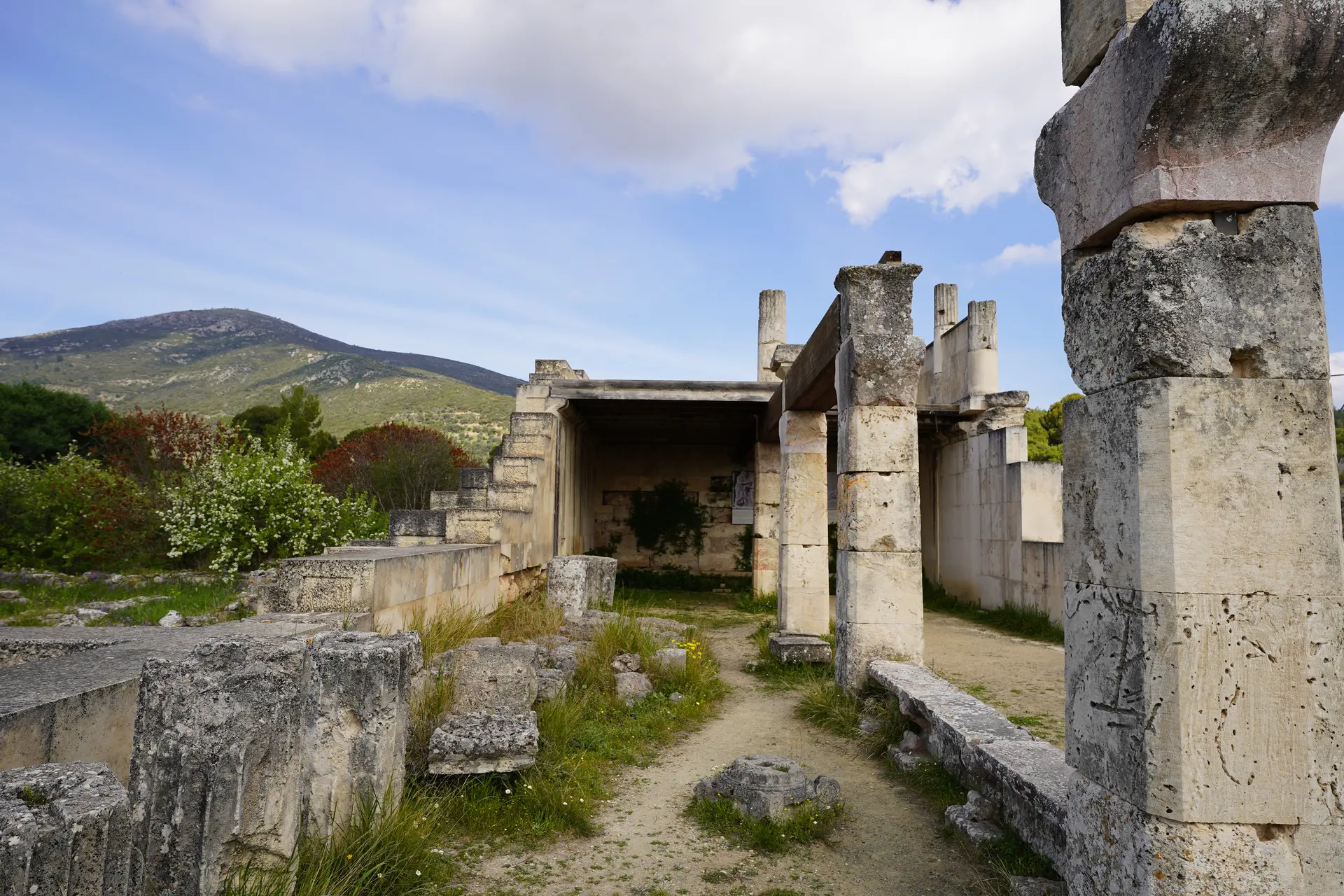
Image of Sanctuary of Asklepios at Epidauros. Image source · CC-BY-2.0
Visit essentials
A quick read before you go
- Duration
- Two to three hours for the sanctuary and museum.
- Access
- Approximately 30 km from Nafplio and about two hours by car from Athens.
Overview
The Sanctuary of Asklepios at Epidauros, in the eastern Peloponnese, was the most influential healing sanctuary of the ancient Greek world and the source-shrine from which dozens of other Asklepieia across the Mediterranean took their lineage.
UNESCO inscribed the site in 1988 (World Heritage 491) for the outstanding fourth-century BCE architectural ensemble built across a wider sixth-century sacred landscape: the Temple of Asklepios by Theodotos, the Tholos and the Theatre by Polykleitos the Younger, and the abaton — the long dormitory hall where pilgrims practised enkoimesis, the ritualised incubation sleep in which the god was expected to appear in a healing dream.
Around seventy iamata inscriptions, recovered on stone stelai by archaeologists from 1881 onward, record specific cures by name, condition, and dream content. These are among the earliest systematic medical case histories in the Western tradition. The healing cult was preceded by an older Apollo Maleatas shrine on the adjacent Mount Kynortion and was eventually absorbed into the Roman cult of Aesculapius, before Christianisation closed the sanctuary in late antiquity.
The theatre, however, has never gone silent: since 1955 the Athens & Epidaurus Festival has staged Aeschylus, Sophocles, Euripides, and Aristophanes in the original space, and its acoustics remain among the most discussed in architectural history.
Why this place is sacred
The site's particular charge comes from a layered convergence. The first layer is the abaton itself — the dormitory where pilgrims slept after purification, expecting Asklepios to appear in a dream that would either cure them directly or prescribe a treatment. The second layer is the iamata: roughly seventy surviving inscriptions in which named individuals describe their conditions, their dreams, and their cures.
To read these in the on-site museum is to encounter specific people from twenty-four centuries ago who came here, slept, and went home reporting that something had happened. The third layer is the theatre. Built by Polykleitos the Younger around 340 to 300 BCE, it remains acoustically extraordinary; a whisper at the orchestra is audible in the top row. The fourth layer is the silence between the ruins.
The Tholos, the abaton foundations, and the surrounding terrain do not announce themselves. Visitors who allow time to sit often describe the same quality that drew pilgrims here in the first place — a sense that the boundary between body and meaning is unusually thin.
Healing traditions
Ancient inscribed healing narrative
One of Epidaurus's healing inscriptions tells of Ambrosia of Athens, who was blind in one eye. In the account, Asklepios treated her during a dream and she left with her sight restored. The inscription belongs to the sanctuary's collection of iamata, public narratives of cures that expressed the god's power and encouraged pilgrimage. It is ancient religious testimony, not a modern patient record.
Ways to participate
Visit the sanctuary and museum to understand the sleeping spaces, offerings, and inscriptions that shaped healing here. A quiet pause can be used to reflect on hope, care, and the vulnerability of illness. Follow the archaeological site's rules; sleeping in the ruins or recreating an ancient treatment is not a visitor activity.
These accounts describe religious traditions and reported experiences. They do not promise a cure or replace medical care.
Experience and orientation
A typical visit begins at the theatre, which dominates the approach and is impossible to ignore: thirty-four rows of limestone seats arranged in a precise mathematical curve, with sightlines and acoustics that have outlived nearly all of their ancient peers. Spend time on the orchestra and let someone speak from the centre — the acoustic effect is not subtle. From the theatre, walk west and north into the sanctuary proper.
The Temple of Asklepios survives as foundations; the Tholos, with its concentric circles of columns, retains enough geometry to suggest its original strangeness; the abaton runs as a long, low colonnaded space where the incubation practice was centred. The Archaeological Museum of Epidaurus is small and easily overlooked, but the iamata stelai are here, along with anatomical votives — terracotta and stone models of healed eyes, limbs, and organs left by patients in thanks.
The cumulative effect is not what most visitors expect: less monumental than reflective, with the strongest moments often happening in transit between buildings rather than at any single one.
Park near the theatre, which is the standard entry point. Allow at least an hour for the sanctuary itself and forty-five minutes for the museum. In summer, plan around the heat — closed shoes and water are essential.
Context and lineage
Asklepios was born nearby on Mount Titthion (or Mount Myrtion in some accounts) to Apollo and the mortal Koronis, and was raised by the centaur Chiron, from whom he learned the art of medicine. The Apollo Maleatas cult on the adjacent hill is regarded as the original sacred substrate from which the Asklepios cult emerged. Pindar's Third Pythian Ode and Pausanias's Description of Greece (Book II) preserve the most influential ancient accounts of the sanctuary's mythology and practice.
Ancient Greek religion, with an Apollo Maleatas substrate succeeded by the Asklepios cult and later absorbed into the Roman cult of Aesculapius. The site holds a continuous archaeological and performance lineage today, but no contemporary ritual cult to Asklepios is practised here.
Traditions and practice
Pilgrims arrived after long journeys (often by sea via the port of Kalauria), underwent purification baths, and made an animal sacrifice — typically a cock to Asklepios. They then slept in the abaton, the long dormitory hall, awaiting an encounter with the god in a dream. Priests assisted with dream interpretation and the prescription of treatments.
Cures were recorded on inscribed stelai (iamata) and displayed for public reading; anatomical votives — terracotta and stone models of healed body parts — were left as thank-offerings. Non-venomous sacred serpents moved freely through the sanctuary as embodiments of the god's presence.
The Athens & Epidaurus Festival has staged ancient drama in the theatre each summer since 1955, typically on Friday and Saturday nights from mid-June to late August. Ongoing archaeological research and conservation, led by the Greek Ministry of Culture with international partners, continues to yield new finds.
Approach the sanctuary slowly, with the iamata in mind. Begin at the theatre, then walk the abaton and the Tholos foundations before entering the museum — the inscriptions will read differently after you have stood in the spaces they describe. If your visit coincides with the festival, attending a performance in the original theatre is the closest available experience to the site's working condition.
Allow time afterward to sit on the upper rows of the theatre as the audience disperses; the acoustics in the empty cavea are one of the quieter pleasures of the visit.
Ancient Greek religion — Cult of Asklepios
HistoricalEpidauros was the principal sanctuary of Asklepios and the mother-sanctuary from which all other Asklepieia across the Hellenic world drew their authority. The healing practice here — enkoimesis (ritual incubation) — is the archetype of dream-based healing that shaped Western medicine for nearly a thousand years, and arguably persists in transformed form to the present.
Roman religion — Cult of Aesculapius
HistoricalRoman expansion incorporated and renamed the cult; Aesculapius sanctuaries throughout the Empire descend from Epidauros.
Archaeological and conservation stewardship
ActiveContinuous excavation since 1881 and ongoing conservation by the Greek Ministry of Culture and international partners. Recent finds continue to expand understanding of the sanctuary's layout and use.
Classical drama at the Ancient Theatre
ActiveSince 1955, the Athens & Epidaurus Festival has staged ancient Greek drama in the original theatre. The continuity of performance has reanimated the only fully working component of the ancient sanctuary.
Perspectives and open questions
Epidauros is read across medical history, architectural history, and contemporary therapeutic theory — with each reading clarifying a different facet of what happened here.
Scholarly perspective
Epidauros is the original and most influential Asklepieion in the Greek world. The fourth-century BCE building programme — Theodotos's Temple, Polykleitos the Younger's Tholos and Theatre — is one of the supreme architectural ensembles of Classical Greece. The iamata constitute a key primary source for ancient medical and religious history.
Living and traditional perspectives
Within ancient Greek religion, healing here was a direct, personal encounter with Asklepios mediated by dream — not separable from divine agency. The serpents, the sleep, and the public testimony of cure functioned as a single coherent practice rather than as adjuncts to a separate medical art.
Alternative interpretations
Some contemporary readings interpret the abaton as an early therapeutic technology — a structured liminal environment combining set, setting, expectation, and surrender — that anticipates modern psychotherapy, hypnosis, and even psychedelic-assisted therapy.
Open questions
The neurobiological mechanism by which incubation dreams produced reported cures remains unstudied. The relationship between the priest-physicians of Epidauros and the contemporary Hippocratic medical tradition based on nearby Kos is debated.
Plan your visit
Access and arrival
Approximately 30 km from Nafplio and about two hours by car from Athens. KTEL bus service runs from Athens (Kifissou) and Nafplio. Special performance shuttles run on festival nights. The entry fee covers sanctuary, theatre, and museum; combined tickets with other Argolid sites are available via the Ministry of Culture e-ticket portal. Mobile phone signal is generally available at the visitor area and theatre; coverage on the wider site is patchy.
Nafplio, 30 km west, is the standard base for visitors and offers the widest range of accommodation. Lygourio, the nearest village (about 5 km from the site), has guesthouses and tavernas convenient for festival nights. Some festival packages include shuttle transport.
Respectful visit
Casual; sun protection essential. Closed shoes recommended for the uneven terrain.
Permitted throughout the site. Restrictions apply during evening theatre performances; flash and tripods are typically not allowed during a show.
Not applicable as an active cult site.
Do not climb on monuments or sit on the proscenium | Stay on designated paths | No drones without permit | Silence requested during ongoing performances or rehearsals | No food or drink within the monument zones
The site is large and exposed; midsummer afternoons are physically demanding. Wear closed shoes for the uneven terrain and bring water. Drones require a permit. Silence is requested during rehearsals and performances.
Current practical details
Address
Epidavros 210 52, Greece
Hours
Hours, fees, and access can change — verify on the official source before you travel. Practical details last checked Jun 2026.
Location
Map loads as you approach this section.
Pilgrim reflections
A portrait of encounter, not a score
Pilgrims describe what they felt, how present they could become, and whether the place would shape a journey. There are no stars and no ranking of traditions.
No reviewed reflections yet
The first pilgrims can help describe the character of being here.
Share a reflection
Available after an account-backed “Been there.” Every reflection is reviewed before publication.
Nearby sacred places
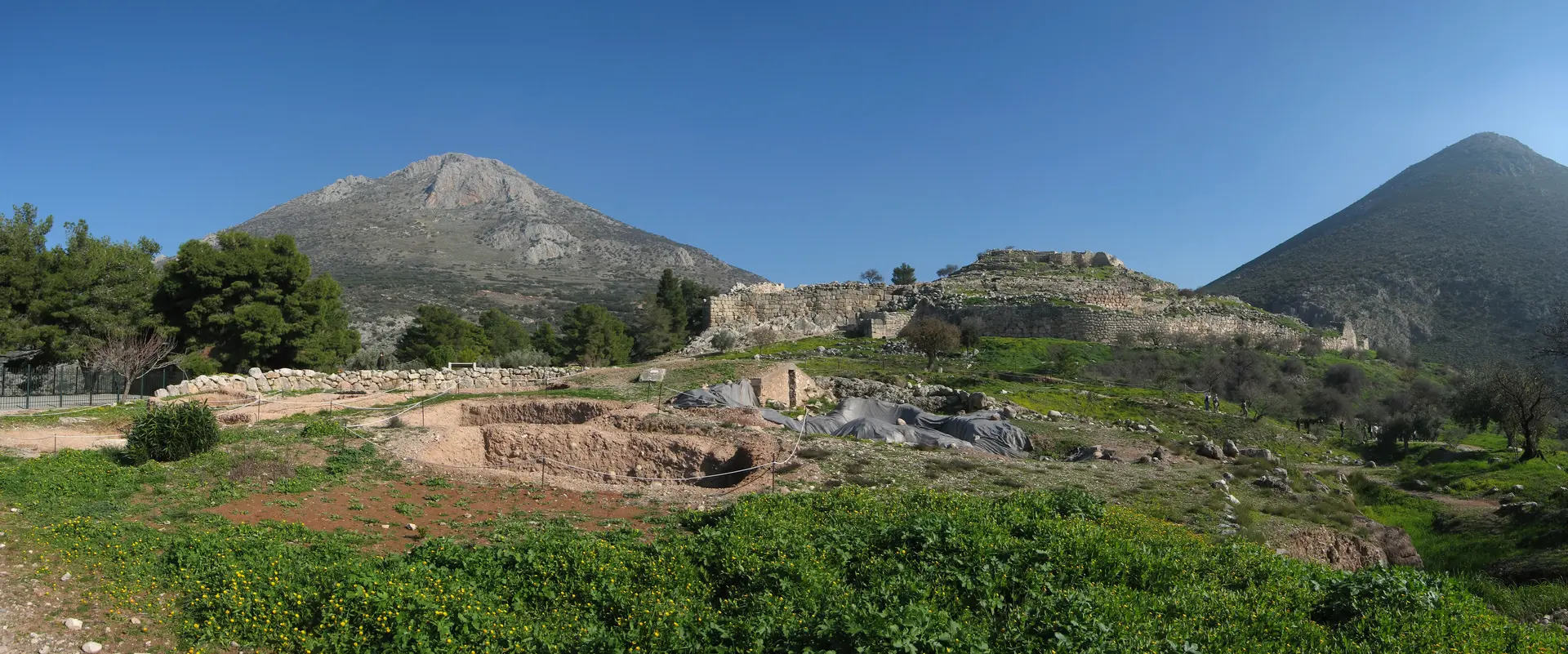
Explore other sacred places in the region. Proximity does not establish access or travel time; check each place’s guidance.



References
Sources consulted for this page. Source categories describe the publication, not a guarantee that every claim is verified. Traditional accounts and outside interpretations may differ.
- 01Sanctuary of Asklepios at Epidaurus — UNESCO World Heritage Centre (site 491) — UNESCOofficialOfficial inscription document (1988): describes the sanctuary's 6th-c. BC origin, 4th-c. BC monuments (Temple of Asklepios, Tholos, Theatre), and its influence on later Asklepieia and Roman Esculape sanctuaries.
- 02Sanctuary of Asclepius, Epidaurus — Wikipedia — Wikipedia contributorsencyclopediaArchitectural inventory, archaeological history (Kavvadias 1881–), and discovery of the iamata (1883).
- 03The Sanctuary of Asklepios at Epidaurus — Visit Greece — Greek National Tourism OrganisationofficialGreek government tourism page on the enkoimesis healing practice and abaton.
- 04Ancient theatre at the Asklepieion of Epidaurus — Hellenic Ministry of Culture and Sports — Hellenic Ministry of Culture and SportsofficialOfficial Greek Ministry of Culture record of the theatre.
- 05Sanctuary of Asklepios in Epidaurus Yields New Discoveries — Stavros Niarchos Foundation — Stavros Niarchos Foundation / Greek Ministry of Culture excavationsacademicReports on ongoing archaeological work and recent finds.
- 06Compositional Background of the Epidaurian Iamata — Lynn R. LiDonniciacademicScholarly article on the structure, composition, and rhetorical function of the iamata inscriptions.
- 07Ancient Theatre of Epidaurus — Athens Epidaurus Festival — Athens & Epidaurus FestivalofficialOfficial festival page describing the continuing performance tradition since 1955.
- 08Asclepieion of Epidaurus — World Heritage Journeys of Europe — UNESCO / European CommissionofficialUNESCO-affiliated visitor and interpretive resource on the healing sanctuary.
- 09Epidaurian healing inscriptions — translated ancient textacademicSupports the attributed account or visitor practice in the healing section; not evidence of clinical efficacy.
- 10Archaeological Museum of Epidaurus — Greek Ministry of CultureofficialSupports the attributed account or visitor practice in the healing section; not evidence of clinical efficacy.
Share a photo
Help visitors recognize Sanctuary of Asklepios at Epidauros. Every submission is reviewed before publication.