Omphalos Stone
Part ofDelphi
The carved navel stone where two eagles met to mark the centre of the world
Understand sacred places, explore living traditions, and learn how to engage respectfully with Pilgrim Map.
Access has not been verified. Check current local guidance before planning a visit.
Central Greece, Greece
Read the sources
Visit essentials
A quick read before you go
- Duration
- 2–3 hours combining the archaeological site and the museum.
- Access
- Near the modern town of Delphi in Phocis, central Greece, on the southwestern slope of Mount…
Overview
Greek tradition says Zeus sought the world's centre by releasing two eagles from opposite ends of the earth at equal speed. Where they met high on Mount Parnassus, he placed the omphalos—the navel—fixing Delphi as the middle of all things. The surviving marble stone in the Delphi Archaeological Museum is rounded and beehive-shaped, its relief carving resembling a net of woolen fillets; Pausanias says two gilded eagles once crowned it in memory of that flight.
For ancient Greeks this was a literal centre, not a metaphor: the cosmic axis joining underworld, surface, and heavens, where human and divine realms approached closely enough for speech. Beside it sat Apollo's priestess, the Pythia, whose pronouncements made Delphi the Hellenic world's most authoritative voice and guided cities and kings.
An older account in Hesiod's Theogony identifies the omphalos with the swaddled stone Rhea gave Kronos to swallow instead of the infant Zeus, later set up at Parnassus as a sacred sign. Apollo's cult closed in late antiquity, and Delphi is now an archaeological site and museum rather than a place of worship. The stone nevertheless preserves the ancient conviction that the precise middle of the world lay between Parnassus's cliffs.
Why this place is sacred
Delphi's thinness was geographical before it was theological: the Greeks located the exact centre of the earth here, and a place that is the centre of everything is, by definition, the place where everything meets. The omphalos was understood as a point on the cosmic axis — the column joining the underworld below, the inhabited earth, and the heavens above — so that to stand beside the stone was to stand at the seam of the cosmos.
The oracle made the connection explicit and operational: through the Pythia, the god Apollo was held to speak directly into human affairs, which presupposes that here the distance between mortal and divine had narrowed almost to nothing. Pilgrims and embassies travelled from across the Mediterranean to consult that thin point, and the maxims of the Seven Sages were carved at the temple so that those who came to hear the gods would also be reminded to know themselves.
The dramatic setting reinforced the sense of a threshold place: the sanctuary clings to a steep slope beneath the sheer Phaidriades cliffs, with the valley falling away toward the sea, a landscape that still makes the centre of the world feel plausible.
The omphalos marked Delphi as the navel and centre of the world in Greek cosmology and stood within the Temple of Apollo beside the oracle, anchoring the sanctuary as the spiritual centre of the Hellenic world and the seat of its most authoritative oracle.
The sanctuary of Apollo flourished from the 8th century BCE; the surviving marble omphalos is a Hellenistic or Roman-era work. The cult declined and closed in late antiquity (4th century CE). Today the omphalos is studied and displayed at the Delphi Archaeological Museum and the site, visited for its cultural and contemplative resonance rather than ritual consultation.
Experience and orientation
Delphi occupies one of the most arresting settings in the ancient world: a sanctuary terraced into the southwestern slope of Mount Parnassus, beneath the towering Phaidriades cliffs, with the olive-filled valley of the Pleistos plunging away below toward the Gulf of Corinth. The visitor climbs the Sacred Way past the foundations of treasuries and monuments to the Temple of Apollo, then on to the theatre and stadium higher up the slope.
The surviving marble omphalos — the carved navel stone — is displayed in the Delphi Archaeological Museum, with fragments and a weathered version at the site itself; standing before it, visitors take in the netted relief of woolen bands that once marked it as the world's centre. The experience is double: the small, strange, beautiful stone, and the vast theatrical landscape that made the ancients certain this was where everything converged.
Many report a vivid sense of contact with the Greek cosmological imagination — the feeling, even now, of having arrived somewhere central.
Begin at the archaeological site, walking the Sacred Way uphill to the Temple of Apollo, where the omphalos once stood near the oracle, then continue to the theatre and stadium for the full sweep of the setting. Visit the adjoining museum to see the surviving marble navel stone in detail. Wear sturdy footwear for the steep, uneven terrain and bring sun protection; the slope is exposed.
Allow the landscape — the cliffs above, the valley below — to register as part of why the Greeks placed the centre of the world here.
Context and lineage
The Greeks held that Delphi stood at the literal centre of the earth, and they told two stories of how the omphalos came to mark it. In the better-known account, Zeus set out to find the world's midpoint and released two eagles — one from the eastern edge of the world, one from the western — to fly toward each other at matching speed.
They crossed paths in the sky above Delphi, and there Zeus set down the omphalos, the navel stone, fixing the spot as the centre of all things and the meeting point of the cosmic axis.
A second, older tradition runs through Hesiod's Theogony: when Kronos devoured his children to forestall a prophecy that one would overthrow him, his wife Rhea saved the infant Zeus by wrapping a stone in swaddling clothes and giving it to Kronos to swallow in the child's place. Kronos later disgorged the stone, and Zeus — having grown to overthrow his father — set it up at Parnassus as a sacred sign of his victory and the beginning of his reign.
Greek tradition identifies that disgorged stone with the omphalos at Delphi, so that the navel of the world is also the marker of a god's survival and the dawn of the Olympian order. The traveller Pausanias, writing in the 2nd century CE, describes the stone he saw bound in woolen fillets, with two gilded eagles fixed atop it — the eagles of Zeus, recalling the founding flight.
Ancient Greek religion, the pan-Hellenic cult of Apollo at Delphi; the tradition ended in late antiquity, and the omphalos survives as an archaeological monument and symbol of the Greek cosmos.
Zeus
King of the gods
Apollo
God of the Delphic sanctuary
The Pythia
Oracular priestess of Apollo
Hesiod
Archaic poet
Pausanias
Geographer and travel writer (2nd c. CE)
Traditions and practice
In antiquity, pilgrims and envoys consulted the Delphic Oracle through the Pythia, offered sacrifices to Apollo, and gathered for the Pythian Games held in his honour; the maxims of the Seven Sages, including 'know thyself', were inscribed at the temple.
There is no active cult. The omphalos is preserved and displayed, the sanctuary is studied and visited, and people come for cultural understanding and quiet reflection rather than ritual.
Approach the navel stone as the ancients framed it — as a marker of centre and meeting. Stand before it without hurry, take in the carved fillets and the idea they once carried, then carry that sense of a centring point out to the temple terrace and let the surrounding landscape complete the image of why this was held to be the middle of the world.
Ancient Greek religion (cult of Apollo)
HistoricalThe omphalos marked Delphi as the navel and centre of the world in Greek cosmology. In the founding myth Zeus released two eagles from opposite ends of the earth; they met above Delphi, and Zeus set the stone there to mark the world's centre. The omphalos was believed to allow communication with the gods and stood within the Temple of Apollo beside the oracle, making Delphi the spiritual centre of the Hellenic world.
Consultation of the Delphic Oracle, sacrifices to Apollo, the Pythian Games, and the maxims of the Seven Sages inscribed at the temple.
Perspectives and open questions
The omphalos sits at the intersection of myth, archaeology and modern imagination, and the readings are best held distinctly rather than blended.
Scholarly perspective
Delphi was the pre-eminent pan-Hellenic oracle, and the surviving omphalos is an ancient marble monument symbolising the world's navel. The two-eagles and Kronos myths are well attested in ancient sources. Several omphalos stones exist — the Hellenistic copy in the museum, fragments at the site, and the lost original Pausanias described — so which represents the 'true' navel stone is uncertain, and the exact original placement within the temple is reconstructed rather than fully documented.
Living and traditional perspectives
In ancient Greek religion the omphalos was the literal centre of the world and a channel to the gods, with the Pythia's oracle as its living voice.
Alternative interpretations
Modern esoteric writers treat the omphalos as an energetic earth-centre or axis mundi; such claims are interpretive and devotional rather than archaeological.
Open questions
The mechanism of the oracle's inspiration, and the original ritual use and exact placement of the stone, remain partly conjectural.
Plan your visit
Access and arrival
Near the modern town of Delphi in Phocis, central Greece, on the southwestern slope of Mount Parnassus; reachable by road from Athens in roughly 2.5–3 hours. Check the Hellenic Ministry of Culture for current opening hours and ticketing.
The modern town of Delphi (Delfoi) and nearby Arachova offer hotels and guesthouses within easy reach of the site; many visitors also make a day trip from Athens.
Respectful visit
No religious dress code; wear comfortable, sturdy footwear and sun protection for the steep, exposed site.
Generally permitted at the site and museum; observe posted restrictions and no-flash rules for fragile objects.
None.
Standard archaeological-site rules: stay on paths, do not climb on or touch the monuments.
Present the mythology as ancient Greek belief, distinct from archaeological fact. Modern claims of the omphalos as a literal energetic earth-centre are interpretive rather than evidentiary.
Current practical details
Address
Delphi 330 54, Greece
Hours
Hours, fees, and access can change — verify on the official source before you travel. Practical details last checked Jun 2026.
Location
Map loads as you approach this section.
Pilgrim reflections
A portrait of encounter, not a score
Pilgrims describe what they felt, how present they could become, and whether the place would shape a journey. There are no stars and no ranking of traditions.
No reviewed reflections yet
The first pilgrims can help describe the character of being here.
Share a reflection
Available after an account-backed “Been there.” Every reflection is reviewed before publication.
Nearby sacred places
Explore other sacred places in the region. Proximity does not establish access or travel time; check each place’s guidance.

Delphi
Municipal Unit of Delphi, Central Greece, Greece
0.0 km away

Corycian Cave
Delphi, Mount Parnassus, Phocis, Central Greece, Greece
4.0 km away

Mount Parnassus
Delphi, Phocis and Phthiotis, Central Greece, Greece
11.5 km away
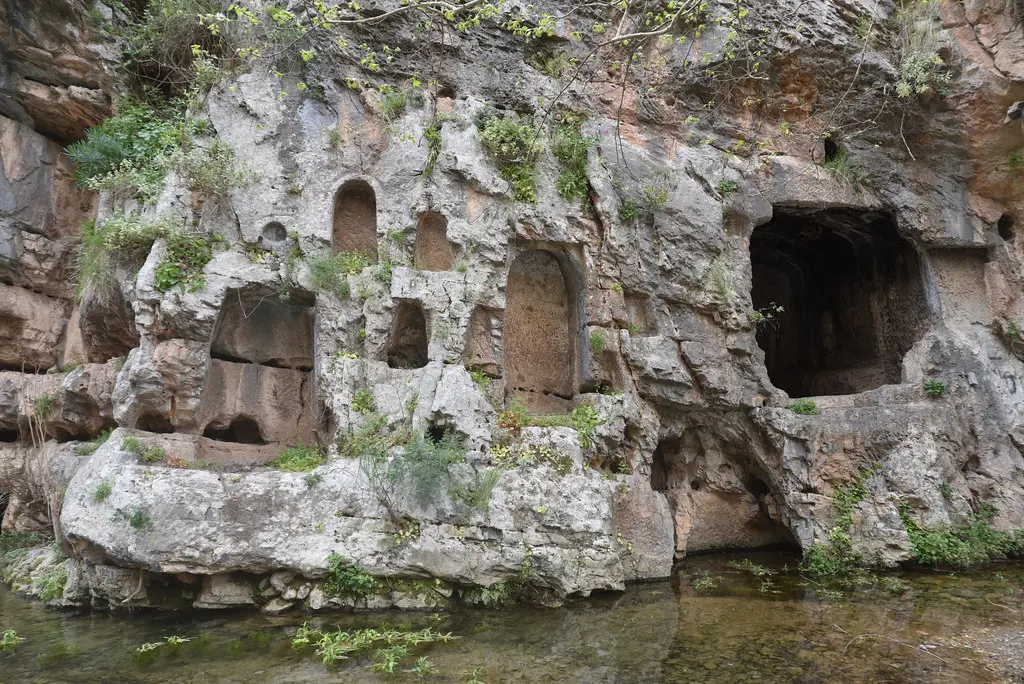
Trofonion Oracle, Livadia, Greece
Levadia Municipal Unit, Central Greece, Greece
33.0 km away
References
Sources consulted for this page. Source categories describe the publication, not a guarantee that every claim is verified. Traditional accounts and outside interpretations may differ.
- 01Omphalos of Delphi — Wikipedia — Wikipedia contributorsacademicMarble monument found at Delphi; omphalos = 'navel'; the two-eagles founding myth; Pausanias' description with wool fillets and gilded eagles.
- 02Omphalos — Wikipedia — Wikipedia contributorsacademicOmphalos as a religious stone object allowing communication with the gods; axis mundi symbolism; Hesiod's Theogony account of the stone given to Kronos.
- 03Archaeological Site of Delphi — UNESCO World Heritage Centre — UNESCOofficialDelphi inscribed 1987; pan-Hellenic sanctuary; the navel of the universe / centre of the earth.
- 04Omphalos — Archaeological Site of Delphi (Greek Ministry of Culture) — Hellenic Ministry of CultureofficialOfficial site page on the omphalos; its placement and meaning at Delphi.
- 05Delphi — Wikipedia — Wikipedia contributorsacademicSanctuary of Apollo, oracle, Pythia, location on Mount Parnassus in Phocis.
- 06The omphalos of Delphi — the navel stone — theDelphiGuide.com — The Delphi GuideSource contextVisitor-facing overview of the navel stone, its myth and where copies are displayed.
- 07The Sacred Omphalos Stone, Navel of the World — Ancient Origins — Ancient OriginsSource contextPopular feature on the omphalos as communicator of the gods; useful for esoteric framing only.
Share a photo
Help visitors recognize Omphalos Stone. Every submission is reviewed before publication.