Dodona
Where Zeus once spoke through rustling oak leaves to all who dared ask
Understand sacred places, explore living traditions, and learn how to engage respectfully with Pilgrim Map.
Access has not been verified. Check current local guidance before planning a visit.
Μαντείο, Epirus, Greece
Read the sources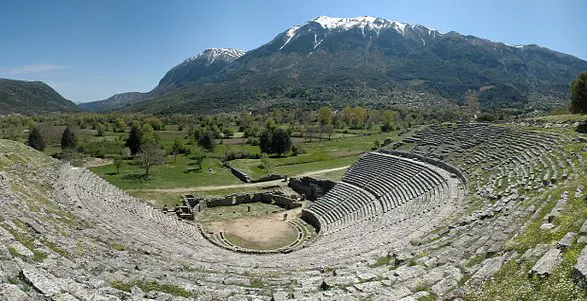
Image of Dodona. Image source · CC-BY-SA-3.0
Visit essentials
A quick read before you go
- Duration
- Allow 1.5 to 2 hours to explore the theatre, sanctuary ruins, and acropolis area at a…
- Access
- Dodona is 22 kilometers southwest of Ioannina, approximately 30 minutes by car.
Overview
Before Delphi rose to prominence, Dodona stood in a verdant valley beneath Mount Tomaros, where Greeks believed Zeus dwelt in a sacred oak and spoke through rustling leaves and resonant bronze. Petitioners folded daily questions onto thin lead tablets and submitted them to the priests: marriage, children, journeys, and whether it was safe to speak the truth. More than 4,200 survive as a UNESCO Memory of the World archive of human uncertainty across centuries.
The oracle fell silent in 391 CE, when the oak was cut under Christian imperial edict. Stone and northwestern Greece's largest ancient theatre remain, its tiers facing the vanished tree. Visitors report a peculiar stillness where thousands once waited for answers: the leaves no longer speak, but the questions and the need to ask them connect people across millennia.
Why this place is sacred
The Greeks called certain places where the divine became accessible oracles, and Dodona was the oldest of them all. According to Plato, Socrates himself declared that the words of the oak at Dodona were the first prophetic utterances in Greek tradition.
What made this particular place a threshold between worlds? The ancient sources suggest multiple factors. The sacred oak stood in a valley of abundant springs, which the poets called the hundred springs. Water in Greek religion marked liminal space, the boundary between ordinary existence and something else. The oak itself, possibly the oldest in Greece, embodied the presence of Zeus in a way temples built by human hands could not.
But it was sound that distinguished Dodona from other oracles. The god spoke not through convulsing priestesses, as at Delphi, but through the natural voice of the place itself. Wind moved through the oak's leaves, creating a continuous murmur the priests learned to interpret. Bronze cauldrons hung from the branches, adding metallic resonance to the chorus. Doves cooed in the upper branches. The whole site became an instrument of communication, the boundary between human speech and divine utterance blurred.
In Andean terms, Dodona might be understood as a huaca. In Celtic vocabulary, a thin place. The concept is cross-cultural: certain locations where the membrane between ordinary and sacred becomes permeable. Dodona's remoteness enhanced this quality. Unlike Delphi, situated along major routes, Dodona required a journey into the mountains of Epirus. Those who came, came with intention.
The accumulated weight of their seeking charged the ground. For perhaps two thousand years, people brought their most urgent questions here. That concentration of human need leaves traces.
Archaeological evidence suggests the site was sacred before the Greeks brought Zeus. Earlier inhabitants may have venerated a Great Goddess or Mother Earth figure here, connected to the springs, the oak, and the fertility of the land. When Greek-speaking peoples arrived, perhaps in the second millennium BCE, they layered their worship atop what already existed. Zeus took the oak; Dione, his consort at Dodona, may preserve the older goddess in new form.
The oracle's practical function was guidance for decisions both personal and political. Individuals asked about marriage, children, travel, health. City-states asked about founding colonies or engaging in war. The questions required yes-or-no answers or choices between alternatives, suggesting a divinatory system rather than open-ended prophecy. The sanctuary also served as a pilgrimage destination and, after the third century BCE, as a major festival site rivaling Olympia.
Dodona's history spans the arc of ancient Greek civilization. The earliest worship may date to the Bronze Age, though the archaeological evidence becomes clear only from the eighth century BCE. For centuries, the sanctuary remained simple, focused on the oak and a small temple. Then King Pyrrhus of Epirus transformed it. Around 290 BCE, he made Dodona his religious capital, constructing the massive theatre, rebuilding the Temple of Zeus, and establishing the Naia festival with athletic and dramatic competitions.
The Aetolians sacked and burned the sanctuary in 219 BCE, but it was rebuilt. Romans came as pilgrims after conquering Greece. The last recorded consultation was in 362 CE, when the pagan emperor Julian asked about his upcoming Persian campaign. Thirty years later, Theodosius closed all pagan temples. The sacred oak was cut down. Christians built a basilica nearby.
For fifteen centuries, Dodona slept. Excavation began in 1875, revealing the theatre, the sanctuary foundations, and thousands of lead tablets. Today, the restored theatre occasionally hosts performances, echoing the festivals Pyrrhus established. But the sanctuary itself remains silent, its purpose archaeological rather than religious.
Experience and orientation
The first thing visitors notice is the quiet. Dodona sits far from major tourist routes, and on most days, you may have the theatre largely to yourself. This absence of crowds changes the quality of attention. Without the pressure of tour groups, the site opens at its own pace.
The theatre commands the initial experience. Built into the hillside, it remains one of the best-preserved in Greece, its tiers sweeping upward to embrace the mountain view beyond. Sitting here, looking out toward where the sacred oak once stood, visitors often feel the weight of the generations who gathered for the Naia festival, watching tragedies and comedies beneath the Epirote sky.
But it is in the sanctuary area, now reduced to foundations and fragments, that the site's deeper resonance emerges. This is where the oak stood. This is where people waited, lead tablets folded in their hands, hearts suspended between question and answer. The questions survive, housed now in the Archaeological Museum of Ioannina. Seeing them, and then standing where they were asked, creates an emotional bridge across twenty-five centuries.
Visitors frequently report a sense of intimacy uncommon at major archaeological sites. The questions on those tablets were not political or abstract. They were the questions people still ask: about love, about children, about whether to trust, whether to act, whether to hope. Standing where those questions were asked, contemporary visitors often find their own uncertainties rising to awareness.
The mountain setting enhances the contemplative quality. Mount Tomaros rises to the south. Eagles sometimes circle overhead. The valley feels protected, enclosed, set apart from ordinary life. This is no accident. The ancients chose this place precisely because it felt different.
Come with a question. Not necessarily one you expect answered, but something genuinely unsettled in your life. The lead tablets remind us that people have always stood at thresholds, uncertain of which path to take. Standing where they stood, you join a lineage of seekers.
Begin at the theatre. Let its scale and preservation ground you in the site's physical reality. Then walk slowly through the sanctuary area, pausing at the foundations of the Temple of Zeus, the House of the Priests, the various treasuries cities built to honor the oracle. The sacred oak stood somewhere in this precinct. The exact location is uncertain, but the area itself was charged with presence.
Before leaving, find a quiet spot and sit. The site invites stillness. Whatever question you brought, hold it lightly. You are unlikely to hear leaves rustle in response. But something may clarify simply by being held in this place, where so many others held their own uncertainties before you.
Context and lineage
Two origin stories survive, both recorded by Herodotus. The Greek version tells of two black doves that flew from Thebes in Egypt. One settled in Libya, where it established the oracle of Zeus Ammon. The other landed in an oak tree at Dodona and spoke with a human voice, declaring that a prophetic sanctuary to Zeus should be established there.
The Egyptian priests offered a different account. Two priestesses had been taken from Thebes by Phoenician pirates. One was sold to Libya, one to Greece. Each continued her oracular work in the new land. The Greek word peleiades means both doves and the name given to the priestesses at Dodona. Perhaps, Herodotus suggests, the story of speaking doves arose from Greeks hearing the foreign speech of Egyptian priestesses and likening it to bird sounds.
Both stories point toward the same intuition: Dodona's oracle was ancient, connected to something older than the Greeks themselves, rooted in the deep past of Mediterranean religion. The sacred oak was already there, already venerated, when the Greeks arrived.
The sanctuary at Dodona served seekers for perhaps two thousand years. Bronze Age peoples may have venerated the oak before Greek religion took form. The Selloi, sleeping on the ground with unwashed feet, preserved practices older than classical Greek worship. As Greek civilization developed, Dodona became a destination for pilgrims from across the Hellenic world.
The oracle's clients ranged from farmers asking about crops to city-states asking about colonial ventures. After Pyrrhus established the Naia festival, Dodona joined the circuit of major Greek athletic and dramatic competitions. Romans continued consulting the oracle after conquering Greece. The sanctuary finally closed under Christian imperial decree in the late fourth century CE.
Since excavation began in 1875, Dodona has drawn a different kind of visitor: archaeologists, historians, tourists, and seekers of various kinds. The site now hosts occasional theatrical performances in the restored ancient theatre, creating a tenuous link to the festivals Pyrrhus established over two millennia ago.
Zeus Naios
deity
Zeus worshipped at Dodona as god of the spring or dwelling. He inhabited the sacred oak and spoke through its leaves. The largest temple at the site was dedicated to him.
Dione
deity
Consort of Zeus at Dodona, her name is the feminine form of Zeus. She may preserve an earlier Mother Goddess. At Dodona, she was considered the mother of Aphrodite. Her worship predates clear historical records.
The Selloi
priest
The earliest priests of Dodona, described by Homer as sleeping on the ground and never washing their feet. These earth-contact practices may preserve pre-Greek chthonic religion.
The Peleiades
priestess
The Doves, priestesses who later served at Dodona alongside or replacing the Selloi. They interpreted the oracle's signs, including the flight and sounds of actual doves in the sacred oak.
Pyrrhus of Epirus
historical
King who made Dodona his religious capital around 290 BCE, constructing the theatre and establishing the Naia festival. His patronage transformed Dodona from a regional sanctuary to a major Panhellenic site.
Traditions and practice
The oracular consultation at Dodona differed from Delphi's famous method. At Delphi, the Pythia entered trance and spoke obscurely. At Dodona, Zeus spoke through his oak. The priests interpreted the rustling of leaves in the wind, the resonance of bronze vessels hung from branches, the flight patterns and cooing of doves nesting in the tree.
Pilgrims inscribed their questions on thin lead tablets, often following formulaic patterns. Common forms included: Is it better and more good for me to do X? or Should I do X or Y? The questions required clear answers rather than cryptic prophecy. After receiving the oracle's response, pilgrims might leave offerings, bronze tripods, jewelry, or weapons, many of which were discovered in excavation.
The priests called Selloi practiced remarkable austerities. Homer describes them sleeping on the ground and never washing their feet, maintaining constant contact with the earth. These practices may preserve traditions older than Greek religion, connecting worshippers to chthonic powers beneath the ground. Later, priestesses called Peleiades took on oracular duties, perhaps interpreting the doves whose name they shared.
The Naia festival, established by Pyrrhus around 290 BCE, added athletic and dramatic competitions. Held perhaps every four years, it drew competitors and audiences from across the Greek world, making Dodona a center of cultural as well as religious life.
The archaeological site hosts no formal religious activity. Greek heritage law protects the ruins, and organized ceremony would not be permitted. However, some contemporary Hellenic polytheist practitioners visit Dodona for personal devotion, though such visits are private rather than publicly organized.
The restored theatre occasionally hosts theatrical and musical performances, continuing in attenuated form the tradition of the Naia festival. These cultural events are secular but carry echoes of the site's ancient purpose.
For visitors seeking meaningful engagement beyond tourism, the site's atmosphere of ancient questioning offers contemplative possibilities. Sitting quietly in the sanctuary area, where the sacred oak once stood, creates space for reflection on one's own unanswered questions. The lead tablets, viewable at the Archaeological Museum of Ioannina, make the human continuity of uncertainty palpable.
If you come seeking more than photographs, consider these approaches.
Before visiting the site, spend time at the Archaeological Museum of Ioannina viewing the lead tablets. Read the questions. Let their ordinariness affect you. These were not philosophers seeking cosmic truth but people asking whether to marry, whether to trust, whether to act. Their concerns were identical to yours.
At the site, begin with the theatre but do not linger there exclusively. The sanctuary area, though less visually impressive, holds the site's heart. Stand where the oak stood. You cannot know the exact spot, but you can inhabit the space where countless seekers awaited answers.
Bring a question of your own. Not as performance but as genuine practice. Write it, if you wish, on a slip of paper before you come. You will not hear leaves rustle in response. But holding an authentic question in a place saturated with ancient questioning changes the quality of attention.
Before leaving, sit in silence. Whatever arises, notice it without forcing interpretation.
Ancient Greek Religion - Cult of Zeus Naios
HistoricalZeus was worshipped at Dodona as Zeus Naios, god of the spring or dwelling. This was one of the most important sanctuaries to the king of the gods in the ancient Greek world, considered the oldest Hellenic oracle. Pilgrims came from across the Greek world to receive divine guidance through the rustling of the sacred oak's leaves.
Historical practices included oracular consultation through interpretation of oak leaf rustling, submission of questions inscribed on lead tablets, offerings of bronze tripods, jewelry, and weapons, animal sacrifice, and participation in the Naia festival with athletic and dramatic competitions. The priests interpreted multiple signs: the sound of leaves, the resonance of bronze vessels, the flight and calls of doves.
Ancient Greek Religion - Cult of Dione
HistoricalDione, whose name is the feminine form of Zeus, was the consort deity at Dodona and may represent an earlier Mother Goddess figure. Some scholars believe her worship predates Zeus at this site, connecting to pre-Hellenic earth goddess traditions. At Dodona, she was considered the mother of Aphrodite.
Dione was worshipped alongside Zeus as divine consort. The priestesses called Peleiades, the Doves, may have been particularly associated with her worship. The dove as sacred animal connected to Dione's cult.
Pre-Hellenic Earth Goddess Worship
HistoricalArchaeological evidence suggests worship at Dodona may extend to the early Bronze Age with veneration of a Great Goddess or Mother Earth figure. This chthonic tradition associated with fertility, abundance, and the sacred oak predates the arrival of Zeus worship.
The Selloi priests practiced earth-centered rituals including sleeping on the ground and maintaining bare feet, ensuring constant contact with the earth. Sacred oak veneration was central. These practices may preserve religious traditions predating Greek culture.
Perspectives and open questions
Dodona invites interpretation from multiple angles, and honest engagement requires holding them together. Scholarly archaeology, ancient religious tradition, and contemporary spiritual seeking each illuminate aspects of the site. The questions on the lead tablets remind us that uncertainty itself is universal, perhaps more so than any answers.
Scholarly perspective
Archaeological consensus places Dodona as the oldest oracle sanctuary in Greece, with possible cult activity extending to the Bronze Age and clear evidence from the eighth century BCE. Scholars understand the site as combining several functions: oracular consultation through interpretation of the sacred oak's sounds, pilgrimage destination, and after Pyrrhus, major festival center.
The lead tablets, numbering over 4,200 fragments, provide unprecedented insight into the concerns of ordinary ancient Greeks. Their recognition by UNESCO as Memory of the World in 2023 confirms their significance for understanding ancient Mediterranean life. Scholarly debate continues regarding the exact mechanics of oracular interpretation and the relationship between earlier earth-goddess worship and the classical cult of Zeus and Dione.
The site's development under Pyrrhus transformed a regional sanctuary into a Panhellenic institution. The theatre, among the largest in ancient Greece, speaks to Dodona's importance as a cultural as well as religious center.
Living and traditional perspectives
The ancient Greeks understood Dodona as a place where Zeus himself was present and communicative. The god inhabited the oak; his voice was the wind in its leaves. This was not metaphor but literal presence. Consulting the oracle meant entering relationship with the divine.
Dione, worshipped alongside Zeus, may preserve older traditions. Her name is simply the feminine of Zeus, suggesting a primordial divine couple. Some scholars see her as a survival of pre-Greek goddess worship, the Great Mother who preceded the Olympians. For worshippers, such distinctions mattered less than the lived reality of divine presence at this particular place.
The Selloi's earth-contact practices, sleeping on the ground, never washing their feet, suggest chthonic traditions predating classical Greek religion. The earth itself was sacred, and maintaining physical contact with it was spiritual practice.
Alternative interpretations
Contemporary spiritual seekers sometimes describe Dodona as a power place with special energetic qualities. The concept of receiving wisdom from nature, the speaking oak, resonates with animist and neo-pagan traditions that see the natural world as ensouled and communicative. Some Hellenic polytheist reconstructionists include Dodona in their sacred geography, though organized worship at the site is not practiced.
The site's relative obscurity compared to Delphi appeals to seekers who prefer contemplative solitude to tourist crowds. Alternative perspectives often emphasize the universality of the questions asked here, seeing the lead tablets as evidence of unchanging human needs that transcend any particular religious framework.
Open questions
Genuine mysteries remain at Dodona. The exact mechanism of oracular interpretation is debated. Was it purely the leaves, bronze vessels, wind chimes, or some combination? How were the priests' interpretations delivered to questioners? What determined whether the oak said yes or no?
The relationship between Dione and earlier goddess worship remains unclear. Was she a Hellenized version of a pre-Greek deity, or an indigenous Greek goddess who happened to share Zeus's sanctuary? The doves, central to the site's mythology, raise similar questions: were they literal birds, priestesses, or a misunderstanding of foreign speech patterns?
The Selloi's origins and the meaning of their practices remain uncertain. Their austerities suggest traditions older than classical Greek religion, perhaps preserving indigenous Epirote practice that preceded Greek influence. What world view required sleeping on the earth and forgoing foot-washing? We do not know.
Most fundamentally: what did people actually experience when they consulted the oracle? The tablets tell us what they asked. They do not tell us what they heard, or how it felt to stand beneath the oak awaiting the voice of a god.
Plan your visit
Access and arrival
Dodona is 22 kilometers southwest of Ioannina, approximately 30 minutes by car. From Athens, the journey is over 400 kilometers, taking 4.5 to 5 hours. From Thessaloniki, approximately 270 kilometers, about 3 hours. Public transport to the site is limited; car rental is strongly recommended. Parking is available at the entrance.
Ioannina offers a full range of lodging options, from budget hotels to boutique accommodations. The town's lakeside setting and historic quarter make it worth an overnight stay. Combine the Dodona visit with the Archaeological Museum of Ioannina, which houses the lead tablets and other artifacts from the sanctuary.
Respectful visit
No formal dress code applies. Practical clothing suitable for walking on uneven terrain is appropriate. Comfortable shoes with good grip are essential. In summer, sun protection is advisable; in spring and autumn, layers accommodate variable mountain weather.
Photography is generally permitted throughout the site. Check for any temporary restrictions. Tripods and professional equipment may require advance permission. Drones are typically prohibited at Greek archaeological sites.
Physical offerings are not appropriate. This is a protected archaeological site, not an active sanctuary. Do not leave objects, candles, or any material at the ruins. Internal offerings, silent prayer, intentions, or gratitude, are more fitting and leave no trace.
Do not climb on or touch ancient structures. Stay on designated paths. No picnicking within the archaeological zone. No smoking. Drone photography requires special permission and is usually not granted.
Do not treat the ruins as props for dramatic photographs or social media content. The stone is fragile, the history is serious, and performative behavior diminishes the experience for others seeking something quieter.
Do not leave physical offerings. This is an archaeological site, not an active sanctuary, and objects left behind are litter. If you wish to offer something, make it internal, a silent intention or gratitude.
Be realistic about what the site can provide. Dodona is not Delphi. The infrastructure is modest, the crowds thin, the interpretive signage limited. This simplicity is part of its appeal, but arrive with appropriate expectations.
Current practical details
Address
Dodoni 455 00, Greece
Phone
Hours
Hours, fees, and access can change — verify on the official source before you travel. Practical details last checked Jun 2026.
Location
Map loads as you approach this section.
Pilgrim reflections
A portrait of encounter, not a score
Pilgrims describe what they felt, how present they could become, and whether the place would shape a journey. There are no stars and no ranking of traditions.
No reviewed reflections yet
The first pilgrims can help describe the character of being here.
Share a reflection
Available after an account-backed “Been there.” Every reflection is reviewed before publication.
Nearby sacred places
Explore other sacred places in the region. Proximity does not establish access or travel time; check each place’s guidance.
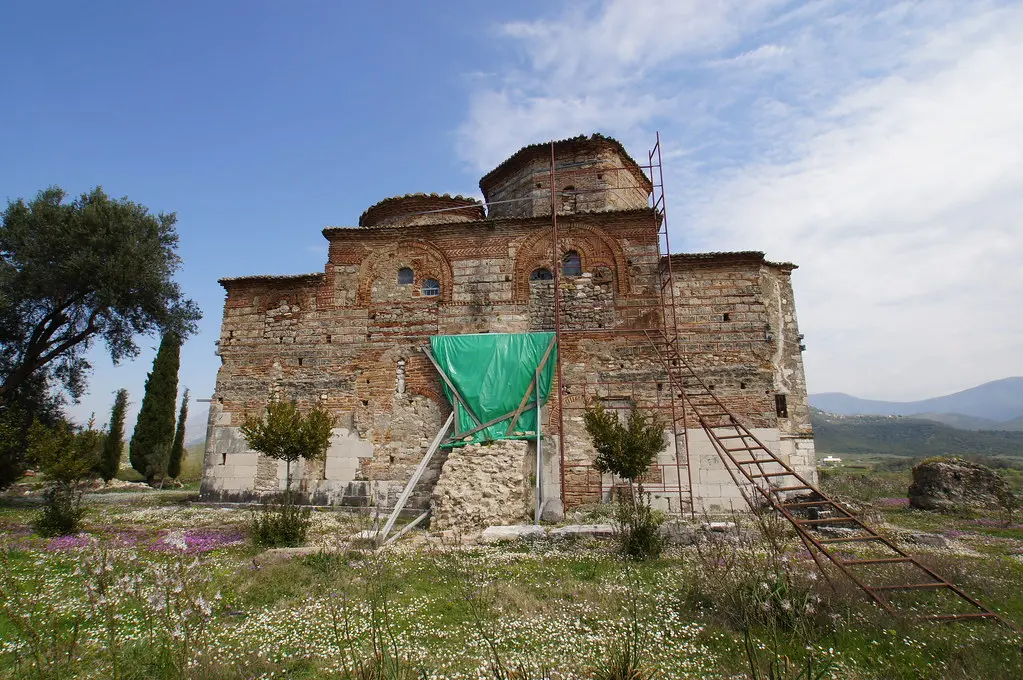
St Nicholas Monastery, Mesopotam, Albania
Brajlat, Vlorë, Albania
71.1 km away

Church of the Dormition, Labovë e Kryqit
Labovë e Kryqit, Labovë e Kryqit, Libohovë Municipality, Gjirokastër County, Albania
72.5 km away

Roussanou Monastery
Kalabaka, Thessaly, Greece
74.2 km away
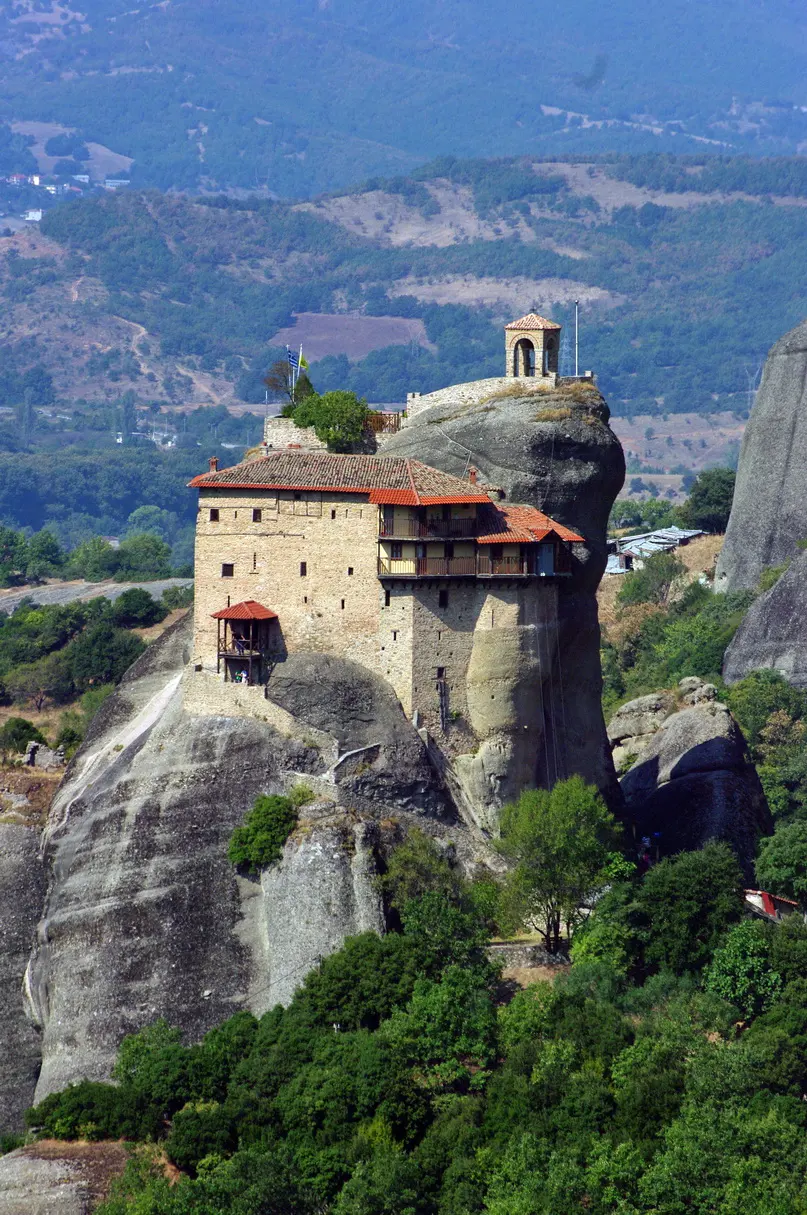
Saint Nicholas Anapausas Monastery, Meteora
Kastraki, Kalambaka, Thessaly, Greece
74.3 km away
References
Sources consulted for this page. Source categories describe the publication, not a guarantee that every claim is verified. Traditional accounts and outside interpretations may differ.
- 01Dodona | Greece, Map, History, & Facts — Encyclopaedia BritannicaacademicAuthoritative academic reference
- 02Dodona - World History Encyclopedia — World History EncyclopediaacademicPeer-reviewed historical content
- 03The oracle shrine at Dodona — Visit Greece (Greek National Tourism Organisation)officialOfficial Greek tourism authority
- 04ZEUS CULT 4 DODONA - Ancient Greek Religion — Theoi Greek MythologyacademicScholarly collection of ancient sources
- 05DIONE - Greek Titan Goddess of the Oracle of Dodona — Theoi Greek MythologyacademicComprehensive deity reference with primary sources
- 06The lead tablets of the Dodona Oracle - Memory of the World — UNESCOofficialUNESCO Memory of the World recognition
- 07Sanctuary of Zeus at Dodona — University of WarwickacademicAcademic database entry
- 08Dodona (Site) — Perseus Digital Library, Tufts UniversityacademicScholarly archaeological database
- 09Seeking answers from the Gods — National Archaeological Museum of AthensofficialOfficial museum interpretation
- 10Dodona - Wikipedia — Wikipedia contributorsacademicComprehensive overview with citations to scholarly sources
- 11Dodona History — Ancient Greece: Phos & LexiacademicDetailed historical analysis
- 12Dodona Archaeological Site — Ancient Greece: Phos & LexiacademicArchaeological site documentation
- 13Dodona - World Pilgrimage Guide — Sacred SitesspiritualPilgrimage-focused perspective
- 14Memory of the World: The oracular questions of Dodona — Archaeology WikiacademicArchaeological news coverage
- 15Ancient Voices on Lead: the Tablets of the Dodona Oracle — Greek News AgendaspiritualContemporary cultural analysis
- 16Archaeological Site of Dodona — DreamInGreece.comguidePractical visitor information
Photo gallery
3 curated photos
Share a photo
Help visitors recognize Dodona. Every submission is reviewed before publication.