Mt. Pelion
Where Chiron taught heroes to heal, and three thousand herbs still remember
Understand sacred places, explore living traditions, and learn how to engage respectfully with Pilgrim Map.
Access has not been verified. Check current local guidance before planning a visit.
Municipal Unit of Zagora, Thessaly, Greece
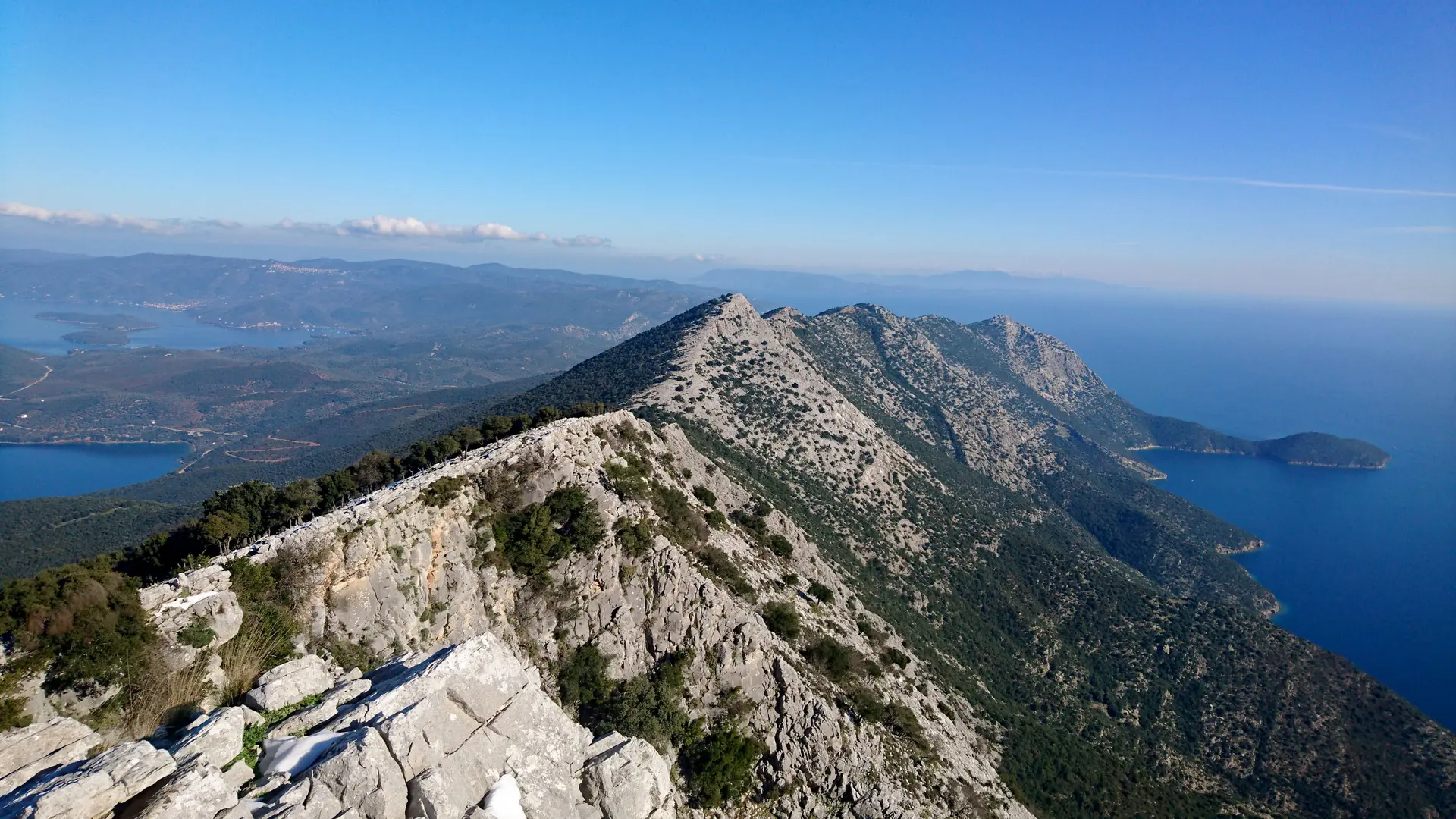
Image of Mt. Pelion. Image source · CC-BY-SA-2.0
Visit essentials
A quick read before you go
- Duration
- Two to three days minimum to visit key villages, hike to Chiron's cave, and walk one of the…
- Access
- Gateway city: Volos, located at the base of the Pelion peninsula.
Overview
Pelion earned sacred status through abundance rather than height or isolation. Greece's green mountain is an anomaly amid sun-bleached rock and dry scrub: beech forests, chestnut groves, ancient plane trees, over three thousand herb species in its ravines and meadows, year-round streams, and waterfalls in gorges that never fully dry. Where water and vegetation are often scarce, Pelion is almost recklessly alive.
Ancient myth placed Chiron here, the wise centaur who discovered plants' healing properties and taught students to mend as well as fight. In his Pelion cave he raised Asclepius, later god of medicine; trained Jason, who built the Argo from Pelion timber; and schooled Achilles in warfare and the arts. Unlike Olympus's power or Parnassus's prophecy, Pelion was a school whose curriculum was compassion, observation, and careful study of what grows.
That curriculum persists in altered form. Centaurea, named for Chiron, still flowers here. Researchers document 253 medicinal plant taxa across 39 botanical families, while village herbalists maintain knowledge tracing, however loosely, to traditions older than writing. The peninsula's twenty-four villages hold churches with unbroken Orthodox liturgies, monasteries founded during Ottoman centuries, and festivals merging sacred observance with communal celebration in a way recognizable to ancient Greeks at a mountain feast.
Why this place is sacred
The thinness of Pelion operates differently from that of most sacred mountains. Where Olympus overwhelms with vertical drama and Sinai strips the landscape to bare stone, Pelion saturates. Every surface holds something growing. Every path passes through layers of green. The air carries the scent of oregano, thyme, and sage so persistently that the fragrance becomes a kind of atmosphere, a medium through which the mountain communicates.
This botanical extravagance is the foundation of the Chiron myth, and walking through Pelion's forests is the closest experience available to understanding why the ancients placed their healer-teacher here and nowhere else. The mountain does not merely host plants; it produces them with an intensity that borders on the communicative. Over three thousand herb species grow on slopes that are only thirty-six kilometers long.
Academic botanists have documented 253 medicinal taxa, and the genus Centaurea carries the centaur's name into Linnaean taxonomy. The landscape is a living pharmacopoeia.
The peninsula's geography reinforces the sense of crossing into another order of reality. Pelion juts into the sea between the sheltered Pagasetic Gulf to the west and the open Aegean to the east, creating a place that belongs fully to neither land nor water. The western villages look across calm water to the industrial city of Volos; the eastern villages face open ocean and the islands of the Sporades. At the summit, these two worlds meet.
The ancient altar to Zeus Actaeus on Pourianos Stavros marked this meeting point — the place where earth, sea, and sky converged.
Chiron's cave near Milies embodies the cave archetype that appears in sacred traditions across the world: a threshold between the surface world and something deeper. The cave reaches ten to fifteen meters in height, opening into the gorge of Taxiarchis. Here, according to the myth, the greatest heroes of Greece descended into darkness to learn what they needed to know. The cave was not a hiding place. It was a place of formation.
Mount Pelion served as the mythological seat of Chiron the centaur — the archetypal healer-teacher who founded the tradition of herbal medicine and educated heroes in combat, virtue, music, and compassion. The summit of the mountain held an altar to Zeus Actaeus (or Akraios), where seasonal festivals were conducted. The mountain's timber provided the hull of the Argo, and the port of Pagasae at its foot was the departure point of the Argonauts.
In the cosmic geography of the Gigantomachy, Pelion was one of three mountains (with Olympus and Ossa) that the giant twins Otus and Ephialtes attempted to stack in their assault on heaven.
The organized worship of Zeus at the summit faded with the decline of ancient Greek religion, though the precise timeline on Pelion is poorly documented. Christian monasticism arrived in the 14th century, with the Monastery of Agios Lavrentios founded in 1378. During the Ottoman period, Pelion's relative autonomy allowed its villages to become centers of Greek education and cultural preservation, with monasteries and churches serving as repositories of learning and identity.
The revolution of 1821 began in Pelion at the Church of Pamegiston Taxiarhon in Milies, led by Anthimos Gazis.
In the modern period, the mountain has become a destination for hikers, botanists, and cultural tourists. The ancient kalderimi stone paths have been restored as hiking trails. Herbal tourism connects visitors to the Chironian tradition through guided botanical walks. The panigiria festivals continue as living links between Orthodox Christianity, village identity, and older patterns of seasonal celebration. The mountain has never been fully secularized; its sacred geography has simply accumulated new layers without losing the old ones entirely.
Experience and orientation
The experience of Pelion begins with a shift in the quality of light. Driving up from Volos through the first villages — Portaria, Makrinitsa — the landscape changes from Mediterranean coastal to something closer to central European forest. The air cools. The trees close in. Stone walls line the roads. By the time you reach the upper villages, you are in a world that bears almost no resemblance to the Greece of postcards and package tours.
Makrinitsa calls itself the balcony of Pelion, and the name is earned. The village hangs on the mountainside at six hundred meters, its central plateia shaded by a plane tree of enormous age, its view sweeping across the Pagasetic Gulf to the mountains of the mainland. The churches here — Agios Ioannis, the Church of the Assumption — hold frescoes that condense centuries of devotion into painted surfaces no larger than a room.
The deeper experience lies on the paths. The kalderimi are stone-paved trails that connected Pelion's villages before roads existed, and many have been restored as hiking routes. Walking these paths is the closest approximation to how the mountain has been experienced for centuries: on foot, through forest, with the smell of herbs rising from the ground with every step.
The path from Milies to Tsagarada passes through some of the densest and most varied forest in Greece — beech, oak, chestnut, wild apple, arbutus — with the understory carpeted in ferns and wildflowers in spring.
Chiron's cave lies in the gorge of Taxiarchis near Milies, accessible by a hiking trail that descends into the ravine. The cave itself is not a tourist attraction in the conventional sense. There are no interpretive panels or guardrails. The space is simply there — a high, vaulted opening in the rock face, cool and shadowed, with the sound of water somewhere below.
Whether this is the cave the ancients meant when they spoke of Chiron's dwelling is archaeologically unconfirmed, but the place carries the quality of a threshold. Standing inside and looking out at the green gorge, it is easy to understand why someone would place a story of healing and teaching here.
The eastern villages face a different world. Damouchari, Fakistra, Mylopotamos — these are places where the mountain meets the sea, where forested gorges open onto small beaches of white pebble and turquoise water. The contrast between the dark forest above and the bright sea below creates a compression of landscapes that reinforces Pelion's essential character as a place of abundance and convergence.
Begin at Volos, the gateway city at Pelion's base. Drive or take a local bus to Portaria or Makrinitsa for the upper western villages. For Chiron's cave, base yourself in Milies or Vizitsa and ask locally for the trail into the Taxiarchis gorge. For the kalderimi hiking experience, the Milies to Tsagarada route is among the finest. For the eastern coast, continue to Damouchari or Agios Ioannis. Allow the mountain to set the pace.
Pelion is not a place for checklists. Its gift is the accumulation of small encounters — an herb-scented path, a frescoed chapel, a village plateia where the plane tree has been alive longer than anyone can remember.
Context and lineage
The mythology of Pelion centers on Chiron, the centaur who was unlike any other centaur. Where the other centaurs were wild and violent, Chiron was wise, gentle, and learned. He was the son of the Titan Cronus and the Oceanid Philyra, conceived when Cronus took the form of a horse. His mother, ashamed of his hybrid form, abandoned him.
He was raised on Pelion, and it was there that he discovered the healing properties of the mountain's extraordinary herbs — becoming, in the Greek tradition, the founder of medicine itself.
Chiron's cave became a school. The young Asclepius was brought there to learn healing, and he would go on to become the god of medicine, his staff and serpent still the symbol of the profession. Jason was raised by Chiron after his uncle Pelias seized the throne of Iolcus at Pelion's foot.
Achilles was entrusted to the centaur by his father Peleus, who had married the sea-goddess Thetis in a famous wedding feast held outside Chiron's cave — a celebration attended by all the Olympian gods, where the uninvited Eris cast her golden apple and set the Trojan War in motion.
The Argo itself was built from Pelion's timber, its hull shaped from the mountain's forests with a prophetic beam from Dodona's sacred oak. It sailed from Pagasae at the mountain's foot, carrying Jason and fifty heroes toward Colchis. In the cosmic register, the twin giants Otus and Ephialtes attempted to pile Pelion and Ossa onto Olympus to storm the heavens, giving the world the expression 'to pile Pelion upon Ossa' for any act of ambitious excess.
The sacred lineage of Pelion moves from the pre-Homeric mythological tradition, through the classical period with its summit altar to Zeus Actaeus attested by the philosopher Dicaearchus in the 4th century BCE, into the Byzantine monastic tradition beginning with the Monastery of Agios Lavrentios in 1378. During the Ottoman centuries, Pelion's villages maintained relative autonomy, and their churches and monasteries served as centers of Greek education, cultural preservation, and eventually revolutionary action.
The living lineage today comprises Greek Orthodox liturgical life in the peninsula's many churches, the panigiria festival tradition that merges religious observance with communal celebration, and the botanical-herbal tradition that connects the mountain's actual biodiversity to its founding myth. Academic botany has, in a sense, confirmed what mythology always claimed: this mountain heals.
Chiron (Cheiron)
The wise centaur, son of Cronus and Philyra, who dwelt in a cave on Mount Pelion and discovered the healing properties of the mountain's herbs. He is the mythological founder of medicine and the archetypal teacher-healer, having educated Asclepius in the art of healing, Jason in leadership, and Achilles in both warfare and the arts. His name lives on in the genus Centaurea, which flowers on Pelion's slopes to this day.
Asclepius (Asklepios)
God of medicine, raised by Chiron on Mount Pelion and taught the art of healing through herbs and surgery. His education on Pelion represents the mythological origin of the Greek medical tradition. His cult at Epidaurus and other healing sanctuaries across the ancient world traced its lineage back to what Chiron taught him on this mountain.
Jason
Leader of the Argonauts, raised by Chiron on Pelion after his uncle Pelias usurped the throne of Iolcus at the mountain's foot. The Argo was built from Pelion's timber and sailed from Pagasae, the port below the mountain. Jason's quest for the Golden Fleece began in the shadow of Pelion and was made possible by what its forests and its centaur provided.
Peleus and Thetis
The mortal king and the sea-goddess whose wedding feast was held at Chiron's cave on Pelion, attended by all the Olympian gods. Their union produced Achilles. The wedding is one of the most consequential events in Greek mythology: the uninvited goddess Eris cast a golden apple among the guests, igniting the sequence of rivalries that led to the Judgment of Paris and the Trojan War. The mountain itself may take its name from Peleus.
Anthimos Gazis
Scholar, clergyman, and revolutionary who launched the Greek War of Independence in Thessaly from the Church of Pamegiston Taxiarhon in Milies on Mount Pelion in May 1821. His act of revolution from a village church on a mountain that had preserved Greek learning through centuries of Ottoman rule makes him the figure who most directly links Pelion's spiritual and political dimensions.
Traditions and practice
The traditional sacred practices of Pelion are known more through mythology than through detailed ritual records. The summit altar to Zeus Actaeus on Pourianos Stavros, attested by the philosopher Dicaearchus in the 4th century BCE, hosted festivals whose precise form has been lost. What survives is the knowledge that this was a place of mountaintop worship within the broader Greek tradition of consecrating high places to Zeus.
The cave of Chiron represents a different order of practice: not formal worship but the mythological archetype of education-as-sacred-act. Chiron's teaching of heroes — in healing, combat, music, virtue, and the knowledge of plants — frames learning itself as a spiritual practice. The cave was a school before it was a shrine, and the tradition it founded valued observation, compassion, and the careful study of the natural world as forms of reverence.
The construction of the Argo from Pelion's timber embedded another practice into the mountain's mythology: the transformation of natural materials into instruments of quest and discovery. The forest was not merely a resource but a participant in the sacred narrative.
Greek Orthodox worship forms the primary living sacred practice on Pelion. The peninsula's churches — hundreds of them, from grand village churches to tiny roadside chapels — hold regular liturgies, and the mountain's annual calendar is structured around the feast days of patron saints.
The panigiria are the most visible expression of Pelion's living sacred tradition. These village festivals combine religious services and the procession of icons with communal feasting, traditional music, and dancing. Notable celebrations include the feast of Agios Georgios in Keramidi on April 23, Agia Marina in Kissos on July 17, the Assumption of the Virgin in multiple villages on August 15, and Agios Ioannis Prodromos in Vizitsa on August 29. These festivals are not performances for tourists.
They are the living pulse of village spiritual life, open to all who arrive with goodwill.
Herbal gathering and botanical tourism represent the contemporary continuation of the Chironian tradition. Local herbalists and tour operators lead walks through the mountain's botanical landscape, identifying medicinal plants and sharing knowledge that connects, however indirectly, to traditions older than writing. The practice of learning from the mountain's plants, with attention and respect, is perhaps the closest available approximation to what Chiron's students may have done.
Walk one of the kalderimi paths in the early morning, before other hikers are about. Let the scent of the herbs register before you try to identify them. Pelion teaches through accumulation, not revelation — the sacred here is distributed across thousands of small encounters rather than concentrated in a single dramatic moment.
If you visit Chiron's cave, sit inside for a while rather than photographing it and moving on. The cave is a threshold space, and its quality becomes apparent only in stillness. Listen to the sound of water in the gorge below.
Consider that the tradition of Western medicine traces its mythological origin to this place — not to a temple or a palace, but to a cave on a green mountain where a centaur taught a young man to pay attention to what grows.
If your visit coincides with a panigiri, attend. You will be welcomed. The experience of religious procession followed by communal feasting, music, and dancing under the plane trees of a village plateia is one of the most complete encounters with living sacred tradition available in Greece.
Ancient Greek Religion — Worship of Zeus Actaeus and the Chiron Tradition
HistoricalMount Pelion held a summit altar to Zeus Actaeus (or Akraios), placing it within the Greek tradition of mountaintop worship, attested by the philosopher Dicaearchus in the 4th century BCE. The Chiron tradition — the wise centaur as founder of herbal medicine and tutor of heroes — is the mountain's most significant mythological contribution. It connects Pelion to the origins of Greek medical and educational traditions and is ecologically grounded in the mountain's extraordinary biodiversity.
Festivals at the summit altar of Zeus Actaeus, details of which have been largely lost. The mythological practices of Chiron's cave — education in healing, archery, music, and virtue — represent an archetype of sacred pedagogy rather than a documented ritual tradition. The building of the Argo from Pelion timber and the wedding feast of Peleus and Thetis are narrative traditions that locate the mountain within the larger framework of Greek myth.
Greek Orthodox Christianity
ActiveThe Greek Orthodox tradition on Pelion extends from the 14th century to the present, with hundreds of churches and several monasteries forming the spiritual architecture of village life. During the Ottoman period, these institutions served as centers of Greek education and cultural preservation. The revolution of 1821 in Thessaly began at the Church of Pamegiston Taxiarhon in Milies, linking Pelion's spiritual tradition directly to the birth of the modern Greek state.
Regular liturgies in village churches, saint's day celebrations, panigiria festivals combining religious procession with communal feasting and dance, monastery pilgrimages, and the lighting of candles and veneration of icons. The annual calendar of feasts structures village life and provides continuity with centuries of tradition.
Panigiria — Village Festival Tradition
ActiveThe panigiria are annual celebrations tied to the Greek Orthodox calendar that combine religious observance with communal festivity. They represent a living link between Pelion's spiritual identity and its cultural heritage, and they echo the ancient Greek tradition of festivals that merged sacred ritual with public celebration.
Religious services and procession of icons through the village, followed by communal feasting, traditional music, and dancing in the village plateia. Major celebrations include Agios Georgios in Keramidi on April 23, Agia Marina in Kissos on July 17, the Assumption of the Virgin in multiple villages on August 15, and Agios Ioannis Prodromos in Vizitsa on August 29. Visitors are welcomed and included.
Chironian Herbal and Healing Tradition
ActiveThe living continuation of Pelion's association with medicinal herbs, connecting the mythological tradition of Chiron as the founder of herbal medicine to the mountain's documented biodiversity. Over 3,000 herb species grow on the mountain, with 253 medicinal taxa documented across 39 botanical families. The genus Centaurea is named for the centaur tradition.
Herb gathering, herbal medicine preparation, botanical tours, and the integration of mountain herbs into local cuisine and traditional remedies. Academic research and cultural tourism programs connect visitors to this heritage through guided botanical walks that frame plant knowledge as a continuation of Chiron's legacy.
Perspectives and open questions
Pelion can be read as a geological peninsula, a botanical treasury, a mythological landscape, or a living community where ancient and modern sacred traditions coexist without needing to be reconciled. Each reading illuminates something the others leave in shadow.
Scholarly perspective
Scholars recognize Mount Pelion as one of the most mythologically dense landscapes in Greece, second only to the Olympus-Dion complex in the breadth of its mythological associations. The Chiron tradition is generally interpreted as reflecting the mountain's actual biodiversity and the role of Thessaly as an early center of botanical and medical knowledge. The centaur myths more broadly are understood by many scholars as reflecting encounters between settled agriculturalists and the horse-riding pastoral peoples of the Thessalian plain.
The summit altar of Zeus Actaeus is attested by the philosopher Dicaearchus, a student of Aristotle writing in the 4th century BCE, placing Pelion within the well-documented Greek tradition of mountaintop worship. The port of Pagasae and the city of Iolcus at the mountain's base are confirmed archaeological sites with Bronze Age habitation, lending material support to the Argonaut traditions.
Academic botanical research has documented 253 medicinal plant taxa across 39 families on Pelion's slopes, providing empirical verification of the mountain's association with healing plants. The genus Centaurea, named for the centaur tradition, includes species that grow on the mountain. This convergence of mythology and ecology is unusual in its directness and has made Pelion a subject of interest in ethnobotanical studies examining the relationship between ancient plant knowledge and modern pharmacology.
Living and traditional perspectives
For the communities of Pelion, the mountain is not a mythological relic but a living home. The villages' spiritual identity is expressed through the cycle of Orthodox liturgies, the panigiria festivals that mark the calendar, and the intimate relationship with the land that comes from centuries of cultivation, herbal gathering, and forest stewardship.
The ancient myths are known and acknowledged, but they exist alongside rather than above the daily reality of village Christianity. The Church of Pamegiston Taxiarhon in Milies, from which Anthimos Gazis launched the 1821 revolution, is more immediately meaningful to many residents than Chiron's cave. The monasteries — Agios Lavrentios, Flamouriou, Gerasimos — represent not archaeological curiosities but functional links in a chain of spiritual life that extends back to the 14th century and forward into the present.
Alternative interpretations
Some visitors and writers approach Pelion through the lens of sacred ecology, reading the Chiron myth as a parable about the relationship between human consciousness and the plant world. The centaur as half-human, half-animal becomes a figure of integration — the healer who bridges the gap between civilized knowledge and wild nature. The cave as classroom becomes a model for learning that begins with attentiveness to what is already present rather than with the imposition of human categories.
The mountain's herbal richness supports readings from contemporary plant-based healing traditions and ethnobotanical perspectives. The connection between Chiron's mythological herb-lore, the documented 253 medicinal taxa, and the local herbal tradition that persists in village life offers a rare case where ancient sacred narrative, ecological reality, and living practice converge. Some interpret the Pelion-Ossa-Olympus triad as an axis mundi or cosmic ladder, with Pelion as the earthly, healing pole and Olympus as the celestial, governing pole.
Open questions
The exact nature of the worship at the altar of Zeus Actaeus on Pelion's summit remains largely unrecovered. That the altar existed is attested. What was done there, by whom, and how often are questions the sources do not answer in detail.
Whether Chiron's cave near Milies was an actual ancient cult site with evidence of ritual use or a later identification imposed on a natural feature has not been definitively resolved. A peer-reviewed article from PubMed Central has explored the cave as a possible prehistoric healing site, but conclusive archaeological evidence is lacking.
The broader question of how the transition from pagan to Christian sacred geography occurred on Pelion — which church sites overlie earlier cult sites, and whether the monastic tradition consciously claimed places already marked as sacred — has not been systematically studied. The mountain holds stories it has not yet been asked to tell.
Plan your visit
Access and arrival
Gateway city: Volos, located at the base of the Pelion peninsula. By air: Volos-Nea Anchialos Airport (VOL) handles domestic flights. International travelers typically fly to Athens (ATH, approximately four hours by car) or Thessaloniki (SKG, approximately two and a half hours by car). By bus: KTEL buses run from Athens to Volos in roughly four hours and from Thessaloniki in roughly two and a half hours. Local buses connect Volos to Portaria and other Pelion villages, though service is limited.
By car: Rental car is strongly recommended for exploring the peninsula. Roads are paved but winding. The historic Moutzouris narrow-gauge railway operates a heritage route between Ano Lechonia and Milies, primarily as a scenic tourist experience. Chiron's cave is accessible via a hiking trail from Milies village into the Taxiarchis gorge. Mobile signal is generally available in villages but can be unreliable on remote trails.
Pelion's traditional villages offer a range of guesthouses, restored stone mansions, and small hotels. Portaria and Makrinitsa are popular for their proximity to Volos and their views over the Pagasetic Gulf. Milies and Vizitsa are excellent bases for hiking and visiting Chiron's cave. Tsagarada, Kissos, and Zagora serve the northern peninsula. Eastern coast villages like Agios Ioannis and Damouchari offer beach access. Volos itself has full urban services. Guesthouses typically offer breakfast and operate in traditional stone buildings.
Booking ahead is essential in July, August, and Greek holiday weekends.
Respectful visit
Modest clothing in churches and monasteries: covered shoulders and knees for all visitors. Hiking attire should be practical and layered, with sturdy footwear for the kalderimi paths. No special dress requirements for villages or outdoor sites.
Photography is freely permitted outdoors and in public spaces. Inside churches and monasteries, ask permission before photographing. Flash photography and tripods are generally not welcome in religious interiors. During panigiria and religious processions, photograph with discretion and ask before taking close-up portraits. Some monasteries may prohibit photography of icons and frescoes.
Candle-lighting is the standard offering in Greek Orthodox churches and is available in all functioning churches on Pelion. Monetary donations to monasteries and churches are appreciated. There are no formal offering traditions at outdoor mythological sites. If you feel moved to mark a visit to Chiron's cave, do so in a way that leaves no physical trace.
Monasteries may have limited visiting hours and may close during services. Some may restrict access for women or require additional covering. Do not enter roped-off areas in churches or archaeological sites. Herb gathering may be regulated; check locally before collecting. Stay on marked trails in sensitive ecological areas. No fires in forested areas.
The herbal richness of Pelion should be appreciated with awareness. Do not gather herbs without understanding local regulations and conservation concerns. Some rare species are protected. The mountain's biodiversity is part of its sacred heritage, and the responsible response to abundance is restraint, not consumption.
Some trails, particularly those descending into gorges, can be steep and slippery. Chiron's cave trail requires reasonable fitness and sturdy footwear. Higher elevations may be inaccessible in winter due to snow. Always carry water and sun protection, even on forested trails.
Current practical details
Address
Pelion, Zagora 370 01, Greece
Hours, fees, and access can change — verify on the official source before you travel. Practical details last checked Jun 2026.
Location
Map loads as you approach this section.
Pilgrim reflections
A portrait of encounter, not a score
Pilgrims describe what they felt, how present they could become, and whether the place would shape a journey. There are no stars and no ranking of traditions.
No reviewed reflections yet
The first pilgrims can help describe the character of being here.
Share a reflection
Available after an account-backed “Been there.” Every reflection is reviewed before publication.
Nearby sacred places
Explore other sacred places in the region. Proximity does not establish access or travel time; check each place’s guidance.
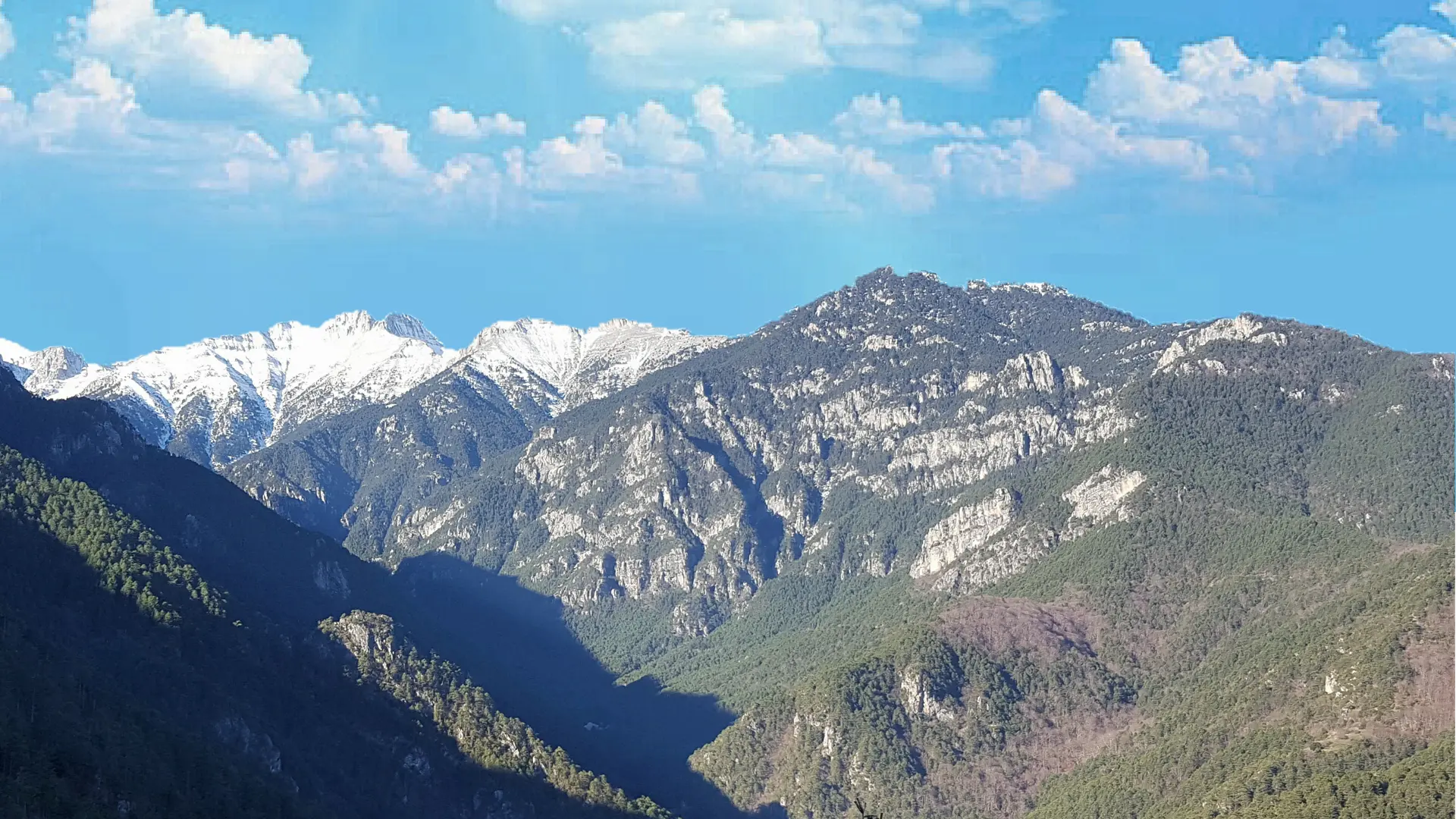
Mt. Olympus
Dion - Olympos Municipality, Thessaly, Greece
93.2 km away

Mount Parnassus
Delphi, Phocis and Phthiotis, Central Greece, Greece
107.3 km away

Corycian Cave
Delphi, Mount Parnassus, Phocis, Central Greece, Greece
112.3 km away
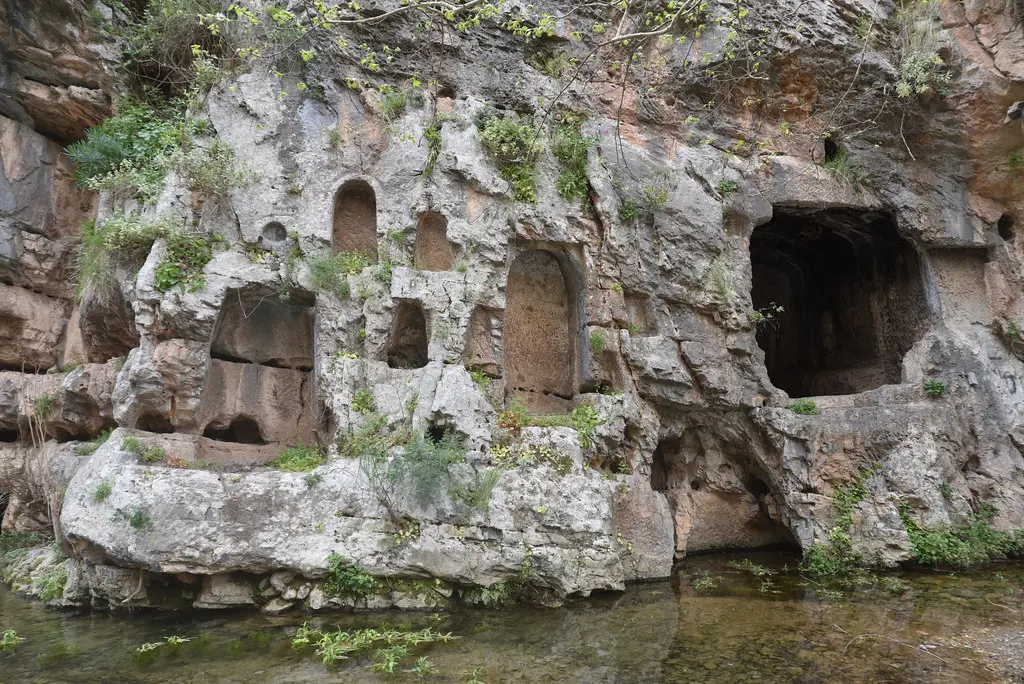
Trofonion Oracle, Livadia, Greece
Levadia Municipal Unit, Central Greece, Greece
112.9 km away
Share a photo
Help visitors recognize Mt. Pelion. Every submission is reviewed before publication.