Meteora
Six monasteries suspended on sandstone pillars between the earth and something older
Understand sacred places, explore living traditions, and learn how to engage respectfully with Pilgrim Map.
Access has not been verified. Check current local guidance before planning a visit.
Kalabaka, Thessaly, Greece
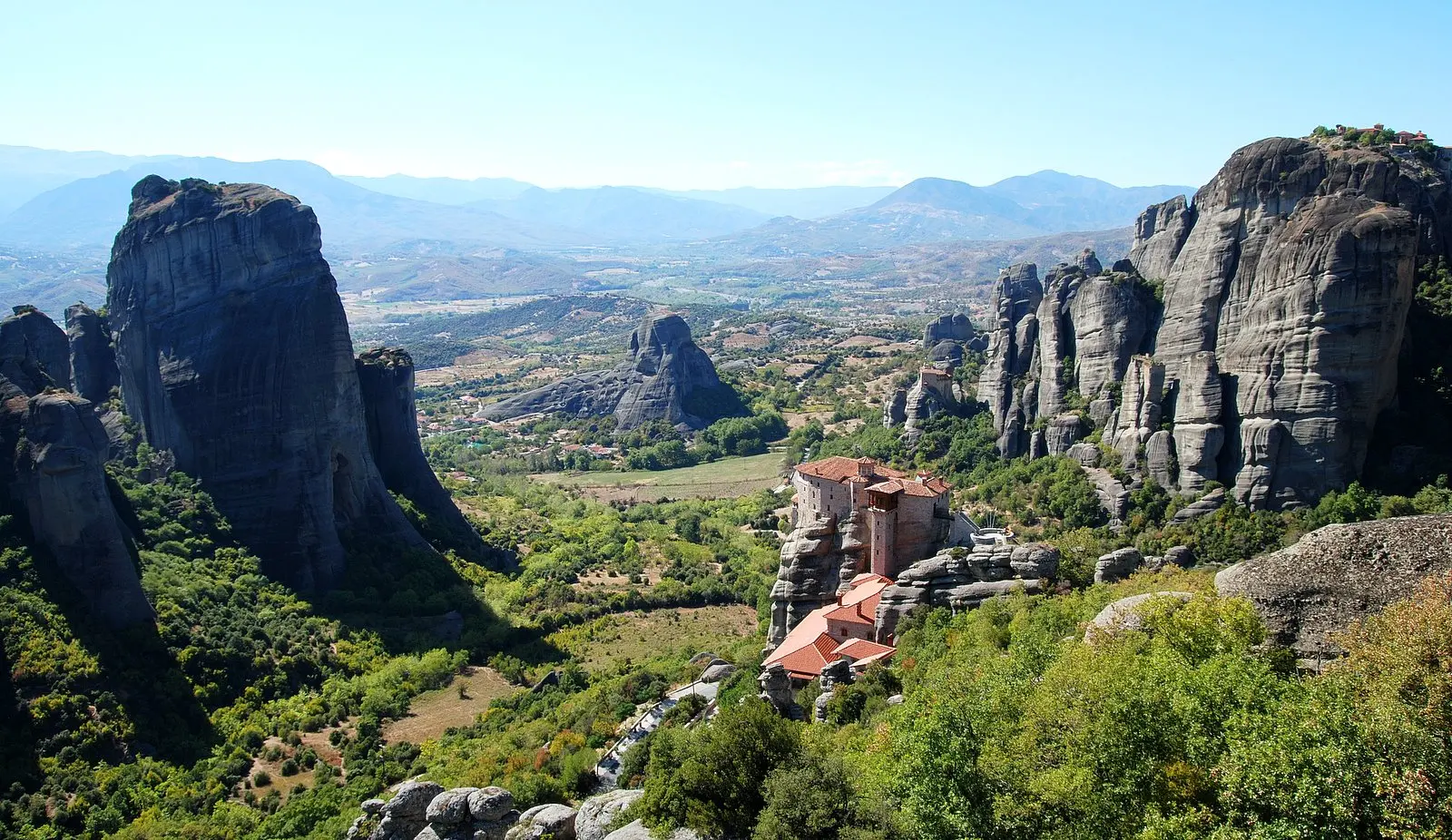
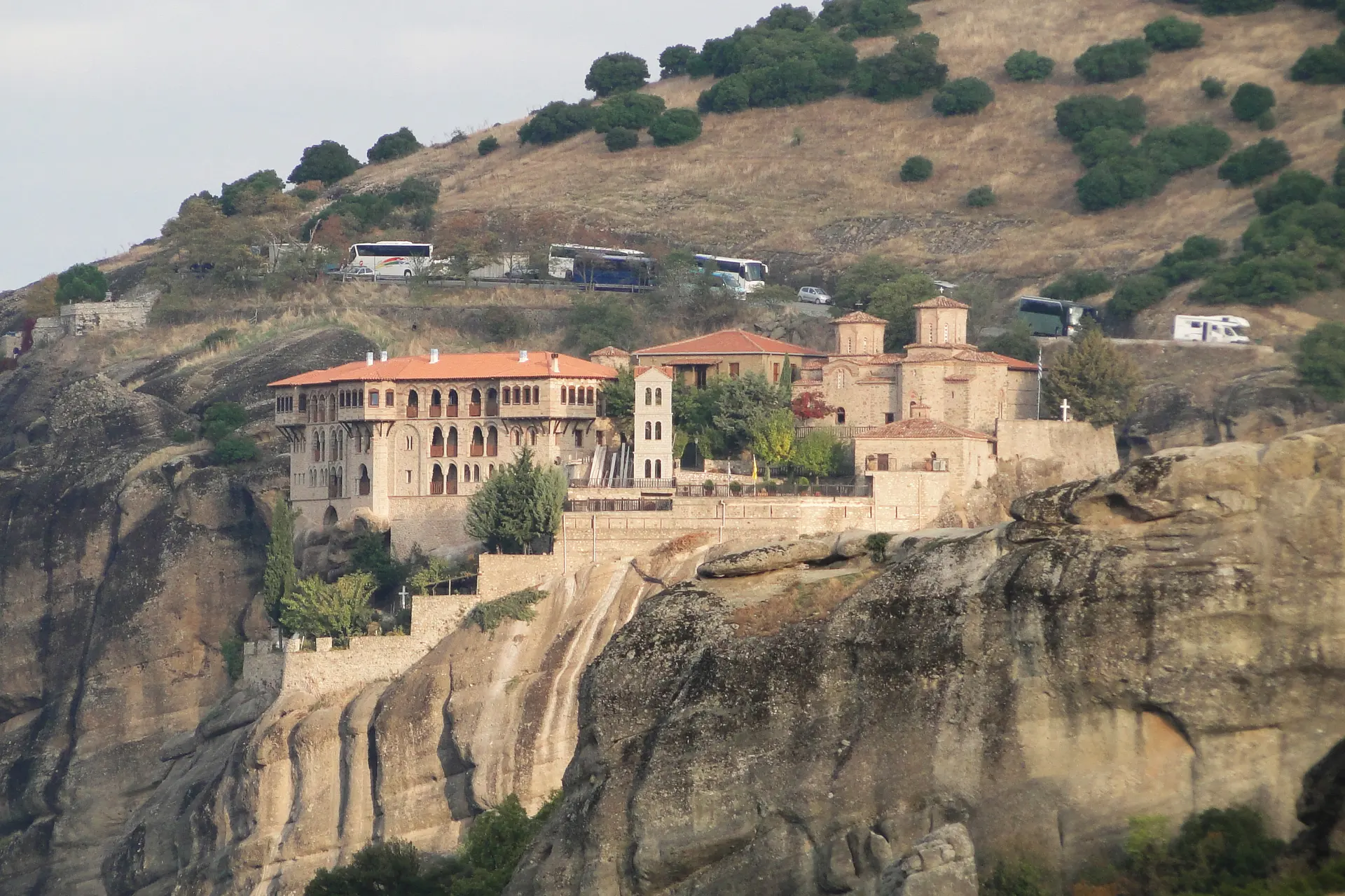
Image of Meteora. Image source · CC-BY-SA-3.0
Visit essentials
A quick read before you go
- Duration
- Minimum one full day.
- Access
- Nearest towns are Kalambaka, at the foot of the rock formations, and the village of Kastraki,…
Overview
Sixty million years of sedimentation and erosion formed Meteora's pillars; twelve centuries of aspiration placed monasteries atop them. The landscape resists adequate description and rewards sustained attention.
Conglomerate and sandstone remnants of a river delta emptying into a prehistoric sea were lifted tectonically and carved by millennia of weathering into sheer, rounded towers. Smooth surfaces rise vertically or overhang from the valley floor; summits are flat enough to build on yet steep enough to make construction an act of genius or desperation.
From the ninth century, hermit monks inhabited caves and lower rock shelters for contemplative isolation. A loose community gathered around Doupiani chapel by the twelfth century. In the fourteenth, Saint Athanasios the Meteorite came from Mount Athos and organized the scattered hermitages on Broad Rock, the tallest and most improbable summit, naming it Meteoron—suspended between heaven and earth.
At the fifteenth- and sixteenth-century peak, twenty-four monasteries housed over two thousand monks. Rope ladders and net baskets, hand-winched upward, remained the access method into the twentieth century. Six active monasteries survive: four male communities and two female. They are working monasteries, not museums or reconstructions; Divine Liturgy is celebrated daily, canonical hours order each day, and monks and nuns live cenobitically as Athanasios intended six hundred years ago.
Treasures include sixteenth-century frescoes UNESCO recognizes as masterpieces of post-Byzantine painting, illuminated manuscripts, icons, and carved wooden iconostases. Great Meteoron, oldest and largest, was endowed by a Serbian prince who abdicated to become a monk. Varlaam's All Saints chapel retains its painted walls. Roussanou rises from a narrow, sheer pinnacle as if its walls grow from stone; Holy Trinity hangs above an immeasurable void.
Places within this site
Why this place is sacred
The quality that visitors recognize at Meteora before they have language for it is verticality made sacred. The rock pillars impose a constant upward orientation. The eye is drawn from the valley floor to the cliff faces, from the cliff faces to the monastery walls, from the walls to the crosses and bell towers at the summit, from the summits to the sky.
The entire landscape is organized along a vertical axis, and the effect on the person standing within it is a bodily sense of elevation — not metaphorical but kinesthetic, a physical pull toward the high.
The hermit monks who first inhabited these formations understood this instinctively. They were seeking separation from the world, and the pillars provided it in its most literal form. A monk living in a cave a hundred meters above the valley floor was removed from secular life not by a wall or a gate but by empty air. The inaccessibility was the point. It made every arrival an act of commitment and every departure a conscious choice.
When Athanasios established the first organized monastery on the Broad Rock in the mid-fourteenth century, he brought with him the cenobitic tradition of Mount Athos. The discipline of communal prayer, communal meals, communal work — layered onto the already extraordinary physical setting — concentrated spiritual attention in a way that few places on earth have matched. For nearly seven hundred years, monks have been praying at these altitudes. That accumulation is present.
Whether one calls it spiritual energy, historical resonance, or simply the unavoidable awareness that this place has mattered to people for a very long time, it inflects the experience of standing here.
The light helps. The Thessaly plain to the east catches the morning sun and reflects it upward into the pillars, turning the sandstone surfaces gold and amber. In the late afternoon, the western light carves the formations into sharp relief, shadow filling the gaps between pillars while the summits remain illuminated. At sunset, the entire complex seems to lift from the earth and float. The name was well chosen.
But the deepest layer of Meteora's thinness may be the simplest: the fact that these monasteries should not be here. Every rational calculation argues against building anything on these summits. The logistics were impossible, the access murderous, the construction a sustained defiance of gravity and common sense. That they were built anyway, and that they endure, says something about the force of the impulse that put them here. The thinness of the place is inseparable from the improbability of it.
The earliest hermits sought Meteora's caves for ascetic withdrawal from the world. The vertical formations provided physical separation from secular life that no wall could match. When Saint Athanasios established organized monasticism at the Great Meteoron in the mid-fourteenth century, the purpose deepened: the site became a cenobitic community modeled on Mount Athos, dedicated to communal prayer, worship, and the preservation of Orthodox Christian monastic tradition.
The very inaccessibility that made building here nearly impossible also made the monasteries natural refuges during periods of political upheaval and Ottoman expansion.
The transformation of Meteora tracks the familiar arc of monastic foundations: growth, flowering, decline, and partial recovery. From scattered hermitages in the ninth through twelfth centuries to a booming monastic complex of twenty-four monasteries in the fifteenth and sixteenth centuries, Meteora became the second most important monastic center in Greek Orthodoxy after Mount Athos. The Ottoman period brought gradual decline: diminishing populations, economic hardship, the slow attrition of isolation without patronage.
By the early twentieth century, most monasteries were abandoned or periodically uninhabited. Revival came from two directions: monks from Mount Athos who arrived to repopulate the surviving foundations, and modern infrastructure — steps carved into rock in the 1920s, roads built in the 1960s — that replaced the ropes and nets with accessible pathways.
The UNESCO inscription in 1988 brought global recognition and, with it, tourism on a scale that now tests the monasteries' capacity to remain what they have always been: places of prayer.
The tension between preservation and access, between pilgrimage and tourism, between the silence that monasticism requires and the noise that hundreds of thousands of annual visitors produce, defines Meteora's present moment.
Experience and orientation
Approach from the east, from Kalambaka, and the pillars announce themselves against the sky like a geological hallucination. They do not look like any rock formations you have seen. They are too smooth, too vertical, too numerous, too tall. The mind reaches for comparisons — Cappadocia, Monument Valley, the towers of Guilin — and each comparison fails. Meteora is its own category.
The road from Kalambaka climbs through the village of Kastraki, where houses press against the base of the formations, and then winds upward through the pillar complex itself. Each turn in the road reveals new configurations: pillars standing alone, pillars leaning together, pillars with monasteries balanced on their summits like architectural impossibilities.
The scale is difficult to grasp until you see a figure on a monastery balcony and realize that the building you thought was a moderate structure is actually five stories tall, and the pillar beneath it is ten times taller than that.
The Great Meteoron requires the most steps — over three hundred, carved into the rock face and winding through tunnels. The physical effort is not incidental. It echoes, in diminished form, the experience of the original monks who were hauled upward in net baskets on ropes that frayed and broke. Each step upward is a step away from the valley floor, from traffic, from the patterns of ordinary movement.
By the time you enter the monastery courtyard, you have earned your altitude.
Inside, the katholikon holds the frescoes that justified the UNESCO inscription: scenes of the Last Judgment, the life of Christ, the martyrdom of saints, rendered in the vivid earth tones and gold leaf of post-Byzantine painting. The quality is extraordinary and deserves slow attention. The refectory, the ossuary, the museum collections of manuscripts and vestments — each space opens another layer of monastic life preserved across centuries.
Varlaam is the second largest, reached by a bridge and a climb that delivers you to the chapel of All Saints with its intact painted interior. Roussanou, now a convent, sits on a narrower pinnacle and gives the strongest impression of a building grown from the rock itself. Holy Trinity, reached by 140 steps carved into sheer stone, is the most dramatically isolated of the six and the one most likely to produce genuine vertigo.
St. Stephen, the most accessible monastery, is reached by a small bridge with no steps and is the only one that does not require climbing. St. Nicholas Anapafsas, the smallest, holds the frescoes painted by Theophanes Strelitzas in 1527, considered among the finest post-Byzantine paintings anywhere.
But the experience of Meteora extends beyond the monastery interiors. The viewpoints along the road — particularly Sunset Rock to the west and Sunrise Rock to the east — offer perspectives on the full complex that can produce a silence in the viewer that has nothing to do with quiet.
Standing at Sunset Rock as the light turns the pillars amber and the monasteries catch the last direct sun of the day, you encounter a landscape that has been organized by geology and consecrated by centuries of devotion into something that functions, whether or not you share any particular faith, as a threshold.
Base yourself in Kalambaka or Kastraki for the closest access. Two full days allow unhurried visits to all six monasteries. Visit the less-crowded monasteries first: Holy Trinity, St. Nicholas Anapafsas, and Roussanou receive fewer tour buses. Arrive at opening time. Each monastery has a different closed day, so check schedules before planning your route. Budget thirty to sixty minutes inside each monastery plus travel and climbing time between them. Wear sturdy shoes. Bring water.
Carry a cover-up for the dress code. End at Sunset Rock in the late afternoon. If you have a third day, return at sunrise — the morning light on the eastern faces of the pillars is the closest you will come to seeing them as the first hermits did.
Context and lineage
The rock pillars were carved by time. The sacred community upon them was carved by need.
The geological story begins sixty million years ago, when a river delta deposited sand, gravel, and stone into a prehistoric sea covering the Thessaly plain. Over tens of millions of years, these sediments lithified into conglomerate and sandstone. Tectonic movements uplifted the formations. Erosion — water, wind, temperature — sculpted them into the pillars visible today, a process measured not in centuries but in geological epochs.
The human story begins in the ninth century, when the first hermit monks climbed into caves among the lower formations, seeking the solitude that contemplative practice requires. By the twelfth century, the monk Nilos organized these scattered ascetics into a community centered on the Skete of Doupiani, establishing rules for communal worship on Sundays while preserving the solitary character of daily practice.
The transformation came with Saint Athanasios the Meteorite. Arriving from Mount Athos around 1340, accompanied by his spiritual father Gregory, Athanasios ascended the Broad Rock — the tallest of the pillars accessible to human determination — and named it Meteoron. According to monastic tradition, an eagle carried him to the summit.
Whether the vehicle was an eagle or a rope, the result was the same: Athanasios established a cenobitic community on the summit, bringing the organized monastic discipline of Mount Athos to a landscape that had previously known only hermits.
The formal founding of the Great Meteoron came between 1356 and 1372, endowed by the Serbian Emperor Simeon Uros. His son, John Uros, went further still: he abdicated his rule of Thessaly around 1373 to enter the monastery as the monk Ioasaph, becoming Athanasios's successor and the second founder of the community. A prince who chose a rope-and-net ascent over a throne — the story captures something essential about what Meteora meant to those who built it.
Meteora belongs to the tradition of Eastern Orthodox cenobitic monasticism transplanted from Mount Athos to the extraordinary geological setting of the Thessaly pillars. The monastic discipline follows the Athonite model: communal prayer according to the canonical hours, shared meals in the refectory, obedience to the abbot or abbess, and manual labor in service of the community. The Serbian Nemanjic dynasty provided crucial early patronage, linking Meteora to the broader network of Balkan Orthodox foundations.
The artistic heritage, particularly the sixteenth-century frescoes, connects Meteora to the Cretan school of post-Byzantine painting. UNESCO inscribed the site in 1988 as a mixed World Heritage property under five criteria, recognizing it as both a masterpiece of human creative genius and a superlative natural phenomenon.
Saint Athanasios the Meteorite
Founder of organized monasticism at Meteora. Arriving from Mount Athos around 1340, he ascended the Broad Rock, named it Meteoron, and established the first cenobitic community there between 1356 and 1372. He imported the Athonite monastic model — communal prayer, shared meals, obedience to an abbot — to a landscape previously inhabited by solitary hermits. His vision transformed Meteora from a collection of caves into a monastic complex that would become the second most important in Greek Orthodoxy.
Saint Ioasaph (John Uros)
Serbian prince who abdicated his rule of Thessaly around 1373 to become a monk at the Great Meteoron. Son of Emperor Simeon Uros, he rebuilt and greatly expanded the katholikon in 1387-1388 with patronage from his sister Maria Angelina. His decision to exchange political power for monastic life embodied the spiritual logic of Meteora: that ascending the rock meant ascending beyond the claims of the world.
Theophanes Strelitzas
Cretan painter who created the frescoes at St. Nicholas Anapafsas in 1527, work that UNESCO recognized as marking a key stage in post-Byzantine painting. His achievement at this tiny monastery — painting an entire interior with scenes of extraordinary refinement and emotional depth — represents the artistic peak of Meteora's cultural legacy.
Nilos
Twelfth-century monk who organized the scattered hermits of Meteora into a structured community at the Skete of Doupiani, establishing rules for communal Sunday worship while preserving the eremitic character of daily life. His organizational work laid the foundations on which Athanasios later built.
Theophanis and Nektarios Apsaras
Brothers from Ioannina who rebuilt the Varlaam Monastery in 1541, constructing the chapel dedicated to All Saints. Their work represents the sixteenth-century flowering of Meteoran monasticism, when patrons and builders matched the ambitions of the original founders in expanding the complex to its greatest extent.
Traditions and practice
The traditional practices at Meteora follow the rhythm of Eastern Orthodox monastic life as established by Saint Athanasios in the fourteenth century, itself modeled on the Athonite rule. The day is structured by the canonical hours: Orthros (Matins) before dawn, the Little Hours through the morning, the Divine Liturgy as the central act of worship, Vespers in the late afternoon, and Compline before sleep. Prayer, work, study, and communal meals in the refectory make up the cycle.
The great liturgical events follow the Orthodox calendar. Easter Holy Week is the most significant: austere fasting through Lent, the services of Holy Thursday commemorating the Last Supper, the Holy Friday litany carrying the epitaphion through candlelit processions, and the midnight Resurrection service on Holy Saturday — the most joyful moment in the Orthodox year, celebrated with the lighting of candles, the declaration Christos Anesti, and the pealing of monastery bells that echo across the valley.
Each monastery celebrates its patron saint's feast day with special liturgies: the Transfiguration of Christ at Great Meteoron, All Saints at Varlaam, Saint Barbara at Roussanou. These days attract pilgrims from across Greece and offer the deepest encounter with Meteora as a living religious community rather than a historical site.
The historical practice that most captures the imagination is the rope-and-net access system that endured from the medieval period into the early twentieth century. Monks and supplies were hauled upward in woven net baskets by a windlass, ascending hundreds of meters of open air on ropes that were replaced, according to one famous account, only when they broke.
The system was not merely practical but theological: every ascent was an act of trust, a literal placing of one's life in the hands of God and the brothers turning the windlass above.
The six active monasteries maintain the full cycle of daily liturgical services. Monks and nuns rise before dawn for Orthros and proceed through the canonical hours. The Divine Liturgy is celebrated daily. The monastic communities are small — typically fewer than ten residents per monastery — but the discipline is sustained.
Visitors may enter the monasteries during published opening hours, viewing the courtyards, museums, refectories, and — from a respectful distance — the katholikons with their painted interiors. It is possible to attend a public liturgical service, particularly on Sundays and feast days, though visitors should stand quietly and not disrupt the worship.
Pilgrims may venerate icons and light candles at designated areas within the monastery churches. The Easter celebrations remain the most significant annual event, drawing thousands of Orthodox faithful from across Greece and the wider Orthodox world.
The summer cultural festival Meteora Technis, held in Kalambaka from July through September, includes concerts of ecclesiastical music that provide another point of access to the sacred artistic traditions of the region.
Meteora asks one thing of visitors that few sacred sites can enforce: the act of ascent. Use it. Climb the steps to each monastery slowly, feeling the altitude accumulate, letting each turn in the staircase separate you a little further from the road and the car park below. The steps are the vestige of the old rope-and-net system, and they serve the same function: they make arrival an achievement.
Inside the monasteries, give time to the frescoes. These are not merely decorative. They are theological statements rendered in paint and plaster, and they reward patient looking. The color relationships, the gestures of the figures, the way light falls across the painted surfaces — these become visible only after the eye has slowed down.
If you visit only one monastery at opening time, choose Holy Trinity or St. Nicholas Anapafsas. The smaller spaces and fewer visitors allow a quality of attention that the larger monasteries rarely permit during peak hours. At Holy Trinity, the 140 steps carved into sheer rock deliver you to a silence that feels earned. At St. Nicholas Anapafsas, Theophanes Strelitzas's frescoes occupy a space small enough that you can stand at the center and take in the entire painted world.
End any day at Sunset Rock. What happens there as the light changes is not an event you observe but a condition you enter.
Eastern Orthodox Christianity
ActiveMeteora is regarded as the second most important monastic complex in Greek Orthodoxy after Mount Athos. Six active monasteries maintain daily liturgical cycles, preserve extraordinary post-Byzantine artistic heritage, and sustain the cenobitic tradition established by Saint Athanasios in the fourteenth century. The site's significance extends beyond monasticism to Greek national and cultural identity.
Daily Divine Liturgy and canonical hours at all six monasteries. Easter Holy Week observances with processions and the midnight Resurrection service. Feast-day celebrations on each monastery's patron saint day. Icon veneration and candle lighting. Monastic tonsure for new community members. Fasting according to the Orthodox calendar.
Cenobitic Monasticism (Athonite Tradition)
ActiveSaint Athanasios brought the cenobitic model directly from Mount Athos, transforming Meteora from a landscape of scattered hermits into organized monastic communities following the Athonite rule of communal life. This importation of the Athonite tradition to a dramatically different physical setting represents one of the most successful transplantations of monastic practice in Orthodox Christian history.
Communal prayer according to the canonical hours. Shared meals in refectories. Obedience to the abbot or abbess. Manual labor and monastery maintenance. Study of scripture and theological texts.
Eremitic (Hermit) Monasticism
HistoricalThe earliest form of sacred practice at Meteora, predating organized monasticism by several centuries. Hermit monks inhabited caves and rock shelters from the ninth through eleventh centuries onward, seeking radical physical separation from the world as the foundation for contemplative prayer. Their presence laid the spiritual groundwork for everything that followed.
Solitary prayer and ascetic practice in caves and rock shelters. Gathering for communal worship on Sundays at the Skete of Doupiani. Extreme physical austerity and extended fasting.
Perspectives and open questions
Meteora has been read as geology, as architecture, as devotion, as landscape art, and as an argument about what human beings will attempt when the impulse toward the sacred is strong enough. Each reading reveals dimensions the others miss.
Scholarly perspective
The scholarly consensus recognizes Meteora as one of the most remarkable achievements of Eastern Orthodox monastic civilization, combining extraordinary natural geology with centuries of spiritual dedication and artistic accomplishment. The UNESCO inscription under five criteria — cultural criteria i, ii, iv, and v alongside natural criterion vii — reflects a rare scholarly agreement that the site's significance is genuinely dual: the monasteries are inseparable from the geology, and the geology is elevated by the monasteries.
Art historians emphasize the sixteenth-century frescoes as pivotal in the development of post-Byzantine painting, particularly the work of Theophanes Strelitzas at St. Nicholas Anapafsas. Historians document the complex interplay between the Serbian Nemanjic dynasty, Byzantine political upheaval, and Ottoman expansion in shaping Meteora's development — the site grew partly because it offered refuge during periods when the lowlands were dangerous.
Geologists have recognized the conglomerate rock formations as globally significant examples of erosional processes, with the International Union of Geological Sciences designating them a geoheritage site. There is broad agreement that the monasteries' survival through centuries of political instability and Ottoman rule was facilitated by the sheer inaccessibility of the rock pillars — the same quality that made them sacred also made them defensible.
Living and traditional perspectives
Within the Greek Orthodox tradition, Meteora is understood as a place where the divine intention for monastic life was revealed through the natural landscape itself. The rock pillars are seen not as geological accidents but as columns prepared by providence for spiritual ascent. The monastic founders, particularly Saint Athanasios, are venerated as figures who recognized and fulfilled the spiritual potential of a place that had been waiting for them.
The tradition emphasizes an unbroken chain of prayer connecting the earliest hermits to the monks and nuns living at Meteora today. This continuity is not merely historical but theological: each generation inherits and sustains the prayer of its predecessors, and the accumulation of devotion across centuries is understood to deepen the spiritual reality of the place.
Within Greek national identity, Meteora holds particular significance as a symbol of Orthodox Christian resilience during the centuries of Ottoman domination, when the monasteries served as repositories of Greek language, learning, and religious identity.
Alternative interpretations
Some visitors and writers have approached Meteora through the lens of sacred geography, viewing the formations as an energy vortex or power place where the dramatic geology concentrates telluric forces. The extreme verticality of the pillars is sometimes interpreted through geomantic frameworks as creating a natural amplification of spiritual intention.
Parallels have been drawn between Meteora and other vertical sacred landscapes — Cappadocia, the pillar saints of early Christianity, the cliff monasteries of Tibet — as expressions of a universal human impulse to ascend toward the divine, a cross-cultural pattern suggesting that verticality itself carries spiritual meaning independent of any particular theological framework.
Open questions
The precise methods by which the earliest hermits first scaled the sheer rock faces remain debated. Before ropes and ladders were established, the initial ascents required technical skills and physical courage that have not been satisfactorily explained. Whether there was pre-Christian sacred use of the Meteora formations is uncertain: local folklore suggests ancient associations, but no archaeological evidence confirms this.
The geological explanation for why the distinctive conglomerate formations and their weathering patterns are confined to this relatively small area within the broader mountain range remains incomplete. And the exact number of hermits and monks who inhabited the caves and rock shelters before the organized monastic period is simply unknown — the rock pillars held their communities in silence, and no census was ever taken.
Plan your visit
Access and arrival
Nearest towns are Kalambaka, at the foot of the rock formations, and the village of Kastraki, even closer to several monasteries. By train: Kalambaka has a railway station with connections to Athens via Paleofarsalos and to Thessaloniki, approximately four to five hours from Athens. By bus: KTEL services connect Kalambaka to Athens, Thessaloniki, and Trikala. By car: the most flexible option for visiting the monasteries, with a paved road winding through the complex connecting all six.
Parking is available at or near each monastery. On foot: hiking paths connect the monasteries and offer spectacular views, with the Short Loop and Main Monasteries Circular among popular routes. Accessibility: most monasteries require climbing significant numbers of stone steps. St. Stephen is the most accessible, reached via a small bridge with no steps. Great Meteoron requires over 300 steps. Holy Trinity has 140 steps carved into rock. The site is not wheelchair accessible except for limited areas.
Entrance fee: 5 euros per person per monastery, payable in cash. Children under 12 enter free.
Kalambaka offers a full range of accommodation from budget hostels to boutique hotels, many with direct views of the rock formations. Kastraki, smaller and quieter, places visitors even closer to the base of the pillars. Several hotels in both towns offer rooftop terraces where the illuminated monasteries are visible at night. Restaurants in both towns serve regional Thessalian cuisine.
Respectful visit
Women must wear skirts or dresses that fall below the knee and tops that cover the shoulders completely. Sleeveless tops are not permitted. Men must wear long trousers. Sleeveless tops are not permitted for either gender. Some monasteries provide wrap-around skirts at the entrance for women who arrive in trousers, but visitors should not rely on this. Bring appropriate clothing and change before entering.
Exterior photography is permitted in monastery courtyards and outdoor areas. Interior photography is strictly prohibited in all churches and museum spaces. No photographing of frescoes, icons, or sacred objects. No photographing of monks or nuns. Tripods and flash are prohibited even in outdoor areas. Professional filming requires special permission from the monastic authorities.
Visitors may purchase candles to light in the monastery churches. Small donations are welcomed. The entrance fee of 5 euros per monastery supports ongoing maintenance and preservation.
Do not touch frescoes, icons, or sacred objects. Do not bring food or drinks into the monasteries. Do not enter areas marked as restricted or reserved for the monastic community. Do not use drones near or above the monasteries. Follow all posted signs and instructions from monastic staff. Respect closing times promptly. Each monastery has a specific closed day per week — verify schedules before visiting.
These are active monasteries, not museums. The monastic communities have expressed concern about over-tourism, disrespectful behavior, and the erosion of the contemplative atmosphere that is their reason for being here. Every visit either contributes to or undermines their continued existence as places of prayer. Respect the dress code absolutely. Observe the photography restrictions without exception. Leave when closing time arrives. The monks and nuns who live here did not choose this life to serve as background for photographs.
Current practical details
Address
Kalabaka 422 00, Greece
Hours, fees, and access can change — verify on the official source before you travel. Practical details last checked Jun 2026.
Location
Map loads as you approach this section.
Pilgrim reflections
A portrait of encounter, not a score
Pilgrims describe what they felt, how present they could become, and whether the place would shape a journey. There are no stars and no ranking of traditions.
No reviewed reflections yet
The first pilgrims can help describe the character of being here.
Share a reflection
Available after an account-backed “Been there.” Every reflection is reviewed before publication.
Nearby sacred places
Explore other sacred places in the region. Proximity does not establish access or travel time; check each place’s guidance.
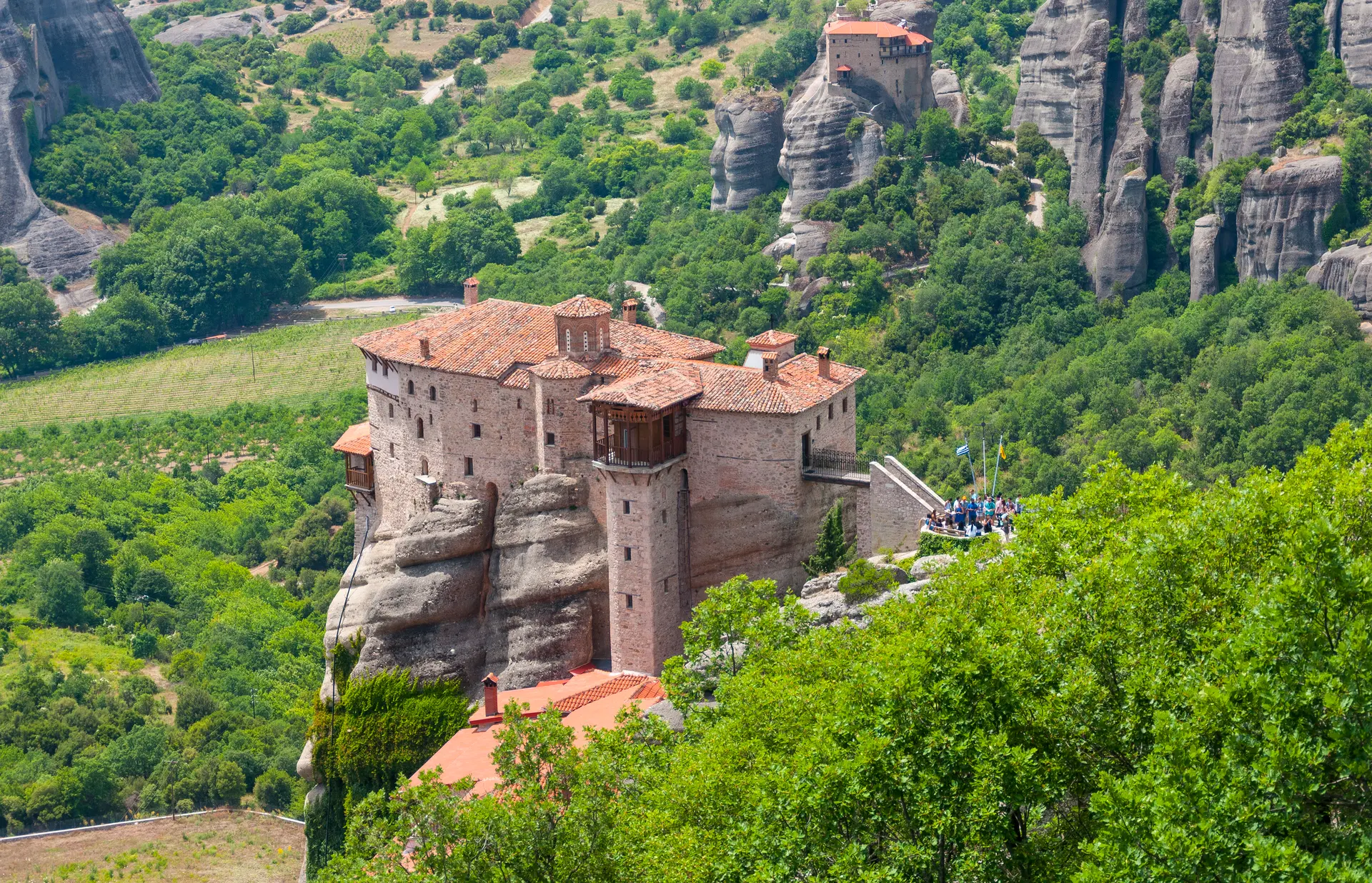
Rousanou Monastery, Meteora
Kastraki, Kalambaka, Thessaly, Greece
0.1 km away
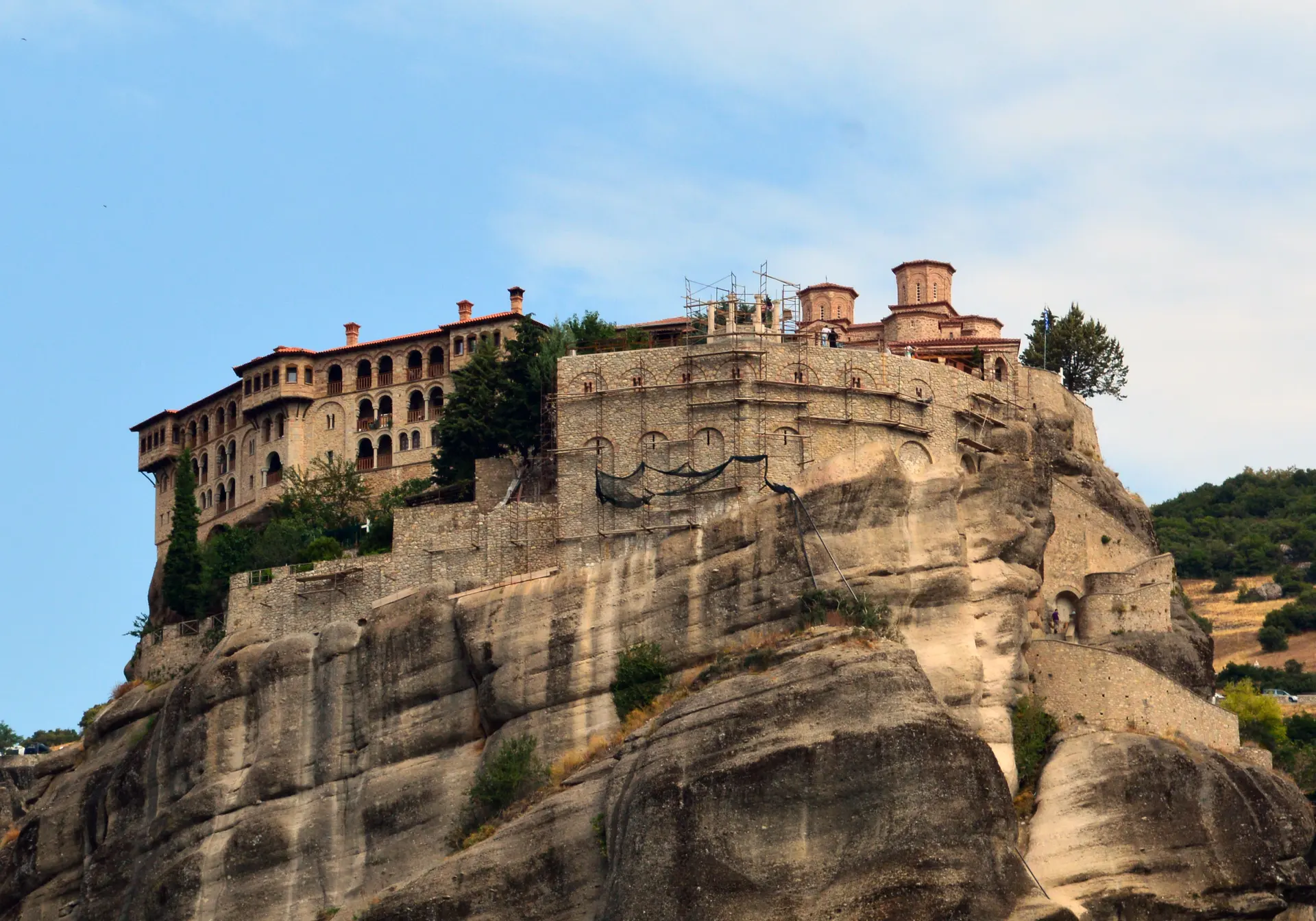
Varlaam Monastery, Meteora
Kastraki, Kalambaka, Thessaly, Greece
0.5 km away
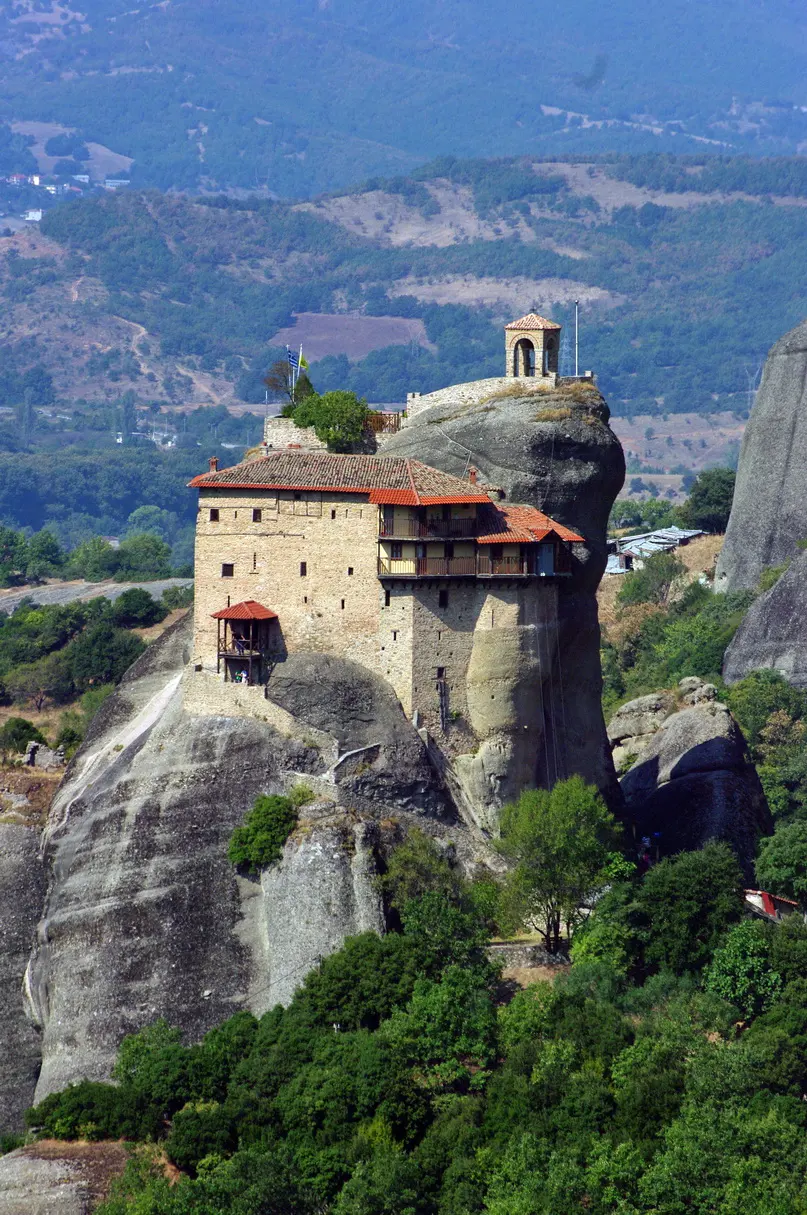
Saint Nicholas Anapausas Monastery, Meteora
Kastraki, Kalambaka, Thessaly, Greece
0.8 km away
Holy Monastery of Great Meteoron
Kalabaka, Thessaly, Greece
0.8 km away
Photo gallery
3 curated photos
Share a photo
Help visitors recognize Meteora. Every submission is reviewed before publication.