Knockroe passage mound, Ireland
A Neolithic passage tomb with Europe's only dual winter solstice alignment, where light returns twice on the darkest day
Understand sacred places, explore living traditions, and learn how to engage respectfully with Pilgrim Map.
Access has not been verified. Check current local guidance before planning a visit.
County Kilkenny, Kilkenny, Ireland
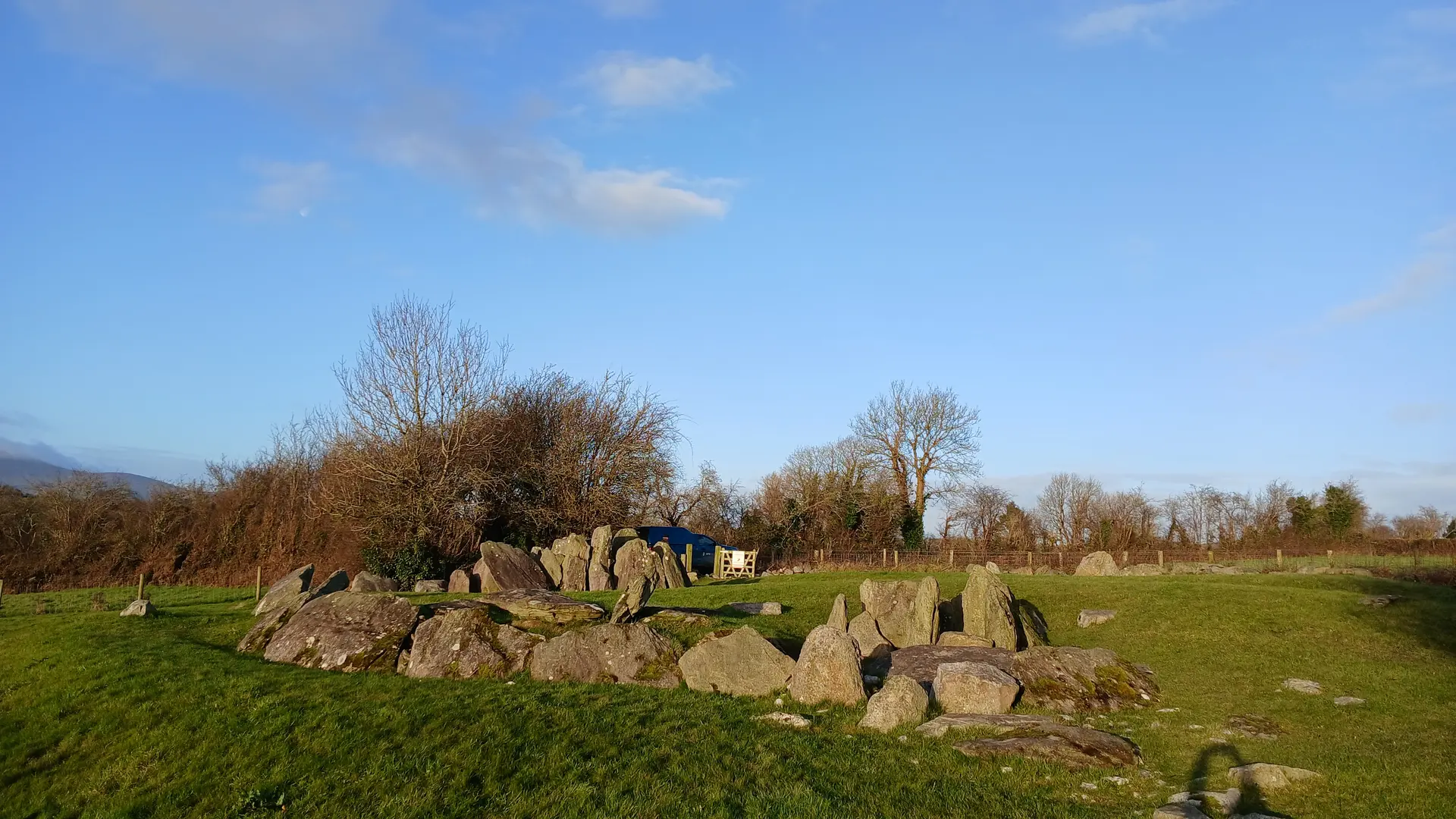
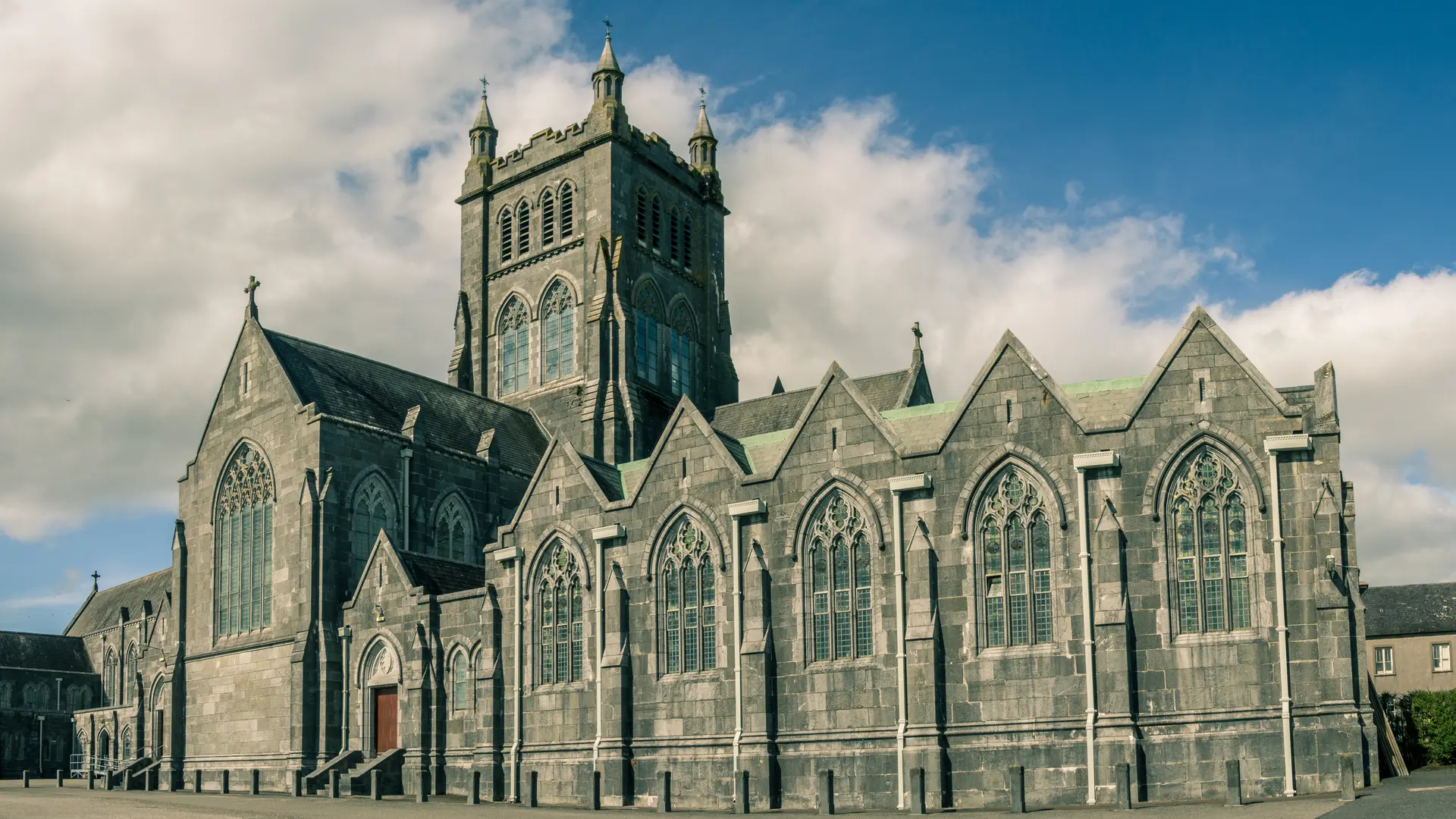
Image of Knockroe passage mound, Ireland. Image source · CC-BY-SA-4.0
Visit essentials
A quick read before you go
- Duration
- Forty-five minutes to one and a half hours for a general visit.
- Access
- Located in the townland of Knockroe, County Kilkenny, approximately 10 km north of…
Overview
On the year's shortest day, sunlight enters Knockroe twice. At dawn a beam crosses the eastern passage to the chamber's back; at dusk the western passage fills with the dying sun's last light. No other known European passage tomb does both.
Its builders, working around 3400 to 2900 BC, left no written explanation. They left the tombs, cremated remains placed in dressed-stone chambers, and over thirty kerbstones carved with spirals, zigzags, and cup marks that scholars still debate. Their precise alignment has operated without interruption for five millennia.
Knockroe occupies a hillside borderland between Kilkenny and Tipperary, above the Lingaun Valley with Slievenamon on the horizon. Irish mythology makes Slievenamon the abode of Bodhbh Dearg, son of the Dagda, and the mountain where Fionn mac Cumhaill married Sadhbh. Knockroe's view connects it to a mythological landscape older than the surviving stories.
Each December, hundreds gather before dawn with lanterns and tea in the cold grass as the sky lightens over the Suir Valley. Silence falls when sunlight enters and the living briefly stand where the dead lay, watching an ancient recurrence. Music and mince pies follow, and the vigil continues until sunset fills the western chamber—an annual reckoning with darkness and return.
Why this place is sacred
The concept of the thin place finds physical expression at Knockroe in a way few sites can match. The builders did not merely orient a tomb toward the sun. They engineered two passages, opening in opposite directions, so that the same day's light would enter from both east and west, marking both the beginning and end of the shortest day.
This dual alignment is not decorative. The western passage admits sunlight for the entire ninety-day period between Samhain and Imbolc, spanning the darkest quarter of the year. In the cosmology of the passage tomb builders, this was the season when the boundary between the living and the dead was understood to be most permeable. The architecture makes that belief tangible. Light reaches into chambers that held cremated human remains, connecting the sky's cycle to the dead who rested below.
The site's position reinforces its liminal character. Knockroe stands on the boundary between County Kilkenny and County Tipperary, at a junction of several dioceses, a pattern that suggests continuous recognition as a threshold place across millennia. The elevation above the Lingaun River creates a commanding view of the valley, with Slievenamon's cairn-crowned summit visible on the horizon.
The passage tomb, the river, the mountain, and the sky form a single system of sacred geography that the builders clearly understood and deliberately activated.
Visitors who come outside the solstice often describe a quality of quietness that feels different from mere absence of noise. The site is small enough to hold in the eye, intimate enough to sit within. The decorated stones catch oblique light in ways that make the carvings seem to shift and pulse.
Something about the proportions of the chambers, the weight of the capstones, and the knowledge of what lies beneath creates a felt compression that photographs consistently fail to convey.
Archaeological evidence indicates Knockroe served as a passage tomb for cremation burials, with grave goods including pottery, bone and antler pins, beads, and pendants placed alongside the dead. The dual winter solstice alignment and the ninety-day light window of the western passage suggest the tomb also functioned as a ceremonial site tied to the astronomical calendar, marking the darkest season and the return of light.
The elaborate megalithic art on over thirty stones points to a site of considerable ritual importance within the Neolithic community.
For millennia after its builders' culture faded, Knockroe persisted in the landscape under local names that preserved a sense of its ancient and mysterious character. 'The Caiseal' (the stone fort) and 'Giant's Grave' both suggest folk memory of builders understood as something more than ordinary people.
Professor Muiris O'Sullivan of University College Dublin conducted five seasons of archaeological excavation through the 1990s and 2010, establishing the dual alignment as unique in Europe and documenting the site's rich assemblage of art and artifacts. Today, the Office of Public Works manages the site as an open-access monument, while the annual winter solstice gathering has transformed it into a living ceremonial site where modern seekers and Druids honor the same solar event the builders encoded in stone.
Experience and orientation
Knockroe rewards those who come prepared to be slow. The site is not large. Two passages open from a shared cairn, one facing east and one west, set into a hillside with views stretching across the Lingaun Valley to Slievenamon. There are no ticket offices, no visitor centers, no crowds outside the solstice. An OPW information board stands at the edge of the field. Beyond it, the tomb waits.
The first thing visitors notice is usually the art. Over thirty kerbstones bear carved spirals, cup marks, zigzags, and concentric circles. In morning or evening light, when shadows fill the grooves, the carvings come alive in a way that midday illumination flattens. Some visitors describe the experience of tracing these patterns with their eyes as mildly hypnotic, a drawing-in that quiets the restless mind.
Those who attend the winter solstice gathering describe something more communal and more intense. Hundreds of people arrive before dawn, some with lanterns, some carrying instruments. The approach path glows in the dark. As the sky begins to lighten, conversation drops away. When the sun crests the horizon and its light enters the eastern passage, the gathered crowd falls silent. For a few minutes, five thousand years collapse.
The event repeats at sunset, when the western passage fills with warm light and the day's second vigil ends.
Between these moments, the gathering has a welcoming, unhurried quality. Mulled wine and mince pies are shared. Music is played on wooden whistles. Strangers become companions in the shared act of witnessing. The atmosphere is neither solemn nor festive but something in between, a quality that perhaps the Neolithic builders would have recognized.
Come to Knockroe with time and patience. If you visit outside the solstice, arrive in early morning or late afternoon when the light is low and the carved stones reveal their patterns most fully. Walk the perimeter of the cairn before approaching the passages. Notice the kerbstones and the way the builders dressed each one differently. Sit on the hillside and look toward Slievenamon. Let the landscape context settle into awareness before focusing on the tomb itself.
If you come for the winter solstice, dress warmly and arrive well before dawn. The gathering is open to all without registration. Bring a flask and something to share. The communal atmosphere depends on mutual goodwill between strangers in the dark.
Context and lineage
No origin myth specific to Knockroe survives, but the tomb exists within a mythological landscape centered on Slievenamon, the Mountain of the Women. In Irish tradition, Slievenamon's summit cairn is the abode of Bodhbh Dearg, son of the Dagda and king of the Tuatha De Danann. The hero Fionn mac Cumhaill married Sadhbh on the mountain, and their son was the legendary poet Oisin.
Knockroe's deliberate orientation toward Slievenamon's summit suggests that the passage tomb builders recognized and worked within a sacred landscape that later mythology inherited and reinterpreted. The local name 'Giant's Grave' preserves the folk memory of builders understood as more than human.
Knockroe belongs to the passage tomb tradition that flourished across Ireland and Atlantic Europe during the fourth millennium BC. The builders were farming communities who invested extraordinary collective labor in constructing monuments for their dead, encoding astronomical knowledge in stone and decorating their work with some of the earliest monumental art in Europe. When their culture faded, the tombs remained, accumulating layers of folk memory and local naming that preserved a sense of their significance across millennia.
The site's modern life began with O'Sullivan's excavations and has continued through the annual solstice gatherings that reconnect the community with the tomb's original astronomical purpose.
Muiris O'Sullivan
archaeologist
Professor of Archaeology at University College Dublin who directed five seasons of excavation at Knockroe through the 1990s and 2010, establishing the dual winter solstice alignment as unique in Europe and documenting the site's rich art and artifact assemblage.
Frank Prendergast
researcher
Researcher who studied the astronomical alignments of Irish passage tombs, situating Knockroe within the broader study of megalithic cosmology and confirming the significance of its dual solstice orientation.
Bodhbh Dearg
deity
Son of the Dagda and king of the Tuatha De Danann, said to dwell on the summit of Slievenamon, the mountain that dominates Knockroe's horizon and gives the passage tomb its wider mythological context.
Fionn mac Cumhaill
mythological figure
Legendary warrior and leader of the Fianna, whose marriage to Sadhbh on Slievenamon connects the passage tomb landscape to the Fenian cycle of Irish mythology.
Traditions and practice
The Neolithic rituals performed at Knockroe are not documented in text but inferred from archaeological evidence. Cremation burials were placed within the chambers, accompanied by grave goods including pottery, bone and antler pins, beads, and pendants. The dual winter solstice alignment and the western passage's ninety-day light window from Samhain through Imbolc suggest that ceremonies may have marked the entire dark season rather than a single day.
The elaborate rock art carved into over thirty stones may have served ritual, symbolic, or astronomical functions that remain debated.
The winter solstice gathering on December 21st is the signature modern event. Hundreds of participants, including modern Druids and Neo-Pagan practitioners, gather before dawn to watch the sunrise enter the eastern passage. The crowd assembles with lanterns, shares mulled wine and mince pies, and observes collective silence as the light penetrates the chamber. Music played on traditional instruments accompanies the waiting. The gathering reconvenes at sunset to witness the western passage fill with the day's final light.
Some practitioners conduct personal rituals or meditations within the landscape.
Approach the tomb slowly from the parking area, allowing the landscape to register before focusing on the stones. Walk the full perimeter of the cairn, noting how each kerbstone carries different carved patterns. In morning or evening light, observe how shadows fill the grooves and make the spirals seem to move. Sit on the hillside and look toward Slievenamon on the horizon, recognizing the deliberate sightline the builders created.
If you visit during the western passage's light window, from approximately late October to early February, position yourself near the western entrance in the late afternoon and watch for sunlight entering the chamber. The effect is quieter than the solstice but no less meaningful. Allow your eyes to adjust to the interior darkness. Notice how sound changes inside the passages, how your breathing becomes the loudest thing.
Neolithic Passage Tomb Tradition
HistoricalKnockroe is one of the finest examples of the Irish passage tomb tradition, which represented a sophisticated burial and cosmological system connecting the living with the dead through solar alignments. The dual winter solstice alignment, unique in Europe, marks it as an especially important ceremonial site within this tradition. The over thirty decorated stones and the assemblage of cremated remains with grave goods attest to its significance as a place where the Neolithic community's relationship with death, time, and the cosmos was architecturally expressed.
Cremation burials were placed within the chambers, accompanied by grave goods including pottery, bone and antler pins, beads, and pendants. The tombs were oriented to capture sunlight at astronomically significant moments, suggesting seasonal ceremonies marking the winter solstice and the periods of Samhain and Imbolc. The elaborate rock art may have served ritual, symbolic, or astronomical functions.
Neo-Druidism and Neo-Paganism
ActiveKnockroe has become a significant gathering place for modern Druids and Neo-Pagans who honor the winter solstice as a moment of solar rebirth. The site's dual alignment makes it particularly meaningful for practitioners who celebrate both the dying and rebirth of the sun. The relative intimacy and accessibility of Knockroe compared to Newgrange gives the gathering a communal quality that participants value.
Annual winter solstice gatherings at both sunrise and sunset on December 21st. Participants arrive before dawn with lanterns, share food and drink, and observe collective silence as the sun enters the passages. Music played on traditional instruments accompanies the waiting periods. Some practitioners conduct personal rituals or meditations within the landscape throughout the year.
Archaeological Scholarship and Heritage Conservation
ActiveKnockroe is an active site of archaeological research and heritage conservation managed by the Office of Public Works. The excavations led by Muiris O'Sullivan have contributed significantly to understanding Irish and European megalithic culture. Ongoing conservation work addresses the challenges of preserving exposed megalithic art and maintaining public access to a fragile ancient monument.
Archaeological excavation, survey, and publication. Conservation monitoring and maintenance by the OPW. Public interpretation through information boards and the Heritage Ireland program. Community engagement through the annual solstice events.
Perspectives and open questions
Knockroe invites interpretation at multiple levels, from precise archaeological analysis of its construction and alignment to speculative readings of its cosmological significance. Holding these perspectives together, without forcing resolution, honors both the builders' achievement and the limits of what we can know about their intentions.
Scholarly perspective
Archaeologists recognize Knockroe as a significant passage tomb within the broader Irish and Atlantic European tradition, dating to approximately 3400 to 2900 BC. Professor Muiris O'Sullivan's excavations established the dual winter solstice alignment as unique in Europe and documented an important assemblage of cremated remains and grave goods. The over thirty decorated stones place Knockroe among the most richly ornamented passage tombs in Ireland.
Scholars view the site as part of a wider sacred landscape in the Lingaun Valley centered on Slievenamon. Frank Prendergast's astronomical research has situated Knockroe within the broader study of megalithic cosmology, confirming the intentionality of its alignments. The question of whether the dual alignment was unique by design or reflects a lost regional tradition remains open.
Living and traditional perspectives
No surviving indigenous oral tradition specific to Knockroe has been documented, though the local names 'The Caiseal' and 'Giant's Grave' preserve folk memory of the monument's ancient and mysterious character. The site's connection to the Slievenamon mythological complex, including Fionn mac Cumhaill, Bodhbh Dearg, and the Tuatha De Danann, provides the closest traditional interpretive framework. These narratives link the passage tomb landscape to the Otherworld and to supernatural beings understood as the original inhabitants of Ireland.
Alternative interpretations
Some visitors and modern spiritual practitioners interpret Knockroe as an energetically significant thin place where the boundary between material and spiritual worlds is permeable. The spirals and geometric art are sometimes read as maps of consciousness or energy patterns. The dual solstice alignment is seen by some as evidence of advanced astronomical and possibly spiritual knowledge among Neolithic peoples that goes beyond calendar-keeping.
The ninety-day Samhain-to-Imbolc light window is interpreted by some Neo-Pagans as evidence that the entire dark season was ritually significant, not just the solstice itself.
Open questions
The meaning of the megalithic art remains one of the greatest unsolved questions in European prehistory. Whether the spirals, zigzags, and cup marks were decorative, symbolic, astronomical, or served some other purpose is unknown. Why Knockroe was given a unique dual alignment when other passage tombs have single alignments is unexplained. The full relationship between Knockroe and the Slievenamon summit tomb complex has not been fully established.
Professor O'Sullivan's comprehensive publication of the excavation results remains pending, and further analysis may reveal new insights into this singular monument.
Plan your visit
Access and arrival
Located in the townland of Knockroe, County Kilkenny, approximately 10 km north of Carrick-on-Suir. From Carrick-on-Suir, take the R697 north, then turn left for Knockroe. A new road and parking area have been provided adjacent to the site. Free entry, open year-round. The site is in an uneven field. Wheelchair access is difficult, though the improved road helps those with limited mobility. The nearest village is Ahenny.
Mobile phone signal may be unreliable at the site; no specific information was available at time of writing. Check Heritage Ireland (heritageireland.ie) for current access arrangements.
Carrick-on-Suir (10 km south) offers accommodation ranging from B&Bs to hotels. Clonmel (20 km west) provides additional options. There is no accommodation at the site itself.
Respectful visit
No formal dress code applies. For the winter solstice, warm waterproof clothing is essential, as visitors stand in the open for extended periods in December. Sturdy footwear is recommended year-round, as the field is uneven. Layers are advisable given Ireland's changeable weather.
Photography is permitted throughout the site. During the solstice gathering, exercise courtesy toward others and avoid blocking views with equipment. The carved stones photograph best in low-angle light, early morning or late afternoon.
No formal offering tradition exists at Knockroe. Do not leave objects on or within the tomb. The most appropriate offering is attention and quiet presence.
Do not touch, climb on, or mark the decorated stones. Keep dogs on a leash at all times. Do not remove any stones, soil, or artifacts from the site. The site is an unguided OPW monument and visitors are responsible for their own safety.
The megalithic art on Knockroe's stones is irreplaceable and vulnerable to weathering and physical damage. Do not touch, trace, or take rubbings of the carved stones. Do not climb on the cairn or remove any material from the site. During the solstice gathering, exercise courtesy toward other participants and allow space for those who wish to observe in silence.
Current practical details
Address
Unnamed Road Knockroe Co, Knockroe, Co. Kilkenny, Ireland
Hours
Hours, fees, and access can change — verify on the official source before you travel. Practical details last checked Jun 2026.
Location
Map loads as you approach this section.
Pilgrim reflections
A portrait of encounter, not a score
Pilgrims describe what they felt, how present they could become, and whether the place would shape a journey. There are no stars and no ranking of traditions.
No reviewed reflections yet
The first pilgrims can help describe the character of being here.
Share a reflection
Available after an account-backed “Been there.” Every reflection is reviewed before publication.
Nearby sacred places
Explore other sacred places in the region. Proximity does not establish access or travel time; check each place’s guidance.
Share a photo
Help visitors recognize Knockroe passage mound, Ireland. Every submission is reviewed before publication.