Loughcrew
Thirty Neolithic tombs on the highest hills in Meath, where equinox light still touches five-thousand-year-old carvings
Understand sacred places, explore living traditions, and learn how to engage respectfully with Pilgrim Map.
Access has not been verified. Check current local guidance before planning a visit.
County Meath, Meath, Ireland

Visit essentials
A quick read before you go
- Duration
- One and a half to three hours to explore the main cairns on Carnbane East.
- Access
- Located near the village of Oldcastle in County Meath, approximately 80 km northwest of Dublin.
Overview
Climb the steep grassy hill above Oldcastle and something shifts. The lowlands of Meath fall away. The horizon opens to three hundred and sixty degrees. On the summit, cairns of grey stone stand as they have for over five thousand years, the work of a people who chose the highest ground in the county to house their dead and mark the turning of the seasons.
Loughcrew holds approximately thirty passage tombs spread across four hilltops collectively known as Sliabh na Cailli, the Mountain of the Hag. According to legend, the Cailleach, in her local form as Garavogue, was leaping between the peaks, dropping stones from her apron to create the cairns. She missed her footing on the third leap and fell to her death.
Beneath the mythology lies a feat of engineering and astronomical knowledge that commands respect on its own terms. Different cairns align to different celestial events. Cairn T captures the equinox sunrise. Cairn S marks the May and August cross-quarter days. Cairn U aligns to the November and February cross-quarters. Together, they form a comprehensive calendar in stone, demonstrating that these Neolithic communities tracked the sun's movement through the year with precision that only became appreciated in the modern era.
At the equinoxes, crowds still gather before dawn on the hilltop, as they may have gathered five millennia ago. When sunlight enters Cairn T and moves across the backstone, illuminating rayed circles and spirals carved into the rock, the effect is less spectacle than confirmation. The sun still does what the builders knew it would do. The stones still hold what they were built to hold. Time has changed everything around this hilltop and nothing at its center.
Why this place is sacred
The climb itself is a threshold. Fifty-five steep stairs and a grassy hillside separate the car park from the summit. By the time you reach Cairn T, you are breathing harder, your perspective has physically shifted, and the everyday world has been left at the bottom of the hill. The Neolithic builders understood this. They chose the highest point in County Meath, a place where the earth rises closest to the sky.
On the summit, the concentration of burial monuments creates a landscape that is saturated with the dead. Approximately thirty tombs cluster across the hilltops, each containing the cremated remains of people who lived and died over five thousand years ago. The boundaries between the living and the dead are not metaphorical here. They are architectural. The passages lead into chambers that held human remains, oriented so that light from specific celestial events would enter and touch what darkness otherwise enclosed.
The astronomical alignments compound the effect. Cairn T is tuned to the equinoxes, when day and night stand in balance. Cairn S catches the cross-quarter days of May and August. Cairn U answers the November and February transitions. The complex does not just mark one celestial event but maps the entire solar year, suggesting the builders understood their hilltop as a place where the rhythms of the cosmos were legible and could be ritually engaged.
The Cailleach adds a mythological dimension. She is not a gentle figure. In Irish tradition, the divine hag personifies winter, storm, and the creative-destructive forces of nature. Her association with Loughcrew links the site to the primal energies of seasonal change, to the death that precedes renewal, to the old woman who carries stones and lets them fall.
Sitting in the Hag's Chair, a large stone near Cairn T associated with her legend, visitors report a quality of stillness that feels earned by the climb and deepened by the weight of what surrounds them.
Archaeological evidence indicates Loughcrew served as a major Neolithic cemetery, with cremation burials placed within cruciform chambers accompanied by grave goods including stone beads, bone pins, and stone balls. The multiple astronomical alignments suggest the complex also functioned as a comprehensive ritual calendar, with different cairns activated at different points in the solar year. The elaborate rock art, featuring distinctive rayed circle motifs alongside spirals and other symbols, may have served ritual, astronomical, or symbolic functions that remain debated.
Loughcrew's cairns stood largely unexcavated until 1863, when Eugene Conwell, a school inspector, rediscovered the site and conducted the first modern excavations. He assigned the letter designations from A through V that are still used today and commissioned artist G.V. Du Noyer to paint the megalithic art. In 1980, American researcher Martin Brennan and Jack Roberts discovered the equinox alignment at Cairn T, publishing their findings in Brennan's landmark 1983 book 'The Stars and the Stones.'
Since then, the site has drawn both scholarly attention and increasing numbers of spiritual seekers, particularly at the equinoxes. The current conservation challenge centers on Cairn T, where a deteriorating 19th-century concrete roof, installed to protect the original structure, now threatens the monument's integrity. The interior has been closed since October 2018.
Experience and orientation
The approach sets the tone. A narrow road leads to a small car park with space for perhaps ten vehicles. There is no visitor center at the hilltop, no gift shop, no cafe. The Loughcrew Megalithic Centre at the base offers tours and context, but the hilltop itself is stripped to essentials: stone, grass, sky, and the wind that rarely stops.
The climb takes ten to fifteen minutes and is steep enough to demand attention. By the time the summit cairns come into view, the body is engaged, the breath deepened, the ordinary preoccupations of ground-level life temporarily displaced. The reward is a three-hundred-and-sixty-degree panorama across the central Irish midlands that explains, viscerally, why the builders chose this spot. You can see further from here than from almost anywhere in Meath.
Cairn T dominates the eastern summit. Its kerbstones are carved with rayed circles, spirals, and other motifs that catch the light differently depending on the time of day and year. The Hag's Chair, a large stone near the cairn, has become a focal point for quiet contemplation. Visitors sit in its curved surface and look out across the landscape, often lingering longer than they intended.
Those who attend the equinox gatherings describe something more concentrated. Arriving before dawn, often in cold and wind, the gathered crowd watches the horizon lighten. When the first light enters the passage and begins to move across the backstone, progressively illuminating the carved symbols, silence falls. The experience is not dramatic in the way of a solstice at Newgrange, with its lottery-controlled access and national attention. It is quieter, more intimate, more dependent on weather and luck.
When it works, the effect is a direct, unmediated encounter with five-thousand-year-old intention.
With Cairn T's interior closed since October 2018, the equinox illumination may only be viewable from the entrance passage. Check current conservation and access conditions before planning a visit centered on interior viewing.
Begin at the Loughcrew Megalithic Centre if it is open, for context and orientation. Then climb. Take the hill slowly and let the gradual opening of the view do its work. At the summit, walk the perimeter of Cairn T before approaching the entrance. Notice the kerbstones and the variation in their carvings. Sit in the Hag's Chair and give yourself time to absorb the landscape.
If you can, visit on multiple days at different times. Morning light and evening light reveal different aspects of the carved stones. The hilltop at dawn, even outside the equinox, has a quality of alert stillness that midday crowds disperse.
Context and lineage
According to legend, the Cailleach, in her local form as Garavogue, a version of An Cailleach Bheara, was attempting a feat that would grant her dominion over all of Ireland. She needed to drop an apronful of stones on each of three Loughcrew peaks while leaping from one to the next. She successfully dropped her cairn-stones on the first two peaks but missed her footing on the third leap and fell to her death.
The cairns visible today are said to be the stones she dropped. This myth encodes the landscape's creation within the figure of a divine feminine power associated with winter, storms, and the elemental forces of nature.
Loughcrew's builders were part of the passage tomb tradition that flourished across Ireland during the fourth millennium BC. They chose the highest hills in Meath for their cemetery, creating a monument complex that tracked the solar year through multiple astronomical alignments. The culture that built these tombs left no written record, and their specific beliefs and practices are inferred from the architecture, art, and burials they left behind.
After millennia of relative obscurity, the site was brought to scholarly attention by Conwell's 1863 excavations, then transformed by Brennan and Roberts' astronomical discoveries in 1980. Today, the Office of Public Works manages the site, while the equinox and Samhain gatherings maintain its function as a place of seasonal observance.
The Cailleach (Garavogue)
deity
The divine hag figure associated with landscape creation, winter, and storms. In her local incarnation as Garavogue, she is said to have created the Loughcrew cairns by dropping stones from her apron. She may trace to the pre-Christian Celtic goddess Bui.
Eugene Conwell
archaeologist
School inspector who rediscovered the Loughcrew complex in 1863, conducted the first modern excavations, assigned the letter designations still used today, and engaged artist G.V. Du Noyer to document the megalithic art.
Martin Brennan
researcher
American researcher who, with Jack Roberts, discovered the equinox alignment at Cairn T in 1980 and published the findings in his landmark 1983 book 'The Stars and the Stones,' transforming understanding of the site's astronomical sophistication.
G.V. Du Noyer
artist
Artist commissioned by Conwell to create accurate paintings of the megalithic art during the 1863 excavations. His watercolors remain a key record of the site's condition before modern weathering and intervention.
Traditions and practice
Neolithic rituals are inferred from archaeology. Cremation burials with grave goods were placed within cruciform chambers. The multiple astronomical alignments suggest seasonal ceremonies marking equinoxes, cross-quarter days, and other celestial events. Martin Brennan's research demonstrated that the sun, moon, and planet Venus all illuminated different parts of the chambers at various points in their cycles, suggesting a multi-layered ritual calendar of considerable sophistication. The Cailleach mythology suggests seasonal transition rituals, particularly at Samhain, when the divine hag ushers in winter.
Spring and autumn equinox gatherings at Cairn T draw crowds before dawn to witness the sunrise illumination, when a beam of light enters the passage and progressively illuminates the carved backstone. Samhain observances in late October and early November honor the Cailleach and the transition from harvest to winter. The Loughcrew Megalithic Centre offers guided spiritual tours focusing on the site's sacred dimensions.
Individual visitors throughout the year engage in meditation, quiet contemplation, and personal ritual at the Hag's Chair and around the cairns.
Note: Since Cairn T's interior has been closed since 2018, the equinox illumination may only be viewable from the entrance. Check current access status before visiting specifically for this event.
Climb to the summit and walk among the cairns before settling in any one place. Let the landscape scale register. Notice how the hilltop feels different from the ground below, how the wind carries differently, how the light falls.
At Cairn T, examine the kerbstones in sequence. The rayed circles, sometimes called sunbursts, are distinctive to Loughcrew. Watch how shadows fill and empty the carved grooves as the sun moves. In the Hag's Chair, sit and look outward. The panorama is part of the monument's design. The builders intended this view.
If you visit near the equinox but cannot attend the dawn gathering, come at sunset instead. The quality of light on the hilltop as the day turns is its own event. Walk the ridge between Carnbane East and Carnbane West if time allows. The cairns on both peaks are part of a single complex, and the walk between them passes through landscape that the builders traversed five thousand years ago.
Neolithic Passage Tomb Tradition
HistoricalLoughcrew is one of the largest and oldest passage tomb cemeteries in Ireland, with approximately thirty tombs demonstrating sophisticated astronomical knowledge. Different cairns align to equinoxes, solstices, and cross-quarter days, suggesting a comprehensive Neolithic calendar system. The elaborate rock art, featuring rayed circles distinctive to Loughcrew, represents one of the most important collections of Neolithic monumental art in Europe.
Cremation burials placed within cruciform chambers, accompanied by grave goods including stone beads, bone pins, and stone balls. The astronomical alignments suggest seasonal ceremonies marking the equinoxes, cross-quarter days, and possibly other celestial events. The elaborate rock art may have served ritual, astronomical, or symbolic functions.
Cailleach Veneration / Irish Mythology
HistoricalThe hills are named Sliabh na Cailli after the Cailleach, a divine hag figure associated with landscape creation, winter, and the elemental forces of nature. The Cailleach may represent an ancient earth and winter goddess whose worship predates recorded mythology, connecting Loughcrew to the deepest layers of Irish spiritual tradition.
The Cailleach legend connected Loughcrew to the seasonal cycle, particularly the transition from autumn to winter at Samhain. The Hag's Chair near Cairn T served as a focal point for the tradition, linking the monument complex to the mythology of the divine feminine and seasonal transformation.
Neo-Paganism and Contemporary Seasonal Observance
ActiveLoughcrew has become one of Ireland's most important gathering places for modern Pagans and Druids, particularly at the equinoxes and Samhain. The site's astronomical alignments, mythological associations with the Cailleach, and relative lack of commercial tourism infrastructure compared to Newgrange give it an atmosphere that many practitioners value.
Equinox sunrise gatherings at Cairn T in March and September. Samhain observances in late October and early November honoring the Cailleach and the transition to winter. Personal meditation, ritual, and contemplation by individuals and groups throughout the year. The Loughcrew Megalithic Centre offers guided spiritual tours.
Archaeological Scholarship and Conservation
ActiveLoughcrew is an active site of archaeological concern, managed by the Office of Public Works. The current conservation crisis at Cairn T, where a deteriorating 19th-century concrete roof threatens the monument, has generated public advocacy for urgent intervention. The site continues to contribute to scholarly understanding of Neolithic Ireland.
Archaeological survey, documentation, and conservation monitoring. Public interpretation through on-site guides and the Loughcrew Megalithic Centre. Community advocacy for heritage preservation.
Perspectives and open questions
Loughcrew invites readings from archaeology, mythology, astronomy, and contemporary spiritual practice. The site is old enough and complex enough to sustain all of them without any single perspective claiming completeness.
Scholarly perspective
Archaeologists recognize Loughcrew as one of the most important Neolithic passage tomb cemeteries in Ireland and Europe, dating to approximately 3300 to 3000 BC. Eugene Conwell's 1863 rediscovery established the modern framework for understanding the site. Martin Brennan and Jack Roberts' 1980 discovery of the equinox alignment at Cairn T, published in 'The Stars and the Stones,' transformed understanding of the site's astronomical sophistication.
Scholars recognize multiple astronomical alignments across different cairns, with the complex functioning as a comprehensive Neolithic calendar. The distinctive rayed circle motifs in the megalithic art are widely interpreted as solar symbols. Current archaeological concern centers on the conservation crisis at Cairn T, where a deteriorating 19th-century concrete roof threatens the monument's integrity.
Living and traditional perspectives
Irish mythological tradition associates the hills with the Cailleach, the divine hag who personifies winter and the creative-destructive forces of nature. The specific legend of Garavogue dropping stones from her apron to create the cairns encodes the landscape's creation within a feminine divine narrative. The Cailleach may trace to the pre-Christian Celtic goddess Bui. The name Sliabh na Cailli preserves this association in the Irish language landscape.
The Hag's Chair near Cairn T is a focal point for this traditional association, connecting the monument complex to the cycles of seasonal death and renewal that the astronomical alignments also track.
Alternative interpretations
Some practitioners view Loughcrew as an energy center, with the multiple astronomical alignments seen as evidence of advanced spiritual knowledge among Neolithic peoples. The equinox alignment is interpreted by some as a deliberate activation of the tomb's energy at moments of cosmic balance. The Cailleach is embraced by some modern spiritual practitioners as a goddess archetype representing transformation, feminine power, and the necessity of death for renewal.
Loughcrew's relative lack of commercial development compared to Newgrange makes it attractive to those seeking what feels like a more authentic encounter with the Neolithic sacred.
Open questions
The full meaning of the megalithic art remains unknown. Whether the rayed circles, spirals, and other motifs served astronomical, ritual, decorative, or other purposes is debated. Brennan's discovery that the sun, moon, and Venus all illuminate different parts of the chambers at different times raises questions about how comprehensive the Neolithic astronomical knowledge was. The relationship between the multiple cairns and whether they functioned as an integrated system or were built incrementally over centuries is not fully resolved.
The identity and social organization of the builders remain largely unknown. Why this particular hilltop was chosen, whether for its commanding visibility, its sacred associations, or other reasons, remains a genuine open question.
Plan your visit
Access and arrival
Located near the village of Oldcastle in County Meath, approximately 80 km northwest of Dublin. From Oldcastle, follow signs for Loughcrew. The approach road is very narrow; be prepared to reverse for oncoming vehicles and park only in the designated area. A small parking lot accommodates approximately ten cars at the base of the hill. The walk to Cairn T takes ten to fifteen minutes up a steep grassy hill with fifty-five initial stairs. Free entry, open dawn to dusk.
Cairn T interior is currently closed. Summer guides may be on site. The Loughcrew Megalithic Centre at the base offers additional tours and services. Mobile phone signal may be unreliable on the hilltop; check with the Megalithic Centre for current conditions. No specific emergency access information was available at time of writing; the nearest village with services is Oldcastle.
Oldcastle (nearest village) offers limited B&B accommodation. Kells (20 km east) provides additional options. The Loughcrew Megalithic Centre may offer recommendations for local stays.
Respectful visit
Sturdy waterproof footwear is essential for the steep, grassy hillside climb. Warm layers are recommended, especially for early-morning equinox visits. The hilltop is fully exposed to wind.
Photography is permitted throughout the site. The carved stones photograph best in low-angle light. Interior photography of Cairn T is not possible while the chamber is closed.
No formal offering tradition exists at Loughcrew. Some visitors leave small natural offerings near the cairns, but objects should not be placed inside the monuments or on the carved stones. Leave no trace of your visit.
Cairn T interior has been closed since October 2018 due to structural safety concerns. Do not climb on, touch, or mark the decorated stones. Do not remove any stones, soil, or artifacts. The approach road is very narrow; drive with extreme caution. Parking is limited to approximately ten cars.
The hilltop is exposed, its path can be slippery when wet, and weather can change rapidly. Dress warmly and carry waterproofs. The approach road is very narrow and requires careful driving. Parking is limited to approximately ten vehicles. Cairn T's interior has been closed since October 2018 due to structural concerns; do not attempt to enter closed areas. The megalithic art is irreplaceable. Do not touch, mark, or take rubbings from the carved stones.
Current practical details
Address
Loughcrew Cairns, Corstown, Oldcastle, Co. Meath, Ireland
Phone
Hours
Hours, fees, and access can change — verify on the official source before you travel. Practical details last checked Jun 2026.
Location
Map loads as you approach this section.
Pilgrim reflections
A portrait of encounter, not a score
Pilgrims describe what they felt, how present they could become, and whether the place would shape a journey. There are no stars and no ranking of traditions.
No reviewed reflections yet
The first pilgrims can help describe the character of being here.
Share a reflection
Available after an account-backed “Been there.” Every reflection is reviewed before publication.
Nearby sacred places
Explore other sacred places in the region. Proximity does not establish access or travel time; check each place’s guidance.
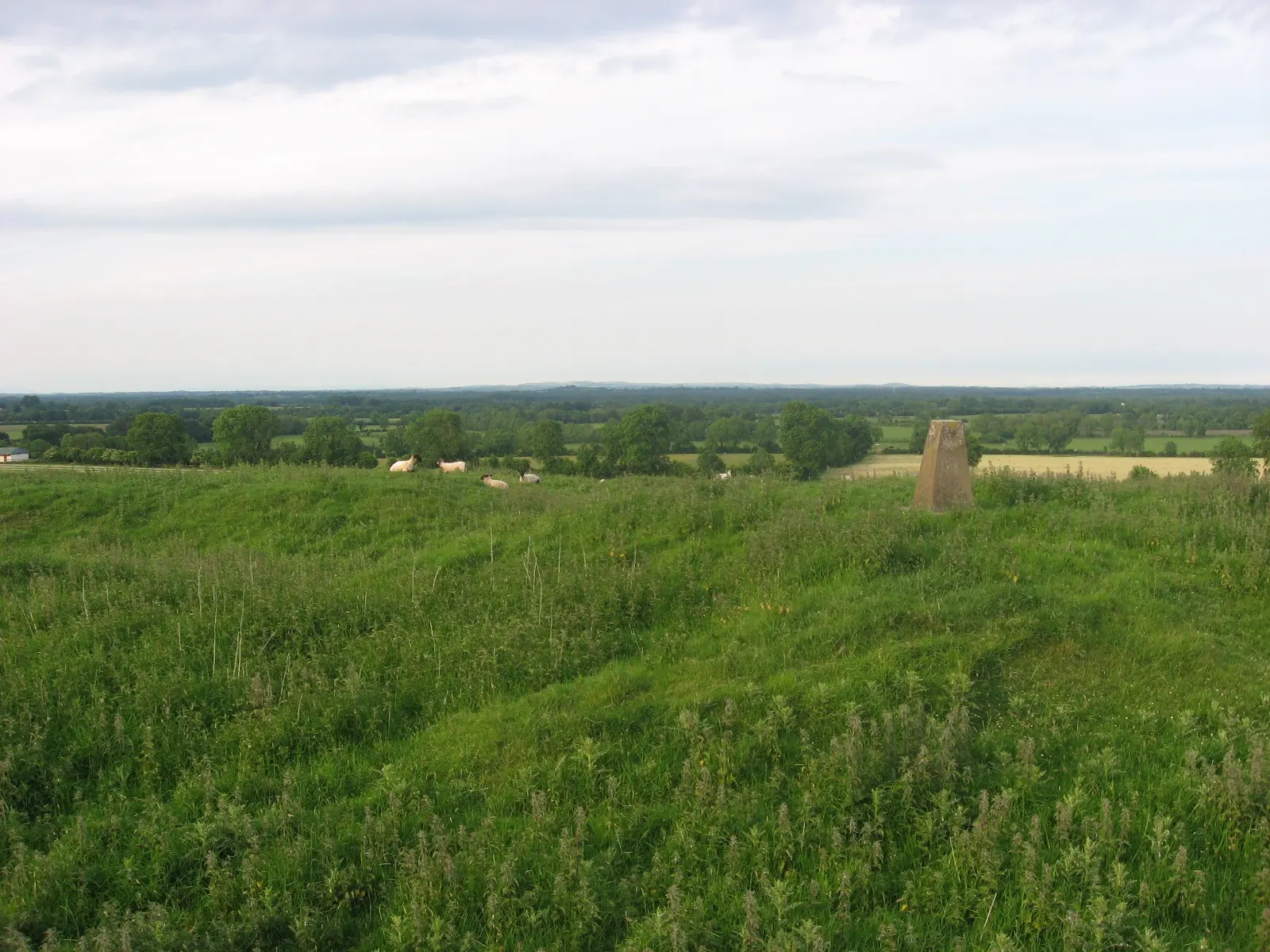

Photo gallery
3 curated photos
Share a photo
Help visitors recognize Loughcrew. Every submission is reviewed before publication.