Holy Cross Abbey
A medieval abbey restored to living worship, holding a relic of the True Cross on the banks of the Suir
Understand sacred places, explore living traditions, and learn how to engage respectfully with Pilgrim Map.
Access has not been verified. Check current local guidance before planning a visit.
County Tipperary, Tipperary, Ireland
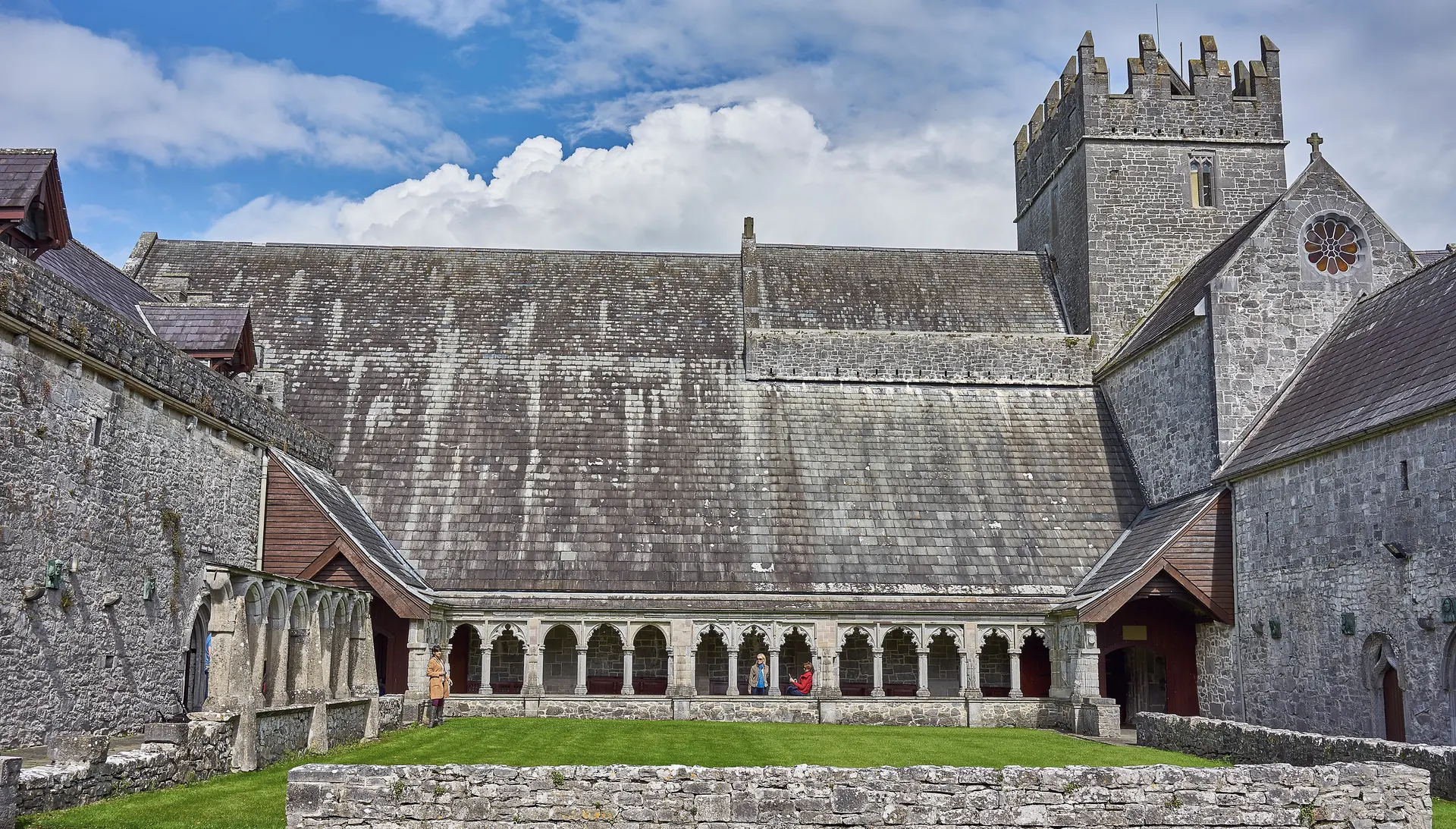
Image of Holy Cross Abbey. Image source · CC-BY-SA-4.0
Visit essentials
A quick read before you go
- Duration
- Allow 1 to 1.5 hours for a thorough self-guided visit covering the interior, Whispering Arch,…
- Access
- Located in Holycross village on the R660, approximately 6 km south of Thurles and 15 km north of…
Overview
Holy Cross Abbey is a restored place of living worship, not a ruin where worship must be imagined. Founded around 1169 by Donal Mor O'Brien, King of Thomond, it became one of Ireland's great pilgrimage destinations when a relic of the True Cross arrived from Queen Isabella of Angouleme in 1233. For three centuries pilgrims venerated the wood believed to have held Christ's body, circled the holy well on their knees, and whispered sins through the cloister's acoustic arch.
The Reformation silenced these practices; the monks departed and the roof fell; for four hundred years tourists and cattle visited the ruin. In 1970 parish priest Fr. Willie Hayes began a five-year, stone-by-stone restoration, reopening it as Holycross parish church on October 5, 1975. The Vatican supplied a newly authenticated True Cross relic and Mass resumed where it had last been celebrated before Shakespeare was born. Sunday worship now occurs beneath 15th-century ribbed vaulting.
The sedilia, widely regarded as Ireland's finest medieval church furniture, remains within worshippers' reach rather than museum glass; the Whispering Arch and river endure. Restoration itself has become part of the sacred story.
Why this place is sacred
The relic is the anchor. For Catholic believers, a fragment of the True Cross is not a symbol but a physical point of contact with the central event of Christian faith: the crucifixion and resurrection of Christ. Whether the relic now displayed is the same fragment that Isabella of Angouleme brought to Ireland in 1233, or the replacement provided by the Vatican in the 1970s, the act of veneration creates a continuity of intention that spans nearly eight hundred years.
But the relic alone does not account for the quality of presence visitors describe at Holy Cross. The abbey's setting plays its part: the River Suir moves past the east wall with a persistence that mirrors the building's own endurance. The water table is high here, which may explain the holy well that once drew pilgrims to the east chancel wall, where they circled on their knees and drank three times seeking healing.
Then there is the stonework itself. The masons who carved the sedilia in the 15th century under Butler patronage created something that transcends decoration. The ribbed vaulting, the tracery, the marks left by individual masons' tools across the centuries, all carry the imprint of hands that understood their work as devotion.
The Whispering Arch in the cloister, where a whisper at one end arrives intact at the other, preserves the acoustic intimacy of medieval confession: the most vulnerable human communication committed to stone.
What makes Holy Cross distinctive among Ireland's sacred sites is the restoration itself. Most medieval monasteries remain in dignified ruin. That this one was brought back to active worship, against considerable skepticism, after four centuries of silence, gives it a resonance that purely archaeological sites cannot claim. The building embodies what it preaches: resurrection is possible.
Holy Cross Abbey was founded as a Cistercian monastery, following the Rule of St. Benedict with additional Cistercian statutes emphasizing simplicity, manual labor, and communal prayer. The monks organized their days around the Divine Office, with eight daily prayer services structuring the hours. The arrival of the True Cross relic circa 1233 transformed the abbey from a monastic house into a major pilgrimage destination, adding a public dimension to what had been primarily a contemplative community.
The abbey's history follows an arc of foundation, glory, suppression, ruin, and restoration that mirrors the broader story of Irish Catholic faith. After flourishing as a pilgrimage center through the medieval period, the Reformation brought dissolution. The Cromwellian period and Penal Laws deepened the destruction. Yet the abbey retained its sacred associations even in ruin. The holy well continued to draw pilgrims into the 19th century before being suppressed by Church authorities concerned about disorder at pattern days.
The 1970s restoration, led by Fr. Willie Hayes with support from Archbishop Thomas Morris and the Office of Public Works, returned the building to its original purpose. A prayer garden commemorating Pope John Paul II's 1979 visit now covers the site of the original holy well, layering one devotional tradition upon another.
Experience and orientation
The first thing that registers is the scale. Holy Cross Abbey is not a modest parish church pressed into medieval clothing. The nave stretches upward into ribbed vaulting that belongs to a cathedral, and the light filtering through the windows falls on stonework of extraordinary refinement. Many visitors arrive expecting ruins and find instead a building that breathes.
The sedilia draws the eye immediately. This ornate stone seating in the chancel, where clergy sat during services, is described by architectural historians as the finest piece of medieval church furniture surviving in Ireland. Under Butler patronage in the 15th century, masons carved it with a precision and imagination that still astonishes. Nearby, masons' marks are visible throughout the building, small personal signatures left by workers who spent years of their lives shaping these stones.
The Whispering Arch in the cloister provides an unexpected moment of intimacy. When one person whispers at one end, the words arrive clearly at the other, carried by the curve of stone. Medieval monks used this for hearing confessions. Standing at the arch today, testing it with a companion, something of the original function returns: the realization that this space was built for the most private form of speech.
Outside, the River Suir moves past the abbey walls with unhurried constancy. The prayer garden offers a space for quiet reflection. The surrounding countryside of Tipperary, green and unhurried, extends the atmosphere of the abbey into the landscape.
What visitors report most consistently is the sense of unbroken continuity. This is not a reconstruction or a heritage center. This is a church that has been worshipping for eight centuries, interrupted but not ended, where the same stones that held Cistercian chant now hold parish hymns.
Holy Cross Abbey rewards visitors who arrive without a schedule. If possible, attend a service to experience the building as its builders intended: full of human voices and liturgical purpose. Outside service times, enter quietly and allow your eyes to adjust to the interior light. Move toward the sedilia first, then let the rest of the interior reveal itself. Test the Whispering Arch with a companion. Before leaving, spend time in the prayer garden or along the riverbank.
The abbey is not merely a building to be seen but a space to be inhabited, however briefly.
Context and lineage
The founding narrative begins with Donal Mor O'Brien, King of Thomond, who established a monastery on the banks of the Suir around 1169. Originally Benedictine, it passed to the Cistercians in 1182 when monks arrived from Monasteranenagh, bringing with them the order's characteristic aesthetic of disciplined simplicity visible in the nave.
The abbey's transformation into a pilgrimage site came around 1233, when Queen Isabella of Angouleme, widow of the English King John, bestowed a fragment of the True Cross upon the monastery. Isabella substantially rebuilt the abbey to house the relic, connecting Holycross to the broader European network of Crusade-era relic veneration. The relic's presence drew pilgrims from across Ireland, with the earliest documented reference to established pilgrimage appearing in Papal letters of 1488.
During the Reformation, Sir Henry Sidney, Lord Lieutenant of Ireland, complained to Queen Elizabeth I in 1567 that the abbey remained a center of Catholic resistance, sheltering the persecuted faithful. The complaint itself testifies to the enduring power of the place and its relic, even as the political order sought to suppress it.
The lineage of Holy Cross runs from Cistercian contemplatives through medieval pilgrims, through centuries of suppression and abandonment, to the parish community that worships here today. The Cistercians brought their distinctive architecture and monastic rule. The medieval pilgrims added a public, devotional dimension centered on the relic. The Reformation broke the chain but did not erase the memory.
The 1970s restoration, led by a parish priest with vision and determination, reconnected the present to the medieval past in a way that few Irish sacred sites have achieved. The Vatican's provision of a new relic closed the circle, giving the restored church the sacred object that had defined its identity for centuries.
Donal Mor O'Brien
historical
King of Thomond who founded the monastery circa 1169, placing it on the banks of the River Suir in his kingdom's territory.
Isabella of Angouleme
historical
Queen consort of England and widow of King John, who bestowed the True Cross relic on the abbey circa 1233 and substantially rebuilt the monastery to house it.
The Butlers of Ormond
historical
One of Ireland's most powerful Anglo-Norman families, whose 15th-century patronage produced the abbey's finest architectural features including the celebrated sedilia.
Fr. Willie Hayes
historical
The parish priest who led the seemingly impossible restoration of the abbey from ruin to active parish church between 1970 and 1975, against considerable skepticism.
Archbishop Thomas Morris
historical
Archbishop of Cashel and Emly who supported Fr. Hayes's restoration effort and helped secure the Vatican-provided replacement relic of the True Cross.
Traditions and practice
The Cistercian monks who inhabited the abbey from the 12th century followed the Divine Office, gathering eight times daily for communal prayer. Their life centered on the balance prescribed by the Rule of St. Benedict: prayer, manual labor, and sacred reading. The community was largely self-sufficient, farming the surrounding lands. The infirmary building, now managed separately by the Office of Public Works, served the care of sick monks.
With the arrival of the True Cross relic, pilgrimage became central to the abbey's life. The main feast days were the Finding of the Cross (May 3) and the Exaltation of the Holy Cross (September 14), when special liturgical celebrations drew pilgrims from across Ireland. The holy well near the east chancel wall offered its own pilgrimage: visitors would circle the well on their knees three times before drinking the water three times, seeking healing.
The earliest documented healing at the well dates to 1628, when John O'Cullenan was cured of pain after drinking from it. Church authorities suppressed the well pilgrimage in the early 1800s.
Regular Catholic Mass is celebrated at Holy Cross Abbey as the parish church of Holycross, with services available via livestream. The Vatican-provided True Cross relic is available for veneration. The Feast of the Exaltation of the Holy Cross on September 14 remains the most liturgically significant day in the abbey's calendar, with special celebrations honoring the relic.
Guided tours are available for groups by arrangement, offering deeper insight into the architectural and historical significance of the building. The prayer garden, which commemorates Pope John Paul II's 1979 visit to Ireland, provides a contemplative space that, with quiet irony, covers the site of the suppressed holy well.
For visitors seeking spiritual engagement, attending Mass offers the most complete experience of the abbey as its builders intended: a space filled with human voices, incense, and liturgical purpose. Outside service times, enter the nave and sit quietly before approaching the architectural highlights. Allow the Whispering Arch to remind you of the intimacy that confession requires, the vulnerability of speaking one's failings aloud in the hope of being heard.
Spend time with the sedilia, noticing the quality of attention the masons brought to stone that only clergy would see close up. Before leaving, walk to the river and listen. The Suir has been the abbey's companion for eight centuries. It has heard every prayer offered here.
Roman Catholicism
ActiveHoly Cross Abbey has been a Catholic sacred site since its foundation circa 1169. It holds a relic of the True Cross, making it one of the most significant Christological relic sites in Ireland. The abbey was a symbol of Catholic resistance during the Reformation, and its restoration in the 1970s as a functioning parish church makes it one of very few medieval monastic churches in Ireland to have been returned to full liturgical use.
Regular Catholic Mass is celebrated as the parish church of Holycross. Veneration of the True Cross relic continues. Special liturgical celebrations are held on the Feast of the Exaltation of the Holy Cross (September 14) and the Feast of the Finding of the Cross (May 3). Pilgrimage visits to venerate the relic draw visitors throughout the year.
Cistercian Monasticism
HistoricalThe abbey was founded as part of the great wave of Cistercian expansion across Ireland in the 12th century. The Cistercians brought their distinctive architectural aesthetic of disciplined simplicity, visible in the nave, and their monastic rule emphasizing manual labor, prayer, and community life. The chapter house doorway, the only intact medieval example in Ireland, and the Whispering Arch used for confessions preserve the physical infrastructure of Cistercian practice.
The monks followed the Rule of St. Benedict with additional Cistercian statutes, organizing their days around the Divine Office with eight daily prayer services. The community was largely self-sufficient, farming the surrounding lands. The infirmary building served the care of sick monks.
Medieval Pilgrimage
HistoricalFrom the arrival of the True Cross relic circa 1233, Holy Cross Abbey became one of Ireland's most important pilgrimage destinations. Papal letters of 1488 confirm an already well-established tradition. The holy well near the east chancel wall offered a secondary pilgrimage focus, with documented healings from 1628.
Pilgrims traveled to venerate the True Cross relic, with peak devotion on the Feast of the Finding of the Cross (May 3) and the Feast of the Exaltation (September 14). At the holy well, pilgrims circled on their knees three times before drinking the water three times. The well pilgrimage was suppressed in the early 1800s by Church authorities.
Perspectives and open questions
Holy Cross Abbey invites interpretation through multiple lenses: as an architectural masterpiece, as a site of Catholic devotion, as a symbol of faith's persistence through persecution, and as an extraordinary example of heritage restoration. These perspectives complement rather than contradict each other.
Scholarly perspective
Historians recognize Holy Cross Abbey as one of Ireland's most important medieval pilgrimage sites. The True Cross relic made it a major destination from the 13th century, with Papal letters of 1488 confirming an already well-established pilgrimage tradition. Architectural historians regard the 15th-century Butler-Ormond restoration as producing some of the finest medieval church architecture in Ireland, with the sedilia receiving particular acclaim. The chapter house doorway is the only intact medieval example surviving in Ireland. The 1970s restoration under Fr.
Willie Hayes is recognized as an exceptional achievement in heritage conservation, being one of very few cases where a medieval Irish monastic church was returned to full liturgical use. State papers, including Sidney's 1567 complaint to Elizabeth I, document the abbey's role as a center of Catholic resistance during the Reformation.
Living and traditional perspectives
Within Irish Catholic tradition, Holy Cross Abbey represents the deep roots of Christian faith in Ireland and the persistence of that faith through centuries of persecution. The abbey's trajectory from flourishing monastery to suppressed ruin to restored parish church embodies the Catholic narrative of death and resurrection: the church that was ruined by the Reformation was brought back to life.
The holy well tradition, though now largely invisible beneath the prayer garden, connects the abbey to the broader Irish pattern of holy wells as sites of healing pilgrimage, a practice that may blend pre-Christian and Christian sacred landscape traditions. For believers, the True Cross relic provides a tangible link to the Passion of Christ, the central event of Christian theology.
Alternative interpretations
The abbey's riverside location on the Suir is sometimes interpreted as reflecting an ancient understanding of water as a conduit of spiritual significance. The holy well, positioned close to both the river and the church, may represent a deliberate integration of water-based sacred landscape with Christian architecture, suggesting that the Cistercians recognized something about this specific place that predated their arrival.
The Whispering Arch has drawn attention as an example of medieval acoustic engineering that may have served spiritual as well as practical purposes. Some visitors approach the abbey from a broader interfaith perspective, seeing the True Cross relic as a connection to the universal human experience of suffering and renewal that transcends any single tradition.
Open questions
The fate of the original True Cross relic after the Reformation remains one of the abbey's enduring mysteries. Whether it was hidden by the monks, destroyed by reformers, or smuggled to safety is not documented. The exact provenance of the relic before Isabella of Angouleme brought it to Ireland is not well established, as is common with medieval relics.
The identity and significance of the figure commemorated in the sedilia, traditionally called 'The Tomb of the Good Woman's Son,' is unknown. The holy well's origins, and whether it was a pre-Christian sacred water source incorporated by the Cistercians, has not been archaeologically investigated, as the well was covered over during the 1979 landscaping for the papal visit prayer garden.
Plan your visit
Access and arrival
Located in Holycross village on the R660, approximately 6 km south of Thurles and 15 km north of the Rock of Cashel. The village is accessible from the M8 motorway via the Thurles exit. Free parking is available in the village. Entry to the abbey is free. For guided group tours, contact the parish at +353-86-1665869 or +353-504-43124 during office hours. The village is served by local bus routes. Mobile phone signal is generally available in the village.
Specific current opening hours were not confirmed in research; contact the abbey directly at holycrossabbey.ie for current arrangements.
Thurles, 6 km north, offers a range of hotels and guesthouses. The village of Holycross has limited local accommodation. Cashel, 15 km south, provides additional options and makes a natural base for visiting both Holy Cross Abbey and the Rock of Cashel.
Respectful visit
Modest dress is expected, as in any active Catholic church. Shoulders and knees should be covered. Smart casual attire is appropriate. No formal requirements beyond standard church decorum.
Photography of the architecture and features is generally permitted outside of church services. Refrain from photography during active services. Flash photography should be avoided near the relic and delicate medieval stonework to prevent cumulative light damage.
A donation box is available and voluntary contributions are appreciated, supporting the ongoing maintenance of both the medieval fabric and the parish. In the Catholic tradition, candle lighting for prayer intentions is customary where candle stands are provided.
Do not enter during Mass unless attending worship. Do not touch the medieval stonework, sedilia, or architectural features. Keep noise levels appropriate for a place of worship. Follow any posted guidelines regarding the True Cross relic.
Visitors should not enter the abbey during Mass unless they intend to participate in the service. The medieval stonework is irreplaceable and must not be touched. Flash photography should be avoided near the relic and delicate carved surfaces. The infirmary building adjacent to the abbey is a separate heritage site managed by the Office of Public Works and may have different access arrangements.
Current practical details
Address
Holycross Abbey, Holycross, Thurles, Co. Tipperary, Ireland
Hours, fees, and access can change — verify on the official source before you travel. Practical details last checked Jun 2026.
Location
Map loads as you approach this section.
Pilgrim reflections
A portrait of encounter, not a score
Pilgrims describe what they felt, how present they could become, and whether the place would shape a journey. There are no stars and no ranking of traditions.
No reviewed reflections yet
The first pilgrims can help describe the character of being here.
Share a reflection
Available after an account-backed “Been there.” Every reflection is reviewed before publication.
Nearby sacred places
Explore other sacred places in the region. Proximity does not establish access or travel time; check each place’s guidance.
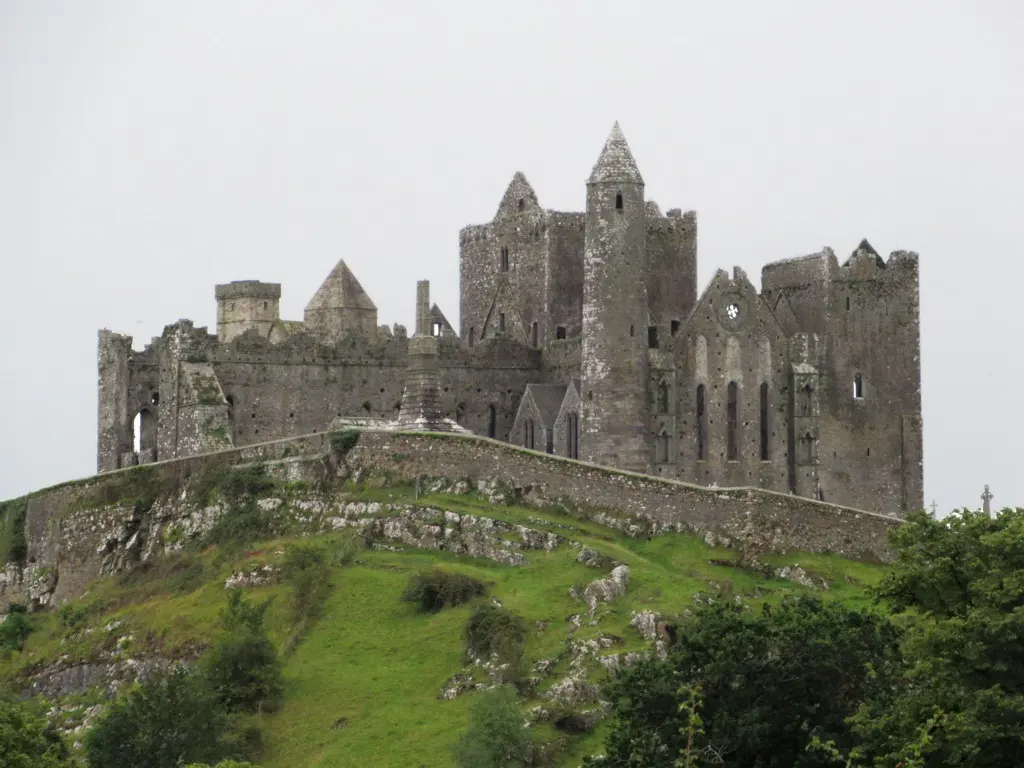
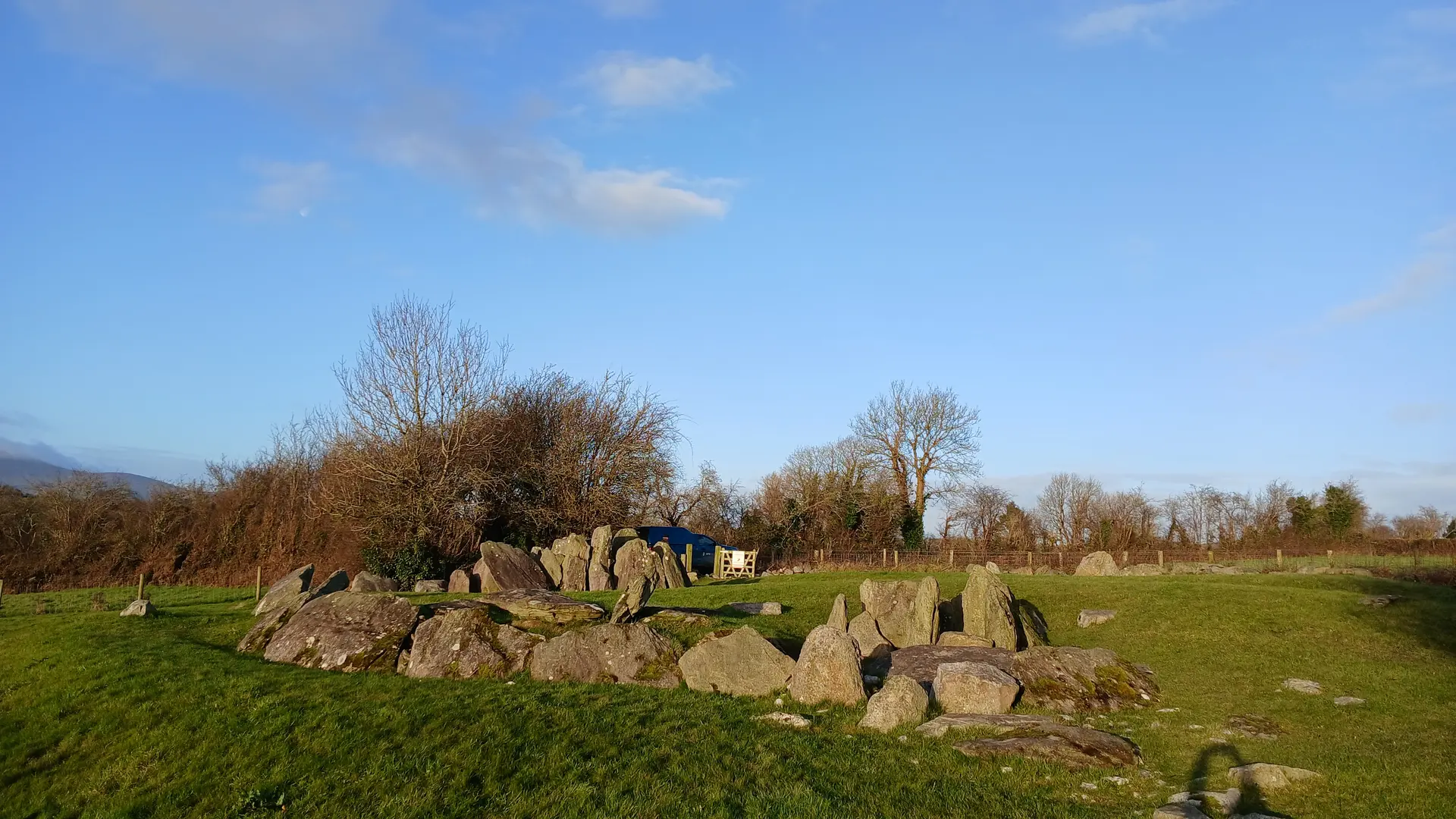
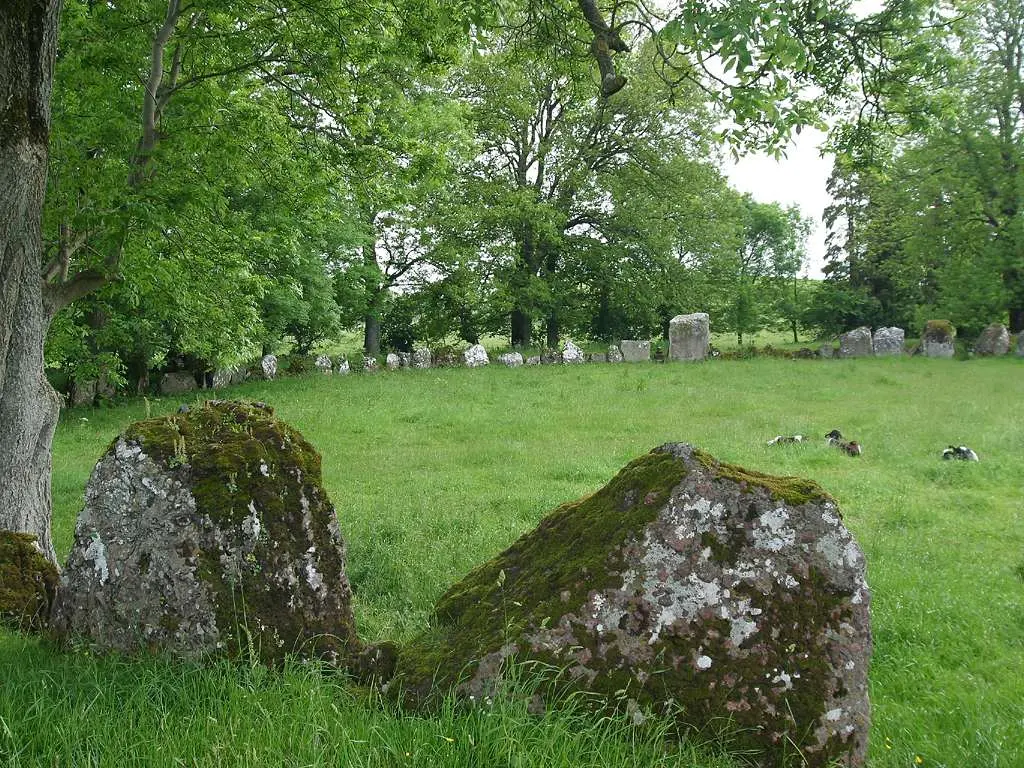
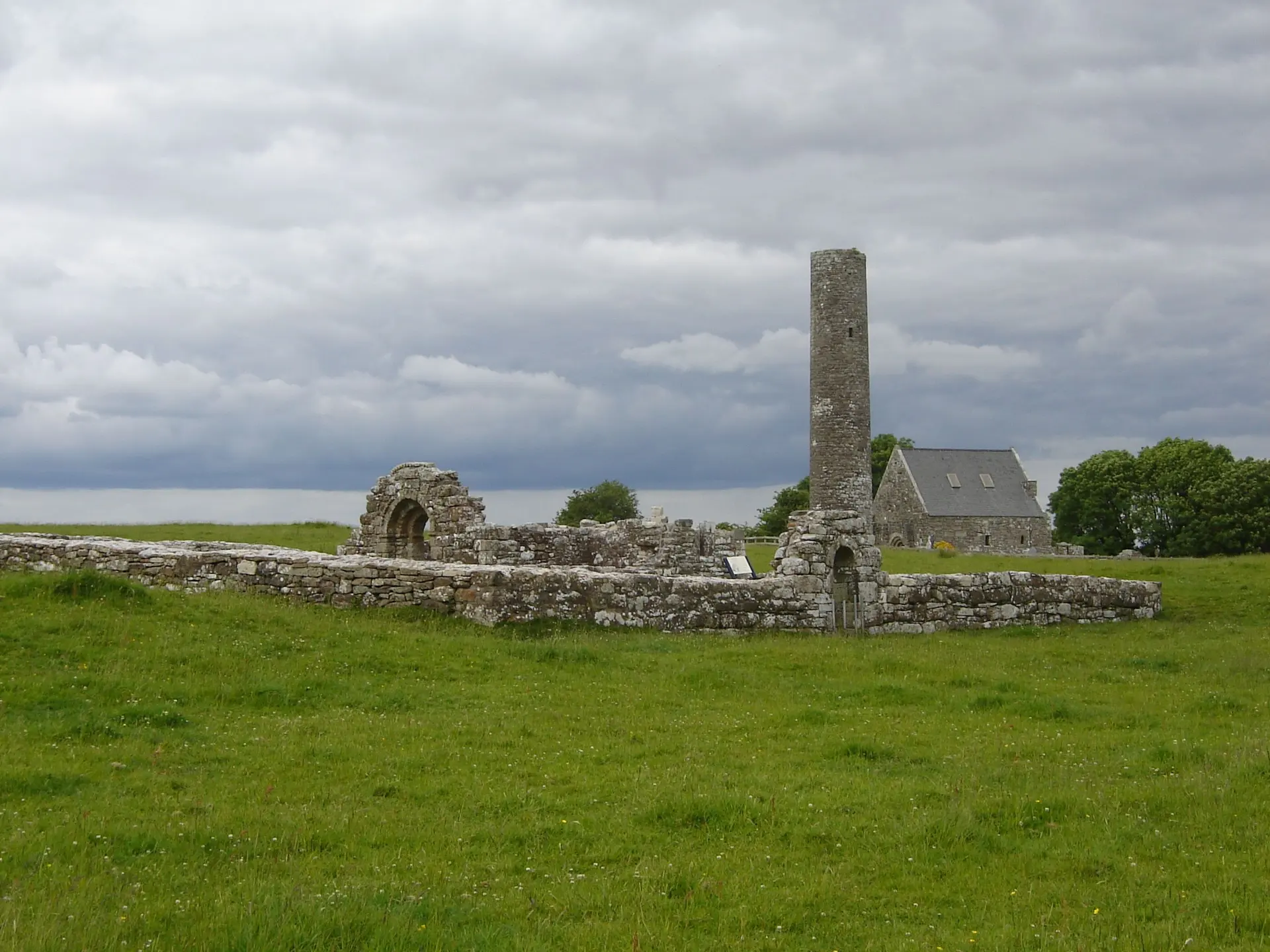
Photo gallery
3 curated photos
Share a photo
Help visitors recognize Holy Cross Abbey. Every submission is reviewed before publication.