Our Lady’s Island Monastery, Rosslare, Ireland
Where fourteen centuries of barefoot pilgrims have circled an island between lake and sea, carrying prayers to Mary
Understand sacred places, explore living traditions, and learn how to engage respectfully with Pilgrim Map.
Access has not been verified. Check current local guidance before planning a visit.
County Wexford, Wexford, Ireland
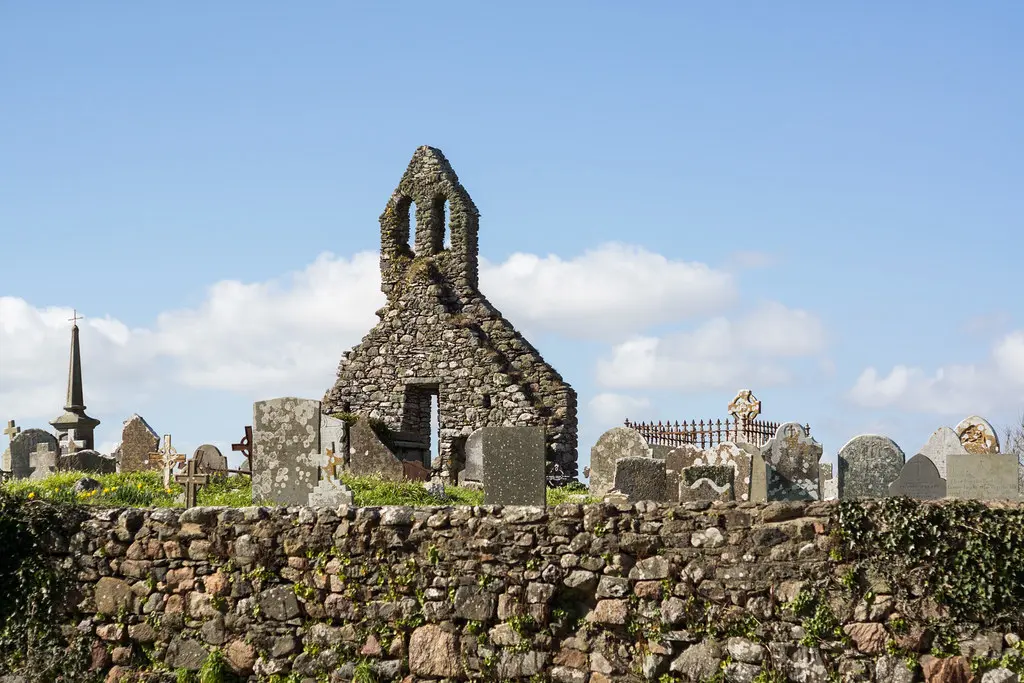
Image of Our Lady’s Island Monastery, Rosslare, Ireland. Image source
Visit essentials
A quick read before you go
- Duration
- 2-3 hours if making the traditional nine-circuit pilgrimage
- Etiquette
- An active Marian shrine where devotion takes precedence.
Overview
The causeway is short, barely a hundred metres, but crossing it changes something. On one side, ordinary Wexford farmland. On the other, a landscape shaped entirely by devotion. A leaning Norman tower, medieval ruins, a modern church, Marian shrines, and a graveyard where the dead rest within sight of the sea. This is Our Lady's Island, one of only two officially recognized Marian shrines in Ireland, and its pilgrimage tradition stretches back further than written records can confirm.
The Irish name, Cluain-na-mBan, translates as 'the meadow of the women.' Before Christianity arrived, this place may have been home to a community of female druids. That a site dedicated to feminine spiritual authority became one of Ireland's foremost shrines to Mary is suggestive, though the connection remains unproven. What is certain is that by 600 CE, the island had established its reputation as a place of Marian devotion. St Abban founded a monastery here in the sixth century.
The Augustinians took stewardship in 1184 and maintained the pilgrimage until Cromwell's soldiers murdered the priests in 1649 and desecrated the church. The pilgrimage survived. When Rome suppressed Irish pilgrimages during the Penal Laws, Pope Benedict XIV made a specific exception for Our Lady's Island. The annual pilgrimage season runs from August 15 to September 8, bookended by the Feast of the Assumption and the Birthday of the Blessed Virgin Mary.
Pilgrims make nine circuits of the island barefoot, some with one foot in the lake water, reciting the Rosary as they walk. The torchlight procession on September 8 closes the season, carrying light across water in the gathering dark. Outside the pilgrimage season, the island offers something different: solitude, ruins, and the particular quality of a place that has been prayed over for more than a millennium.
Why this place is sacred
The thinness of Our Lady's Island operates through layering. Each era left its mark without erasing what came before. The pre-Christian name persists alongside the Christian dedication. The ruined Norman tower stands beside the modern church. The causeway that connects the island to the mainland is also the threshold between ordinary life and sacred space. Water is central to the site's liminal quality. The peninsula sits between Lady's Island Lake, brackish and still, and the open Irish Sea.
Pilgrims walk with the lake on one side and sacred ground on the other, and the tradition of walking barefoot with one foot in the water literalizes the experience of being between two worlds. The site's survival through persecution adds another dimension. The Augustinian priests were martyred by Cromwell's soldiers. The Penal Laws banned Catholic pilgrimage. Yet the pilgrimage continued, surviving through clandestine devotion and the extraordinary Papal exemption that set this island apart from every other Irish pilgrimage site.
That persistence has weight. Fourteen centuries of people walking the same circuit, praying the same prayers, in defiance of armies and laws, creates a density of intention that newcomers often sense before they understand its source.
The pre-Christian settlement may have functioned as a sanctuary for female druids, if the place-name Cluain-na-mBan is taken as evidence. St Abban's sixth-century monastery established the site as a centre of Christian worship and pilgrimage. The Augustinian foundation from 1184 formalized the pilgrimage tradition that continues today.
From possible pre-Christian druid sanctuary to early Christian monastery, through Augustinian stewardship, Cromwellian destruction, Penal-era defiance, and modern mass pilgrimage. The Church of the Assumption now serves as the parish church. The site is part of the Wexford-Pembrokeshire Pilgrim Way, a long-distance pilgrimage route connecting Ireland and Wales. A webcam broadcasts Mass via churchservices.tv.
Experience and orientation
The approach is by car along quiet Wexford roads, through farmland that gives no hint of what lies ahead. A small car park near the causeway marks the transition point. Cross the causeway on foot, and the island opens before you: the leaning Norman tower, the medieval ruins, the Church of the Assumption with its welcoming simplicity, and beyond everything, the lake and the sea. During the pilgrimage season, the atmosphere shifts.
Pilgrims move in quiet procession around the island's perimeter, many barefoot, rosary beads in hand. The sound is of murmured prayer, wind, and water. Nine circuits take two to three hours, and the repetition creates its own kind of meditation, the landscape becoming more familiar with each pass, details emerging that the first circuit missed. The water is close, sometimes underfoot.
The traditional practice of walking with one foot in the lake connects the pilgrim to the element that defines this place. Outside the pilgrimage season, the site offers a different encounter. The ruins are yours alone. The tower leans against the sky. The graveyard holds its silence. The lake reflects whatever light the day provides. The Marian shrines along the circuit carry flowers and candles left by those who came before.
On the September 8 closing, the torchlight procession transforms the island. Hundreds of flames moving across the water in the dark, the final blessing, the sense of a season completed. Those who have witnessed it describe the experience as one that stays.
Our Lady's Island is located on the northern shore of Lady's Island Lake, approximately 15 km south of Wexford town and 5 km west of Rosslare. The causeway connects the peninsula to the mainland from the north. The pilgrimage circuit follows the island's perimeter. The Church of the Assumption, the Norman tower ruins, and the Marian shrines are all within the circuit.
Context and lineage
The oldest name for this place is Cluain-na-mBan, 'the meadow of the women.' Some scholars interpret this as evidence of a pre-Christian community of female druids who occupied the island before Christianity arrived. A natural stone formation at nearby Carnsore Point may have served as a druidic altar. Whether or not this interpretation is correct, the site's sacred character clearly predates its Christian identity.
In the sixth century, St Abban, nephew of St Ibar, one of Ireland's pre-Patrician missionaries, founded a monastery here and dedicated it to the Blessed Virgin Mary. By 600 CE, the island's reputation as a Marian pilgrimage site was established. The Norman lord Rudolph de Lamporte, witnessing the constant stream of pilgrims, granted the island to the Augustinian fathers in 1184. His relative Milo built a castle in 1195, whose tower still stands, leaning but refusing to fall.
In October 1649, Cromwell's soldiers murdered the Augustinian priests and desecrated the church. The pilgrimage survived. During the Penal Laws, when Rome itself suppressed Irish pilgrimages, Pope Benedict XIV made a specific exemption for Our Lady's Island, the only pilgrimage in Ireland to receive such protection. In 1897, Fr Whitty re-established the public pilgrimage procession on August 15, and it has continued without interruption since.
Our Lady's Island belongs to the tradition of Irish island and peninsula pilgrimages, alongside Croagh Patrick, Lough Derg, and Skellig Michael. Its unbroken Marian focus connects it to the broader European tradition of Marian shrines, though its antiquity predates most continental counterparts. The Wexford-Pembrokeshire Pilgrim Way now links the site to a cross-channel pilgrimage network.
St Abban
Rudolph de Lamporte
Milo De Lamporte
Pope Benedict XIV
Fr Whitty
Traditions and practice
Medieval pilgrims walked barefoot around the island, sometimes crawling, sometimes wading in the lake water. The nine-circuit practice with Rosary recitation has been continuous for centuries. The Plenary Indulgence was granted for visits on the Feast of the Assumption and the Nativity of Our Lady. Holy water was collected from Our Lady's Well. The Augustinian fathers maintained daily monastic offices and pilgrim hospitality until their martyrdom in 1649.
The annual pilgrimage season runs from August 15 to September 8. Opening Mass on August 15 at 3pm is followed by the first procession. Throughout the season, organized groups and individual pilgrims walk the nine-circuit route, many barefoot, reciting the Rosary. The closing Mass on September 8 culminates in a torchlight procession with a final blessing. Year-round, the Church of the Assumption holds regular Mass. Candles can be lit at the Marian shrines. Holy water is collected.
The Anointing of the Sick is available during the pilgrimage season.
Walk the causeway on foot, leaving your car at the car park. If visiting during the pilgrimage season, consider making the nine circuits, barefoot if you choose. The repetition of the circuit, combined with the proximity of water and the rhythm of prayer, creates a contemplative experience that does not require Catholic faith to appreciate. Outside the season, walk the perimeter slowly. Pause at the leaning tower. Sit by the lake.
Light a candle at the shrine if moved to do so.
Roman Catholic Marian Devotion
ActiveOur Lady's Island is one of only two officially recognized Marian shrines in Ireland. Its pilgrimage tradition has been continuous for at least 1,400 years, and it received a specific Papal exemption from the suppression of Irish pilgrimages, confirming its exceptional status within the Church. A Plenary Indulgence is granted to pilgrims who visit on the Feast of the Assumption or the Nativity of Our Lady.
Annual pilgrimage season from August 15 to September 8 with nine barefoot circuits, Rosary recitation, opening and closing Masses, torchlight procession on September 8, candle lighting at Marian shrines, holy water collection, and Anointing of the Sick.
Early Irish Christian Monasticism
HistoricalSt Abban's sixth-century foundation places the site within the earliest wave of Irish Christian monasticism. The Augustinian fathers maintained the pilgrimage from 1184 until their martyrdom at Cromwell's hands in 1649.
Monastic prayer, daily liturgical offices, study, and hospitality for pilgrims. The Augustinians maintained the pilgrimage tradition through the medieval period.
Pre-Christian / Druidic
HistoricalThe Irish name Cluain-na-mBan suggests the site may have been inhabited by female druids before Christianity. The transition from feminine pagan sanctuary to Marian shrine follows a pattern seen at other Irish sacred sites.
Specific practices are unknown and inferred from place-name evidence and the general pattern of Irish sacred sites. The sacredness of the island's water and the circumambulation tradition may have pre-Christian origins.
Wexford-Pembrokeshire Pilgrim Way
ActiveOur Lady's Island is a key station on the Wexford-Pembrokeshire Pilgrim Way, a long-distance pilgrimage route connecting Ireland and Wales.
Long-distance walkers pass through the site as part of the multi-day pilgrimage, connecting Our Lady's Island to the broader European pilgrimage network.
Perspectives and open questions
Our Lady's Island sits at the intersection of pre-Christian memory, medieval martyrdom, and living Catholic devotion. Each perspective opens a different dimension of the site's significance.
Scholarly perspective
Historians recognize Our Lady's Island as one of Ireland's oldest continuous pilgrimage sites, with well-documented evidence from the medieval period onward. The Augustinian foundation in 1184, Cromwell's destruction in 1649, and the Papal exemption from pilgrimage suppression under Pope Benedict XIV are all historically verified. The pre-Christian connection is inferred primarily from the place-name Cluain-na-mBan and the broader pattern of Christian adoption of pagan sacred sites in Ireland, but lacks direct archaeological confirmation.
The Carnsore Point formation has not been formally investigated as a druidic site.
Living and traditional perspectives
In Catholic tradition, the Blessed Virgin Mary chose this site for her veneration through the early Irish saints. St Abban's founding of the monastery is understood as divinely guided. The unbroken pilgrimage tradition, surviving Cromwell, the Penal Laws, and even Papal suppression of other Irish pilgrimages, is interpreted as evidence of Mary's particular protection of this place. The Plenary Indulgence confirms its spiritual authority within the Church.
Alternative interpretations
Some interpreters see the transition from the female druid sanctuary of Cluain-na-mBan to a Marian shrine as evidence of a continuous feminine sacred tradition predating Christianity. The island's position between lake and sea, and the practice of barefoot walking in water, are sometimes read as surviving elements of pre-Christian water veneration. The liminal landscape, neither fully land nor water, is regarded by some as a natural thin place where the boundary between physical and spiritual worlds is especially permeable.
Open questions
The precise nature of the pre-Christian settlement remains unknown. Whether a female druid community actually inhabited the island, and what their practices might have been, cannot be determined from place-name evidence alone. The exact date when the Marian pilgrimage tradition began is uncertain. The relationship between the druidic name and the later Marian dedication is suggestive but unproven. The Carnsore Point druid altar and its relationship to Our Lady's Island has not been archaeologically investigated.
Plan your visit
Access and arrival
Accommodation available in Rosslare and Wexford town. During the pilgrimage season, book in advance as demand increases. No accommodation on the island itself.
Respectful visit
No formal dress code, but modest attire appropriate for a place of worship is recommended, especially when attending Mass. Comfortable walking shoes for the circuit path, unless walking barefoot by tradition. Weather-appropriate layers are advisable given the exposed coastal location.
Photography of the ruins, tower, lake, and landscape is generally welcome. Be discreet during Mass and when others are at prayer. Do not photograph individual pilgrims without permission, especially during barefoot devotional circuits.
Candles can be lit at the Marian shrines. Donations for site maintenance are welcome. No specific offering tradition beyond standard Catholic practice.
Free and open access at all times, no admission fee. Respectful behavior expected at all times, especially in the church, graveyard, and at the shrines. Do not disturb pilgrims engaged in their circuits. Do not climb on medieval ruins. During pilgrimage season processions, yield right of way to organized groups.
The site is an active place of Catholic worship and pilgrimage. During the pilgrimage season, the atmosphere is intensely devotional. Non-Catholic visitors are welcome but should be mindful of those engaged in prayer. The causeway and circuit path are exposed to coastal winds. Barefoot walking on uneven ground requires care.
Current practical details
Address
Lady's Island, Co. Wexford, Y35 ND66, Ireland
Phone
Hours
Hours, fees, and access can change — verify on the official source before you travel. Practical details last checked Jun 2026.
Location
Map loads as you approach this section.
Pilgrim reflections
A portrait of encounter, not a score
Pilgrims describe what they felt, how present they could become, and whether the place would shape a journey. There are no stars and no ranking of traditions.
No reviewed reflections yet
The first pilgrims can help describe the character of being here.
Share a reflection
Available after an account-backed “Been there.” Every reflection is reviewed before publication.
Nearby sacred places
Explore other sacred places in the region. Proximity does not establish access or travel time; check each place’s guidance.

Share a photo
Help visitors recognize Our Lady’s Island Monastery, Rosslare, Ireland. Every submission is reviewed before publication.