Jasna Góra, Poland
Our Lady of Częstochowa
Shrine
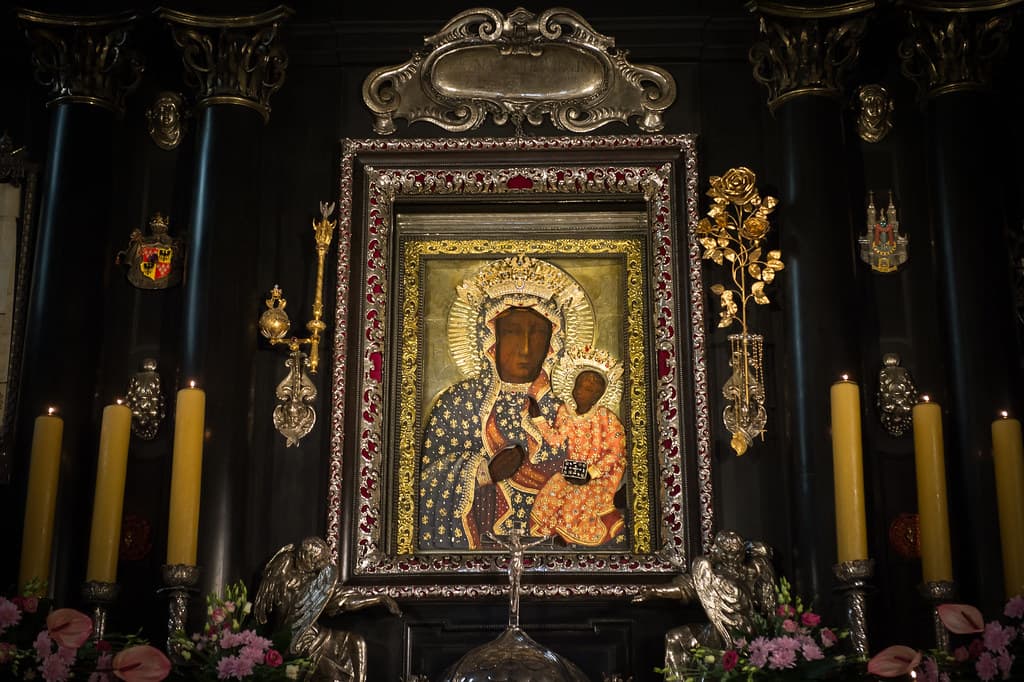
The Black Madonna of Poland — the cultural and spiritual heart of Polish Catholicism, crowned Queen of Poland in 1656. The icon's two scarred cheeks recall the Hussite raid of 1430.
Iconographic theme · Marian devotion
Vierges Noires · La Moreneta · Czarna Madonna
Explore places venerating Black Madonnas across Europe and the Americas. Discover the images, their histories and the communities that care for them.
20 destinations. Grouped geographically, not as a suggested travel order. Open each place for its own story and visitor guidance.
20 destinations shown
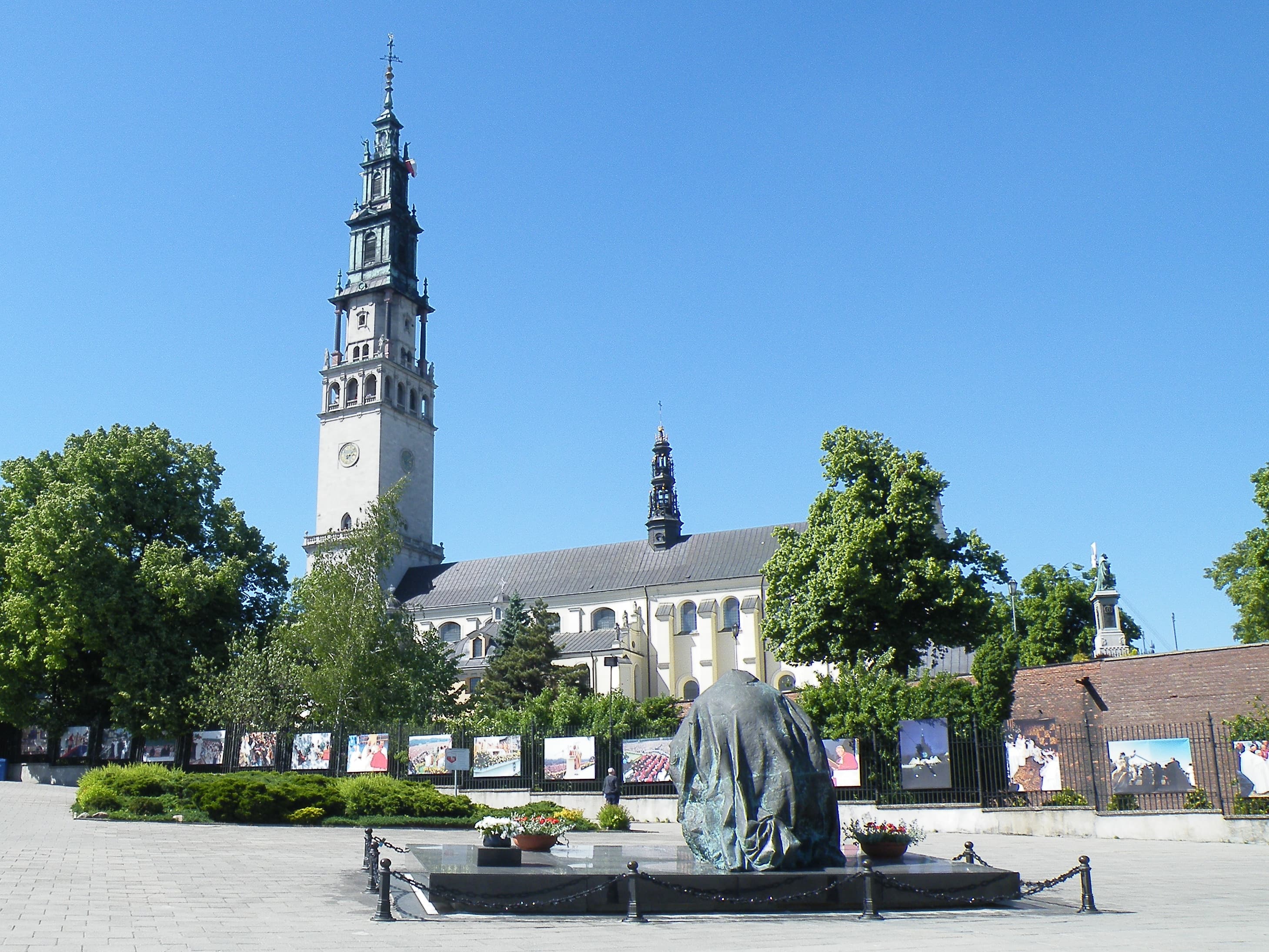
Jasna Góra, Poland
Shrine
The Black Madonna of Poland — the cultural and spiritual heart of Polish Catholicism, crowned Queen of Poland in 1656. The icon's two scarred cheeks recall the Hussite raid of 1430.
Częstochowa, Poland
Monastery
The Pauline monastery that has guarded the icon since 1382. ‘Jasna Góra' means Bright Mountain — a paradox that gathers the dark image into a place of light.
Montserrat, Catalonia, Spain
Shrine
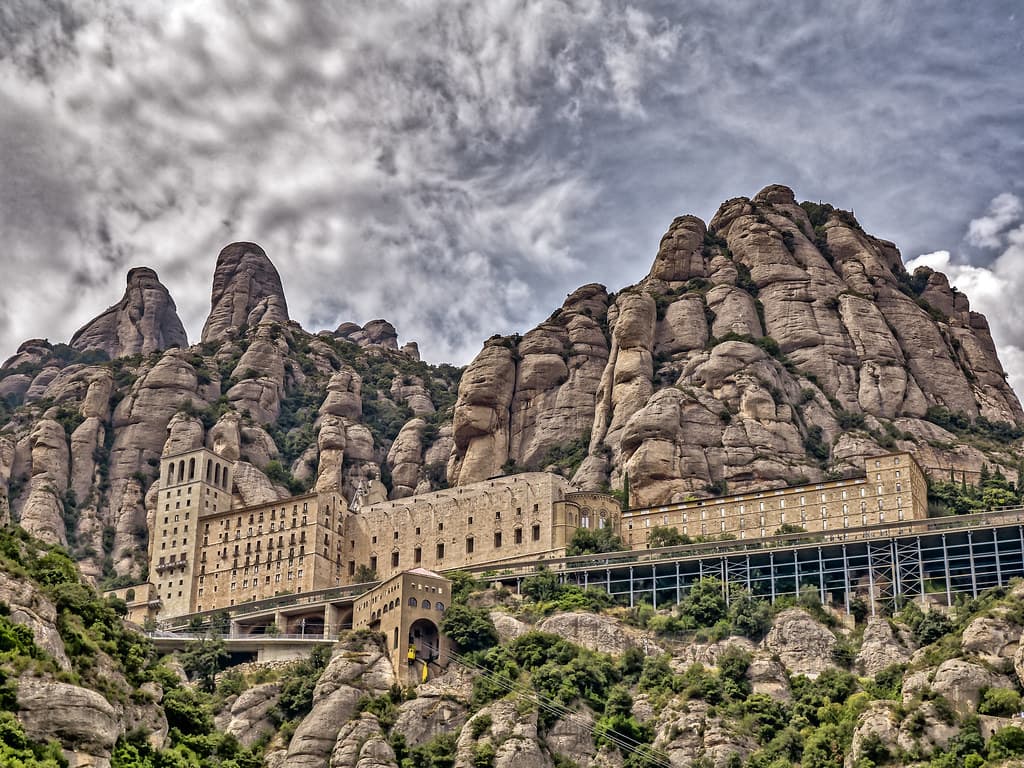
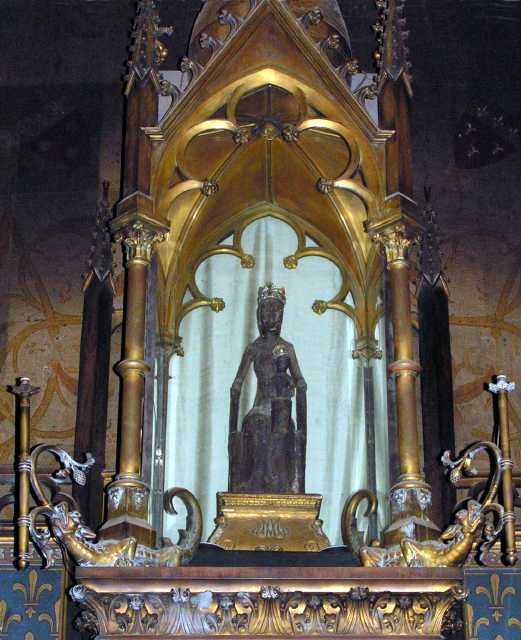
Catalonia's patroness, enthroned in the serrated mountain abbey since at least 1223. ‘La Moreneta' — the little dark one — is a Romanesque carved-wood Virgin whose face has darkened with centuries of candle smoke and varnish.
Montserrat, Catalonia, Spain
The Benedictine abbey founded in 1025 that houses La Moreneta. Pilgrims approach the camarín behind the high altar to touch the orb she holds in her right hand.
Guadalupe, Extremadura, Spain
Shrine
A small dark cedarwood statue, dated by most scholars to the 12th century, discovered c. 1326 by the Castilian shepherd Gil Cordero. The Royal Monastery is UNESCO World Heritage. Columbus made pilgrimage here before and after his first voyage, named the Caribbean island of Guadeloupe for her, and the first indigenous Americans were baptised at the monastery's font.
Le Puy-en-Velay, France
Shrine
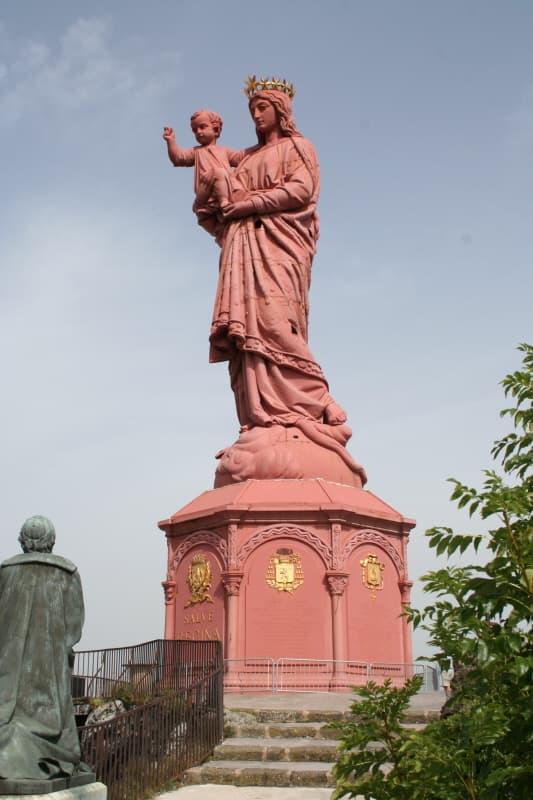
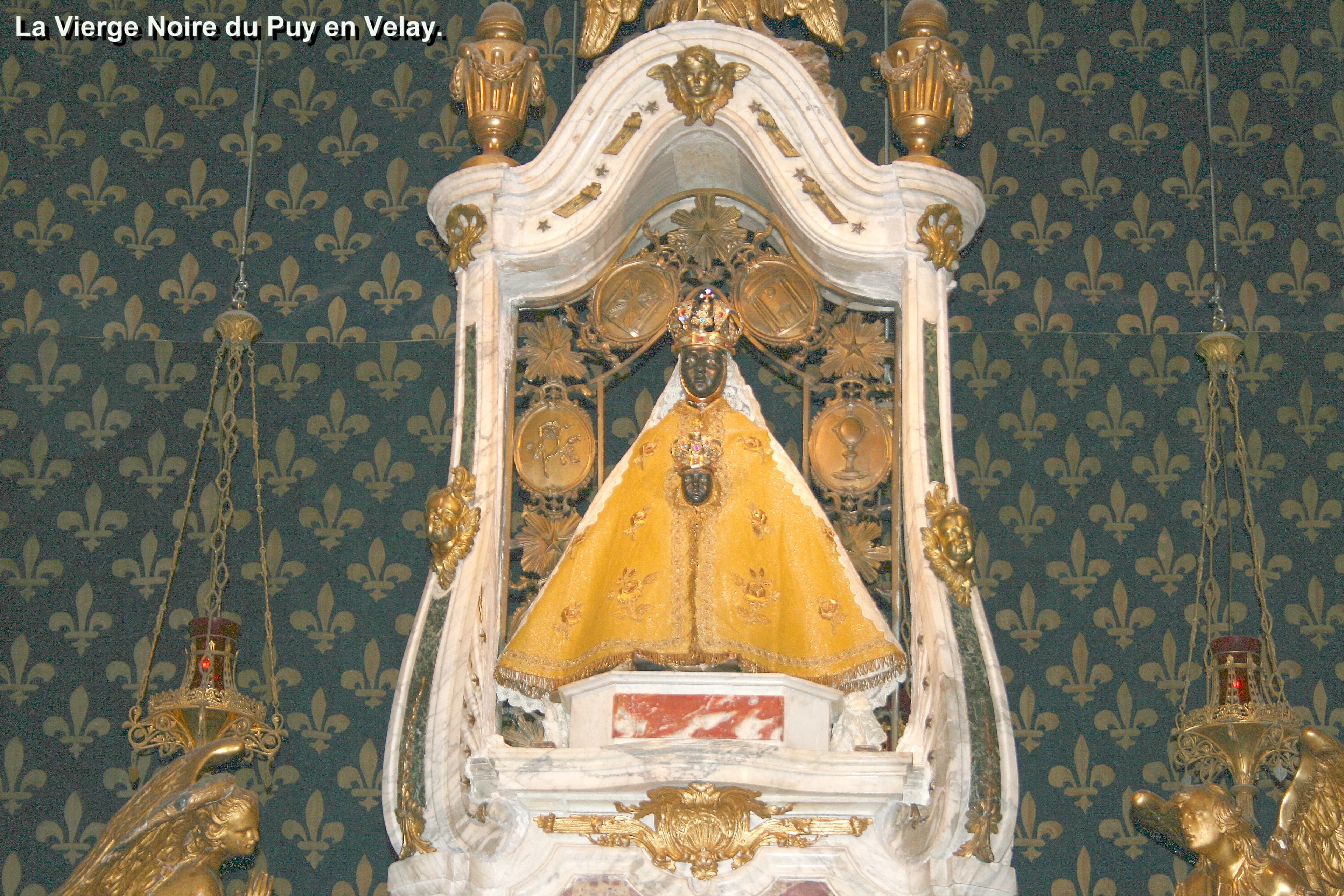
One of the four oldest Marian shrines in Christendom, on a site of pre-Christian healing. The original Black Madonna — possibly an Egyptian statue brought back by Saint Louis — was burned in 1794; the current image is a 19th-century replacement.
Le Puy-en-Velay, France
Sacred Object
The replacement image enthroned in the cathedral after the Revolution. Le Puy remains a starting point for the Via Podiensis route to Santiago de Compostela.
Rocamadour, France
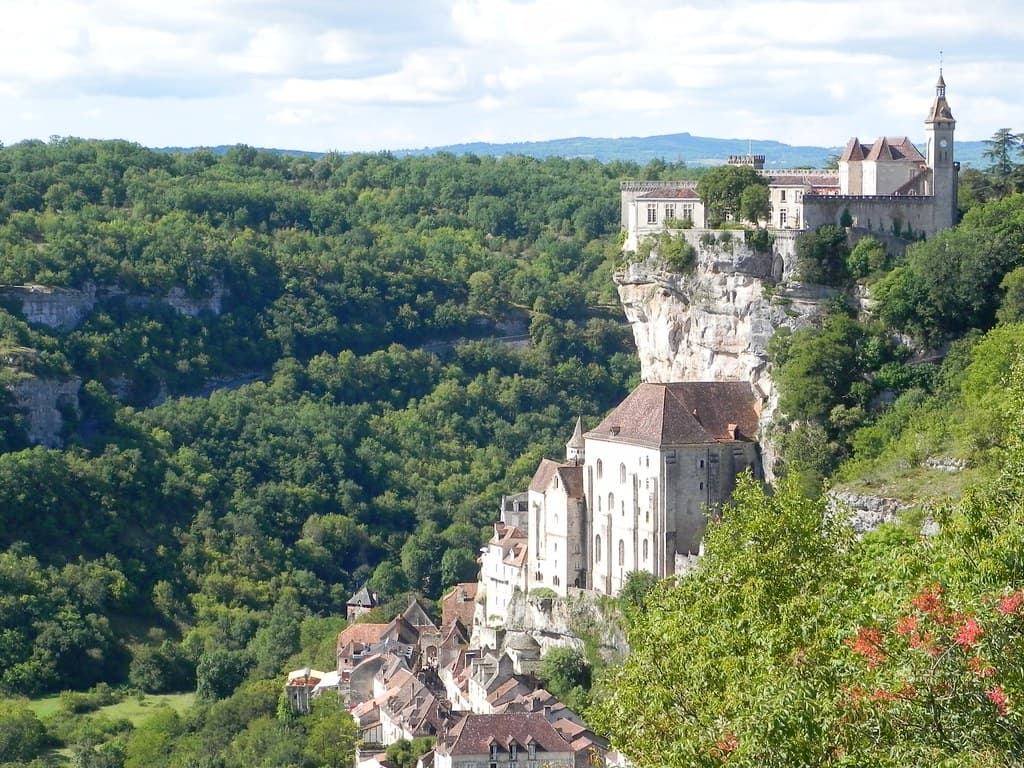
A medieval pilgrimage city built into a cliff, with seven sanctuaries clustered around the Chapelle Notre-Dame. The 12th-century walnut-wood Black Madonna there is one of the most venerated in France.
Rocamadour, France
Shrine
The seated Virgin and Child whose miracles were recorded in the 12th-century Livre des miracles. Pilgrims still climb the 216 steps of the Grand Escalier on their knees.
Chartres Cathedral, France
Shrine
‘Our Lady Beneath the Earth' — the crypt Madonna at Chartres. Tradition holds that the original wooden statue stood in a Druid sanctuary on this site before Christianisation; the current statue is a 1976 replacement.
Clermont-Ferrand, France
Shrine
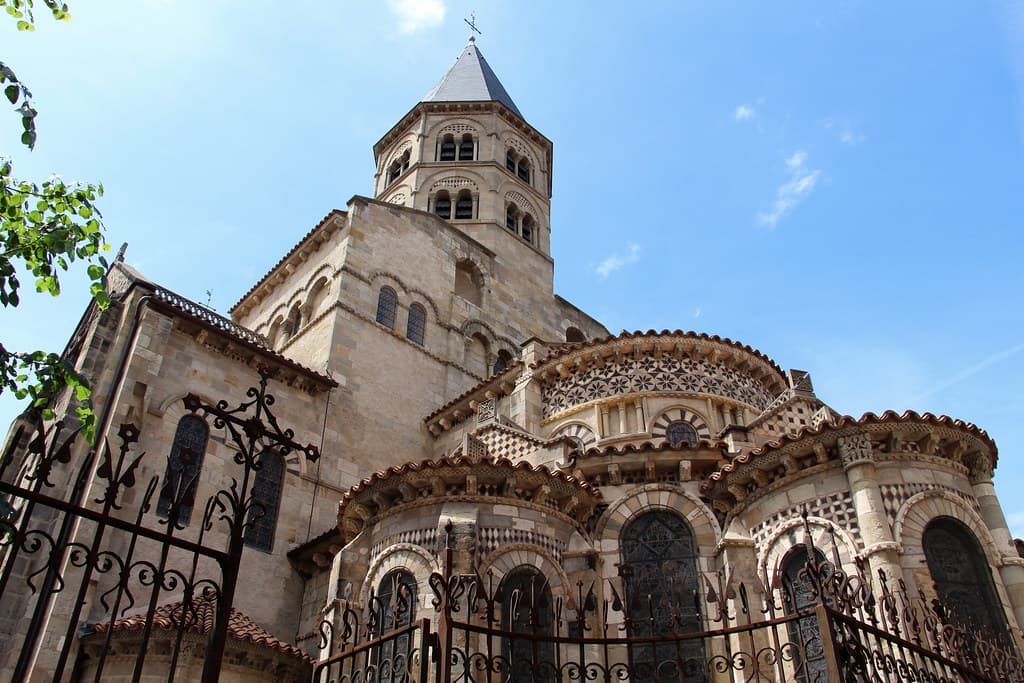
A 12th-century Romanesque masterpiece in the heart of the Auvergne. The crypt's seated Black Madonna is one of the oldest Auvergnat Vierges Noires still in continuous veneration.
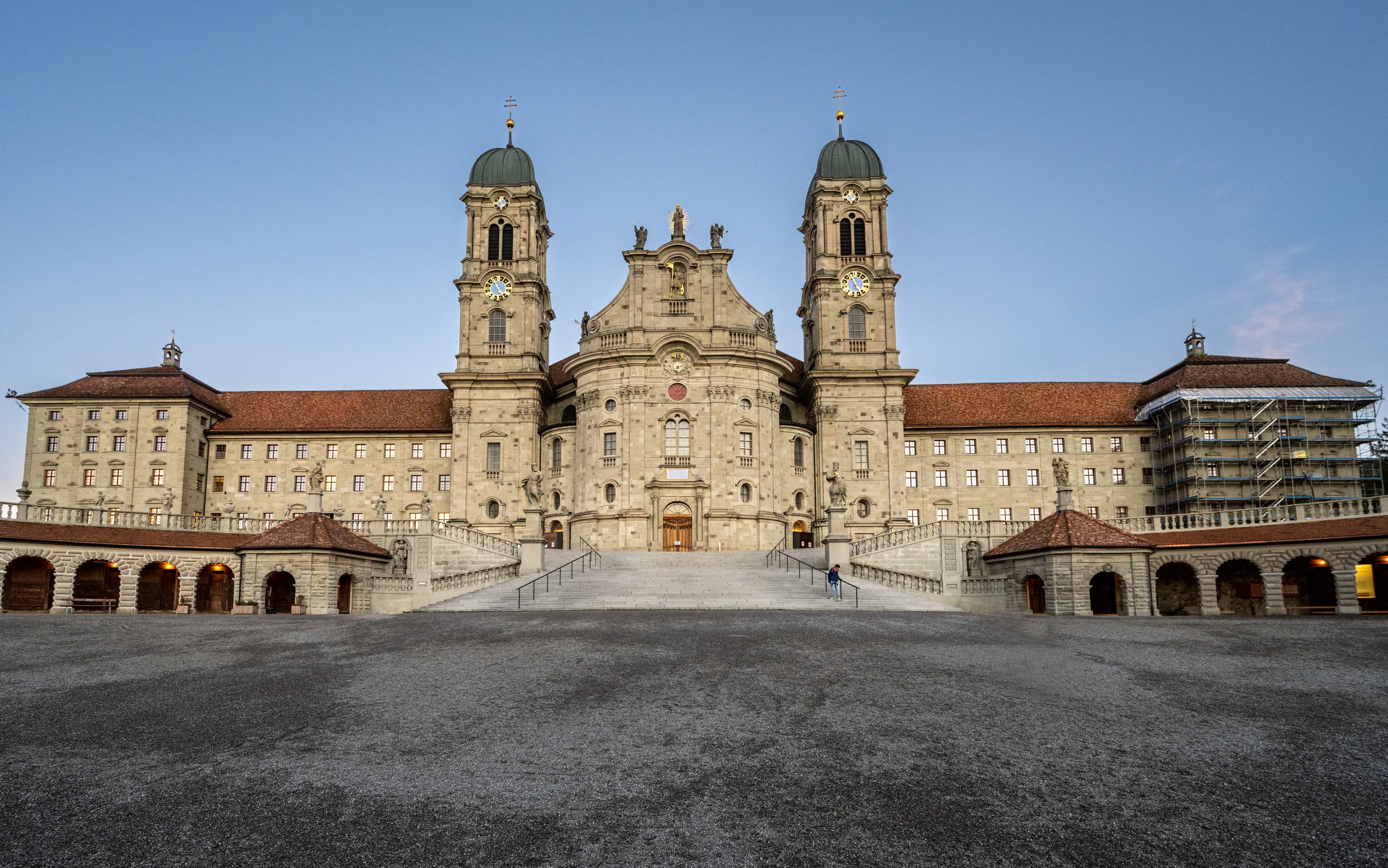
Einsiedeln, Switzerland
Monastery
Founded in the tenth century around the cell of the hermit Saint Meinrad. The Marian shrine in the Lady Chapel houses Switzerland's most-pilgrimaged Black Madonna.
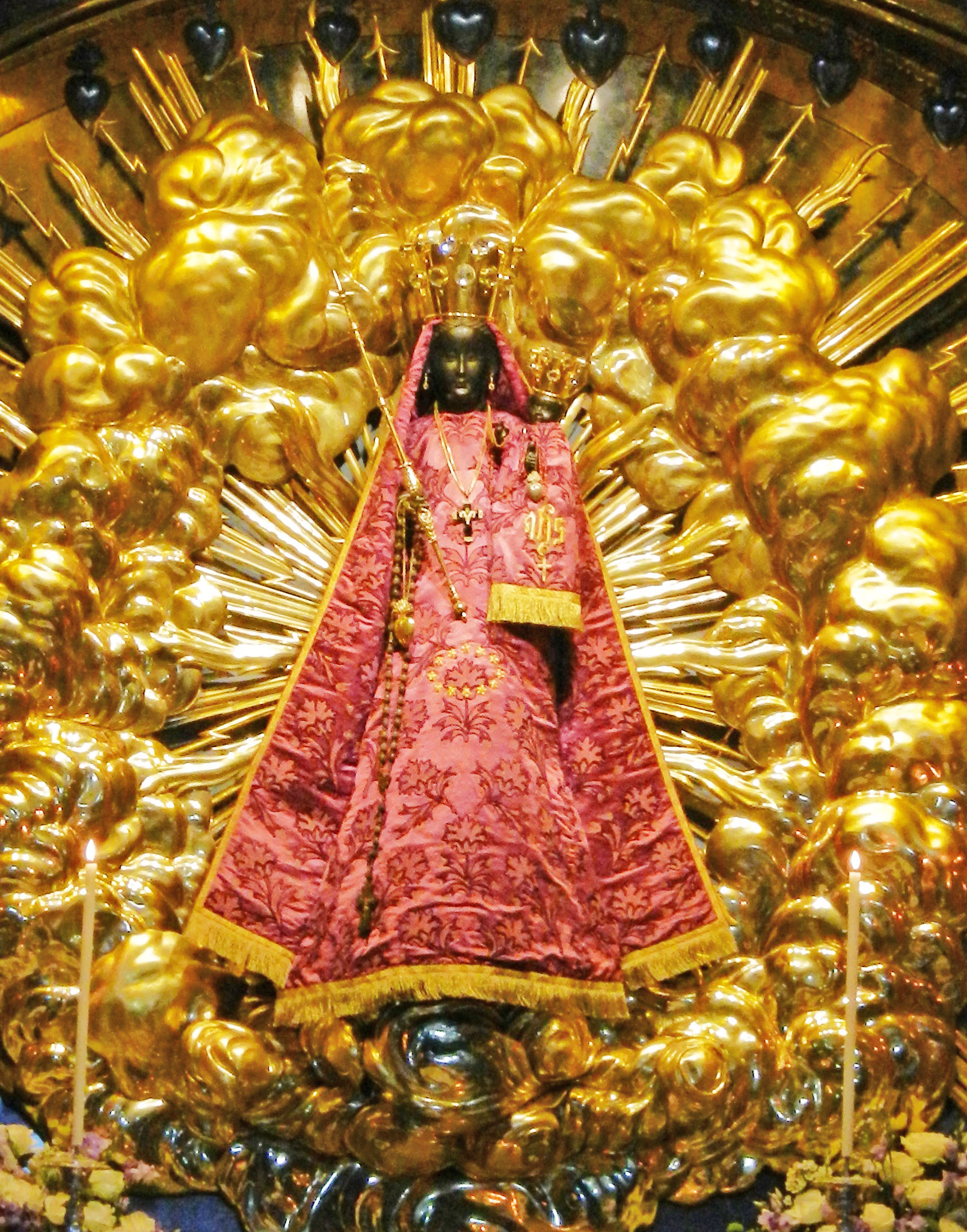
Einsiedeln, Switzerland
Marian Shrine
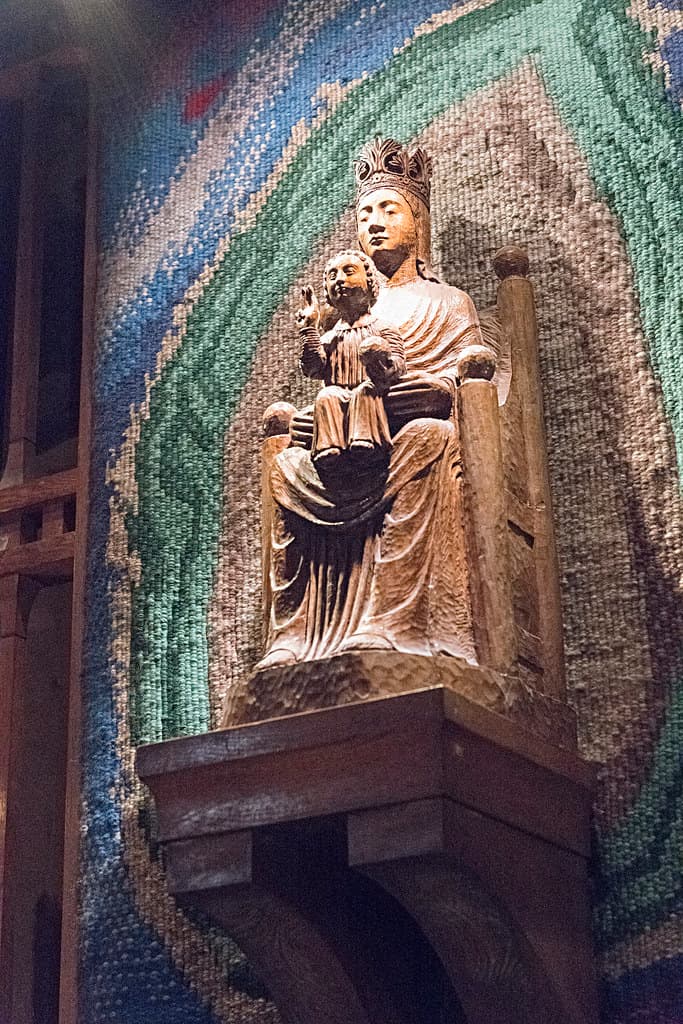
The 15th-century carved Virgin whose face darkened from centuries of incense and candle soot. The annual ‘Engelweihe' celebration commemorates the legendary angelic consecration of the original chapel.
Mariazell, Austria
Basilica
Austria's national shrine and Central Europe's most-pilgrimaged Marian site. The lime-wood image of the Magna Mater Austriae has been venerated since 1157.
Tindari, Sicily, Italy
Sanctuary
‘Nigra sum, sed formosa' — black I am, but beautiful — the Latin inscription on the icon, taken from the Song of Songs. A Byzantine cedar-wood Madonna venerated since at least the 16th century.
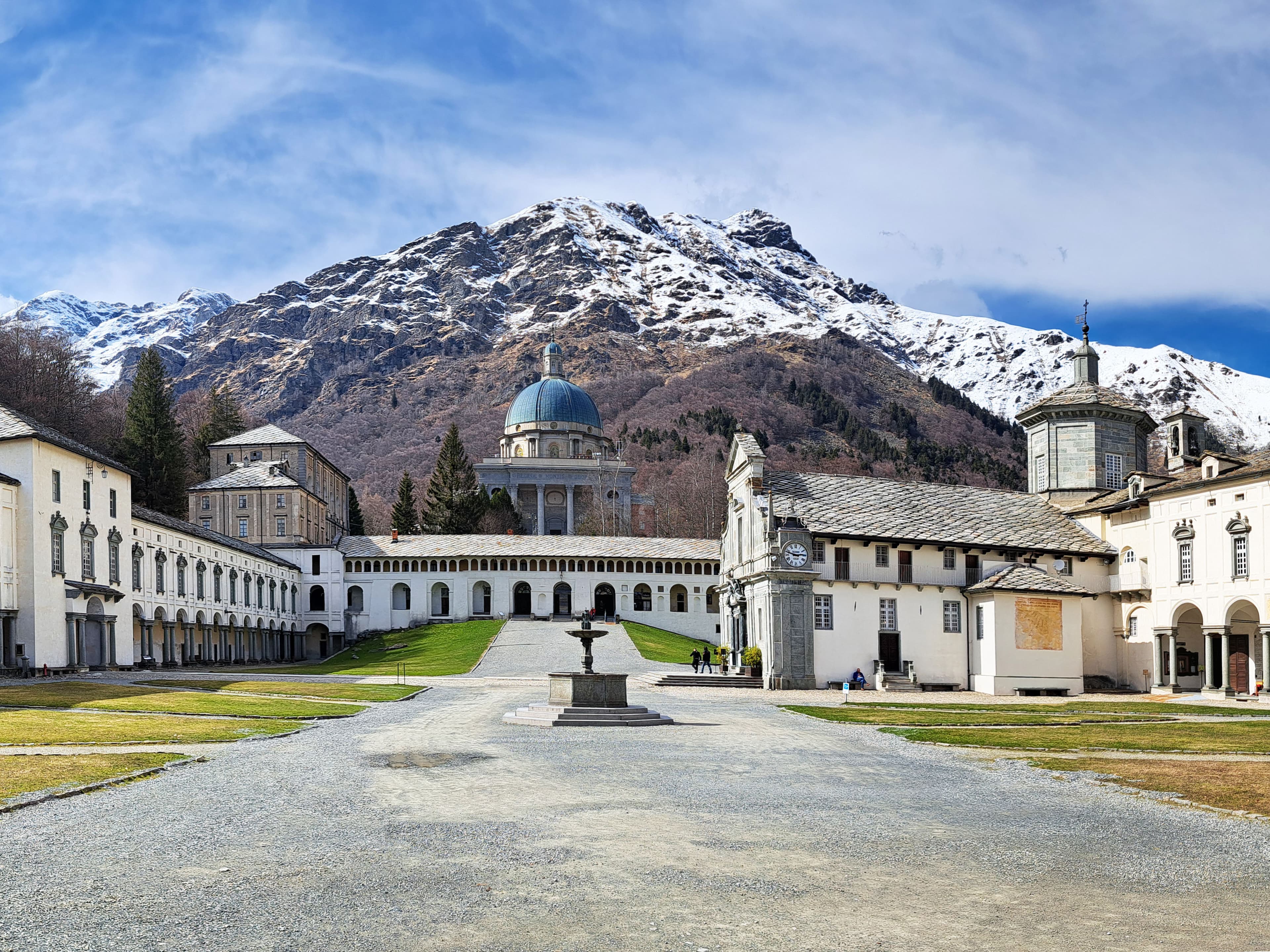
Biella, Piedmont, Italy
Sanctuary
The Sanctuary of Our Lady of Oropa, in the foothills of the Alps. The Black Madonna is a 13th-century carved walnut statue traditionally attributed to Saint Eusebius of Vercelli's mission in the 4th century.
Loreto, Italy
Shrine
Inside the Holy House of Loreto — said to be the home of the Annunciation, transported from Nazareth — sits a Black Madonna in cedar of Lebanon. The current statue is a 1922 replacement after the original was lost in a 1921 fire.
Verviers, Belgium
Shrine
A Walloon Black Madonna of unusual tenderness, in the Church of the Recollects. The figure has survived three Belgian wars and remains a focus of textile-pilgrim devotion in the old industrial city.
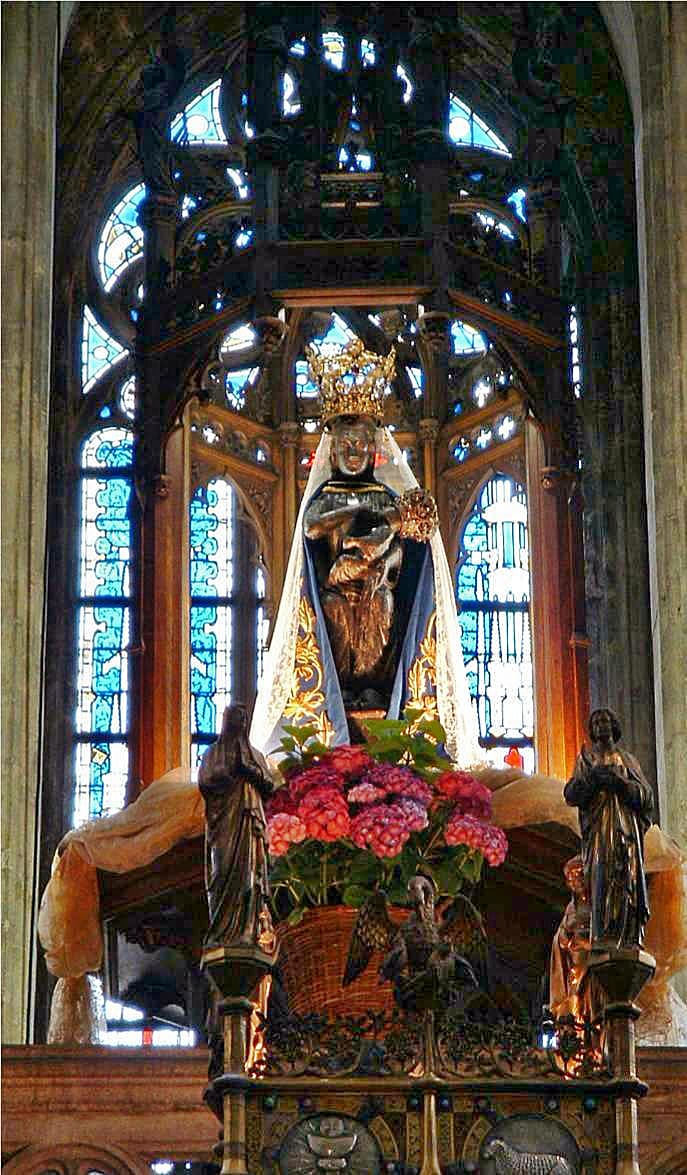
photo by Napoleon Vier
Halle, Belgium
Shrine
A small 13th-century walnut statue of the Virgin and Child kept on the high altar of the Brabantine Gothic basilica of Saint Martin, just south of Brussels. Tradition holds that during the 1489 siege some thirty cannonballs fired into the basilica killed no one; the recovered balls hang in the church as ex-votos.
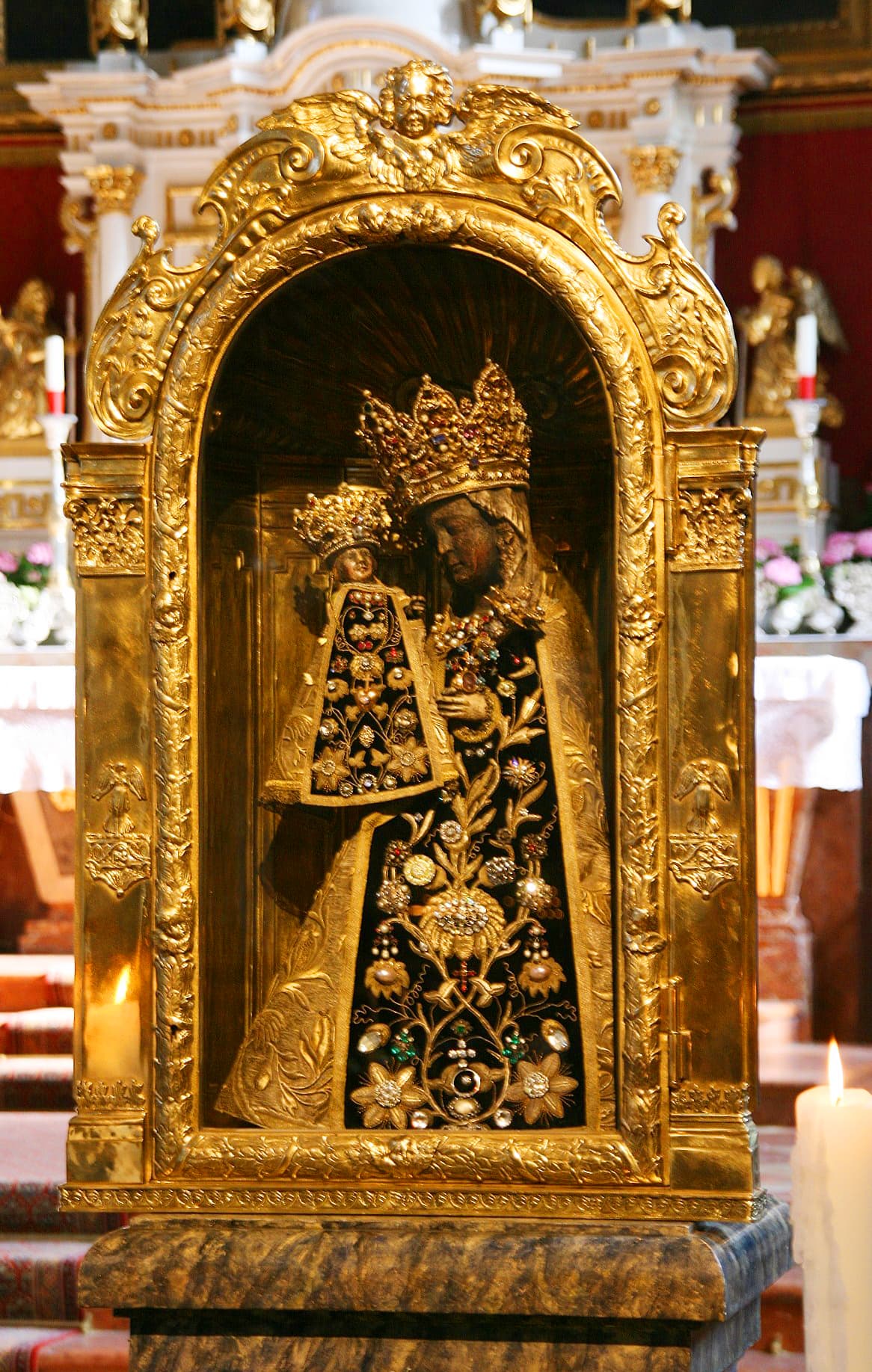
Altötting, Bavaria, Germany
Shrine
Altötting's tiny octagonal Chapel of Grace houses one of Europe's most venerated Black Madonnas — a small dark lindenwood statue carved in the early 14th century. In May 1489 a drowned child laid before her on the altar is recorded as having revived; the silver urns of Bavarian kings and dukes line the chapel walls.
For Black Madonna pilgrimage sites. Local rules and custodians take priority.
Pilgrim Map · Black Madonna pilgrimage sites
Explore the history behind these places. Traditional accounts, scholarly interpretations and living practices may differ.
Why pilgrims come
Pilgrims come to a Black Madonna for what feels older than they are. The image is small. The chapel is often crowded. The atmosphere — incense-thickened, candle-warm, the wood worn shiny by centuries of touch — is the opposite of monumental. People kneel close. They place a hand on the orb she holds, on the foot of the Child, on the silver casing around her face, and stay there.
Many come for healing — Le Puy and Rocamadour have recorded miracles since the twelfth century. Many come for protection: Częstochowa is the patroness who, in 1656, was sworn to as Queen of Poland; Montserrat is the heart of Catalan identity; Mariazell is the Magna Mater Austriae. Many come because the dark face, after the bright sky outside, makes them feel smaller and held. The Black Madonnas are intimate in a way the polychrome later Madonnas often are not.
And many come without quite knowing why. The cult is older than its explanations, and the silence around her face is part of what they are answering.
Why are they dark?
No single explanation accounts for every Black Madonna, and most images carry more than one of these layered together. The cult has refused to settle into a single answer, and that refusal is part of why she is loved.
Perspective 01
Many Black Madonna sanctuaries (Le Puy, Chartres, Tindari) sit on pre-Christian sites associated with Isis, Cybele, Artemis, or Celtic mother-goddess cults. Begg, Forman, and the comparative scholarship argue that the dark face preserved an older symbolic vocabulary as Christianisation advanced.
Perspective 02
The Moss & Cappannari hypothesis: many of these images were not originally dark. Centuries of votive candles, oil lamps, and successive layers of varnish darkened the wood. When Notre-Dame de Sous-Terre at Chartres was being restored, the underlying paint was found to have been lighter than the visible surface.
Perspective 03
Walnut, dark cedar of Lebanon, and lime wood — the materials of choice for medieval Marian carving — naturally darken with age and exposure to incense smoke. Several Madonnas (Loreto, Oropa) appear to have been carved from materials that were always going to read as dark.
Perspective 04
‘I am black, but beautiful' — the Song of Songs verse inscribed beneath several of the images (Tindari, Verviers). A theological reading: the Bride of the Canticle is identified with Mary, and her dark beauty is not in spite of itself but because of itself. The cult sometimes deliberately preserved or restored the dark colour for this reason.
A long veneration
The earliest stable cults of the dark Virgin emerge in the eighth to tenth centuries, in monasteries and pilgrimage churches strung along the Mediterranean and the early Roman roads. By the eleventh century the Auvergne is dense with Vierges Noires; by the twelfth, Rocamadour, Le Puy, and Montserrat are receiving thousands of pilgrims a year, with documented miracle-collections. The Crusades bring more — some images are said to have been carried from the Holy Land by returning knights, others copied from the icons of the Eastern empire.
The cult survives the Reformation in Catholic Europe and is repeatedly nearly destroyed in the French Revolution, when many of the original images are burned. The 19th century rebuilds: Le Puy installs a replacement image, Chartres reconstructs Notre-Dame de Sous-Terre, the Auvergne restores its Black Madonnas one by one. The 20th century reawakens devotion at the universal level — Pope John Paul II's pilgrimages to Częstochowa, Pope Benedict XVI's at Mariazell, the renewed Catalan and Polish national identification with their Madonnas.
Today, six of the ten most-pilgrimaged Marian shrines in Europe enshrine a Black Madonna. The cult is not a relic; it is a living devotion, with its own annual feasts (Engelweihe at Einsiedeln, the August procession at Tindari, the perpetual novenas at Częstochowa), its own pilgrim brotherhoods, and its own continuing miracle-collections.
A statue or icon of the Virgin Mary depicted with dark or blackened skin. Most are medieval works, often in walnut or lime wood, found in older Marian sanctuaries across Europe and (by extension of cult) the Americas. There is no single explanation for the dark colour: candle smoke, age, deliberate pigmentation, and inheritance from older mother-goddess imagery have all been proposed.
Estimates vary. Ean Begg's 1985 catalogue lists more than 450, with concentrations in France, Italy, Spain, Switzerland, Austria, Germany, and Poland. Newer additions and discovered images regularly extend the count.
Choose a region and open a destination for its story and visitor guidance. Some places have limited visitor details; consult the responsible community or custodians before planning a visit.
Sources
The selections, dates, and traditions referenced on this page draw from the following sources. Where claims of healing, apparition, or relic provenance are made, we link to the institutional or scholarly source rather than presenting them as confirmed fact.