Our Lady of Częstochowa
InsideJasna Góra Monastery
Where a scarred Madonna has held the gaze of Poland for six centuries
Understand sacred places, explore living traditions, and learn how to engage respectfully with Pilgrim Map.
Access has not been verified. Check current local guidance before planning a visit.
Częstochowa, Silesian Voivodeship, Poland
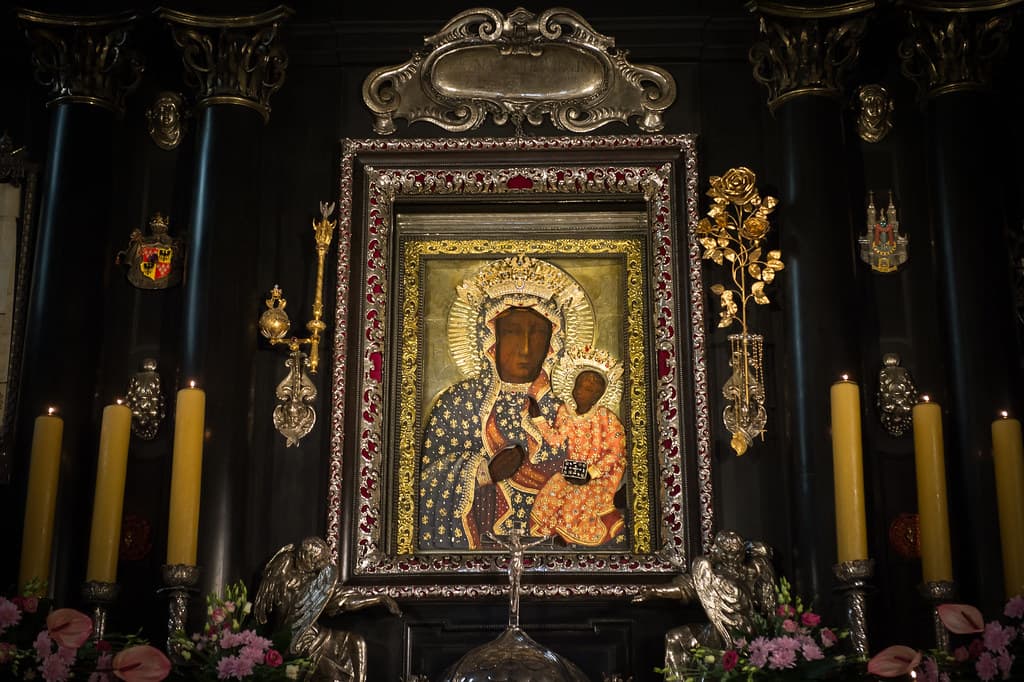
Image of Our Lady of Częstochowa. Image source
Visit essentials
A quick read before you go
- Duration
- The monastery complex requires 2-4 hours for a thorough visit including the icon chapel,…
- Etiquette
- Modest dress, reverent silence in the chapel, and awareness that for many present this is not a…
Overview
The icon emerges from behind silver coverings to the sound of hymns, and the chapel fills with a collective intake of breath. The Black Madonna of Czestochowa looks out with ancient sorrow, her dark face marked by two parallel scars on her right cheek. These wounds have been painted over countless times by restorers. They keep reappearing.
Jasna Gora—the Bright Mountain—has held this image since 1382. Legend traces the icon to Saint Luke himself, painting on the Holy Family's table. Art historians place its origins somewhere between the sixth and fourteenth centuries, in the Byzantine tradition of the Hodegetria—She Who Shows the Way. What is certain: for over six centuries, this Madonna has been the spiritual heart of Poland.
The monastery stands as fortress as much as sanctuary. Thick walls and bastions encircle the hilltop, remnants of the 1655 siege when three hundred monks and soldiers held against thousands of Swedish invaders. That defense, attributed to Mary's intercession, transformed Polish history. The nation rallied. King John Casimir crowned the icon Queen of Poland. When Poland ceased to exist as a state for over a century, this remained the spiritual capital.
Five million pilgrims come each year from over eighty countries. Over two hundred thousand walk on foot each summer, some for weeks, arriving exhausted and exalted. At nine each evening, the Apel Jasnogórski broadcasts across Poland: millions pause to pray with their Queen. The icon is covered and unveiled multiple times daily, each revelation a small resurrection.
Why this place is sacred
The thinness at Jasna Gora accumulates through repetition across centuries. Since 1382, prayers have risen continuously from this hilltop—through wars, plagues, partitions, and occupation. The stones hold the compressed devotion of billions of prayers. The icon itself carries the accumulated weight of every gaze fixed upon it, every tear shed before it, every candle lit.
The ceremonial unveiling creates recurring thresholds. Multiple times each day, the silver-gilt cover draws back with a mechanical whisper, revealing the dark face beneath. Hymns swell. Pilgrims weep. For a few hours, the icon is visible; then she is hidden again. This rhythm of revelation and concealment, presence and absence, opens liminal space.
The scars deepen the mystery. Two parallel slashes mark Mary's right cheek—wounds inflicted by Hussite raiders in 1430. Restorers have painted over them repeatedly. They return. The monastery does not explain this phenomenon; it simply attests to it. The wounds become theological: Mary bears the scars of her people. She refuses to be healed because her children are not healed.
Pilgrimage intensifies the thinness. Those who walk for days or weeks to reach Jasna Gora arrive stripped down, their ordinary defenses worn away by exhaustion and exposure. They approach the shrine on their knees. The final approach compresses a lifetime of seeking into a few dozen meters. When they look up at the icon, the veil between them and what it represents has grown very thin indeed.
History adds density. This is where Poland survived when Poland did not exist. This is where workers wore Black Madonna pins while defying a Communist state. This is where John Paul II's bloodstained cassock belt rests in the treasury, where Lech Walesa's Nobel Prize hangs as votive offering. The icon watched over all of it. She still watches.
The Jasna Gora monastery was founded in 1382 to house the miraculous icon and to serve as a center of Marian devotion under the care of the Pauline monks. The defensive walls were added after the Swedish invasion of 1655, but the site's purpose has remained constant: to guard the Black Madonna and to welcome those who come seeking her intercession.
From regional shrine to national sanctuary, from religious center to symbol of resistance. The 1655 siege transformed the monastery's meaning, linking faith and patriotism permanently. During partitions, occupation, and Communist rule, Jasna Gora served as the one place where Polish identity could not be extinguished. Today it functions as both major pilgrimage destination and living heritage site, receiving five million visitors annually while maintaining continuous liturgical life.
Experience and orientation
The approach announces the transition. The 106-meter bell tower—the tallest historic church tower in Poland—marks the monastery from a distance. Pilgrims who have walked for days see it first as silhouette, then as destination, then as arrival. The fortified walls rise on Jasna Gora's summit, their bastions speaking of the siege that nearly ended everything.
Inside the walls, the complex opens into courtyards surrounded by baroque architecture. The monastery functions as a small city: churches, chapels, treasury, museums, pilgrim accommodation, Pauline monks in white habits. Crowds move with purpose toward the Chapel of the Miraculous Image.
The chapel is rarely empty. Pilgrims kneel in rows, rosaries in hand, gazes fixed on the altar where the icon rests behind its silver-gilt cover. The atmosphere is dense with devotion—murmured prayers, the rustle of clothing, occasional sobbing. Many have traveled far to be here. Some approach the shrine on their knees.
The unveiling changes everything. At appointed hours, with hymns swelling through the chapel, the mechanical covering draws back. The Black Madonna emerges: dark face, melancholic eyes, two parallel scars on her right cheek, the infant Jesus on her arm pointing toward heaven. The icon is smaller than expected—perhaps 122 by 82 centimeters—but its presence fills the space. Many visitors report an inexplicable emotional response at this moment, regardless of their religious background.
Beyond the chapel, the treasury displays six centuries of votive offerings: gifts from popes and presidents, from kings and peasants. Each object testifies to a prayer answered, a vow fulfilled. The collection overwhelms: gold and silver, jewels and folk crafts, artifacts of gratitude. Walesa's Nobel Prize hangs here. So does the bloodstained belt from the cassock John Paul II wore when he was shot.
Evening brings the Apel Jasnogórski. At nine o'clock, bells call the faithful to the final prayer. The words broadcast across Poland: 'Mary, Queen of Poland, I am near you, I remember you, I watch.' For those within the monastery walls, participation in this nightly appeal connects them to millions praying simultaneously across the nation.
Enter through the main gate and follow the flow of pilgrims toward the Chapel of the Miraculous Image. The icon is unveiled at 6am and 1:30pm on weekdays, 6am and 2pm on weekends—plan your visit around these times for the full experience. The treasury and 600th Anniversary Museum provide context. The 106-meter bell tower offers panoramic views. If possible, attend the 9pm Apel Jasnogórski for the communal evening prayer.
Context and lineage
Tradition holds that Saint Luke the Evangelist painted the icon on a cedar tabletop from the Holy Family's house in Nazareth—a table built by Jesus himself. Hidden for centuries, the painting was discovered by Saint Helena in Jerusalem in 326 CE while she searched for the True Cross. It traveled to Constantinople, then to the fortress of Belz in Poland. In 1382, Tartar raiders attacked Belz, and an arrow pierced the icon at Mary's throat—the wound still visible today.
Prince Wladyslaw fled with the icon toward Krakow, but at Czestochowa his horses refused to move. Receiving a dream vision, he understood: Mary wished to remain here. He built the monastery on Jasna Gora to house her image.
The Pauline Fathers—the Order of Saint Paul the First Hermit—have guarded the icon continuously since 1382. Originating in Hungary, the order was brought to Poland specifically to care for the Black Madonna. The tradition is Roman Catholic with strong Marian emphasis, but the icon's Byzantine origins create ecumenical resonance with Eastern Orthodox Christianity. The style is Hodegetria—'She Who Shows the Way'—linking Czestochowa to Constantinople and ultimately to the earliest Marian iconography.
Prince Wladyslaw of Opole
Founder of Jasna Gora (1382)
Prior Augustyn Kordecki
Defender during the Swedish siege (1655)
King John II Casimir Vasa
Proclaimed Mary 'Queen of Poland' (1656)
Pope John Paul II
Polish pope and devoted pilgrim
Traditions and practice
Pilgrimage on foot remains the highest expression of devotion. Routes from across Poland converge on Jasna Gora, some covering over 600 kilometers over two to three weeks. The Warsaw Pilgrimage, continuous since 1711, covers 350 kilometers in eleven days. Upon arrival, pilgrims traditionally approach the shrine on their knees. Votive offerings express gratitude for graces received. The feast day of August 26 draws the largest crowds.
Daily Mass is celebrated continuously throughout the day. The icon is unveiled at 6am and covered at noon, unveiled again at 1:30pm (2pm weekends) and covered at 9:20pm. The Apel Jasnogórski at 9pm is broadcast live across Poland, uniting millions in prayer with the words: 'Mary, Queen of Poland, I am near you, I remember you, I watch.' Walking pilgrimages arrive throughout summer, with over 200,000 pilgrims on foot annually. Professional groups—military, firefighters, motorcyclists, parliamentarians—organize specialized pilgrimages.
Plan your visit around an unveiling time to witness the central devotional moment. If possible, attend the 9pm Apel Jasnogórski to experience the communal prayer that unites Poland nightly. Visit the treasury to understand the depth of devotion through six centuries of offerings. Consider joining even a portion of a walking pilgrimage if visiting during summer months—communities along the routes welcome walkers with food and bells.
Roman Catholicism
ActiveOur Lady of Czestochowa is Poland's most venerated Marian image and one of the most important Marian shrines in the Catholic world. The icon was crowned 'Queen of Poland' in 1656, making it unique as a nationally proclaimed royal protectress. Three popes have granted golden roses to the image. Over 1,000 recognized miracles are documented in monastery archives dating to 1402. Pope John Paul II—who said there would be no Polish pope without Jasna Gora—visited multiple times and gifted new crowns in 2005.
Daily Masses celebrated continuously. Ceremonial unveiling of the icon multiple times daily. Nightly Apel Jasnogórski broadcast across Poland at 9pm. Walking pilgrimages from across Poland with over 200,000 pilgrims on foot annually. Rosary processions. Kneeling approach to the shrine. Votive offerings. The feast day of August 26 draws the largest gatherings.
Eastern Orthodox Christianity
ActiveThe icon originates from the Byzantine iconographic tradition, displaying the Hodegetria type—'She Who Shows the Way'—common in Orthodox Christianity. The stylistic connection to Byzantine tradition creates an ecumenical bridge between Eastern and Western Christianity. Orthodox faithful in Ukraine, Belarus, and other former Polish-Lithuanian Commonwealth territories have maintained devotion to this Madonna for centuries.
Eastern Orthodox faithful may venerate the icon following Orthodox customs. The icon appears in traditional prayers and songs in Ukrainian and Belarusian Orthodox communities. The Orthodox feast day for the icon is March 6/19. Since 2012, a copy of the icon has traveled to both Catholic and Orthodox parishes worldwide as part of interfaith pilgrimage.
Polish National Identity
ActiveBeyond religious devotion, the Black Madonna is the paramount symbol of Polish national identity and resistance. When Poland had no state existence (1795-1918), Czestochowa served as the spiritual capital keeping national identity alive. Under Communist rule, the image became a center of resistance. Lech Walesa wore a Black Madonna lapel pin while leading Solidarity. The icon represents Polish survival through countless invasions, occupations, and oppressions.
Wearing icon reproductions as lapel pins or badges during political resistance. Pilgrimages as expressions of national solidarity. Processions carrying the image during times of crisis. Enshrinement of the image in Polish homes, institutions, and diaspora communities worldwide. The Nobel Prize awarded to Lech Walesa rests in the Jasna Gora treasury as votive offering.
Perspectives and open questions
The Black Madonna of Czestochowa exists at the intersection of miracle and history, art and devotion, national identity and universal faith. Its meaning shifts depending on who approaches and why.
Scholarly perspective
Art historians agree the icon is not from the first century as legend claims but originates from the Byzantine iconographic tradition, dating somewhere between the sixth and fourteenth centuries. The image was substantially repainted after the 1430 Hussite attack. The dark coloration results from centuries of candle soot and darkening varnish. Historians document the 1382 founding, the 1430 attack, and the 1655 siege from contemporary sources.
Scholars recognize the icon's central role in Polish national identity formation and its function as a symbol of resistance through partitions, Nazi occupation, and Communist rule.
Living and traditional perspectives
For Catholic faithful, the Black Madonna is not artwork but living presence—the Virgin Mary herself actively interceding for her children. The legend of Saint Luke painting Mary is received as tradition connecting the image to the Holy Family. The miraculous reappearance of the scars despite repairs is understood as Mary's choice to bear visible wounds in solidarity with suffering Poland. Over 1,000 documented miracles attest to ongoing supernatural intervention.
King John Casimir's 1656 proclamation of Mary as Queen of Poland reflects genuine heavenly patronage. As Poles say: 'Poland has not been lost as long as we are alive—and as long as She watches over us.'
Alternative interpretations
Some approach the Black Madonna through the archetype of the Divine Feminine, seeing in her dark face echoes of ancient goddess figures—Isis, Cybele, the Magna Mater. The darkness resonates with those drawn to the 'black goddess' tradition across cultures. The accumulated spiritual energy of six centuries of intense devotion functions for some as a power source regardless of specific belief. The wounded face speaks to those processing trauma, offering solidarity with suffering.
The icon's refusal to be 'fixed' resonates with contemporary understanding of how wounds become integral to identity and healing.
Open questions
Mysteries remain. How old is the original painting beneath medieval restoration? Why do the scars resist all repair—a phenomenon attested across centuries? What causes the darkening that defies restoration? What was the icon's exact journey from Constantinople to Belz to Czestochowa? Why do so many report profound experiences specifically at the unveiling, despite the image being covered most of the time?
The intersection of legend, history, and continuing unexplained phenomena creates sacred mystery that has captivated pilgrims for over six hundred years.
Plan your visit
Access and arrival
The monastery offers pilgrimage accommodation. Hotels and guesthouses throughout Czestochowa, many within walking distance. Day trips from Krakow or Warsaw are possible but overnight stays allow for both morning and evening prayer experiences.
Respectful visit
Knees and shoulders must be covered—this is strictly enforced. Comfortable, modest clothing recommended. Head coverings optional but appreciated for women. Summer can be warm; winter cold.
Photography without flash is permitted in most areas, but not during religious services. The chapel's lighting makes photography of the icon challenging. Tripods and professional equipment may require permission. Do not photograph worshippers without consent.
Votive offerings expressing gratitude for graces received are traditional. Candles may be lit. Notable historical offerings in the treasury include Lech Walesa's Nobel Peace Prize and the bloodstained belt from John Paul II's cassock. Simple offerings from humble pilgrims rest alongside gifts from royalty.
Silence and reverence required in the chapel. No eating or drinking in sacred spaces. Mobile phones silenced. Do not approach the icon out of turn—wait in the line that forms. Flash photography prohibited. Services take precedence over visitation.
The chapel is a place of active worship, not a museum. Long lines may form to approach the icon, especially on feast days. The most crowded times are the Assumption (August 15) and the Feast of Our Lady of Czestochowa (August 26)—plan accordingly or embrace the intensity.
Current practical details
Address
ul. o. A. Kordeckiego 2, 42-225 Częstochowa, Poland
Phone
Hours
Hours, fees, and access can change — verify on the official source before you travel. Practical details last checked Jun 2026.
Location
Map loads as you approach this section.
Pilgrim reflections
A portrait of encounter, not a score
Pilgrims describe what they felt, how present they could become, and whether the place would shape a journey. There are no stars and no ranking of traditions.
No reviewed reflections yet
The first pilgrims can help describe the character of being here.
Share a reflection
Available after an account-backed “Been there.” Every reflection is reviewed before publication.
Nearby sacred places
Explore other sacred places in the region. Proximity does not establish access or travel time; check each place’s guidance.
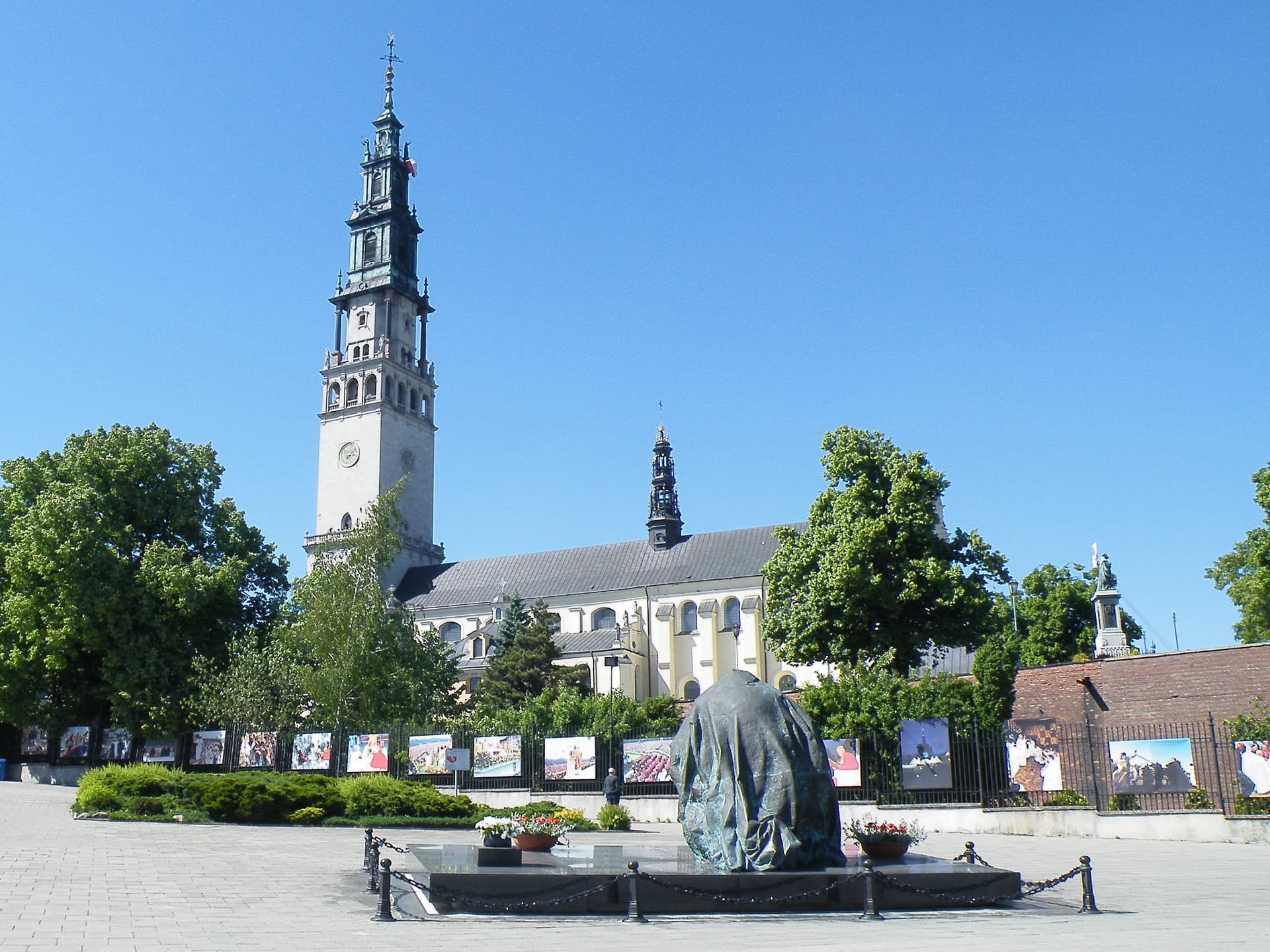
Jasna Góra Monastery
Częstochowa, Silesian Voivodeship, Poland
0.0 km away

Tomb of Rabbi David Biederman of Lelów
Lelów, Lelów, Silesian Voivodeship, Poland
39.9 km away
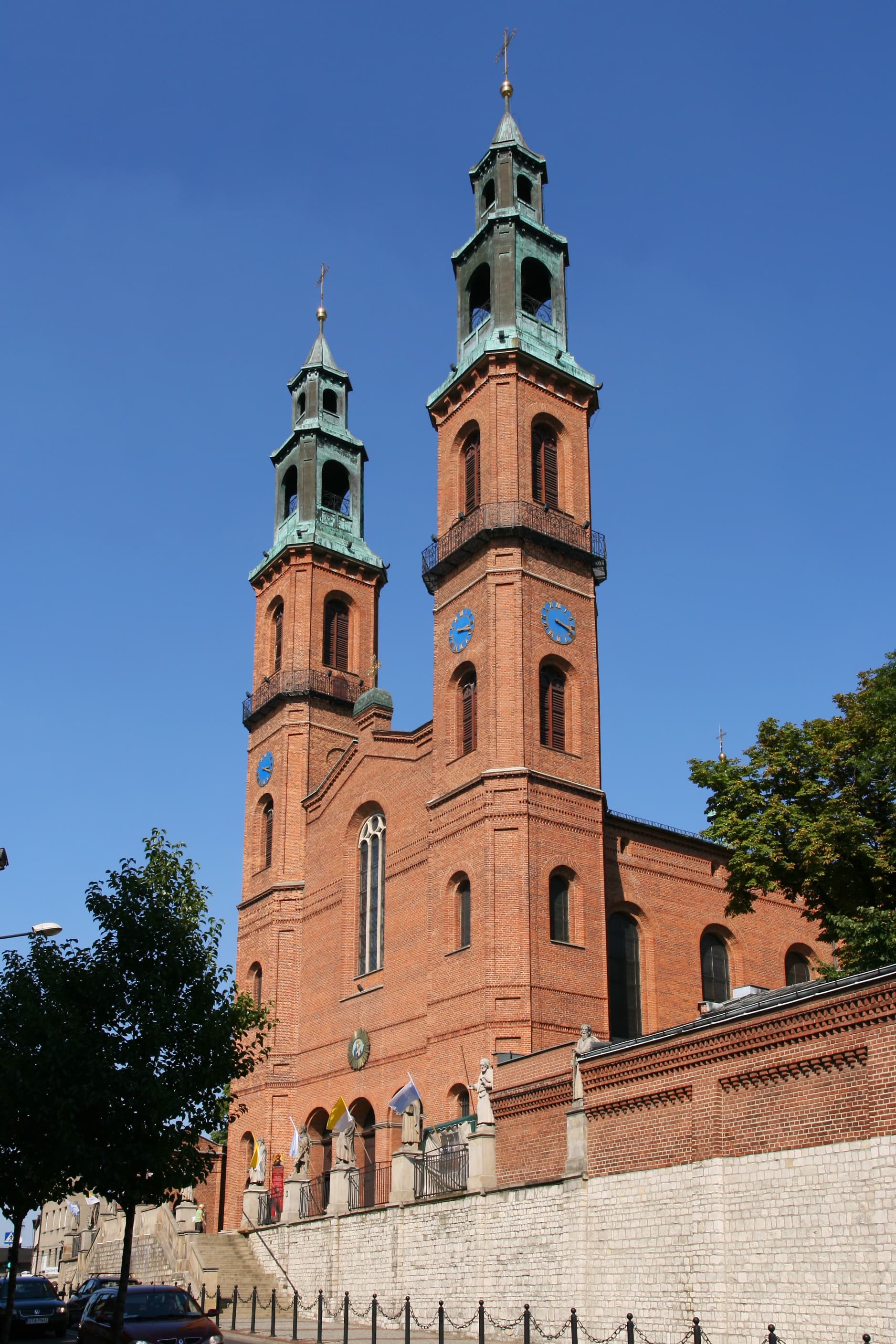
Piekary Śląskie Marian Sanctuary
Piekary Śląskie, Piekary Śląskie, Silesian Voivodeship, Poland
49.3 km away

Basilica of St. Anne, Gora Swietej Anny, Poland
Góra Świętej Anny, Góra Świętej Anny, Opole Voivodeship, Poland
76.5 km away
Photo gallery
3 curated photos
Share a photo
Help visitors recognize Our Lady of Częstochowa. Every submission is reviewed before publication.