The Sanctuary of Rocamadour
Where pilgrims have climbed toward the Black Madonna for a thousand years, between stone and sky
Rocamadour, Lot, France
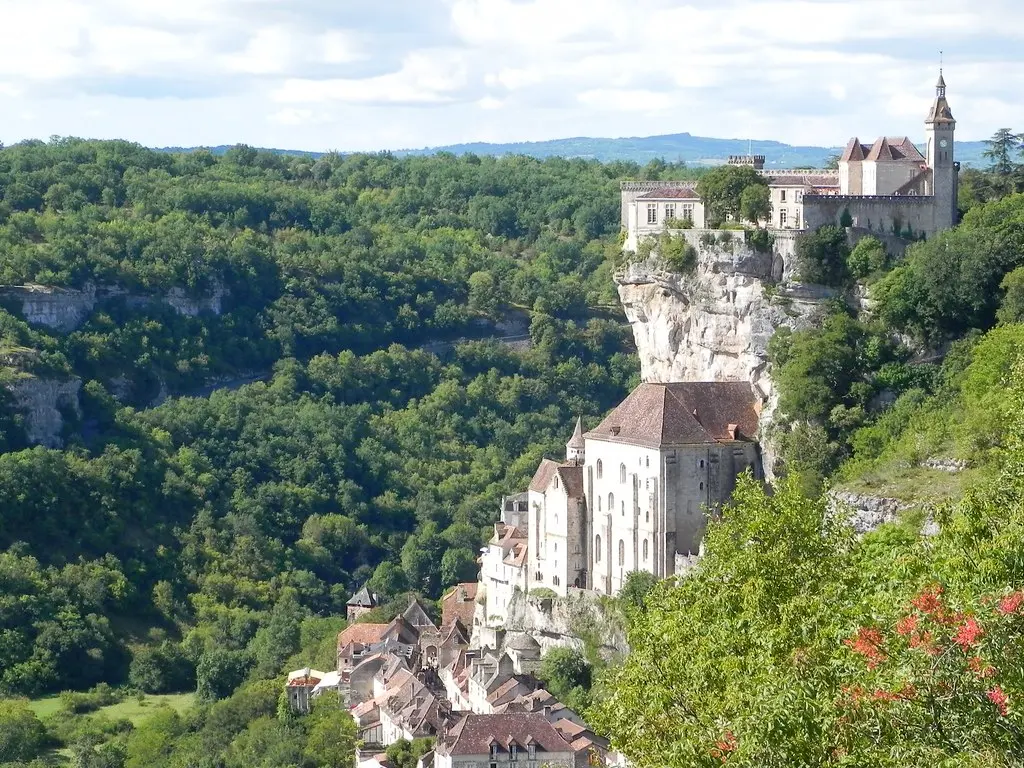
Image of The Sanctuary of Rocamadour. Image source
Visit essentials
Before you go
- Access
- Rocamadour lies in the Lot department of the Occitanie region.
- Address
- 46500 Rocamadour, France
- Duration
- A rushed visit through the main sanctuary takes two to three hours.
- Etiquette
- As an active Catholic sanctuary, Rocamadour requires respectful behavior.
Overview
Rocamadour's first view stops visitors: seven chapels and churches rise through a limestone cliff seemingly too sheer to hold them. A village occupies a ledge below, a castle crowns the summit, and between them the Grand Stairway's 216 steps mark the pilgrims' path.
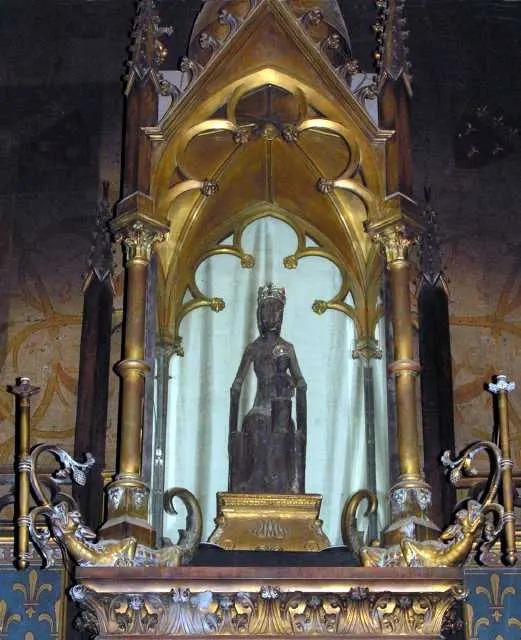
For over eight hundred years, people have climbed toward Rocamadour's Black Madonna. Medieval penitents ascended on their knees, praying at each step; kings and saints came, and sailors saved from shipwreck returned to fulfill desperate vows. The small ancient statue sits in the Chapelle Notre-Dame, blackened by time and candle smoke, holding the infant Christ with a stillness undiminished by centuries of veneration.
Architecture and history alone do not explain the draw. The cliff creates an elemental meeting of earth and sky, and the ascent turns arrival from event into achievement. Something persists in the small dark chapel at the summit that pilgrims struggle to name but consistently recognize. They speak of presence, of being met, and of prayers answered unexpectedly.
Rocamadour does not require belief, but rewards sincerity. Those arriving with questions often leave with something—not always answers, but a sense of having been heard.
Sites inside
Why this place is sacred
The cliffs of Rocamadour have drawn human attention far longer than recorded history. The Grotte des Merveilles nearby contains Paleolithic paintings dating to 25,000 years ago—horses, stags, and the handprints of people who found something worth marking in this landscape. Some sources suggest the cliffs held significance in Celtic times, perhaps as a shrine to goddesses later integrated into Christian devotion.
The exact nature of pre-Christian worship here remains uncertain, but the site's power appears to predate its chapels by millennia.
What the medieval builders encountered—and transformed—was a place already saturated with human recognition of the sacred. They carved chapels directly into the cliff face, fitting three walls of the Virgin's chapel from living rock. The Chapelle Saint-Michel, half-cave and half-structure, preserves twelfth-century frescoes in space that was both constructed and natural. The entire sanctuary complex reads as dialogue between human devotion and the mountain that receives it.
The vertical dimension defines the experience. Rocamadour forces the gaze upward. The Grand Stairway, whether climbed laboriously or observed from below, traces the pilgrim's path from earth toward something higher. This is not mere symbolism but physical reality—the body participates in ascent, and arrival at the sanctuary is earned. Medieval pilgrims understood this architecture of effort; contemporary visitors still feel it.
At the summit, in the small Chapelle Notre-Dame, sits the Black Madonna. The statue is not beautiful in conventional terms—small, dark, worn by centuries. But something concentrates in that space. The Book of Miracles, begun in 1172, documents 126 authenticated miracles attributed to the Virgin's intercession here. Sailors caught in storms who prayed to Notre-Dame de Rocamadour and survived.
A bell, hung in the chapel since the eighth or ninth century, said to ring of its own accord when the Virgin intervenes. Whether one accepts the miraculous claims or not, the consistency of reports across eight centuries suggests something worth attending to.
The sanctuary took recognizable form in the twelfth century, following the discovery of an incorrupt body in 1166. This body was identified as Saint Amadour—a hermit who, according to tradition, had carved the Black Madonna himself and lived out his days in these cliffs. The discovery drew pilgrims in numbers that transformed the site from local shrine to international pilgrimage destination.
By the height of the medieval period, Rocamadour was considered one of the four pillars of Christendom, alongside Jerusalem, Rome, and Santiago de Compostela. Kings came. Saints came. Those seeking miracles and those performing penance made the difficult journey to this remote canyon in the Quercy region.
The sixteenth-century Wars of Religion brought devastation. Protestant forces burned the sanctuary in 1562. The incorrupt body of Saint Amadour was destroyed. The pilgrimage waned. By the nineteenth century, the complex teetered on the edge of physical collapse. Restoration under Abbot Chevalt, a student of Viollet-le-Duc, preserved the structures but significantly altered their medieval character.
Yet pilgrimage never entirely ceased, and the twentieth century saw renewal. Today approximately one million visitors arrive annually. The sanctuary functions as a living place of Catholic worship, with regular Masses, confessions, and vespers. Surviving relics of Saint Amadour were reinstated in the basilica in 2016. The Festival of Sacred Music draws thousands each August. Rocamadour has outlasted its medieval peak, its destruction, and its near-collapse. Something about this place persists.
Healing traditions
Medieval miracle narrative
Rocamadour's Book of Miracles, compiled in 1172, tells of a Burgundian woman who lost her sight after childbirth while in Jerusalem. Her husband accompanied her in prayer at the Holy Sepulchre. In the narrative, her sight returned after a promise of pilgrimage to Our Lady of Rocamadour. The recovery is set in Jerusalem; Rocamadour is the destination of devotion and thanksgiving, rather than the location of that particular cure.
Ways to participate
In the chapel of Notre-Dame, offer a personal intention or a prayer of gratitude before the image. Allow time for stillness rather than treating the ascent as a test. Choose an accessible route appropriate to your mobility and ask the sanctuary about current services or assistance.
These accounts describe religious traditions and reported experiences. They do not promise a cure or replace medical care.
Experience and orientation
The approach matters. Most visitors first see Rocamadour from across the Alzou canyon, the full improbable stack of village, sanctuary, and castle revealed at once. The scale and audacity of what medieval builders achieved here registers immediately. Something impossible has been done, and you are about to enter it.
The village itself is narrow, a single main street lined with shops selling religious articles and regional goods. It can feel commercial during peak hours. The sanctuary requires further effort—either the Grand Stairway's 216 steps or, for those who cannot manage them, elevators that bypass the traditional route. Those who climb the stairs report that the physical exertion matters. Breath quickens. Muscles protest. And each step upward marks progress toward something.
Arrival at the sanctuary opens onto the Parvis des Eglises, a small square surrounded by the seven chapels. The scale shifts from dramatic to intimate. The Basilique Saint-Sauveur offers a large, dark interior—stone walls and nineteenth-century wooden balconies creating shadow and weight. But the heart of the pilgrimage lies in the Chapelle Notre-Dame, a smaller space where three walls were carved from the cliff itself.
Here sits the Black Madonna. She is small, perhaps surprisingly so. Dark wood worn by centuries. The infant Christ on her lap looks outward with the same stillness as his mother. The chapel fills with candle smoke and the murmur of those who have come to pray. Model ships hang from the ceiling, left by sailors fulfilling vows made at sea. Above, an ancient iron bell waits—the bell said to ring when the Virgin performs a miracle.
Visitors describe what happens in this space in various ways. Some speak of peace. Some of being seen. Some weep without knowing why. Those who arrive skeptical often leave uncertain of their skepticism—not converted, perhaps, but no longer dismissive. The reports are too consistent across too many visitors to attribute solely to expectation. Something concentrates here that visitors recognize even when they cannot name it.
The sanctuary is best experienced early morning or late evening, when day-trippers have departed. An overnight stay in the village allows multiple visits, including time to simply sit in the Chapelle Notre-Dame after the crowds thin. The Chapelle Saint-Michel, with its remarkably preserved Romanesque frescoes, rewards contemplation but receives fewer visitors. From the castle ramparts above, the whole landscape opens—the canyon, the sanctuary below, the sense of having ascended to a threshold between worlds.
Rocamadour rewards those who approach it as pilgrims rather than tourists. This does not require religious belief—only willingness to let the place work on you at its own pace. Consider climbing the Grand Stairway even if elevators are available; the body's participation in ascent shapes what follows. Arrive early or late to find the sanctuary in relative quiet. In the Chapelle Notre-Dame, sit if space permits rather than photographing and leaving. Let the Black Madonna hold your gaze.
Something responds to sincere attention here, though what that something is may resist explanation.
Context and lineage
The earliest documented mention of pilgrimage to Rocamadour appears in 1105, when Pope Pascal II officially acknowledged devotion to the Madonna here. But the site's transformation into a major destination came through two events. In 1148, the first miracle was announced, drawing attention across Europe. Then in 1166, workers excavating a grave in front of the Virgin's chapel discovered an incorrupt body.
This body was identified as Saint Amadour, a hermit believed to have lived in the cliffs and, according to tradition, carved the Black Madonna himself.
Who Saint Amadour actually was remains uncertain. One tradition identifies him with Zaccheus, the tax collector from the Gospel of Luke who climbed a sycamore tree to see Jesus. According to this account, Zaccheus and his wife Veronica traveled to France after persecution in the Holy Land, settling eventually in this canyon where Zaccheus became a hermit devoted to the Virgin. Other traditions see him simply as a local anchorite of unknown origin.
The discovery of his incorrupt body, regardless of identity, electrified medieval Christendom.
By 1172, Benedictine monks had begun documenting miracles in the Book of Miracles—126 authenticated cases of divine intervention attributed to the Black Madonna's intercession. Rocamadour became a site of international pilgrimage. The penitential system sent sinners here to climb the stairs on their knees. The sick came hoping for healing. Sailors survived storms through prayers to Notre-Dame de Rocamadour and returned to give thanks.
Rocamadour's stewardship passed through various hands. Benedictine monks oversaw the sanctuary during its medieval peak. The Wars of Religion brought Protestant destruction in 1562, scattering relics and ending the site's golden age. Centuries of decline followed. The nineteenth-century restoration under Abbot Chevalt preserved the structures, though in altered form.
Today the sanctuary remains under Catholic administration, functioning as an active place of worship within the French hierarchy. The site belongs to the network of Villes Sanctuaires en France, recognized alongside Lourdes, Chartres, and other major pilgrimage destinations. Chaplains serve the ongoing spiritual needs of visitors. Regular Masses, confessions, and vespers continue the practices that began here nearly a millennium ago.
Notre-Dame de Rocamadour
deity/sacred object
The Black Madonna, a small wooden statue dating to the eleventh or twelfth century, sits at the heart of Rocamadour's pilgrimage. Tradition holds that Saint Amadour carved her. She is credited with over 126 documented miracles and remains the focus of devotion for the approximately one million visitors who come annually.
Saint Amadour
saint/founder
The hermit whose incorrupt body was discovered in 1166. His identity remains debated—some traditions identify him with the Biblical Zaccheus, others as an unknown local hermit. The surviving relics were reinstated in the basilica in 2016 after being scattered during the Wars of Religion.
Henry II of England
historical pilgrim
Among the royal pilgrims who made the journey to Rocamadour. His pilgrimage demonstrated the site's significance across medieval Europe.
Saint Louis IX of France
historical pilgrim
The sainted French king made pilgrimage to Rocamadour, ascending the stairs like any penitent. His visit exemplifies the site's drawing power for the highest ranks of medieval society.
Traditions and practice
The medieval pilgrimage followed a pattern of physical penance and spiritual petition. Penitents climbed the 216 steps of the Grand Stairway on their knees, praying at each step. This practice could be assigned by the Church as satisfaction for sins, or undertaken voluntarily in hopes of miraculous intervention. Upon reaching the sanctuary, pilgrims venerated the Black Madonna, made offerings, and sought the sacraments.
Sailors held particular devotion to Notre-Dame de Rocamadour. Those caught in storms at sea would vow that if they survived, they would make the pilgrimage and leave an offering. The model ships hanging in the Chapelle Notre-Dame bear witness to vows fulfilled. The miraculous bell, said to ring of its own accord when the Virgin intervenes for sailors in distress, became part of this maritime tradition.
A stone plaque in the chapel records fifteen instances between 1385 and 1617 when the bell allegedly rang without human touch.
The sanctuary continues to function as a living place of Catholic worship. Daily Masses are celebrated in the basilica. Confessions are heard. Vespers provide evening prayer. The schedule varies seasonally, and visitors are encouraged to check current times.
Some pilgrims still climb the Grand Stairway on their knees, though this practice is less common than in medieval times. More typical is ascending on foot with deliberate attention, perhaps pausing at intervals for prayer or reflection. Candles may be lit in the chapel. Time spent in silent presence before the Black Madonna forms the heart of many visits.
The annual Festival of Sacred Music, held over ten days in mid-to-late August, fills the Basilique Saint-Sauveur with Gregorian chant, organ recitals, and sacred classical music. Over 5,000 concert-goers attend. This festival has become a contemporary form of pilgrimage, drawing those who seek the sacred through music.
Rocamadour also lies on a variant of the Via Podiensis, one of the French routes to Santiago de Compostela. Walking pilgrims on the Camino pass through here, connecting their longer journey to this particular sanctuary.
For those seeking spiritual engagement rather than mere sightseeing, consider these approaches. Climb the Grand Stairway mindfully, letting the physical effort participate in whatever you are carrying—a question, a grief, a hope. Let the body's labor correspond to the soul's. In the Chapelle Notre-Dame, find a seat if available and remain present with the Black Madonna. Notice what arises.
The practice of sitting before sacred images has roots in multiple traditions; you need not share Catholic faith to engage sincerely with what centuries of pilgrims have found here.
If you attend Mass, do so with full attention even if the liturgy is unfamiliar. Observe how others pray. The form may not be yours, but the sincerity of those around you is instructive. Light a candle if the practice holds meaning. If nothing does, simply be present.
Roman Catholic
ActiveRocamadour stands as one of France's most important Marian pilgrimage sites, home to the venerated Black Madonna. During the medieval period, it was considered one of the four pillars of Christendom alongside Jerusalem, Rome, and Santiago de Compostela. The sanctuary is associated with 126 documented miracles attributed to the Virgin's intercession, with particular devotion among sailors. Kings, saints, and countless ordinary pilgrims have made the journey across eight centuries.
The sanctuary maintains active worship with daily Masses, confessions, and vespers. Pilgrims climb the 216-step Grand Stairway, sometimes on knees as medieval penitents did. Candles are lit before the Black Madonna. The annual Festival of Sacred Music fills the basilica with sacred compositions. The site serves as a station on the Via Podiensis variant route to Santiago de Compostela.
Pre-Christian/Prehistoric
HistoricalArchaeological evidence demonstrates human spiritual activity at this site dating back 20,000-25,000 years. The Grotte des Merveilles contains Paleolithic cave paintings from the Gravettian period—horses, stags, and human handprints that mark this landscape as significant long before any historical tradition. Some sources suggest the cliffs may have held pre-Christian religious significance, perhaps as a Celtic shrine or place of goddess worship, later appropriated by Christian devotion to the Virgin Mary.
Specific practices are unknown. The prehistoric cave paintings suggest ritual activity; Bronze Age burials in the Grotte de Linars indicate continued sacred significance. Whatever rites were performed here over those millennia left only fragmentary material evidence.
Perspectives and open questions
Rocamadour invites multiple interpretations that need not resolve into a single view. Historical scholarship, Catholic tradition, and alternative spiritual perspectives each offer insight into what draws people to this cliff-face sanctuary. Genuine mysteries remain, including the identity of Saint Amadour and the mechanism—if any—by which the miraculous bell allegedly rings.
Scholarly perspective
Historians recognize Rocamadour as one of medieval Europe's most significant pilgrimage sites, with documented religious activity from at least the ninth century. Archaeological and documentary evidence confirms the site's rise to prominence following the 1166 discovery of the incorrupt body attributed to Saint Amadour. The identity of this figure remains uncertain; scholars generally regard the Zaccheus connection as pious legend rather than history.
The nineteenth-century restoration under Abbot Chevalt, while necessary to prevent collapse, significantly altered the medieval structures. What visitors see today reflects both medieval construction and Victorian-era intervention. Art historians continue to debate the dating of the Black Madonna statue, placing it somewhere between the eleventh and twelfth centuries.
The Grotte des Merveilles provides evidence of human spiritual activity at this site dating back 20,000-25,000 years, well before any historical tradition. This deep prehistory contextualizes the medieval sanctuary within a much longer human relationship with these cliffs.
Living and traditional perspectives
Catholic teaching holds Rocamadour as a major Marian shrine where the Black Madonna has interceded miraculously for petitioners across eight centuries. The Book of Miracles documents 126 authenticated cases, with particular emphasis on sailors saved from shipwreck. The discovery of Saint Amadour's incorrupt body is understood as divine affirmation of the site's sanctity.
Within this perspective, the Black Madonna is not merely an ancient artifact but a channel of grace—a meeting point between heaven and earth where the Virgin Mary's intercession becomes accessible. Pilgrimage to Rocamadour participates in an unbroken chain of devotion linking contemporary visitors to medieval saints who walked these same stairs and knelt before this same image.
The practice of penitential ascent, the lighting of candles, the prayers offered before the Virgin are understood as efficacious spiritual acts, not merely symbolic gestures.
Alternative interpretations
Some contemporary spiritual seekers are drawn to Rocamadour through frameworks outside Catholic tradition. The Black Madonna, in these interpretations, represents an older divine feminine—perhaps continuous with pre-Christian goddess worship at the site. Some sources suggest the cliffs held significance for a triple goddess (Sulevia, Minerva, and Iduenna, later integrated as Cybele) before Christian appropriation, though such claims are difficult to verify.
The site's position on what some understand as earth energy lines, combined with the geological features of the limestone cliffs and underground waters, attracts those interested in sacred geography beyond any single tradition. From this perspective, the medieval builders recognized and enhanced something already present in the landscape.
These interpretations lack scholarly support but often emerge from genuine experience. The language of energy and presence may represent attempts to describe something that resists conventional vocabulary.
Open questions
Genuine mysteries persist at Rocamadour. The identity of Saint Amadour remains uncertain—scholarly consensus doubts the Zaccheus connection without being able to determine who the incorrupt body actually was. The original appearance and meaning of the Black Madonna before centuries of wear, candle smoke, and restoration is irrecoverable. The mechanism by which the miraculous bell allegedly rang without human touch has no satisfactory explanation; skeptics note that the last recorded instance was in 1617.
The extent of pre-Christian religious activity at the precise location of the current sanctuary remains unclear. The Grotte des Merveilles demonstrates prehistoric presence in the area, but the spiritual significance—if any—assigned to the specific cliffs now holding the medieval sanctuary is a matter of speculation rather than documentation.
Most recently, the legendary sword Durandal, which local tradition held was thrown by the dying Roland and embedded in the cliff face, was stolen in 2024. The sword was almost certainly a later reproduction rather than a medieval artifact, but its theft closes one chapter of Rocamadour's accumulated legend.
Plan your visit
Access and arrival
Rocamadour lies in the Lot department of the Occitanie region. The nearest major cities are Brive-la-Gaillarde (54 km) and Cahors (60 km). By car is most practical; public transport is limited, with the nearest train station at Rocamadour-Padirac (4 km) connected by seasonal shuttle. Five parking areas serve visitors: P1, P3, and P4 on the plateau are furthest; P2 near the castle is closest; P5 in the valley requires climbing or taking the small train to the village.
Campervans are restricted to P1, P2, and P4 with no overnight camping.
The Grand Stairway's 216 steps connect the village to the sanctuary. Two elevators are available for those who cannot manage the stairs: one from the castle car park to the sanctuary, one from the lower village to the sanctuary level. A small fee applies for visitors eight and older.
The sanctuary itself is free to enter. Castle ramparts require a small fee (approximately 2 euros). The prehistoric Grotte des Merveilles, adjacent to the village, has separate admission.
The village of Rocamadour offers hotels and guesthouses ranging from modest to comfortable. Staying overnight transforms the visit, allowing experience of the sanctuary when day-trippers have departed. The surrounding Lot region provides additional accommodation options in nearby villages. For those walking the Via Podiensis, pilgrim hostels exist along the route.
Respectful visit
Modest dress is required within the sanctuary. Shorts, short skirts, and bare shoulders are not appropriate in the sacred sites. Cover shoulders before entering the chapels. This is not merely tradition but active policy, and you may be asked to adjust your clothing.
Photography is generally permitted in outdoor areas and some interior spaces, but restrictions apply. Flash photography is discouraged near historic frescoes, particularly in the Chapelle Saint-Michel. Do not photograph during services. In the Chapelle Notre-Dame, prioritize presence over documentation—the Black Madonna does not translate to photographs in ways that capture the experience of being before her.
Candles may be lit as offerings. Donations support the sanctuary's continued operation. The tradition of ex-votos—objects left in thanksgiving for answered prayers—has historical depth here, though contemporary visitors should follow current guidelines rather than leaving unauthorized items.
Motor vehicle access to the village is restricted from 11am to 7pm during summer months. Parking is available at multiple lots at various distances from the site. Within the sanctuary, certain areas may have limited hours. The castle interior is not open to the public, though the ramparts are accessible for a small fee.
The sanctuary is an active place of worship, not a museum of spirituality. Photography may be restricted during services. Conversation should remain hushed. Those who come seeking something should be prepared to encounter others doing the same—the intimacy of the Chapelle Notre-Dame means that genuine pilgrims and curious tourists occupy the same small space. Your comportment affects their experience as theirs affects yours.
Current practical details
Address
46500 Rocamadour, France
Hours, fees, and access can change — verify on the official source before you travel. Practical details last checked Jun 2026.
Location
Map loads as you approach this section.
Pilgrim reflections
A portrait of encounter, not a score
Pilgrims describe what they felt, how present they could become, and whether the place would shape a journey. There are no stars and no ranking of traditions.
No reviewed reflections yet
The first pilgrims can help describe the character of being here.
Share a reflection
Available after an account-backed “Been there.” Every reflection is reviewed before publication.
Nearby sacred places
Explore other sacred places in the region. Proximity does not establish access or travel time; check each place’s guidance.


References
Sources consulted for this page. Source categories describe the publication, not a guarantee that every claim is verified. Traditional accounts and outside interpretations may differ.
- 01Rocamadour | History, Geography, & Points of Interest — Britannica editorsencyclopediaEstablished reference source
- 02Rocamadour | Villes Sanctuaires en France — Villes Sanctuaires en FranceofficialOfficial French sanctuary cities network
- 03Sanctuary of Rocamadour: a place of pilgrimage and a surprising village — Brive TourismeofficialOfficial regional tourism authority
- 04Grotte Prehistorique des Merveilles — Sarlat TourismeofficialOfficial tourism authority on prehistoric cave
- 05Festival de Rocamadour — Rocamadour FestivalofficialOfficial sacred music festival
- 06Rocamadour - Wikipedia — Wikipedia contributorsencyclopediaGeneral overview with cited references
- 07Rocamadour - World Pilgrimage Guide — Sacred SitesguideSpecialized sacred sites resource with spiritual perspective
- 08Rocamadour: The Vertiginous Citadel of Faith — French MomentsguideCultural travel publication with historical detail
- 09The Hidden Pilgrimage Site of the Black Virgin of Rocamadour — EWTNspiritualCatholic perspective on Marian devotion
- 10Our Lady of Rocamadour (Notre-Dame de Rocamadour) — Interfaith Mary PageSource contextInterfaith perspective on Marian sites
- 11Sanctuary of Rocamadour: history and visitor guide — France This WayguideDetailed visitor information
- 12Sanctuary of Rocamadour, France; an important pilgrim and tourist destination — North of the DordogneguideRegional tourism with historical context
- 13Rocamadour Shrine - Rocamadour, France — Sacred DestinationsguidePilgrimage-focused travel resource
- 14Via Podiensis - Wikipedia — Wikipedia contributorsencyclopediaOverview of pilgrimage route
- 15Le Chemin du Puy | Camino Route from France to Santiago — CaminoWaysguideSpecialized Camino pilgrimage resource
- 16The Legend of Durandal: Roland's Magic Sword in Rocamadour — French MomentsacademicLegend and folklore context
- 17The Book of Miracles — Rocamadour sanctuaryofficialSupports the attributed account or visitor practice in the healing section; not evidence of clinical efficacy.
Photo gallery
2 curated photos
Share a photo
Help visitors recognize The Sanctuary of Rocamadour. Every submission is reviewed before publication.