Jasna Góra Monastery
Where Poland's heart beats before the Black Madonna, and pilgrims still walk the ancient roads to the Bright Mountain
Understand sacred places, explore living traditions, and learn how to engage respectfully with Pilgrim Map.
Access has not been verified. Check current local guidance before planning a visit.
Częstochowa, Silesian Voivodeship, Poland
Read the sources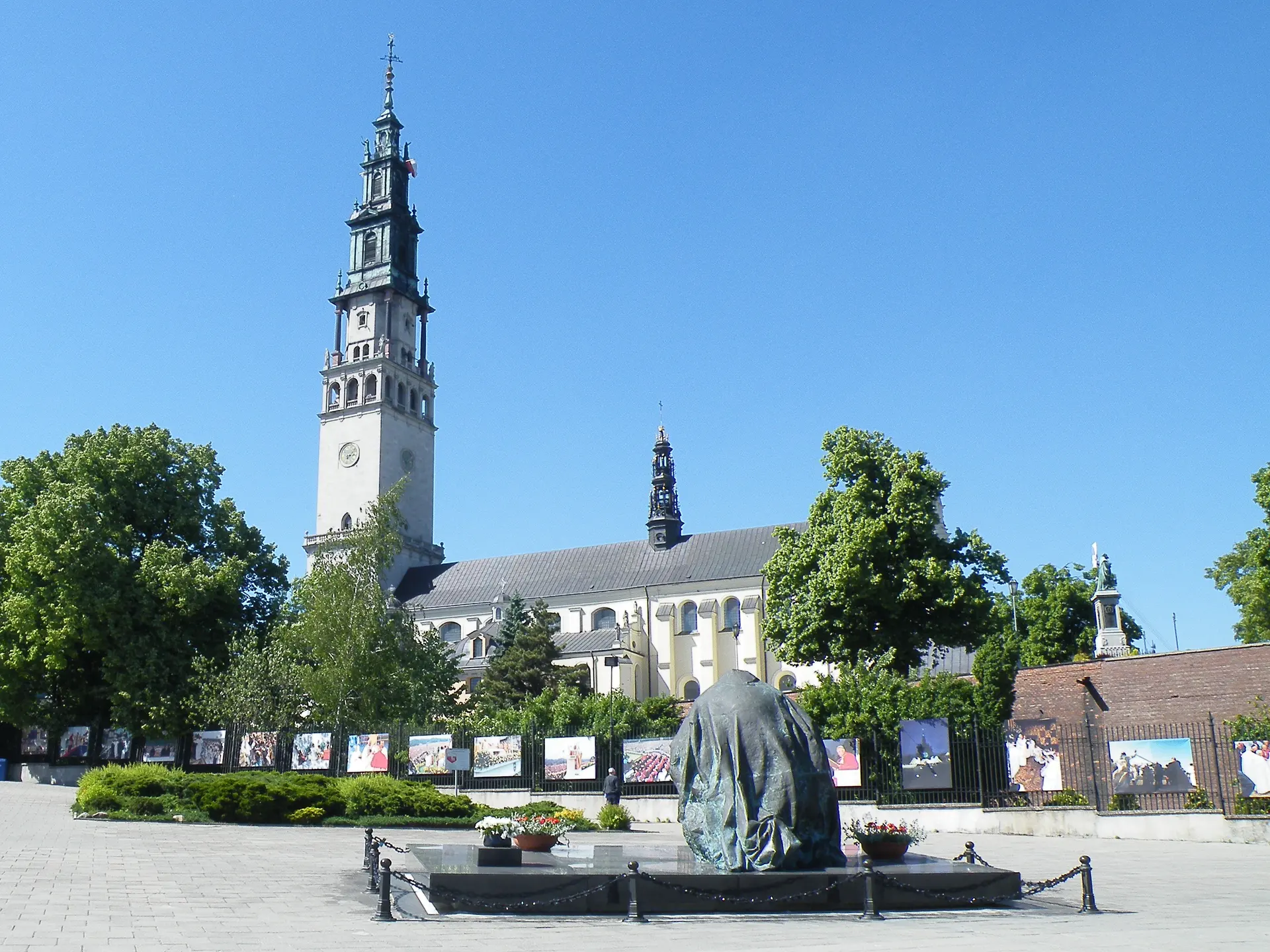
Image of Jasna Góra Monastery. Image source · CC-BY-SA-3.0
Visit essentials
A quick read before you go
- Duration
- Minimum 1-3 hours for basic visit including chapel and basilica.
- Etiquette
- Modest dress is required, silence is expected, and approaching the shrine on one's knees is…
Overview
Jasna Gora means Bright Mountain, though the hill above Czestochowa is modest. Its true height is six centuries of devotion: hundreds of millions have knelt before the Black Madonna at Poland's spiritual capital, where national identity and Catholic faith became inseparable.
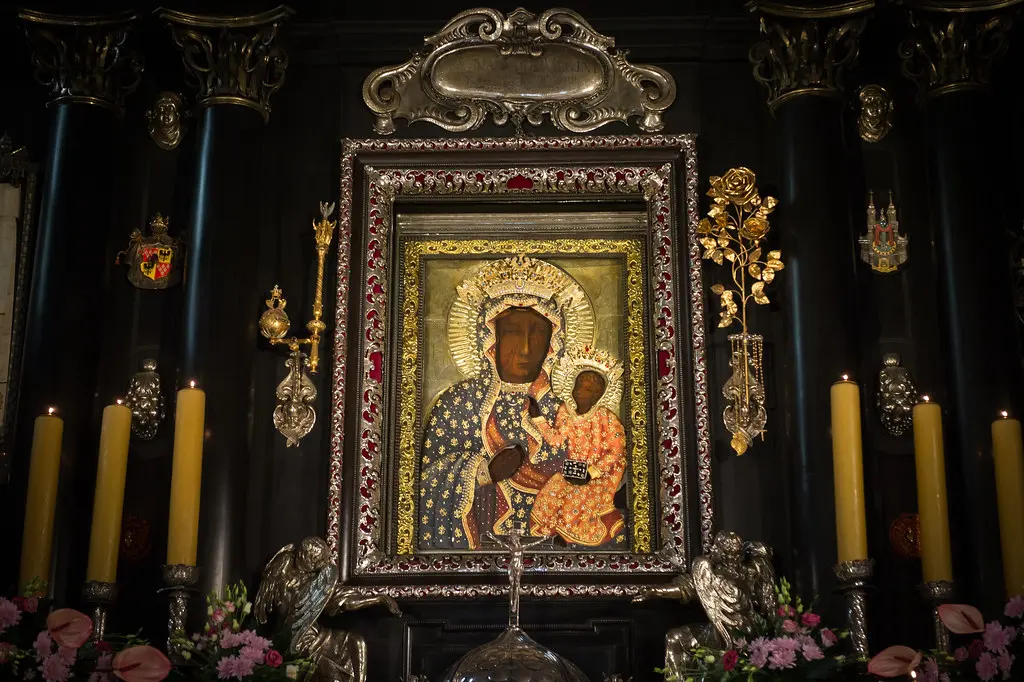
Dark-faced and solemn, the icon bears two sword slashes from a fifteenth-century attack that could not be repaired. It has looked from its chapel since 1384. Art historians debate its age; tradition attributes it to Saint Luke painting on a table from the Holy Family's house. At the unveiling, trumpets sound and a silver screen rises before weeping pilgrims.
The sanctuary's bastions date from 1616. In 1655, during the Swedish Deluge, perhaps three hundred defenders held against a massive army; the event became a national turning point associated with proclaiming Mary Queen of Poland. Today four to five million pilgrims arrive annually by bus, by car, and increasingly on foot. More than fifty walking routes—some hundreds of kilometers long—converge here in a tradition unbroken since 1626.
Sites inside
Why this place is sacred
The thinness of Jasna Gora is not subtle. Where other sacred places whisper, this one declares. The devotion concentrated here is almost physical, layered over centuries like sediment, pressed into the stones by the knees of countless pilgrims.
The icon is the center. Since 1384, the Black Madonna has received the prayers of kings and peasants, soldiers and mothers, the desperate and the grateful. The ex-votos that fill the treasury—offerings left in thanks for answered prayers—number in the hundreds of thousands: crutches from the healed, jewelry from the blessed, military decorations from soldiers who survived. Each offering is a testimony to encounter, to something that happened before this image.
The historical events amplify the sacred charge. When the Swedish army surrounded Jasna Gora in 1655 and the small garrison held, Polish interpretation was certain: the Virgin had protected her shrine. King John II Casimir subsequently proclaimed Mary Queen of Poland in the cathedral at Lwow, binding the fate of the nation to the icon at Czestochowa. This covenant has been renewed in every crisis since: the partitions, the Nazi occupation, the communist years.
Cardinal Wyszynski visited 136 times, organizing the 'Vows of Jasna Gora' in 1956 when the regime seemed most oppressive. Pope John Paul II made his first papal journey to Poland a pilgrimage to Jasna Gora. The icon witnessed it all.
The walking pilgrimage tradition adds another dimension. Since 1626, pilgrims have approached on foot, some traveling for weeks. Today over 200,000 annual pilgrims still walk, the longest routes taking nineteen days. These approaches create sacred corridors across the Polish landscape, paths worn by centuries of devotion, all converging on the Bright Mountain. The physical effort transforms the pilgrimage into the body's prayer.
The continuous prayer completes the picture. For over six centuries, the Pauline monks have maintained their devotions. The Jasna Gora Appeal sounds at 9 PM every night. Masses begin before dawn. The icon is veiled and unveiled according to ancient rhythm. The prayer has not stopped—through war, through siege, through occupation, through all the catastrophes of Polish history, the monks have continued.
This unbroken chain of devotion is itself a form of thinness: the veil between worlds worn thin by constant attention.
The Pauline Fathers arrived in 1382 at the invitation of Prince Wladyslaw Opolczyk, seeking a site for contemplative life. In 1384, they received the icon of the Black Madonna, which immediately began attracting pilgrims. The monastery evolved rapidly from hermitage to pilgrimage destination, its purpose shaped by the miraculous reputation of the image.
The transformation of Jasna Gora from monastery to national shrine occurred in stages. The 1655 siege was the watershed: the miraculous defense transformed the site from important pilgrimage destination to the spiritual center of Polish identity. The subsequent proclamation of Mary as Queen of Poland formalized this status. Fortress walls rose around the sanctuary, the complex expanding to accommodate growing pilgrim numbers.
Through the partitions (1795-1918), Nazi occupation, and communist rule, Jasna Gora served as sanctuary for Polish Catholic identity when that identity was suppressed elsewhere. The site remains what it became in 1656: Poland's spiritual capital.
Healing traditions
Votive healing testimony
Jasna Góra's official accounts point to crutches, canes, and other votive gifts left as thanks for healing. These objects preserve the gratitude of pilgrims who understood help received through the Black Madonna's intercession. They make the healing tradition visible, although an offering alone cannot establish what medically caused an individual's recovery. Pilgrimages for people who are ill keep care and intercession central to the shrine's life.
Ways to participate
Offer an intention before the icon, join a rosary or public liturgy, or ask about prayer for someone who is ill. Looking at the votive gifts can prompt gratitude for people who have helped you. Circling the chapel on one's knees is optional; standing or seated prayer does not diminish participation.
These accounts describe religious traditions and reported experiences. They do not promise a cure or replace medical care.
Experience and orientation
The approach to Jasna Gora follows the same path pilgrims have walked for centuries. The monastery complex crowns the hill, its defensive walls and tower visible from below. The 106-meter tower—one of Poland's tallest—marks the destination, drawing the eye upward as the body climbs.
The fortifications announce that this is sanctuary under protection. Passing through the gates, you enter a world organized around a single purpose: veneration of the icon. The complex is vast—basilica, chapels, museums, bastions, cloisters—but everything orients toward the Chapel of the Miraculous Image.
The chapel itself is intimate despite the crowds. The Black Madonna hangs above the altar behind an ornate silver covering. Most hours she is veiled; the covering is in place, hiding the icon. The veiling and unveiling ceremonies structure the day. At appointed times—noon on weekdays, 1 PM on weekends—the silver screen descends to cover the image. When it rises again at 1:30 PM, trumpets sound and pilgrims sing. This moment is the encounter.
Pilgrims who have traveled for days or weeks wait for the screen to lift, for the dark face to emerge, for the direct meeting with the icon.
The experience of seeing the Black Madonna for the first time is difficult to describe. The icon is small—only about 122 by 82 centimeters—but the intensity of attention concentrated upon it is immense. The dark face, the golden halos, the two scars on the Virgin's cheek from the 1430 attack: these details become vivid. The eyes meet yours across the chapel. Pilgrims weep. Others kneel in silence. The collective attention creates something beyond what any individual brings.
The traditional approach is on one's knees. A pathway before the shrine is worn smooth by generations of pilgrims who have crossed it kneeling. This is not required, but it is traditional, and many pilgrims follow the practice. The physical gesture of kneeling transforms the visit from observation to participation.
Beyond the chapel, the monastery complex rewards exploration. The Treasury displays centuries of offerings—the Lech Walesa Nobel Peace Prize is here, donated along with countless military medals, jewels, and medical instruments from those who were healed. The Arsenal and bastions preserve the fortification history. The 600th Anniversary Museum tells the monastery's story. The view from the tower encompasses the pilgrimage landscape, the roads along which millions have traveled.
The evening brings the Jasna Gora Appeal at 9 PM, a prayer broadcast across Poland that unites the faithful in daily devotion. To be at Jasna Gora for the Appeal is to participate in a national spiritual practice, a nightly renewal of the vows that bind Poland to its Queen.
Enter through the main gates and proceed to the Chapel of the Miraculous Image. Plan your visit around the unveiling ceremony (1:30 PM weekdays) for the full experience. The chapel is on the upper level; the basilica and museums are accessible from the main courtyard. The tower offers orientation and perspective. The evening Appeal at 9 PM completes a full day's visit.
Context and lineage
The icon's legendary journey spans continents and centuries. Tradition holds that Saint Luke the Evangelist painted the image on a cedar table from the Holy Family's house in Nazareth. The icon traveled to Constantinople, where it was kept until Saint Helena, mother of Emperor Constantine, brought it from Jerusalem. Through routes that medieval documents trace through Belz in Ukraine, the image eventually reached Polish territory. In 1382, Pauline monks arrived at the hill of Czestochowa.
Two years later, Prince Wladyslaw Opolczyk entrusted the icon to their care. Almost immediately, pilgrims began to arrive, drawn by reports of miraculous interventions. In 1430, Hussite raiders attacked the monastery and slashed the Virgin's face with a sword; when a third stroke was attempted, the attacker fell dead. The scars from this attack were never successfully repaired—paint applied to cover them repeatedly fell away—and remain visible on the icon today.
Jasna Gora is administered by the Pauline Fathers, the Order of Saint Paul the First Hermit, a monastic order founded in thirteenth-century Hungary. The order takes Saint Paul of Thebes—the first Christian hermit—as their patron, emphasizing contemplative life and Marian devotion. Over one hundred monks currently reside at the monastery, maintaining the continuous prayer that has defined the site for over six centuries.
The spirituality combines monastic contemplation with the demands of serving millions of annual pilgrims, holding silence and solitude in tension with the crowds who come seeking the Black Madonna.
Prince Wladyslaw Opolczyk
Founder (1382)
Prior Augustyn Kordecki
Defender of Jasna Gora (1655)
King John II Casimir
Proclaimer of Mary as Queen of Poland (1656)
Cardinal Stefan Wyszynski
Primate of Poland (1948-1981)
Pope John Paul II
Pilgrim and witness
Traditions and practice
The walking pilgrimage is Jasna Gora's defining practice. Since 1626, pilgrims have approached on foot, following routes that cross Poland from every direction. The Warsaw pilgrimage alone attracts tens of thousands each August, walking 250 kilometers over ten days. The physical effort—blisters, exhaustion, shared hardship—transforms the journey into embodied prayer. Pilgrims arrive having earned their encounter with the icon.
The tradition of kneeling before the shrine extends this embodiment: pilgrims traverse the chapel's anterior on their knees, a gesture of humility repeated for centuries. The Holy Stairs offer another physical devotion: climbing on one's knees in imitation of Christ's ascent to Pilate's judgment hall.
Mass is celebrated throughout the day, beginning at 5:30 AM. The veiling ceremony occurs at noon (weekdays) or 1 PM (weekends); the unveiling with trumpets at 1:30 PM. The Rosary is prayed communally at 4 PM. At 9 PM, the Jasna Gora Appeal is broadcast across Poland, a moment of national prayer that unites believers regardless of location. The major feast days—May 3, August 15, August 26, September 8—draw enormous crowds; August 15 (Assumption) can see half a million pilgrims.
Confession is continuously available. Walking pilgrimages continue throughout the pilgrimage season, with over fifty established routes.
Time your visit for the unveiling ceremony at 1:30 PM to experience the dramatic revelation of the icon. Knee-walking is a voluntary devotion; standing or seated prayer offers another way to participate. Consider walking at least part of a pilgrimage route, even if you cannot complete the full journey. Stay for the evening Jasna Gora Appeal at 9 PM to join the national prayer.
Visit on a weekday for a more contemplative experience, or during a feast day to witness the scale of Polish devotion.
Roman Catholicism
ActiveJasna Gora is Poland's most sacred Catholic site and one of Christianity's most important pilgrimage destinations. The Black Madonna has been venerated here since 1384; the proclamation of Mary as Queen of Poland in 1656 made Jasna Gora the spiritual center of Polish Catholic identity. Three popes have visited (John Paul II six times, Benedict XVI, Francis). The monastery has been administered by the Pauline Fathers for over six centuries, maintaining continuous prayer through all the catastrophes of Polish history.
Daily Mass in multiple languages (beginning 5:30 AM). Rosary at 4 PM. Jasna Gora Appeal at 9 PM. Veiling and unveiling ceremonies of the icon. Walking pilgrimages on over fifty routes, some spanning hundreds of kilometers. Kneeling before the shrine. Climbing the Holy Stairs on knees. Major feast days: May 3, August 15 (Assumption), August 26 (Our Lady of Czestochowa), September 8. Confession continuously available.
Eastern Orthodox Christianity
ActiveThe Black Madonna icon is also venerated by Eastern Orthodox Christians, who recognize its Byzantine heritage. The Hodegetria iconographic type—'she who shows the way,' with Mary pointing to Christ as the source of salvation—originates in Byzantine tradition. The icon's legendary journey through Constantinople preserves Orthodox connection to the image.
Orthodox pilgrims visit to venerate the icon. The practices are generally Catholic in form given the site's administration, but Orthodox Christians participate in their own devotional manner.
Perspectives and open questions
Jasna Gora stands at the intersection of Catholic devotion, Polish national identity, and centuries of historical crisis. How it is understood depends on the lens through which it is viewed.
Scholarly perspective
Art historians generally date the Black Madonna icon to between the sixth and fourteenth centuries, most likely the fourteenth century based on the absence of documented provenance before 1384. The icon is classified as a Byzantine Hodegetria type—'she who shows the way'—depicting Mary pointing to Christ as the source of salvation. The dark coloring was likely intentional, not the result of fire or candle smoke. The fortress architecture represents significant seventeenth-century military design, expanded under multiple kings.
Historians acknowledge Jasna Gora's crucial role in Polish national identity, particularly its symbolic importance during the 1655 Swedish Deluge and subsequent periods of foreign domination.
Living and traditional perspectives
Catholic tradition holds that Saint Luke the Evangelist painted the icon on a table from the Holy Family's house in Nazareth. The image is believed to be miraculous, responsible for countless healings and intercessions attested by the ex-votos in the treasury. The 1655 defense is understood as divine intervention—the Virgin Mary protecting her shrine. The proclamation of Mary as Queen of Poland established a covenant between nation and heaven that remains in force.
For the faithful, Jasna Gora is not merely a historical site but a place of active power, where prayers are answered and the Mother of God is present.
Alternative interpretations
Beyond its Catholic significance, Jasna Gora can be approached as a study in concentrated devotion. The effect of six centuries of continuous prayer, of hundreds of millions of pilgrims directing attention and intention toward a single point, has created something regardless of specific belief. The walking pilgrimage tradition offers transformative potential through physical effort and sustained focus.
The icon itself, marked by centuries of veneration, carries what some call 'devotional charge'—an accumulated power that operates on visitors regardless of their theological framework.
Open questions
The true origin and age of the icon remain debated between legend and art historical analysis. Why the slashes from the 1430 attack could not be permanently repaired—paint applied to cover them repeatedly fell away—has no definitive explanation. The precise events of the 1655 siege, and which reported miracles actually occurred, remain matters of interpretation. What happens in the encounter between pilgrim and icon—the mechanism by which the experience transforms—resists systematic explanation.
Plan your visit
Access and arrival
The Pilgrims' House offers accommodation for pilgrims within the monastery complex. Hotels and guesthouses are available throughout Czestochowa. Day trips from Krakow or Warsaw are possible but overnight stays allow for evening and early morning visits when crowds thin.
Respectful visit
Modest dress is mandatory. Shoulders and knees must be covered. Short skirts, shorts, and bare shoulders are not appropriate. Head covering for women is traditional but not strictly enforced for tourists. Comfortable shoes are appropriate; the monastery complex is extensive.
Photography is generally permitted but prohibited during Mass and services. The best time to photograph the Black Madonna is during the ten minutes between services when the icon is unveiled. Flash photography is inappropriate. Avoid photographing pilgrims at prayer without permission. Keep cameras away during the unveiling ceremony.
Votive candles are available for purchase. Donations support the monastery. Pilgrims traditionally bring flowers and religious objects for blessing. The tradition of ex-votos—offerings in thanks for answered prayers—continues; the treasury displays centuries of such offerings.
No eating, drinking, or chewing gum in the chapel or basilica. No loud conversation. Cell phones must be silenced. Do not visit the chapel during Mass unless participating. Some areas may be closed for private services.
The icon is covered for part of each day; plan around the unveiling times. Major feast days, especially August 15, bring overwhelming crowds—expect limited access to the chapel and long waits. Walking pilgrimages require physical preparation and advance planning. Some services are in Polish only. The chapel can be closed for private masses; check schedules.
Current practical details
Address
ul. o. A. Kordeckiego 2, 42-225 Częstochowa, Poland
Phone
Hours
Hours, fees, and access can change — verify on the official source before you travel. Practical details last checked Jun 2026.
Location
Map loads as you approach this section.
Pilgrim reflections
A portrait of encounter, not a score
Pilgrims describe what they felt, how present they could become, and whether the place would shape a journey. There are no stars and no ranking of traditions.
No reviewed reflections yet
The first pilgrims can help describe the character of being here.
Share a reflection
Available after an account-backed “Been there.” Every reflection is reviewed before publication.
Dates and observances
Upcoming festivals, feast days, and pilgrimages connected to this place. Add any to your calendar, or browse the full observance calendar.
- Add to calendar
Feast of the Assumption Pilgrimage
Sun, Aug 15, 2027Pilgrimage
The largest annual gathering at Jasna Gora, when roughly 100,000 pilgrims, many on foot from across Poland, converge for the Assumption of the Blessed Virgin Mary.
- Add to calendar
Feast of Our Lady of Czestochowa
Thu, Aug 26, 2027Feast day
The principal feast of the Black Madonna of Jasna Gora (Aug 26), commemorating the icon's 1382 arrival at the monastery. Tens of thousands venerate Poland's holiest image.
Nearby sacred places
Explore other sacred places in the region. Proximity does not establish access or travel time; check each place’s guidance.
Our Lady of Częstochowa
Częstochowa, Silesian Voivodeship, Poland
0.0 km away

Tomb of Rabbi David Biederman of Lelów
Lelów, Lelów, Silesian Voivodeship, Poland
39.9 km away
Piekary Śląskie Marian Sanctuary
Piekary Śląskie, Piekary Śląskie, Silesian Voivodeship, Poland
49.3 km away

Basilica of St. Anne, Gora Swietej Anny, Poland
Góra Świętej Anny, Góra Świętej Anny, Opole Voivodeship, Poland
76.5 km away
References
Sources consulted for this page. Source categories describe the publication, not a guarantee that every claim is verified. Traditional accounts and outside interpretations may differ.
- 01Jasna Gora - English — Pauline FathersofficialOfficial monastery website with accurate practical information
- 02The Pauline Fathers Australia - About the Black Madonna — Order of St. Paul the First HermitspiritualOfficial Pauline Order source on icon history
- 03Walking Pilgrimages to Jasna Gora - Shrines of Europe — Shrines of Europe NetworkofficialEuropean shrine network documentation
- 04Poland: Thousands of pilgrims gather at Jasna Gora Shrine — Vatican NewsofficialVatican official news coverage of 2023 pilgrimage
- 05The Black Madonna - History & Facts — BritannicaacademicAcademic encyclopedia reference
- 06The Black Madonna: A Folkloristic and Iconographic Investigation — Skeptical InquireracademicArt historical analysis of icon dating
- 07Jasna Gora Monastery - WikipediaacademicComprehensive overview with citations
- 08Black Madonna of Czestochowa - WikipediaacademicDetailed icon history and veneration
- 09Czestochowa - World Pilgrimage Guide — Martin GrayguideReputable sacred sites travel resource
- 10The Black Madonna of Poland - Our Lady of Czestochowa and Jasna Gora — EWTNspiritualCatholic media network with detailed devotional history
- 11Siege of Jasna Gora - WikipediaacademicHistorical account of the 1655 siege
- 12Jasna Gora, Poland: Our Lady of Czestochowa — The Catholic Travel GuideguidePractical pilgrimage guidance
- 13John Paul II's Hero: Stefan Wyszynski Faced Communism With Clear Eyes and a Steel Spine — National Catholic RegisterspiritualCardinal Wyszynski's role documentation
- 14Jasna Gora Monastery and the Black Madonna of Czestochowa, Poland — Pilgrim-info.comguideComprehensive pilgrim information
- 15Pilgrimage of the Apostolate of the Sick — Jasna GóraofficialSupports the attributed account or visitor practice in the healing section; not evidence of clinical efficacy.
- 16Day of the Sick — Jasna GóraofficialSupports the attributed account or visitor practice in the healing section; not evidence of clinical efficacy.
Share a photo
Help visitors recognize Jasna Góra Monastery. Every submission is reviewed before publication.