Site type guide
City
Crawlable taxonomy page generated from the current site detail schema and used in the internal linking graph.
Traditions represented here
29 sites
Browse this type across countries, traditions, and sacred landscapes.

Ancient Jericho/Tell es-Sultan
Jericho, West Bank, Palestinian Territories
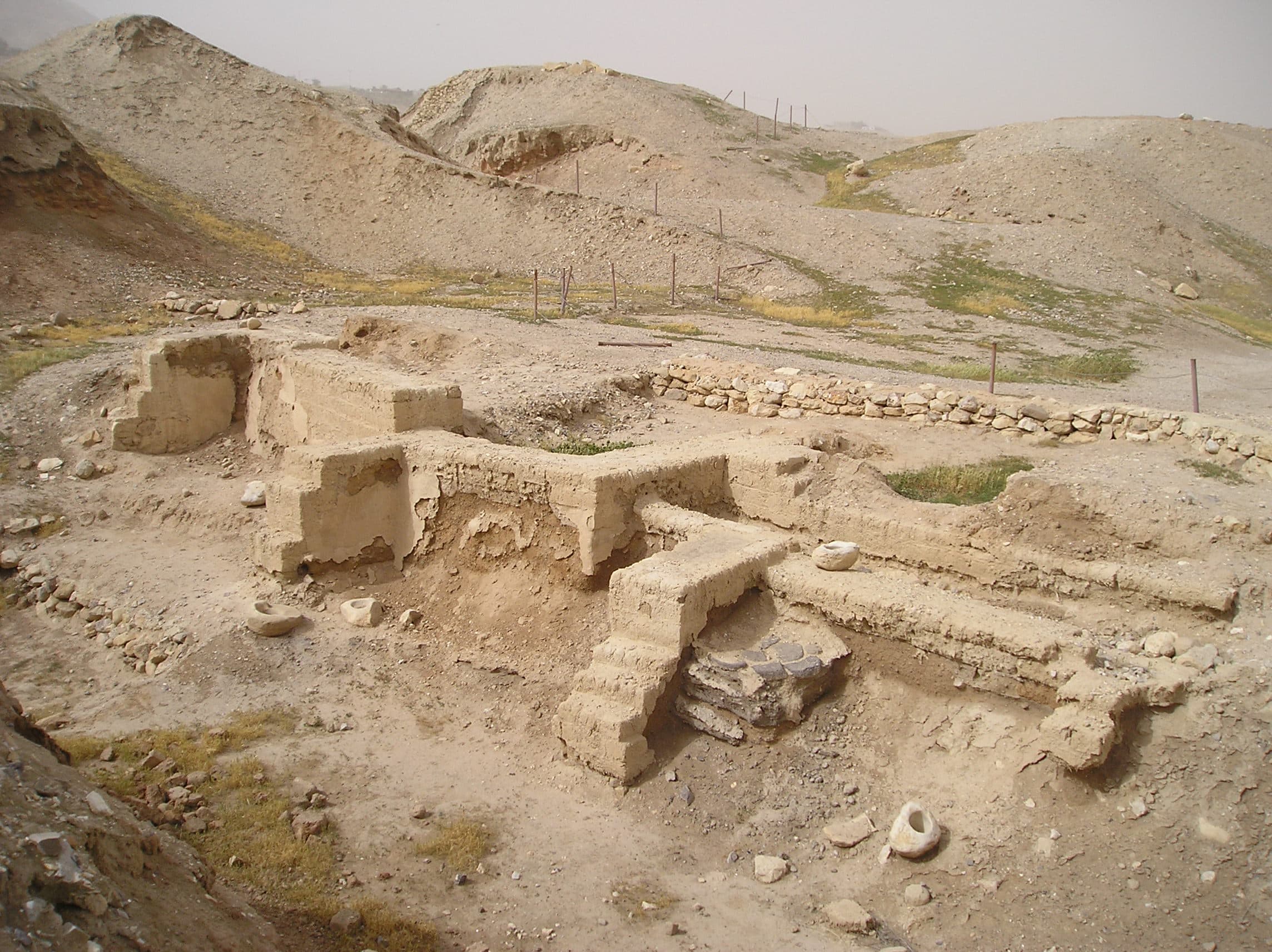
Jericho is a city of sacred significance. Approximate coordinates: 31.87446, 35.43044. Attributes: built, cultural, archaeological, pilgrimage. Tradition: Christianity. Associated figure: Christ. Mythological context: Biblical. Recognized as a UNESCO World Heritage Site. Jericho ( JERR-ik-oh; Arabic: أريحا, romanized: Arīḥā, IPA: [ʔaˈriːħaː] ) is a city in the West Bank, Palestine; it is the administrative seat of the Jericho Governorate of Palestine. Jericho is located in the Jordan Valley, with the Jordan River to the east and Jerusalem to the west. In 2017, it had a population of 20,907. From the end of the era of Mandatory Palestine, the city was annexed and ruled by Jordan from 1949 to 1967 and, with the rest of the West Bank, has been subject to Israeli occupation since 1967; administrative control was handed over to the Palestinian Authority in 1994. Jericho is among the oldest cities in the world, and it is also the city with the oldest known defensive wall. Archaeologists have unearthed the remains of more than 20 successive settlements in Jericho, the first of which dates back 11,000 years (to 9000 BCE), almost to the very beginning of the Holocene epoch of the Earth s history. Copious springs in and around the city have attracted human habitation for thousands of years. Jericho is described in the Bible as the city of palm trees . In 2023, the archaeological site in the center of the city, known as Tell es-Sultan / Old Jericho, was inscribed in UNESCO s list as a World Heritage Site in the State of Palestine, and described as the oldest fortified city in the world . Located in الضفة الغربية, Palestinian Territory.

Aphrodisias
Karacasu, Aydın, Turkey
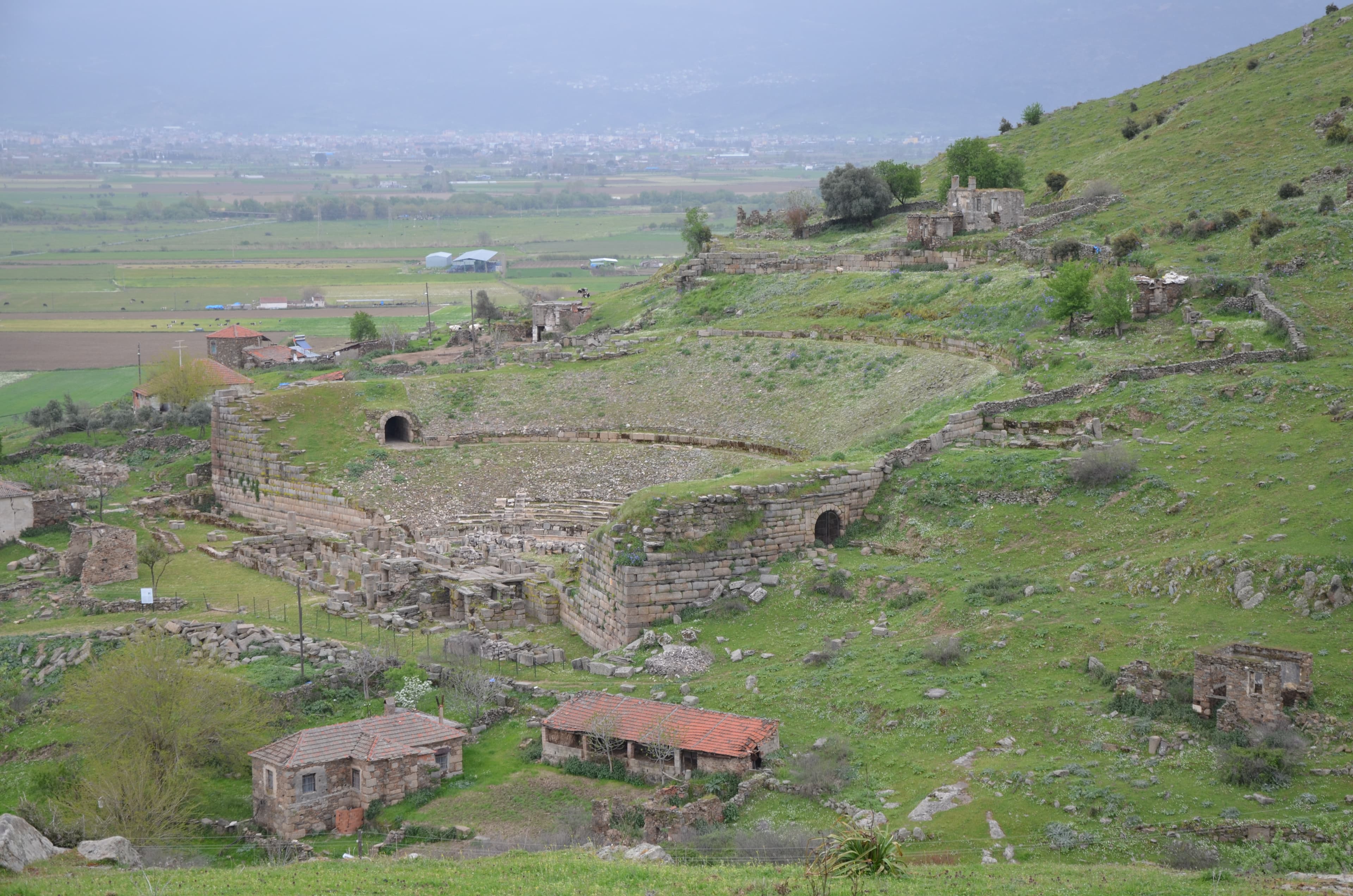
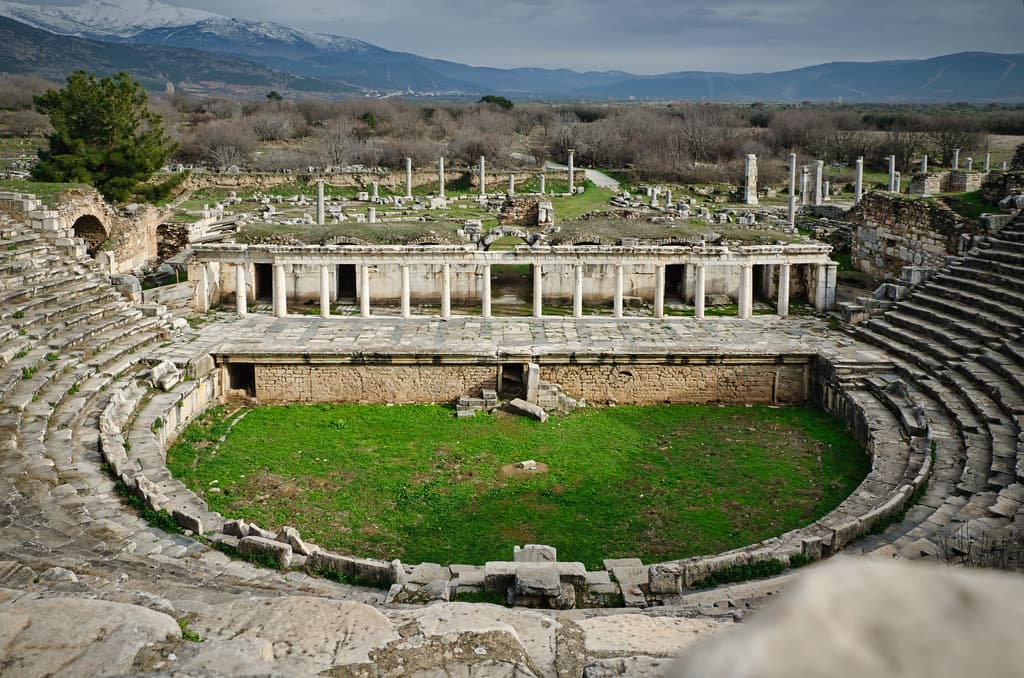
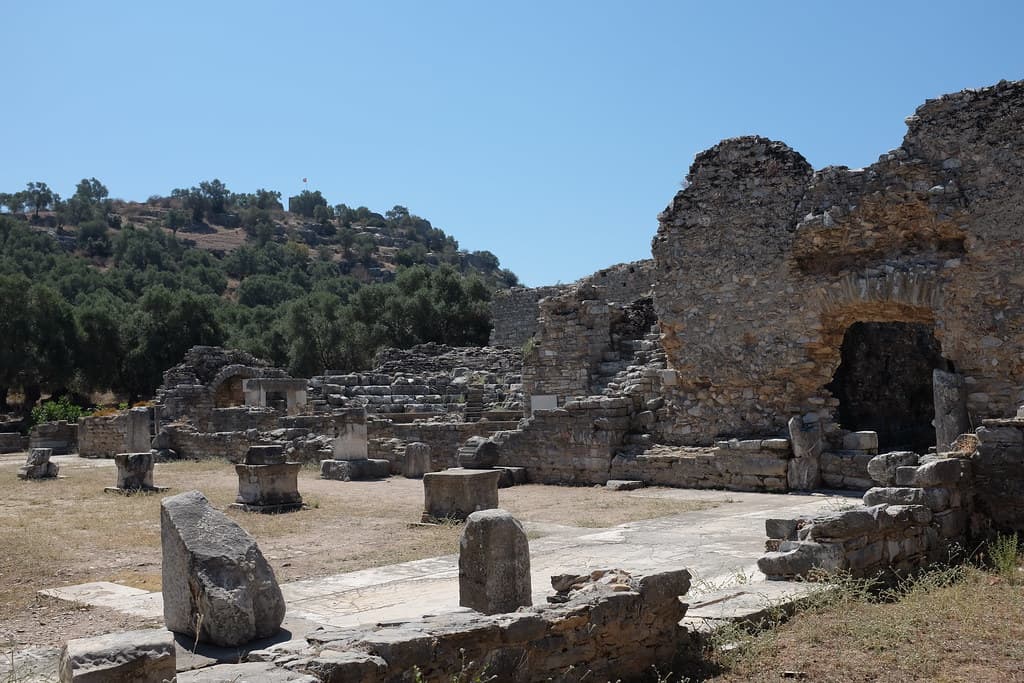
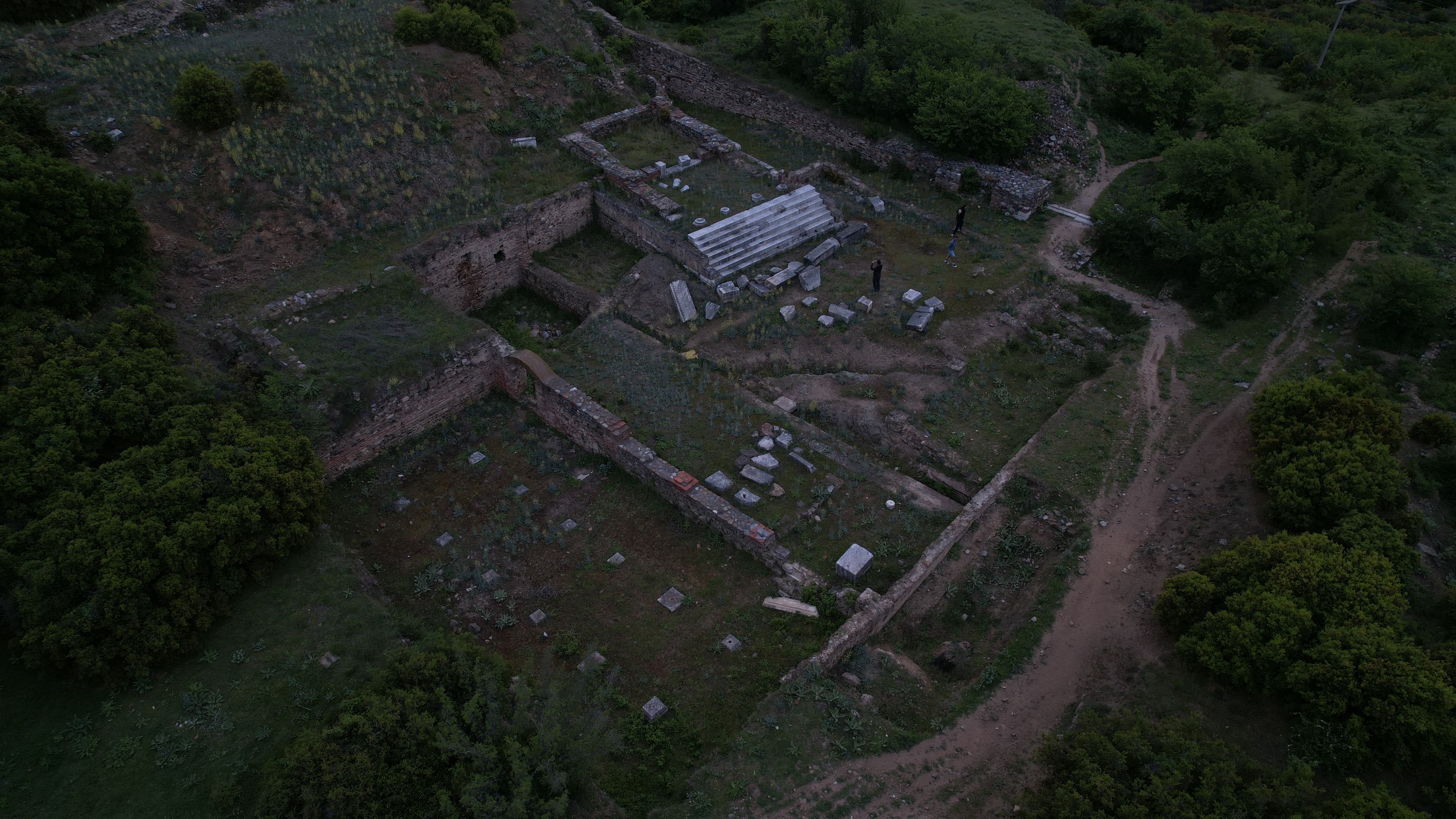
Aphrodisias is a ancient city of sacred significance. Approximate coordinates: 37.70918, 28.72357. Attributes: built, cultural, archaeological. Tradition: Hellenistic Greek. Associated figure: Aphrodite. Mythological context: Greek Mythology. Recognized as a UNESCO World Heritage Site. Aphrodisias (; Ancient Greek: Ἀφροδισιάς, romanized: Aphrodisiás) was a Hellenistic Greek city in the historic Caria cultural region of western Asia Minor, today s Anatolia in Turkey. It is located near the modern village of Geyre, about 100 km (62 mi) east/inland from the coast of the Aegean Sea, and 230 km (140 mi) southeast of İzmir. Aphrodisias was named after Aphrodite, the Greek goddess of love, who had here her unique cult image, the Aphrodite of Aphrodisias. According to the Suda, a Byzantine encyclopedic compilation, before the city became known as Aphrodisias (c. 3rd century BC) it had three previous Greek names: Lelégōn Pólis (Λελέγων πόλις, City of the Leleges ), Megálē Pólis (Μεγάλη Πόλις, Great City ), and Ninóē (Νινόη). Sometime before 640, in the Late Antique period when it was within the Byzantine Empire, the city was renamed Stauropolis (Σταυρούπολις, City of the Cross ). In 2017, it was inscribed on the UNESCO World Heritage Site list. Located in Karacasu, Ege Bölgesi, Turkey.

Arles
Arles, Provence-Alpes-Côte d'Azur, France
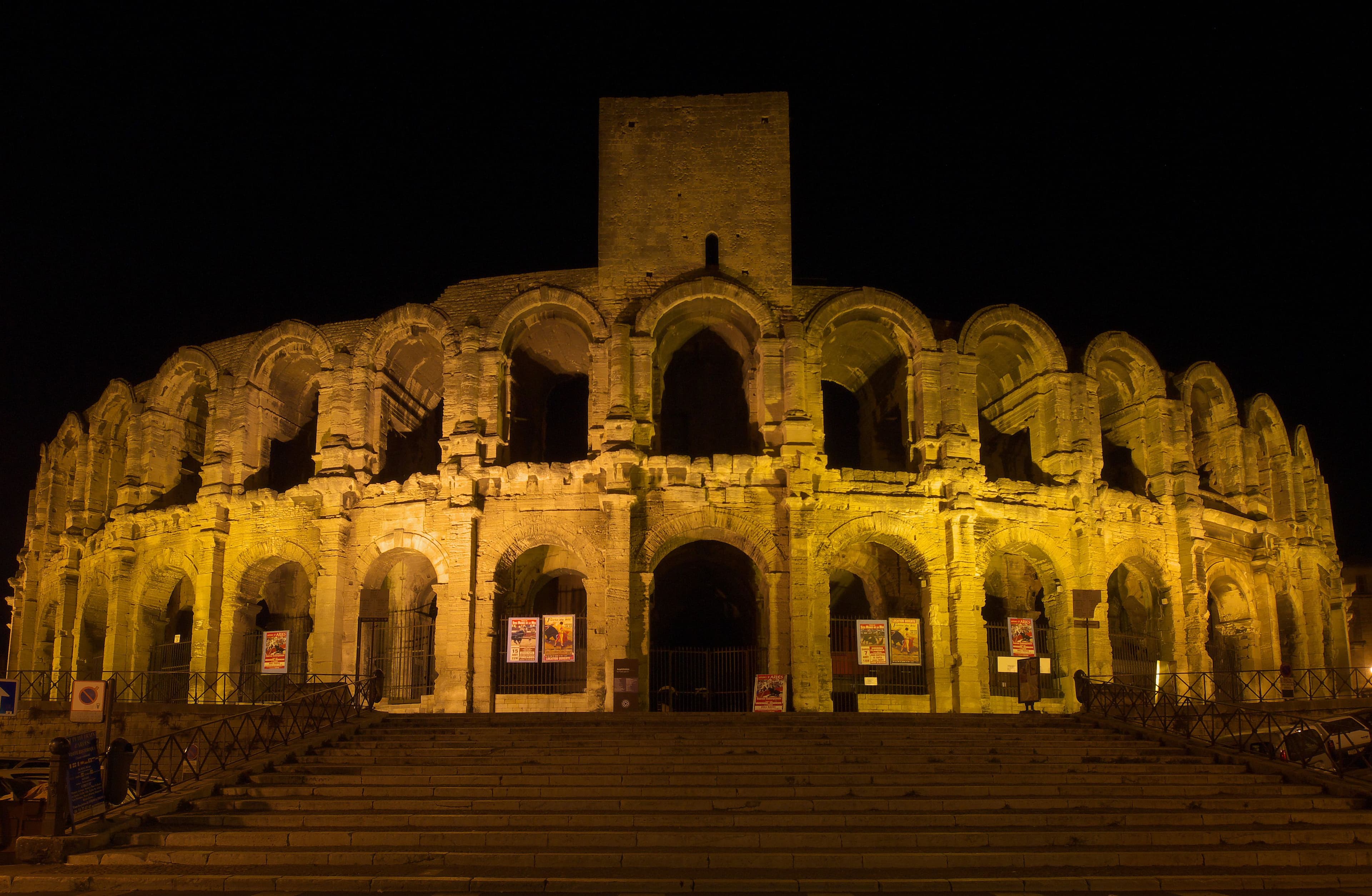
Arles is a city of sacred significance. Approximate coordinates: 43.67663, 4.62787. Attributes: built, cultural, archaeological. Tradition: Christianity. Associated figure: St. Trophime. Recognized as a UNESCO World Heritage Site. Arles ( ARL(Z), US also AR-əl, French: [aʁl]; Provençal: Arle [ˈaʀle] in both classical and Mistralian norms; Classical Latin: Arelate) is a coastal city and commune in the South of France, a subprefecture in the Bouches-du-Rhône department of the Provence-Alpes-Côte d Azur region, in the former province of Provence. A large part of the Camargue, the largest wetlands in France, is located within the territory of the commune, which is the largest in Metropolitan France in terms of geographic territory. In non-metropolitan France, Maripasoula in French Guiana is the largest French commune in general. The commune s land area is roughly similar to that of Singapore. The city has a long history, and was of considerable importance in the Roman province of Gallia Narbonensis. The Roman and Romanesque Monuments of Arles were listed as UNESCO World Heritage Sites in 1981 for their testimony to the history of the region. The city is famous for being the archdiocese of Caesarius of Arles and Hilary of Arles. Additionally, many artists have lived and worked in this area, including Pablo Picasso, Paul Gauguin and Jacques Réattu. The Dutch post-Impressionist painter Vincent van Gogh lived in Arles from 1888 to 1889, and produced over 300 paintings and drawings during his time there. These are held in internationally known museums and private collections around the world. An international photography festival has been held annually in the city since 1970. Located in Arles, Provence-Alpes-Côte d'Azur, France.

Bagan
Nyaung-U, Mandalay, Myanmar
Bagan is a ancient city of sacred significance. Approximate coordinates: 21.16796, 94.86690. Attributes: built, cultural, archaeological, pilgrimage. Tradition: Buddhism. Recognized as a UNESCO World Heritage Site. Bagan ( bə-GAN; Burmese: ပုဂံ Băgam [bəɡàɰ̃]; formerly Pagan) is an ancient city and a UNESCO World Heritage Site in the Mandalay Region of Myanmar. From the 9th to 13th centuries, the city was the capital of the Pagan Kingdom, the first kingdom that unified the regions that would later constitute Myanmar. During the kingdom s height between the 11th and 13th centuries, more than 10,000 Buddhist temples, pagodas and monasteries were constructed in the Bagan plains alone, of which the remains of over 2200 temples and pagodas survive. The Bagan Archaeological Zone is a main attraction for the country s nascent tourism industry. Located in ညောင်ဦး, မန္တလေးတိုင်း, မြန်မာ.

Bagrati Cathedral, Kutaisi
Kutaisi, Imereti, Georgia
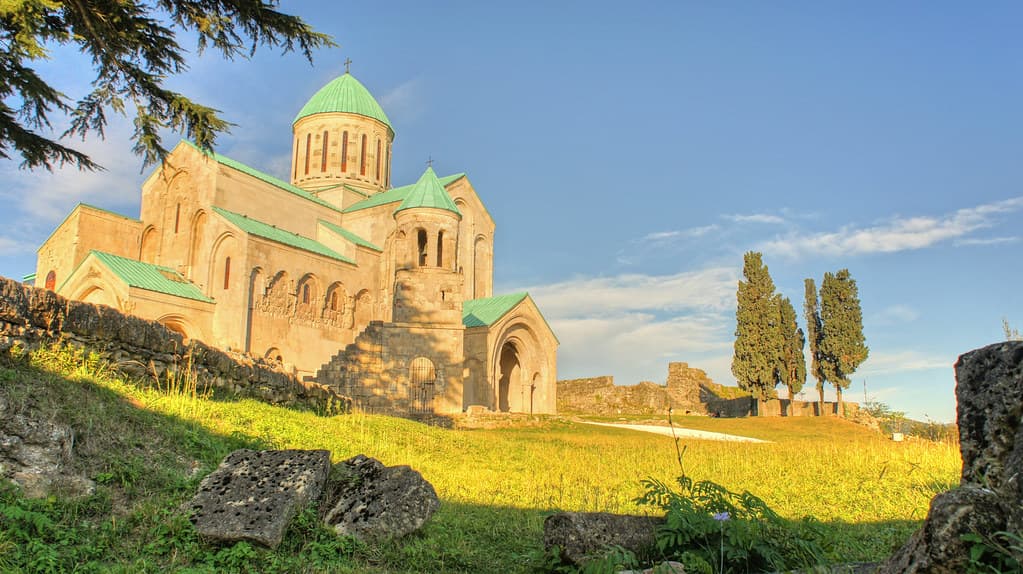
Kutaisi is a city of sacred significance. Approximate coordinates: 42.27723, 42.70430. Attributes: built, cultural, pilgrimage. Tradition: Christianity. Recognized as a UNESCO World Heritage Site. Kutaisi ( koo-TY-see, Georgian: ქუთაისი pronounced [ˈkʰut̪ʰais̪i] ) is a city in the Imereti region of the Republic of Georgia. One of the oldest continuously inhabited cities in the world, it is the fourth-most populous city in Georgia after Tbilisi, Batumi and Rustavi. It lies 221 kilometres (137 miles) west of Tbilisi, on the Rioni River, and is the capital of Imereti. Historically one of the major cities of Georgia, it served as the political center of Colchis in the Middle Ages as the capital of the Kingdom of Abkhazia and Kingdom of Georgia and later as the capital of the Kingdom of Imereti. From October 2012 to December 2018, Kutaisi was the seat of the Parliament of Georgia as an effort to decentralize the Georgian government. Located in ქუთაისი, იმერეთი, საქართველო.
Bethlehem
Bethlehem, West Bank, Palestinian Territories
Bethlehem is a city of sacred significance. Approximate coordinates: 31.70430, 35.20753. Attributes: built, cultural, archaeological, pilgrimage. Tradition: Christianity, Judaism, Islam; also recognized in Interfaith contexts. Associated figure: Jesus, David, Prophet Elias, St. George, Khidr. Mythological context: Birthplace of Jesus, Birthplace of David, Burial of Prophet Elias. Recognized as a UNESCO World Heritage Site. Bethlehem is a city in the West Bank of Palestine, located about ten kilometres (six miles) south of Jerusalem. It is the capital of the Bethlehem Governorate, and as of 2017 had a population of 28,591 people. The city s economy is strongly linked to tourism, with a focus on the Christmas period, when Christians embark on a pilgrimage to the Church of the Nativity, which is revered as the location of the birth of Jesus. A possible first mention of Bethlehem is in the Amarna correspondence of ancient Egypt, dated to 1350–1330 BCE, although that reading is uncertain. In the Hebrew Bible, the period of the Israelites is described; it identifies Bethlehem as the birthplace of David. In the New Testament, the city is identified as the birthplace of Jesus of Nazareth. Under the Roman Empire, the city of Bethlehem was destroyed by Hadrian, but later rebuilt by Constantine the Great, who commissioned the Church of the Nativity in 327 CE. In 529, the Church of the Nativity was heavily damaged by Samaritans involved in the Samaritan revolts; following the victory of the Byzantine Empire, it was rebuilt by Justinian I. Later, during the rule of several Caliphates, Bethlehem became part of Jund Filastin in 637. Muslims continued to rule the city until 1099, when it was conquered by the Crusaders, who replaced the local Christian Greek Orthodox clergy with Catholic ones. In the mid-13th century, Bethlehem s walls were demolished by the Mamluk Sultanate. However, they were rebuilt by the Ottoman Empire in the 16th century when it came to control the region. After the dissolution of the Ottoman Empire at the end of World War I, Bethlehem was part of Mandatory Palestine until 1948, and later of the West Bank that was annexed by Jordan following the 1948 Arab–Israeli War. During the 1967 Six Day War, Bethlehem was occupied by Israel along with the rest of the West Bank. Since the Oslo Accords between Israel and the Palestinian National Authority, Bethlehem has been designated as part of Area A of the West Bank, nominally rendering it as being under Palestinian control, but it remains under Israeli occupation. Movement around the city is limited due to the Israeli West Bank barrier. While it was historically a city of Arab Christians, Bethlehem now has a majority of Arab Muslims; while it is still home to a significant population of Palestinian Christians, this community has dwindled significantly, from about 86 per cent in 1950 to about 10 per cent in 2022. Presently, Bethlehem has become encircled by dozens of Israeli settlements, which significantly hinder the ability of Palestinians in the city to openly access their land and livelihoods, which has contributed to the exodus of Palestinians. Located in بيت لحم, الضفة الغربية, Palestinian Territory.

Budhanilkantha Temple
Kathmandu, Bagmati Province, Nepal
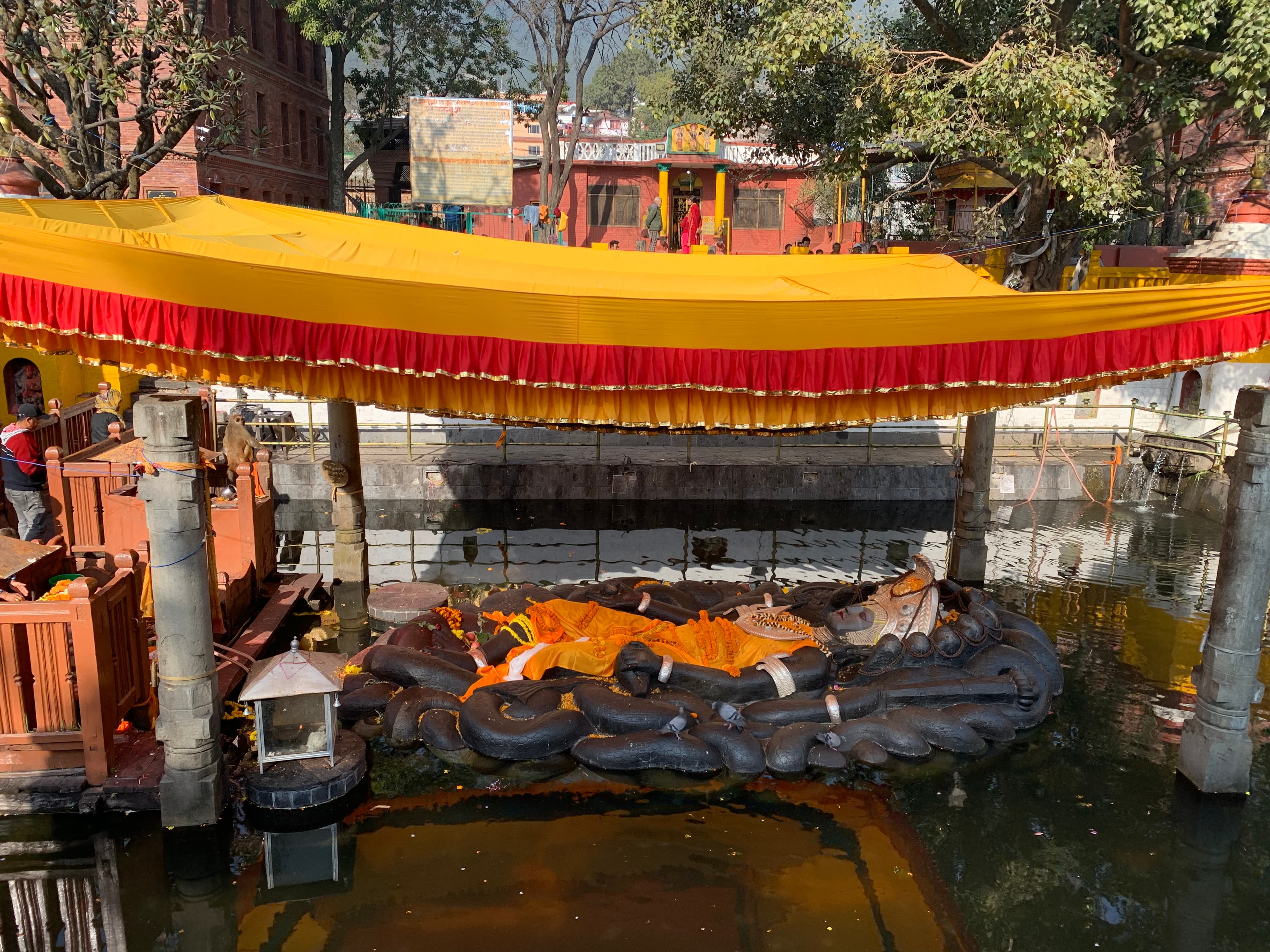
Budhanilkantha is a city and municipality of sacred significance. Approximate coordinates: 27.77801, 85.36237. Attributes: built, cultural. Tradition: Hindu. Associated figure: Vishnu. Budhanilkantha is a city and municipality in Kathmandu district of Bagmati province of Nepal. It is the 3rd largest city in the Kathmandu Valley after Kathmandu and Lalitpur. As per 2021 Nepal census, the city population was 179,688 and 26,678 households. It was established on 2 December 2014 by merging the former Village development committees Hattigauda, Khadka Bhadrakali, Chapali Bhadrakali, Mahankal, Bishnu, Chunikhel and Kapan. The city is situated at the foot of Shivapuri hill. At the time of the 2011 Nepal census, the VDC of Budhanilkantha had a population of 15,421. The municipality is named after the sacred Budhanilkantha Temple. The Budhanilkantha School is also located within the municipality. Located in बूढानिलकण्ठ नगरपालिका, बागमती प्रदेश, नेपाल.

Bursa
Yıldırım, Bursa, Turkey
Bursa is a city of sacred significance. Approximate coordinates: 40.18217, 29.07463. Attributes: built, natural, cultural, pilgrimage. Tradition: Islamic. Bursa (Turkish pronunciation: [ˈbuɾsa]) is a city in northwestern Turkey and the administrative center of Bursa Province. The fourth-most populous city in Turkey and second-most populous in the Marmara Region, Bursa is one of the industrial centers of the country. Most of Turkey s automotive production takes place in Bursa. As of 2019, the Metropolitan Province was home to 3 238 618 inhabitants, 2 283 697 of whom lived in the 3 city urban districts (Osmangazi, Yıldırım and Nilüfer) plus Gürsu and Kestel. Its rich history provides various places of interest in Bursa. Bursa became the capital of the Ottoman Empire (back then the Ottoman Beylik) from 1335 until the 1360s. A more recent nickname is Yeşil Bursa ( Green Bursa ) referring to the parks and gardens located across the city, as well as to the vast, varied forests of the surrounding region. Bursa has a rather orderly urban growth and borders a fertile plain. The mausoleums of the early Ottoman sultans are located in Bursa, and the city s main landmarks include numerous edifices built throughout the Ottoman period. Bursa also has thermal baths, old Ottoman mansions, palaces, and several museums. Mount Uludağ, known in classical antiquity as the Mysian Olympus or alternatively Bithynian Olympus, towers over the city, and has a well-known ski resort. The shadow play characters Karagöz and Hacivat are based on historic personalities who lived and died in Bursa in the 14th century. Located in Yıldırım, Marmara Bölgesi, Turkey.

Carcassonne
Carcassonne, Occitania, France
Carcassonne is a fortified city of sacred significance. Approximate coordinates: 43.20508, 2.36325. Attributes: built, cultural, archaeological. Tradition: Christian. Associated figure: St. Nazaire. Recognized as a UNESCO World Heritage Site. Carcassonne is a French fortified city in the department of Aude, region of Occitania. It is the prefecture of the department. Inhabited since the Neolithic Period, Carcassonne is located in the plain of the Aude between historic trade routes, linking the Atlantic to the Mediterranean Sea and the Massif Central to the Pyrénées. Its strategic importance was quickly recognised by the Romans, who occupied its hilltop until the demise of the Western Roman Empire. In the fifth century, the region of Septimania was taken over by the Visigoths, who founded the city of Carcassonne in the newly established Visigothic Kingdom. Its citadel, known as the Cité de Carcassonne, is a medieval fortress dating back to the Gallo-Roman period and restored by the theorist and architect Eugène Viollet-le-Duc between 1853 and 1879. It was added to the UNESCO list of World Heritage Sites in 1997 because of the exceptional preservation and restoration of the medieval citadel. Consequently, Carcassonne relies heavily on tourism but also counts manufacturing and winemaking as some of its other key economic sectors. Located in Carcassonne, Occitanie, France.

Chiang Rai
Mae Sai district, Chiang Rai Province, Thailand
Chiang Rai is a city of sacred significance. Approximate coordinates: 20.32774, 99.82591. Attributes: built, cultural, pilgrimage. Tradition: Buddhism. Chiang Rai (Thai: เชียงราย, pronounced [t͡ɕʰīa̯ŋ rāːj]; Northern Thai: ᨩ᩠ᨿᨦᩁᩣ᩠ᨿ, เจียงฮาย, Northern Thai pronunciation: [t͡ɕīa̯ŋ hāːj]) is the northernmost major city in Thailand, with a population of about 200,000 people. It is located in Mueang Chiang Rai District, Chiang Rai Province. Chiang Rai was established as a capital city in the reign of King Mangrai, in 1262 CE. Located in อำเภอแม่สาย, Mae Sai, ประเทศไทย.

Chichen Itza
Pisté, Yucatán, Mexico
Chichen Itza is a pre-columbian city of sacred significance. Approximate coordinates: 20.68322, -88.57075. Attributes: built, cultural, archaeological, pilgrimage, ceremonial. Tradition: Maya. Mythological context: Mesoamerican. Recognized as a UNESCO World Heritage Site. Chichén Itzá (often spelled Chichen Itza in English and traditional Yucatec Maya) was a large pre-Columbian city built by the Maya people of the Terminal Classic period. The archeological site is located in Tinúm Municipality, Yucatán State, Mexico. Chichén Itzá was a major focal point in the Northern Maya Lowlands from the Late Classic (c. AD 600–900) through the Terminal Classic (c. AD 800–900) and into the early portion of the Postclassic period (c. AD 900–1200). The site exhibits a multitude of architectural styles, reminiscent of styles seen in central Mexico and of the Puuc and Chenes styles of the Northern Maya lowlands. The presence of central Mexican styles was once thought to have been representative of direct migration or even conquest from central Mexico, but most contemporary interpretations view the presence of these non-Maya styles more as the result of cultural diffusion. Chichén Itzá was one of the largest Maya cities and it was likely to have been one of the mythical great cities, or Tollans, referred to in later Mesoamerican literature. The city may have had the most diverse population in the Maya world, a factor that could have contributed to the variety of architectural styles at the site. The ruins of Chichén Itzá are federal property, and the site s stewardship is maintained by Mexico s Instituto Nacional de Antropología e Historia (National Institute of Anthropology and History). The land under the monuments had been privately owned until 29 March 2010, when it was purchased by the state of Yucatán. Chichén Itzá is one of the most visited archeological sites in Mexico with over 2.6 million tourists in 2017. Located in Yucatán, Mexico.

Coba
Cobá, Quintana Roo, Mexico
Coba is a ancient city of sacred significance. Approximate coordinates: 20.48668, -87.73836. Attributes: built, cultural, archaeological, ceremonial. Tradition: Maya. Mythological context: Mesoamerican. Coba (Spanish: Cobá) is an ancient Maya city on the Yucatán Peninsula, located in the Mexican state of Quintana Roo. The site is the nexus of the largest network of stone causeways of the ancient Maya world, and it contains many engraved and sculpted stelae that document ceremonial life and important events of the Late Classic Period (AD 600–900) of Mesoamerican civilization. The adjacent modern village bearing the same name, reported a population of 1,278 inhabitants in the 2010 Mexican federal census. The ruins of Coba lie 47 km (approx. 29 mi) northwest of Tulum, in the State of Quintana Roo, Mexico. The geographical coordinates of Coba Group (main entrance for tourist area of the archaeological site) are North 19° 29.6’ and West 87° 43.7’. The archaeological zone is reached by a two-kilometer branch from the asphalt road connecting Tulum with Nuevo Xcán (a community of Lázaro Cárdenas, another municipality of Quintana Roo) on the Valladolid to Cancún highway. Coba is located around two lagoons, Lake Coba and Lake Macanxoc. A series of elevated stone and plaster roads radiate from the central site to various smaller sites near and far. These are known by the Maya term sacbe (plural sacbeob) or white road. Some of these causeways go east, and the longest runs over 100 kilometres (62 mi) westward to the site of Yaxuna. The site contains a group of large temple pyramids known as the Nohoch Mul, the tallest of which, Ixmoja, is some 42 metres (138 ft) in height. Ixmoja is among the tallest pyramids on the Yucatán peninsula, exceeded by Calakmul at 45 metres (148 ft). Coba was estimated to have had some 50,000 inhabitants (and possibly significantly more) at its peak of civilization, and the built up area extends over some 80 km2. The site was occupied by a sizable agricultural population by the first century. The bulk of Coba s major construction seems to have been made in the middle and late Classic period, about 500 to 900 AD, with most of the dated hieroglyphic inscriptions from the 7th century (see Mesoamerican Long Count calendar). However, Coba remained an important site in the Post-Classic era and new temples were built and old ones kept in repair until at least the 14th century, possibly as late as the arrival of the Spanish. Cobá lies in the tropics, subject to alternating wet and dry seasons which, on average, differ somewhat from those in the rest of the northern peninsula, where the rainy season generally runs from June through October and the dry season from November through May. At Cobá, rain can occur in almost any time of the year, but there is a short dry period in February and March, and a concentration of rain from September through November. Located in Tulum, Quintana Roo, Mexico.

Damascus
Damascus, Damascus Governorate, Syria
Damascus is a city of sacred significance. Approximate coordinates: 33.51135, 36.30670. Attributes: built, cultural, archaeological, pilgrimage. Tradition: Islam. Associated figure: Ibn Arabi, Lady Zaynab. Damascus is the capital and largest city of Syria. It is the oldest capital in the world and, according to some, the fourth holiest city in Islam. Known colloquially in Syria as aš-Šām (الشَّام) and dubbed, poetically, the City of Jasmine (مَدِيْنَةُ الْيَاسْمِينِ Madīnat al-Yāsmīn), Damascus is a major cultural center of the Levant and the Arab world. Situated in southwestern Syria, Damascus is the center of a large metropolitan area. Nestled among the eastern foothills of the Anti-Lebanon mountain range 80 kilometres (50 mi) inland from the eastern shore of the Mediterranean on a plateau 680 metres (2,230 ft) above sea level, Damascus experiences an arid climate because of the rain shadow effect. The Barada River flows through Damascus. Damascus is one of the oldest continuously inhabited cities in the world. First settled in the 3rd millennium BC, it was chosen as the capital of the Umayyad Caliphate from 661 to 750. After the victory of the Abbasid dynasty, the seat of Islamic power was moved to Baghdad. Damascus saw its importance decline throughout the Abbasid era, only to regain significant importance in the Ayyubid and Mamluk periods. Today, it is the seat of the central government of Syria. As of September 2019, eight years into the Syrian civil war, Damascus was named the least livable city out of 140 global cities in the Global Liveability Ranking. As of June 2023, it was the least livable out of 173 global cities in the same Global Liveability Ranking. In 2017, two new development projects were launched in Damascus to build new residential districts, Marota City and Basillia City to symbolize post-war reconstruction. Located in بلدية دمشق القديمة, محافظة دمشق, سوريا.

Ephesus
Selçuk, Aegean Region, Turkey
Ephesus is a ancient city of sacred significance. Approximate coordinates: 37.91240, 27.33276. Attributes: built, cultural, archaeological, pilgrimage. Tradition: Ancient Greek. Associated figure: Artemis. Mythological context: Ancient Greek Mythology. Recognized as a UNESCO World Heritage Site. Ephesus (; Ancient Greek: Ἔφεσος, romanized: Éphesos; Turkish: Efes; may ultimately derive from Hittite: 𒀀𒉺𒀀𒊭, romanized: Apāša) was an ancient Greek city on the coast of Ionia, in present-day Selçuk in İzmir Province, Turkey. It was built in the 10th century BC on the site of Apasa, the former Arzawan capital, by Attic and Ionian Greek colonists. During the Classical Greek era, it was one of twelve cities that were members of the Ionian League. The city came under the control of the Roman Republic in 129 BC. The city was famous in its day for the nearby Temple of Artemis (completed around 550 BC), which has been designated one of the Seven Wonders of the Ancient World. Its many monumental buildings included the Library of Celsus and a theatre capable of holding 24,000 spectators. Ephesus was a recipient city of one of the Pauline epistles and one of the seven churches of Asia addressed in the Book of Revelation. The Gospel of John may have been written there, and it was the site of several 5th-century Christian Councils (Council of Ephesus). The city was destroyed by the Goths in 263. Although it was afterwards rebuilt, its importance as a port and commercial centre declined as the harbour was slowly silted up by the Küçükmenderes River. In 614, it was partially destroyed by an earthquake. Today, the ruins of Ephesus are a favourite international and local tourist attraction, being accessible from Adnan Menderes Airport and from the resort town Kuşadası. In 2015, the ruins were designated a UNESCO World Heritage Site. Located in Selçuk, Ege Bölgesi, Turkey.
Gori
Gori Municipality, Shida Kartli, Georgia
Gori is a church and cave city of sacred significance. Approximate coordinates: 41.96738, 44.20726. Attributes: built, cultural, archaeological. Gori may refer to: Located in შიდა ქართლი, საქართველო.

Great Zimbabwe
Nemanwa Growth Point, Masvingo Province, Zimbabwe
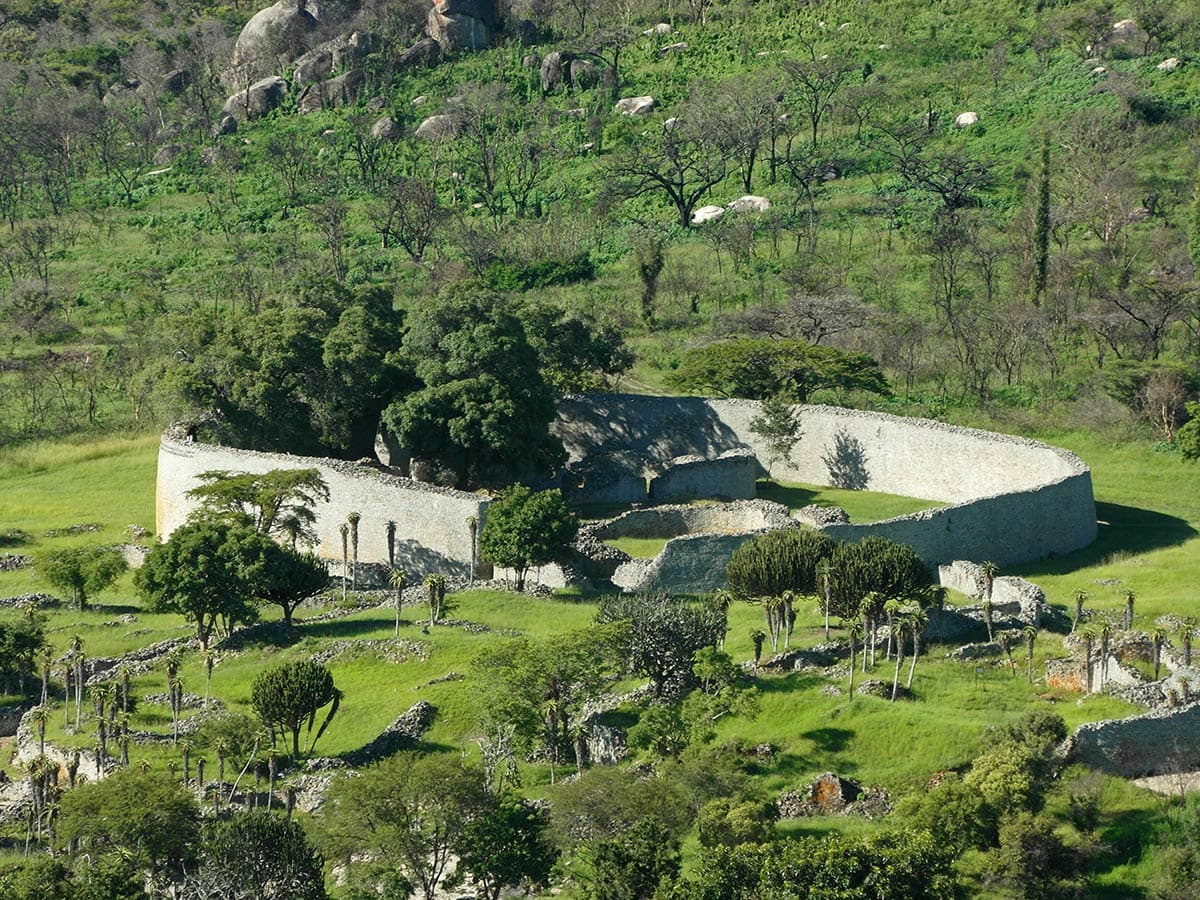
Great Zimbabwe is a ancient city of sacred significance. Approximate coordinates: -20.27133, 30.93313. Attributes: built, cultural, archaeological, ceremonial. Tradition: Shona. Recognized as a UNESCO World Heritage Site. Great Zimbabwe was a city in the south-eastern hills of the modern country of Zimbabwe, near Masvingo. It was settled from 1000 AD, and served as the capital of the Kingdom of Zimbabwe from the 13th century. It is the largest stone structure in precolonial Southern Africa. Major construction on the city began in the 11th century until the 15th century, and it was abandoned in the 16th or 17th century. The edifices were erected by ancestors of the Shona people, currently located in Zimbabwe and nearby countries. The stone city spans an area of 7.22 square kilometres (2.79 sq mi) and could have housed up to 18,000 people at its peak, giving it a population density of approximately 2,500 inhabitants per square kilometre (6,500/sq mi). The Zimbabwe state centred on it likely covered 50,000 km² (19,000 sq mi). It is recognised as a World Heritage Site by UNESCO. The site of Great Zimbabwe is composed of the Hill Complex, the Valley Complex, and the Great Enclosure (constructed at different times), and contained area for commoner housing within the perimeter walls. There is disagreement on the functions of the complexes among scholars. Some consider them to have been residences for the royals and elites at different periods of the site, while others infer them to have had separate functions. The Great Enclosure, with its 11 m (36 ft) high dry stone walls (that is, constructed without mortar), was built during the 13th and 14th centuries, and likely served as the royal residence, with demarcated public spaces for rituals. The earliest document mentioning the Great Zimbabwe ruins was in 1531 by Vicente Pegado, captain of the Portuguese garrison of Sofala on the coast of modern-day Mozambique, who recorded it as Symbaoe. The first confirmed visits by Europeans were in the late 19th century, with investigations of the site starting in 1871. Great Zimbabwe and surrounding sites were looted by European antiquarians between the 1890s and 1920s. Some later studies of the monument were controversial, as the white government of Rhodesia pressured archaeologists to deny its construction by black Africans. Its African origin only became consensus by the 1950s. Great Zimbabwe has since been adopted as a national monument by the Zimbabwean government, and the modern independent state was named after it. The word great distinguishes the site from the many smaller ruins, known as zimbabwes , spread across the Zimbabwe Highveld. There are around 200 such sites in Southern Africa, such as Bumbusi in Zimbabwe and Manyikeni in Mozambique, with monumental, mortarless walls. Located in Masvingo, Zimbabwe.

Janaki Mandir
Janakpur, Madhesh Province, Nepal
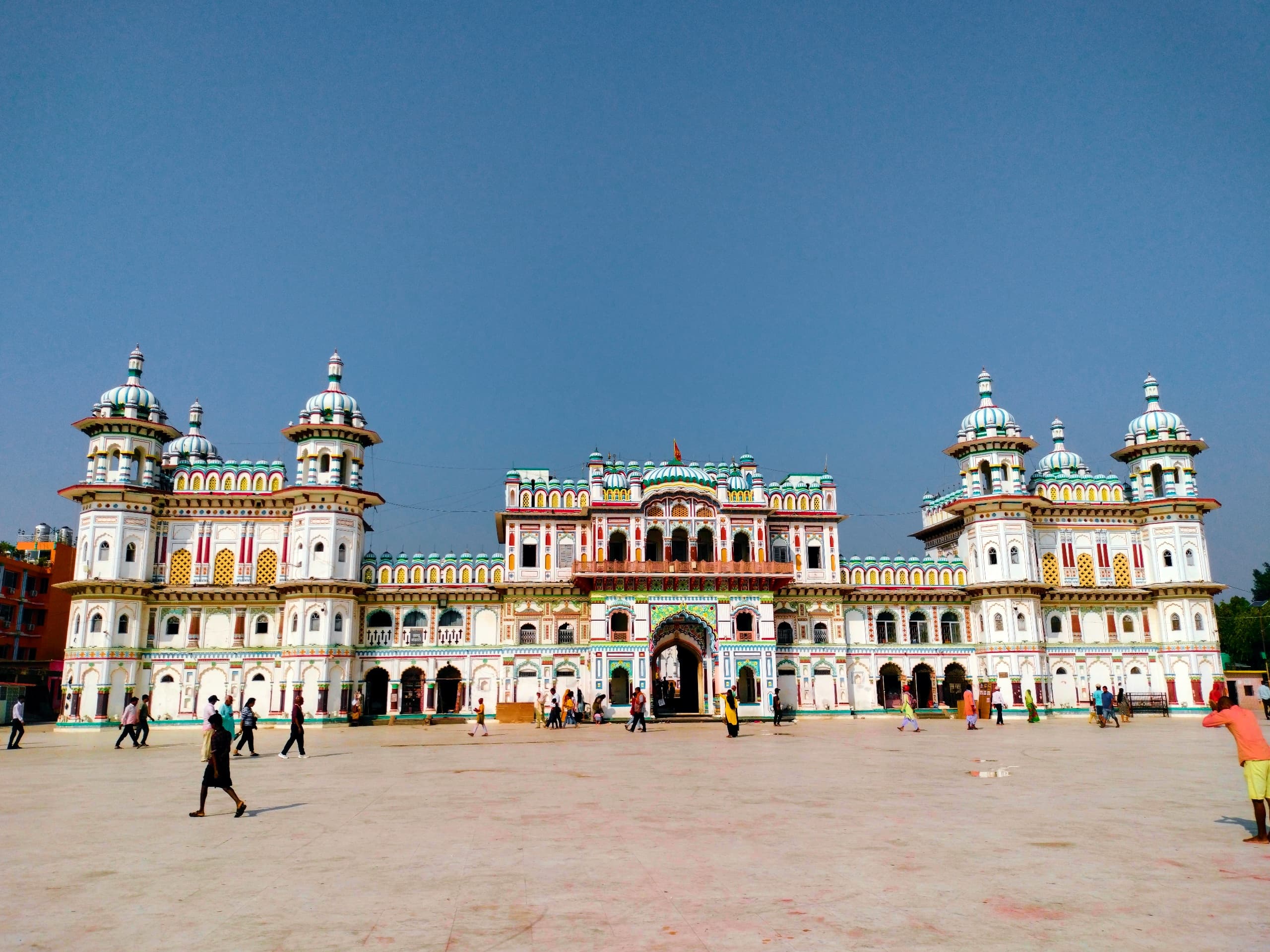
Janakpur is a city of sacred significance. Approximate coordinates: 26.73040, 85.92571. Attributes: built, cultural, pilgrimage. Tradition: Hinduism. Associated figure: Sita. Mythological context: Ramayana. Janakpurdham or Janakpur (Maithili: जनकपुर), is the capital city of Madhesh Province. This sub-metropolitan city is a central hub for the Maithili language, as well as for religious and cultural tourism in Nepal. The city was founded in the early 18th century but was designated as the location of the capital of the Videha kingdom, although there is no archaeological evidence to support this. Janakpur is located about 225 km (140 mi) southeast of Kathmandu. As of 2021, the city had a population of 195,438, with a density of 2,125/km2. Janakpur is currently the fourth most densely populated city in Nepal. Janakpur is located about 23 km from the Bhitthamore border with India. Nepal Railways operates a service between Janakpur and Jainagar in India. Located in जनकपुर, मधेश प्रदेश, नेपाल.
Jerusalem
Jerusalem, Jerusalem District, Israel
Jerusalem is a city of sacred significance. Approximate coordinates: 31.77802, 35.23541. Attributes: built, cultural, archaeological, pilgrimage, ceremonial. Tradition: Abrahamic; also recognized in Judaism, Christianity, Islam contexts. Associated figure: God, Jesus, Muhammad. Mythological context: Biblical, Quranic. Recognized as a UNESCO World Heritage Site. Jerusalem is a city in the Southern Levant, on a plateau in the Judaean Mountains between the Mediterranean and the Dead Sea. It is one of the oldest cities in the world, and is considered holy to the three major Abrahamic religions—Judaism, Christianity, and Islam. Both the State of Israel and the State of Palestine claim Jerusalem as their capital city. Israel maintains its primary governmental institutions there, and the State of Palestine ultimately foresees it as its seat of power. Neither claim is widely recognized internationally. Throughout its long history, Jerusalem has been destroyed at least twice, besieged 23 times, captured and recaptured 44 times, and attacked 52 times. The part of Jerusalem called the City of David shows first signs of settlement in the 4th millennium BCE, in the shape of encampments of nomadic shepherds. During the Canaanite period (14th century BCE), Jerusalem was named as Urusalim on ancient Egyptian tablets, probably meaning City of Shalem after a Canaanite deity. During the Israelite period, significant construction activity in Jerusalem began in the 10th century BCE (Iron Age II), and by the 9th century BCE, the city had developed into the religious and administrative center of the Kingdom of Judah. In 1538, the city walls were rebuilt for a last time around Jerusalem under Suleiman the Magnificent of the Ottoman Empire. Today those walls define the Old City, which since the 19th century has been divided into four quarters—the Armenian, Christian, Jewish, and Muslim quarters. The Old City became a World Heritage Site in 1981, and is on the List of World Heritage in Danger. Since 1860, Jerusalem has grown far beyond the Old City s boundaries. In 2022, Jerusalem had a population of some 971,800 residents, of which almost 60% were Jews and almost 40% Palestinians. In 2020, the population was 951,100, of which Jews comprised 570,100 (59.9%), Muslims 353,800 (37.2%), Christians 16,300 (1.7%), and 10,800 unclassified (1.1%). According to the Hebrew Bible, King David conquered the city from the Jebusites and established it as the capital of the United Kingdom of Israel, and his son, King Solomon, commissioned the building of the First Temple. Modern scholars argue that Israelites branched out of the Canaanite peoples and culture through the development of a distinct monolatrous—and later monotheistic—religion centered on El/Yahweh. These foundational events, straddling the dawn of the 1st millennium BCE, assumed central symbolic importance for the Jewish people. The sobriquet of holy city (Hebrew: עיר הקודש, romanized: Ir ha-Qodesh) was probably attached to Jerusalem in post-exilic times. The holiness of Jerusalem in Christianity, conserved in the Greek translation of the Hebrew Bible, which Christians adopted as the Old Testament, was reinforced by the New Testament account of Jesus s crucifixion and resurrection there. Meanwhile, in Islam, Jerusalem is the third-holiest city, after Mecca and Medina. The city was the first standard direction for Muslim prayers, and in Islamic tradition, Muhammad made his Night Journey there in 621, ascending to heaven where he spoke to God, per the Quran. As a result, despite having an area of only 0.9 km2 (3⁄8 sq mi), the Old City is home to many sites of seminal religious importance, among them the Temple Mount with its Western Wall, Dome of the Rock and al-Aqsa Mosque, and the Church of the Holy Sepulchre. At present, the status of Jerusalem remains one of the core issues in the Israeli–Palestinian conflict. Under the 1947 United Nations Partition Plan for Palestine, Jerusalem was to be established as a corpus separatum under a special international regime administered by the United Nations. During the 1948 Arab–Israeli War, West Jerusalem was among the areas incorporated into Israel, while East Jerusalem, including the Old City, was occupied and annexed by Jordan. Israel occupied East Jerusalem from Jordan during the 1967 Six-Day War and subsequently annexed it into the city s municipality, together with additional surrounding territory. One of Israel s Basic Laws, the 1980 Jerusalem Law, refers to Jerusalem as the country s undivided capital. All branches of the Israeli government are located in Jerusalem, including the Knesset (Israel s parliament), the residences of the prime minister and president, and the Supreme Court. The international community rejects the annexation as illegal and regards East Jerusalem as Palestinian territory occupied by Israel. Located in ירושלים | القدس, מחוז ירושלים, ישראל.
Joensuu
Heinävesi, North Karelia, Finland
Joensuu is a city of sacred significance. Approximate coordinates: 62.56306, 28.79130. Attributes: built, cultural. Tradition: Christianity. Joensuu (Finnish: [ˈjoensuː] ; Karelian: Jovensuu; lit. river s mouth ) is a city in Finland and the regional capital of North Karelia. It is located in the eastern interior of the country and in the Finnish Lakeland. The population of Joensuu is approximately 79,000, while the sub-region has a population of approximately 128,000. It is the 11th most populous municipality in Finland, and the ninth most populous urban area in the country. Joensuu was founded in 1848 by the Russian Emperor Nicholas I. The city is located on the northern shore of Lake Pyhäselkä, the northern part of Lake Saimaa, at the mouth of the River Pielinen. The nearest major city, Kuopio in North Savonia, is located 136 kilometres (85 mi) to the west. From Joensuu, the distance to Lappeenranta, the capital of South Karelia, is 233 kilometres (145 mi) along Highway 6. As is typical of cities in Eastern Finland, Joensuu is monolingually Finnish. Along with Kuopio, Joensuu is one of major urban, economic, and cultural hubs of Eastern Finland. Joensuu is a student city with a subsidiary of the University of Eastern Finland, which has over 20,000 enrolled students, and a further 4,000 students at the Karelia University of Applied Sciences. Located in Heinävesi, Pohjois-Karjala, Suomi / Finland.

Kathmandu Valley
Kathmandu, Bagmati Province, Nepal
Kathmandu is a city of sacred significance. Approximate coordinates: 27.71271, 85.33081. Attributes: built, cultural, pilgrimage, ceremonial. Tradition: Hinduism; also recognized in Hinduism, Buddhism contexts. Associated figure: Pashupatinath, Matsyendranath. Mythological context: Hindu mythology. Recognized as a UNESCO World Heritage Site. Kathmandu, officially the Kathmandu Metropolitan City, is the seat of federal government and the most populous city in Nepal. As of the 2021 Nepal census, there were 845,767 inhabitants living in 105,649 households and approximately 4 million people in its surrounding agglomeration. It is located in the Kathmandu Valley, a large valley surrounded by hills in central Nepal, at an altitude of 4,344 feet (1,324 metres) above sea level. The city is one of the oldest continuously inhabited places in the world, founded in the 2nd century AD. The valley was historically called the Nepal Mandala (the name for the cosmic elements of water Dha mandala in Newari, and cosmos), and has been the home of the Newar people, a cosmopolitan urban civilization in the Himalayan foothills. The city was the royal capital of the Kingdom of Nepal and hosts palaces, mansions and gardens built by the Nepali aristocracy. It has been home to the headquarters of the South Asian Association for Regional Cooperation (SAARC) since 1985. Today, it is the seat of government of the Federal Democratic Republic of Nepal, established in 2008, and is part of Bagmati Province. Kathmandu is and has been for many years the centre of Nepal s history, art, culture, and economy. It has a multi-ethnic population within a Hindu majority. Religious and cultural festivities form a major part of the lives of people residing in Kathmandu. Tourism is an important part of the economy in the city. In 2013, Kathmandu was ranked third among the top ten upcoming travel destinations in the world by TripAdvisor, and ranked first in Asia. The city is considered the gateway to the Nepal Himalayas and is home to several World Heritage Sites: the Durbar Square, Swayambhu Mahachaitya, Bouddha and Pashupatinath. Kathmandu valley is growing at 4 per cent per year according to the World Bank in 2010, making it one of the fastest-growing metropolitan areas in South Asia, and the first region in Nepal to face the unprecedented challenges of rapid urbanization and modernization at a metropolitan scale. It is the largest metropolitan area located in the Himalayas. Located in काठमाडौँ महानगरपालिका, बागमती प्रदेश, नेपाल.

Larache
Larache, Tangier-Tetouan-Al Hoceima, Morocco
Larache is a city of sacred significance. Approximate coordinates: 35.18395, -6.15011. Attributes: built, cultural, archaeological, pilgrimage. Tradition: Islamic. Associated figure: Mulay Abd as-Salim ibn Mashish. Larache (Arabic: العرائش, romanized: al-ʿArāʾish) is a city in northwestern Morocco. It is on the Moroccan coast, where the Loukkos River meets the Atlantic Ocean. Larache is one of the most important cities of the Tanger-Tetouan-Al Hoceima region. Many civilisations and cultures have influenced the history of Larache, starting in the ancient city of Lixus during the 12th century BCE. Between the period of being a strategic Berber town and then a Phoenician trading centre to Morocco s independence era around the 1950s, Larache was a nexus for many cultures. Located in Larache العرائش, Tanger-Tétouan-Al Hoceïma ⵟⴰⵏⵊ-ⵟⵉⵜⴰⵡⵉⵏ-ⵍⵃⵓⵙⵉⵎⴰ طنجة تطوان الحسيمة, Maroc ⵍⵎⵖⵔⵉⴱ المغرب.

Lato
Agios Nikolaos Municipal Unit, Region of Crete, Greece
Lato is a ancient city of sacred significance. Approximate coordinates: 35.17904, 25.65529. Attributes: built, cultural, archaeological. Tradition: Ancient Greek. Lato (Ancient Greek: Λατώ, romanized: Latṓ) was an ancient city of Crete, the ruins of which are located approximately 3 km from the village of Kritsa. Located in Δημοτική Ενότητα Αγίου Νικολάου, Αποκεντρωμένη Διοίκηση Κρήτης, Ελλάς.

Maracaibo
Maracaibo, Zulia State, Venezuela
Maracaibo is a city of sacred significance. Approximate coordinates: 10.64296, -71.61588. Attributes: built, cultural. Tradition: Christianity. Associated figure: Virgen de la Chinquinquira. Maracaibo ( MARR-ə-KY-boh, Spanish: [maɾaˈkajβo] ; Wayuu: Marakaaya) is a city and municipality in northwestern Venezuela, on the western shore of the strait that connects Lake Maracaibo to the Gulf of Venezuela. It is the largest city in Venezuela and is the second-largest city proper in Venezuela, after the national capital, Caracas, and the capital of the state of Zulia. The population of the city is approximately 2,658,355 with the metropolitan area estimated at 5,278,448 as of 2010. Maracaibo is nicknamed The Beloved Land of the Sun (Spanish: La Tierra del Sol Amada). Maracaibo is considered the economic center of western Venezuela, owing to the petroleum industry that developed in the shores of Lake Maracaibo. It is sometimes known as The First City of Venezuela , for being the first city in Venezuela to adopt various types of public services, including electricity, as well as for being located in the shores of Lake Maracaibo, where the name of Venezuela allegedly originates. Early indigenous settlements around the area were of Arawak and Carib origin. Maracaibo s founding date is disputed. There were failed attempts to found the city—in 1529, by Captain Ambrosio Ehinger, and in 1569, by Captain Alonso Pacheco. Founded in 1574 as Nueva Zamora de la Laguna de Maracaibo by Captain Pedro Maldonado, the city became a transshipment point for inland settlements after Gibraltar, at the head of the lake, had been destroyed by pirates in 1669. It was not until the first decades of the 17th century that the first town was settled. Petroleum was discovered in 1917, leading to a large increase in population from migration. Maracaibo is served by La Chinita International Airport. The General Rafael Urdaneta Bridge connects Maracaibo to the rest of the country. Located in Parroquia Chiquinquirá, Zulia, Venezuela.

Mashhad
Mashhad, Razavi Khorasan, Iran
Mashhad is a city of sacred significance. Approximate coordinates: 36.28798, 59.61577. Attributes: built, cultural, pilgrimage. Tradition: Shia Islam. Associated figure: Imam Ali ibn Musa al Ridha. Mashhad ( mə-SHAD; Persian: مشهد [mæʃˈhæd] ), historically also known as Mashad, Meshhed, or Meshed in English, is the second-most-populous city in Iran, located in the relatively remote north-east of the country about 900 kilometres (560 miles) from Tehran. In the Central District of Mashhad County, it serves as the capital of Razavi Khorasan province, the county, and the district. It has a population of about 3,400,000 (2016 census), which includes the areas of Mashhad Taman and Torqabeh. The city was governed by different ethnic groups over the course of its history. Mashhad was previously a small village, which by the 9th century had been known as Sanabad, and which was located—along with Tus and other villages—on the ancient Silk Road connecting them with Merv to the east. Mashhad would eventually outgrow all its surrounding villages. It gained its current name meaning place of martyrdom in reference to the Imam Reza shrine, where the eighth Shia Imam, Ali al-Rida, is buried. The Abbasid caliph Harun al-Rashid is also buried within the same shrine. The shrine is an important place of pilgrimage, visited by 25 millions each year in what is often described as the holiest city in Iran . Mashhad later also became associated with Ferdowsi, the Persian poet and author of the Shahnameh, who was born in Tus (with many institutions in Mashhad named after him). Mashhad enjoyed relative prosperity in the Mongol period, and continued to grow. Between 1736 and 1796, Mashhad became the capital of Afsharid Iran which was ruled by the Afsharid dynasty founded by Nader Shah, whose tomb is located in the city. In the modern era, Mashhad continued to expand and became the hometown of some of the most significant literary figures and artists of modern Iran, such as the poet Mehdi Akhavan-Sales, and the traditional Iranian singer and composer Mohammad-Reza Shajarian. On 30 October 2009 (the anniversary of Imam Reza s martyrdom), Iran s then-President Mahmoud Ahmadinejad declared Mashhad to be Iran s spiritual capital . Located in شهر مشهد, استان خراسان رضوی, ایران.

Old Town of Ghadames, Libya
Ghadames, Nalut, Libya
Ghadames, Libya is a ancient city of sacred significance. Approximate coordinates: 30.13236, 9.49724. Attributes: built, cultural, archaeological. Recognized as a UNESCO World Heritage Site. Located in غدامس, نالوت, ليبيا.

Sacred City of Caral-Supe
Supe, Lima, Peru
Caral is a ancient city of sacred significance. Approximate coordinates: -10.89275, -77.52111. Attributes: built, cultural, archaeological, ceremonial. Tradition: Pre-Hispanic. Recognized as a UNESCO World Heritage Site. The Sacred City of Caral-Supe, or simply Caral, is an archaeological site in Peru where the remains of the main city of the Caral civilization are found. It is located in the Supe valley of Peru, near the current town of Caral, 182 kilometers north of Lima, 23 km from the coast and 350 metres above sea level. It is attributed an antiquity of 5,000 years and it is considered the oldest city in the Americas and one of the oldest in the world. No other site has been found with such a diversity of monumental buildings or different ceremonial and administrative functions in the Americas as early as Caral. It has been declared a Humanity Cultural Heritage site by UNESCO. The Caral culture developed between 3000 and 1800 B.C (Late Archaic and Lower Formative periods). In America, it is the oldest of the pre-Hispanic civilizations, developing 1,500 years earlier than the Olmec civilization, the first Mesoamerican complex society. Closely related to the city of Caral was an early fishing city, Áspero or El Áspero, located on the coast near the mouth of the Supe River. There, remains of human sacrifices (two children and a newborn) have been found. In 2016, the remains were found of a woman, who presumably belonged to the local elite of 4,500 years ago. Located in Supe, Lima, Peru.

Seven Saints of Marrakesh
Marrakesh, Marrakech-Safi, Morocco
Marrakesh is a city of sacred significance. Approximate coordinates: 31.62367, -7.99360. Attributes: built, cultural, pilgrimage. Tradition: Islamic. Associated figure: Seven saints of Marrakesh. Recognized as a UNESCO World Heritage Site. Marrakesh or Marrakech (; Arabic: مراكش, romanized: murrākuš, pronounced [murraːkuʃ]) is the fourth-largest city in Morocco. It is one of the four imperial cities of Morocco and is the capital of the Marrakesh–Safi region. The city lies west of the foothills of the Atlas Mountains. The city was founded circa 1070 by Abu Bakr ibn Umar as the capital of the Almoravid dynasty. The Almoravids established the first major structures in the city and shaped its layout for centuries to come. The red walls of the city, built by Ali ibn Yusuf in 1122–1123, and various buildings constructed in red sandstone afterwards, have given the city the nickname of the Red City or Ochre City . Marrakesh grew rapidly and established itself as a cultural, religious, and trading center for the Maghreb. After a period of decline, Marrakesh regained its status in the early 16th century as the capital of the Saadian dynasty, with sultans Abdallah al-Ghalib and Ahmad al-Mansur embellishing the city with an array of sumptuous monuments. Beginning in the 17th century, the city became popular among Sufi pilgrims for its seven patron saints who are buried here. In 1912, the French Protectorate in Morocco was established and T hami El Glaoui became Pasha of Marrakesh and generally held this position until the independence of Morocco and the reestablishment of the monarchy in 1956. Marrakesh comprises an old fortified city packed with vendors and their stalls. This medina quarter is a UNESCO World Heritage Site and contains the Jemaa el-Fnaa square, a large number of souks (markets), the Kutubiyya Mosque, and many other historic and cultural sites. The city serves as a major economic center and tourist destination. Real estate and hotel development in Marrakesh have grown dramatically in the 21st century. Marrakesh is particularly popular with the French, and numerous French celebrities own property in the city. Marrakesh is served by Ménara International Airport and by Marrakesh railway station, which connects the city to Casablanca and northern Morocco. Marrakesh has several universities and schools, including Cadi Ayyad University. A number of Moroccan football clubs are here, including Najm de Marrakech, KAC Marrakech, Mouloudia de Marrakech and Chez Ali Club de Marrakech. The Marrakesh Street Circuit hosts the World Touring Car Championship, Auto GP and FIA Formula Two Championship races. Located in Marrakech ⵎⵕⵕⴰⴽⵯⵛ مراكش, Marrakech-Safi ⵎⵕⵕⴰⴽⵛ-ⴰⵙⴼⵉ مراكش-أسفي, Maroc ⵍⵎⵖⵔⵉⴱ المغرب.

The acropolis of Baalbek
Baalbek, Baalbek-Hermel Governorate, Lebanon
Baalbek is a ancient city of sacred significance. Approximate coordinates: 34.00670, 36.20549. Attributes: built, cultural, archaeological. Tradition: Roman; also recognized in Islam, Christianity contexts. Associated figure: Bacchus, Jupiter. Mythological context: Roman Mythology. Recognized as a UNESCO World Heritage Site. Baalbek (; Arabic: بَعْلَبَكّ, romanized: Baʿlabakk; Syriac: ܒܥܠܒܟ) is a city located east of the Litani River in Lebanon s Beqaa Valley, about 67 km (42 mi) northeast of Beirut. It is the capital of Baalbek-Hermel Governorate. In 1998, the city had a population of 82,608. Most of the population consists of Shia Muslims, followed by Sunni Muslims and Christians; in 2017, there was also a large presence of Syrian refugees. Baalbek has a history that dates back at least 11,000 years, encompassing significant periods such as Prehistoric, Canaanite, Hellenistic, and Roman eras. After Alexander the Great conquered the city in 334 BCE, he renamed it Heliopolis (Ἡλιούπολις, Greek for Sun City ). The city flourished under Roman rule. However, it underwent transformations during the Christianization period and the subsequent rise of Islam following the Arab conquest in the 7th century. In later periods, the city was sacked by the Mongols and faced a series of earthquakes, resulting in a decline in importance during the Ottoman and modern periods. In the modern era, Baalbek enjoys economic advantages as a sought-after tourist destination. It is known for the ruins of the Roman temple complex, which includes the Temple of Bacchus and the Temple of Jupiter, and was inscribed in 1984 as a UNESCO World Heritage site. Other tourist attractions are the Great Umayyad Mosque, the Baalbek International Festival, the mausoleum of Sit Khawla, and a Roman quarry site named Hajar al-Hibla. Baalbek s tourism sector has encountered challenges due to conflicts in Lebanon, particularly the 1975–1990 civil war, the ongoing Syrian civil war since 2011, and the Israel–Hezbollah conflict (2023–present). Baalbek is considered to be part of Hezbollah group s heartland and is known to be their political stronghold. During the Israeli occupation of Southern Lebanon (1982–2000), the group managed to overpower the Lebanese army in Baalbek and gain control of the city. The settlement was subsequently used as a base to recruit and train men for attacks against Israeli forces. Hezbollah continues to hold significant political influence and popular support in Baalbek. In the 2022 Lebanese general election the Amal-Hezbollah list won 9 out of 10 seats in the Baalbek-Hermel Governorate. Israel has conducted numerous airstrikes and raids against military and civilian targets in the Baalbek area in the past decades. For instance, in 2006 during the Operation Sharp and Smooth, Israeli commandos raided a hospital and bombed multiple houses, killing two Hezbollah fighters and at least eleven civilians. In 2024, during the Israel–Hezbollah conflict, Israel sent forced displacement calls for the entire city. Shortly after, Israeli airstrikes killed 19 people, including 8 women. Located in بعلبك, محافظة بعلبك الهرمل, لبنان.

Wat Xieng Thong, Luang Prabang
Luang Prabang, Luang Prabang, Laos
Luang Prabang is a city of sacred significance. Approximate coordinates: 19.89556, 102.14148. Attributes: built, cultural, ceremonial. Tradition: Buddhism. Associated figure: Buddha. Recognized as a UNESCO World Heritage Site. Luang Prabang (Lao: ຫຼວງພະບາງ, pronounced [lǔaŋ pʰāʔ.bàːŋ]), historically known as Xieng Thong (ຊຽງທອງ) and alternatively spelled Luang Phabang or Louangphabang, is the capital of Luang Prabang Province in north-central Laos. Its name, meaning “Royal Buddha Image,” derives from the Phra Bang, a statue symbolizing Lao sovereignty. Designated a UNESCO World Heritage Site in 1995, the city is recognized for blending traditional Lao architecture, European colonial buildings, and over 30 Buddhist temples. The protected area encompasses 33 of its 58 villages, where daily rituals like the morning alms-giving ceremony persist. Located in ຫຼວງພະບາງ, ຫລວງພະບາງ, ປະເທດລາວ.