Bagrati Cathedral, Kutaisi
A cathedral destroyed and resurrected, where Georgian faith and nationhood have converged for a millennium
Understand sacred places, explore living traditions, and learn how to engage respectfully with Pilgrim Map.
Access has not been verified. Check current local guidance before planning a visit.
Kutaisi, Imereti, Georgia
Read the sources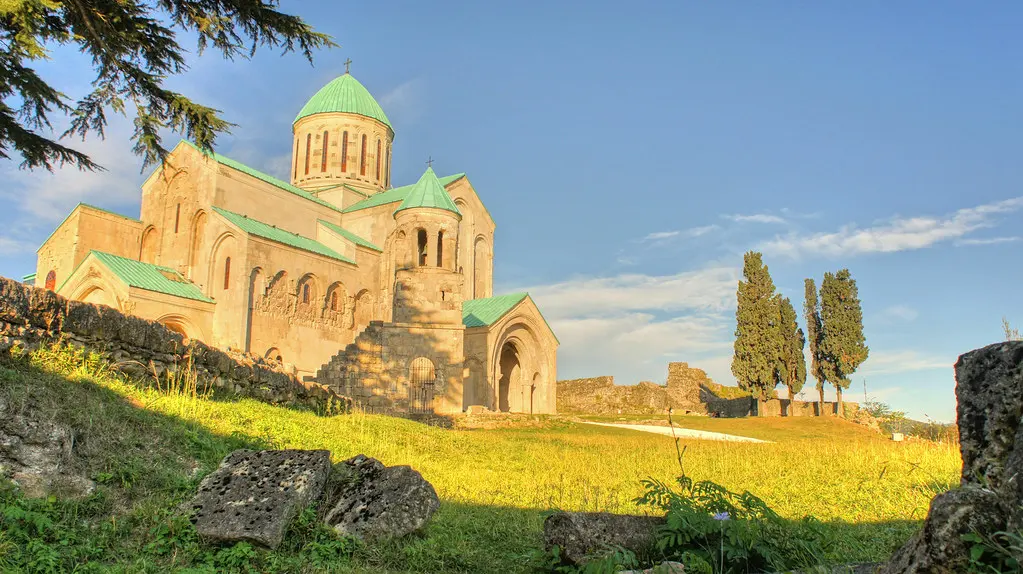
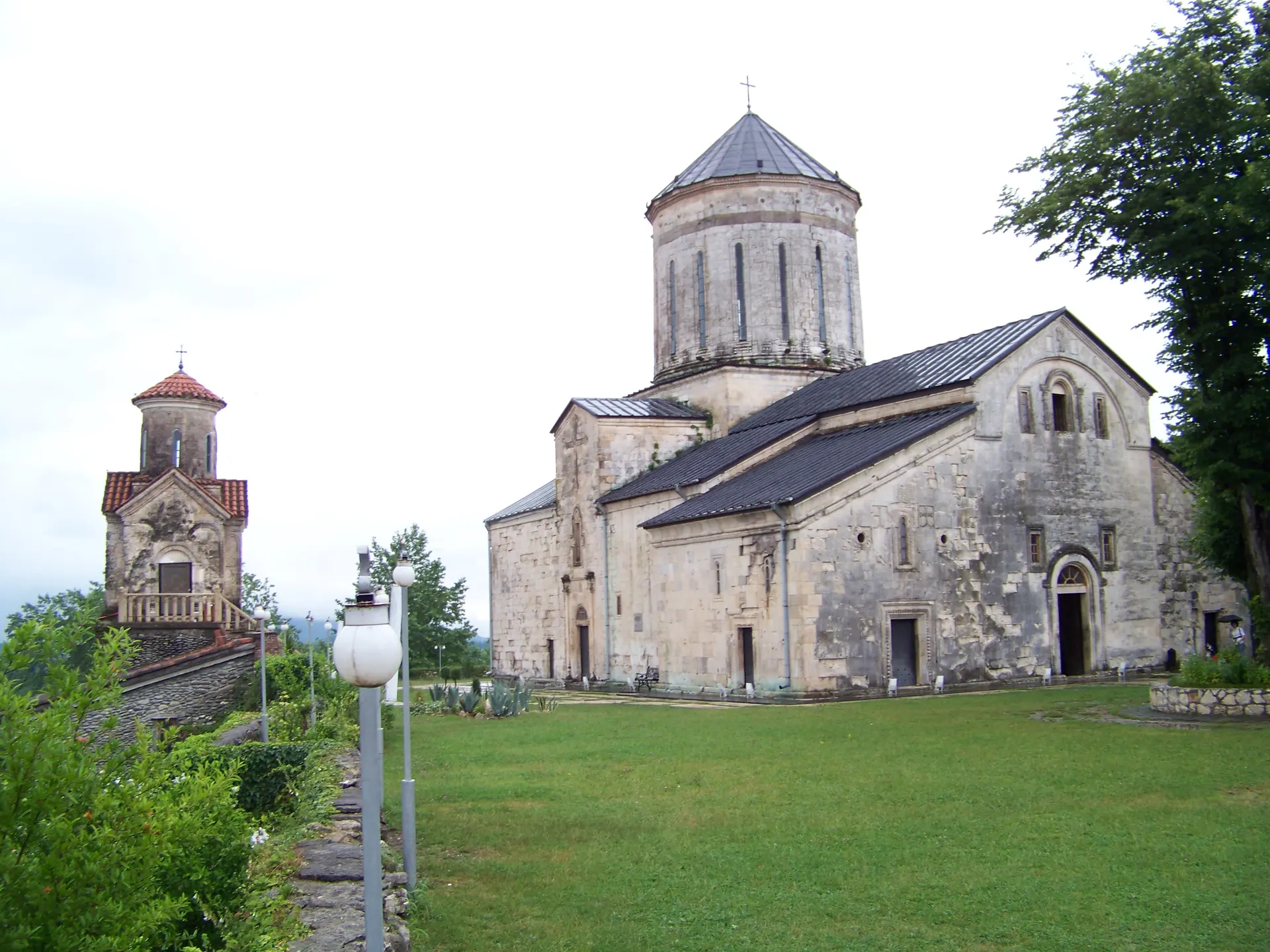
Image of Bagrati Cathedral, Kutaisi. Image source
Visit essentials
A quick read before you go
- Duration
- Plan 30 minutes to one hour for the cathedral itself.
- Access
- The cathedral stands on Ukimerioni Hill in central Kutaisi.
Overview
Some sacred sites hold power because they have endured unchanged. Bagrati Cathedral holds power because it has not.
When King Bagrat III commissioned this cathedral in 1003 CE, he was doing more than building a church. He was giving architectural form to a newly unified Georgia, creating a spiritual center for a kingdom that had just emerged from fragmentation. For nearly seven centuries, the cathedral stood as witness to coronations, liturgies, and the rhythms of Orthodox life in the western Georgian highlands.
Then, in 1692, Ottoman cannon fire brought the dome crashing down. For over three hundred years, the cathedral remained a roofless ruin, its walls open to weather and time. Yet something persisted. Local faithful continued to visit. The memory of what had been, and the hope of what might be restored, never entirely faded.
In 2012, after a controversial reconstruction that cost the site its UNESCO World Heritage status, Bagrati Cathedral was reconsecrated. The Georgian Orthodox Patriarch declared it restored to God and to the Georgian people. Today, hieromonks celebrate the Divine Liturgy within walls that are both ancient and new, and pilgrims climb the hill as they have for a thousand years.
Whether you view the reconstruction as restoration or destruction, Bagrati confronts you with a question sacred sites rarely ask so directly: What matters more, the stones or the faith they serve?
Why this place is sacred
The decision to build here was not incidental. Ukimerioni Hill had already served as a royal citadel since the 6th century, a place of power overlooking the Rioni River valley. When Bagrat III chose this site for his cathedral, he was layering sacred upon political, creating a spiritual crown for Georgia's new unity.
The cathedral's dedication to the Dormition of the Virgin Mary connects it to one of the most profound mysteries in Orthodox Christianity: Mary's passage from earthly life to heavenly glory. In Orthodox understanding, the Dormition is not death but transformation, not ending but translation to a higher realm. This theology of death-and-resurrection has proven strangely apt for a building that would itself experience death and resurrection.
King David IV the Builder was crowned here in 1089, linking spiritual authority with earthly rule in a ceremony witnessed by the medieval city gathered below. For generations, the cathedral served as the episcopal seat for the diocese of Kutaisi, a center from which Orthodox faith radiated through western Georgia. The walls absorbed centuries of incense, prayer, and the chanting of the Divine Liturgy.
When Ottoman forces destroyed the dome in 1692, they created not an ending but a wound that would not heal. The ruined cathedral became a symbol of loss, occupation, and longing. Locals continued to visit the roofless walls, maintaining a connection to what had been. The ruin stood as both accusation and promise.
The reconstruction completed in 2012 brought the theological theme full circle. Whatever architectural purists may think, for Georgian believers the rebuilt cathedral demonstrates that faith outlasts destruction, that what matters about a sacred place cannot be permanently destroyed. The new dome rising above ancient foundations embodies the Dormition itself: passage through apparent death into renewed life.
Bagrati Cathedral was built to serve multiple intertwined purposes. Most immediately, it was the episcopal seat for the diocese of Kutaisi, the center of ecclesiastical administration and liturgical life for western Georgia. But its construction under Bagrat III gave it deeper meaning: the cathedral commemorated and symbolized the unification of Georgia into a single kingdom after centuries of fragmentation. Sacred architecture and political identity were inseparable.
The building proclaimed that Georgian unity was not merely political arrangement but divinely blessed reality, sealed in stone.
From its completion around 1003 until 1692, the cathedral functioned as intended: a working Orthodox cathedral hosting the rhythms of daily, weekly, and annual liturgy, while also serving as site for coronations and other ceremonies linking spiritual and temporal authority. The Ottoman destruction ended this chapter without providing closure.
The centuries of ruination created a different kind of meaning. The cathedral became a symbol of Georgian suffering under foreign domination and a focus for hopes of restoration. Archaeological work in the 20th century recovered fragments of floor mosaics, frescoes, and carved stone, revealing glimpses of the original splendor.
The 2012 reconstruction, led by Italian architect Andrea Bruno, sparked fierce debate. UNESCO, which had inscribed the site in 1994, placed it on the danger list in 2010 and ultimately removed Bagrati from World Heritage status in 2017, while retaining nearby Gelati Monastery. The use of reinforced concrete, the introduction of modern materials, and the scale of intervention irreversibly altered the site's historical authenticity as preservation professionals define it.
But the Georgian Orthodox Church and many Georgians saw the matter differently. For them, the cathedral's purpose was never to serve as an archaeological specimen but to house the living faith. The reconstruction fulfilled a national and spiritual longing that stretched back three centuries.
Experience and orientation
The approach prepares you for what follows. Whether you walk from Kutaisi's center or arrive by taxi, the final ascent brings you to a height from which the city spreads below, the Rioni River winding through its valley, mountains rising in the distance. You have left the ordinary world. The hilltop is set apart.
Entering the cathedral, the scale impresses first. The vaulted ceilings soar overhead, supported by massive pillars that anchor the space. Light enters through windows placed to illuminate the interior without harsh glare. The proportions create a sense of being held within something larger than human scale, designed to lift the spirit upward.
The atmosphere is distinctly contemplative. This is an active place of worship, not a museum, and visitors often find themselves lowering their voices, slowing their pace, responding to a quality of stillness that seems intrinsic to the space. Candles flicker before icons. The scent of incense lingers.
Those familiar with medieval Orthodox churches may notice something different here. The reconstruction means that not everything carries the patina of centuries. Stone-clad reinforced concrete meets original limestone. Some visitors appreciate the restored grandeur; others mourn the loss of what heritage professionals call authenticity. Both responses are honest.
The most commonly reported experience is simply peace. A settling of the mind that comes from the combination of physical elevation, sacred purpose, and architectural scale. For those who come with specific intentions, whether prayer, reflection on personal transitions, or seeking connection with Georgian spiritual heritage, the cathedral provides a receptive container.
Evening visits offer something special. The cathedral is illuminated at night, glowing against the darkened sky, visible from across Kutaisi. Standing outside as the light fades and the building emerges in golden light, you understand why Bagrat III chose this hill.
If you come seeking more than photographs, consider how you approach. The walk from the city center takes twenty to thirty minutes, and the gradual ascent serves as a kind of pilgrimage in miniature. Arriving by taxi is faster but sacrifices the physical preparation of climbing.
Once inside, resist the temptation to document before you experience. Find a place to sit or stand that allows you to simply be present with the space. Notice how your body responds to the scale, the light, the silence. If the cathedral is empty, the quiet becomes especially palpable.
The visible layers of history reward attention. Fragments of original floor mosaics remain. Stone carvings, including a relief of Jacob wrestling the Angel on the west wall, survived the centuries. Traces of frescoes depicting the Virgin Mary testify to what once covered the walls. These remnants, held within the reconstructed whole, speak of continuity through rupture.
If you are present during a service, whether weekday liturgy or Sunday celebration, you encounter the cathedral in its intended mode: alive with chanting, candlelight, the movements of priest and faithful. Non-Orthodox visitors are welcome to observe respectfully, standing at the back or along the sides, witnessing a tradition that has continued in Georgia for over sixteen centuries.
Context and lineage
The story of Bagrati Cathedral begins with the reunification of Georgia. Through the early medieval period, Georgian lands had been divided among competing kingdoms and principalities. Bagrat III, through a combination of inheritance, diplomacy, and conquest, brought these fragmented territories under single rule, becoming the first king of a unified Georgia.
To celebrate and consecrate this achievement, Bagrat commissioned a cathedral that would stand as the spiritual center of the new kingdom. Construction began around 1001 CE. An inscription on the east facade glorifies Bagrat and notes his reception of the Byzantine title Kuropalates in that year. A second inscription on the north wall records the completion of the floor in 1003 CE.
The cathedral's design drew on the sophisticated architectural tradition that had developed in the Georgian highlands, particularly in the region of Tao under David III Kurapalates, with whom Bagrat had close relations. The triconch cross-domed plan, with four freestanding piers supporting a tall drum and pointed dome, represented the culmination of medieval Georgian sacred architecture.
Bagrat III did not live to see his dynasty's greatest ruler. His descendant David IV, known as David the Builder, was crowned in this cathedral in 1089. David would drive out the Seljuk Turks, capture Tbilisi, and transform Georgia into a regional power. His coronation at Bagrati linked spiritual blessing with military and political revival, a memory that still resonates in Georgian consciousness.
For nearly seven centuries, Bagrati Cathedral served as the living heart of Georgian Orthodox life in the Imereti region. Bishops administered the diocese from its precincts. Monarchs were crowned within its walls. The faithful gathered for feasts and fasts, for baptisms and burials, for the daily rhythms of Orthodox worship.
The Ottoman destruction in 1692 ended this continuity without erasing it from memory. Through the centuries that followed, including Russian imperial rule, Soviet atheism, and post-Soviet transition, the ruined cathedral remained a symbol of Georgian identity and faith. Local people continued to visit, maintaining a thread of connection.
The 2012 reconstruction and reconsecration by Patriarch Ilia II formally restored the cathedral to active worship. Today, hieromonks from the monastery on the cathedral grounds celebrate regular liturgies, and the faithful once again climb the hill as Georgians have done for a millennium.
Bagrat III
historical
First king of unified Georgia (978-1014), who commissioned the cathedral to celebrate national unity. The building bears his name and commemorates his achievement in bringing the Georgian lands under single rule.
David IV the Builder
historical
Crowned at Bagrati Cathedral in 1089, David became one of Georgia's greatest kings and is venerated as a saint in the Georgian Orthodox Church. His coronation here linked spiritual authority with his program of national revival.
Theotokos (Virgin Mary)
deity
The cathedral is dedicated to the Dormition of the Mother of God (Mariamoba), the Orthodox celebration of Mary's passage from earthly life. Georgia itself is traditionally called 'the lot of the Mother of God,' deepening the cathedral's Marian significance.
Andrea Bruno
historical
Italian architect who led the controversial 2012 reconstruction. His approach prioritized restoring the cathedral's liturgical function over strict preservation of ruins, creating the structure that stands today.
Traditions and practice
Throughout its medieval history, Bagrati Cathedral hosted the full range of Orthodox liturgical practice: the Divine Liturgy, the cycle of daily offices, the great feasts of the church year. Royal coronations added a dimension of civil ceremony, with kings receiving their crowns before the altar as visible signs of divine sanction.
The cathedral's dedication to the Dormition meant that Mariamoba, celebrated on August 28, was the principal feast. Processions, special liturgies, and the gathering of pilgrims from across the diocese marked this celebration of the Virgin's translation to heaven.
The centuries of ruination suspended but did not end traditional practice. During the Soviet period, organized religion faced severe restrictions throughout Georgia, though the faithful found ways to maintain devotion. The cathedral grounds, even in ruins, remained a site of quiet pilgrimage.
Today, the reconstructed cathedral hosts regular Orthodox services celebrated by the monastic community. The monastery on the cathedral grounds provides the hieromonks who maintain liturgical life. Major Orthodox feasts, particularly the Dormition, draw larger gatherings.
The restored interior allows full liturgical function: the altar, the iconostasis, the space for the faithful to stand (Orthodox churches traditionally have no pews). Candles may be purchased and lit before icons. The faithful venerate icons with kisses and prostrations. The atmosphere during services combines ancient chant, incense, and the movement of clergy in vestments with the participation of local believers.
For Georgian Orthodox Christians, attending liturgy at Bagrati carries particular resonance. This is not simply a parish church but a cathedral freighted with national and spiritual meaning, restored against odds, serving once again the purpose for which it was built.
If you are not Orthodox but wish to engage meaningfully with Bagrati Cathedral, consider these approaches.
Arrive outside service times if you seek silence and personal reflection. The cathedral is open for prayer and contemplation throughout the day. Find a place to sit or stand that allows you to take in the scale and atmosphere without interruption. Notice what arises in the stillness.
If you wish to witness the living tradition, attend a service. Sunday liturgy draws the most participants, but weekday services offer a more intimate experience. Stand quietly at the back or along the walls, observing the movements and sounds of Orthodox worship. You need not cross yourself or venerate icons if these gestures feel inappropriate, but maintain respectful silence and attention.
Lighting a candle is a simple practice open to anyone. Candles may be purchased near the entrance. Light one and place it before an icon with whatever intention you bring. The gesture requires no particular belief, only sincerity.
Georgian Orthodox Christianity
ActiveBagrati Cathedral holds profound significance for Georgian Orthodox Christianity. As the episcopal seat for the diocese of Kutaisi throughout the medieval period, it served as the center of Orthodox life for western Georgia. Its dedication to the Dormition of the Mother of God connects it to one of the great feasts of the Orthodox calendar and to Georgia's special relationship with the Theotokos, in whose lot the nation is traditionally counted. The coronation of King David the Builder here in 1089 linked spiritual and temporal authority in a ceremony still remembered. The cathedral's destruction by Ottoman forces and its reconstruction in 2012 are understood within a narrative of Christian perseverance through suffering.
The cathedral hosts regular Orthodox liturgies celebrated by hieromonks from the monastery on the grounds. The Divine Liturgy follows the ancient Byzantine rite in the Georgian liturgical tradition. Mariamoba (Dormition, August 28) is the principal feast. The faithful light candles, venerate icons, receive Holy Communion, and participate in the movements and prayers that have structured Orthodox worship for centuries. The cathedral serves local parishioners, Georgian pilgrims, and visitors seeking connection with this living tradition.
Perspectives and open questions
Bagrati Cathedral invites reflection on questions that have no easy answers. What makes a sacred site authentic? Can destruction be undone? Does heritage preservation or living worship better serve a building's purpose? Different perspectives offer genuine insight while reaching different conclusions. The cathedral is large enough to contain these tensions.
Scholarly perspective
Art historians and archaeologists recognize Bagrati Cathedral as a masterpiece of medieval Georgian architecture. The triconch cross-domed design, the sophisticated stonework, the floor mosaics and carved elements recovered from the ruins all testify to the artistic achievement of 11th-century Georgia. The site's importance for understanding medieval Georgian construction techniques and decorative programs is beyond dispute.
The 2012 reconstruction has been critically received by heritage professionals. The Venice Charter and UNESCO's operational guidelines emphasize authenticity as a core criterion for World Heritage status. The use of reinforced concrete, the introduction of modern materials visible in the structure, and the scale of intervention permanently altered the relationship between original fabric and reconstruction. UNESCO's 2017 decision to delist Bagrati while retaining Gelati Monastery established a precedent for how full reconstruction compromises World Heritage values.
Archaeological work prior to reconstruction recovered significant elements: floor mosaics showing Byzantine parallels, ceramic antefixes inscribed with the names of King George I and Bishop Antony Sagirisdze, fragments of frescoes depicting the Virgin Mary, the remarkable relief of Jacob wrestling the Angel. These fragments, now incorporated into the reconstructed whole, offer glimpses of what medieval visitors would have experienced.
Living and traditional perspectives
For the Georgian Orthodox Church and for many Georgian believers, the question of authenticity looks very different. A cathedral exists to house the Divine Liturgy, to provide a space where heaven and earth meet in worship. A roofless ruin cannot fulfill this purpose. The reconstruction restored the building to its proper function.
Patriarch Ilia II consecrated the restored cathedral in 2012, declaring it returned to God and to the Georgian people. From this perspective, the cathedral had been wounded by foreign invaders and healed by faithful restoration. The stones matter, but the faith they serve matters more. Medieval Georgians would have rebuilt their cathedral if they could; modern Georgians did.
The cathedral's dedication to the Dormition adds theological depth to this perspective. The Dormition celebrates Mary's passage through apparent death into resurrection glory. A cathedral dedicated to this mystery, destroyed and rebuilt, enacts the very transformation it commemorates. What heritage professionals see as loss of authenticity, believers may see as witness to resurrection.
Alternative interpretations
Some visitors and spiritual seekers appreciate Bagrati's hilltop position as a liminal space, a thin place where the boundary between ordinary and sacred feels more permeable. The commanding views, the elevation above the city, the sense of being set apart all contribute to this quality.
The cathedral's history of destruction and resurrection resonates with patterns found across spiritual traditions: the death-and-rebirth of initiation, the phoenix rising from ashes, the theological rhythms of crucifixion and resurrection. Whether or not visitors hold to any particular tradition, the site invites meditation on impermanence, renewal, and what persists through destruction.
The controversy over preservation versus reconstruction itself becomes a kind of spiritual question. What is essential and what is accidental in sacred architecture? If the stones are replaced but the prayers continue, is it the same cathedral? These are not merely academic debates but questions about the nature of sacred presence.
Open questions
Genuine mysteries remain about Bagrati Cathedral's medieval life. The specific ceremonies performed at royal coronations here are not fully documented. What relics or sacred objects were housed in the cathedral during its centuries of active use? How did the faithful maintain devotion to the ruined site during the centuries of Ottoman influence and later Russian imperial and Soviet rule?
The extent and nature of the original frescoes and decorative program can only be inferred from fragments. What stories did these images tell to medieval worshippers? How did the complete interior, with its mosaics, carvings, and painted walls, shape the experience of the Divine Liturgy?
The deeper question of how the reconstruction will age remains open. Will the new materials and the reconstructed dome acquire, over generations, the patina of use and prayer? Or will the distinction between original and modern remain visible and felt? Only time will tell.
Plan your visit
Access and arrival
The cathedral stands on Ukimerioni Hill in central Kutaisi. From the Colchis Fountain in the city center, the walk takes 20-30 minutes uphill. Taxis are readily available and cost approximately 5-7 Georgian Lari. The cathedral is visible from much of the city, so navigation is straightforward. Entry is free; donations are appreciated.
Kutaisi offers lodging at all price points, from budget guesthouses to comfortable hotels. Staying in the city center allows easy walking access to Bagrati. For those seeking deeper engagement with Georgian Orthodox spirituality, inquiring locally about monastery guesthouses may be worthwhile, though facilities are modest and typically intended for pilgrims rather than tourists.
Respectful visit
Modest dress is required for all visitors. Shoulders and knees should be covered. Avoid tight or revealing clothing. Women must cover their heads inside the cathedral; scarves are often available at the entrance if you have not brought one. Men should remove hats upon entering. Comfortable walking shoes are advisable for the hilltop terrain.
Photography is generally permitted outside of services. During liturgy, photography may be restricted; look for signs or ask clergy. Do not use flash. Do not photograph clergy or worshippers without permission. Be present before being productive with your camera.
Candles may be purchased and lit before icons; the proceeds support the cathedral. Donations for the maintenance of the building and the work of the monastic community are appreciated. If you receive hospitality, such as being invited to share blessed bread after a service, receive it graciously.
Entry is free. There are no formal restrictions on visiting outside service times, but respect for the sacred space is expected at all hours. Certain areas near the altar may be accessible only to clergy. The reconstructed portions of the cathedral are delicate; do not touch or lean against the walls.
Bagrati Cathedral is an active place of worship, not a museum. Behavior appropriate to a sacred space is expected. During services, do not walk through the congregation, do not photograph clergy or worshippers without permission, and do not interrupt prayers.
Orthodox practice includes gender-specific customs. Women should cover their heads within the cathedral; scarves are often available at the entrance. Both men and women should dress modestly, with shoulders and knees covered. Men should remove hats upon entering.
The tension between the cathedral's role as heritage site and active church is real. Respect that for those who worship here, this is not primarily a tourist attraction but the house of God. Adjust your behavior accordingly.
Current practical details
Address
Bagrati Street, Kutaisi, Georgia
Hours
Hours, fees, and access can change — verify on the official source before you travel. Practical details last checked Jun 2026.
Location
Map loads as you approach this section.
Pilgrim reflections
A portrait of encounter, not a score
Pilgrims describe what they felt, how present they could become, and whether the place would shape a journey. There are no stars and no ranking of traditions.
No reviewed reflections yet
The first pilgrims can help describe the character of being here.
Share a reflection
Available after an account-backed “Been there.” Every reflection is reviewed before publication.
Nearby sacred places
Explore other sacred places in the region. Proximity does not establish access or travel time; check each place’s guidance.
References
Sources consulted for this page. Source categories describe the publication, not a guarantee that every claim is verified. Traditional accounts and outside interpretations may differ.
- 01Bagrati Cathedral - Crossing Frontiers — Courtauld Institute of ArtacademicAcademic art historical analysis with archaeological details
- 02World Heritage Committee inscribes Bagrati Cathedral on List of World Heritage in Danger — UNESCO World Heritage CentreofficialOfficial UNESCO statement on endangered status 2010
- 03Gelati Monastery, Georgia, removed from UNESCO's List of World Heritage in Danger — UNESCO World Heritage Centreofficial2017 decision separating Bagrati from World Heritage status
- 04Reconstructing the Sacred: The Controversial Process of Bagrati Cathedral's Full-scale Restoration and Its World Heritage Delisting — International Journal of Cultural Property (Cambridge Core)academicAcademic peer-reviewed analysis of restoration controversy
- 05Bagrati Cathedral — Wikipedia contributorsencyclopediaComprehensive overview with construction dates and UNESCO history
- 06Georgian Perspectives - Controversial World Culture — Stefan Applis GeographienacademicAnalysis of political and cultural dimensions of restoration controversy
- 07Bagrati Cathedral — Georgia Travel (Official Tourism)guideOfficial Georgian tourism information
- 08Bagrati Cathedral — Georgian Travel GuideguideDetailed visitor information and historical overview
- 09Bagrati Cathedral — Lonely PlanetguideReputable travel publication
- 10Restoration of UNESCO heritage Bagrati cathedral — DMM EngineeringSource contextProject documentation from Andrea Bruno's engineering partner
Photo gallery
3 curated photos
Share a photo
Help visitors recognize Bagrati Cathedral, Kutaisi. Every submission is reviewed before publication.