Arles
Where Roman spectacle became Christian burial ground became medieval pilgrimage's first step toward Santiago
Understand sacred places, explore living traditions, and learn how to engage respectfully with Pilgrim Map.
Access has not been verified. Check current local guidance before planning a visit.
Arles, Bouches-du-Rhône, France
Read the sources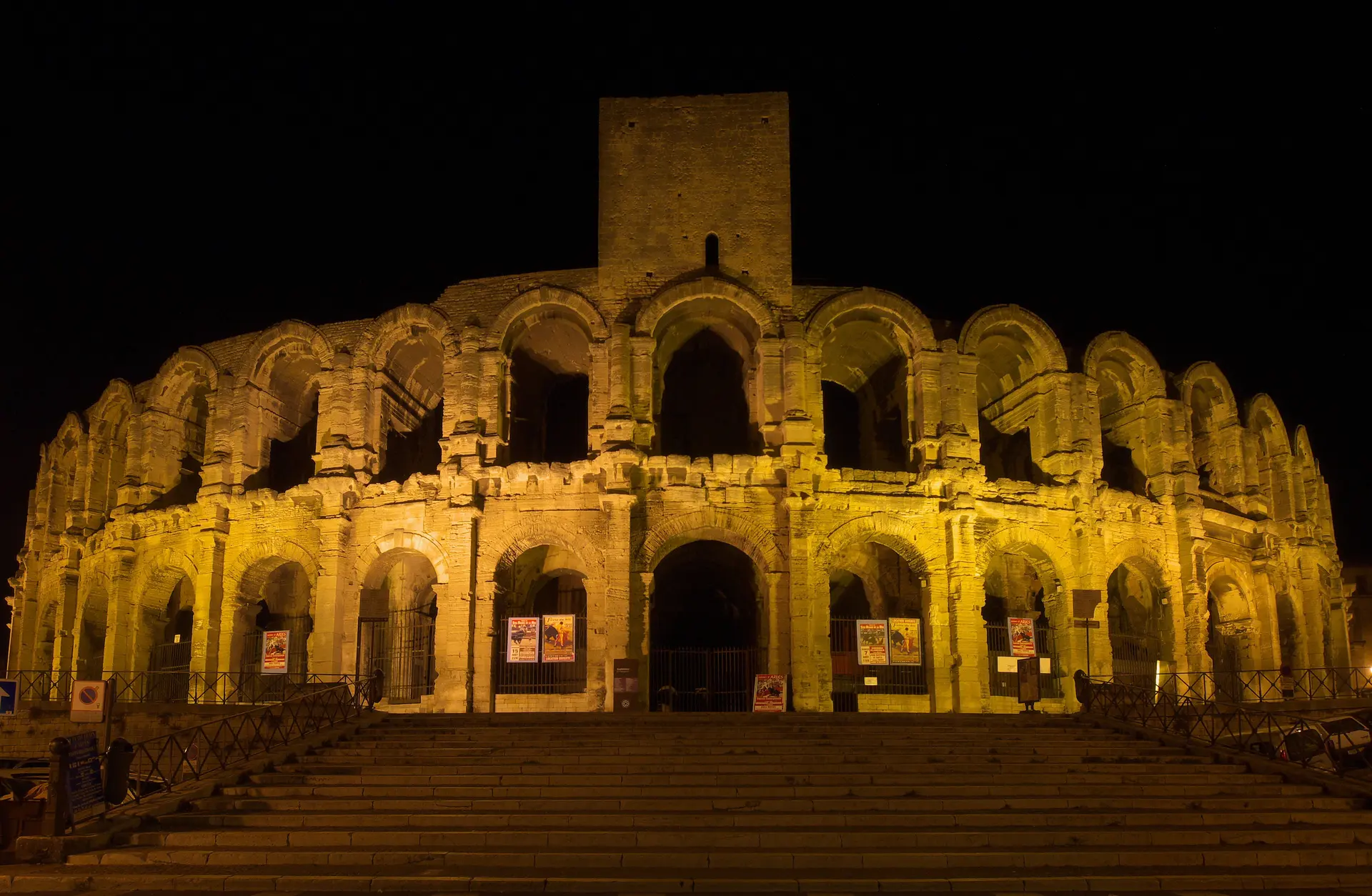
Visit essentials
A quick read before you go
- Duration
- Half day minimum for essential sites.
- Etiquette
- Saint-Trophime is an active church; respect services and dress modestly.
Overview
Rome’s ‘Little Rome of the Gauls’ transplanted a complete monumental city to Provence: amphitheatre, theatre, forum, and baths intended to civilize Gaul. Arles then became Christian sacred ground after Saint Genesius’s martyrdom in 303 CE and, according to legend, Christ’s consecration of the necropolis. Bodies arrived from across Europe for burial among saints, with sarcophagi stacked three deep in the Alyscamps; Late Antique church councils met under Constantine’s patronage.
Medieval Arles became the Via Tolosana starting point for Santiago de Compostela, and Saint-Trophime’s Romanesque portal confronted departing pilgrims with the Last Judgment. Today the route is walked again, the amphitheatre hosts spectacles, and the sarcophagus avenue invites meditation on mortality. Arles remains a palimpsest, each sacred era visible beneath the next.
Why this place is sacred
What makes Arles thin is the visible continuity of sacred function across radical changes in belief. The Romans built an amphitheatre where twenty thousand watched combat and execution; the Christians built a necropolis where thousands sought burial near the martyred Genesius. The forum's cryptoporticus went underground; the imperial baths served Constantine as he made Christianity official. Each transformation preserved the city's function as sacred center while changing entirely what that sacredness meant.
The Alyscamps—the Elysian Fields in Provençal—carries the ancient name for the land of the blessed dead into Christian meaning. The legend of Christ's personal consecration of the site when Genesius's body arrived claims divine sanction for the transformation, asserting that the Christian god himself approved the shift from pagan necropolis to holy burial ground.
Saint-Trophime's portal, with its sculpted Last Judgment, brought the final threshold into architectural presence: pilgrims departing for Compostela passed beneath the image of what awaited them at journey's end. Arles is thin because it makes visible the Western tradition's layered history of negotiating death, meaning, and transcendence.
Roman colony demonstrating the urbanization and religious organization of conquered Gaul. Imperial seat during Constantine's rule. Christian pilgrimage and burial site.
Greek trading settlement (Theline) to Gallic town (Arelate) to Roman colony rewarded by Julius Caesar. Imperial capital under Constantine with church councils establishing Christian orthodoxy. Major medieval pilgrimage center on the Via Tolosana. Artistic pilgrimage site for Van Gogh and Gauguin. Contemporary heritage tourism with living pilgrimage tradition.
Experience and orientation
Begin where the Romans built for spectacle. The amphitheatre rises above the modern city, two levels of sixty arches each, its ellipse designed to focus twenty thousand gazes on combat and death. In the arena's silence today, the modern visitor can imagine the roar that once filled this space, the very different relationship to mortality that spectacle expressed. The Romans built to witness death; the Christians who followed sought to sanctify it.
Walk to the Alyscamps, the avenue of sarcophagi, and the mood shifts entirely. Stone coffins line the path toward the Romanesque Church of Saint-Honorat. Once this avenue extended much farther, before Renaissance looting scattered its tombs. What remains is enough: the presence of the dead, the aspiration toward holy ground, the belief that location of burial mattered for salvation. The Alyscamps offers one of Europe's most evocative encounters with medieval death culture. Return to the city center and enter Saint-Trophime.
The Romanesque portal confronts arriving visitors with the Last Judgment: Christ in majesty, the saved and the damned, the stakes of life made stone. Inside, the cloister offers contemplative enclosure, its capitals carved with scenes from scripture and the lives of saints. This is where pilgrims received their credentials before departing for Compostela—and where they can still do so today. The journey continues.
The amphitheatre and Roman theatre are central, walkable from the main squares. The cryptoporticus lies beneath the city hall—an underground experience requiring separate entry. The Baths of Constantine are along the Rhône. The Alyscamps is a short walk southeast of the center along the ancient Via Aurelia. Saint-Trophime and its cloister face Place de la République. A full day allows thorough exploration; a half day covers the essentials.
Context and lineage
The site was settled before history recorded it. Greeks called it Theline. Gallic tribes took it and named it Arelate. When Rome's civil war divided the Mediterranean, Arles chose Julius Caesar while Marseille chose Pompey. Caesar won, punished Marseille, rewarded Arles. Veterans of the Sixth Legion settled there. The Romans built to civilize: amphitheatre for spectacle, theatre for drama, forum for civic life, baths for bodily culture, roads for connection.
Arles became 'Little Rome of the Gauls,' a model of what conquered territory could become. Then Christianity transformed everything. The martyrdom of Genesius in 303 CE and the legend of Christ's personal appearance to consecrate his burial place made the Alyscamps one of Europe's most desired cemeteries. Bodies arrived by boat down the Rhône. The wealthy paid for burial near the saints. Constantine made Arles an imperial residence; church councils met to define orthodoxy.
When medieval pilgrimage to Santiago de Compostela ordered Christian geography, Arles became a starting point. The church of Saint-Trophime—named for the legendary first bishop, disciple of Paul—sent pilgrims west with the Last Judgment carved above the door.
Greek trading settlement. Gallic tribal town. Roman veteran colony. Imperial capital. Christian pilgrimage center. Medieval gateway to Compostela. Modern heritage site with living traditions.
Saint Genesius of Arles
Martyr whose death consecrated the Alyscamps
Saint Trophimus
Legendary first bishop, apostolic connection
Constantine the Great
Emperor who made Arles an imperial capital
Traditions and practice
Roman spectacles—gladiatorial combat, animal hunts, theatrical performances. Christian burial in the Alyscamps with transportation of bodies from across Europe. Medieval pilgrimage on the Via Tolosana to Santiago de Compostela. Church councils establishing Christian doctrine.
Mass and liturgical services at Saint-Trophime Cathedral. Pilgrims walk the Via Tolosana to Compostela and can obtain credential stamps at the cloister, Alyscamps, and Tourist Office. The amphitheatre hosts bullfights (controversial) and concerts. Various monuments host cultural events year-round. The Van Gogh trail connects artistic pilgrimage to the painter's time in Arles.
Begin at Saint-Trophime to understand the pilgrimage tradition that still animates the city. Study the portal's Last Judgment—the medieval pilgrim's reminder of ultimate stakes. Walk the cloister contemplatively. Then visit the Alyscamps in early morning or late afternoon, when the avenue of tombs has few visitors and the light is gentle. Let the sarcophagi prompt reflection on mortality and the medieval longing for holy burial. The amphitheatre offers encounter with an entirely different death culture—Roman spectacle rather than Christian sanctification.
The contrast illuminates how profoundly worldview shapes our relationship to mortality.
Roman Civic Religion
HistoricalArles was established as a Roman colony in 45 BCE and became one of the most important cities in Roman Gaul. The monumental architecture—amphitheatre, theatre, forum, baths—expressed Roman civic religion's integration of spectacle, politics, and the sacred. The amphitheatre's gladiatorial combats were religious as well as entertainment; death in the arena had ritual meaning.
Public spectacles in the amphitheatre including gladiatorial combat and animal hunts. Theatrical performances with religious dimensions. Temple worship. Funeral rites at the necropolis along the Via Aurelia.
Early Christian Burial Cult
HistoricalThe martyrdom of Saint Genesius in 303 CE and the legend of Christ's miraculous consecration transformed the Alyscamps into one of medieval Europe's most desired burial grounds. Bodies were shipped from across the continent for interment near the saints. After the Vatican, Arles has the largest collection of Early Christian sarcophagi in the world.
Christian burial in the Alyscamps necropolis. Transportation of bodies via the Rhône. Veneration at martyrs' tombs. Pilgrimage to burial sites.
Roman Catholic (Pilgrimage to Santiago)
ActiveSaint-Trophime Cathedral marks the starting point of the Via Tolosana, one of the four main pilgrimage routes through France to Santiago de Compostela. The church is dedicated to the legendary first bishop of Arles. The Romanesque portal, completed around 1180, depicts the Last Judgment. Frederick Barbarossa was crowned King of Arles here in 1178.
Mass and liturgical services. Pilgrims obtain credential stamps at the cloister, Alyscamps, and Tourist Office. The Via Tolosana is walked by pilgrims continuing the medieval tradition.
Perspectives and open questions
Arles invites interpretation as archaeological ensemble, as documentation of religious transformation, and as a living threshold where pilgrimage continues.
Scholarly perspective
Historians and archaeologists view Arles as among the most important Roman sites in France, preserving exceptional examples of urban architecture that document Roman civilization's transplantation to Gaul. The city's transformation from Roman to Christian to medieval provides material evidence for the great transitions of Western history. UNESCO recognition acknowledges the monument ensemble's outstanding universal value. The Romanesque sculpture of Saint-Trophime is considered among the finest in France and was influential across the medieval Mediterranean.
Living and traditional perspectives
The Christian tradition traces Arles's apostolic foundation through Saint Trophimus and venerates the saints and martyrs of the Alyscamps. The Via Tolosana remains a living pilgrimage route where faith continues to motivate walking. Saint-Trophime functions as both parish church and pilgrimage station. The tradition holds that burial near the saints mattered for salvation—a belief that made the Alyscamps one of medieval Europe's most desired cemeteries.
Alternative interpretations
Some visitors approach the monuments with interest in ancient sacred geometry, ley lines, or energy. Van Gogh and Gauguin came seeking light and color for their art, adding an artistic-spiritual dimension to the city's meanings. These contemporary engagements represent modern projections onto ancient sites rather than recovery of ancient practice.
Open questions
What sacred sites preceded Roman construction? How did the early Christian community understand the relationship between Roman and Christian use of the necropolis? What was the full extent of the Alyscamps before Renaissance looting? What beliefs and practices attended burial there that documentation does not preserve?
Plan your visit
Access and arrival
Arles offers accommodation ranging from historic hotels to modern chains to characterful guesthouses. The center provides atmosphere; peripheral options offer parking and quiet. Book ahead during festivals.
Respectful visit
Modest dress appropriate for church visits at Saint-Trophime (covered shoulders, appropriate length). Comfortable walking clothes for outdoor sites.
Generally permitted at most sites. Flash and tripods may be restricted in churches and museums. Check current regulations.
Candles can be lit at Saint-Trophime Cathedral. Donations support preservation.
Respect services at Saint-Trophime. Do not touch ancient sarcophagi or climb monuments. Various sites have different opening hours and entry fees.
The bullfights in the amphitheatre are traditional but controversial; some visitors avoid them on ethical grounds. Respect services at Saint-Trophime. The Alyscamps requires modest walking; wear appropriate shoes. Summer heat can be intense.
Current practical details
Address
Arles, France
Hours, fees, and access can change — verify on the official source before you travel. Practical details last checked Jun 2026.
Location
Map loads as you approach this section.
Pilgrim reflections
A portrait of encounter, not a score
Pilgrims describe what they felt, how present they could become, and whether the place would shape a journey. There are no stars and no ranking of traditions.
No reviewed reflections yet
The first pilgrims can help describe the character of being here.
Share a reflection
Available after an account-backed “Been there.” Every reflection is reviewed before publication.
Nearby sacred places
Explore other sacred places in the region. Proximity does not establish access or travel time; check each place’s guidance.

Saint-Gilles Abbey Church
Saint-Gilles, Occitanie, France
15.8 km away

Église Notre-Dame-de-la-Mer, Saintes-Maries-de-la-Mer
Saintes-Maries-de-la-Mer, Bouches-du-Rhône, France
29.6 km away
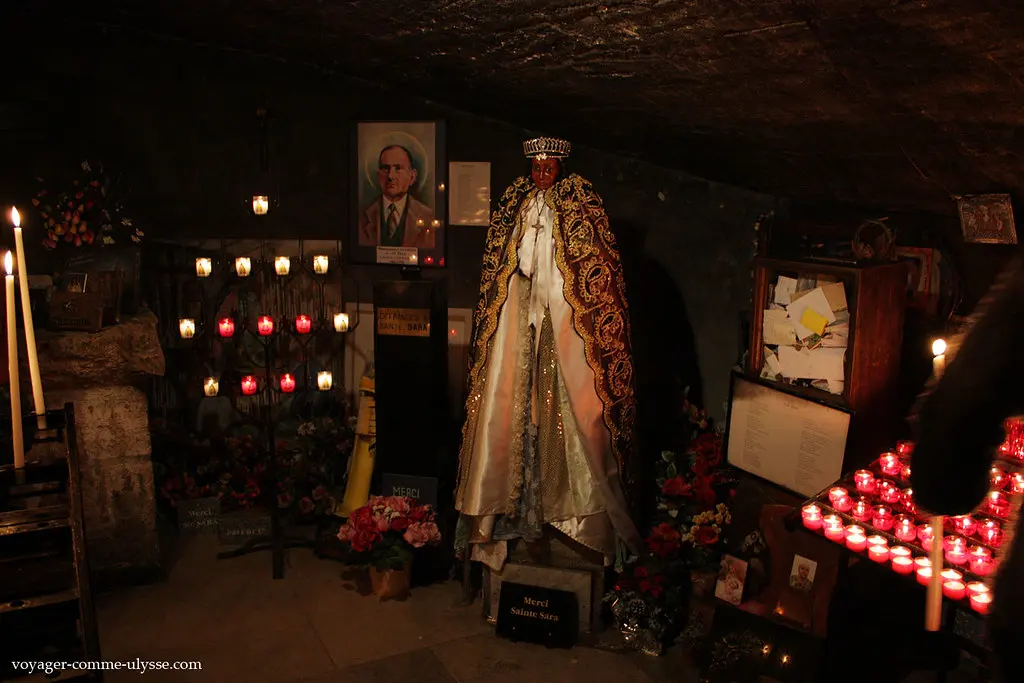
Saint Sarah
Saintes-Maries-de-la-Mer, Bouches-du-Rhône, France
29.6 km away

Church of Our Lady of Good Repos
Montfavet, Vaucluse, France
33.6 km away
References
Sources consulted for this page. Source categories describe the publication, not a guarantee that every claim is verified. Traditional accounts and outside interpretations may differ.
- 01Arles, Roman and Romanesque Monuments — UNESCO World Heritage CentreofficialOfficial World Heritage documentation
- 02Arles, Roman and Romanesque Monuments — Wikipedia contributorsencyclopediaComprehensive overview with citations
- 03Alyscamps — Wikipedia contributorsencyclopediaDetailed necropolis history
- 04Church of St. Trophime, Arles — Wikipedia contributorsencyclopediaCathedral and pilgrimage history
- 05Les Alyscamps – Arles — History HitacademicAccessible historical overview
Photo gallery
3 curated photos
Share a photo
Help visitors recognize Arles. Every submission is reviewed before publication.