Sacred City of Caral-Supe
Where civilization began in the Americas with pyramids built not for war but for gathering around the sacred fire
Understand sacred places, explore living traditions, and learn how to engage respectfully with Pilgrim Map.
Access has not been verified. Check current local guidance before planning a visit.
Supe, Lima, Peru
Read the sources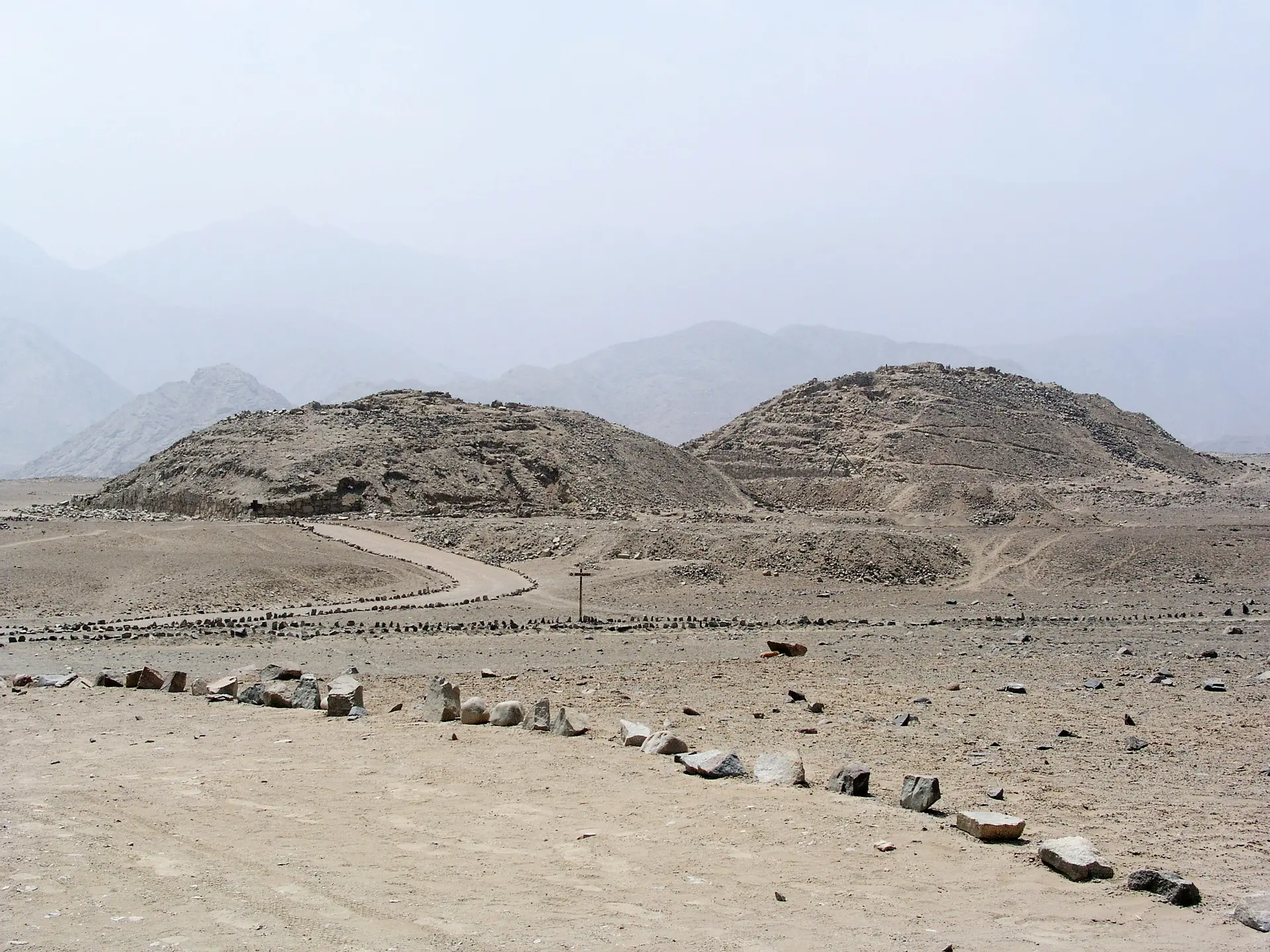
Image of Sacred City of Caral-Supe. Image source · CC-BY-2.5
Visit essentials
A quick read before you go
- Duration
- 4-5 hours at the site including guided tour.
- Etiquette
- As an archaeological site, practical considerations dominate: guided tours mandatory, desert…
Overview
The pyramids of Caral rise from the desert floor of the Supe Valley, their stepped platforms ascending toward ceremonies that ended four thousand years ago. These are among the oldest monumental structures in the Americas—contemporary with the pyramids of Egypt, contemporary with the ziggurats of Mesopotamia—yet built by a civilization that left no evidence of war.
No weapons have been found at Caral. No defensive fortifications. No mutilated bodies or mass graves. Where other early civilizations were organized around military power, Caral was organized around something else: religion, ceremony, music. Archaeologists have found thirty-two flutes carved from pelican and condor bones, thirty-seven cornets from deer and llama remains. They have found fire altars with underground ventilation channels, evidence of offerings burned at the hearts of pyramids.
They have found a standing stone aligned to mark the solstices. They have found quipu—the knotted-string recording devices used millennia later by the Inca—in the oldest known example.
This is what Ruth Shady Solís, the Peruvian archaeologist who has led excavations since 1996, calls 'the sacred city.' Everything uncovered points to a society where religion was not separate from daily life but was the organizing principle of civilization itself. The pyramids were not tombs but ceremonial centers. The plazas were not markets but gathering places for ritual. The music was not entertainment but prayer.
Caral lasted over a thousand years—from approximately 3000 to 1800 BCE—before drought forced its abandonment. Its people did not disappear but resettled at coastal sites, their friezes depicting famine and renewal. What they built in the Supe Valley still stands: evidence that the first civilization in the Americas was built not on conquest but on communion.
Why this place is sacred
The thinness of Caral is the thinness of origins—standing where something began for the first time in human history. This is one of only six places on Earth where complex civilization arose independently. Mesopotamia, Egypt, the Indus Valley, China, Mesoamerica, and here: the Supe Valley of coastal Peru. What emerged here five thousand years ago was not a copy of something developed elsewhere but something genuinely new—an independent human achievement.
What makes Caral's thinness distinctive is the nature of that achievement. Civilizations typically show evidence of warfare from their earliest stages. Weapons, walls, wounds on bones. Caral shows none of this. Excavations spanning decades have found no weapons suitable for war, no fortifications, no evidence of violent death. What they have found instead is evidence of something else holding the community together: religion.
The pyramids contained sacred fire altars—circular pits with underground channels that channeled wind to feed the flames. Offerings were burned in these fires during ceremonies that accompanied the periodic renovation of temples. The amphitheater could seat three hundred people for public rituals. Musical instruments—flutes and cornets carved from the bones of pelicans, condors, deer, and llamas—suggest ceremonies accompanied by sound. The Huanca, a standing stone 2.15 meters tall, was aligned to mark the summer and winter solstices.
Ruth Shady Solís, who has led research at Caral since its scientific discovery in 1994, writes that religion functioned as 'the nexus of cohesion' for this society. There was no separation between sacred and secular; the ideology of the state was religious ideology. People came together not to defend against enemies but to participate in shared ceremony. The pyramids were built not by slaves but by communities investing their labor in what they held sacred.
To stand at Caral is to stand at a question. If civilization can arise from sacred gathering rather than military necessity, what does that mean for how we understand human possibility? The pyramids do not answer the question; they embody it.
The site functioned as a ceremonial center and sacred city for the Norte Chico civilization from approximately 3000 to 1800 BCE. The pyramids served as platforms for sacred fire rituals and offerings. The amphitheater hosted public ceremonies. The community was organized around religious activity, with priests or religious leaders likely directing labor, trade, and social life.
Caral was occupied for approximately 1,200 years before being abandoned around 1800 BCE, likely due to severe drought. The inhabitants resettled at coastal sites such as Vichama, where dramatic friezes depict the famine and hope for renewal. The site remained unknown to the modern world until the late 20th century. Ruth Shady Solís discovered its significance in 1994 and began systematic excavation in 1996. UNESCO inscription in 2009 recognized Caral as the oldest center of civilization in the Americas.
Experience and orientation
The approach to Caral crosses the arid coastal desert of Peru, the Supe Valley appearing as a green ribbon cut by the river through brown landscape. The site itself sits on a dry terrace overlooking the valley—a location chosen not for defense (there was none) but for visibility and access. The pyramids announce themselves from a distance: six major structures rising from the desert floor.
The Pirámide Mayor—the Great Pyramid—dominates the site. Nearly one hundred feet tall with a base spanning roughly four football fields, it served as the primary ceremonial center. Visitors can climb to the summit via designated paths, ascending steps that carry you where priests once presided over sacred fire rituals. At the top, the views extend across the Supe Valley: the green line of the river, the surrounding settlements of the Norte Chico civilization, the coastal desert stretching toward the Pacific.
The guided tour (mandatory) provides essential context. Without it, Caral would be impressive but incomprehensible—ancient structures whose meaning has been lost. With the guide, the site comes alive: here was the sacred fire altar where offerings were burned; here was the amphitheater where three hundred gathered for ceremony; here was the residential quarter where the elite lived near the pyramids; here was found the quipu, the oldest known example of the knotted-string recording system.
The Huanca—the standing stone—rewards attention. This 2.15-meter monolith stands across from one of the pyramids, aligned due north. Its angle to the pyramid summit marks the summer and winter solstices. Astronomical observation was not separate from religion but integral to it: knowing when to hold ceremonies, when to plant, when the seasons would turn.
The small interpretation center provides additional context, but the pyramids themselves are the primary text. They stand where they have stood for five millennia—built by people contemporary with the pharaohs, contemporary with the earliest cities of Sumer, yet entirely independent in their development. The experience is not one of answers but of questions: how was this built? Why with no war? What held them together? The sacred fire altars, the ceremonial music, the public plazas offer partial responses.
The rest remains mystery.
Begin at the interpretation center for context before the guided tour. The tour (mandatory) covers the major pyramids, residential areas, and ceremonial spaces. Climbing the Pirámide Mayor is permitted via designated paths. Allow time to contemplate the Huanca monolith and its astronomical alignments. Bring water, sun protection, and comfortable walking shoes for desert terrain.
Context and lineage
The Norte Chico civilization arose independently in the Supe Valley and neighboring coastal valleys of Peru around 3000 BCE. The people developed agriculture—cotton, squash, beans—and integrated with coastal fishing communities. Unlike other early civilizations, this one developed without ceramics during its peak period and, uniquely, without warfare. The community was organized around religious activity: pyramids with sacred fire altars, ceremonial plazas, public rituals.
When severe drought struck around 1800 BCE, the inhabitants abandoned Caral and resettled at coastal sites like Vichama. The site remained unknown to modern archaeology until Ruth Shady Solís recognized its significance in 1994.
Caral belongs to the Norte Chico civilization, one of six independent cradles of civilization on Earth. The civilization's practices—including the quipu recording system—prefigure later Andean cultures, though thousands of years separate Caral from the Inca. The site represents the foundation from which Andean civilization ultimately developed, though that development followed abandonment and resettlement rather than continuous occupation.
Ruth Shady Solís
Archaeologist and discoverer
Traditions and practice
Sacred fire rituals at altars in pyramids and dwellings, with offerings burned during temple renovations. Ceremonial music performed on flutes carved from pelican and condor bones and cornets from deer and llama bones. Public ceremonies in the amphitheater (capacity 300). Astronomical observation using the Huanca monolith to track solstices. Record-keeping through quipu (knotted strings). The absence of weapons or defensive structures suggests rituals served social cohesion that warfare provided for other civilizations.
No living tradition continues from Caral—the civilization ended around 1800 BCE. The site functions as an archaeological monument. Guided tours (mandatory) provide historical and archaeological context. The experience is contemplative encounter with ancient achievement rather than participation in ongoing practice.
Approach Caral as encounter with a question: what might civilization be if organized around the sacred rather than around war? Climb the Pirámide Mayor for the view the priests would have seen. Observe the sacred fire altars and imagine offerings burning there five thousand years ago. Consider the bone flutes and cornets—imagine the music echoing across these plazas. The site offers not answers but the evidence from which answers might be contemplated.
Norte Chico/Caral-Supe Civilization
HistoricalThe Norte Chico civilization flourished from approximately 3000-1800 BCE, making Caral one of only six independent cradles of civilization on Earth. What distinguishes this civilization is the complete absence of evidence for warfare. The society was organized around religion: pyramids with sacred fire altars, ceremonial plazas, public rituals, astronomical observation. Religion functioned as 'the nexus of cohesion,' with no separation between sacred and secular. The civilization lasted over a thousand years before drought forced abandonment.
Sacred fire rituals at altars in pyramids and dwellings, with burnt offerings accompanying major temple renovations. Ceremonial music performed on 32 flutes carved from pelican and condor bones and 37 cornets from deer and llama bones. Public gatherings in the amphitheater (capacity 300). Astronomical observations using the Huanca monolith to mark solstices. Record-keeping through quipu (knotted strings). Periodic renovation of temples as ceremonial act.
Perspectives and open questions
Caral stands at the intersection of archaeology, philosophy, and questions about human nature. Its meaning shifts depending on what questions visitors bring.
Scholarly perspective
Archaeologists recognize Caral as the oldest urban center in the Americas and one of only six sites globally where civilization arose independently. The absence of warfare evidence distinguishes Caral from other early civilizations and raises questions about theories that link civilization emergence to military organization. Ruth Shady Solís's ongoing research emphasizes the central role of religion as social cohesion. UNESCO inscription cites Caral as 'the oldest centre of civilization in the Americas' with 'exceptional testimony' to Norte Chico culture.
Living and traditional perspectives
No continuous indigenous tradition links to Caral—the civilization ended around 1800 BCE, millennia before the Inca and thousands of years before Spanish contact. However, the quipu discovered at Caral predates other known examples by thousands of years, suggesting deep roots for practices later central to Andean civilizations. Caral represents the foundation layer of American cultural heritage.
Alternative interpretations
Some visitors are drawn by Caral's spiritual organization—the evidence that civilization can emerge from religion rather than warfare. The peaceful nature of the society has attracted interpretation as evidence of an alternative possibility for human organization. The astronomical alignments, sacred fire ceremonies, and ceremonial music suggest sophisticated spiritual technology. For some, Caral offers hope: proof that humans can organize complex society around the sacred rather than the violent.
Open questions
Mysteries remain abundant. What specific beliefs and mythology organized Caral society? What was recorded on the quipu found at the Gallery Pyramid? Why did this civilization develop without ceramics when other cultures did not? What exactly was the nature of the religious practices that held society together for over a thousand years? Why is there no evidence of warfare when other early civilizations show extensive violence? The pyramids stand; the answers do not.
Plan your visit
Access and arrival
Most visitors come on day trips from Lima. For overnight stays, Barranca offers budget to mid-range hotels. The nearby coast has beach accommodations.
Respectful visit
Practical clothing for desert conditions. Sun protection essential: hat, sunscreen, sunglasses. Comfortable walking shoes for uneven terrain and climbing.
Permitted throughout the site. No flash restrictions.
Not applicable. No living tradition to which offerings would be made.
Guided tours mandatory. Stay on designated paths. Do not climb structures except where permitted. Do not remove any materials. Last tour begins at approximately 2:30 PM.
Guided tours are mandatory—you cannot explore independently. Tours are primarily in Spanish; English tours may be available on weekends. The desert environment is harsh: bring sun protection, water, and comfortable shoes. Arrive before 2:30 PM to join the last tour.
Current practical details
Address
Barranca, Supe Puerto 15161, Peru
Phone
Hours
Hours, fees, and access can change — verify on the official source before you travel. Practical details last checked Jun 2026.
Location
Map loads as you approach this section.
Pilgrim reflections
A portrait of encounter, not a score
Pilgrims describe what they felt, how present they could become, and whether the place would shape a journey. There are no stars and no ranking of traditions.
No reviewed reflections yet
The first pilgrims can help describe the character of being here.
Share a reflection
Available after an account-backed “Been there.” Every reflection is reviewed before publication.
Nearby sacred places
Explore other sacred places in the region. Proximity does not establish access or travel time; check each place’s guidance.
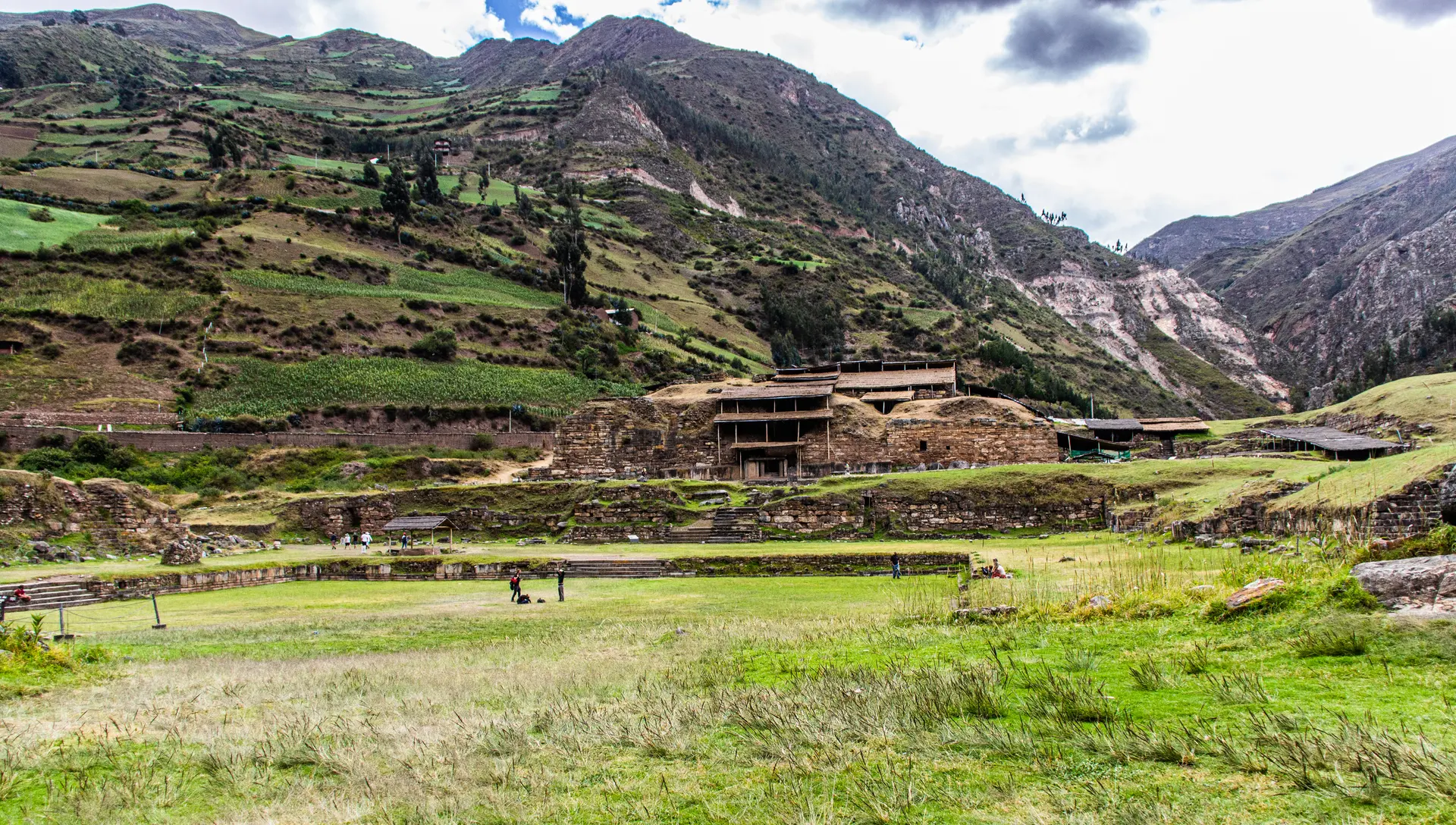
Chavín de Huántar
Chavín de Huantar, Ancash, Peru
149.3 km away

Archaeological Sanctuary of Pachacamac
Lurín, Lima Province, Peru
166.2 km away
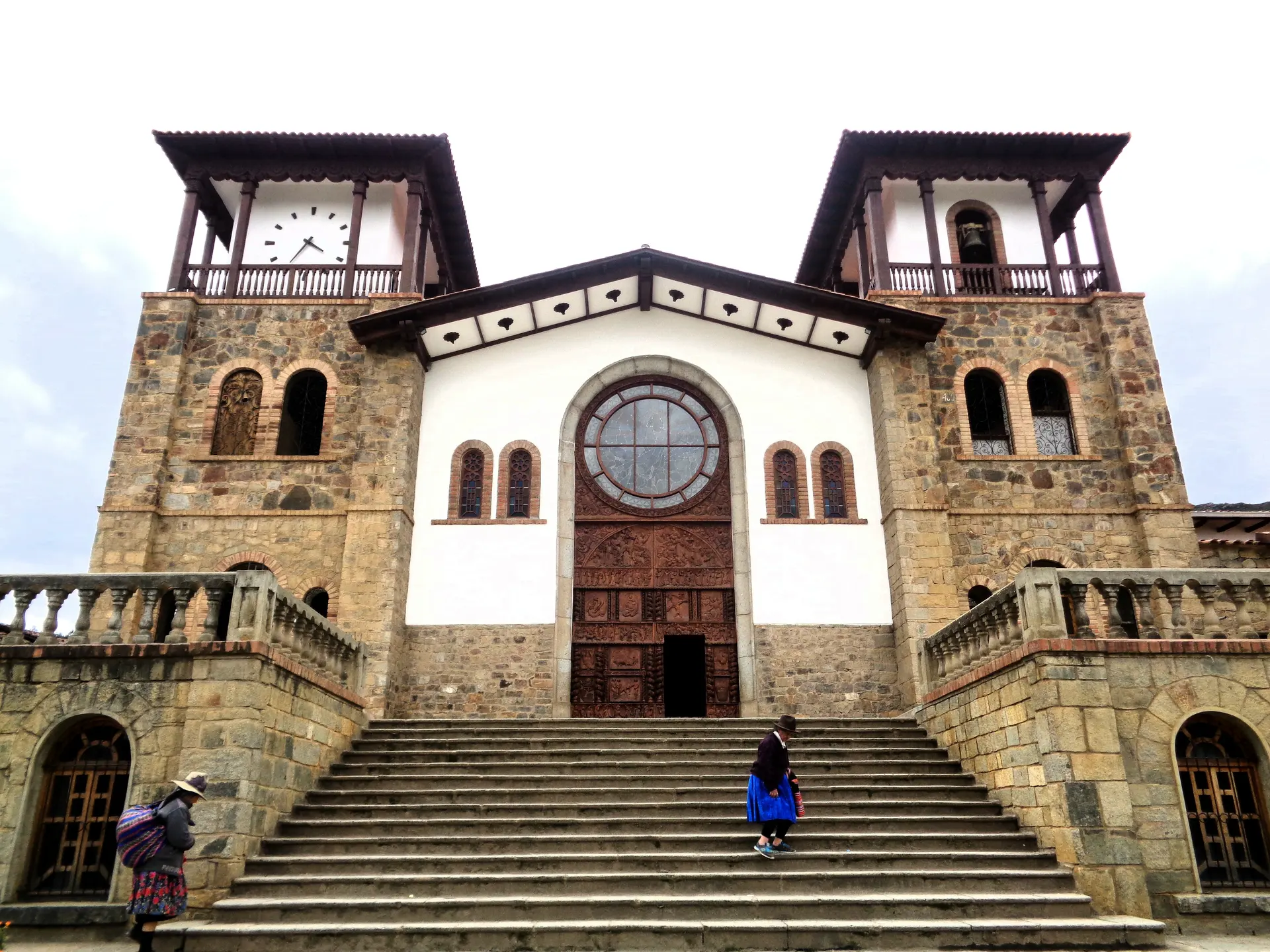
Sanctuary of Our Lady of the Assumption in Chacas
Chacas, Ancash, Peru
193.0 km away
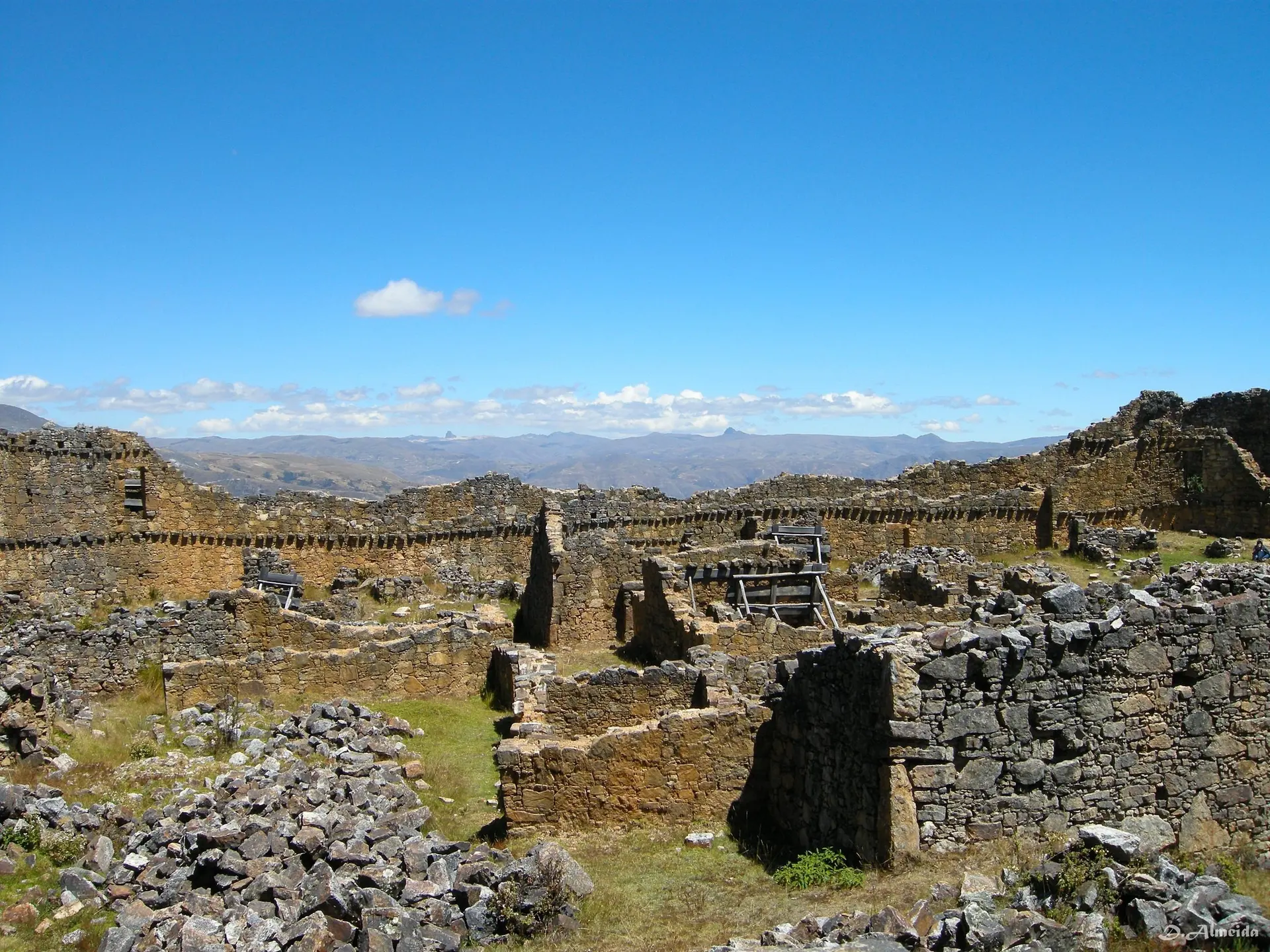
Marcahuamachuco Archaeological Complex
Huamachuco, La Libertad, Peru
348.5 km away
References
Sources consulted for this page. Source categories describe the publication, not a guarantee that every claim is verified. Traditional accounts and outside interpretations may differ.
- 01Sacred City of Caral-Supe — UNESCO World Heritage CentreofficialOfficial UNESCO documentation
- 02Timetables and Prices — Zona Caral OfficialofficialOfficial visitor information
- 03Caral — Wikipedia contributorsencyclopediaComprehensive archaeological overview
- 04Caral–Supe civilization — Wikipedia contributorsencyclopediaBroader cultural context
- 05This Peruvian Civilization Built Pyramids as Old as Egypt's — History.comSource contextPopular historical overview
Photo gallery
3 curated photos
Share a photo
Help visitors recognize Sacred City of Caral-Supe. Every submission is reviewed before publication.