Mahakaleshwar Jyotirlinga Shiva Temple, Ujjain, Madhya Pradesh
The south-facing jyotirlinga where Shiva is worshipped daily with cremation ash
Understand sacred places, explore living traditions, and learn how to engage respectfully with Pilgrim Map.
Access has not been verified. Check current local guidance before planning a visit.
Ujjain, Madhya Pradesh, India
Read the sources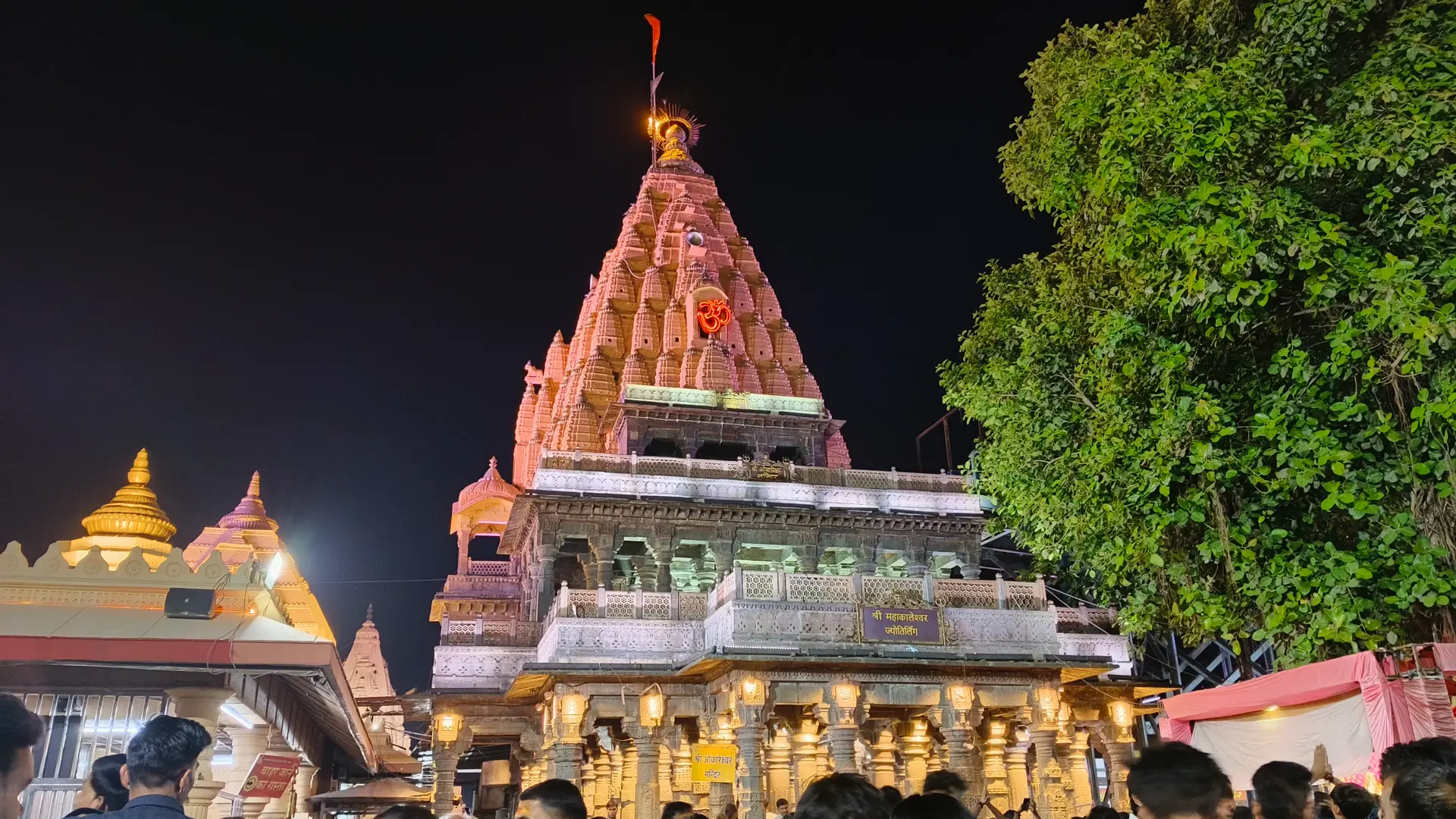
Station mahakaleshwar of 12
Twelve JyotirlingasVisit essentials
A quick read before you go
- Duration
- Two to three hours for general darshan; four to five hours including Bhasma Aarti with the 02:30…
- Access
- Indore (Devi Ahilyabai) Airport is 56 km from the temple, about 1.5 hours by road.
Overview
Mahakaleshwar stands in Ujjain at the centre of one of India's seven sacred cities (Saptapuri) and on the prime meridian of classical Indian astronomy as defined in the Surya Siddhanta. The lingam is the third in the canonical sequence of twelve jyotirlingas, and it is unique in two respects. First, it is dakshinamukhi — facing south, the direction of death and Yama — and no other jyotirlinga is so oriented.
Tradition holds this makes it uniquely powerful for mrityunjaya worship, the practice of conquering the fear of death. Second, it is the only temple in the world whose daily ritual involves the Bhasma Aarti at 04:00, when the lingam is bathed and then smeared with sacred ash to the accompaniment of damru, conch, and Vedic chanting.
The ash, traditionally drawn from the first cremation of the day at the Chandwasa ghat and now substituted with mantra-consecrated cow-dung ash, enacts in miniature what Mahakala enacts cosmically: the reduction of all matter to ash and its daily reconstitution. The temple sits below ground level — devotees descend into the sanctum — and is administered by the Shri Mahakaleshwar Mandir Prabandh Samiti.
The 2022 inauguration of the Mahakal Lok corridor, with its 108 stambhas and 50-plus murals from the Shiva Purana, has reshaped the approach without altering the ritual interior.
Why this place is sacred
Mahakaleshwar concentrates several rare claims into one underground sanctum. The dakshinamukhi orientation places the lingam facing the direction of death, making it the canonical site for Mahamrityunjaya practice — the conquest of mortality through mantra. The Bhasma Aarti is performed nowhere else: pre-dawn cremation-ash worship that confronts the body's perishability while declaring divinity as what remains.
Ujjain itself sits on the classical Indian prime meridian — the Surya Siddhanta's reference longitude for astronomical calculation — and is one of the seven sacred Saptapuri cities. Civically, Mahakal is the eternal sovereign of Ujjain. No other king may sleep within the city overnight, a custom respected even by reigning monarchs and observed by modern political dignitaries. Every Monday of Shravan, a silver palanquin carries Mahakal in royal procession (Sawari) to bathe in the Shipra at Ramghat.
The combination of south orientation, ash ritual, prime meridian, Saptapuri status, and Kumbh Mela host makes Mahakaleshwar among the most karmically dense Shaiva sites in India.
Worship of Shiva as Mahakala — Great Time, the conqueror of death — through the dakshinamukhi jyotirlinga and the daily Bhasma Aarti.
From the 1st-century-BCE Avantika temple complex referenced by Kalidasa's Meghaduta, through Paramara reconstruction under King Bhoja, the 1235 sack by Iltutmish, the 1734–1736 Maratha reconstruction by Ranoji Shinde, and the 2022 first phase of the Mahakal Lok corridor.
Experience and orientation
Most pilgrims arrive at Mahakaleshwar via Ujjain Junction or Indore Airport. The temple is approached now via the Mahakal Lok corridor — 900 metres of red stambhas and Shiva Purana murals lit dramatically at night — which leads to the security perimeter. Phones, cameras, and electronics are deposited at the cloakroom. The sanctum itself is below ground; descent is part of the encounter.
The lingam sits in a depression at the centre of the chamber, perpetually wet from abhishekam, with Vedic recitation echoing through the stone. The Bhasma Aarti at 04:00 is the temple's defining ritual and the principal reason many pilgrims travel to Ujjain. Booking opens 30 or more days in advance through the official temple website and is limited to roughly 1,700 attendees per day. Men attending must wear only a dhoti; women must wear a sari.
The aarti begins in near-darkness with the sudden crash of damru and shankha. The lingam is bathed first, then smeared with grey-white ash — traditionally women turn away or cover their faces during the ash application. Pilgrims describe the experience as one of the most psychologically overwhelming in Hindu practice: confronting cremation, time, and divinity in a single ritual. Outside the Bhasma window, the temple maintains a six-aarti cycle. The Sandhya Aarti at 17:00 is the second most atmospheric.
If the Bhasma Aarti is the goal, book at least a month in advance and arrive at the queue by 02:30 in correct attire. If unable to secure a booking, attend the 17:00 Sandhya Aarti for a more accessible but still powerful experience, and add the Kal Bhairav Temple 3 km away — the police-chief of Ujjain who accepts liquor as offering.
Context and lineage
A Brahmin named Vedapriya and his four sons worshipped Shiva at Avantika, the ancient name of Ujjain. A demon called Dushana attacked the city, terrorising its people and threatening the devotees. They called upon Mahakal. Shiva burst from the earth as Mahakala, the embodiment of Time itself, and destroyed Dushana with a single roar. At the prayers of the people, he agreed to remain in the form of a jyotirlinga, facing south as the conqueror of death.
Kalidasa in the Meghaduta describes the temple in the 4th to 5th century CE: the cloud-messenger is told to pause at Mahakal at twilight to witness the aarti. Some tantric traditions hold that Ujjain is the navel of the cosmic body of Bharata, and Mahakal the deity who resides at that point of self-arising consciousness.
The temple is administered by the Shri Mahakaleshwar Mandir Prabandh Samiti. Ritual lineage runs through Pashupata and Mahakala-Bhairava tantric traditions to the present Smarta and Shaiva pandit families who conduct the six daily aartis and the Bhasma Aarti.
Kalidasa
4th–5th-century Sanskrit poet whose Meghaduta provides the earliest detailed literary description of the temple
King Bhoja
11th-century Paramara king who undertook major reconstruction after the Sultanate-era damage
Ranoji Shinde
Maratha general of the Scindia dynasty who built the present sanctum between 1734 and 1736
Hafeez Contractor
Architect of the 2022 Mahakal Lok corridor — 108 stambhas, Shiva Purana murals, and the reshaped approach
Traditions and practice
The six-aarti cycle has been maintained without interruption. The Bhasma Aarti at 04:00 is unique to Mahakaleshwar among the twelve jyotirlingas. Naivedya Aarti at 07:00, Bhog Aarti at 10:30, Sandhya Aarti at 17:00, Shri Mahakal Aarti at 19:00, and Shayan Aarti at 22:30 follow. Rudrabhishek and Maharudrabhishek are offered by pilgrims taking sankalpa. Mahamrityunjaya Jaap — continuous recitation of the death-conquering mantra revealed at this site — is central to the temple's contemplative life.
Mahashivaratri brings three days of continuous celebration with Mahakal's special shringar.
Every Monday of Shravan and Bhadrapada, the silver palanquin of Mahakal is carried in royal Sawari procession through Ujjain to bathe in the Shipra at Ramghat — six processions each year, with the Shahi Sawari on the last Shravan Monday the grandest. The chief minister of Madhya Pradesh traditionally does not stay overnight in Ujjain in deference to Mahakal's sovereignty. Harihar Milan on Vaikuntha Chaturdashi sees Vishnu and Shiva ritually exchange visits.
The 2022 Mahakal Lok corridor has made the night approach a destination in itself; the 108 illuminated stambhas now form part of many pilgrims' experience.
Book the Bhasma Aarti at least a month in advance through the official portal. Allow at least one full day in Ujjain: Bhasma at 04:00, rest and meals through morning, Kal Bhairav and Harsiddhi in the afternoon, Sandhya Aarti at 17:00. If visiting during Shravan, plan around a Monday to witness the Sawari procession. Combine with Omkareshwar (140 km / 3 hours by road) for a two-jyotirlinga Madhya Pradesh circuit.
Shaivism — Jyotirlinga and Dakshinamukhi Lingam
ActiveMahakaleshwar is the third in the canonical list of twelve jyotirlingas and is unique among them for being dakshinamukhi — facing south, the direction of death and Yama. Of the twelve, only Mahakal has this orientation. Tradition holds this makes it uniquely powerful for mrityunjaya (conquest of death) worship. The name Mahakal means Great Time, Shiva as the destroyer of temporality.
Mrityunjaya Jaap (continuous recitation of the Mahamrityunjaya Mantra); pancha-amrit abhishekam; bilva-patra offering; Rudrabhishek with Namakam-Chamakam.
Bhasma Aarti — The Ash Worship
ActiveThe Bhasma Aarti, performed at 04:00 every morning, is unique to Mahakaleshwar among the twelve jyotirlingas. The lingam is bathed and then smeared with sacred ash to the accompaniment of damru, conch, and Vedic chanting. Traditionally the ash came from the first cremation of the day at the Chandwasa cremation ghat; current practice substitutes purified cow-dung ash with mantra-consecration. The ritual enacts Shiva's nature as Mahakala — the consumer of time and matter, who reduces all things to ash.
Bhasma Aarti at 04:00 with damru and shankhanaad; devotees view from designated halls; women turn away during the ash application; recitation of the Rudrashtakam.
Mahakal as Raja of Ujjain — Sawari Procession
ActiveMahakal is considered the eternal sovereign of Ujjain. No other king may sleep within the city overnight — a custom respected even by reigning monarchs and by modern political dignitaries. Every Monday of Shravan and Bhadrapada, a Sawari (royal procession) carries the silver palanquin of Mahakal through Ujjain to bathe in the Shipra at Ramghat.
Sawari procession every Monday of Shravan (six Sawaris each year); Shahi Sawari on the last Monday — the grandest; snan (ritual bath) of Mahakal in the Shipra.
Saptapuri and Simhastha Kumbh
ActiveUjjain is one of the Saptapuri — the seven holiest Hindu cities, alongside Ayodhya, Mathura, Haridwar, Varanasi, Kanchi, and Dwarka — and one of the four sites of the Simhastha Kumbh Mela, held every 12 years when Jupiter enters Leo. The 2016 Simhastha drew an estimated 75 million pilgrims over a month. Mahakaleshwar is the spiritual axis of the entire mela.
Shipra snana at Ramghat; akhada processions; Mahakal darshan as culmination of Kumbh pilgrimage.
Perspectives and open questions
Mahakaleshwar is held simultaneously as the canonical site for Mahamrityunjaya practice, the singular venue of Bhasma Aarti, an underground architectural anomaly, and a politically and astrologically loaded centre of Indian sacred geography. These readings are routinely held together by pilgrims and pandits alike.
Scholarly perspective
Archaeological and literary evidence places Mahakal worship at Ujjayini from at least the 1st century BCE. Kalidasa's Meghaduta (4th–5th century CE) provides the earliest detailed literary description. The dakshinamukhi feature distinguishes Mahakaleshwar as a Bhairava-Shiva form deeply linked to ash-rites and tantric tradition. The 2022 Mahakal Lok corridor is the most significant temple-infrastructure project in the region since the Maratha era.
Living and traditional perspectives
For devotees, Mahakal is not merely a deity but the sovereign of all time — including the time each devotee has remaining. The Bhasma Aarti is the daily reminder that the body is ash and the divine is what remains. The Mahamrityunjaya mantra, said to have been received here, is the most-recited death-conquering mantra in Sanskrit tradition.
Alternative interpretations
Tantric and Aghori lineages have a long association with Mahakal. The use of cremation ash, the south-facing orientation, and the proximity to Kal Bhairav — who accepts liquor — all mark Ujjain as a major centre of left-handed (vama marga) Shaiva tradition. The city is sometimes mapped as Shiva's third eye on the cosmic body of India.
Open questions
The exact age of the original lingam is unknown; its appearance below ground level — devotees descend into the sanctum — suggests a much older subterranean shrine. The ash used in the Bhasma Aarti has shifted between cremation ash and substitutes over the centuries; the current source is not publicly documented by the trust.
Plan your visit
Access and arrival
Indore (Devi Ahilyabai) Airport is 56 km from the temple, about 1.5 hours by road. Ujjain Junction railway station is 3 km / 15 minutes by auto. Bhopal is 190 km / 4 hours; direct trains run from Delhi, Mumbai, and Ahmedabad. Temple open 04:00 to 23:00. Bhasma Aarti 04:00 to 06:00 by booking only. Sandhya Aarti at 17:00.
The Shri Mahakaleshwar Mandir Prabandh Samiti runs limited dharamshala accommodation near the temple; booking through the official portal is essential. A wide range of hotels operates in Ujjain — from budget yatri houses near the railway station to mid-range and heritage hotels along Mahakal Marg. Booking ahead is critical during Shivaratri, Shravan Mondays, and Kumbh years.
Respectful visit
General darshan: modest traditional attire. Bhasma Aarti: men in dhoti only (no upper garment); women in sari (no salwar-kameez). Western attire is acceptable in the corridor and outer complex but discouraged in the sanctum.
Strictly prohibited inside the temple. Cameras, phones, and electronics deposited at the cloakroom. Exterior and Mahakal Lok corridor photography is permitted.
Bilva leaves, dhatura, milk, Ganga or Shipra water, honey, curd, ghee, white flowers, and ladoo prasad. Rudraksha mala and consecrated bhasma packets are sold by the trust.
No electronics inside. During Bhasma Aarti, women traditionally turn away during the ash application. No food or drink in the sanctum. Separate queues for general, VIP, and sponsored darshan.
Crowds during Shravan Mondays and Mahashivaratri are intense — avoid the 09:00 to 16:00 window if possible. Bhasma Aarti has strict attire requirements (dhoti for men, sari for women) and a 02:30 queue time. Visitors uncomfortable with cremation-ash symbolism should consider whether Bhasma Aarti is the right fit; many pilgrims find it transformative, some find it overwhelming.
Current practical details
Address
Jaisinghpura, Ujjain, Madhya Pradesh 456006, India
Hours
Hours, fees, and access can change — verify on the official source before you travel. Practical details last checked Jun 2026.
Location
Map loads as you approach this section.
Pilgrim reflections
A portrait of encounter, not a score
Pilgrims describe what they felt, how present they could become, and whether the place would shape a journey. There are no stars and no ranking of traditions.
No reviewed reflections yet
The first pilgrims can help describe the character of being here.
Share a reflection
Available after an account-backed “Been there.” Every reflection is reviewed before publication.
Nearby sacred places
Explore other sacred places in the region. Proximity does not establish access or travel time; check each place’s guidance.

Bhartrihari Caves, Ujjain, Madhya Pradesh
Ujjain, Madhya Pradesh, India
2.4 km away
Husain Tekri, Jaora
Jaora, Madhya Pradesh, India
82.4 km away
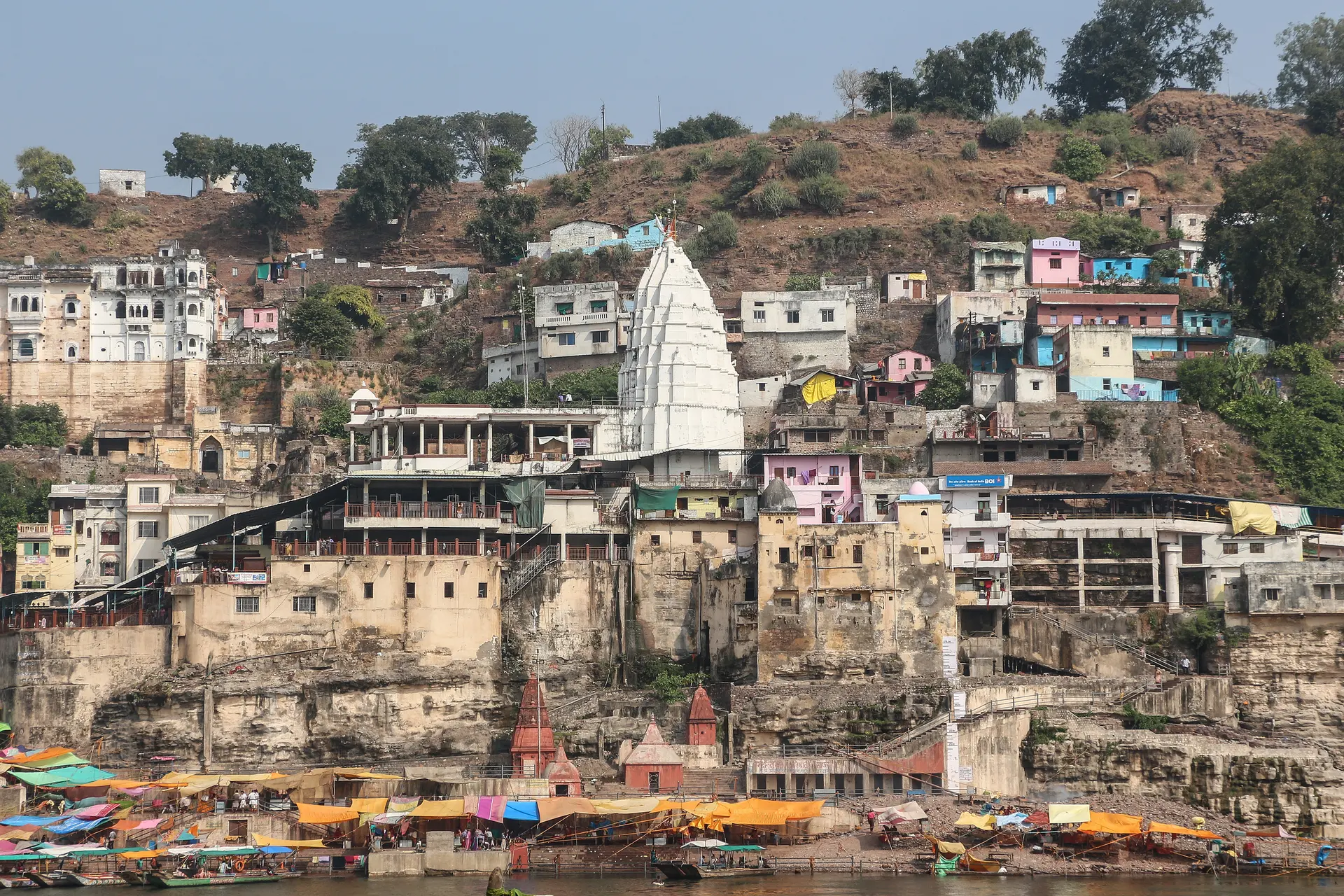
Omkareshwar Jyotir Linga Shiva temple, Omkareshwar, Madhya Pradesh
Omkareshwar, Madhya Pradesh, India
111.4 km away

Buddhist Monuments at Sanchi
Amkhera, Madhya Pradesh, India
204.0 km away
References
Sources consulted for this page. Source categories describe the publication, not a guarantee that every claim is verified. Traditional accounts and outside interpretations may differ.
- 01Mahakaleshwar Jyotirlinga — Wikipedia — Wikipedia contributorsencyclopediaComprehensive overview of temple history, lingam features, and rituals
- 02Shri Mahakaleshwar Mandir — Official Website — Shri Mahakaleshwar Mandir Prabandh SamitiofficialOfficial temple management committee site with aarti timings, Bhasma Aarti booking, history
- 03Ujjain — Wikipedia — Wikipedia contributorsencyclopediaBackground on Ujjain as one of the seven sacred Hindu cities (Saptapuri)
- 04Jyotirlinga — Wikipedia — Wikipedia contributorsencyclopediaCanonical Shaiva pilgrimage geography
- 05Mahakal Lok Corridor — Government of Madhya Pradesh — Madhya Pradesh GovernmentofficialOfficial documentation of the 2022 corridor project
- 06The Lord of Time: Mahakala in the Indian Tradition — David Kinsley (in Hindu Goddesses)academicScholarly background on Mahakala-Kali symbolism
- 07PM Modi inaugurates Mahakal Lok in Ujjain — The HindunewsOctober 2022 corridor inauguration
- 08Ujjain Simhastha Kumbh — Madhya Pradesh Tourism — MP Tourism BoardguideOfficial tourism site with Kumbh Mela and Mahakaleshwar information
- 09Mahakala — Encyclopedia Britannica — Editors of Encyclopaedia BritannicaspiritualOn the iconography and theology of Mahakala as Shiva-Bhairava
Photo gallery
5 curated photos
Pilgrim glossary
- Mantra
- A sound, word, or phrase repeated as part of meditation or ritual.
Share a photo
Help visitors recognize Mahakaleshwar Jyotirlinga Shiva Temple, Ujjain, Madhya Pradesh. Every submission is reviewed before publication.