Trimbakeshwar Jyotir Linga Shiva Temple, Trimbak, Maharashtra
The three-faced lingam at the source of the Godavari, where ancestral karma is settled
Understand sacred places, explore living traditions, and learn how to engage respectfully with Pilgrim Map.
Access has not been verified. Check current local guidance before planning a visit.
Trimbak, Maharashtra, India
Read the sources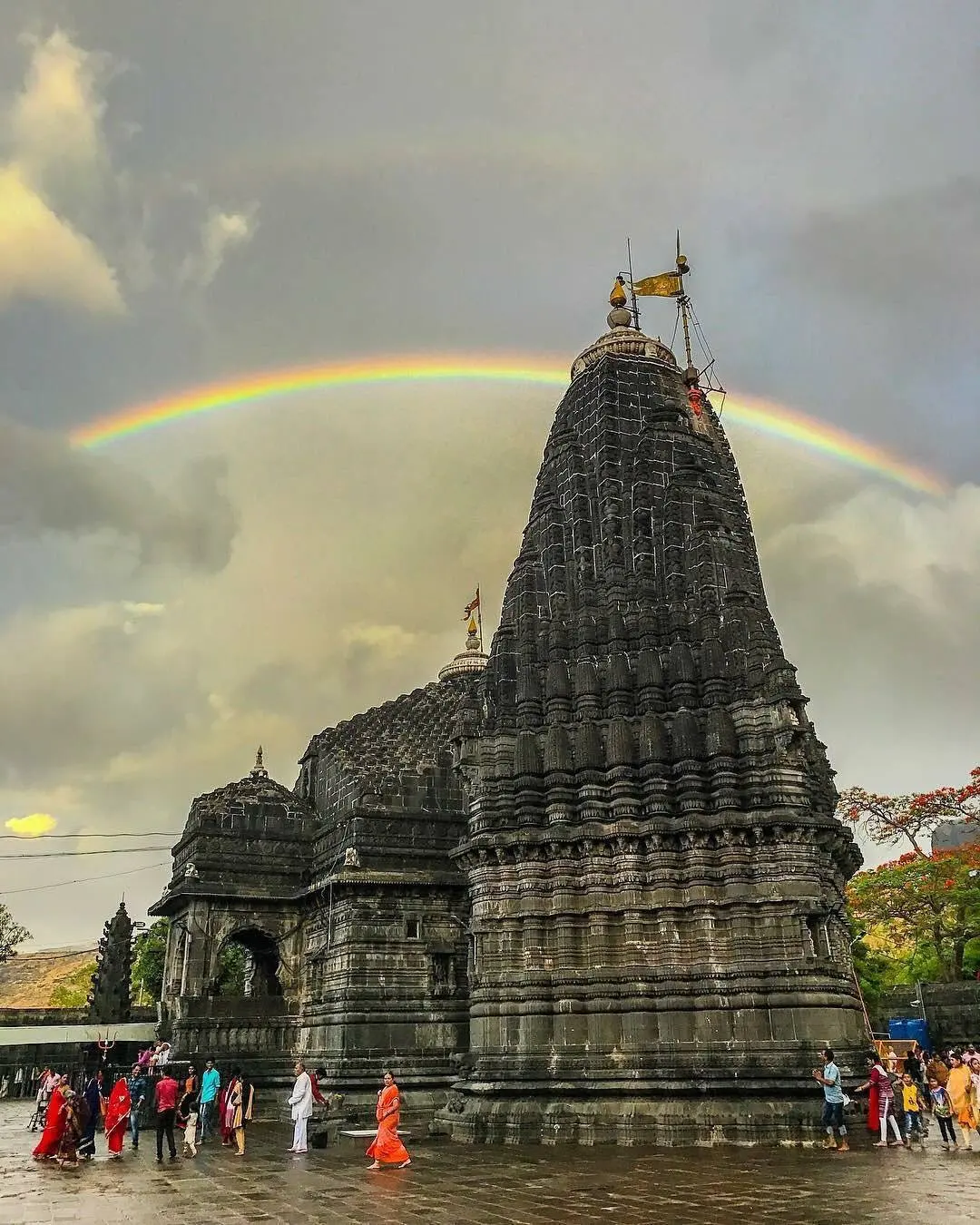
Visit essentials
A quick read before you go
- Duration
- Half day for darshan and Kushavarta; full day with Brahmagiri parikrama or summit climb.
- Access
- Nashik (Ozar) Airport is 60 km from the temple, about 1.5 hours by road.
Overview
Trimbakeshwar stands at the foot of Brahmagiri Hill, 28 km west of Nashik, at the source of the Godavari River — the longest river of peninsular India and the only river of comparable Hindu sanctity to the Ganga in the south.
The jyotirlinga is the tenth in the canonical sequence and is unique in form: a small, eroded, three-faced lingam (tri-mukhi), most often interpreted as the trimurti — Brahma, Vishnu, and Shiva together — though some traditions read it as Shiva's three aspects of creation, preservation, and dissolution. The lingam sits in a depression filled with water from the Godavari source, perpetually bathed by the river herself.
The present temple is the 1755–1786 reconstruction by Peshwa Balaji Bajirao (Nanasaheb), built in black stone in the Hemadpanthi style at a cost of approximately ₹16 lakh — an enormous sum for the era. What further distinguishes Trimbakeshwar is its role in ancestral ritual. It is the only site in India authorised to perform the three-day Narayan Nagbali, a rite for the absolution of unfulfilled ancestral desires and the karmic burden of having killed a snake.
Combined with Tripindi Shraddha and Kaal Sarp Dosh nivaran puja, this makes Trimbakeshwar the destination for pilgrims attending to family lineage and inherited karma. The site is also one of the four hosts of the Simhastha Kumbh Mela, with the next gathering due in 2027.
Why this place is sacred
Trimbakeshwar layers multiple thresholds in a small temple. The three-faced lingam is unique among the twelve jyotirlingas, and the perpetual water bath from the Godavari source makes the abhishekam literally continuous — the river herself is the abhisheka. The Mahamrityunjaya Mantra of the Rig Veda — 'Om Tryambakam yajamahe sugandhim pushti-vardhanam…' — addresses Shiva as the Three-Eyed One, the very form worshipped here, and tradition holds the mantra was revealed at this site.
The Kushavarta Kund just outside the temple is the first source-spring of the Godavari and a mandatory bathing point before darshan. Brahmagiri Hill above the temple is considered Shiva-rupa — Shiva in the form of a mountain — and the 750-step climb is undertaken by tens of thousands on Mondays. The Narayan Nagbali rite, performed nowhere else in India, draws pilgrims attending to ancestral karma.
And the Nashik-Trimbak Simhastha Kumbh Mela every 12 years (next 2027) is one of the four largest religious gatherings in the world.
Worship of Shiva as Trayambaka (the Three-Eyed One) and as Trimbakeshwar (the Three-Faced Lord) at the source of the Godavari River, and the absolution of ancestral karma through Narayan Nagbali and Tripindi Shraddha.
From the Vedic worship of Trayambaka-Rudra in the Mahamrityunjaya mantra, through medieval Nath-sampradaya patronage (Sant Nivruttinath took samadhi here in 1297), to the 1755–1786 Peshwa-era reconstruction by Balaji Bajirao in black stone Hemadpanthi style, and the modern Kumbh-era infrastructure that supports gatherings of tens of millions.
Experience and orientation
The day at Trimbakeshwar begins with the Kushavarta Kund bath. The first source-spring of the Godavari, 50 metres from the temple, is treated as the abhishekam water source and as a tirtha in its own right. Pilgrims bathe, then walk barefoot to the temple, depositing footwear and bags at the entrance. The protocol at the sanctum is strict: only men, dressed in dhoti with no upper garment, may enter the garbhagriha for sparsh darshan (touching the lingam).
Women view the lingam from the outer mandapa. Sparsh darshan requires booking through the trust counter or website and is limited to roughly 1,500 male devotees per day. The lingam itself is small, eroded by centuries of abhishekam, and set into a depression that perpetually fills with Godavari source water — the river bathes the lingam continuously. The three faces are subtle, and pilgrims often spend several quiet minutes locating them.
On Monday mornings, devotees climb the 750 steps to Brahmagiri's summit in slow procession; on those who have come for Narayan Nagbali, the three-day rite unfolds on the riverbank under the guidance of the hereditary Tungar pandits. The Kakad Aarti at 05:30 is the most contemplative ritual moment of the day.
Plan at least a half day. Bathe at Kushavarta first, then take darshan, climb to Brahmagiri summit (or take the partial path), and end at Sant Nivruttinath's samadhi. Narayan Nagbali requires three full days plus a prior sankalpa day, with the trust's authorised purohit lists for booking pandits.
Context and lineage
The sage Goutama lived on Brahmagiri Hill with his wife Ahalya. During a famine, he alone among the sages produced food through his tapasya, which provoked the jealousy of other rishis. They sent a maya-cow (illusory cow) into his fields; when Goutama tried to drive it away, it died, and the rishis accused him of go-hatya — cow-killing. To absolve the sin, Goutama performed severe penance to bring the Ganga down to wash the cow's body.
Shiva, pleased, released the Ganga as Godavari from his matted hair onto Brahmagiri, and agreed to remain at the source as Trimbakeshwar. The three faces of the lingam represent Brahma (creation), Vishnu (preservation), and Shiva (dissolution) — the entire trimurti contained in one jyotirlinga, available for darshan only here. The Mahamrityunjaya Mantra — 'Om Tryambakam yajamahe…' — was revealed by the sage Markandeya at Trimbakeshwar; reciting it here is considered uniquely powerful for overcoming illness and the fear of death.
The temple is administered by the Shri Trimbakeshwar Devasthan Trust. Ritual lineage runs from Vedic Trayambaka-Rudra worship through Pashupata Shaivism and the Nath sampradaya to the present Smarta pandit families. The Narayan Nagbali tradition is conducted by hereditary Brahmin families known as the Tungar pandits, and the trust maintains a list of authorised purohits.
Goutama Rishi
Mythological sage whose penance brought the Godavari down to Brahmagiri and whose prayer kept Shiva at the source as Trimbakeshwar
Peshwa Balaji Bajirao (Nanasaheb)
Commissioned the present black stone Hemadpanthi temple between 1755 and 1786 at a cost of approximately ₹16 lakh
Sant Nivruttinath
Elder brother of Sant Jnaneshwar; took samadhi at Trimbak in 1297, anchoring the site in the Nath sampradaya
Markandeya
Sage who, in tradition, received the Mahamrityunjaya Mantra at Trimbakeshwar
Traditions and practice
The day at Trimbakeshwar runs on four aartis: Kakad Aarti at 05:30, Madhyana Aarti at 12:00, Sandhya Aarti at 19:30, and Shayan Aarti at 21:00. Pancha-amrit abhishekam, Triambak Rudra Abhishek, and Laghurudra or Atirudra recitations (eleven or one hundred and eleven repetitions) are offered. Narayan Nagbali — performed only here in India — is a three-day rite for unfulfilled ancestral desires and the karmic burden of having killed a snake.
Tripindi Shraddha addresses three generations of ancestors who have not received proper last rites; Kaal Sarp Dosh nivaran puja is performed when the natal chart shows Rahu-Ketu afflictions.
Sparsh darshan must be booked at the temple counter or through the trust website and is limited to about 1,500 male devotees per day. Women view the lingam from the outer mandapa. Pitru-pujas — Narayan Nagbali, Tripindi Shraddha, Kaal Sarp Dosh — must be booked in advance through hereditary Tungar pandits; the trust maintains a list of authorised purohits. Monday processions up Brahmagiri's 750 steps continue as living tradition.
The Nashik-Trimbak Simhastha Kumbh Mela is the major civic-religious event; the next is scheduled for 2027, and the Shahi Snan (royal bath) processions at Kushavarta Kund are among the largest Hindu gatherings on earth.
For a contemplative visit, plan one or two days: Kushavarta bath, Kakad Aarti, the Brahmagiri climb or parikrama, Sant Nivruttinath samadhi, and the Sandhya Aarti. For Narayan Nagbali, plan four or five days minimum — one for sankalpa, three for the ritual, one for rest — and book a trust-authorised Tungar purohit weeks in advance. Combine with Nashik's Panchavati Ramayana sites for a wider Maharashtra Shaiva-Ramayana circuit.
Shaivism — Trimbakeshwar Jyotirlinga
ActiveTrimbakeshwar is the tenth in the canonical sequence of twelve jyotirlingas, uniquely characterised by a three-faced (tri-mukhi) lingam — most often interpreted as Brahma, Vishnu, and Shiva together, though some traditions read it as Shiva's three aspects. The lingam is small, set into a depression filled with water from the Godavari source, and constantly bathed. A jewelled crown said to date to the Pandava era is placed over the lingam during festivals.
Pancha-amrit abhishekam; bilva-patra offering; Rudrabhishek and Maharudrabhishek; Laghurudra and Atirudra (eleven and one hundred and eleven repetitions); four daily aartis.
Godavari Source — Brahmagiri
ActiveThe Godavari, longest river of peninsular India and the Dakshin Ganga (Ganga of the south), rises on Brahmagiri Hill directly above Trimbakeshwar. The first source-spring is the Kushavarta Kund just outside the temple. The Godavari's source is itself a tirtha; bathing at Kushavarta is mandatory before darshan. Tradition holds the river was brought down by Goutama Rishi's penance.
Kushavarta Kund bath before darshan; Brahmagiri Parikrama (~10 km hill circumambulation); pitru-tarpan at Kushavarta; climbing the 750 steps to Brahmagiri summit on Mondays.
Pitru-Karma — Narayan Nagbali, Tripindi, Kaal Sarp Dosh
ActiveTrimbakeshwar is the only site in India authorised to perform Narayan Nagbali (a three-day ritual to absolve unfulfilled ancestral desires and the karmic burden of having killed a snake) and is among the foremost sites for Tripindi Shraddha. Kaal Sarp Dosh nivaran puja is also widely sought. These rites are conducted by hereditary Brahmin families — the Tungar pandits — on the banks of the Godavari.
Narayan Nagbali (three days, by appointment); Tripindi Shraddha; Kaal Sarp Dosh shanti puja; Pitru Paksha shraddha during the annual 16-day period.
Nashik–Trimbak Simhastha Kumbh Mela
ActiveThe Nashik-Trimbak Simhastha Kumbh Mela is held every 12 years when Jupiter enters Leo (Simha rashi) and the Sun enters Cancer. It is one of the four Kumbh Melas alongside Haridwar, Prayagraj, and Ujjain. Bathing ghats are split between Ramkund in Nashik and Kushavarta Kund in Trimbak.
Shahi Snan at Kushavarta Kund (Trimbak) and Ramkund (Nashik); akhada processions; Naga sadhu darshan; religious discourses across the mela.
Perspectives and open questions
Trimbakeshwar is held as a Vedic Trayambaka-Rudra site, a Puranic jyotirlinga, the river-source of the Godavari, the singular venue for Narayan Nagbali, and one of the four Kumbh Mela hosts. These readings reinforce rather than compete with each other.
Scholarly perspective
The present temple is firmly dated to the 1755–1786 Peshwa-era reconstruction. The Vedic association of Trayambaka with the Mahamrityunjaya mantra is much older, represented in early Vedic literature. The Godavari's geographic source on Brahmagiri is unambiguous. The site's role as the singular venue for Narayan Nagbali is a regional ritual specialisation that emerged in the medieval period and is well-attested.
Living and traditional perspectives
For devotees, the three faces of the lingam are not metaphor but presence — Brahma, Vishnu, and Shiva simultaneously available for darshan in a single sanctum. The water that perpetually bathes the lingam is direct Godavari source-water; the lingam is therefore being abhisheka'd continuously by the river herself. The Mahamrityunjaya recited here is said to reach Shiva most directly because it was first revealed at this site.
Alternative interpretations
Some tantric traditions interpret the three faces as the three gunas (sattva-rajas-tamas) or the three nadis (ida-pingala-sushumna) made visible in stone. Brahmagiri Hill is mapped onto the spinal column, with Kushavarta as muladhara and the summit as sahasrara — the climb is a literal kundalini yatra.
Open questions
The jewelled mukut placed on the lingam during certain festivals is said by tradition to be of Pandava-era origin; its provenance has never been independently dated. The original Vedic shrine that preceded the Peshwa temple is undocumented archaeologically. The precise efficacy of Narayan Nagbali — whether the relief reported by pilgrims is psychological, karmic, or both — remains, as in all such rituals, beyond verification.
Plan your visit
Access and arrival
Nashik (Ozar) Airport is 60 km from the temple, about 1.5 hours by road. Nashik Road railway station is 35 km / 1 hour. Mumbai is 180 km / 4 hours; Pune is 220 km / 5 hours. Frequent buses and shared taxis run from Nashik Central Bus Stand. Temple open 05:30 to 21:00 daily. Kushavarta Kund is open 24 hours. Brahmagiri summit is accessible during daylight only.
The Trimbakeshwar Devasthan Trust runs basic dharamshala accommodation; a range of pilgrim guesthouses and hotels operates in Trimbak town and along the Trimbakeshwar-Nashik road. For Narayan Nagbali pilgrims, the Tungar pandit families often arrange lodging as part of the ritual package. Booking ahead is essential during Shravan, Mahashivaratri, and Kumbh years.
Respectful visit
Inner sanctum (garbhagriha): men only, dhoti compulsory, no upper garment. Outer mandapa: modest traditional attire for all. Women cover their heads during darshan.
Strictly prohibited inside the temple. Permitted at Kushavarta Kund and on Brahmagiri.
Bilva leaves, white flowers, milk, ghee, honey, sandalwood paste, sesame seeds (for pitru-pujas), and Godavari water. Coconuts and sweets are common.
Women cannot enter the inner sanctum. No phones or cameras inside. Footwear and bags deposited at the entrance. Quiet behaviour during Narayan Nagbali rites on the riverbank. Pitru-pujas require fasting and bathing protocols.
Inner sanctum is closed to women — this is non-negotiable. Visitors should plan accordingly. Narayan Nagbali is physically demanding (early morning bathing, fasting, three days on the riverbank) and emotionally weighty; pilgrims often report intense dreams of deceased relatives. It should not be approached as ritual tourism. Crowds during Shravan Mondays and Kumbh years can be overwhelming.
Current practical details
Address
Trimbak, Maharashtra 422212, India
Hours
Hours, fees, and access can change — verify on the official source before you travel. Practical details last checked Jun 2026.
Location
Map loads as you approach this section.
Pilgrim reflections
A portrait of encounter, not a score
Pilgrims describe what they felt, how present they could become, and whether the place would shape a journey. There are no stars and no ranking of traditions.
No reviewed reflections yet
The first pilgrims can help describe the character of being here.
Share a reflection
Available after an account-backed “Been there.” Every reflection is reviewed before publication.
Dates and observances
Upcoming festivals, feast days, and pilgrimages connected to this place. Add any to your calendar, or browse the full observance calendar.
- Add to calendar
Nashik-Trimbakeshwar Simhastha Kumbh Mela
Oct 31 – Mon, Jul 24, 2028Pilgrimage
The Simhastha Kumbh, held once every twelve years when Jupiter enters Leo, centers on sacred bathing at Kushavarta Kund. The 2027-28 Mela opens with the Dhwajarohan flag-hoisting on 31 Oct 2026; principal Shahi Snans fall in 2027-28. A twelve-yearly event, not annual.
Nearby sacred places
Explore other sacred places in the region. Proximity does not establish access or travel time; check each place’s guidance.
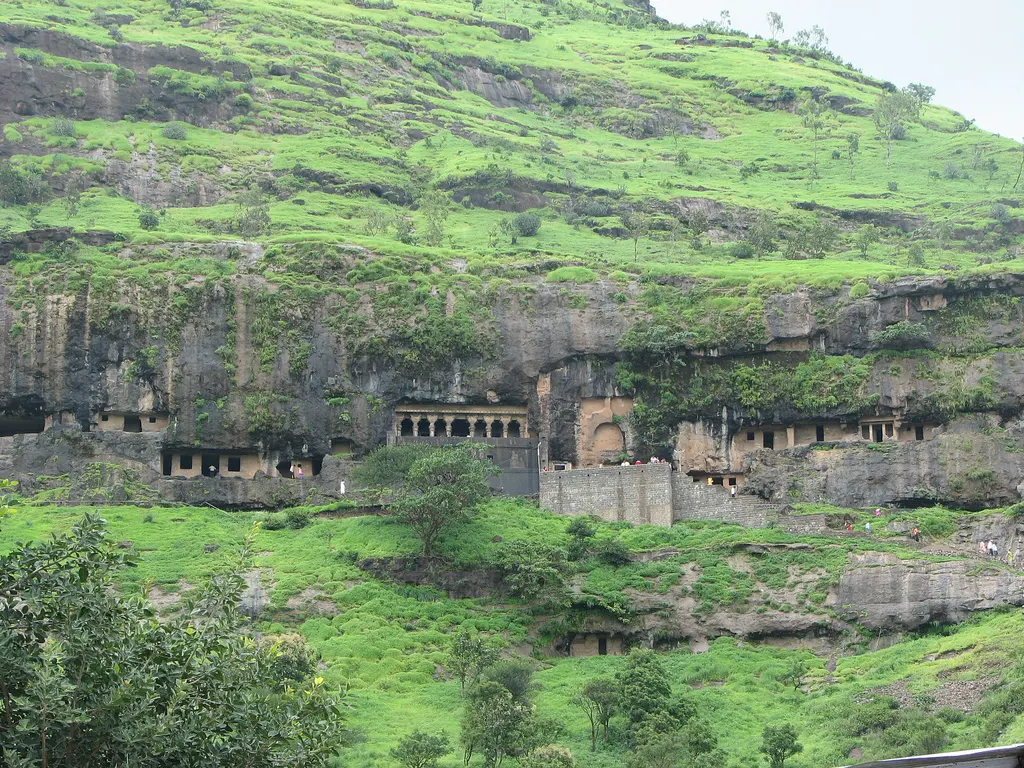
Girijatmaj Temple, Lenyadri
Lenyadri, Maharashtra, India
85.2 km away
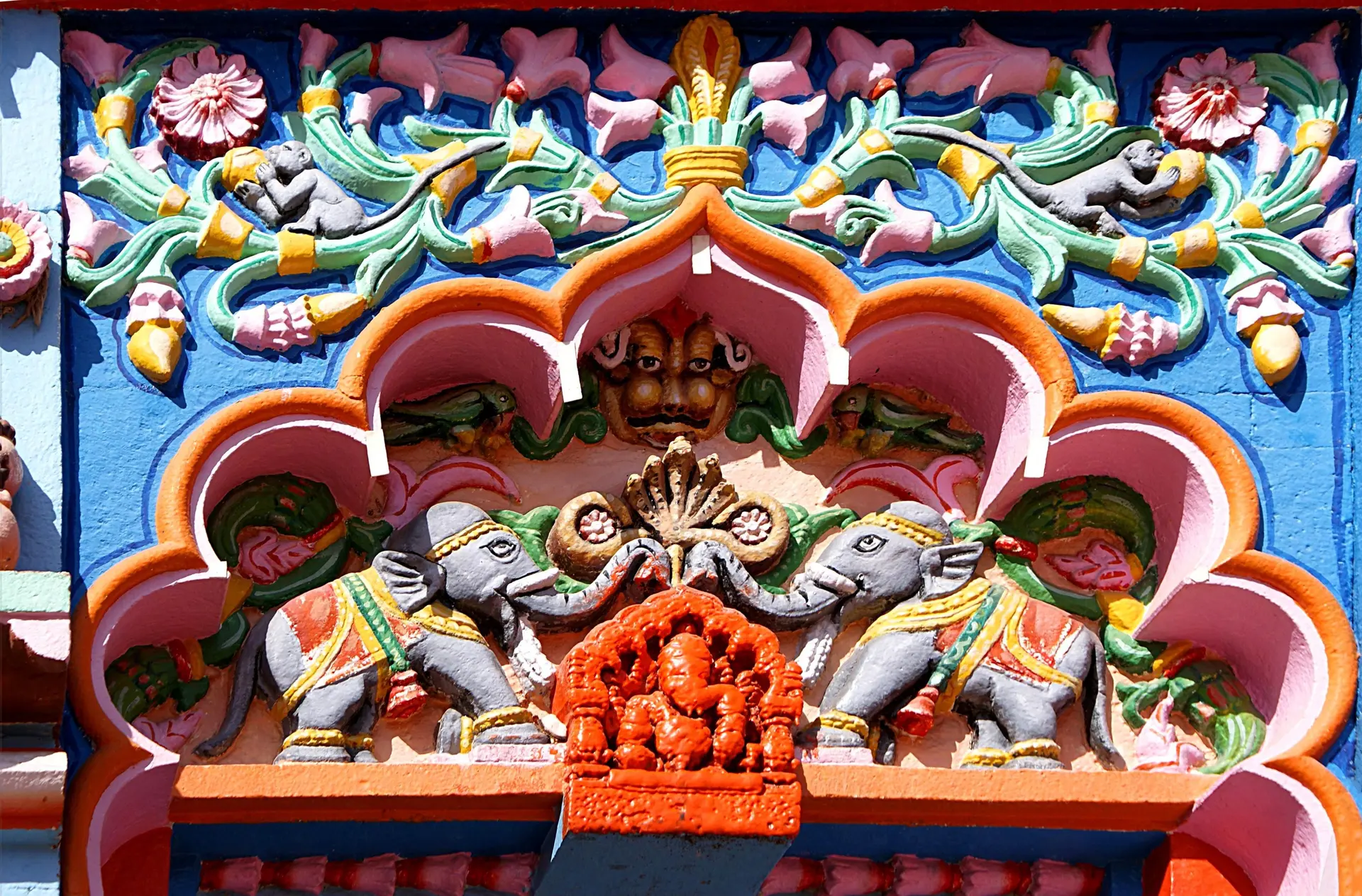
Vighneshwar Temple, Ozar
Ojhar, Maharashtra, India
94.2 km away

Bhimashankar Shiva Jyotir Linga temple, Bhimashankar, Maharashtra
Bhimashankar, Maharashtra, India
95.6 km away
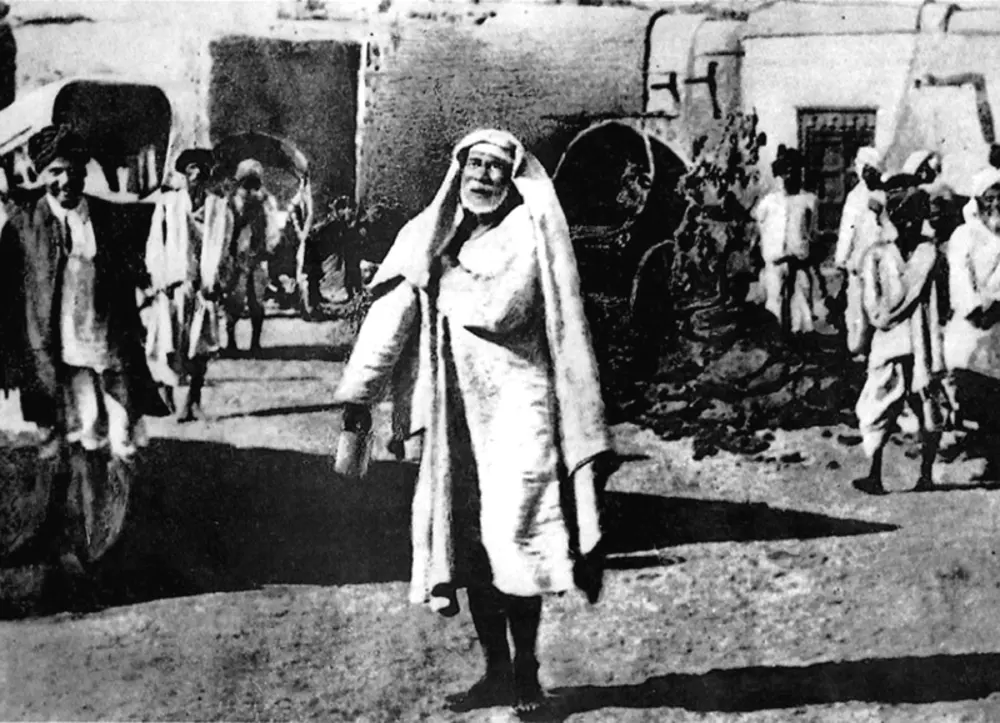
Shirdi Sai Baba Samadhi Temple, Maharashtra
Sainagar, Maharashtra, India
100.6 km away
References
Sources consulted for this page. Source categories describe the publication, not a guarantee that every claim is verified. Traditional accounts and outside interpretations may differ.
- 01Trimbakeshwar Shiva Temple — Wikipedia — Wikipedia contributorsencyclopediaComprehensive history including the three-faced lingam and Godavari connection
- 02Jyotirlinga — Wikipedia — Wikipedia contributorsencyclopediaCanonical position in the twelve
- 03Shri Trimbakeshwar Devasthan Trust — Official Website — Shri Trimbakeshwar Devasthan TrustofficialOfficial trust site with puja and darshan booking
- 04Godavari River — Wikipedia — Wikipedia contributorsencyclopediaSource of the Godavari at Brahmagiri above Trimbakeshwar
- 05Simhastha Kumbh Mela — Wikipedia — Wikipedia contributorsencyclopediaNashik–Trimbak Kumbh Mela held every 12 years
- 06Trimbakeshwar — Maharashtra Tourism — Maharashtra Tourism Development CorporationofficialOfficial state tourism guide
- 07Sacred Geography of India — Diana L. EckacademicScholarly treatment of jyotirlinga geography and river sources
- 08Narayan Nagbali and Kaal Sarp Dosh Puja at Trimbakeshwar — Trimbakeshwar Pandits AssociationspiritualOn the specialised three-day pitru-rituals for which Trimbakeshwar is the singular Indian site
Photo gallery
2 curated photos
Pilgrim glossary
- Mantra
- A sound, word, or phrase repeated as part of meditation or ritual.
Share a photo
Help visitors recognize Trimbakeshwar Jyotir Linga Shiva Temple, Trimbak, Maharashtra. Every submission is reviewed before publication.