Unpen-ji
Highest of the Shikoku 88 at 927 metres — the temple in the clouds, where the Nirvana stage begins among stone arhats
Understand sacred places, explore living traditions, and learn how to engage respectfully with Pilgrim Map.
Access has not been verified. Check current local guidance before planning a visit.
Miyoshi, Tokushima Prefecture, Japan
Read the sources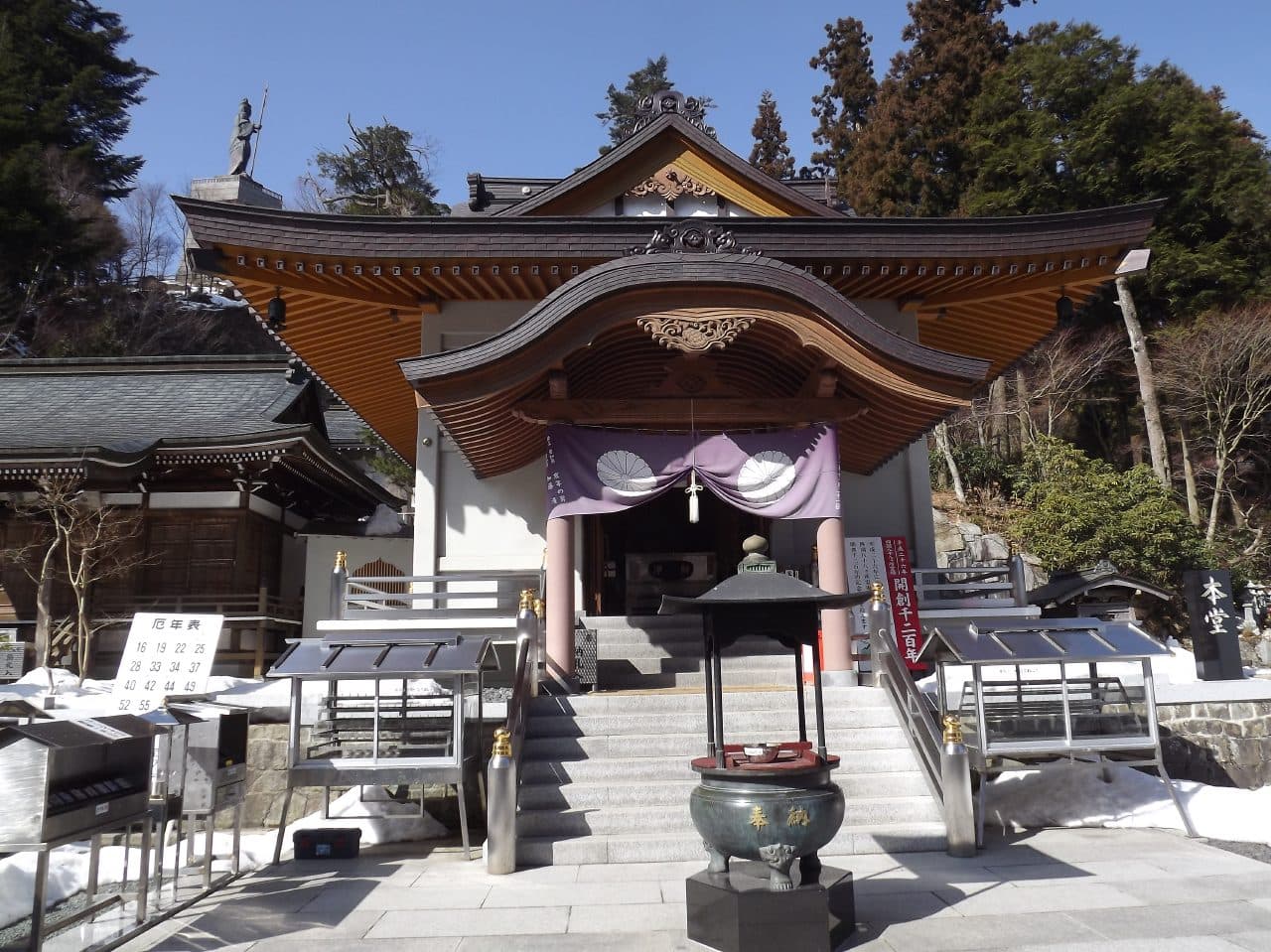
Image of Unpen-ji (雲辺寺). Image source · CC-BY-SA-4.0
Station 66 of 88
Shikoku 88 Temple PilgrimageVisit essentials
A quick read before you go
- Duration
- 60 to 90 minutes on site; longer if walking the rakan circuit slowly or holding the ridge…
- Access
- Unpenji Ropeway from the Kan'onji base station on the Kagawa side: about seven minutes ascending…
Overview
Unpen-ji means 'temple of the clouds,' and the name is literal. At 927 metres it is the highest of the eighty-eight temples of the Shikoku Pilgrimage, sitting on a forested ridge that forms the prefectural border between Miyoshi in Tokushima and Kan'onji in Kagawa.
Pilgrims who walk the trail from Sankaku-ji at Temple 65 climb a long mountain stage to get here; most modern visitors take the Unpenji Ropeway from the Kan'onji base station, which rises 927 metres at ten metres a second — the fastest ropeway in Japan — and delivers them through cloud layers to the upper grounds in about seven minutes.
Administratively the temple lies in Tokushima Prefecture, even though the ropeway base, the views, and the visceral feel of arrival belong to Kagawa side; this border ambiguity is part of the place. Tradition holds that Kūkai founded Unpen-ji in 789 at age sixteen, while scouting the mountain for sacred timber to build what would become Zentsuji, the temple of his birth. He recognized the ridge as numinous and built a small hall on the spot.
That first hall grew across centuries into a major monastic complex; by the Kamakura period the temple held seven principal halls, twelve sub-temples, and eight branches across the surrounding mountains.
What pilgrims meet today is quieter than that medieval peak but still substantial: the Hondō and Daishi-dō, an old-growth forest of cypress and cedar, snow that lingers later than in the lowlands, and the Five Hundred Arhats — Gohyaku Rakan — set in irregular ranks across the upper grounds, each carved face different, each one a possible self. For henro, Unpen-ji is also the first temple of the Nirvana stage.
Whatever Ehime's long traverse of awakening-mind temples has built up in the body, the climb to this ridge undoes. The Nirvana practice arrives where the cloud line meets the trees.
Why this place is sacred
Three layers make Unpen-ji feel different from the lower temples. The first is altitude. At 927 metres the ridge sits above where the weather often forms; pilgrims can stand on the upper grounds in clear sun while cloud rolls beneath them in the valleys. Snow lingers here weeks longer than in Kan'onji below, and the mountain holds its own colder, more reflective air through summer. The second is biography.
Kūkai's traditional founding here at age sixteen places Unpen-ji at the threshold of his religious life — the moment when the boy who would become Kōbō Daishi recognized a sacred mountain and acted on it. For pilgrims who began the route in Tokushima where his mature work and the temples of his death are concentrated, climbing to a place tied to his youth carries an unusual temporal direction. The third layer is the Five Hundred Arhats.
Set in stone in irregular groups across the upper grounds, each carved with a different face — laughing, brooding, sleeping, listening — they are devotional objects rather than sculpture park installations. In Shingon contemplative reading they mirror the practitioner's own awakening, each face a possible self. Walking among them in mist is one of the most striking experiences on the entire pilgrimage.
Traditionally founded in 789 by the young Kūkai (age 16) as a small mountain hall on a ridge he had climbed while scouting timber for what would become Zentsuji. Recognized as a sacred peak and built up across the Heian and Kamakura periods into a major Shingon esoteric monastery.
Imperial patronage from Emperor Seiwa in the Jōgan era (859–877) expanded the foundation. By the Kamakura period the temple had reached its peak — seven main halls, twelve sub-temples, eight branches. Subsequent centuries reduced the precinct, and the modern temple is far smaller than its medieval scale. The Unpenji Ropeway opened in 1987, shifting the ordinary mode of arrival from foot to cabin and widening pilgrim access dramatically while changing the rhythm of the visit.
Experience and orientation
Most pilgrims now arrive by ropeway from the Kan'onji base station on the Kagawa side. The cabin is large, the ascent steep, and the vertical change rapid enough that ears pop. On clear days the Setouchi inland sea spreads behind you as the cabin climbs; on cloudy days you enter white silence about halfway up and emerge from it onto the ridge.
Walking henro climb on foot from Sankaku-ji at Temple 65 — a long, steep mountain stage that takes most of a day, ending with a final cold ascent to the precinct. Both paths converge at the same gate. Inside, the upper grounds spread along the ridge: the Hondō with its Senju Kannon, the Daishi-dō, the bell tower, and the wide irregular field of the Five Hundred Arhats among old cypress and cedar. Pilgrims walk slowly here. The arhats invite it.
Each carved face is different — open-mouthed, eyes-closed, pensive, mocking, serene — and the path through them is not a single line but a wandering through. In winter snow gathers on the stone heads and shoulders; in late spring shafts of sun pick out individual figures from the moss. At the Hondō and Daishi-dō pilgrims perform the standard henro routine: candle, three sticks of incense, osamefuda, coin, Heart Sutra and Kōbō Daishi mantra.
The chant carries differently above the cloud line. Many henro find Unpen-ji is the temple where the body finally lets go of the Ehime fatigue and the Nirvana stage simply arrives — both an ending and a beginning, with the long descent into Kagawa still ahead.
At the upper station, dress for cooler temperatures even in summer. Bow at the gate. Approach the Hondō first: candle from your own flame, three sticks of incense, osamefuda, small coin, Heart Sutra. Move to the Daishi-dō and repeat with the Kōbō Daishi mantra. Walk the Five Hundred Arhats slowly; do not touch the statues. Visit the nōkyō office for your stamp before 17:00. Allow time at the ridge viewpoint on clear days.
Context and lineage
Tradition holds that at sixteen, Kūkai climbed the border ridge from the Sanuki side looking for sacred timber for what would later become Zentsuji, the temple of his birth. He recognized the place as numinous and built a small hall on the spot. The hall grew.
By the late ninth century the temple had received imperial patronage from Emperor Seiwa in the Jōgan era; by the Kamakura period it stood at its peak with seven main halls, twelve sub-temples, and eight branch temples spreading across the surrounding ridges.
Shingon Buddhism, the esoteric tradition founded by Kūkai. Sources identify Unpen-ji as a Shingon temple; the precise present-day Shingon sub-branch is reported variably.
Kūkai (Kōbō Daishi)
Traditional founder
Emperor Seiwa
Heian-era imperial patron
Traditions and practice
Senju (Thousand-Armed) Kannon devotion, mantra recitation, and Shingon esoteric services for the resident community. Daishi commemorations across the monastic year.
Daily liturgy by resident clergy; nōkyō office serving pilgrims; the upper grounds open year-round via the ropeway, with foot pilgrims arriving on the henro trail.
Take the slow path through the arhats both before and after the halls. At the Hondō, light a candle from your own flame, place three sticks of incense, leave an osamefuda and a coin, chant the Heart Sutra. Move to the Daishi-dō and repeat with the Kōbō Daishi mantra. Stand at the ridge viewpoint if the air is clear; sit a while at the edge of the arhat field if it is misty.
Many pilgrims find the visit deepens by going slowly enough to notice individual arhat faces rather than the field as a whole.
Shingon Buddhism
ActiveTraditionally founded by Kūkai himself in 789 at age sixteen, while he was scouting timber for what would become Zentsuji. Unpen-ji is the first temple of the Nirvana stage of the Shikoku 88, marking entry into Kagawa-side practice.
Esoteric Shingon ritual including mantra recitation, sutra chanting, and Daishi devotion. The temple is associated with Senju Kannon practices for compassion.
Perspectives and open questions
Unpen-ji can be read as Kūkai's youth temple, as a Heian–Kamakura mountain monastery now mostly faded, as a contemplative arhat field, and as the practical gateway to the Nirvana stage of the Shikoku 88.
Scholarly perspective
Unpen-ji is one of the most clearly Kūkai-attributed sites on the route, though the 789 founding date is traditional rather than archaeologically documented. The Kamakura-era expansion is well attested. Wikipedia and the official Shikoku 88 reference both identify the temple as Shingon and confirm 927 metres as the highest elevation among the eighty-eight temples. The Unpenji Ropeway, opened in 1987, is documented as the fastest in Japan.
Living and traditional perspectives
Mountain-Buddhism (sangaku shinkō) currents read the summit itself as the icon — the temple buildings as the visible face of a much older sacred peak. In this reading, the ridge held its sacredness before any hall was built, and Kūkai's recognition of it at sixteen was itself the founding act.
Alternative interpretations
In Shingon contemplative practice, the Five Hundred Arhats are sometimes interpreted as a mirror of the practitioner's own awakening — each face a possible self. Walking the rakan circuit becomes a kind of moving meditation in which one's own faces, current and past, are reflected back in carved stone.
Open questions
How much of Kūkai's actual 8th–9th-century activity here is historical versus legendary remains debated; no contemporary records survive. The exact lineage of the present Senju Kannon honzon (whether descended from an early carving or replaced over the centuries) is not publicly documented.
Plan your visit
Access and arrival
Unpenji Ropeway from the Kan'onji base station on the Kagawa side: about seven minutes ascending 927 metres at ten metres a second — the fastest ropeway in Japan. Foot trail from Temple 65 Sankaku-ji is a long, steep mountain stage of most of a day. By car: drive to the ropeway base station; the temple itself has no road access for general visitors.
No accommodation on the ridge itself. Pilgrim inns and minshuku in Kan'onji on the Kagawa side serve as natural overnight bases; some walking pilgrims overnight in Miyoshi (Tokushima) before the climb. Confirm specifics through the official Shikoku 88 pilgrim office or local tourism authority.
Respectful visit
Warm layers — the summit is markedly cooler than Kan'onji below, with snow possible in winter and cool wind even in midsummer. Sturdy shoes. Traditional henro whites are welcomed but not required.
Photography of the Five Hundred Arhats and the outdoor grounds is generally permitted; not inside the halls. Use restraint near worshipers; the arhat field is devotional space, not a sculpture park.
One candle (from your own flame), three sticks of incense, an osamefuda slip, and a small coin offering at each of the Hondō and the Daishi-dō.
Stay on the paths through the rakan field. Do not touch or sit on the statues. The stamp office stops issuing at 17:00. The ropeway operates on its own schedule; missing the last descent leaves few options on the ridge.
The ridge is markedly colder than the lowlands; warm layers are essential even in summer, and the trail can be dangerous on foot in winter. Snow lingers into spring on the upper grounds. Stay on the paths through the arhat field. Do not touch or sit on the carved figures.
Current practical details
Address
Norōchi-763 Ikedachō Hakuchi, Miyoshi, Tokushima 778-5251, Japan
Phone
Hours
Hours, fees, and access can change — verify on the official source before you travel. Practical details last checked Jun 2026.
Location
Map loads as you approach this section.
Pilgrim reflections
A portrait of encounter, not a score
Pilgrims describe what they felt, how present they could become, and whether the place would shape a journey. There are no stars and no ranking of traditions.
No reviewed reflections yet
The first pilgrims can help describe the character of being here.
Share a reflection
Available after an account-backed “Been there.” Every reflection is reviewed before publication.
Watch deeper
Films, episodes, and recorded talks for visitors who want more context before or after a visit. Speculative and alternative-history entries are labelled as perspectives, not as sources for established claims.
Nearby sacred places
Explore other sacred places in the region. Proximity does not establish access or travel time; check each place’s guidance.


References
Sources consulted for this page. Source categories describe the publication, not a guarantee that every claim is verified. Traditional accounts and outside interpretations may differ.
- 01Unpen-ji — WikipediaencyclopediaCore encyclopedia entry with founding, sect, and elevation.
- 02Unpenji – Miyoshi, Tokushima Prefecture, Shikoku — Henro.orgguidePilgrim-focused authoritative reference.
- 03Unpenji Temple (66th Temple) — Discover Tokushima (official tourism)officialTokushima prefectural tourism page.
- 04Unpenji Temple — Miyoshi Tourism NavigationofficialLocal tourism authority.
- 05Customs and Etiquette of the Shikoku Pilgrimage — Henro.orgguidePilgrim etiquette baseline.
- 06Unpenji Ropeway — WikipediaencyclopediaAccess infrastructure details.
Pilgrim glossary
- Kannon
- The bodhisattva of compassion, central to many East Asian pilgrimage routes.
- Sutra
- A canonical Buddhist scripture, often chanted as part of practice.
- Mantra
- A sound, word, or phrase repeated as part of meditation or ritual.
- Shingon
- An esoteric Japanese Buddhist school emphasizing ritual, mantra, and mandala practice.
Share a photo
Help visitors recognize Unpen-ji. Every submission is reviewed before publication.