Sankaku-ji
The triangle altar at the close of Ehime — final temple of the Bodhi stage, where awakening-mind fatigue begins to clear
Understand sacred places, explore living traditions, and learn how to engage respectfully with Pilgrim Map.
Access has not been verified. Check current local guidance before planning a visit.
Shikokuchūō, Ehime Prefecture, Japan
Read the sources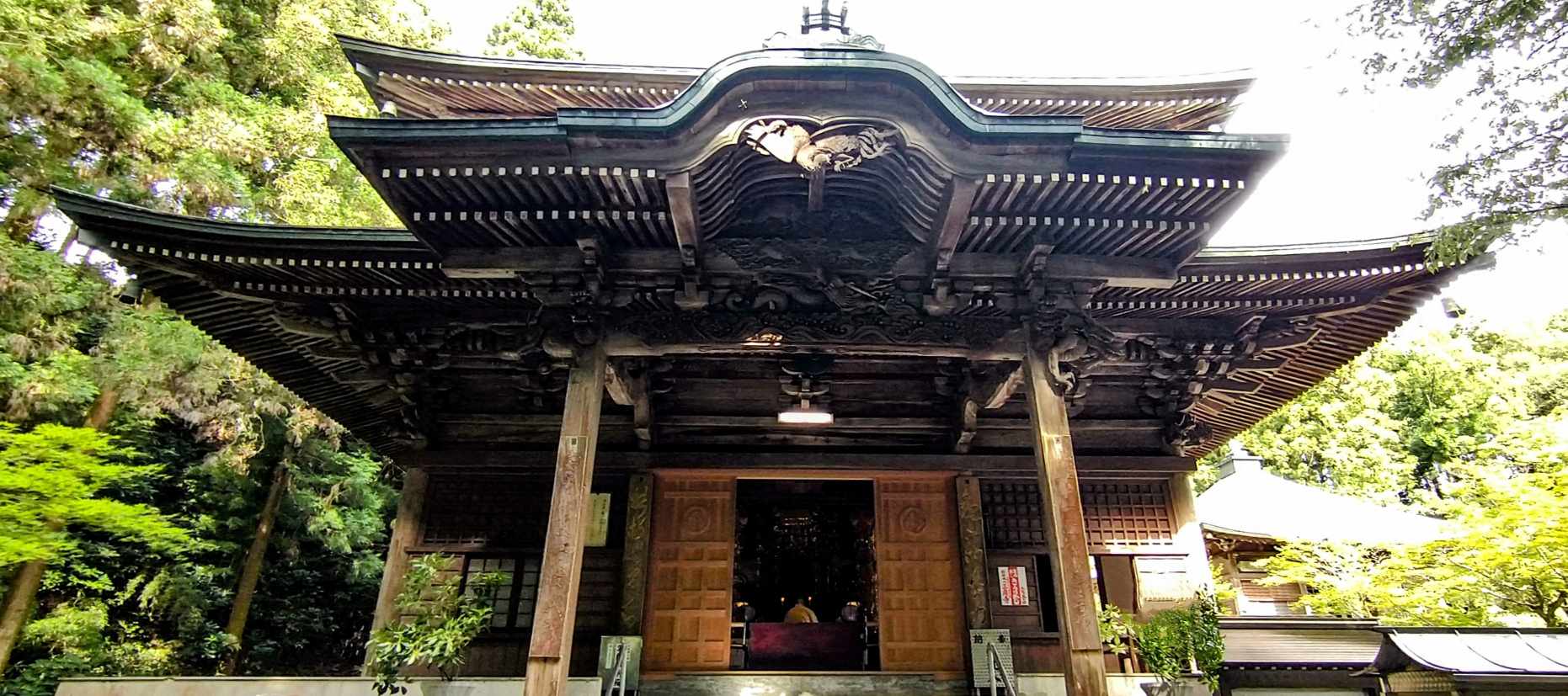
Image of Sankaku-ji (三角寺). Image source · CC0
Station 65 of 88
Shikoku 88 Temple PilgrimageVisit essentials
A quick read before you go
- Duration
- 45 to 75 minutes on site.
- Access
- Mountain temple at roughly 450 metres elevation in Shikokuchūō, Ehime.
Overview
Sankaku-ji means 'triangle temple,' and it earns the name twice over. The first triangle is the goma altar Kūkai built in 815 — three points of fire bound to a single ritual purpose.
The second is the geographical triangle the henro now closes here: with this temple, the long Ehime stretch of the Shikoku 88 ends, and the Bodhi stage of the pilgrimage — the dawning of the awakening mind — comes to its quiet close before the crossing into Kagawa.
The temple was founded in the 8th century by the priest Gyōki at the request of Emperor Shōmu and refounded ritually by Kūkai a generation later, when, according to tradition, he carved the eleven-faced Kannon now enshrined in the Hondō, raised a triangular altar, and performed a twenty-one-day fire rite to settle a regional disturbance and pray for the welfare of the realm. The mountain courtyard at about 450 metres holds itself apart from the city below.
Cherry trees three and four centuries old line the long stone steps; in late March the petals fall on pilgrim hats and white hakui as if the trees themselves were performing the rite. After the long traverse from Maegami-ji and Yokomine-ji and the deeper Ishizuchi temples, henro often arrive here with the body honestly tired — an emptied attentiveness that the small contained precinct seems to absorb.
The Hondō, rebuilt in 1849 and restored in 1971, holds the Jūichimen Kannon: eleven faces watching every direction so that no suffering goes unseen. The Daishi-dō stands close by. Pilgrims chant the Heart Sutra and the Kōbō Daishi mantra, light one candle and three sticks of incense at each hall, drop an osamefuda and a coin in the box, and receive the temple's calligraphic stamp at the nōkyō office.
Whether the original triangular altar Kūkai built still survives in any form on the grounds is unclear; the geometry remains in the temple's name and the cardinal logic of the courtyard.
Why this place is sacred
Sankaku-ji's thinness has three sources that interact. First is its altitude — about 450 metres on the eastern flank of the Ishizuchi range — high enough to lift the precinct out of the industrial humidity of the coast and into a cooler, contained microclimate where the wind moves differently.
Second is the ancient cherry tree colony lining the approach: trees three to four centuries old that have outlived a dozen reconstructions of the buildings around them, holding the slow time of the place in their wood. Third is the temple's ritual identity.
Kūkai's 815 visit, when he is said to have carved the eleven-faced Kannon and raised a triangular goma altar for a twenty-one-day fire ceremony to subdue malevolent influence and pray for the realm, gave the site both its name and a particular quality — a place understood in folk Buddhism as actively binding a region to ritual peace through three-pointed mandalic geometry.
For pilgrims, the geographical fact reinforces this: with Sankaku-ji, the twenty-six 'Bodhi' temples of Ehime end, and the Nirvana stage in Kagawa begins. The body knows it before the mind does.
Founded in the 8th century by Gyōki under Emperor Shōmu as a Buddhist temple. Refounded ritually by Kūkai in 815 as a Shingon esoteric site centred on the eleven-faced Kannon and a triangular goma altar built to perform protective fire rites for the realm.
Damaged during the 16th-century Chōsokabe invasions of Shikoku, like much of the pilgrimage. The current Hondō was rebuilt in 1849 and restored in 1971. Across centuries the pilgrimage's Edo-period systematization fixed Sankaku-ji as the sixty-fifth temple — the last of the twenty-six Ehime temples and the closing point of the awakening-mind stage — a structural role the temple still carries.
Experience and orientation
Most pilgrims arrive in one of two ways. The walking henro come from Maegami-ji at Temple 64 across the Ishizuchi foothills, a substantial mountain stage of several hours that ends with a steep approach to the temple gate. Others drive a winding mountain road from the Shikokuchūō plain to a small parking area near the bottom of the stone steps.
Either way the entry is the same: a long flight of worn stone stairs ascending under cherry trees old enough that their lower branches have become horizontal beams over the path. In late March the petals fall onto white hakui and sedge hats; in October the maples redden behind them. The gate gives onto a compact courtyard set against the mountain rather than spread across it.
The Hondō faces forward, the Daishi-dō stands to the side, the bell tower is close enough to feel its sound when struck. Below, the industrial coast of Shikokuchūō flattens out — paper mills, the Setouchi inland sea, a layer of haze. Above, the wooded ridge stays cool.
Pilgrims set down kongō-zue staffs at the hall steps, light a single candle from their own match, place three sticks of incense, drop an osamefuda and a small coin, and chant the Heart Sutra at one hall, then move to the other. The chant carries differently here than at the lower temples — the courtyard is small enough to return the sound.
After the second hall many pilgrims sit a while at the edge of the precinct before going to the nōkyō office for the stamp. The body is often tired in a way that feels not heavy but cleared. After Sankaku-ji the next stop, Unpen-ji, climbs much higher still and crosses into Tokushima.
From the parking lot or trailhead, climb the stone steps to the gate. Bow at the gate before entering. Wash hands and rinse the mouth at the chōzuya (water pavilion). Approach the Hondō first: light one candle (use your own flame, not another pilgrim's), place three sticks of incense, deposit your osamefuda slip and a small coin, then recite the Heart Sutra. Move to the Daishi-dō and repeat, adding the Kōbō Daishi mantra Namu Daishi Henjō Kongō.
Walk the precinct: the bell tower, the cherry-tree avenue, the view down to the coast. Visit the nōkyō office for your stamp before 17:00. Bow again at the gate as you leave.
Context and lineage
Tradition holds that the priest Gyōki founded a temple here in the 8th century at the request of Emperor Shōmu — part of the same Nara-era programme that produced provincial temples across the country. About a generation later, in 815, the young Kūkai (later Kōbō Daishi) is said to have visited the mountain, carved an eleven-faced Kannon and a Fudō Myōō statue, and raised a triangular goma altar on which he performed a twenty-one-day fire ritual.
The rite is recorded as a response to a regional disturbance — sometimes glossed in folk accounts as a ghost or calamity — and as a prayer for the welfare of the realm. The triangular geometry gave the temple its name and a continuing reputation as a site of protective ritual.
Shingon Buddhism, the esoteric tradition founded by Kūkai. The exact present-day Shingon sub-branch (Kōyasan-shū vs. a Sanuki regional branch) is reported variably across sources.
Gyōki
Founder
Kūkai (Kōbō Daishi)
Refounder and ritual originator
Emperor Shōmu
Patron of original foundation
Traditions and practice
Goma (homa) fire offering, the Shingon esoteric ritual whose triangular altar gave the temple its name; recitation of the Heart Sutra and the Mantra of Light; Jūichimen Kannon devotional practices for compassion and protection.
Daily monastic services led by resident clergy; nōkyō office issuing pilgrim stamps and calligraphy; seasonal Daishi commemorations.
Climb slowly. The stair is the first part of the practice. At the Hondō, light one candle from your own flame, place three sticks of incense, leave an osamefuda and a coin, and chant the Heart Sutra. Move to the Daishi-dō and repeat, adding Namu Daishi Henjō Kongō. Stand a moment at the edge of the courtyard before going for your stamp; let the body register that this is the last Ehime temple.
Shingon Buddhism
ActiveSankaku-ji is part of the esoteric Shingon school founded by Kūkai. Tradition associates the temple with his 815 visit, when he carved the Jūichimen (Eleven-faced) Kannon honzon and built a triangular goma altar for a twenty-one-day fire ritual on behalf of the realm.
Goma (homa) fire offerings, mantra recitation, mudras, visualization. Pilgrims chant the Heart Sutra and the Kōbō Daishi mantra (Namu Daishi Henjō Kongō) at the Hondō and Daishi-dō.
Perspectives and open questions
Sankaku-ji can be read through several frames at once: a Nara-Heian foundation refounded by Kūkai, a node in the Edo-period mapping of the Shikoku 88, a folk-Buddhist site of protective triangular geometry, and an interior threshold for the modern pilgrim closing the Ehime stage.
Scholarly perspective
Historians treat Sankaku-ji as a Nara/Heian-era foundation associated with Gyōki and refounded ritually as a Shingon esoteric site through Kūkai's 815 visit. Its placement at the close of the Bodhi stage of the Shikoku 88 reflects the Edo-period systematization of the pilgrimage rather than an earlier scheme. The current Hondō dates to the Edo-period 1849 rebuild, restored in 1971.
Living and traditional perspectives
In folk-Buddhist reading, the triangular altar Kūkai built is understood as protective mandalic geometry — three points binding a region to ritual peace. The temple's reputation as a site of fire-ritual exorcism survives in pilgrim memory even where direct ritual evidence has faded.
Alternative interpretations
Within Shingon contemplative tradition, the goma fire ritual is the burning away of inner defilements (kleshas). The triangular altar at Sankaku-ji is sometimes read as a literal embodiment of this purificatory geometry — not a metaphor for inner purification but its outer form.
Open questions
Whether the exact triangular altar Kūkai is said to have built survives in any physical form on the present grounds is not documented. The precise nature of the regional disturbance his twenty-one-day rite addressed — recorded variously as a ghost, a calamity, or a malevolent influence — is not historically attested.
Plan your visit
Access and arrival
Mountain temple at roughly 450 metres elevation in Shikokuchūō, Ehime. By car: a winding mountain road climbs to a small parking lot near the bottom of the stone steps. On foot: the henro trail from Maegami-ji (Temple 64) is a substantial climb of several hours through the eastern Ishizuchi foothills.
Small inns and minshuku along the henro route in Shikokuchūō; many walking pilgrims overnight in the city below before the morning climb. Specific availability and contact details should be confirmed through the official Shikoku 88 pilgrim office or local tourism authority.
Respectful visit
Modest, comfortable clothing for the climb. Traditional henro whites — hakui, sedge hat, kongō-zue staff, juzu — are welcomed but not required. Sturdy shoes for the stone steps.
Outdoor photography on the grounds is generally permitted. No photography inside the Hondō or Daishi-dō, no flash near altars, and no interruption of rituals.
One candle (lit from your own match, never from another pilgrim's flame), three sticks of incense, an osamefuda slip, and a small coin offering at each of the Hondō and the Daishi-dō.
Do not enter inner sanctum areas. No eating in worship areas. Do not disturb the cherry trees. The stamp office stops issuing after 17:00.
Never light a candle from another pilgrim's flame — bring your own match or lighter. Set down the kongō-zue staff before entering halls. Do not interrupt monks during services.
Current practical details
Address
甲-75 三角寺 金田町 Shikokuchuo, Ehime 799-0124, Japan
Phone
Hours
Hours, fees, and access can change — verify on the official source before you travel. Practical details last checked Jun 2026.
Location
Map loads as you approach this section.
Pilgrim reflections
A portrait of encounter, not a score
Pilgrims describe what they felt, how present they could become, and whether the place would shape a journey. There are no stars and no ranking of traditions.
No reviewed reflections yet
The first pilgrims can help describe the character of being here.
Share a reflection
Available after an account-backed “Been there.” Every reflection is reviewed before publication.
Watch deeper
Films, episodes, and recorded talks for visitors who want more context before or after a visit. Speculative and alternative-history entries are labelled as perspectives, not as sources for established claims.
Nearby sacred places
Explore other sacred places in the region. Proximity does not establish access or travel time; check each place’s guidance.


References
Sources consulted for this page. Source categories describe the publication, not a guarantee that every claim is verified. Traditional accounts and outside interpretations may differ.
- 01Sankakuji – Shikokuchuo, Ehime Prefecture, Shikoku — Henro.orgguideAuthoritative English-language reference for the Shikoku 88 temples.
- 02Customs and Etiquette of the Shikoku Pilgrimage — Henro.orgguideStandard pilgrim etiquette and temple-visit procedure.
- 03Temple 65, Sankaku-ji — Japan AdventurerguideDetailed temple-by-temple guide with founding history.
- 04Temple 65, Sankaku-ji — Shikoku ToursguidePilgrim-oriented overview.
- 05Shikoku Pilgrimage — WikipediaencyclopediaBackground on the pilgrimage and the four prefectural stages of practice.
Pilgrim glossary
- Kannon
- The bodhisattva of compassion, central to many East Asian pilgrimage routes.
- Sutra
- A canonical Buddhist scripture, often chanted as part of practice.
- Mantra
- A sound, word, or phrase repeated as part of meditation or ritual.
- Shingon
- An esoteric Japanese Buddhist school emphasizing ritual, mantra, and mandala practice.
Share a photo
Help visitors recognize Sankaku-ji. Every submission is reviewed before publication.