Ido-ji
A well that returns your reflection — and reads it
Understand sacred places, explore living traditions, and learn how to engage respectfully with Pilgrim Map.
Access has not been verified. Check current local guidance before planning a visit.
Tokushima, Tokushima Prefecture, Japan
Read the sources
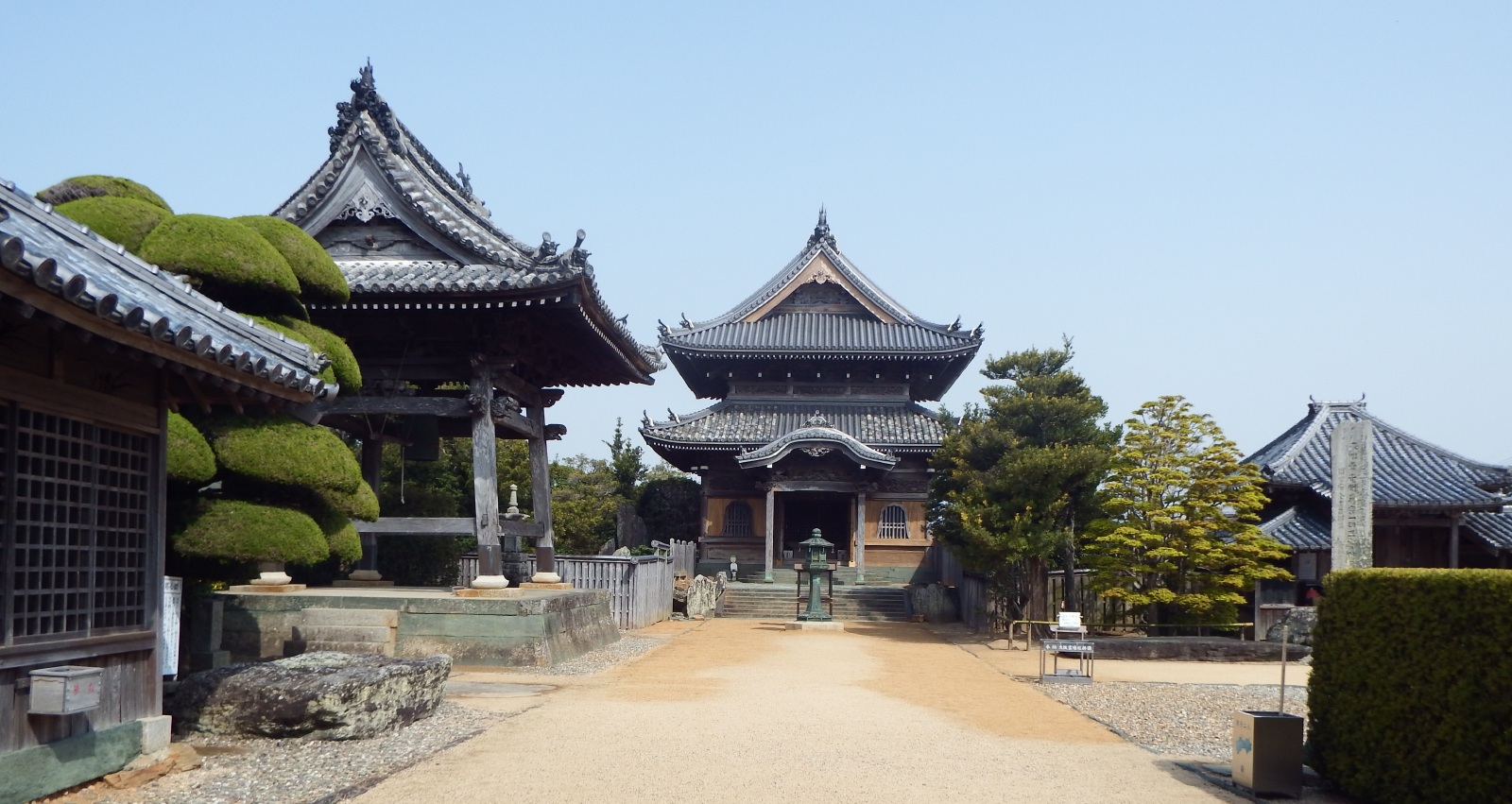
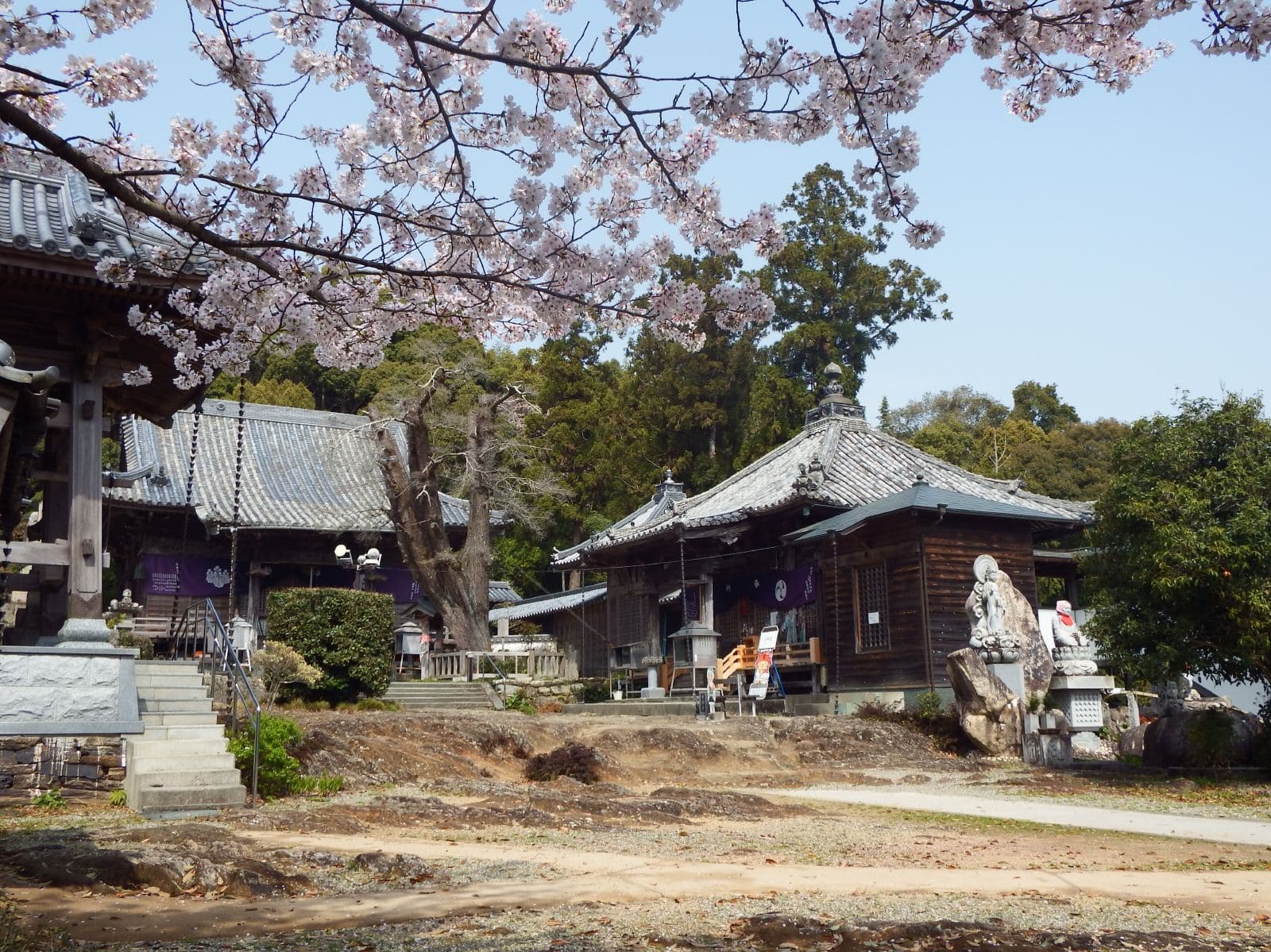
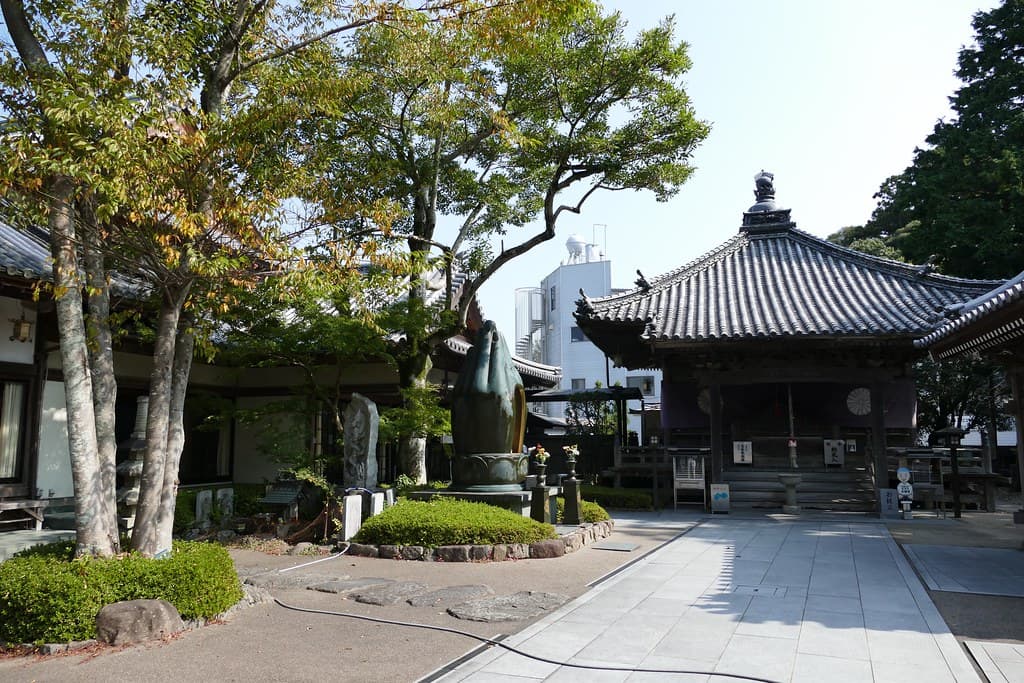
Image of Ido-ji (井戸寺). Image source · CC-BY-SA-4.0
Station 17 of 88
Shikoku 88 Temple PilgrimageVisit essentials
A quick read before you go
- Duration
- 30-60 minutes for a thoughtful visit including both halls, the Reflection Well, and the stamp…
- Access
- Address: 80-1 Idokita-Yashiki, Kokufu-chō, Tokushima City, Tokushima 779-3118.
Overview
Ido-ji, the 17th of Shikoku's 88, stands at Tokushima's edge. Its name means 'Well Temple,' and its Reflection Well centers the precinct. Tradition says Kūkai came in 815, dug a well with his staff in a single night to relieve villagers whose drinking water had turned foul, and carved an Eleven-Headed Kannon. The temple began earlier, in 673 under Emperor Tenmu, as Myōshō-ji.
It enshrined seven Yakushi statues said to have been carved by Prince Shōtoku, with Nikkō and Gakkō attendant bodhisattvas attributed to Gyōki. Ido-ji became its official name only in 1916.
Pilgrims bow at the Niōmon, offer first at the Hondō to Yakushi Nyorai, the Medicine Buddha, and then at the Daishidō to Kōbō Daishi. At the Omokage-no-Ido, they drop a coin and look down: tradition promises good health to those who see their reflection and warns those who cannot of misfortune within three years. The legend is folkloric, but people genuinely grow still and look.
Water and medicine shape the temple's logic: Yakushi heals body, speech, and mind; Kūkai's well heals thirst and impurity; the Reflection Well asks whether the heart can see itself. Between Temple 16 Kannon-ji and Onzan-ji, Ido-ji lets the henro's healing dimension surface above physical demand. The Hondō was rebuilt in 1968 after centuries of fires, preserving a line of practice rather than original wood.
Why this place is sacred
The thinness here is liquid. Two threads of legend meet at the well: an imperial Buddhist foundation in 673 with seven Yakushi statues attributed to Prince Shōtoku, and Kūkai's 815 visit, when he is said to have dug a well overnight to relieve villagers whose water had become polluted. The same Kūkai is credited with carving a 1.9-metre Eleven-Headed Kannon during the same visit. Healing here is not abstract.
The Yakushi tradition treats the Buddha as physician — body, speech, and mind as patients — and Ido-ji literalises that imagery in well water. The Reflection Well does something stranger. Pilgrims peer down, expecting to see their face. Folk tradition says those who cannot are warned of misfortune within three years; those who can will enjoy health. The act collapses the distance between literal water and metaphysical mirror.
For walking pilgrims, the temple often functions as a moment when the henro's pace slows and its healing dimension becomes visible above its physical effort.
Founded as Myōshō-ji in 673 under Emperor Tenmu, the temple was an imperial dedication housing the Shichi-butsu Yakushi (Seven Medicine Buddhas) — a complete pantheon for healing across body, mind, and circumstance. Kūkai's 815 visit recoded the precinct around water: an act of compassion-as-engineering that fused dharma and hydrology.
Successive fires in 1362 and damage in 1582 forced rebuilds; the present Hondō dates to 1968. The official name changed from Myōshō-ji to Ido-ji in 1916, formalising a folk identity that the well had already earned. The seven Yakushi figures inside are most likely later replacements after the medieval fires — the line of attribution survives where the original wood did not.
Today Ido-ji is a working Shingon temple on the edge of Tokushima City, receiving daily henro pilgrims and issuing nōkyōchō stamps.
Experience and orientation
Step through the Niōmon and the temple opens around you in a familiar Shingon arrangement: the Hondō ahead, the Daishidō to the side, a stamp office, a stone basin for purification, and the small covered well that gives the temple its name. The two halls house the formal worship — Yakushi Nyorai in the Hondō behind a gold-leaf altar, Kōbō Daishi in the Daishidō. Most pilgrims complete both before approaching the well. The Reflection Well sits low and quiet.
There is no spectacle. Pilgrims drop a one-yen coin, lean over the wooden frame, and look down. Some hesitate. Some smile. Some stand back up and walk away without saying what they saw. The legend gives the gesture its weight: see your reflection, you are well; do not, three years' caution. Whether or not you trust the folk-frame, the act asks for honest looking. The temple's atmosphere reflects this — quiet, attentive, rarely crowded except at peak henro season.
The chanting of the Heart Sutra at the Hondō, the click of nōkyōchō stamps in the office, the small splash of a coin in the well are most of the soundscape.
Enter through the Niōmon with a small bow. Purify hands and mouth at the stone basin. Offer at the Hondō first (Yakushi Nyorai), then the Daishidō (Kōbō Daishi). Drop your osamefuda, light incense, chant or read the Heart Sutra and the Kōbō Daishi mantra ('Namu Daishi Henjō Kongō') if that is your practice. Then approach the Reflection Well. Drop a coin, look down. Receive your nōkyōchō stamp at the temple office before leaving.
Bow again at the Niōmon as you depart.
Context and lineage
The temple's official biography stitches two legendary moments. In 673, Emperor Tenmu founded a temple here named Myōshō-ji, dedicating it to seven Yakushi figures said to have been carved by the legendary statesman-monk Prince Shōtoku. Two attendant bodhisattvas, Nikkō (Sunlight) and Gakkō (Moonlight), were attributed to Gyōki, the wandering monk-engineer of the Nara period.
In 815, Kūkai is said to have visited and added two strands: he carved a 1.9-metre Eleven-Headed Kannon, and he dug the well overnight with his staff to bring clean water to villagers suffering polluted wells. The folk version emphasises the well; the institutional version emphasises the imperial dedication. Both layers persist.
Kōyasan Shingon (Omuro-ha sub-affiliation referenced in some sources). Ido-ji is one of the 88 sacred sites of the Shikoku Pilgrimage and the 17th in standard order, bridging Tokushima City's urban temples and the southward turn toward Onzan-ji.
Emperor Tenmu
Imperial founder
Prince Shōtoku
Traditional carver of the Seven Yakushi
Gyōki
Attributed carver of Nikkō and Gakkō Bosatsu
Kūkai (Kōbō Daishi)
Visited 815, carved Eleven-Headed Kannon, dug the well
Traditions and practice
Twice-daily monastic services maintain the temple's liturgical rhythm. Goma fire rituals are performed on key Shingon dates, and Yakushi-related healing prayers — yakuyoke (warding misfortune) and byōkihei (illness recovery) — are offered for individuals and families. The seven Yakushi images focus prayers across what Shingon esotericism describes as complete healing: body, speech, and mind.
Daily henro arrivals form most of the visible activity. Pilgrims offer first at the Hondō, then at the Daishidō, peer into the Reflection Well, and receive their nōkyōchō stamp at the temple office. Local visitors come for personal healing prayers, especially when family members are ill at home. Coins, incense, and osamefuda are sold on site for those without their own.
If you are visiting as a pilgrim, complete both halls before approaching the well. Read or chant the Heart Sutra at each hall, drop your osamefuda in the wooden box, and add three sticks of incense. At the well, drop a coin and look down without rushing. The gesture is private; do not perform it. If you have someone unwell at home, write their name on an osamefuda and leave it with intention.
Shingon Buddhism
ActiveIdo-ji is one of the 88 sacred temples founded or sanctified by Kūkai (Kōbō Daishi), placing it at the heart of Shingon esoteric practice on Shikoku.
Henro worship at the Hondō (Yakushi Nyorai) and Daishidō (Kūkai), with sutra chanting (Heart Sutra, Hannya Shingyō), incense and candle offering, osamefuda placement, and nōkyōchō stamp. The Reflection Well sits as a distinctive folk-ritual element layered onto the standard liturgy.
Perspectives and open questions
Ido-ji's foundation legends sit comfortably within standard Heian-era patterns of temple origin: imperial sponsorship, royal-monk attributions, and later Kūkai sanctification. Different readings emphasise different layers.
Scholarly perspective
Academic Japanese Buddhist scholarship treats the foundation legends as narrative devices that consolidated local cults into the Shingon network rather than as literal historical events. The Prince Shōtoku and Gyōki attributions are typical Heian backformations; the Kūkai 815 visit is more historically plausible but still cannot be dated precisely. The medieval fires of 1362 and 1582 mean most of the present statuary is later replacement, however ancient the line of practice.
Living and traditional perspectives
Local Tokushima oral tradition emphasises Kūkai's compassionate engineering — that he 'dug the well in one night with his staff' to relieve villagers — a folk tale that aligns Kōbō Daishi with the bodhisattva ideal of practical aid as much as esoteric attainment. The well is treated as living, not as historical relic.
Alternative interpretations
In Shingon esoteric reading, the Seven Yakushi correspond to seven aspects of the Medicine Buddha (Shichi-butsu Yakushi), representing complete healing across body, speech, and mind. The Reflection Well functions as a mandalic mirror: water as upaya (skillful means), the gaze as the test of the practitioner's clarity.
Open questions
The exact date of Kūkai's 815 visit and its circumstances cannot be verified. Whether the original well predated him or was genuinely opened by him is unknowable. Several attributed images are likely later replacements after the medieval fires.
Plan your visit
Access and arrival
Address: 80-1 Idokita-Yashiki, Kokufu-chō, Tokushima City, Tokushima 779-3118. Approximately 20-minute walk from Ko Station on the JR Tokushima Line. Taxi from Tokushima Station roughly 20 minutes. Free parking on site. Phone: 088-642-1324. Standard Shikoku 88 nōkyō hours typically 07:00-17:00; phone ahead for early or late visits.
Tokushima City offers a full range of business hotels, guesthouses, and ryokan within easy reach by taxi or local train. Pilgrim-friendly minshuku exist along the Mugi Line corridor for walkers continuing south.
Respectful visit
Modest casual is fine. Many pilgrims wear the white hakui (pilgrim coat), kasa (sedge hat), and carry a kongō-zue staff. Hats off inside halls.
Permitted in the precincts and at the well exterior. Interior photography of altars and Buddha images is typically prohibited or discouraged — ask staff if uncertain.
Coins (1, 5, or 10 yen), three sticks of incense, one candle, an osamefuda slip dropped in the wooden box at each hall, and shakyō (copied sutras) if you have them. The coin-drop at the Reflection Well is its own small offering.
No alcohol on grounds, no smoking, do not step on hall thresholds, and do not interact physically with the Reflection Well beyond looking and a single coin.
Do not wash hands, feet, or anything else in the Reflection Well — it is for viewing only. Do not photograph the interior altars without explicit permission. Avoid loud conversation in either hall.
Current practical details
Address
Kitayashiki-80-1 Kokufuchō Ido, Tokushima, 779-3118, Japan
Phone
Hours
Hours, fees, and access can change — verify on the official source before you travel. Practical details last checked Jun 2026.
Location
Map loads as you approach this section.
Pilgrim reflections
A portrait of encounter, not a score
Pilgrims describe what they felt, how present they could become, and whether the place would shape a journey. There are no stars and no ranking of traditions.
No reviewed reflections yet
The first pilgrims can help describe the character of being here.
Share a reflection
Available after an account-backed “Been there.” Every reflection is reviewed before publication.
Watch deeper
Films, episodes, and recorded talks for visitors who want more context before or after a visit. Speculative and alternative-history entries are labelled as perspectives, not as sources for established claims.
Nearby sacred places
Explore other sacred places in the region. Proximity does not establish access or travel time; check each place’s guidance.

References
Sources consulted for this page. Source categories describe the publication, not a guarantee that every claim is verified. Traditional accounts and outside interpretations may differ.
- 01Idoji Temple Tokushima — Japan ExperienceguideProvides foundation date (673), name change history, and address.
- 02Rurizan Shinpukuin Idoji – Shikoku 88 Temple Pilgrimage — Shikoku 88 Reijokai (official pilgrimage association)officialOfficial temple association page with mountain name and lineage.
- 03Idoji – Tokushima City, Tokushima Prefecture, Shikoku — Henro.org (David C. Moreton et al.)guideEstablished pilgrim reference; details well legend, principal images.
- 04Temple No. 17 of the Sacred Temples of Shikoku, Ido-ji Temple — Shikoku Pilgrimage NewsguideDetailed historical narrative including fire and rebuild dates.
- 05Temple 17, Ido-ji — Japan AdventurerguidePractical visitor guide.
- 06Shikoku Pilgrimage — Wikipedia contributorsencyclopediaPilgrimage etiquette context and route framing.
Pilgrim glossary
- Kannon
- The bodhisattva of compassion, central to many East Asian pilgrimage routes.
- Bodhisattva
- An enlightened being who postpones full nirvana to help others toward awakening.
- Sutra
- A canonical Buddhist scripture, often chanted as part of practice.
- Mantra
- A sound, word, or phrase repeated as part of meditation or ritual.
- Dharma
- The teachings of the Buddha; also the universal law underlying them.
- Shingon
- An esoteric Japanese Buddhist school emphasizing ritual, mantra, and mandala practice.
Share a photo
Help visitors recognize Ido-ji. Every submission is reviewed before publication.