Awa Kokubun-ji
Imperial provincial temple of Awa, founded 741, Temple 15 of the Shikoku 88
Understand sacred places, explore living traditions, and learn how to engage respectfully with Pilgrim Map.
Access has not been verified. Check current local guidance before planning a visit.
Tokushima, Tokushima Prefecture, Japan
Read the sources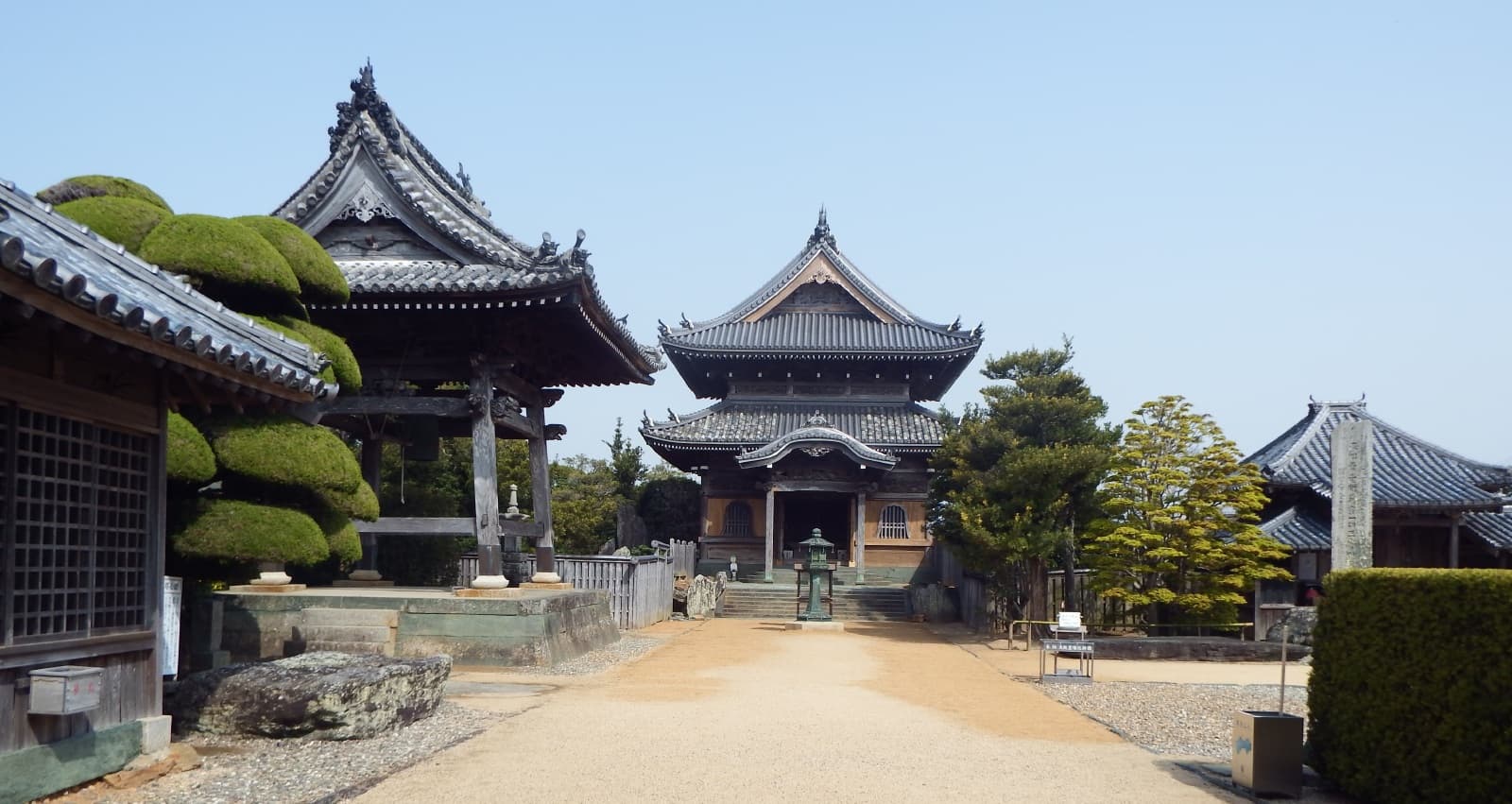
Image of Awa Kokubun-ji (阿波国分寺). Image source · CC-BY-SA-4.0
Station 15 of 88
Shikoku 88 Temple PilgrimageVisit essentials
A quick read before you go
- Duration
- 30–60 minutes including ritual, foundation-stone viewing, and garden contemplation.
- Access
- Located in Tokushima City (Kokufu-chō), Tokushima Prefecture, just north of Temple 14 Jōraku-ji.
Overview
Awa Kokubun-ji belongs to a network of provincial temples ordered into being by Emperor Shōmu's 741 edict. Sixty-eight kokubunji and matching kokubunniji (provincial nunneries) were established across Japan to pray for national peace, good harvests, political and religious unity, and the cultural improvement of the provinces. The Awa kokubunji was built in fulfilment of this edict; the monk Gyōki, a leading Buddhist figure of Shōmu's reign, traditionally carved the principal Yakushi Nyorai (Medicine Buddha) image.
The temple's continuous use since the 8th century is materially visible. Foundation stones of the original Nara-period pagoda and other structures have been excavated within the precinct and are designated a Tokushima Prefectural Historical Site. The visible stone bases anchor the modern visitor to a sacred geography that has functioned for nearly thirteen centuries. The temple was, however, transformed by the Tenshō-era Chōsokabe campaigns: most structures were burnt down between 1573 and 1592.
Reconstruction came in 1741—exactly a thousand years after the imperial founding—when Hayami Kakugorō, county magistrate of Awa, rebuilt the temple and reorganised it as a Sōtō Zen establishment, an unusual sectarian shift on a Shingon-rooted pilgrimage.
What distinguishes the modern precinct beyond its history is the garden. In 2000, the temple's dry stone-arrangement garden was designated a Place of Scenic Beauty by the Japanese national government—a formal recognition of its design quality among the gardens of Japan. The arrangement is dynamic rather than placid; the stones lead the eye through long compositions that reward extended viewing.
Pilgrims chant the standard Shikoku henro chants at the Hondō and Daishi-dō, while the resident Sōtō Zen community maintains zazen and Sōtō liturgy. The temple holds three layers in a single precinct: imperial Nara-period origin, henro Shingon devotion, and resident Zen practice.
Why this place is sacred
Thinness here is layered. The imperial-edict founding in 741 places the temple within a network of provincial kokubunji ordered by Emperor Shōmu to pray for the welfare of the whole country. The visible foundation stones of the original pagoda anchor that history materially: the modern visitor walks past actual eighth-century stone bases. The Sōtō Zen residence dating from 1741 marks a second consolidation, exactly a thousand years after the first founding, and brings a distinct meditative tonality to the precinct.
The pilgrim chant of the Shikoku 88 marks a third layer, continuous through both founding and reconstruction.
The garden adds aesthetic depth to historical depth. Designated a Place of Scenic Beauty in 2000, the dry stone arrangement is recognised among the finest gardens in Japan. Standing in front of it, the eye moves through long horizontal and vertical compositions that reward extended viewing. The garden is not a karesansui in the strict Zen-temple sense but draws on the same tradition of rock-and-gravel composition.
Together with the foundation stones, the garden holds the precinct in two distinct registers of arrangement—the lost geometry of the original pagoda's footprint, and the present geometry of the deliberately composed stones.
Founded 741 CE by imperial edict of Emperor Shōmu (reigned 724–749) as the kokubunji (provincial Buddhist temple) of Awa Province. The kokubunji system was established to pray for national peace, good harvests, political and religious unity, and cultural improvement of the provinces. The principal Yakushi Nyorai (Medicine Buddha) image, traditionally carved by Gyōki (668–749), embodied imperial-state Buddhism's promise of physical and political healing for the entire province.
The original Nara-period kokubunji was a substantial complex; foundation stones of the pagoda and other structures survive and are designated a Tokushima Prefectural Historical Site. Most structures were destroyed during the Tenshō era (1573–1592). Reconstruction came in 1741 by Hayami Kakugorō, county magistrate of Awa, who rebuilt the temple and reorganised it as a Sōtō Zen establishment—an unusual sectarian shift on a Shingon-rooted pilgrimage. The Hondō was rebuilt in the Bunka–Bunsei period (1804–1830).
In 2000, the dry stone-arrangement garden was designated a Place of Scenic Beauty by the Japanese national government. The temple has continued in active service as Temple 15 of the Shikoku 88 and as a working Sōtō Zen establishment.
Experience and orientation
Walking pilgrims arrive about a kilometre north of Jōraku-ji, an easy fifteen minutes on flat ground. The Niōmon at Awa Kokubun-ji opens into a quiet, well-kept precinct. The first impression for many pilgrims is the unusual sense of historical depth—old stone walls, well-tended grounds, and the foundation stones of the original Nara-period pagoda visible to one side. Reading the small signage explaining the eighth-century history changes how the precinct feels.
The visible stone bases are unimposing in scale, but they are the actual material remains of an imperial Nara-period temple complex.
The ritual sequence at the Hondō and Daishi-dō follows the standard pilgrim pattern, with the Yakushi Nyorai mantra at the main hall. After ritual, many pilgrims walk to the dry stone-arrangement garden, designated a Place of Scenic Beauty in 2000. The garden rewards slow viewing; standing for several minutes lets the long compositional lines of the stones become visible. The combined visit—ritual, foundation stones, garden—takes thirty to sixty minutes for a thorough engagement.
Some pilgrims continue immediately to Kannon-ji (Temple 16), about three kilometres further north, while others stay longer in the garden's stillness.
The temple sits in Tokushima City (Kokufu-chō), Tokushima Prefecture, just north of Temple 14 Jōraku-ji. The Niōmon faces the road; the courtyard opens to the Hondō and Daishi-dō, with the goshuin office near the precinct edge. The Nara-period foundation stones are within the precinct on one side; the dry stone-arrangement garden is in another section, often viewable from a designated viewing position. Free parking is available.
Context and lineage
In 741, Emperor Shōmu issued an edict ordering the construction of 68 provincial temples (kokubunji) and provincial nunneries (kokubunniji) across Japan to pray for national peace, good harvests, political and religious unity, and cultural improvement of the provinces. Shōmu had been deeply moved by Buddhism, particularly by the cosmology of the Kegon Sutra, and saw the kokubunji network as a means of binding the country together through dharma.
Awa Kokubun-ji was built in fulfilment of this edict; the monk Gyōki carved the Yakushi Nyorai principal image. According to local tradition, Emperor Shōmu personally dedicated a Shaka Nyorai statue and a copy of the Mahā-prajñā-pāramitā Sutra to the temple, and enshrined the mortuary tablet of his consort Empress Kōmyō in the Hondō. The temple is mentioned in the Shikoku Henro Reijōki of 1689 as having declined in the medieval period.
Two layers run together at Awa Kokubun-ji. The historical layer is the Nara-period imperial Buddhism of Emperor Shōmu's kokubunji system, originally administered through the Kegon and Hossō schools, no longer maintained as a distinct lineage. The resident sect is Sōtō Zen, the major Sōtō school of Zen Buddhism descended from Dōgen (1200–1253), emphasising shikantaza (just sitting) and gradual cultivation.
The pilgrimage layer is Shingon: the Shikoku 88 chant sequence is performed at the Hondō and Daishi-dō by passing pilgrims, even as the resident community follows Sōtō ritual.
Emperor Shōmu
Imperial founder; issued the 741 edict ordering construction of the kokubunji network
Gyōki
Traditional carver of the principal Yakushi Nyorai image
Hayami Kakugorō
Edo-period rebuilder; reorganised the temple as Sōtō Zen in 1741
Traditions and practice
The henro sequence at Awa Kokubun-ji follows the standard Shikoku 88 pattern. Pilgrims bow at the Niōmon, purify hands and mouth at the temizuya, and sound the bell once on entry. At the Hondō: osamefuda, candle, three sticks of incense, a small coin, the Heart Sutra, and the Yakushi Nyorai mantra: On Korokoro Sendari Matōgi Sowaka. At the Daishi-dō: the same offerings and the Kōbō Daishi mantra: Namu Daishi Henjō Kongō.
The garden is best contemplated in silence after ritual; standing in front of the stone arrangement for several minutes opens its compositional depth.
The nōkyō office is open 7:00–17:00 daily. The resident Sōtō Zen community maintains zazen and Sōtō liturgy independent of the pilgrim ritual. Pilgrim reception is steady throughout the year, with the cluster of Tokushima City temples (13–17) bringing concentrated foot traffic on certain days. The temple is also a research site for ongoing archaeological and conservation work on the Nara-period foundation stones and the Place of Scenic Beauty garden.
Visit the foundation stones of the original pagoda before or after the ritual—the eighth-century material remains change how the rest of the precinct feels. Spend several minutes silently in front of the dry stone-arrangement garden; quick glances miss its compositional depth. Those interested in zazen may inquire about resident community practice, though formal participation is not standard pilgrim experience.
Sōtō Zen Buddhism
ActiveAwa Kokubun-ji is one of the very few Zen temples among the Shikoku 88. After devastation in the late 16th century, it was revived in 1741 by Hayami Kakugorō as a Sōtō Zen temple. The resident community follows Sōtō ritual, while pilgrim chanting continues the Shingon-rooted Shikoku 88 sutra sequence.
Resident Sōtō Zen practice maintains zazen (seated meditation) and Sōtō liturgy. Pilgrims chant the Heart Sutra and the Yakushi Nyorai mantra at the Hondō, and the Kōbō Daishi mantra at the Daishi-dō.
Imperial Buddhism (Nara-period kokubunji system)
HistoricalAwa Kokubun-ji is one of the 68 provincial temples (kokubunji) ordered into being by Emperor Shōmu's 741 edict to pray for national peace, good harvests, political and religious unity, and cultural improvement of the provinces. The site preserves foundation stones of the original 8th-century pagoda and other structures, designated a Tokushima Prefectural Historical Site.
The original Nara-period Kegon and Hossō schools that animated the kokubunji system are no longer maintained, but the temple's identity as the Awa provincial temple remains a living historical layer.
Perspectives and open questions
Awa Kokubun-ji is read as Nara-period imperial foundation, as henro Shingon temple, as resident Sōtō Zen monastery, and as nationally designated garden. Each reading sees a different facet of the same precinct.
Scholarly perspective
Awa Kokubun-ji's 741 founding is historically documented through the kokubunji edict system; archaeological excavations confirm 8th-century structures on site. The transition to Sōtō Zen in 1741 under Hayami Kakugorō is documented through Awa domain records. The garden's national Place of Scenic Beauty designation in 2000 reflects formal scholarly assessment of its design quality, placing it among the finest gardens in Japan.
Living and traditional perspectives
The temple is venerated as a vehicle of Yakushi Nyorai's healing for the entire province of Awa, in continuity from the Nara-period imperial-state Buddhist vision through current pilgrim devotion. The Nara-period foundation stones are held to retain the sanctity established by the original imperial dedication, and the modern reconstruction is understood as continuous with that founding rather than as a break from it.
Alternative interpretations
Esoteric readings see the garden's dry stone arrangements as a meditation on form and emptiness; the foundation stones of the lost Nara-period pagoda as an inverse stupa—the structure remembered by absence; and the threefold layering of imperial Buddhism, henro Shingon, and Sōtō Zen as a single mandala of dharma's transmission across centuries.
Open questions
The exact original size and layout of the 8th-century kokubunji compound remain partly conjectural. The traditions about Shōmu's personal dedications and Empress Kōmyō's mortuary tablet are difficult to verify from primary sources but persist in temple lore. The relationship between the surviving Yakushi Nyorai image and the Gyōki-attributed original cannot be definitively established.
Plan your visit
Access and arrival
Located in Tokushima City (Kokufu-chō), Tokushima Prefecture, just north of Temple 14 Jōraku-ji. By car: free parking. On foot (henro trail): about 1 kilometre north of Jōraku-ji and about 3 kilometres south of Temple 16 Kannon-ji. Nearest train station: JR Tokushima Station, then bus or taxi.
Pilgrim minshuku, ryokan, and small hotels are available in Tokushima City. The cluster of Temples 13–17 within a few kilometres makes a single-day or two-day completion realistic, with overnight stays in Tokushima City or along the route. Direct contact details and current availability should be confirmed in advance through the Shikoku Henro Reijōkai or local pilgrim guides.
Respectful visit
Modest casual clothing covering shoulders and knees; comfortable walking shoes. Pilgrim white hakui jackets, sedge hats, and kongō-zue staffs are common but optional.
Exterior photography of the precinct, halls, foundation stones, and garden is welcomed. Avoid flash and direct images of enshrined statues inside the halls. Respect the Place of Scenic Beauty designation by not climbing onto stone arrangements for staged photographs.
Standard pilgrim offerings: osamefuda, candle, three incense sticks, and a small coin at each hall. Garden viewing typically involves no specific offering—silent presence is the practice.
Stay on marked paths in the garden and around the foundation stones. Ring the bell only on entry. Do not touch or rearrange stones in the designated garden. Areas under reconstruction or conservation may be temporarily closed; defer to posted signage.
Stay on marked paths around the foundation stones; they are protected as a Tokushima Prefectural Historical Site. The Place of Scenic Beauty garden's stones must not be touched, climbed on, or rearranged—the designation legally protects the composition. Photography of enshrined images inside the halls is generally restricted. Ongoing reconstruction work has been reported in recent years; some areas may be temporarily closed.
Current practical details
Address
Yano-718-1 Kokufuchō, Tokushima, 779-3126, Japan
Phone
Hours
Hours, fees, and access can change — verify on the official source before you travel. Practical details last checked Jun 2026.
Location
Map loads as you approach this section.
Pilgrim reflections
A portrait of encounter, not a score
Pilgrims describe what they felt, how present they could become, and whether the place would shape a journey. There are no stars and no ranking of traditions.
No reviewed reflections yet
The first pilgrims can help describe the character of being here.
Share a reflection
Available after an account-backed “Been there.” Every reflection is reviewed before publication.
Watch deeper
Films, episodes, and recorded talks for visitors who want more context before or after a visit. Speculative and alternative-history entries are labelled as perspectives, not as sources for established claims.
Nearby sacred places
Explore other sacred places in the region. Proximity does not establish access or travel time; check each place’s guidance.


References
Sources consulted for this page. Source categories describe the publication, not a guarantee that every claim is verified. Traditional accounts and outside interpretations may differ.
- 01Temple 15, Kokubunji|What to See & Do|Tourism SHIKOKU — Shikoku Tourism Promotion OrganizationofficialFounding under Emperor Shōmu's 741 edict; Gyōki-attributed Yakushi Nyorai; Place of Scenic Beauty designation.
- 02Yakuouzan Konjikiin Kokubunji – Shikoku 88 Temple Pilgrimage — Shikoku 88 Henro ReijokaiofficialOfficial temple association entry; mountain and institutional names; Sōtō Zen affiliation.
- 03Awa Kokubunji – Tokushima City, Tokushima Prefecture, Shikoku • Henro.org — Henro.orgguidePilgrim guide; Shikoku Henro Reijōki (1689) reference for medieval decline; 1741 Hayami Kakugorō rebuild.
- 04Customs and Etiquette of the Shikoku Pilgrimage - Henro.org — Henro.orgguideStandard henro etiquette.
- 05Temple 15, Kokubunji - 88temples.info — 88temples.infoguideConfirms Sōtō Zen, Yakushi Nyorai, garden of national designation.
- 06Five of the 88 temples of the Shikoku Pilgrimage are located in Tokushima city - Japan Travel — Japan TravelguideConfirms cluster geography of temples 13–17 in Tokushima City.
Pilgrim glossary
- Kannon
- The bodhisattva of compassion, central to many East Asian pilgrimage routes.
- Stupa
- A dome-shaped Buddhist monument that holds relics or marks a sacred place.
- Mandala
- A symbolic diagram of the cosmos used in meditation and ritual.
- Sutra
- A canonical Buddhist scripture, often chanted as part of practice.
- Mantra
- A sound, word, or phrase repeated as part of meditation or ritual.
- Dharma
- The teachings of the Buddha; also the universal law underlying them.
- Shingon
- An esoteric Japanese Buddhist school emphasizing ritual, mantra, and mandala practice.
- Zen
- A Japanese Buddhist school emphasizing seated meditation and direct insight.
Share a photo
Help visitors recognize Awa Kokubun-ji. Every submission is reviewed before publication.