Katsuō-ji
Saigoku temple 23: a working Senju Kannon hall in the Kansai pilgrimage round
Understand sacred places, explore living traditions, and learn how to engage respectfully with Pilgrim Map.
Access has not been verified. Check current local guidance before planning a visit.
Minoh, Osaka Prefecture, Japan
Read the sources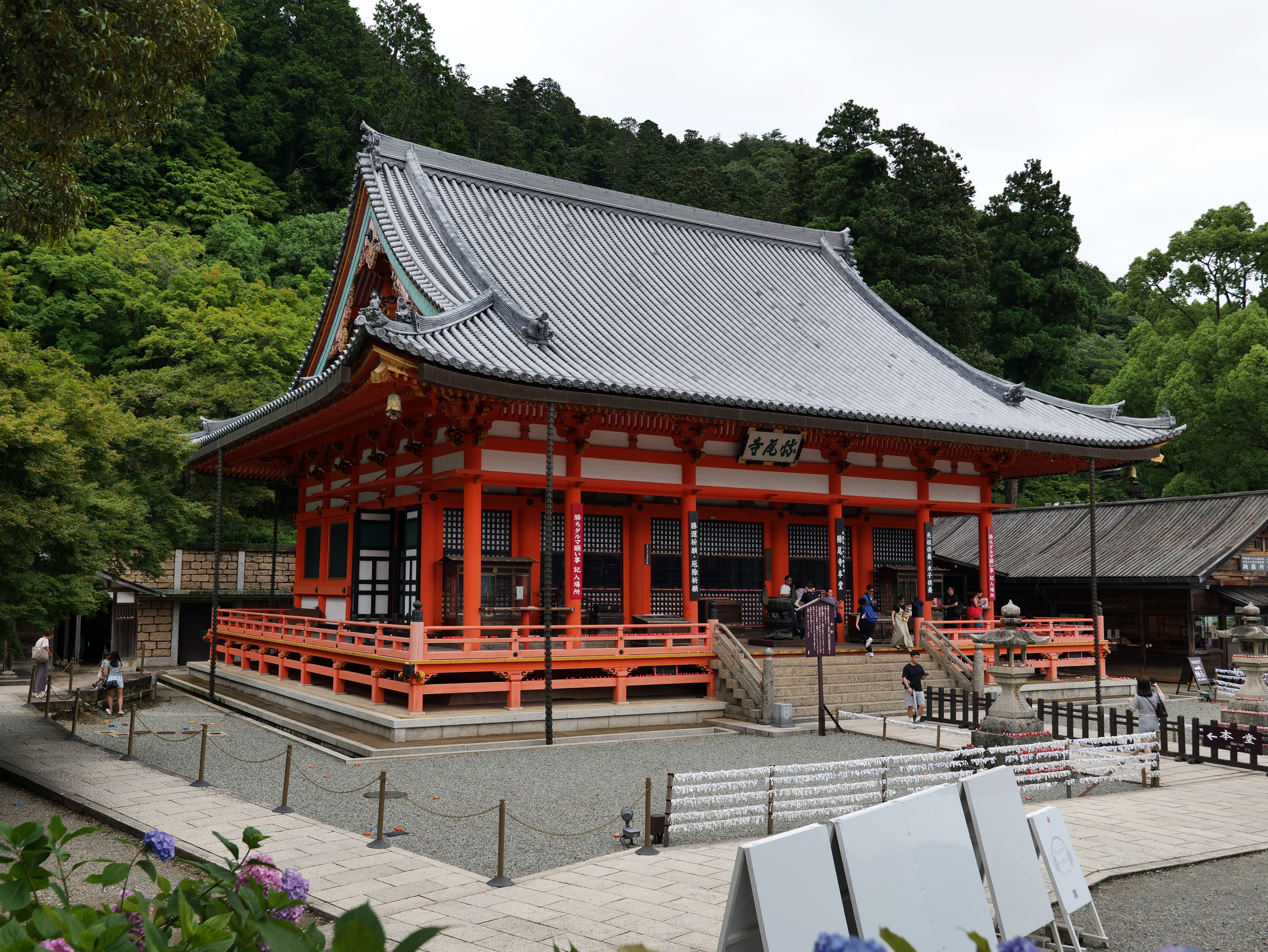
Station 23 of 33
Saigoku Kannon PilgrimageVisit essentials
A quick read before you go
- Duration
- 1.5–3 hours for a full circuit.
- Access
- Adult admission ¥500; junior high/elementary students ¥400; preschool children ¥100.
Overview
Katsuō-ji is temple 23 of the thirty-three-station Saigoku Kannon Pilgrimage, a route that has organized Kansai Kannon devotion for more than a thousand years. Known as the 'temple of victory,' it invokes 勝 (katsu, 'to win') in prayers to Senju Kannon for prevailing over inner and outer obstacles. Thousands of returned red daruma form a visible archive of fulfilled vows.
Tradition dates its foundation to 727 CE (Jinki 4), when Zenchū and Zensan, sons of Fujiwara no Tomofusa, built a Mino-o hermitage to copy the Daihannya-kyō (Mahaprajnaparamita Sutra). In 765, Prince Kaisei, Emperor Kōnin's son, joined and ordained. Imperial recognition came under Emperor Kōkō and later Emperor Seiwa in 880. The name Shōō-ji (勝王寺, 'temple that defeats the king') was judged politically improper and amended to Katsuō-ji (勝尾寺).
Originally an early 8th-century Tendai mountain temple, it became a Kōyasan Shingon-shū branch of Shakamon-in on Mount Kōya in 1674. In the misty Mino-o range, November illuminations, a Japan-unique 64-hexagram Daruma omikuji, and documented imperial-aristocratic patronage from Heian through Edo frame its living popularity.
Why this place is sacred
In the misty Mino-o (Minoh) range, November foliage illumination and thousands of returned red daruma make Katsuō-ji a visible archive of fulfilled vows. It is the Saigoku 33's signature 'temple of victory': 勝 (katsu, 'to win') frames prayer to Senju Kannon for overcoming inner and outer obstacles. Its 64-hexagram Daruma omikuji is described as unique in Japan, while imperial-aristocratic patronage spans the Heian through Edo eras.
Tradition says Zenchū and Zensan settled here in 727 to copy the Mahaprajnaparamita Sutra. Prince Kaisei, son of Emperor Kōnin, joined and ordained in 765. Myōkan sculpted the principal Senju Jūichimen Kannon around 780.
Experience and orientation
Visitors describe Katsuō-ji as one of the most photogenic Saigoku stations — a hillside dotted with countless small red daruma dolls perched on stones, gates, and rooflines. The pond and incense smoke at the entrance, the dramatic stone steps, and the autumn illumination (mid-November) are universally noted.
Context and lineage
727 CE (Jinki 4) — traditional founding by the brothers Zenchū and Zensan, sons of Fujiwara no Tomofusa, who built a hermitage to copy the Daihannya-kyō (Mahaprajnaparamita Sutra). Renamed and granted imperial recognition under Emperor Kōkō (and later Emperor Seiwa, 880); originally bestowed the name 'Shōō-ji' (勝王寺, 'temple that defeats the king'), considered politically inappropriate, and amended to 'Katsuō-ji' (勝尾寺).
Zenchū and Zensan (founding hermits, 727); Kaisei (son of Emperor Kōnin, ordained at Katsuō-ji in 765); Myōkan (sculptor of the principal Senju Jūichimen Kannon image, c. In 727, the brothers Zenchū and Zensan settled in the Mino-o mountains to copy the Mahaprajnaparamita Sutra.
Traditions and practice
Senju Kannon Mikkyō devotion (Kōyasan Shingon mode) Daruma omikuji and the painting/return ritual 64-hexagram Daruma omikuji (unique to Katsuō-ji) Autumn evening pilgrimage (yo-mōde) during November illumination
Kōyasan Shingon-shū (since 1674)
ActiveOriginally founded as a Tendai mountain temple in the early 8th century, Katsuō-ji formally changed sect in 1674 when it became a branch of Shakamon-in on Mount Kōya. The shift from Tendai to Shingon during the Edo period is a documented Edo-era sectarian realignment. The temple is a major Saigoku station and an exceptionally popular daruma-worship center.
Senju Kannon Mikkyō devotion (Senju Sengen Darani); Daruma omikuji ritual: drawing a daruma fortune doll containing a paper omikuji, then leaving the daruma at the temple if desired; 64-hexagram Daruma omikuji (unique to Katsuō-ji): an I-Ching-derived fortune system offering guidance words rather than simple good/bad luck
Perspectives and open questions
The 727 founding by Zenchū and Zensan is recorded in the Katsuō-ji Engi (a temple chronicle of uncertain compositional date) and is not independently dated, but the Heian-era imperial connections (Kaisei's ordination, Emperor Seiwa's name grant in 880) are well attested. Local devotion frames Katsuō-ji as a temple where Senju Kannon's thousand arms are extended specifically to help the practitioner overcome internal weaknesses (fear, indecision, illness).
Scholarly perspective
The 727 founding by Zenchū and Zensan is recorded in the Katsuō-ji Engi (a temple chronicle of uncertain compositional date) and is not independently dated, but the Heian-era imperial connections (Kaisei's ordination, Emperor Seiwa's name grant in 880) are well attested. The 1674 sect change from Tendai to Kōyasan Shingon is a documented Edo-period transfer.
Living and traditional perspectives
Local devotion frames Katsuō-ji as a temple where Senju Kannon's thousand arms are extended specifically to help the practitioner overcome internal weaknesses (fear, indecision, illness). The daruma — modeled on Bodhidharma's nine-year wall-gazing — is read as a symbol of the resolve required to follow through on a vow, with one painted eye representing the commitment and the second eye representing fulfillment.
Alternative interpretations
In Kōyasan Shingon framing, the daruma practice is a folk-Buddhist analog of the Mikkyō vow-and-fulfillment cycle (gan and jōju). The 64-hexagram omikuji, drawn from the I-Ching tradition, is unusual in a Shingon context and reflects the syncretic mountain-Buddhist heritage of the Mino-o range.
Plan your visit
Access and arrival
Adult admission ¥500; junior high/elementary students ¥400; preschool children ¥100. From Senri-Chūō Station on the Osaka Monorail, take the Hankyū Bus (about 30 minutes) to Katsuō-ji. Web tickets available on the temple's official site to skip the gate queue.
Respectful visit
Photography is generally welcomed across the outdoor precinct. Avoid flash near the hondo and during evening illumination. Do not stage-pose with daruma dolls left by other pilgrims.
Coin offering at the offertory box; incense at the censer; admission fee at the gate funds maintenance.
Do not remove daruma dolls placed by other pilgrims Stay on marked paths to protect mossy ground and sub-shrines Quiet voices in the hondo and Tahōtō pagoda
Current practical details
Address
2914-1 Aomatani, Minoh, Osaka 562-8508, Japan
Phone
Hours
Hours, fees, and access can change — verify on the official source before you travel. Practical details last checked Jun 2026.
Location
Map loads as you approach this section.
Pilgrim reflections
A portrait of encounter, not a score
Pilgrims describe what they felt, how present they could become, and whether the place would shape a journey. There are no stars and no ranking of traditions.
No reviewed reflections yet
The first pilgrims can help describe the character of being here.
Share a reflection
Available after an account-backed “Been there.” Every reflection is reviewed before publication.
Nearby sacred places
Explore other sacred places in the region. Proximity does not establish access or travel time; check each place’s guidance.


References
Sources consulted for this page. Source categories describe the publication, not a guarantee that every claim is verified. Traditional accounts and outside interpretations may differ.
- 01Katsuoji Temple — temple of luck and daruma — Osaka Convention & Tourism BureauofficialOfficial Osaka tourism portal.
- 02Katsuō-ji – Minoh, Osaka — Henro.orgguidePilgrimage reference.
- 03Saikoku Kannon Pilgrimage Japan Heritage — Saigoku Sanjusankasho ReijokaiofficialConfirms Japan Heritage designation.
- 04Katsuō-ji — Wikipedia contributorsencyclopediaCites the Katsuō-ji Engi for 727 founding by brothers Zenchū and Zensan; sect change from Tendai to Shingon in 1674.
- 05Katsuo-ji - The Daruma Dolls Temple in Osaka — Kanpai JapanguideDetailed visit info, admission, autumn illumination.
- 06A Visitor's Guide to Katsuo-ji: Historic 'Winning Daruma' Temple — Good Luck Trip (GLT)guideDaruma omikuji and 64-hexagram fortune practice.
- 07Katsuo-ji Temple, Osaka's Hidden Daruma Temple — Kansai OdysseyguidePractical visit info.
Pilgrim glossary
- Kannon
- The bodhisattva of compassion, central to many East Asian pilgrimage routes.
- Sutra
- A canonical Buddhist scripture, often chanted as part of practice.
- Shingon
- An esoteric Japanese Buddhist school emphasizing ritual, mantra, and mandala practice.
- Tendai
- A Japanese Buddhist school based on the Lotus Sutra, foundational to many later traditions.
Share a photo
Help visitors recognize Katsuō-ji. Every submission is reviewed before publication.