Tokoin Hagino-tera
Bush clover, haiku stones, and an emperor's personal Buddha
Understand sacred places, explore living traditions, and learn how to engage respectfully with Pilgrim Map.
Access has not been verified. Check current local guidance before planning a visit.
Osaka Prefecture, Japan
Read the sources
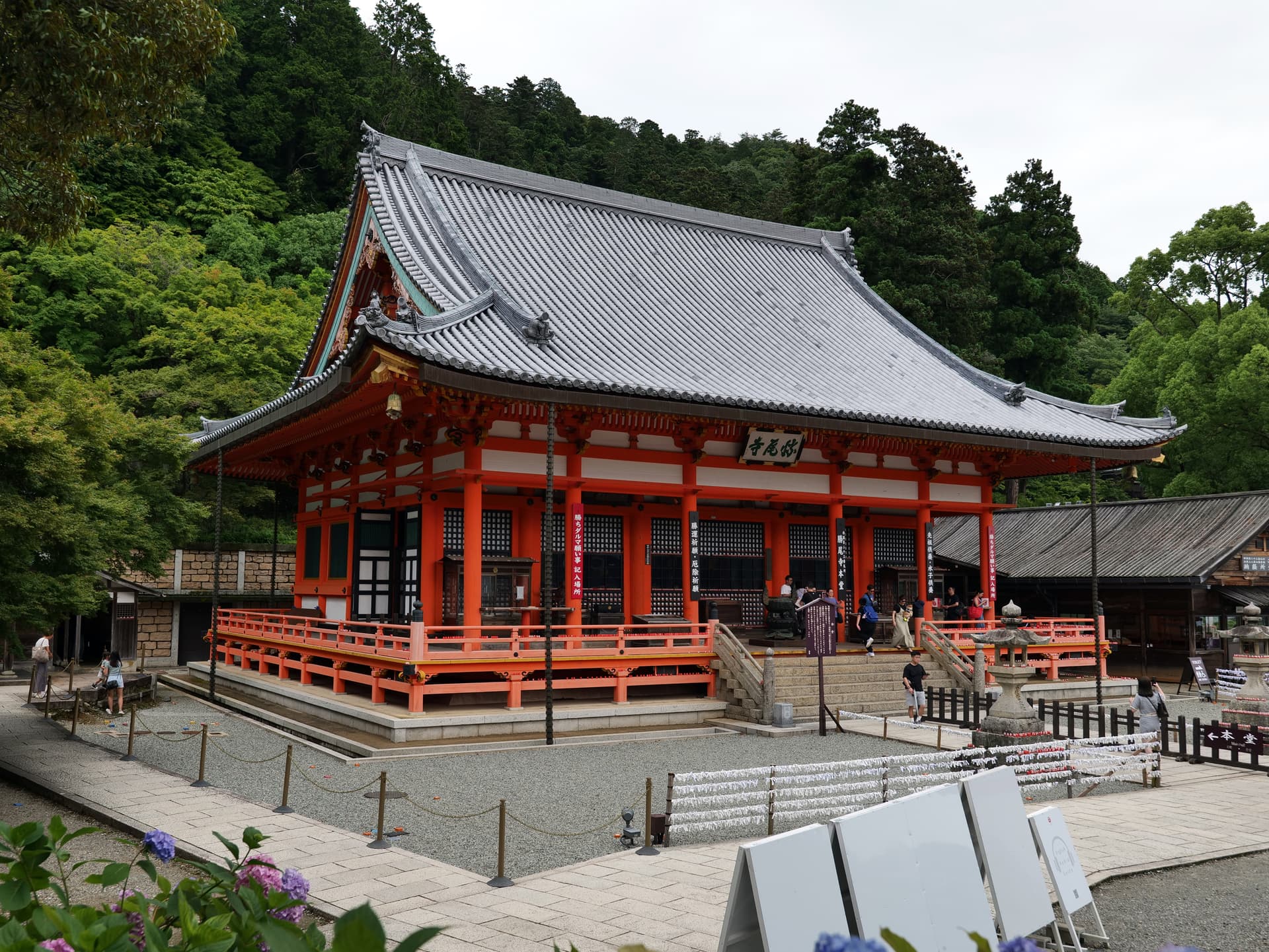
Image of Tokoin Hagino-tera. Image source · CC-BY-SA-3.0
Station 12 of 33
New Saigoku Kannon PilgrimageVisit essentials
A quick read before you go
- Duration
- 45 minutes to 1 hour at Tōkō-in; longer if attending haiku-related events during the festival.
- Access
- From Hankyu Sone Station (Takarazuka Line), 5-minute walk; alternative access from JR Tsukamoto…
Overview
Tōkō-in was founded in 735 CE at a different Settsu coast site by Gyōki, the itinerant early-eighth-century 'people's bodhisattva' who built temples and bridges. In 1914, during the Taishō era, the temple moved carefully to Toyonaka, preserving its name, lineage, principal image, and sacred identity across more than a millennium: a quiet theological statement that a temple is not its building.
Its Eleven-Headed Kannon (Jūichimen) was Emperor Godaigo's jibutsu, or personal Buddha. Godaigo (1288–1339) briefly restored direct imperial rule over the Kamakura shogunate in the Kenmu Restoration before retreating to Yoshino's Southern Court. His private Kannon now anchors a public Sōtō Zen temple in suburban Osaka.
About 3,000 bush clover plants bloom from mid- to late September. The Hagi Matsuri Doryō festival runs September 15–25 as a notable seasonal Buddhist observance. Stone monuments honor late-nineteenth- and early-twentieth-century haiku reformers Masaoka Shiki and Takahama Kyoshi, who admired the hagi, making this a literary Kannon temple where seasonal awareness and devotion meet.
Why this place is sacred
Hagi — bush clover — is among the seasonal flowers most associated with Buddhist contemplative awareness in Japan. Its small, fast-fading purple flowers mark the turn of summer into autumn; classical poets from the Manyōshū onward returned to it as a marker of mujō, impermanence. Masaoka Shiki and his disciple Takahama Kyoshi visited Tōkō-in and wrote haiku here; their stone monuments stand on the precinct.
For practitioners trained in Sōtō Zen, the bush clover garden functions as a teaching aid — its modest, fast-fading flowers train attention to seasonal impermanence in the spirit of Dōgen's writings on time-being.
The Eleven-Headed Kannon adds an entirely different register. Recorded as Emperor Godaigo's personal Buddha, the image carries traces of 14th-century court devotion, the failed Kenmu Restoration, and the emperor's eventual retreat to the Southern Court at Yoshino. That Godaigo's private Kannon now anchors a suburban Sōtō Zen temple is the kind of layered history Japan's smaller temples often carry without much fanfare.
The 1914 relocation is the third layer. Most temples with Gyōki-era origins (735 CE here) cluster around their original sites; Tōkō-in's deliberate move from the Settsu coast to suburban Toyonaka, accomplished during Meiji-Taishō urbanization, preserved the institution's identity through its change of location. Pilgrims sometimes describe the precinct as quieter than expected for a 1,300-year-old temple, then notice that the site itself is just over a century old.
Founded 735 CE by Gyōki as part of his network of itinerant healing-and-charity establishments along the Settsu coast.
From 735 CE Gyōki origin through medieval Sōtō Zen institutionalization, to imperial patronage under Emperor Godaigo (14th c.), to the carefully accomplished 1914 relocation to Toyonaka. The Hagi Matsuri Doryō festival in September has been the temple's most distinctive seasonal observance for over a century.
Experience and orientation
A five-minute walk from Hankyu Sone Station through suburban Toyonaka ends suddenly at a small precinct. The southwest gate opens onto the bush clover garden; the main hall stands northeast with the Eleven-Headed Kannon. At peak bloom, about 3,000 plants cover low frames and line paths with small purple flowers.
From mid-September, Hagi Matsuri Doryō brings extended hours, visitors, seasonal teas, and offerings. Stone monuments to Masaoka Shiki and Takahama Kyoshi form a small literary station, where haiku practitioners may pause longer than at the Kannon hall. Interpretive signage explains that the dimly visible image was Emperor Godaigo's personal Buddha.
Outside September and early October, the precinct is quiet. Periodic Sōtō zazen continues, and New Saigoku #12 pilgrim stamps are issued at the office. For nine months of the year, Tōkō-in remains a contemplative neighborhood temple without the crush of major Kyoto and Nara stations.
Begin at the gate, move into the bush clover garden, then to the haiku monuments, and finally to the main hall and Kannon. Reverse the order if visiting outside the bloom season. The Hagi Matsuri Doryō festival is the year's most distinctive window.
Context and lineage
Gyōki (668–749) — the itinerant priest later honored with the title 'people's bodhisattva' (民衆の菩薩) for his network of bridges, irrigation works, and healing temples across early-8th-century Japan — founded Tōkō-in in 735 CE as part of his Settsu coastal establishments. Centuries later, Emperor Godaigo (1288–1339) personally venerated the Eleven-Headed Kannon now enshrined here, eventually donating it as the principal image.
Facing urbanization in the Meiji-Taishō era, the temple was carefully relocated from its Settsu coast site to Toyonaka in 1914 — an unusual undertaking that preserved its sacred identity through the change of place. The poet Masaoka Shiki (1867–1902) visited and wrote about the bush clover; his disciple Takahama Kyoshi (1874–1959) followed.
Sōtō Zen Buddhism, with deep roots in Gyōki's 8th-century itinerant Buddhist network and a layer of 14th-century imperial-aristocratic Kannon devotion.
Traditions and practice
Sōtō Zen liturgy includes seated meditation (zazen) and the standard daily chanting cycles. Eleven-Headed Kannon devotion at the principal hall continues across the centuries. The Hagi Matsuri Doryō festival is a Daoist-Zen-folk hybrid celebrating the bush clover bloom — its specific ritual elements include offerings, blessings, and seasonal Buddhist services.
Daily Sōtō services continue. Pilgrim stamps for the New Saigoku #12 station are issued at the office. Seasonal openings of the bush clover garden are timed to peak bloom. Haiku gatherings near the monuments occur on a less formal schedule, often coordinated with the autumn bloom.
Time the visit to mid-September through early October if possible. Begin in the bush clover garden; move slowly through the planting and pause at the haiku monuments. Read or recite a Shiki or Kyoshi haiku at the stone before continuing to the main hall. The Eleven-Headed Kannon is the formal pilgrimage focus; the bush clover and haiku monuments are the experiential center.
Sōtō Zen Buddhism
ActiveTōkō-in carries one of the unusual lineage stories in Japanese Buddhism: founded by Gyōki in 735 CE in a different location, it was relocated to its current Toyonaka site only in 1914, preserving its identity across more than a millennium and a major migration. As a Zen temple it integrates seated meditation with classic Kannon devotion at the pilgrimage hall.
Perspectives and open questions
Tōkō-in's record combines documented founding by a major historical figure (Gyōki), authenticated 14th-century imperial patronage, and a verifiable late-19th and early-20th-century literary connection. The 1914 relocation is documented institutional history rather than legend.
Scholarly perspective
Tōkō-in's Gyōki-era origin and Emperor Godaigo's patronage are documented in temple records. The Heian-period wooden Buddha statue is independently authenticated as a national Important Cultural Property. The 1914 relocation is documented Meiji-Taishō ecclesiastical history. The Masaoka Shiki and Takahama Kyoshi connections are securely traceable in haiku scholarship.
Living and traditional perspectives
Within Sōtō Zen, the bush clover garden functions as a teaching aid — its modest, fast-fading purple flowers train attention to seasonal impermanence in the spirit of Dōgen's writings on time-being (uji). Eleven-Headed Kannon devotion at the principal hall provides the temple's pilgrimage anchor on the New Saigoku circuit.
Alternative interpretations
Some haiku practitioners treat the precinct as a 'cell of perception' where Buddhist seasonal awareness and the haiku tradition openly converge. The presence of Shiki's and Kyoshi's monuments makes this reading semi-formal at the temple itself.
Open questions
The exact circumstances of Emperor Godaigo's donation of the Kannon are not fully documented; the original 735 CE site has not been precisely identified, and the relationship between the original Settsu coastal location and the relocated Toyonaka precinct is mostly known through temple records rather than independent archaeological survey.
Plan your visit
Access and arrival
From Hankyu Sone Station (Takarazuka Line), 5-minute walk; alternative access from JR Tsukamoto via local bus. Limited street parking nearby; public transit is preferred.
Day-trip access from central Osaka is straightforward. Toyonaka has standard suburban hotel options; most pilgrims base in Osaka.
Respectful visit
Modest, comfortable clothing. Layered for variable autumn weather. Comfortable shoes for the garden paths.
Permitted in the bush clover garden and outdoor precincts; ask before photographing inside the main hall.
Incense, saisen, pilgrim slips at the main hall.
Quiet during zazen sessions | No flash photography inside the main hall
The precinct is modest in scale; large groups disturb the contemplative quality. Photography near the haiku monuments is fine; flash inside the main hall should be avoided. The Hagi Matsuri Doryō festival period draws larger crowds than usual.
Current practical details
Address
1-chōme-12-7 Minamisakurazuka, Toyonaka, Osaka 561-0882, Japan
Phone
Hours
Hours, fees, and access can change — verify on the official source before you travel. Practical details last checked Jun 2026.
Location
Map loads as you approach this section.
Pilgrim reflections
A portrait of encounter, not a score
Pilgrims describe what they felt, how present they could become, and whether the place would shape a journey. There are no stars and no ranking of traditions.
No reviewed reflections yet
The first pilgrims can help describe the character of being here.
Share a reflection
Available after an account-backed “Been there.” Every reflection is reviewed before publication.
Nearby sacred places
Explore other sacred places in the region. Proximity does not establish access or travel time; check each place’s guidance.


References
Sources consulted for this page. Source categories describe the publication, not a guarantee that every claim is verified. Traditional accounts and outside interpretations may differ.
- 01Tōkō-in (Toyonaka) — Wikipedia (German) — Wikipedia contributorsofficialCoordinates 34°46'29"N 135°28'5"E; founded 735 CE by Gyōki; relocated to current Toyonaka location in 1914; Sōtō-shū; honzon Eleven-Headed Kannon; #12 of New Saigoku Pilgrimage; Bush Clover Festival Sept 15–25.
- 02Toko-in Temple of Hagi (Toyonaka, Osaka) — Osaka Convention & Tourism BureauofficialApproximately 3,000 bush clover plants bloom each autumn; Hagi Matsuri Doryō festival; Eleven-Headed Kannon (Emperor Godaigo's personal Buddha); Masaoka Shiki and Takahama Kyoshi haiku monuments.
- 03Toko-in Temple of Hagi — HH Cross Towns — Hankyu-Hanshin HoldingsguideConfirms layout — entry gate southwest, bush clover garden, main hall northeast — and ancient nickname Hagi-no-tera.
- 04Tōkō-in Hagi-no-tera (Toyonaka) — Tabiiro — TabiiroguideConfirms Sōtō affiliation, hagi (Lespedeza) seasonal display, and the temple's modern presence.
Pilgrim glossary
- Kannon
- The bodhisattva of compassion, central to many East Asian pilgrimage routes.
- Bodhisattva
- An enlightened being who postpones full nirvana to help others toward awakening.
- Zen
- A Japanese Buddhist school emphasizing seated meditation and direct insight.
Share a photo
Help visitors recognize Tokoin Hagino-tera. Every submission is reviewed before publication.