Sōji-ji
Saigoku temple 22: a working Senju Kannon hall in the Kansai pilgrimage round
Understand sacred places, explore living traditions, and learn how to engage respectfully with Pilgrim Map.
Access has not been verified. Check current local guidance before planning a visit.
Ibaraki, Osaka Prefecture, Japan
Read the sources
Station 22 of 33
Saigoku Kannon PilgrimageVisit essentials
A quick read before you go
- Duration
- 30–60 minutes for a focused pilgrimage visit; longer if attending the knife ceremony.
- Access
- Roughly a 5-minute walk from Sōjiji Station on the Hankyū Kyoto Line in Ibaraki, Osaka.
Overview
Sōji-ji is temple 22 of the thirty-three-station Saigoku Kannon Pilgrimage, a route that has organized Kansai Kannon devotion for more than a thousand years. Its hidden Senju Kannon stands on a giant turtle, joining Heian aristocratic Buddhism, Yamakage-ryū ritual cookery, and a folk ethic of saving life through a Yodo River story of inter-species gratitude.
The Konjaku Monogatari and Genpei Jōsuiki tell that Fujiwara no Takafusa, traveling toward Dazaifu, bought and released a large turtle caught by fishermen, saying, 'Today, the 18th, is Kannon's festival day.' Years later, a giant turtle saved his young son Yamakage after he was thrown into the river. Chūnagon Fujiwara no Yamakage then founded Sōji-ji in 886 CE (Ninna 2), fulfilling a vow with the turtle-mounted Kannon.
Sōji-ji belongs to Kōyasan Shingon-shū, one of Kūkai's two major esoteric lineages headquartered at Mount Kōya; its 22nd-place position and turtle iconography distinguish it among the route's Shingon stations. The image opens only April 15–21; the rare living Yamakage-ryū knife ceremony occurs on April 18. Its quiet residential setting between Kyoto and Osaka receives fewer visitors than many Saigoku stations.
Why this place is sacred
In a quiet residential setting between Kyoto and Osaka, Sōji-ji brings Heian court lineage, the folk ethic of saving life, and Yamakage-ryū ritual cookery together around Senju Kannon standing on a giant turtle. The hidden image opens only April 15–21, while the rare April 18 knife ceremony keeps Heian ritual cookery alive.
According to the Konjaku Monogatari and Genpei Jōsuiki, Fujiwara no Takafusa was traveling down the Yodo River toward Dazaifu when he bought and released a fisherman's large turtle, saying, 'Today, the 18th, is Kannon's festival day.' Years later, a giant turtle carried his young son Yamakage to safety after he was thrown into the river. Learning the story as an adult, Yamakage vowed to commission the turtle-mounted Kannon and founded Sōji-ji in 886.
Experience and orientation
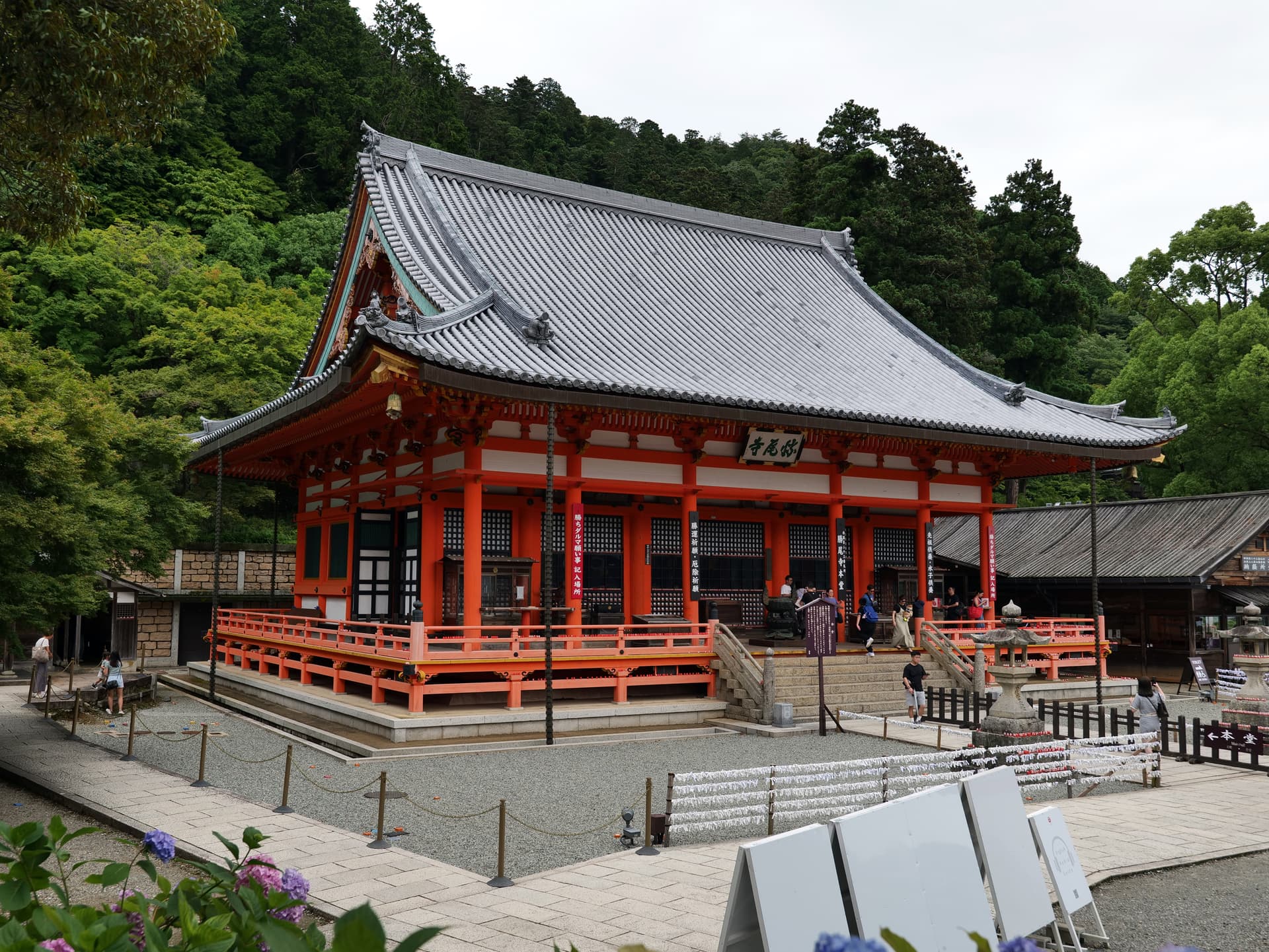
Visitors describe Sōji-ji as a small, immaculately kept temple in a quiet Ibaraki neighborhood, easy to overlook. Turtle imagery — stone, wooden, and ceramic turtles — appears throughout the precinct.
Context and lineage
886 CE (Ninna 2) — founded by Chūnagon Fujiwara no Yamakage in fulfillment of a vow connected to the 'Turtle's Gratitude' legend. Fujiwara no Yamakage (824–888), Heian-period courtier and the legendary 'founder of the art of the knife' (the Yamakage-ryū lineage of ritual cookery). According to the Konjaku Monogatari and Genpei Jōsuiki, Fujiwara no Takafusa, traveling down the Yodo River en route to Dazaifu, saw fishermen catching a large turtle.
Traditions and practice
Senju Kannon Mikkyō devotion in the Kōyasan Shingon mode Annual hibutsu opening April 15–21 (kaihi) Yamakage-ryū Hōchōshiki — ritual cutting of fish without touching them by hand, performed by white-robed officiants every April 18
Kōyasan Shingon-shū
ActiveSōji-ji is a temple of the Kōyasan Shingon school (one of the two major lineages of Kūkai's esoteric Shingon Buddhism, headquartered at Mount Kōya). Its 22nd-place position on the Saigoku circuit and the turtle iconography make it one of the most distinctive Shingon stations on the route.
Senju Kannon devotion in the Shingon-Mikkyō mode (Senju Sengen Darani); Annual hibutsu opening of the principal Senju Kannon (riding a turtle) April 15–21; Yamakage-ryū Hōchōshiki — annual ritual knife/cutting ceremony every April 18, dedicated to the founder's lineage as 'god of cooking'
Perspectives and open questions
Sōji-ji is a documented late-9th-century Heian foundation associated with the Fujiwara no Yamakage lineage. Devotees read the turtle-rescue story as a paradigmatic example of issho-en (lifelong karmic connection) and the Mahayana ethic that compassion to any sentient being eventually returns.
Scholarly perspective
Sōji-ji is a documented late-9th-century Heian foundation associated with the Fujiwara no Yamakage lineage. The turtle-gratitude legend is preserved in major medieval narrative collections (Konjaku Monogatari, Genpei Jōsuiki). The Kōyasan Shingon affiliation is established. The Yamakage-ryū lineage of ritual cookery is independently attested in Japanese culinary history.
Living and traditional perspectives
Devotees read the turtle-rescue story as a paradigmatic example of issho-en (lifelong karmic connection) and the Mahayana ethic that compassion to any sentient being eventually returns. The image of Kannon standing on a turtle is a unique iconographic synthesis of bodhisattva and grateful animal.
Alternative interpretations
Within Kōyasan Shingon, the turtle is sometimes interpreted as a symbol of the steady, longevous earth-element and as a vehicle (vahana) embodying tariki (other-power) support of devotional practice. The April hibutsu opening coincides loosely with the spring festival cycle of Kannon devotion.
Plan your visit
Access and arrival
Roughly a 5-minute walk from Sōjiji Station on the Hankyū Kyoto Line in Ibaraki, Osaka. Convenient day trip from both Kyoto (Hankyū Kawaramachi) and Osaka (Hankyū Umeda).
Respectful visit
Photography of outdoor precinct is generally permitted. Avoid photographing the Senju Kannon hibutsu during its April opening unless specifically allowed; do not flash-photograph during the knife ceremony.
Coin offerings (5 yen traditional) at the offertory box; incense at the censer.
Quiet voices in the hondo Do not handle or feed the temple's resident turtles in the pond During the Yamakage-ryū ceremony, follow staff direction and remain in designated visitor areas
Current practical details
Address
1-chōme-6-1 Sōjiji, Ibaraki, Osaka 567-0801, Japan
Phone
Hours
Hours, fees, and access can change — verify on the official source before you travel. Practical details last checked Jun 2026.
Location
Map loads as you approach this section.
Pilgrim reflections
A portrait of encounter, not a score
Pilgrims describe what they felt, how present they could become, and whether the place would shape a journey. There are no stars and no ranking of traditions.
No reviewed reflections yet
The first pilgrims can help describe the character of being here.
Share a reflection
Available after an account-backed “Been there.” Every reflection is reviewed before publication.
Nearby sacred places
Explore other sacred places in the region. Proximity does not establish access or travel time; check each place’s guidance.



References
Sources consulted for this page. Source categories describe the publication, not a guarantee that every claim is verified. Traditional accounts and outside interpretations may differ.
- 01Sojiji Temple (Ibaraki, Osaka) — Osaka Convention & Tourism BureauofficialOfficial Osaka tourism portal.
- 02Sōji-ji – Ibaraki — Henro.orgguidePilgrimage reference.
- 03Sojiji Temple - Saigoku Kannon Pilgrimage — Tale of GenjiguideCites Konjaku Monogatari and Genpei Jōsuiki for the turtle legend; notes April 15–21 hibutsu opening.
- 04Saikoku Kannon Pilgrimage Japan Heritage — Saigoku Sanjusankasho ReijokaiofficialConfirms Japan Heritage designation of the route.
- 05Sōji-ji (Osaka) — Wikipedia contributorsencyclopediaIdentifies Kōyasan Shingon-shū affiliation, 886 founding.
- 06Sojiji Temple, Osaka's Turtle Temple — Kansai OdysseyguidePractical visit notes; turtle imagery.
Pilgrim glossary
- Kannon
- The bodhisattva of compassion, central to many East Asian pilgrimage routes.
- Bodhisattva
- An enlightened being who postpones full nirvana to help others toward awakening.
- Shingon
- An esoteric Japanese Buddhist school emphasizing ritual, mantra, and mandala practice.
Share a photo
Help visitors recognize Sōji-ji. Every submission is reviewed before publication.