Gankei-ji
Saigoku temple bangai-gankei-ji: a working Kannon hall in the Kansai pilgrimage round
Understand sacred places, explore living traditions, and learn how to engage respectfully with Pilgrim Map.
Access has not been verified. Check current local guidance before planning a visit.
Kyoto City, Kyoto Prefecture, Japan
Read the sources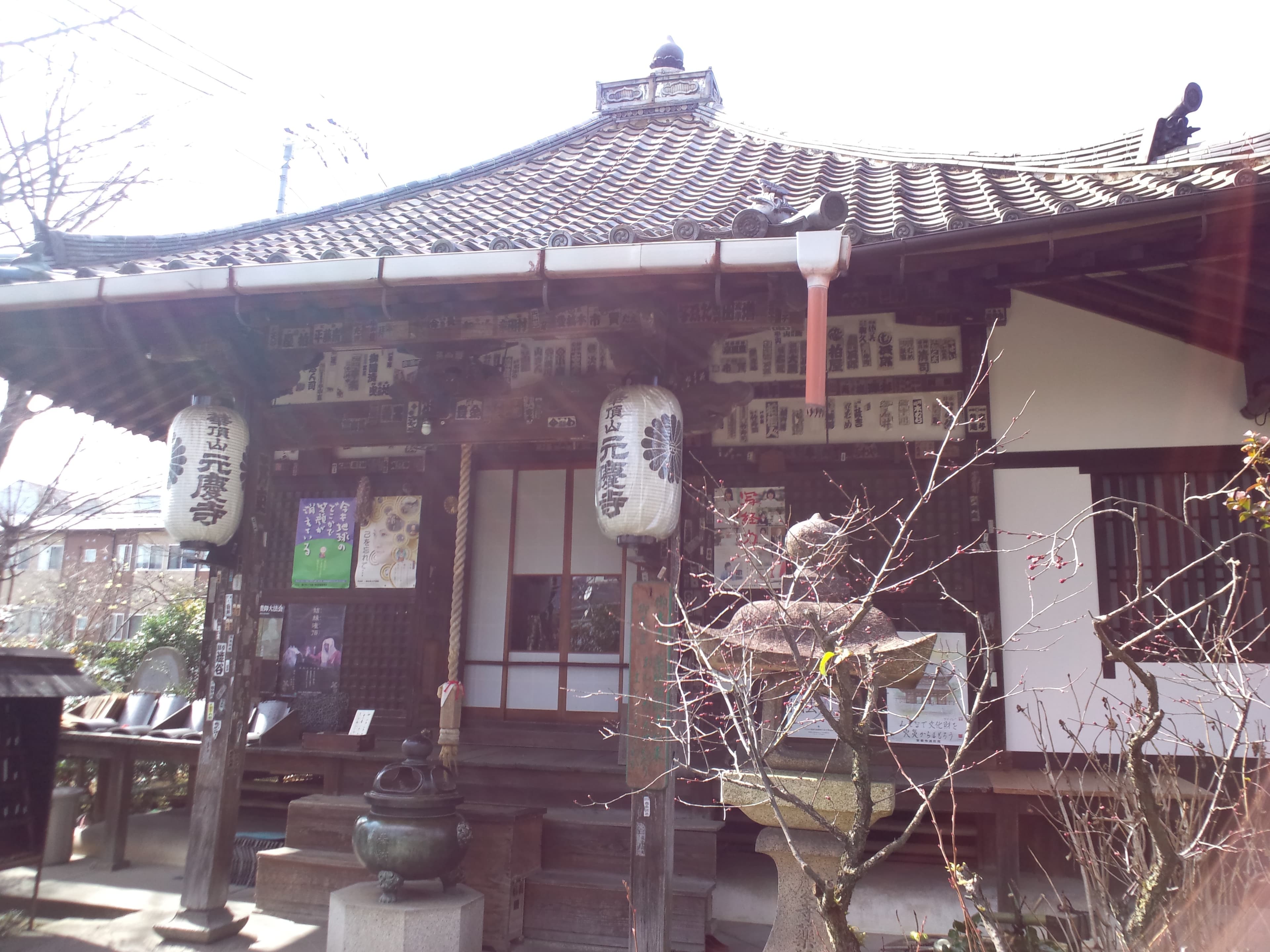
Image of Gankei-ji (元慶寺). Image source · CC-BY-SA-3.0
Bangai bangai-gankei-ji
Saigoku Kannon PilgrimageVisit essentials
A quick read before you go
- Duration
- 20–40 minutes; pairs naturally with Daigo-ji (T11) ~5 km south, Bishamon-dō nearby, or with…
- Access
- Kitakazan Kawaramachi neighborhood, Yamashina-ku, Kyoto City (34.988639, 135.801167).
Overview
Gankei-ji (Gangyō-ji) is a working Tendai Kannon hall and bangai site on the thirty-three-station Saigoku Kannon Pilgrimage. Fujiwara no Takako, mother of Emperor Yōzei, founded it as a private chapel in 868 CE (Jōgan 10), with Henjō—Yoshimine no Munesada (816–890), Tendai priest and one of the Six Immortal Poets—as founder. Emperor Yōzei granted official status in 877 and the temple took the Gangyō era name.
At 2 a.m. on 6 August 986, seventeen-year-old Emperor Kazan was led here by Fujiwara no Michikane, who falsely promised to take vows too, and induced by priest Genkyu to accept tonsure and abdicate as monk Nyūkaku. Kazan later walked and re-established the Saigoku route, making this coercive ordination central to Gankei-ji's bangai role.
Why this place is sacred
The quiet Yamashina residential setting concentrates attention on the 986 tonsure. Michikane fled without taking vows; his nephew Prince Kanehito became Emperor Ichijō within hours, securing Fujiwara regency under Fujiwara no Kaneie. Kazan later walked the Saigoku route and is credited with reviving an 8th-century memory into the pilgrimage followed today, though scholarship debates whether he restored or effectively founded its continuous form. Gankei-ji also preserves Henjō's 868 poet-priest foundation and 877 imperial recognition.
The site links literary Tendai culture, political coercion, and later Kannon devotion.
Experience and orientation
Quiet, easily missed temple in a residential block; short visit; sense of standing in a place where Japanese imperial and religious history pivoted; intimate goshuin reception; combined naturally with visits to nearby Bishamon-dō or Kazan-in (the imperial cemetery related to Kazan).
Context and lineage
868 CE (Jōgan 10), as a private temple (jōgakuji) at the request of Fujiwara no Takako, mother of Emperor Yōzei Founded by Fujiwara no Takako; founding monk Henjō (Yoshimine no Munesada, 816–890), one of the Six Immortal Poets (Rokkasen); designated an official temple in 877 (the first year of the Gangyō era) at the request of Emperor Yōzei, hence the alternative reading 'Gangyō-ji'; site of Emperor Kazan's forced tonsure on 6 August 986 by Fujiwara no Michikane and the priest Genkyu Imperial founding (868): Fujiwara no Takako, mother of Emperor Yōzei, founded the temple as a private chapel; Henjō presided as founding monk.
Traditions and practice
Yakushi Nyorai devotion (healing of body and rulership); Kazan memorial observances; Tendai sutra chanting; goshuin issuance for the bangai stamp.
Tendai Buddhism (天台宗)
ActiveTendai-shū lineage; founding monk Henjō (Yoshimine no Munesada, 816–890) was both an early Tendai priest and one of the Six Immortal Poets (Rokkasen). The temple's link to Emperor Kazan—the cloistered emperor who restored and personally walked the Saigoku Kannon Pilgrimage—makes it a key bangai site for understanding the route's medieval re-establishment.
Yakushi Nyorai (Medicine Buddha) devotion; Kazan tonsure memorial veneration; Tendai chanting; goshuin issuance for bangai pilgrims
Perspectives and open questions
The 986 tonsure of Emperor Kazan at this temple is well-documented in Japanese historiography (notably the Eiga Monogatari and Ōkagami). Tendai narrative honors Henjō as both poet and priest, modeling the Heian ideal of literary-religious life.
Scholarly perspective
The 986 tonsure of Emperor Kazan at this temple is well-documented in Japanese historiography (notably the Eiga Monogatari and Ōkagami). Cloistered Emperor Kazan's personal walking of the Saigoku route in the late 10th century is the basis for the modern temple sequence; whether he 'restored' a Tokudō-era 8th-century pilgrimage or effectively founded the historically continuous pilgrimage is a scholarly question, but his role is foundational either way.
Living and traditional perspectives
Tendai narrative honors Henjō as both poet and priest, modeling the Heian ideal of literary-religious life. Saigoku tradition places Gankei-ji as the place where the pilgrimage's medieval restorer entered religion.
Alternative interpretations
The conjunction of imperial coercion, priestly conspiracy, and ultimate devotional flowering reads as a karmic narrative: the violence done to Kazan in 986 produced his decades of cloistered Kannon devotion and the restored route.
Plan your visit
Access and arrival
Kitakazan Kawaramachi neighborhood, Yamashina-ku, Kyoto City (34.988639, 135.801167). From Kyoto Subway Tōzai Line Misasagi Station, ~10-minute walk; or from JR/Keihan Yamashina Station, 15–20 minutes by walk or short taxi.
Respectful visit
Permitted on grounds; photography of the inner sanctum and Yakushi Nyorai honzon is generally restricted; respect privacy of neighboring homes.
Osaisen, incense, candles; goshuin fee typically 300 yen.
No food or drink in halls; do not enter posted residence-priest areas; keep voices low—this is a small temple in a quiet residential lane.
Current practical details
Address
13 Kitakazankawarachō, Yamashina Ward, Kyoto, 607-8476, Japan
Phone
Hours
Hours, fees, and access can change — verify on the official source before you travel. Practical details last checked Jun 2026.
Location
Map loads as you approach this section.
Pilgrim reflections
A portrait of encounter, not a score
Pilgrims describe what they felt, how present they could become, and whether the place would shape a journey. There are no stars and no ranking of traditions.
No reviewed reflections yet
The first pilgrims can help describe the character of being here.
Share a reflection
Available after an account-backed “Been there.” Every reflection is reviewed before publication.
Nearby sacred places
Explore other sacred places in the region. Proximity does not establish access or travel time; check each place’s guidance.



References
Sources consulted for this page. Source categories describe the publication, not a guarantee that every claim is verified. Traditional accounts and outside interpretations may differ.
- 01Gangyō-ji - WikipediaencyclopediaFounding 868 by Fujiwara no Takako; founding monk Henjō; Emperor Kazan tonsure 986; bangai status
- 02Emperor Kazan - WikipediaencyclopediaKazan biographical context, Saigoku revival
- 03Saikoku Kannon Pilgrimage – Japan HeritageguideJapan Heritage status of full route
- 04Gankei-ji Temple - Japanese Wiki CorpusencyclopediaDetailed temple history
- 05Fujiwara no Michikane - Japanese Wiki CorpusencyclopediaDetailed account of the 986 tonsure plot
- 06Day 28 – Walking the Saigoku Kannon Pilgrimage – Bangai Temple #2 Gankei-ji — Tali LandsmanguideFirst-hand pilgrim account
- 07The Temple Guy: The Saigoku 33 Kannon RouteguideBangai overview
Pilgrim glossary
- Kannon
- The bodhisattva of compassion, central to many East Asian pilgrimage routes.
- Sutra
- A canonical Buddhist scripture, often chanted as part of practice.
- Tendai
- A Japanese Buddhist school based on the Lotus Sutra, foundational to many later traditions.
Share a photo
Help visitors recognize Gankei-ji. Every submission is reviewed before publication.