Hōki-in
Saigoku temple bangai-hoki-in: a working Kannon hall in the Kansai pilgrimage round
Understand sacred places, explore living traditions, and learn how to engage respectfully with Pilgrim Map.
Access has not been verified. Check current local guidance before planning a visit.
Sakurai, Nara Prefecture, Japan
Read the sources
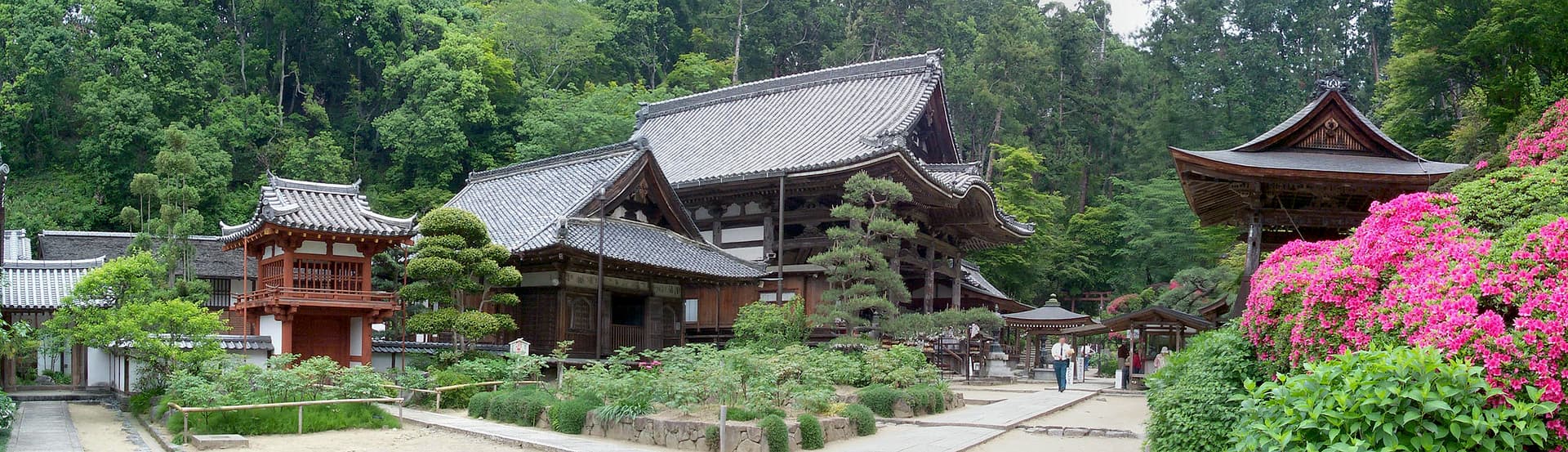
Image of Hōki-in (法起院). Image source · CC-BY-2.5
Bangai bangai-hoki-in
Saigoku Kannon PilgrimageVisit essentials
A quick read before you go
- Duration
- 20–40 minutes; combines naturally with a visit to Hase-dera (T8) requiring an additional 1.5–2…
- Access
- Hatsuse (Hase) neighborhood, Sakurai City, Nara (34.532819, 135.909858).
Overview
Hōki-in is a working Shingon Kannon hall, a bangai site on the thirty-three-station Saigoku Kannon Pilgrimage, and the route founder's memorial. Its honzon portrays Tokudō Shōnin, an 8th-century priest associated with Hase-dera. Tradition says that, while near death in 718, he met Enma-Ō, received thirty-three seals, and was ordered to establish thirty-three Kannon sites so pilgrims could escape hellfire. Tokudō recovered, founded Hase-dera and the route, and built a hut here in 735.
Hōki-in is now Hase-dera's Kaisan-dō and a tatchū of Shingon-shū Buzan-ha, whose head temple has around 3,000 affiliates. The underworld narrative is religious tradition, not verified history; documentary evidence for Hōki-in as a formal sub-temple begins with Eigaku's 1695 rebuilding.
Why this place is sacred
Hōki-in's small grounds and Tokudō pine concentrate attention on the pilgrimage founder, apart from much larger Hase-dera. Positioned between temples 7, Okadera, and 8, Hase-dera, it often marks the start or near-start of the route's second half. Tradition says Tokudō's thirty-three seals became the goshuin model; after establishing Hase-dera and the pilgrimage, he retired to his 735 hut here and died as a Bodhisattva after climbing the pine.
Visiting acknowledges the source of Saigoku devotion, but the underworld, seals, and pine ascent remain attributed sacred narratives.
Experience and orientation
Quiet, modest grounds in contrast to the grand Hase-dera nearby; sense of historical depth in standing before the Tokudō Shōnin image; brief but emotionally resonant visit; goshuin reception in a small hall; respectful pause at the legendary pine tree (or its successor); relief at the easy access in flat town setting compared to mountainous main temples.
Context and lineage
Traditionally 735 CE (Tempyō era) Tokudō Shōnin (徳道上人), founder of Hase-dera and traditional originator of the Saigoku Kannon Pilgrimage; rebuilt and designated the Kaisan-dō (Founder's Hall) of Hase-dera in 1695 by the priest Eigaku, head priest of Hase-dera Tokudō's underworld vision (718): when he was near death from illness, he encountered King Enma, who ordered him to create thirty-three Kannon sacred sites and gave him thirty-three seals as proof.
Traditions and practice
Tokudō Shōnin memorial veneration; goshuin issuance for bangai stamp-collectors; sutra recitation; small-scale Buzan-ha Shingon services.
Shingon Buddhism, Buzan branch (真言宗豊山派)
ActiveHōki-in is a sub-temple (tatchū) of Hase-dera, head temple of the Shingon-shū Buzan-ha sect with around 3,000 affiliated temples in Japan. It serves specifically as the Kaisan-dō (Founder's Hall) commemorating Tokudō Shōnin, founder both of Hase-dera and of the Saigoku Kannon Pilgrimage tradition.
Tokudō Shōnin memorial veneration; Saigoku pilgrimage origin stories; Shingon esoteric chanting; goshuin issuance for bangai pilgrims
Perspectives and open questions
Read Hōki-in through distinct historical and Buzan-ha Shingon lenses. Tokudō is historically associated with Hase-dera, while the Enma encounter, thirty-three seals, and spiritual-root meaning belong to pilgrimage tradition rather than verifiable history.
Scholarly perspective
Tokudō Shōnin is a historically attested 8th-century priest associated with Hase-dera, but the underworld-Enma narrative is religious tradition, not verifiable history. Documentary establishment of Hōki-in as a formal sub-temple dates to its 1695 rebuilding by Eigaku as Hase-dera's Kaisan-dō. The bangai status crystallized as the Saigoku pilgrimage gained mass popularity in the Edo period.
Living and traditional perspectives
In Buzan-ha Shingon narrative, Hōki-in is the spiritual root of Saigoku devotion: every goshuin pilgrims collect across the 33 temples descends from Enma's thirty-three seals given to Tokudō. Visiting here completes a hidden ritual loop of acknowledgment to the founder.
Alternative interpretations
The descent-and-return (Enma encounter) and ascent-from-pine-tree (Bodhisattva passing) frame Tokudō as a shaman-like figure who crosses cosmic boundaries; pine trees in Japanese religion frequently mark sites of kami descent, and a Bodhisattva ascending a pine inverts that motif into Buddhist transcendence.
Plan your visit
Access and arrival
Hatsuse (Hase) neighborhood, Sakurai City, Nara (34.532819, 135.909858). From Kintetsu Hasedera Station, ~15-minute walk along the Hase-dera approach lane; Hōki-in is set just off the main approach before the Hase-dera niōmon gate.
Respectful visit
Permitted on grounds; photography of the Tokudō Shōnin honzon in the inner sanctum is generally restricted—follow signage and staff direction.
Osaisen at the main hall, incense, candles; goshuin fee typically 300 yen.
Quiet conduct; do not climb on or pick branches from the Tokudō pine tree or its successor; do not enter posted private areas of the sub-temple.
Current practical details
Address
776 Hase, Sakurai, Nara 633-0112, Japan
Phone
Hours
Hours, fees, and access can change — verify on the official source before you travel. Practical details last checked Jun 2026.
Location
Map loads as you approach this section.
Pilgrim reflections
A portrait of encounter, not a score
Pilgrims describe what they felt, how present they could become, and whether the place would shape a journey. There are no stars and no ranking of traditions.
No reviewed reflections yet
The first pilgrims can help describe the character of being here.
Share a reflection
Available after an account-backed “Been there.” Every reflection is reviewed before publication.
Nearby sacred places
Explore other sacred places in the region. Proximity does not establish access or travel time; check each place’s guidance.



References
Sources consulted for this page. Source categories describe the publication, not a guarantee that every claim is verified. Traditional accounts and outside interpretations may differ.
- 01Hōki-in - WikipediaencyclopediaSect (Shingon-shū Buzan-ha), honzon (Tokudō Shōnin), bangai status, 1695 rebuilding by Eigaku
- 02Houki-in Temple - Official Nara Travel GuideofficialOfficial Nara prefectural tourism
- 03Hokiin Temple - Sakurai CityofficialSakurai City official tourism page
- 04The Beginning of the Saikoku Kannon PilgrimageguideOfficial pilgrimage Japan Heritage history of Tokudō and Enma legend
- 05Shingon-shū Buzan-ha - WikipediaencyclopediaSect identity
- 06Day 22 – Hoki-in, Bangai Temple #1 - Tali Landsman — Tali LandsmanguideFirst-hand pilgrim account
- 07Hase-dera - Henro.orgencyclopediaHase-dera context including Hōki-in as kaisan-dō
Pilgrim glossary
- Honzon
- The principal Buddhist deity enshrined as a temple's central object of worship.
- Kannon
- The bodhisattva of compassion, central to many East Asian pilgrimage routes.
- Bodhisattva
- An enlightened being who postpones full nirvana to help others toward awakening.
- Sutra
- A canonical Buddhist scripture, often chanted as part of practice.
- Shingon
- An esoteric Japanese Buddhist school emphasizing ritual, mantra, and mandala practice.
Share a photo
Help visitors recognize Hōki-in. Every submission is reviewed before publication.