Bodai-ji
Saigoku temple bangai-bodai-ji: a working Kannon hall in the Kansai pilgrimage round
Understand sacred places, explore living traditions, and learn how to engage respectfully with Pilgrim Map.
Access has not been verified. Check current local guidance before planning a visit.
Sanda, Hyogo Prefecture, Japan
Read the sources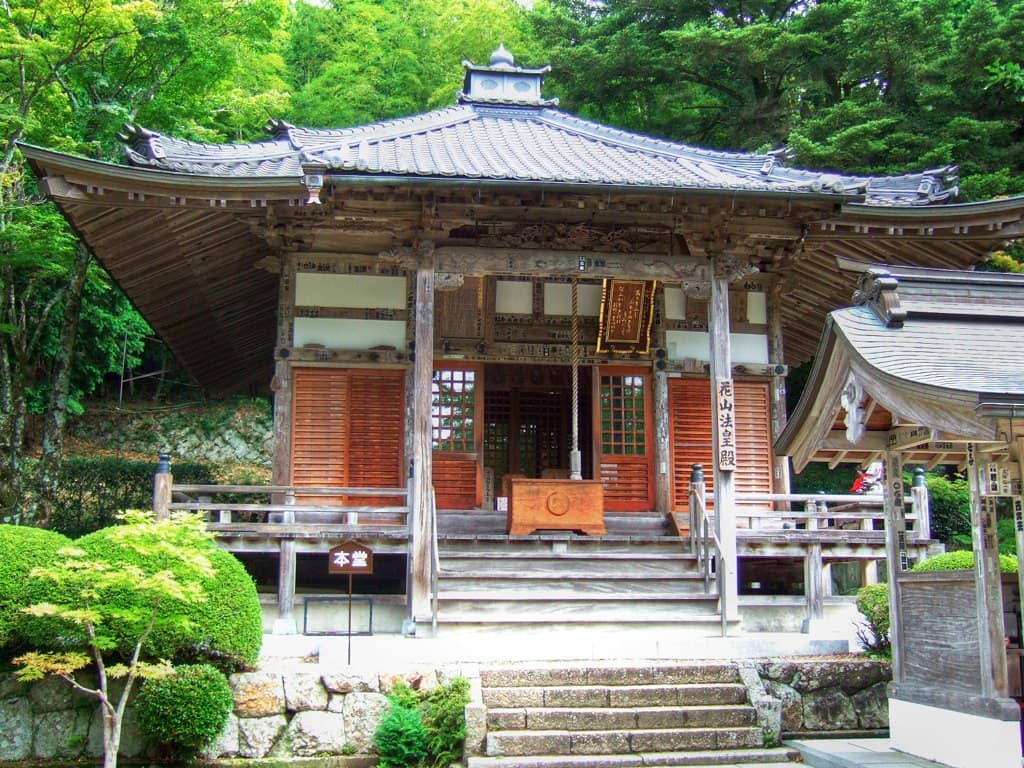
Image of Bodai-ji (菩提寺). Image source
Bangai bangai-bodai-ji
Saigoku Kannon PilgrimageVisit essentials
A quick read before you go
- Duration
- 1.5–2.5 hours including the steep approach, hall visits, the Seven Jizō, the Kazan mausoleum,…
- Access
- Niiji neighborhood, Sanda City, Hyōgo (34.940389, 135.2405).
Overview
Bodai-ji is a working Kannon hall and bangai temple on the Saigoku Kannon Pilgrimage, whose thirty-three stations have organised Kansai Kannon devotion for more than a thousand years, and the head temple of the small Shingon Kazan-in branch. Its founding date is uncertain; temple tradition attributes it to Hōdō, an Indian mystic and sage, on Mount Tōkōzan in Hyōgo's Sanda region.
Cloistered Emperor Kazan was forced into tonsure at Kyoto's Gankei-ji in 986, later restored and personally walked the Saigoku route, and performed Saigoku devotions during his c. 992–1008 residence here. The branch's identity is inseparable from that final residence. At 395m, the mountain precinct holds his mausoleum, relics and statue beside the Yakushi honzon, and seven Jizō statues with distinct vows.
The steep ascent, broad views, and quieter setting than nearby Nakayama-dera (T24) join imperial memorial, healing devotion, and medieval pilgrimage memory.
Why this place is sacred
The steep ascent to 395m Mount Tōkōzan echoes medieval pilgrimage before opening to broad views and a quieter precinct than Nakayama-dera (T24). Kazan Hou-ou-den, with the emperor's statue, and Yakushidō, with Yakushi Nyorai, hold imperial memorial and Buddhist sanctuary side by side. His mausoleum makes this the resting place of the emperor who restored Saigoku's walking continuity.
Seven Jizō Statues of Happiness, each granting a distinct benefit, serve lay pilgrims, while the bangai stop closes a chapter running from Kazan's 986 tonsure through his c. 992 hermitage to his 1008 death.
Experience and orientation
Steep approach road taxing for vehicles; reward of panoramic views at the upper terraces (the temple operates a viewing observatory); quiet contemplation at the Kazan mausoleum; the choosing of one of seven Jizō statues for prayer based on personal need; cheerful conversation at the goshuin office; sense of completing a chapter of Saigoku history connecting Gankei-ji (where Kazan entered religion) to Bodai-ji (where he died).
Context and lineage
Founding date uncertain; temple legend attributes founding to Hōdō (an Indian mystic and sage), with later Heian-period consolidation; documented imperial association from c. 992 with Cloistered Emperor Kazan Hōdō (legendary Indian founder); Cloistered Emperor Kazan (formally Hanayama-in), who lived here from c. Founding legend: a temple founded by Hōdō, an Indian mystic and sage, on Mount Tōkōzan in Hyōgo's Sanda region.
Traditions and practice
Yakushi Nyorai healing devotions; veneration of Cloistered Emperor Kazan at the Hou-ou-den and mausoleum; selection of and prayer to one of the Seven Jizō Statues of Happiness; goshuin for both bangai (Saigoku 33) and Saigoku Yakushi 49 pilgrimages.
Shingon Buddhism, Kazan-in branch (真言宗 花山院派)
ActiveBodai-ji is the head temple of the small 'Kazan-in' branch of the Shingon sect, named for Cloistered Emperor Kazan (Hanayama-in), who retreated to this temple around 992 while making the Saigoku Kannon Pilgrimage and remained until his death. The branch's identity is inseparable from Kazan's role as the cloistered emperor who restored and personally walked the Saigoku route.
Yakushi Nyorai (Medicine Buddha) devotion; Cloistered Emperor Kazan veneration at the mausoleum; Saigoku Yakushi 49 Sacred Sites pilgrimage; Seven 'Jizō Statues of Happiness' devotion; goshuin issuance for bangai and Yakushi pilgrims
Perspectives and open questions
Bodai-ji can be understood through distinct historical, Saigoku-traditional, and healing-devotional lenses. History distinguishes Kazan's attested final residence and burial from the Hōdō foundation tradition. Saigoku memory follows the emperor from coerced tonsure at Gankei-ji to the route he restored and his Sanda tomb. Devotional practice joins Yakushi with seven differently vowed Jizō.
Scholarly perspective
Cloistered Emperor Kazan's final residence and burial at Bodai-ji are historically attested; Hōdō's foundation is religious tradition. The small Shingon Kazan-in branch traces directly to Kazan's death site. Bodai-ji's bangai status was consolidated in the Edo period as the wider Saigoku route became systematized.
Living and traditional perspectives
In Saigoku narrative, Bodai-ji is the place where the cloistered emperor's bones rest near the route he restored; pilgrims pass from Gankei-ji (Kyoto) to Bodai-ji (Sanda) following the arc of Kazan's life from tonsure to death.
Alternative interpretations
The Yakushi (Medicine Buddha) honzon and the Seven Jizō (each a distinct intention) frame Bodai-ji as a complex of healing practices; Kazan's biography—coerced tonsure, pilgrimage as life work, mountaintop death—reads as a near-mythic transformation of imperial loss into religious merit.
Plan your visit
Access and arrival
Niiji neighborhood, Sanda City, Hyōgo (34.940389, 135.2405). From the Kobe-Sanda interchange on the Chūgoku Expressway, ~20-minute drive on a steep approach road; from JR Sanda Station, taxi (~20–25 minutes) or local bus + steep walk. ~6 km north of central Sanda City. Parking ~500 yen.
Respectful visit
Permitted on grounds and at viewpoints; photography inside halls and of the principal Yakushi image is generally restricted; do not photograph the imperial mausoleum's inner enclosure if signage prohibits.
Osaisen at halls; incense and candles; goshuin fee typically 300 yen per stamp; parking donation 500 yen.
Quiet conduct at the mausoleum; do not pick plants or remove stones; stay on marked paths; respect the small monastic community living on the mountain.
Current practical details
Address
352 Ninji, Sanda, Hyogo 669-1505, Japan
Phone
Hours
Hours, fees, and access can change — verify on the official source before you travel. Practical details last checked Jun 2026.
Location
Map loads as you approach this section.
Pilgrim reflections
A portrait of encounter, not a score
Pilgrims describe what they felt, how present they could become, and whether the place would shape a journey. There are no stars and no ranking of traditions.
No reviewed reflections yet
The first pilgrims can help describe the character of being here.
Share a reflection
Available after an account-backed “Been there.” Every reflection is reviewed before publication.
Nearby sacred places
Explore other sacred places in the region. Proximity does not establish access or travel time; check each place’s guidance.


References
Sources consulted for this page. Source categories describe the publication, not a guarantee that every claim is verified. Traditional accounts and outside interpretations may differ.
- 01Bodai-ji - WikipediaencyclopediaSect (Shingon, Kazan-in branch), honzon (Yakushi Nyorai), bangai status, Emperor Kazan mausoleum, founding by Hōdō (Indian sage)
- 02Saikoku Kannon Pilgrimage – Japan HeritageguideJapan Heritage status of full route
- 03Kazanin Temple (Tokozan Bodaiji) - NAVITIMEofficialAccess details from Sanda area
- 04The Temple Guy: The Saigoku 33 Kannon RouteguideBangai context and Saigoku Yakushi 49 Sacred Sites overlap
- 05Kazan-in Bodai TempleofficialTourism listing
- 06Kazanin Bodaiji Temple, Sanda - TripAdvisorguideVisitor reviews and observations
Pilgrim glossary
- Honzon
- The principal Buddhist deity enshrined as a temple's central object of worship.
- Kannon
- The bodhisattva of compassion, central to many East Asian pilgrimage routes.
- Shingon
- An esoteric Japanese Buddhist school emphasizing ritual, mantra, and mandala practice.
Share a photo
Help visitors recognize Bodai-ji. Every submission is reviewed before publication.