Shōryū-ji
The Green Dragon Temple — named for Kūkai's master's monastery in Tang Chang'an
Understand sacred places, explore living traditions, and learn how to engage respectfully with Pilgrim Map.
Access has not been verified. Check current local guidance before planning a visit.
Tosa, Kochi Prefecture, Japan
Read the sources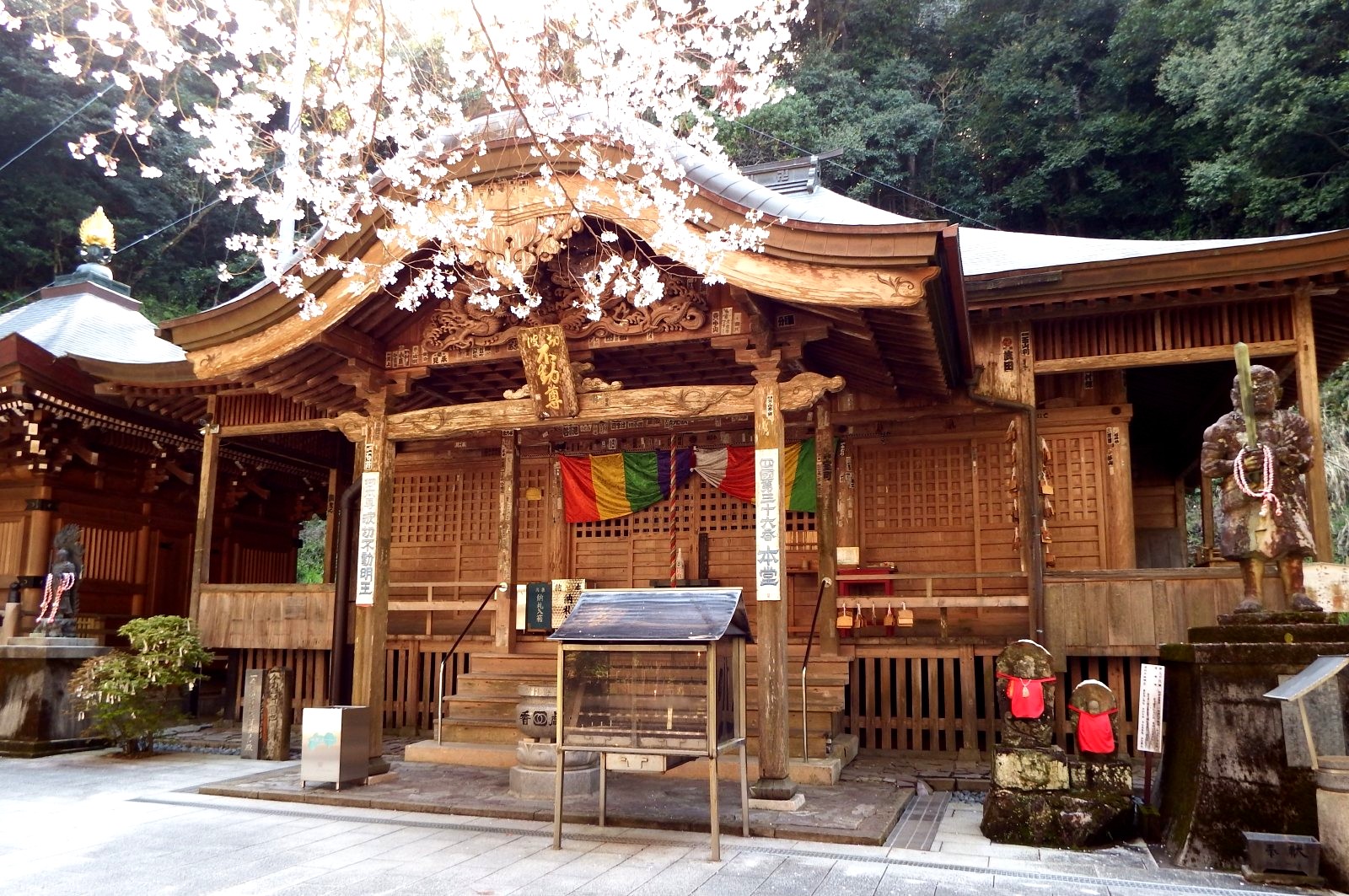
Image of Shōryū-ji (青竜寺). Image source · CC-BY-SA-4.0
Station 36 of 88
Shikoku 88 Temple PilgrimageVisit essentials
A quick read before you go
- Duration
- 45–60 minutes for the standard temple visit, including the climb and chanting at both halls; add…
- Access
- On the Yokonami Peninsula in Tosa City, Kōchi Prefecture, on the south shore of Uranouchi Bay.
Overview
Shōryū-ji carries the Shikoku 88's most explicit geographic memory of Kūkai's Tang-Chinese teacher. Its name—青竜寺, Green Dragon Temple—is the Japanese reading of 青龍寺 (Qinglong-si), the Chang'an monastery where Kūkai studied esoteric Buddhism under Huiguo before returning to Japan in 805.
Two temple legends embody that transmission and its maritime setting. Kūkai is said to have thrown a single-pronged vajra (dokko) east from China and later found it lodged in a Yokonami-headland pine, inspiring the formal name Tokkozan Ishanain Shōryū-ji. On his sea voyage home, Fudō Myōō reportedly cut through a threatening storm; Kūkai carved that Namikiri Fudō Myōō, the Wave-Cutting Wisdom King, as the honzon. Pilgrims still come for safe voyages, bountiful catches, and protection in rough waters.
Why this place is sacred
What thins at Shōryū-ji is distance — first geographic, then internal. The temple's name carries the Chang'an monastery directly into Tosa: Qinglong-si and Shōryū-ji are the same characters, the same Green Dragon, the same lineage. Kūkai's vajra crossing the Pacific is the legend that does the work, but the work is done already by the name.
The Wave-Cutting Fudō does a parallel work on the inner register. Fudō Myōō, sword raised, is the wrathful Wisdom King who cuts through obstruction; the Namikiri version specifically cuts through ocean storms. Pilgrims often describe the figure as imaging a decisive cutting through whatever internal storm has accompanied them on the henro — the long Tosa stretch is the dōjō of ascetic discipline, and discipline sometimes means cutting.
The forest climb to the precinct, the old-growth shade, the okunoin's cliff-edge view of the open Pacific — all extend the contemplative environment. From the okunoin, the long horizon is the same horizon over which the vajra is said to have flown. Whether or not anyone reads the legend as historical, standing there, the geographic compression feels real.
Founded by Kūkai in 815 as a Shingon temple commemorating his Tang-Chinese teacher Huiguo and the transmission of esoteric Buddhism from Chang'an to Japan; honzon Namikiri Fudō Myōō for maritime protection.
Suffered Sengoku-era decline, like many Tosa Buddhist institutions; rebuilt during the Shōhō era (1644–1648) by Yamauchi Tadayoshi, the second daimyō of the Tosa domain. Affiliated with the Toyoyama branch of Shingon. Continues today as an active Shikoku 88 stop with a Niōmon, stone-step climb, Hondō, Daishi-dō, and a separate cliff-edge okunoin Fudō-dō.
Experience and orientation
Pilgrims approaching from Kiyotaki-ji either drive about fourteen kilometers around Uranouchi Bay or take the small Uranouchi ferry across — a maritime crossing that suits the Wave-Cutting Fudō waiting on the other side. From the parking area at the base, the Niōmon opens onto a long flight of stone steps shaded by old trees. The climb is moderate but steady; in summer it is hot, in wet weather the steps are slick.
At the top, the precinct is compact — Hondō and Daishi-dō arranged around a small courtyard, with the bonshō to one side. The standard Shikoku henro liturgy proceeds: bell on entering, chōzuya for hands and mouth, candle and three sticks of incense, fudasho-fuda placed in the box, Heart Sutra and the Kōbō Daishi mantra (Namu Daishi Henjō Kongō), coin offering, repeated at the Daishi-dō. The nōkyō stamp is received at the temple office.
For pilgrims with time, the okunoin Fudō-dō is reached by a separate walking trail to a cliff edge overlooking Uranouchi Bay and the open Pacific. The walk takes thirty minutes or more each way; the view rewards it. The okunoin's exposed coastal position adds a wilder maritime-Fudō dimension to the standard temple visit. Fishermen and ocean-going pilgrims sometimes come specifically for safe-voyage prayers (kōkai-anzen) at the Hondō.
The temple is sometimes mentioned in connection with the sumo wrestler Asashōryū's training as a child in Tosa — folk-cultural rather than canonical, but part of the local color.
The temple sits on the Yokonami Peninsula on the south shore of Uranouchi Bay in Tosa City, Kōchi Prefecture. Parking is at the base of the stairs. The Niōmon opens onto a long flight of stone steps that climbs through old-growth forest to the upper precinct, where the Hondō, Daishi-dō, and bonshō are arranged. A separate trail leads to the okunoin Fudō-dō at a cliff edge overlooking the bay.
Context and lineage
Two tightly linked temple legends. According to the first, Kūkai — completing his studies under Huiguo at the Qinglong-si in Chang'an in 805 — threw a single-pronged vajra eastward over the Pacific, vowing to build a temple wherever it landed. On his later proselytization tour through Tosa he found the vajra embedded in a pine tree on the Yokonami headland and built Shōryū-ji on that spot, naming it after his master's home temple.
The second legend recalls Kūkai's sea voyage between China and Japan: a storm threatened the ship; Fudō Myōō appeared and cut the waves with his sword, calming the sea. Kūkai later carved this Namikiri Fudō Myōō and enshrined it as the temple's honzon. Both legends bind the temple to maritime protection and to the China-Japan transmission of Shingon.
After Sengoku-era decline, the temple was rebuilt under the Tosa domain's second daimyō Yamauchi Tadayoshi during the Shōhō era (1644–1648) and has continued as a working Shikoku 88 stop.
Shingon Buddhism, Toyoyama branch (Toyoyama-ha). The temple's formal name is Tokkozan Ishanain Shōryū-ji.
Kūkai (Kōbō Daishi)
Founder, carver of the honzon
Huiguo
Kūkai's teacher (indirect)
Yamauchi Tadayoshi
Rebuilder
Traditions and practice
Goma fire rituals to Fudō Myōō; safe-voyage and bountiful-catch prayers, especially by fishermen and ocean-going pilgrims; standard Kōbō Daishi memorial services. The Wave-Cutting Fudō is a regional deity of Pacific maritime culture.
Pilgrims complete the henro liturgy at the Hondō (Namikiri Fudō Myōō) and Daishi-dō, climb to the okunoin Fudō-dō if time permits, and receive nōkyō at the temple office. Maritime-protection prayers (kōkai-anzen / taiyō-anzen) can be requested at the office.
If you have walked or ferried across Uranouchi Bay to reach the temple, let the maritime register stay with you as you climb the steps. The Namikiri Fudō is a deity of cutting through; if there is something in your life that needs cutting through — a hesitation, a paralysis, a storm you have been holding — the Hondō is a place to put it down.
After the standard liturgy, the climb to the okunoin extends the visit by about an hour and adds the open-Pacific view that makes the legend feel proximate.
Shingon Buddhism (Toyoyama-ha)
ActiveToyoyama-school Shingon temple with a uniquely direct namesake link to Kūkai's Chinese teacher Huiguo at the Qinglong-si in Chang'an. The temple's name literally transmits the Tang-Chinese lineage of Shingon esoteric Buddhism.
Standard Shingon henro liturgy at the Hondō (Namikiri Fudō Myōō) and Daishi-dō; goma fire rituals; safe-voyage and bountiful-catch prayers especially by fishing communities.
Perspectives and open questions
Shōryū-ji is read as a transmission anchor, a maritime-protection site, and a meditation point for cutting through — three layers that hold together at this particular cliff.
Scholarly perspective
Scholars treat the vajra-throw and wave-cutting legends as foundational temple narratives common to many Kūkai sites — combining a transmission story (vajra from China) with a maritime-protection story (storm calmed by Fudō) — which together encode Kūkai's role as both inheritor of Tang esoteric Buddhism and protector of seafaring communities. The temple's Toyoyama-school affiliation and Yamauchi-era restoration follow standard Tosa-region patterns.
Living and traditional perspectives
Local fishermen and seafarers have long visited Shōryū-ji for safe-voyage prayers; the Wave-Cutting Fudō is a regional deity of Pacific maritime culture. Within the Shikoku henro tradition, the temple's Tang-Chinese name is read as a direct geographic anchoring of the Shingon transmission.
Alternative interpretations
The temple's namesake link to Qinglong-si in Chang'an is sometimes interpreted as a 'fold' in sacred geography — Kūkai compressing the China-Japan transmission into a single place name. The single-pronged vajra (tokko) of the mountain name evokes the unified, undifferentiated tantric energy at the center of Shingon practice.
Open questions
Whether any physical vajra fragment is preserved at the temple, and the exact location of the original pine tree of the legend, are not conclusively documented.
Plan your visit
Access and arrival
On the Yokonami Peninsula in Tosa City, Kōchi Prefecture, on the south shore of Uranouchi Bay. By car from Temple 35 Kiyotaki-ji is approximately 14 km south, rounding or crossing the bay. Walking pilgrims often take the Uranouchi ferry across the bay. Temple parking is available at the base of the stairs. The next stage to Temple 37 Iwamoto-ji is approximately 58 km southwest.
No shukubō at Shōryū-ji itself. Pilgrim and standard lodging is available in Tosa City and along the Uranouchi Bay coast. Walking pilgrims who plan to take the ferry should confirm schedules in advance, especially in winter.
Respectful visit
Modest, respectful clothing. Sturdy footwear for the steep stair climb to the Hondō and the okunoin trail. The kongō-zue is helpful on the steps.
Permitted on grounds; interior altar photography is not allowed. Ask before photographing fishermen at prayer or any ex-voto offerings.
Standard henro offerings — candle, three sticks of incense, fudasho-fuda, coin offering. Fishermen sometimes leave small ema relating to safe voyage at the Hondō.
Do not ring the bonshō on leaving. Take care on the steps in wet weather. Stay on marked paths near the okunoin cliffs.
The stone steps are slippery in wet weather; sturdy footwear is recommended. The okunoin trail is exposed and can be windy; check conditions before walking. The bonshō rings on entering only — never on leaving.
Current practical details
Address
163 Usachōryū, Tosa, Kochi 781-1165, Japan
Phone
Hours
Hours, fees, and access can change — verify on the official source before you travel. Practical details last checked Jun 2026.
Location
Map loads as you approach this section.
Pilgrim reflections
A portrait of encounter, not a score
Pilgrims describe what they felt, how present they could become, and whether the place would shape a journey. There are no stars and no ranking of traditions.
No reviewed reflections yet
The first pilgrims can help describe the character of being here.
Share a reflection
Available after an account-backed “Been there.” Every reflection is reviewed before publication.
Watch deeper
Films, episodes, and recorded talks for visitors who want more context before or after a visit. Speculative and alternative-history entries are labelled as perspectives, not as sources for established claims.
Nearby sacred places
Explore other sacred places in the region. Proximity does not establish access or travel time; check each place’s guidance.


References
Sources consulted for this page. Source categories describe the publication, not a guarantee that every claim is verified. Traditional accounts and outside interpretations may differ.
- 01Shōryū-ji - Wikipedia — Wikipedia contributorsencyclopediaCore history, sect, founder
- 02Tokkozan Ishanain Shoryuji – Shikoku 88 Temple Pilgrimage — Shikoku 88 ReijokaiofficialOfficial entry
- 03Shoryuji – Tosa, Kochi Prefecture, Shikoku — Henro.orgguidePilgrim practicalities
- 04Shoryuji Temple, Temple No. 36 of the Sacred Temples of Shikoku — Shikoku Pilgrimage NewsguideVajra-throw legend; Namikiri Fudō Myōō
- 05Temple thirty six – The Green Dragon Temple — Japan TravelguideAtmosphere and steps
Pilgrim glossary
- Honzon
- The principal Buddhist deity enshrined as a temple's central object of worship.
- Sutra
- A canonical Buddhist scripture, often chanted as part of practice.
- Mantra
- A sound, word, or phrase repeated as part of meditation or ritual.
- Shingon
- An esoteric Japanese Buddhist school emphasizing ritual, mantra, and mandala practice.
Share a photo
Help visitors recognize Shōryū-ji. Every submission is reviewed before publication.