Seiganto-ji
Where Japan's oldest Kannon pilgrimage begins, beside its tallest waterfall
Understand sacred places, explore living traditions, and learn how to engage respectfully with Pilgrim Map.
Access has not been verified. Check current local guidance before planning a visit.
Nachikatsuura, Wakayama Prefecture, Japan
Read the sources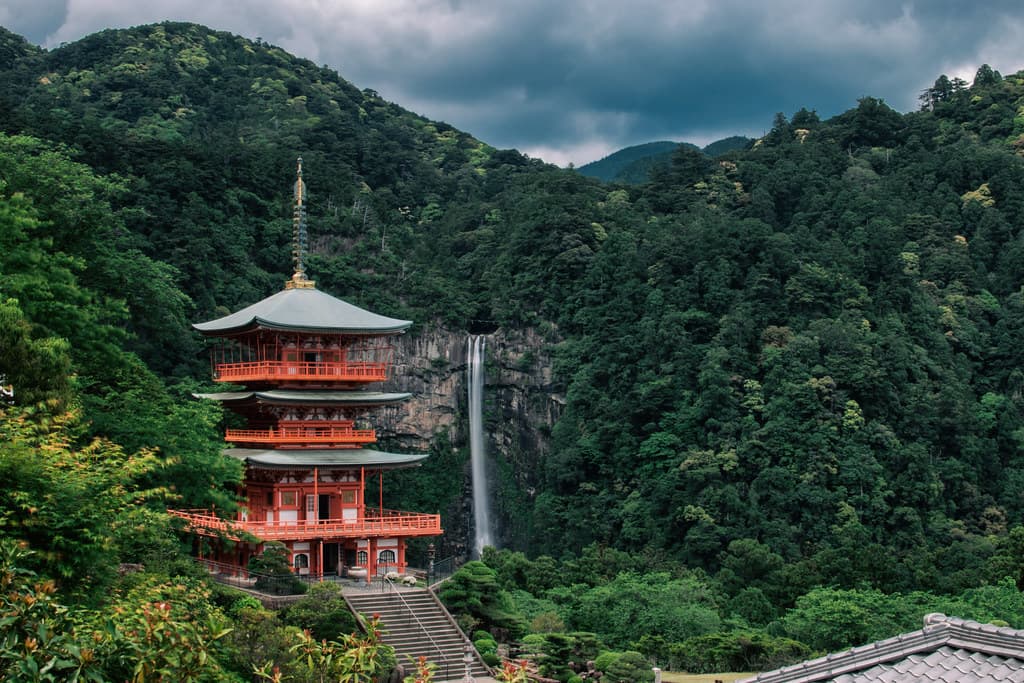
Image of Seiganto-ji (青岸渡寺). Image source
Station 1 of 33
Saigoku Kannon PilgrimageVisit essentials
A quick read before you go
- Duration
- 1 hour at the temple itself; 2–3 hours including Nachi Falls, the pagoda viewpoint, and Kumano…
- Access
- From JR Kii-Katsuura Station, take the Kumano Kōtsū bus to Nachi-san (~30 min).
Overview
The Saigoku route begins at Seiganto-ji in sound: Nachi Falls' 133 meters of unbroken water roar through the cedar forest to the Hondō before any image appears. Here Buddhist Kannon worship met Kumano's much older mountain religion, and the meeting was never undone.
Legend places the foundation in the late 6th century, when Indian monk Ragyō Shōnin found a small golden Kannon at the falls' base and enshrined it in a hut. A century later, Shōbutsu Shōnin carved a four-meter Nyoirin Kannon from one camellia tree to house it. Around 988, retired Emperor Kazan, recovering from monastic vows and Kumano devotion, declared Seiganto-ji the Saigoku route's first temple.
Its vermilion three-storied pagoda against the white falls is among Japanese sacred geography's most photographed images, yet spray and silence dissolve the cliché.
Seiganto-ji survived Meiji intact. The 1868 shinbutsu-bunri edicts separating Buddhist temples and Shintō shrines could not fully sever it from neighboring Kumano Nachi Taisha; their entanglement was too physical and old. Pilgrims still move between both precincts in one act of attention.
The Nyoirin Kannon is hibutsu, hidden and rarely shown. At the altar, devotion gathers around the wish-fulfilling jewel and Dharma wheel held by a presence not quite seen—a fitting beginning for pilgrims walking thirty-three temples.
Why this place is sacred
Seiganto-ji's thinness comes from a long refusal to be separated. Most jingū-ji — shrine-temple complexes that knit Buddhist and kami worship into one fabric — were forcibly disentangled during the Meiji shinbutsu-bunri edicts of 1868. Seiganto-ji was an exception. The Hondō, the pagoda, the Hirō-jinja shrine at the falls, and Kumano Nachi Taisha share a precinct, a soundscape, and a pilgrim flow that predates the modern division of religion.
The falls themselves are the primary sacred fact; the buildings articulate that fact in different idioms.
This layering compounds the felt presence of the place. The mountain is steep enough to demand effort. The cedars are old enough to dim the light. The Daimon-zaka stone stair, polished by centuries of feet, climbs through forest that has been ritually preserved as part of the Kumano Kodō trail network. By the time you reach the temple gate, the body has already done part of the work.
The temple's original function was to enshrine and maintain devotion to a Kannon image discovered in the orbit of Nachi Falls — a Buddhist articulation of the kami-presence already understood there. The Nachi Kannon cult drew imperial pilgrims from the Heian period onward.
From a forest hermitage to an imperial pilgrimage destination to a designated UNESCO World Heritage component (2004), Seiganto-ji has shifted in scale but not in substance. Its survival through the 16th-century burning by Oda Nobunaga, rebuilding by Toyotomi Hideyoshi in 1587, and the 1972 reconstruction of the three-storied pagoda are episodes in a continuous Kannon devotion.
Experience and orientation
The standard approach is from below — Daimon-zaka, the great-gate slope. The stair runs through cedars planted as ritual forest centuries ago; some are large enough that two people cannot encircle them. The roar of the falls is intermittent at first, then constant. By the time you reach the upper plaza, the temple has already been preparing you to receive it.
Inside the Hondō the soundscape inverts. The thick wooden walls and the mountain itself muffle the falls. What comes through is a low resonance you feel in the chest more than the ears. The hibutsu Kannon at the altar is not visible; what is visible is the gilded canopy, the smoke from the incense burner, the worn floor where pilgrims have knelt for over a thousand years. Many find that the silence here is more potent than the sound outside.
The pagoda viewpoint, a short walk from the Hondō, is where most photographs are made. From the deck the falls and the pagoda compose themselves as you have seen them in books — and yet, in person, the relationship between water, vermilion, and forest is not what photographs convey. The space between the buildings carries the felt weight.
From JR Kii-Katsuura Station, the Kumano Kōtsū bus to Nachi-san takes about 30 minutes. Most pilgrims either climb the 467-step Daimon-zaka pilgrim stair or use the upper parking lot near the temple gate. Allow 2–3 hours for Seiganto-ji combined with Nachi Falls, the pagoda viewpoint, and Kumano Nachi Taisha. Goshuin (pilgrim seal) is collected at the nōkyō office to the right of the Hondō.
Context and lineage
The traditional account names the Indian monk Ragyō Shōnin, who is said to have crossed to Kumano in the late 6th century and discovered a small golden Kannon image in a cave behind Nachi Falls. He enshrined the image in a simple hut.
A century later, the Japanese monk Shōbutsu Shōnin, drawn to the site, carved a four-meter Nyoirin Kannon from a single camellia tree and built a proper Hondō to house both the original image (placed within the larger statue) and the new icon. Whether Ragyō Shōnin was a single historical figure or a composite of early continental missionaries, the legend captures the route by which Kannon devotion entered Kumano's pre-Buddhist nature cult.
In 988, retired Emperor Kazan made the Kumano pilgrimage that would shape Japanese religious practice for centuries. According to Saigoku tradition, he received a Kannon vision at Nachi and was instructed to revive the 33-temple route that had been outlined a generation earlier by Tokudō-Shōnin. Kazan designated Seiganto-ji as Temple One, fixing the order that pilgrims still follow.
Seiganto-ji belongs to the Tendai school, with its principal monastic affiliation through the Tendai-Buddhist network that historically administered Kumano sites. The temple's Tendai esoteric reading of Nyoirin Kannon as a cosmic-compassion figure shaped imperial devotion through the Heian and Kamakura periods.
Ragyō Shōnin
Legendary founder
Shōbutsu Shōnin
Founder of the Hondō image
Retired Emperor Kazan
Saigoku route reviver
Toyotomi Hideyoshi
Patron of reconstruction
Traditions and practice
The pilgrim arrives in the white hakui jacket, sedge hat, and kongō-zue staff. At the chōzuya, hands and mouth are purified. At the Hondō, three sticks of incense are placed in the burner and a candle lit from an existing flame. The pilgrim recites the Heart Sutra and the Nyoirin Kannon mantra (Oṃ varada padme hum), bows three times, and presents an osamefuda name slip.
The nōkyōchō is then taken to the temple office for the goshuin stamp — calligraphy and red seal that mark this temple's place in the pilgrim's record. Many pilgrims continue down to Hirō-jinja at the base of the falls to bow toward the water itself.
Daily morning services, monthly Kannon-kō gatherings, sutra-copying (shakyō) workshops on request, and special prayers for ancestors and the seriously ill. The annual Nachi no Ogi Matsuri on 14 July features twelve large flaming torches carried in procession to purify the path back to the falls — a fire festival that draws Kumano practitioners and pilgrims from across Japan.
Allow time for the climb up Daimon-zaka rather than driving to the upper lot — the stair is part of the pilgrimage. After the Hondō, walk to the pagoda viewpoint and stand for several minutes without taking photographs. The ear adjusts; the eye adjusts; the falls become more than a backdrop. Conclude at Hirō-jinja and Kumano Nachi Taisha to honor the full jingū-ji configuration.
Tendai Buddhism
ActiveSeiganto-ji is one of the oldest Tendai Kannon halls in western Japan, integral to the Nachi Kannon cult and the larger Kumano shugen tradition.
Daily Tendai liturgy centered on Nyoirin Kannon, sutra chanting, goshuin issuance, monthly Kannon services. Among few surviving jingū-ji preserving pre-Meiji syncretic worship.
Kumano Shugendō and Nature Religion
ActiveBuilt adjacent to Nachi Falls, a pre-Buddhist site of nature worship; the temple participates in Kumano shugen and the Kumano Sanzan pilgrimage culture.
Veneration of Nachi Falls as sacred manifestation, joint observance with Kumano Nachi Taisha, the annual Nachi no Ogi Matsuri fire festival, mountain training routes through the Daimon-zaka and broader Kumano Kodō.
Perspectives and open questions
Seiganto-ji sits at the intersection of imperial Buddhist devotion, Kumano nature religion, and modern World Heritage interpretation. Each frame illuminates a different aspect of what the place is.
Scholarly perspective
Religious historians treat Seiganto-ji as a paradigmatic example of Japanese shinbutsu-shūgō preserved in unusually intact form. The Meiji 1868 shinbutsu-bunri edicts that disentangled most jingū-ji could not be fully implemented here because the Buddhist and Shintō functions were too physically and ritually integrated with Nachi Falls. The 2004 UNESCO inscription explicitly recognizes this layered continuity.
Living and traditional perspectives
Tendai Buddhist tradition reads the Nyoirin Kannon enshrined here as the cosmic Kannon of compassion bearing the wish-fulfilling jewel — an esoteric figure whose blessings extend to imperial protection, abundance, and salvific aid for those caught in the cycles of birth and death. The pilgrim's circuit beginning here is framed as taking refuge in that compassion.
Alternative interpretations
Kumano-region devotees emphasize the falls themselves as the primary sacred presence, with the temple serving as a Buddhist articulation of much older spirit-worship. Shugendō practitioners regard Nachi as a key training ground in their tradition of mountain ascetic practice.
Open questions
The exact pre-Buddhist character of Nachi Falls worship before 6th–7th century continental Buddhist arrival is not fully documented; the precise dating of Shōbutsu Shōnin's image and the historicity of Ragyō Shōnin remain matters of conjecture.
Plan your visit
Access and arrival
From JR Kii-Katsuura Station, take the Kumano Kōtsū bus to Nachi-san (~30 min). From the bus stop, climb the 467-step Daimon-zaka pilgrim stair or use the upper parking lot. Pagoda admission ¥300 adult, ¥200 child. The Daimon-zaka Kumano Kodō walking route from Daimonzaka-chū-shajō takes ~40 minutes.
No shukubo at Seiganto-ji. Pilgrims typically stay in Kii-Katsuura town (ryokan, hotels, onsen) or at Yunomine/Kawayu Onsen on the Kumano Kodō. Several pilgrim-friendly minshuku in Nachi-san village offer dawn-departure breakfasts.
Respectful visit
Modest, comfortable for stairs. Pilgrims often wear the white hakui (oizuru) jacket; ordinary clothing is also welcome. Sturdy shoes for the Daimon-zaka stairs.
Permitted on the grounds and around the pagoda/falls vista. Not permitted inside the Hondō or of enshrined images. Tripods discouraged on the main stairway.
Incense at the burner (osenkō), a candle lit from an existing flame, monetary saisen at the offering box, an osamefuda name slip in the box at the Hondō. Goshuin costs ¥300.
The principal Nyoirin Kannon is hibutsu and rarely shown publicly. Quiet voices, no smoking on the grounds, respectful behavior throughout the World Heritage area.
The Hondō does not permit photography; observe quietly. Tripods are discouraged on the main stair. The site is part of an active religious community as well as a UNESCO World Heritage area; keep voices low and stay on marked paths near the falls.
Current practical details
Address
8 Nachisan, Nachikatsuura, Higashimuro District, Wakayama 649-5301, Japan
Phone
Hours
Hours, fees, and access can change — verify on the official source before you travel. Practical details last checked Jun 2026.
Location
Map loads as you approach this section.
Pilgrim reflections
A portrait of encounter, not a score
Pilgrims describe what they felt, how present they could become, and whether the place would shape a journey. There are no stars and no ranking of traditions.
No reviewed reflections yet
The first pilgrims can help describe the character of being here.
Share a reflection
Available after an account-backed “Been there.” Every reflection is reviewed before publication.
Nearby sacred places
Explore other sacred places in the region. Proximity does not establish access or travel time; check each place’s guidance.
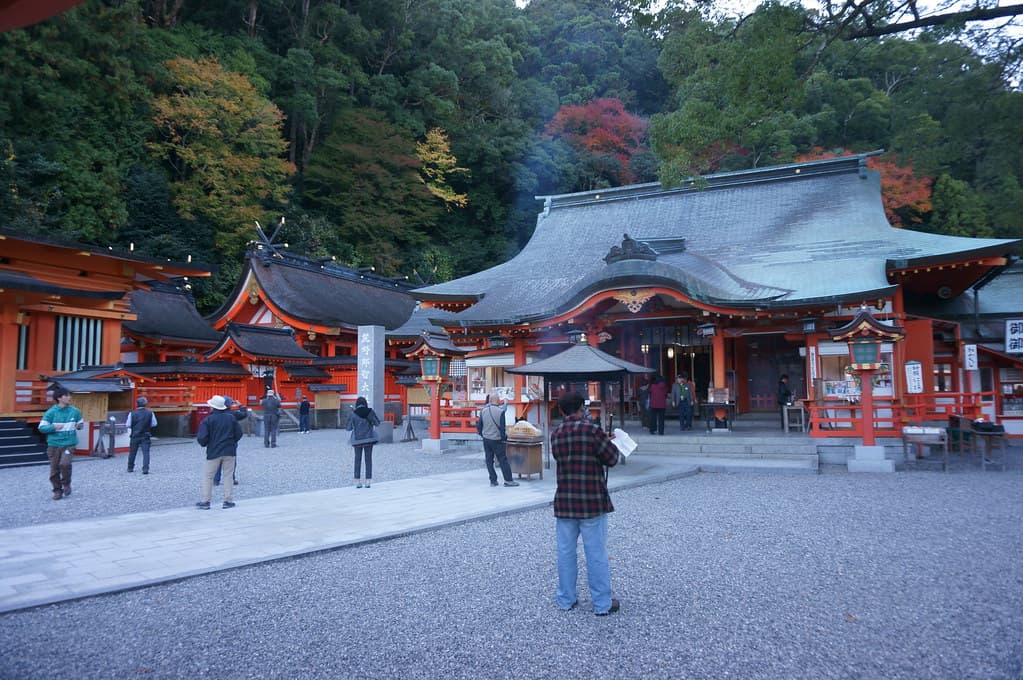


References
Sources consulted for this page. Source categories describe the publication, not a guarantee that every claim is verified. Traditional accounts and outside interpretations may differ.
- 01Seiganto-ji — Wikipedia contributorsencyclopediaComprehensive history, sect affiliation (Tendai), legendary founding by Ragyō Shōnin and historical Shōbutsu Shōnin
- 02World Heritage: Nachisan Seiganto-ji Temple — Nachi Katsuura Tourism BureauofficialOfficial Nachi Katsuura tourism portal; confirms UNESCO listing and visiting details
- 03Seiganto-ji – Nachikatsuura, Wakayama Prefecture — Henro.orgguideSaigoku-pilgrimage-specific guide with pilgrim etiquette
- 04Sacred Sites and Pilgrimage Routes in the Kii Mountain Range — Japan National Tourism Organization / UNESCOofficialConfirms 2004 UNESCO World Heritage inscription
- 05Seiganto-ji Temple, First of the Saigoku Pilgrimage — Kansai OdysseyguideDetailed practical info and historical context for first temple
Pilgrim glossary
- Kannon
- The bodhisattva of compassion, central to many East Asian pilgrimage routes.
- Sutra
- A canonical Buddhist scripture, often chanted as part of practice.
- Mantra
- A sound, word, or phrase repeated as part of meditation or ritual.
- Dharma
- The teachings of the Buddha; also the universal law underlying them.
- Tendai
- A Japanese Buddhist school based on the Lotus Sutra, foundational to many later traditions.
Share a photo
Help visitors recognize Seiganto-ji. Every submission is reviewed before publication.