Ki-mii-dera
Saigoku temple 2: a working Jūichimen Kannon hall in the Kansai pilgrimage round
Understand sacred places, explore living traditions, and learn how to engage respectfully with Pilgrim Map.
Access has not been verified. Check current local guidance before planning a visit.
Sa, Wakayama Prefecture, Japan
Read the sources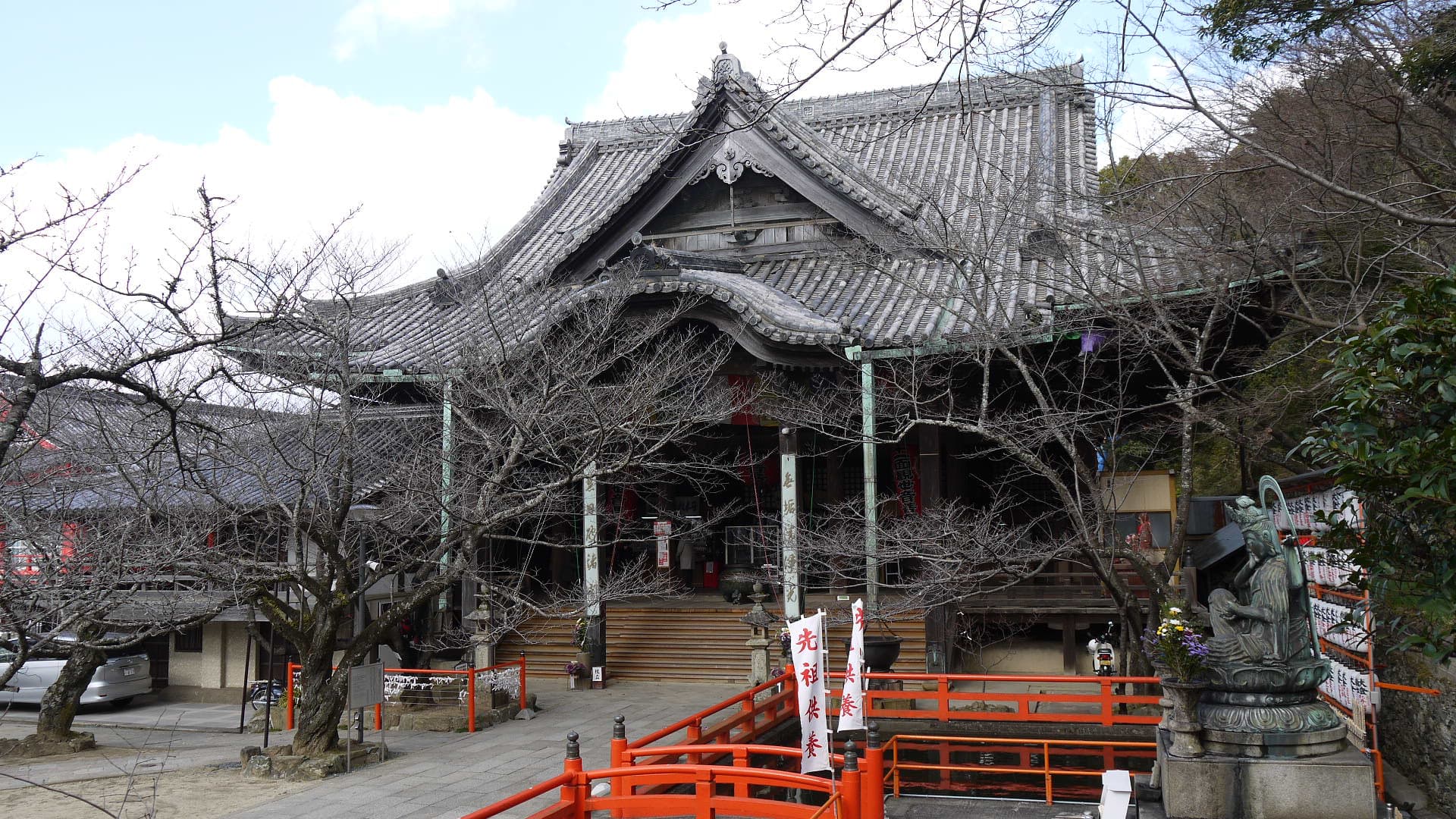
Image of Ki-mii-dera (紀三井寺). Image source · CC-BY-3.0
Station 2 of 33
Saigoku Kannon PilgrimageVisit essentials
A quick read before you go
- Duration
- 60–90 minutes typical, longer if visiting the Daikannon hall and gardens.
- Access
- 10-minute walk uphill from JR Kimiidera Station (Kinokuni Line) — about 5 minutes from JR…
Overview
Ki-mii-dera is a working Jūichimen Kannon hall and temple 2 on the thirty-three-station Saigoku Kannon Pilgrimage, a route with more than a thousand years of devotion. Its name refers to three sacred wells—Purity, Good Fortune, and Healing—said to flow since its founding, and its Wakanoura Bay setting marks a transition between the Kumano world and urban Kansai.
Tradition says the Tang Chinese monk Ikō Shōnin followed a strange light to Mount Nagusa in 770 CE (Hōki 1), found the springs, and carved a single-wood Eleven-faced Kannon containing a small golden Kannon brought from Tang China. The Hondō dates to 1509 and the three-story pagoda to 1449. Formerly Shingon Buzan-ha, Ki-mii-dera is now the head temple of the independent Kuze Kannon-shū. Its approach climbs 231 stone steps called Sango-zaka, the 'Slope of Good Fortune.'
Why this place is sacred
The 231-step Sango-zaka opens to Wakanoura Bay, ancient sakura, and the sound of the three wells. These features can shape arrival without guaranteeing renewal. Temple tradition attributes the Wells of Purity, Good Fortune, and Healing and the dual Kannon image to Ikō Shōnin's light-guided discovery on Mount Nagusa. As Saigoku temple 2, Ki-mii-dera bridges the Kumano and Kansai portions of the route; this geographic role, living devotion, and attributed origin should remain distinct.
Experience and orientation
Strong physical exertion of the long stairway, joy and exhaustion at the bayside view, tactile pilgrimage to drink from or wash with the three wells. During cherry blossom season visitors describe overwhelming beauty — Kimiidera is the official 'first cherry blossom' announcement site for Kansai.
Context and lineage
Founded in 770 CE (Hōki 1) by the Tang Chinese monk Ikō Shōnin (為光上人). The current Hondō was rebuilt in 1509; the three-storied pagoda was constructed in 1449. Founded by Ikō Shōnin, a Chinese pilgrim-monk; significant later patronage from the Kishū Tokugawa family during the Edo period (Wakayama domain). Ikō Shōnin, a Chinese monk traveling Japan, was guided by a strange light to Mount Nagusa above Wakanoura.
Traditions and practice
Daily Kannon liturgy, recitation of the Heart Sutra and Eleven-faced Kannon dhāraṇī, monthly devotional services, special openings of the principal image (shown only once every 50 years), sutra copying.
Kuze Kannon-shū (救世観音宗) — formerly Shingon
ActiveKimiidera is the head temple (sōhonzan) of the independent Kuze Kannon-shū sect; it broke from the larger Shingon Buzan-ha lineage in the modern period to form its own school centered on Kannon devotion. The 1449 pagoda still reflects its Shingon architectural heritage.
Kannon-centered esoteric ritual, recitation of the Eleven-faced Kannon dhāraṇī, monthly Kannon-kō devotional services, goshuin issuance, water offerings at the three sacred wells.
Perspectives and open questions
Read Ki-mii-dera through distinct sectarian, founding-tradition, and local lenses. Its Shingon-to-Kuze Kannon-shū transition preserved Kannon devotion and a Tang-derived origin account; local tradition treats the continuously flowing wells as Kannon's protection and the temple's sakura as a Wakayama seasonal marker.
Scholarly perspective
Kimiidera is a key example of a Heian-era esoteric Kannon hall that successfully transitioned between major Buddhist sectarian movements (Shingon to independent Kuze Kannon-shū) while preserving its core Kannon-cult identity and Tang-derived founding narrative.
Living and traditional perspectives
Local tradition emphasizes the three wells' continuous flow as proof of Kannon's protection over Wakayama Bay; the temple has long served as the city's spiritual anchor and seasonal calendar marker via its sakura.
Alternative interpretations
Esoterically, Eleven-faced Kannon represents Kannon's all-directional vigilance — the eleven faces survey the cosmos to detect suffering. Pilgrims sometimes interpret the three wells as manifestations of the Kannon's threefold body, mind, and speech.
Plan your visit
Access and arrival
10-minute walk uphill from JR Kimiidera Station (Kinokuni Line) — about 5 minutes from JR Wakayama Station. The 231-step Sango-zaka begins at the Niōmon gate. A side cable elevator is available for those unable to climb the stairs (separate small fee).
Respectful visit
Permitted on the grounds, gardens, and exterior buildings; not permitted of the principal hibutsu image inside the Hondō. The interior of the Buttenkaku (Daikannon hall) generally allows photography of the giant statue — confirm at the office.
Saisen (coin offering), incense and candles at the Hondō, optional water offerings at the three wells. Goshuin ¥300; pilgrim stamps available at the temple office.
The principal Eleven-faced Kannon is hibutsu and not normally visible. Quiet voices in the Hondō, removal of shoes when entering interior spaces, no eating/smoking on the temple steps.
Current practical details
Address
1201 Kimiidera, Wakayama, 641-0012, Japan
Phone
Hours
Hours, fees, and access can change — verify on the official source before you travel. Practical details last checked Jun 2026.
Location
Map loads as you approach this section.
Pilgrim reflections
A portrait of encounter, not a score
Pilgrims describe what they felt, how present they could become, and whether the place would shape a journey. There are no stars and no ranking of traditions.
No reviewed reflections yet
The first pilgrims can help describe the character of being here.
Share a reflection
Available after an account-backed “Been there.” Every reflection is reviewed before publication.
Nearby sacred places
Explore other sacred places in the region. Proximity does not establish access or travel time; check each place’s guidance.


References
Sources consulted for this page. Source categories describe the publication, not a guarantee that every claim is verified. Traditional accounts and outside interpretations may differ.
- 01Kimii-dera – Wakayama, Wakayama Prefecture — Henro.orgguidePilgrim-specific guide with founding history and current sect
- 02Kimiidera Temple — Wakayama Kanko (Wakayama Prefecture official tourism)officialOfficial prefecture tourism site
- 03Kimiidera Temple — Japan National Tourism OrganizationofficialOfficial JNTO description
- 04Kimii-dera - The Plebeian Temple in Wakayama — Kanpai JapanguideCultural and architectural details
- 05Kimiidera Temple, Top Pick for Sakura in Wakayama — Kansai OdysseyguidePractical visitor information and sect history
- 06Kimiidera Temple - Saigoku Kannon Pilgrimage — Tale of Genji projectblogHistorical detail on Iko Shōnin and the founding legend
Pilgrim glossary
- Kannon
- The bodhisattva of compassion, central to many East Asian pilgrimage routes.
- Sutra
- A canonical Buddhist scripture, often chanted as part of practice.
- Shingon
- An esoteric Japanese Buddhist school emphasizing ritual, mantra, and mandala practice.
Share a photo
Help visitors recognize Ki-mii-dera. Every submission is reviewed before publication.