Kumano-Nachi Grand Shrine
Where ancient nature worship meets the sacred falls that drew emperors on pilgrimage
Understand sacred places, explore living traditions, and learn how to engage respectfully with Pilgrim Map.
Access has not been verified. Check current local guidance before planning a visit.
Nachikatsuura, Wakayama Prefecture, Japan
Read the sources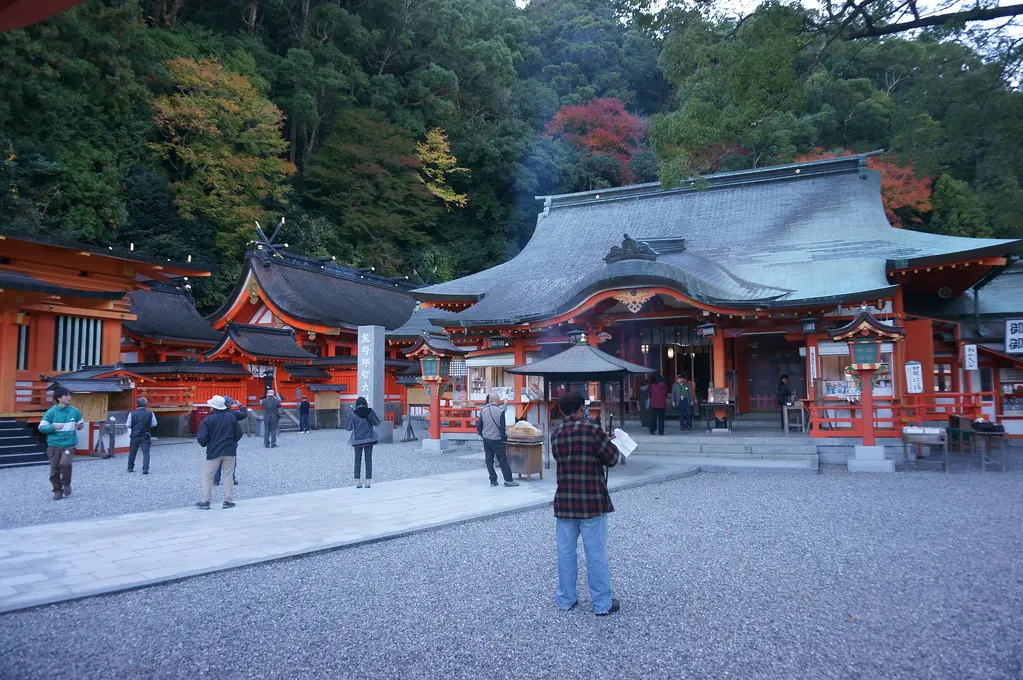
Image of Kumano-Nachi Grand Shrine. Image source
Station 8 of 8
Kumano Kodo — Nakahechi and Kumano SanzanVisit essentials
A quick read before you go
- Duration
- 1-2 hours for shrine alone.
- Access
- From Kii-Katsuura Station (JR Kisei Main Line), buses run to Nachi Falls area (approximately 30…
Overview
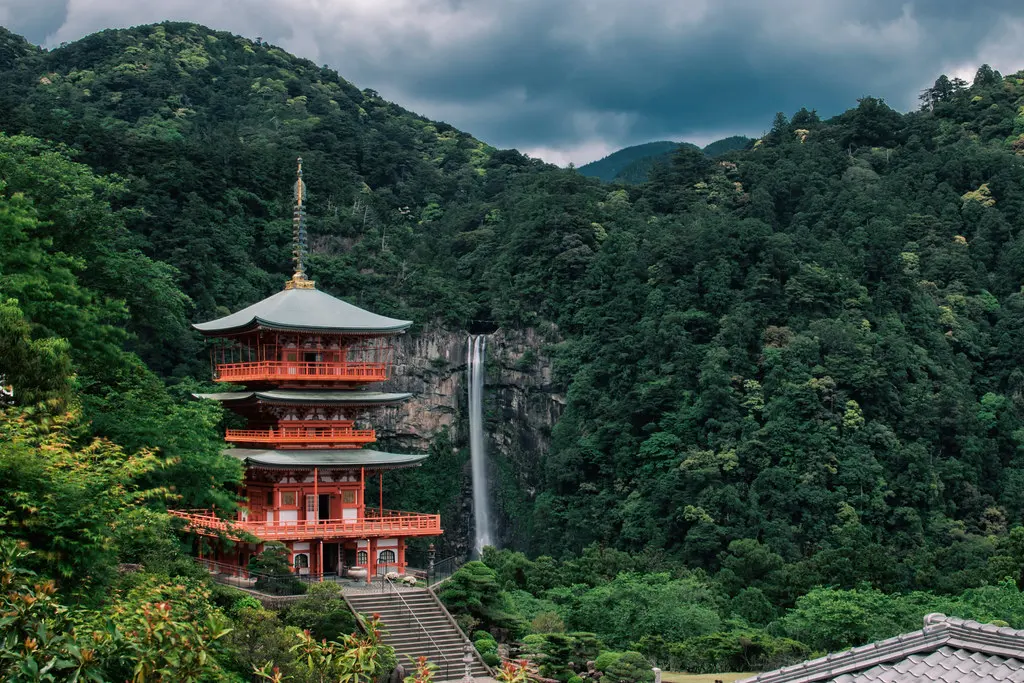
Long before a shrine stood on these forested slopes, people worshipped Nachi Falls. At 133 meters, Japan's tallest single-drop waterfall embodied divine natural power for prehistoric peoples: kami dwelling in the roar, mist, and ceaseless descent.
From that nature worship grew Kumano Nachi Taisha, one of three Kumano Grand Shrines forming Japan's holiest pilgrimage destination. It absorbed Buddhist elements into the Shinto-Buddhist synthesis that shaped Japanese religion for centuries; even after the Meiji government forced separation, the adjacent temple and shrine remain one sacred landscape.
During the Heian period, retired emperors repeatedly made the dangerous weeks-long pilgrimage from Kyoto. Emperor Go-Shirakawa came thirty-four times. Today's pilgrims follow paths worn by a thousand years of devoted feet toward falls still understood as a living divine presence.
Why this place is sacred
The thinness at Kumano Nachi Taisha begins with the falls themselves, which predate and in some sense create everything that followed. Water has been falling here since before humans arrived in Japan, and from the moment humans encountered this place, they recognized it as sacred. This is not metaphor or projection; the falls truly are overwhelming, working directly on the senses in ways that open perception to depths normally hidden.
The shrine represents the formalization of this primal recognition. What began as awe before natural power developed into complex institutional religion, with hierarchy, ritual, and doctrine. Yet the original impulse remains: the kami are here because the power is here, and the power was recognized long before anyone articulated the concept of kami.
Imperial pilgrimage added another layer. For the most elevated figures in Japanese society to undertake weeks of arduous mountain travel demonstrated that Kumano held significance beyond local cult. The prestige of imperial attention drew thousands more, until the pilgrimage routes were 'like trails of ants' with constant foot traffic. Each pilgrim who walked these paths left something behind and took something away; over centuries, this accumulation of devotion has saturated the site.
Today Kumano Nachi Taisha serves as the head shrine for over 4,000 Kumano shrines throughout Japan, each of which connects devotees to the power of this original location. The shrine is not merely historically important but actively functions as a center of ongoing spiritual practice, perpetuating the tradition it inherited.
The original purpose was nature worship at Nachi Falls, which ancient peoples understood as divine manifestation. The shrine formalized this worship, providing structure for the recognition of kami in natural phenomena.
The shrine developed from pure nature worship to formal institutional Shinto, absorbing Buddhist elements during the medieval period. The Meiji separation artificially divided the unified religious complex, but the site retains its fundamental character as a place where nature worship and formal religion interpenetrate.
Experience and orientation
The approach to Kumano Nachi Taisha sets the tone for encounter. Whether arriving by bus along mountain roads or walking the ancient pilgrimage trails, visitors sense the increasing presence of something significant. The shrine sits at about 350 meters elevation on the slopes of Mt. Nachi, surrounded by forest, with the sound of the falls audible before they come into view.
The shrine complex reveals itself through a series of vermillion torii gates and structures, vivid against the green of the surrounding forest. The main hall (honden) enshrines multiple kami, including Kumanofusumi no Okami. The architecture follows traditional Shinto patterns, emphasizing purity and the proper housing of divine presence.
What distinguishes this shrine from others is the continuous awareness of the falls. They are visible from various points, their sound an ongoing background, their mist occasionally reaching shrine grounds. The kami of the falls, Hiryū Gongen, is enshrined at the subsidiary Hirou Shrine near the falls' base, but the falls' influence pervades the entire sacred complex.
Between the Shinto shrine and the Buddhist temple (Seigantoji) stands the Sacred Camphor Tree, 850 years old, planted according to tradition by a member of the Taira clan. The tree serves as a living bridge between institutions that were once unified, a reminder that distinctions between 'Shinto' and 'Buddhist' are often more administrative than spiritual.
Many visitors report a sense of encountering something ancient and potent. The combination of natural power, accumulated devotion, and the visible beauty of the site creates conditions where ordinary awareness shifts. Some describe feeling connected to the long line of pilgrims who preceded them; others speak of peace or clarity arising unexpectedly.
Approach Kumano Nachi Taisha as one element in a larger sacred landscape that includes the adjacent Seigantoji Temple and the Hirou Shrine at the falls' base. Plan time to experience all three, as together they reveal what was once a unified religious complex. If walking the pilgrimage trails, understand that you walk where emperors walked a thousand years ago.
Context and lineage
The origins of worship at Nachi lie beyond recorded history, in the recognition by prehistoric peoples that the falls embodied divine power. According to shrine records, the formal shrine was established in 317 CE (the fifth year of Emperor Nintoku's reign), originally located at what is now the subsidiary Tobitaki Shrine. The worship of Hiryū Gongen at the falls and the development of the main shrine complex represent parallel but related streams of devotion that eventually became institutionally connected.
During the Heian period (794-1185 CE), retired emperors began making pilgrimages to Kumano, lending prestige that drew thousands of additional pilgrims along the mountain paths.
Kumano Nachi Taisha maintains the priestly traditions that have served the shrine since its founding. It serves as the head shrine for over 4,000 Kumano shrines throughout Japan, all of which draw spiritual connection from this original location. The Kumano Kodo pilgrimage routes connect it to the other two grand shrines (Hongu and Hayatama) and to the broader network of sacred sites in the Kii Mountains.
Hiryū Gongen
The kami believed to inhabit Nachi Falls, worshipped at Hirou Shrine at the falls' base
Emperor Go-Shirakawa
Retired emperor who made 34 pilgrimages to Kumano during the late Heian period, demonstrating extraordinary devotion
Kumanofusumi no Okami
Principal kami enshrined at the main hall of Kumano Nachi Taisha
Traditions and practice
The most spectacular traditional practice is the Nachi Fire Festival (Nachi-no-Hi Matsuri), held annually on July 14. During this festival, twelve large torches representing the kami are paraded through the shrine grounds while participants carry portable shrines (mikoshi). The festival celebrates the mythical descent of the kami from the peak of Mt. Nachi to the falls.
Historically, the pilgrimage itself constituted major spiritual practice. The weeks of walking from Kyoto, the physical hardship, the immersion in sacred landscape, all served to prepare pilgrims for encounter with the divine. Imperial pilgrims brought elaborate offerings and performed extended ceremonies.
Modern visitors engage in standard Shinto practices: purification at the temizuya, prayer at the main hall following the bow-clap-bow sequence, and receiving goshuin stamps as record of their visit. Many pilgrims walk portions of the Kumano Kodo trails, connecting to the physical practice of their predecessors. The shrine offers omamori (protective amulets) and various blessings.
The Nachi Fire Festival continues as a major annual event, drawing visitors from throughout Japan and internationally.
For meaningful engagement, consider walking at least a portion of the Kumano Kodo pilgrimage trails, experiencing the physical dimension of the journey. Visit the adjacent Seigantoji Temple and Hirou Shrine at the falls' base to appreciate the original unity of the sacred complex. If possible, time your visit for the Nachi Fire Festival, understanding the crowds will be significant.
Shinto
ActiveKumano Nachi Taisha is one of the three Kumano Grand Shrines and serves as head shrine for over 4,000 Kumano shrines nationwide. It enshrines multiple kami and maintains traditional Shinto practice.
Daily rituals, festival observances including the Nachi Fire Festival, pilgrimage reception, various blessings and ceremonies
Kumano Pilgrimage
ActiveAs one of the three Kumano Grand Shrines, Nachi Taisha is a major destination on the UNESCO-listed Kumano Kodo pilgrimage routes that drew emperors and commoners alike.
Walking the ancient paths, visiting the three grand shrines, receiving stamps at each location, devotional prayer
Perspectives and open questions
Kumano Nachi Taisha can be understood through Shinto theology, pilgrimage practice, nature reverence, or historical analysis. Each lens illuminates different dimensions of this place where natural power and human devotion converge.
Scholarly perspective
Scholarship recognizes Kumano Nachi Taisha as exemplary of how Japanese religion developed from nature worship to institutional Shinto while maintaining connection to natural phenomena. The site illustrates both the shinbutsu shugo synthesis that characterized pre-modern Japan and the artificial separations imposed by Meiji modernization.
Living and traditional perspectives
For Shinto practitioners, the kami truly inhabit this place, present in the falls, the sacred trees, and the shrine buildings themselves. The pilgrimage to Kumano is understood as encounter with divine powers who bestow blessings upon sincere devotees. The relationship is reciprocal: human worship maintains the kami's connection to the human world.
Alternative interpretations
Some practitioners understand the Kumano region as possessing particularly concentrated spiritual energy, with the three grand shrines marking nodes in a sacred landscape. The falls are seen as perpetually generating purifying force that radiates throughout the region.
Open questions
The precise nature of the earliest worship at the falls remains beyond historical documentation. Why Kumano attracted such extraordinary imperial devotion, what inner experiences drove emperors to make the journey dozens of times, and how pre-Buddhist nature worship transformed into but also persisted within institutional Shinto, these questions point toward depths that resist simple analysis.
Plan your visit
Access and arrival
From Kii-Katsuura Station (JR Kisei Main Line), buses run to Nachi Falls area (approximately 30 minutes). The shrine is at about 350 meters elevation on Mt. Nachi. For pilgrimage experience, consider walking portions of the Kumano Kodo trails.
Kii-Katsuura is a hot spring resort town with numerous ryokan and hotels. Staying overnight allows for early morning visits and extended exploration of the sacred landscape.
Respectful visit
Modest, comfortable clothing. No specific requirements, but avoid excessively casual or revealing attire.
Photography permitted in most outdoor areas. Exercise discretion during ceremonies or when others are praying.
Monetary offerings made at the main hall. Omamori and other items available for purchase at the shrine office.
{"Follow Shinto etiquette when praying","Respect sacred spaces and ceremonies","Stay on designated paths","Do not disturb other worshippers"}
The shrine is an active religious site. Approach with appropriate reverence. During the Fire Festival, the crowds can be overwhelming; plan accordingly.
Current practical details
Address
1 Nachisan, Nachikatsuura, Higashimuro District, Wakayama 649-5301, Japan
Phone
Hours
Hours, fees, and access can change — verify on the official source before you travel. Practical details last checked Jun 2026.
Location
Map loads as you approach this section.
Pilgrim reflections
A portrait of encounter, not a score
Pilgrims describe what they felt, how present they could become, and whether the place would shape a journey. There are no stars and no ranking of traditions.
No reviewed reflections yet
The first pilgrims can help describe the character of being here.
Share a reflection
Available after an account-backed “Been there.” Every reflection is reviewed before publication.
Nearby sacred places
Explore other sacred places in the region. Proximity does not establish access or travel time; check each place’s guidance.


References
Sources consulted for this page. Source categories describe the publication, not a guarantee that every claim is verified. Traditional accounts and outside interpretations may differ.
- 01Kumano Nachi Taisha Shrine — Japan National Tourism OrganizationofficialGovernment tourism bureau information
- 02Kumano Nachi Taisha Grand Shrine — Visit WakayamaofficialOfficial prefecture tourism website
- 03Kumano Nachi Taisha — Tanabe City Kumano Tourism BureauSource contextOfficial pilgrimage authority
- 04Kumano Nachi Taisha - Wikipedia — WikipediaencyclopediaGeneral reference with cited sources
- 05Walking the Land of Gods: The Kumano Grand Shrines — Centrip JapanguidePilgrimage-focused perspective
Pilgrim glossary
- Torii
- The traditional Japanese gate marking the entrance to a Shinto sacred area.
- Mikoshi
- A portable Shinto shrine carried during festivals to bring a deity into the community.
Share a photo
Help visitors recognize Kumano-Nachi Grand Shrine. Every submission is reviewed before publication.