Hiro Shrine
Where the kami lives in falling water and worshippers pray directly to nature itself
Understand sacred places, explore living traditions, and learn how to engage respectfully with Pilgrim Map.
Access has not been verified. Check current local guidance before planning a visit.
Nachikatsuura, Wakayama Prefecture, Japan
Read the sources
Visit essentials
A quick read before you go
- Duration
- 30 minutes to 1 hour for meaningful engagement.
- Access
- A short walk (about 120 meters) from the main Nachi Falls bus stop.
Overview
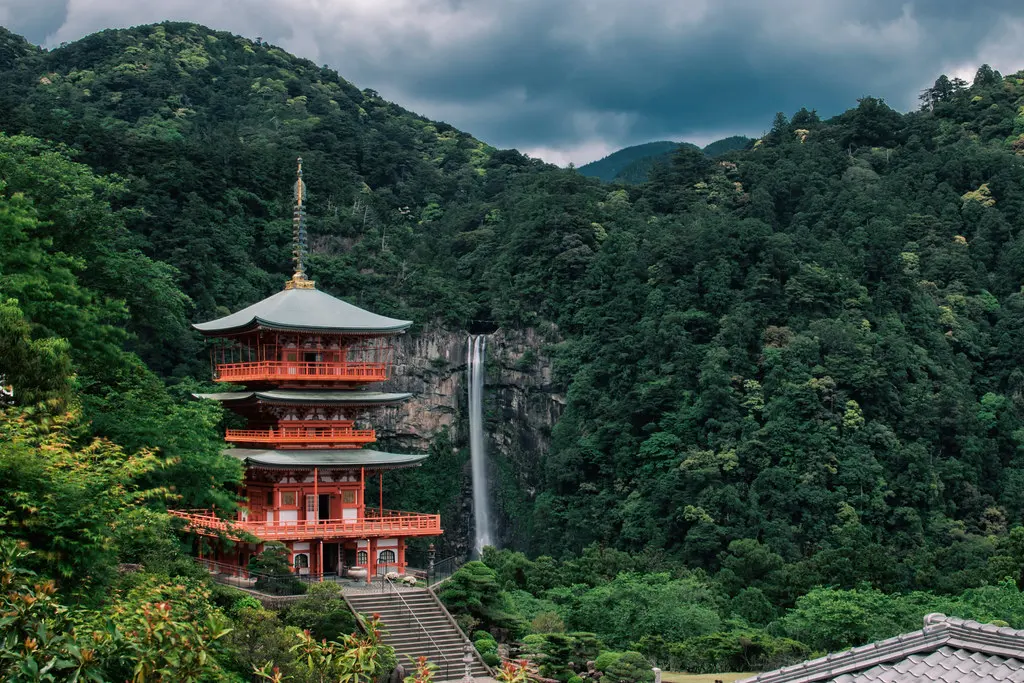
Hirou Shrine has no building or architectural barrier between worshipper and sacred object. The 133-meter Nachi Falls is itself the shintai, the divine body where the kami Hiryu Gongen dwells; prayer addresses falling water, sound, mist, and ceaseless descent. For worshippers here since before recorded history, the falls do not symbolize the divine but manifest power beyond human comprehension in perceptible form.
The name Hiryu Gongen, 'Flying Dragon Avatar,' and incorporation into the Kumano shrine complex came later; the water predates those concepts and will outlast them. At the cascade's base, mist touches visitors and sound fills awareness. From a platform 120 meters from the shore, worshippers face what their ancestors faced and what will continue after them. The distinction between nature as sacred and merely beautiful loses meaning before something speaking a language older than words.
Why this place is sacred
What makes Hirou Shrine a thin place operates at a level more fundamental than most sacred sites. At most temples and shrines, worshippers pray to images, objects, or buildings that represent or house the sacred. At Hirou Shrine, the sacred object is nature itself, unmediated by human craftsmanship.
The 133-meter waterfall works directly on the body before the mind can intervene. The sound is not heard so much as felt, a vibration that penetrates to the bones. The mist coats the skin. The visual spectacle exceeds the frame that ordinary vision provides. Under these conditions, the boundary between observer and observed becomes uncertain. This is not metaphor but phenomenological fact: the falls disrupt the stable sense of separate self that ordinary experience assumes.
For Shugendo practitioners who performed extended austerity under the falls, this disruption was deliberately sought. Standing in the cascade's impact, body numbed by cold, mind stripped of its usual defenses, the practitioner broke through to states of awareness normally unavailable. What remains of this tradition lives in the shrine's continued reverence for the falls' transformative power.
The conceptualization of Hiryu Gongen, the 'Flying Dragon Avatar,' provides religious language for what overwhelms language. The kami is understood to be present in and as the falls, not located elsewhere and merely represented here. This theological stance matches experiential reality: at Hirou Shrine, there is no 'elsewhere.' The sacred is what one sees, hears, and feels.
The original purpose was pure nature worship: recognition that this waterfall manifested power worthy of veneration. All subsequent development served to formalize and support this original recognition.
The site evolved from prehistoric nature worship to incorporation into the Kumano shrine complex, with Hiryu Gongen identified as the specific kami present in the falls. The physical infrastructure developed to support worship while maintaining the principle that the falls themselves, not any building, are the focus of devotion.
Experience and orientation
The path to Hirou Shrine descends through forest toward the sound of falling water. Long before the cascade comes into view, its presence is announced through sound that grows from background to foreground to total environment. By the time the viewing platform is reached, the falls have already begun their work on the visitor.
The view from the platform is unmistakable: 133 meters of water in continuous descent, a curtain of white against the dark rock face. The falls are not merely large but overwhelming in a way that photographs cannot convey. The eye cannot take in the whole without scanning; the cascade exceeds the visual field that comfortable viewing assumes.
Mist drifts from the impact zone, cooling skin and settling on clothing. On windless days it rises straight up; with breeze it sweeps across the viewing area. The moisture carries ions, a freshness that visitors often describe as physically purifying.
The sound is perhaps the most penetrating element. It is not loud in the sense of painful, but it is total, filling awareness until it becomes a kind of silence, a white noise that blanks out smaller sounds and, eventually, smaller thoughts. Standing in this sound for extended periods, visitors often report altered states: unusual clarity, profound peace, or unexpected emotional release.
The shrine itself provides minimal structure for this encounter. There is no building to pray before, only a simple altar facing the falls. To worship here is to face the water directly, to offer prayers to cascading nature rather than to human-made symbol. This simplicity is itself the teaching: at Hirou Shrine, the sacred needs no elaboration.
Approach Hirou Shrine as the culmination of the Nachi sacred complex, where all the formality of the upper shrines gives way to direct encounter. Allow ample time to simply stand and receive what the falls offer. Do not rush to photograph; let the experience penetrate before reaching for the camera.
Context and lineage
There is no founding story for Hirou Shrine because its founding predates story. Before any mythology was articulated, before Hiryu Gongen was named or the Kumano shrine system developed, people came here to witness the falls and to recognize in them something worthy of reverence. The shrine exists because the falls exist, and the falls have been falling since before humans inhabited these islands.
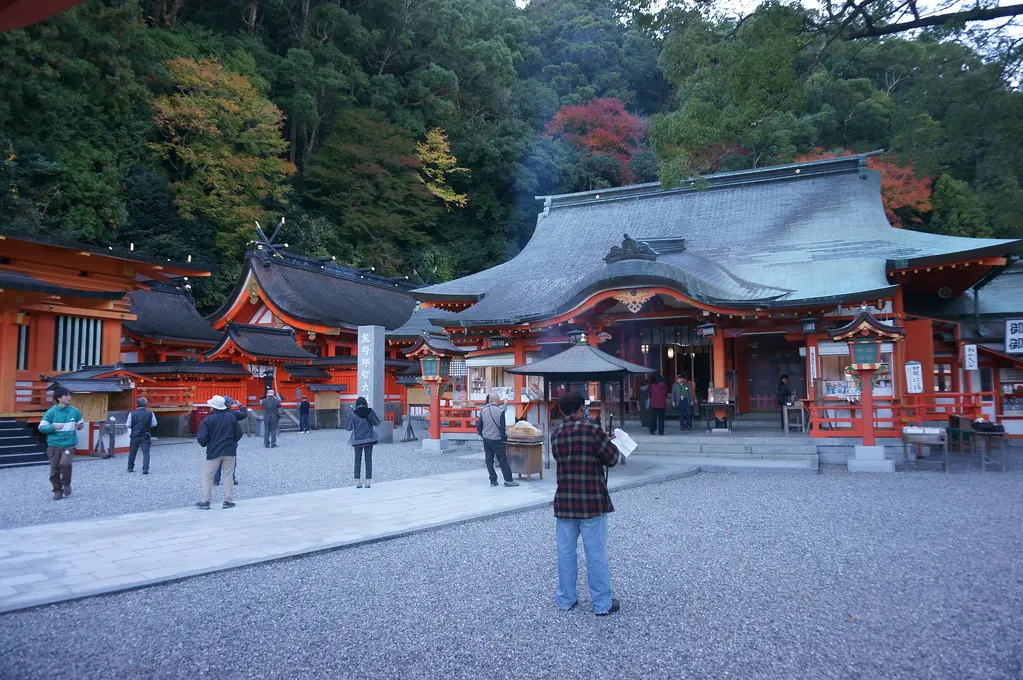
Hirou Shrine is officially a subsidiary shrine (sessha) of Kumano Nachi Taisha, connected to the priestly lineage that serves the Kumano complex. However, its essential character as place of nature worship is older than institutional affiliation.
Hiryu Gongen
The 'Flying Dragon Avatar,' the kami identified as dwelling in the waterfall. The name provides conceptual frame for what exceeds conceptualization.
Traditions and practice
The most demanding traditional practice was takigyo, waterfall austerity, in which Shugendo practitioners stood in the cascade itself for extended periods. Using the physical shock of cold water and the psychological impact of continuous bombardment, practitioners broke through ordinary consciousness to altered states. This practice was part of the broader Shugendo training that used the entire Nachi mountain as a spiritual training ground.
For ordinary worshippers, practice was and remains simple: facing the falls directly and offering prayer to the kami present in the water itself.
Modern visitors approach the falls via the viewing platform, offer prayers toward the cascade, and often receive goshuin stamps as record of their visit. Extended austerity practice is not available to casual visitors, but the essential encounter with the falls remains accessible.
Many visitors spend extended time simply standing before the cascade, allowing its sound and mist to work on their awareness. This passive reception may be the deepest practice available at this site.
Allow at least thirty minutes to simply stand and receive the falls' impact on your senses. Do not rush to photograph. Let the sound become background, then become silence. Notice how the mist feels on your skin. If you have visited the upper shrines first, observe how this encounter differs from prayer before buildings. Consider that your ancestors, whatever their origins, likely had similar encounters with waterfalls that shaped their sense of the sacred.
Shinto Nature Worship
ActiveHirou Shrine embodies the most direct form of Shinto nature worship. The waterfall itself is the shintai (divine body), and prayer is offered directly to the cascade without intervening architecture.
Direct worship facing the waterfall, contemplation, reception of the falls' sensory impact
Perspectives and open questions
Hirou Shrine can be understood through Shinto theology, phenomenological encounter with nature, or simply as place where something powerful speaks without requiring interpretation.
Scholarly perspective
Scholarship recognizes Hirou Shrine as representing the foundational layer of Japanese religion: direct nature worship before the development of institutional Shinto or the arrival of Buddhism. The site exemplifies how natural phenomena were venerated as sacred in their own right.
Living and traditional perspectives
For Shinto practitioners, Hiryu Gongen genuinely dwells in the waterfall. The falls are not symbol but shintai, divine body, the physical form in which the kami is present. To pray to the falls is to pray to the kami directly.
Alternative interpretations
Some understand the falls as generating continuous purifying energy through the ion-rich mist and the vibrational impact of sound. The cascade is seen as natural cleanser of both physical and subtle energy systems.
Open questions
What the falls 'mean' independent of human interpretation remains beyond articulation. The experience of standing before them points toward something that precedes and exceeds all conceptualization.
Plan your visit
Access and arrival
A short walk (about 120 meters) from the main Nachi Falls bus stop. Stairs lead down to the viewing platform. Small entrance fee required for the closest viewing area.
See accommodations for Kumano Nachi Taisha area.
Respectful visit
Comfortable outdoor clothing. Expect mist, especially on windy days; a light waterproof layer may be helpful.
Photography is permitted and encouraged. The falls provide dramatic subject matter in all conditions.
A small monetary offering can be made at the shrine area. The entrance fee to the viewing platform supports the site.
{"Stay on designated paths and viewing areas","Do not attempt to climb on or approach the falls","No swimming or water contact","Respect other visitors seeking contemplation"}
Do not attempt to approach or enter the falls beyond designated viewing areas. The power that makes the falls sacred also makes them dangerous.
Current practical details
Address
Japan, 〒649-5301 和歌山県東牟婁郡那智勝浦町那智山1
Phone
Hours
Hours, fees, and access can change — verify on the official source before you travel. Practical details last checked Jun 2026.
Location
Map loads as you approach this section.
Pilgrim reflections
A portrait of encounter, not a score
Pilgrims describe what they felt, how present they could become, and whether the place would shape a journey. There are no stars and no ranking of traditions.
No reviewed reflections yet
The first pilgrims can help describe the character of being here.
Share a reflection
Available after an account-backed “Been there.” Every reflection is reviewed before publication.
Nearby sacred places
Explore other sacred places in the region. Proximity does not establish access or travel time; check each place’s guidance.


References
Sources consulted for this page. Source categories describe the publication, not a guarantee that every claim is verified. Traditional accounts and outside interpretations may differ.
- 01Nachi Waterfall — Visit WakayamaofficialOfficial prefecture tourism website
- 02Nachi Falls — Japan National Tourism OrganizationguideGovernment tourism bureau information
- 03Hirou Shrine — Japan CheapoguideTravel guide with practical information
- 04Hirou Shrine - Go Go Goshuin — Go Go GoshuinSource contextPilgrimage and shrine stamp focused
Share a photo
Help visitors recognize Hiro Shrine. Every submission is reviewed before publication.