The Temple of Haeinsa, Gaya-san
Where 52 million characters of Buddhist scripture have been preserved in silence for eight centuries
Understand sacred places, explore living traditions, and learn how to engage respectfully with Pilgrim Map.
Access has not been verified. Check current local guidance before planning a visit.
Hapcheon, Gyeongsangnam-do, South Korea
On this pilgrimage
Three Jewel Temples of KoreaVisit essentials
A quick read before you go
- Duration
- A brief visit covering the main halls and Janggyeong Panjeon requires 90 minutes minimum.
- Access
- From Seoul, take KTX high-speed rail to Dongdaegu Station, then bus to Haeinsa, a total journey…
Overview
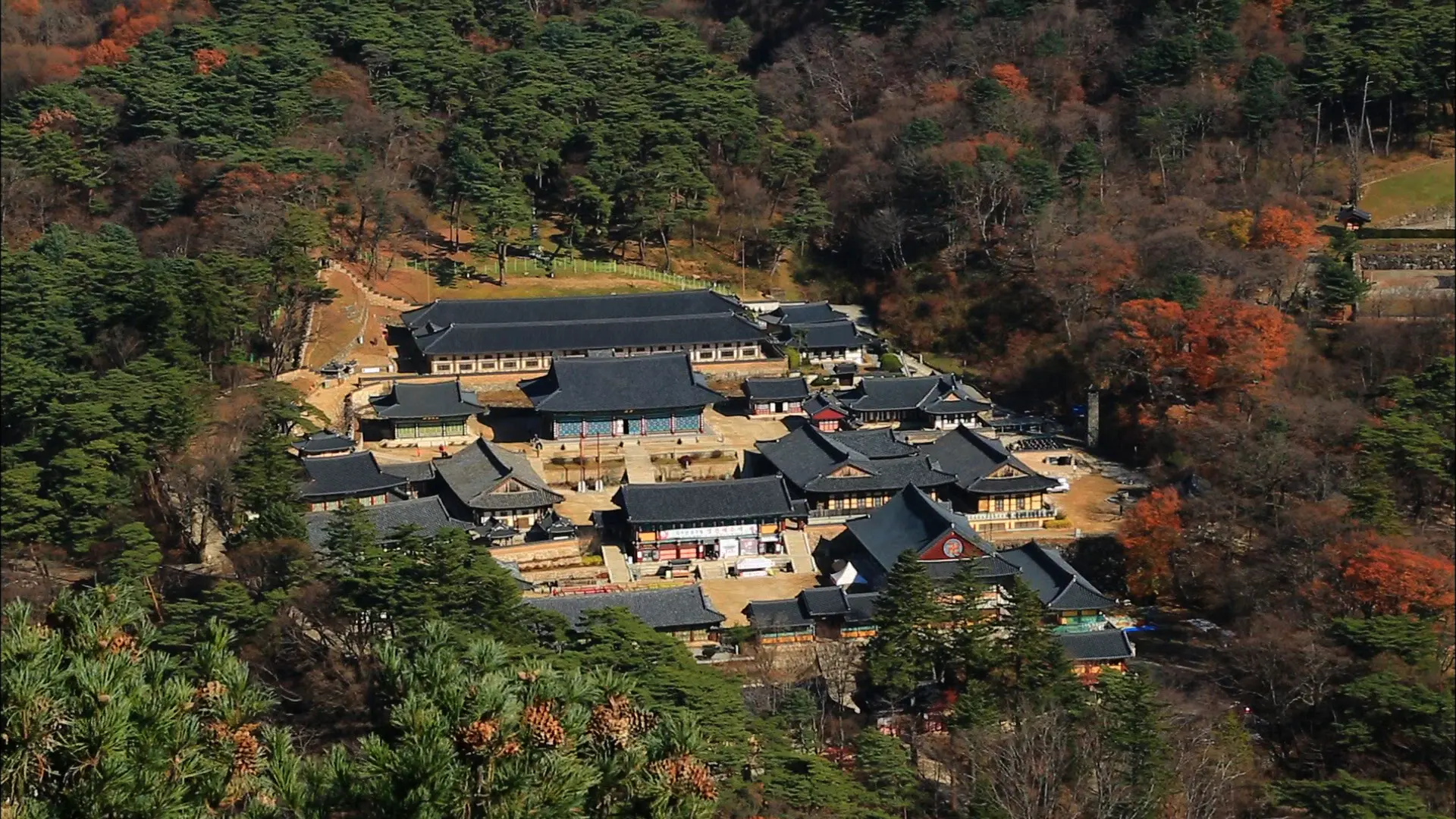
Each day at 3am, Haeinsa's great drum sounds across Mount Gayasan, calling monks to chant before the Cosmic Buddha in halls holding twelve centuries of practice. The name means Ocean Seal, from the Avatamsaka Sutra's instruction that a still mind reflects all phenomena like a waveless sea.
Haeinsa guards the Tripitaka Koreana: over 81,000 woodblocks bearing 52 million scriptural characters, carved during the 13th-century Mongol invasions and regarded by scholars as the most accurate surviving Buddhist canon. Ingeniously ventilated depositories have protected them without warping for over 750 years, earning UNESCO recognition as irreplaceable human heritage. Behind latticed windows they remain sacred texts, not museum objects, within a continuing monastic practice.
Why this place is sacred
Haein Sammae, the Avatamsaka Sutra's Ocean Seal Samadhi, describes consciousness reflecting all phenomena as a calm ocean reflects the sky: when delusion ceases, mind becomes mirror. Haeinsa's founders embodied that aim in practice and stone.
At 655 metres on pre-Buddhist sacred Mount Gayasan, ridges concentrate what geomancers call beneficial currents. Sangwangbong and Chilbulbong, peaks invoking kings and Buddhas, block northern cold and deflect southern moisture—the same conditions protecting woodblocks and contemplation. The Tripitaka's 52 million characters were carved over twelve years by many hands in script so uniform it appears singular. Some credit skill; others suggest the carvers entered states through which something larger moved.
Twelve centuries of pre-dawn chanting underlie the unusual stillness even non-Buddhist visitors report.
According to traditional accounts, Haeinsa was founded in 802 CE when the monks Suneung and Ijeong healed King Aejang's wife of a tumor through esoteric Buddhist practice. In gratitude, the king ordered the temple's construction. But Suneung had deeper purposes. Having studied in Tang China, he returned to establish a center for the Hwaeom School of Buddhism, which teaches the interpenetration of all phenomena.
The temple was designed as a place where this teaching could be realized in practice, not merely studied.
For its first five centuries, Haeinsa was primarily a center of Hwaeom study and practice. The arrival of the Tripitaka Koreana in 1398, moved from Ganghwa Island for safekeeping, transformed its identity. The temple became guardian of the Dharma itself, the complete teachings entrusted to its care.
Seven major fires have swept the complex over the centuries, the most devastating in 1818 destroying most structures. Remarkably, the Janggyeong Panjeon, the depositories housing the woodblocks, survived every conflagration. During the Korean War, Colonel Kim Young-hwan refused orders to bomb the temple to dislodge Communist guerrillas, preserving what bombs would have destroyed in minutes. Some see providence in such survival. Others see the accumulation of protective merit from centuries of practice.
In the 20th century, the Seon master Seongcheol made Haeinsa his home temple, reviving intensive meditation practice and establishing the famous Hundred-Day Dharma Talks that drew thousands. His presence renewed the temple's identity as a living practice center, not merely a repository. Today Haeinsa functions as one of seven Chongnims, comprehensive monastic training complexes, preparing new generations to continue what has been transmitted.
Experience and orientation
A one-kilometre pine-forest path follows twelve centuries of monastic footsteps before the courtyards unfold. In the main hall, a golden Vairocana represents the Cosmic Buddha and eternal truth, offering a mirror rather than a devotional personality.
Through the Janggyeong Panjeon's latticed windows, dark woodblocks carry hand-cut characters from seven and a half centuries ago. Visitors often remain before them for long minutes or hours, feeling the weight of 52 million preserved characters rather than a visual spectacle. Overnight participants wake at 2:45am to drums, walk through mountain darkness, and chant among monks barely visible by lamplight before dawn.
Haeinsa rewards those who slow their pace to match the mountain's rhythm. The temple grounds are modest by tourist standards, viewable in ninety minutes if one is determined to merely see. But seeing is not the point.
Consider arriving early, when mist still clings to the pines and few visitors have gathered. Walk the kilometer from the entrance slowly, attending to your breathing. When you reach the first courtyard, pause before entering. You are about to cross into space that has been held in practice for over a thousand years.
At the Janggyeong Panjeon, resist the urge to photograph immediately. Stand before the woodblocks in silence. Consider that every character was carved as an act of devotion during a time of invasion and suffering, when the entire project was a prayer for national protection. Consider that the prayer worked, or at least the woodblocks survived. Let this register before you reach for your camera.
If temple stay is possible, take it. One night changes nothing and everything. The monks do not expect you to understand. They only ask that you participate.
Context and lineage
In the early ninth century, two monks returned to Silla Korea from Tang China, bearing teachings and practices that would transform Korean Buddhism. Suneung, of royal Daegaya descent, had studied the Avatamsaka Sutra and esoteric Buddhist rituals. His disciple Ijeong accompanied him.
Traditional accounts tell that when King Aejang's wife developed a tumor that no physician could cure, Suneung and Ijeong were summoned. They tied a silk thread from the tumor to a nearby tree and began chanting esoteric verses. The tumor transferred to the tree, which withered and died while the queen recovered. The grateful king ordered a temple built on Mount Gayasan, in the style of the Chinese temples where Suneung had trained.
Historical records by Choe Chi-Won, writing in 900 CE, suggest the founding involved royal patronage through a queen dowager who had converted to Buddhism. Whether miraculous healing or political alliance sparked the construction, by 802 CE Haeinsa had begun its centuries-long residence on the mountain.
The name Haeinsa derives from Suneung's lineage. His teacher Sillim had studied with Uisang, the monk who first brought Avatamsaka teachings to Korea. The Ocean Seal Samadhi from which the temple takes its name was not merely a philosophical concept for these practitioners. It was the goal of their lives.
For twelve centuries, monks have passed through Haeinsa's training. The early centuries emphasized Hwaeom scholasticism, detailed study of the Avatamsaka Sutra and its teaching of universal interpenetration. When the Tripitaka Koreana arrived in 1398, guardianship of the complete Buddhist canon became central to the temple's identity.
The modern era brought renewal through Seongcheol, who arrived in 1967 and remained until his death in 1993. His insistence on intensive practice, including grueling seven-day meditation sessions without sleep, produced a generation of teachers who now lead temples across Korea. His successor masters continue this emphasis on experiential realization over merely intellectual understanding.
Today Haeinsa trains monks through its Monastic College for beginners, Vinaya College for advanced study of ethics, and Seon Center for meditation retreats. Each generation transmits what it received to the next. The chain has not broken in forty-nine generations.
Suneung
founder
Monk of royal Daegaya descent who founded Haeinsa after returning from study in Tang China. His lineage traced to Uisang, who first brought Avatamsaka Buddhism to Korea, establishing Haeinsa within the most significant scholarly tradition of its era.
Ijeong
founder
Disciple of Suneung who co-founded the temple and helped establish its early practices.
Vairocana Buddha
deity
The Cosmic Buddha representing the dharma body of truth itself, enshrined in Haeinsa's main hall. Unlike historical Buddha figures, Vairocana embodies the eternal, unchanging nature of reality that pervades all phenomena.
Seongcheol
historical
Called the Tiger of Gaya Mountain for his fierce teaching, this 20th-century master revived intensive meditation practice at Haeinsa and throughout Korean Buddhism. His Hundred-Day Dharma Talks drew thousands and his final words were simply: Meditate well.
Colonel Kim Young-hwan
historical
Air Force pilot who refused orders to bomb Haeinsa during the Korean War in 1951, saving the temple and Tripitaka Koreana from destruction.
Traditions and practice
The daily rhythm at Haeinsa begins at 3am, when the great drum sounds across the mountain. This ten-minute drumming, accompanied by the temple gong, calls monks from sleep to practice. They gather in the Daejeokkwangjeon, the main dharma hall, to chant before Vairocana Buddha as light has not yet touched the peaks.
Following morning chanting, monks sit in meditation for approximately one hour. The evening service mirrors this pattern, the drum and gong sounding at 6pm to mark the day's close. Between services, monastic life unfolds in work, study, and private practice.
The most intensive practice occurs during biannual Seon retreats, three months each in winter and summer. During these periods, monks from temples across Korea gather at Haeinsa for concentrated meditation, following schedules that allow minimal sleep and maximum sitting. The culmination of each retreat is a seven-day session in which participants do not lie down to sleep at all, maintaining continuous practice through the threshold of exhaustion where, practitioners report, something may finally release.
The Song of Dharma Nature, a chant praising equality and harmony, has been sung in the main hall for centuries. When monks gather before Vairocana to offer this ancient melody, visitors standing at the back may feel they have stepped outside time entirely.
The temple stay program offers laypeople a carefully structured taste of monastic life. Arriving Friday evening, participants receive the grey robes monks wear and join evening practice. The night is short. At 2:45am, staff wake participants for the predawn service.
Meals are taken in silence, following forms that transform eating into practice. One finishes everything in one's bowl, cleaning it with water and tea that is then consumed, leaving nothing wasted. This practice of complete attention to the mundane act of eating becomes, for many participants, the most affecting element of their stay.
Walking meditation through the temple grounds and surrounding forest paths offers another form of practice. The kilometer approach through pines becomes a meditation hall when walked with attention. Some participants find this moving practice more accessible than seated meditation.
Dharma talks by resident monks provide context for the practice, though these are offered in Korean with variable English interpretation. The temple stay concludes Saturday afternoon, having compressed into twenty hours what monks spend lifetimes developing.
If visiting without staying overnight, consider timing your arrival to witness the 6pm evening service. The sound of the temple drum rolling across the mountain as darkness gathers creates an atmosphere no daytime visit can replicate. Position yourself outside the main hall, where you can hear without intruding.
At the Janggyeong Panjeon, rather than photographing, spend time simply standing before the woodblocks. Consider that each character represents a moment of concentrated attention by a carver who may have been praying for his nation's survival as he worked. Let the weight of their devotion register.
If seated meditation is part of your practice, find a quiet spot on the temple grounds where you can sit. You need no instruction beyond what you already know. The monastery will hold you.
Before leaving, spend time with Vairocana Buddha in the main hall. This figure does not ask for prayer or petition. It simply mirrors. Sit with the mirror.
Korean Seon Buddhism (Jogye Order)
ActiveHaeinsa is one of the Seven Chongnims, comprehensive monastic training complexes of the Jogye Order, Korea's largest Buddhist denomination. It serves as head temple of the 12th Diocese and was the home temple of Seongcheol, the 20th-century master who revived intensive meditation practice throughout Korean Buddhism. His fierce insistence on experiential realization over mere study shaped the character of contemporary Korean Seon.
Daily practice includes predawn chanting and meditation beginning at 3am, evening services at 6pm, and ongoing study and work practice throughout the day. Biannual intensive retreats in winter and summer bring monks from across Korea for three months of concentrated sitting, culminating in seven-day sessions without lying down to sleep. Hwadu practice, working with paradoxical phrases to cut through conceptual mind, continues the koan tradition shared with Japanese Zen. The Hundred-Day Dharma Talks established by Seongcheol have become an institution, drawing thousands of lay practitioners to extended teaching periods.
Hwaeom (Avatamsaka) Buddhism
ActiveHaeinsa was founded as a center of the Hwaeom School, which bases its teaching on the Avatamsaka Sutra's vision of the interpenetration of all phenomena. The temple is one of ten Hwaeom temples established across Korea and takes its name from the Avatamsaka concept of Haein Sammae, the Ocean Seal Samadhi. While Seon practice now dominates, the Hwaeom foundation persists in the temple's devotion to Vairocana Buddha, the Cosmic Buddha who embodies the Avatamsaka teaching.
Study of the Avatamsaka Sutra continues as part of the temple's educational programs. The main hall enshrines Vairocana Buddha rather than the historical Shakyamuni, reflecting the Hwaeom emphasis on the eternal, pervading nature of enlightened mind. The teaching of universal interpenetration, that all phenomena contain and reflect all other phenomena, provides philosophical grounding for the experiential emphasis of Seon practice.
Perspectives and open questions
Haeinsa holds multiple significances simultaneously. For scholars, it represents extraordinary achievement in textual preservation and architectural engineering. For Korean Buddhists, it embodies the Dharma Jewel, the teachings themselves made manifest. For practitioners of any background, it offers an environment shaped by over a millennium of concentrated contemplative attention. These perspectives do not compete. They describe different dimensions of the same remarkable place.
Scholarly perspective
UNESCO inscription recognizes the Janggyeong Panjeon depositories as masterworks of pre-modern preservation technology. The buildings' ventilation system, using different-sized windows and a floor constructed of charcoal, calcium oxide, salt, lime, and sand, has maintained stable temperature and humidity for over six centuries. The engineering solved problems that modern climate control addresses through mechanical means.
The Tripitaka Koreana itself represents monumental scholarly achievement. Created between 1237 and 1248 under conditions of Mongol invasion and national crisis, the woodblocks contain the most complete and accurate version of the Chinese Buddhist canon. Scholars have found fewer errors in these blocks than in any comparable Buddhist text collection. The uniformity of carving across 81,000 blocks, created by many hands over twelve years, suggests either extraordinary quality control or something beyond ordinary skill.
Archaeological and historical study continues to illuminate the temple's complex history, including its role in various periods of Korean political and religious development. The site layers Hwaeom scholastic Buddhism, later Seon meditation emphasis, and the unique responsibility of guardianship over irreplaceable textual heritage.
Living and traditional perspectives
Korean Buddhist tradition understands Haeinsa as the Dharma Jewel Temple, one of three sites representing Buddhism's essential treasures. Where Tongdosa represents Buddha through relics and Songgwangsa represents Sangha through its monastic community, Haeinsa represents Dharma, the teachings themselves, through the Tripitaka Koreana.
The temple's name encodes profound teaching. Haein Sammae, the Ocean Seal Samadhi, describes the enlightened mind in which all phenomena are reflected without distortion, as a calm sea reflects the entire sky. This is not poetic metaphor but technical description of meditative attainment. The temple exists to facilitate this realization.
From this perspective, the woodblocks' survival through fires, invasions, and wars reflects not coincidence but the accumulated merit of practice. The monks who have risen before dawn for twelve centuries have generated protective power. The site is sacred because practice has made it sacred, and continued practice maintains that sacredness.
Open questions
Several mysteries persist at Haeinsa. The exact techniques by which the woodblocks have resisted insect damage and warping for over 750 years are not fully understood, even with scientific study of the preservation system. The remarkable uniformity of carving across 81,000 blocks, created by unknown numbers of craftsmen, has no satisfactory technical explanation.
The founding legend's account of miraculous healing through esoteric practice can be neither verified nor dismissed by historical method. What the founding monks actually practiced, and what they may have accomplished through that practice, remains beyond documentation.
Why the Janggyeong Panjeon survived seven fires that destroyed surrounding structures invites various explanations. Perhaps the buildings' different construction. Perhaps favorable fire dynamics. Perhaps something else. The question remains open.
Plan your visit
Access and arrival
From Seoul, take KTX high-speed rail to Dongdaegu Station, then bus to Haeinsa, a total journey of 3-4 hours. From Daegu, express buses depart from Seobu Bus Terminal approximately every 40 minutes, reaching the temple area in about 90 minutes.
Driving is straightforward with parking available near the entrance. From the parking area, a scenic kilometer walk through pine forest leads to the temple proper. This approach is itself part of the pilgrimage, allowing transition from travel mode to contemplative presence.
Those with mobility limitations should note that the kilometer approach and the temple's multiple levels present challenges. Some paths have stairs and uneven terrain.
The temple stay program provides the only overnight option within the monastery grounds itself. This requires advance booking through the official Templestay Korea website and runs 50,000-80,000 KRW per person.
The town of Hapcheon offers standard Korean accommodations at various price points. More atmospheric options may be found in traditional hanok stays in the region. Most visitors either make the temple a day trip from Daegu or arrange temple stay for the fullest experience.
Respectful visit
Dress modestly, with shoulders and knees covered. Avoid sleeveless shirts, shorts, and flip-flops. Mountain temperatures can be cool even in summer, and long sleeves are often welcome. Comfortable walking shoes with good grip are essential for the temple grounds and the kilometer approach path.
Temple stay participants receive grey robes to wear over their clothing. Personal garments can be worn underneath for warmth. The robes standardize appearance, removing one layer of distinction between participants.
Photography is generally allowed in outdoor areas of the temple complex. Inside buildings, particularly the main hall and around the Janggyeong Panjeon, observe posted restrictions. Flash photography near the woodblocks is never appropriate.
Consider spending time without camera in hand. The urge to document can displace the experience being documented. See first, photograph later.
Traditional offerings at Korean Buddhist temples include incense, candles, flowers, and fruit, following the six offering items of Buddhist practice. These may be placed at designated offering areas. Do not leave offerings in random locations or attach anything to structures or trees.
Alcohol, tobacco, and meat are not permitted on temple grounds. These prohibitions reflect Buddhist precepts and the monastery's pure practice environment. Do not bring these items or consume them during your visit.
The Tripitaka Koreana woodblocks cannot be touched or accessed directly. Do not attempt to circumvent protective barriers regardless of research credentials or spiritual motivation. These treasures are protected precisely because they cannot be replaced.
Temple stay programs are available only on Friday nights and require advance booking through the official Templestay Korea website. Do not expect to arrange overnight participation on arrival.
The temple grounds are not a meditation retreat center offering instruction. Monks are engaged in their own practice and training. While friendly when approached, they are not guides or teachers for visitors. Practice here is largely self-directed.
The Tripitaka Koreana cannot be accessed directly. Viewing occurs only through the protective windows of the Janggyeong Panjeon. Requests for closer examination, however sincere, cannot be accommodated.
Current practical details
Address
122 Haeinsa-gil, Gaya-myeon, Hapcheon, Gyeongsangnam-do, South Korea
Phone
Hours, fees, and access can change — verify on the official source before you travel. Practical details last checked Jun 2026.
Location
Map loads as you approach this section.
Pilgrim reflections
A portrait of encounter, not a score
Pilgrims describe what they felt, how present they could become, and whether the place would shape a journey. There are no stars and no ranking of traditions.
No reviewed reflections yet
The first pilgrims can help describe the character of being here.
Share a reflection
Available after an account-backed “Been there.” Every reflection is reviewed before publication.
Nearby sacred places
Explore other sacred places in the region. Proximity does not establish access or travel time; check each place’s guidance.
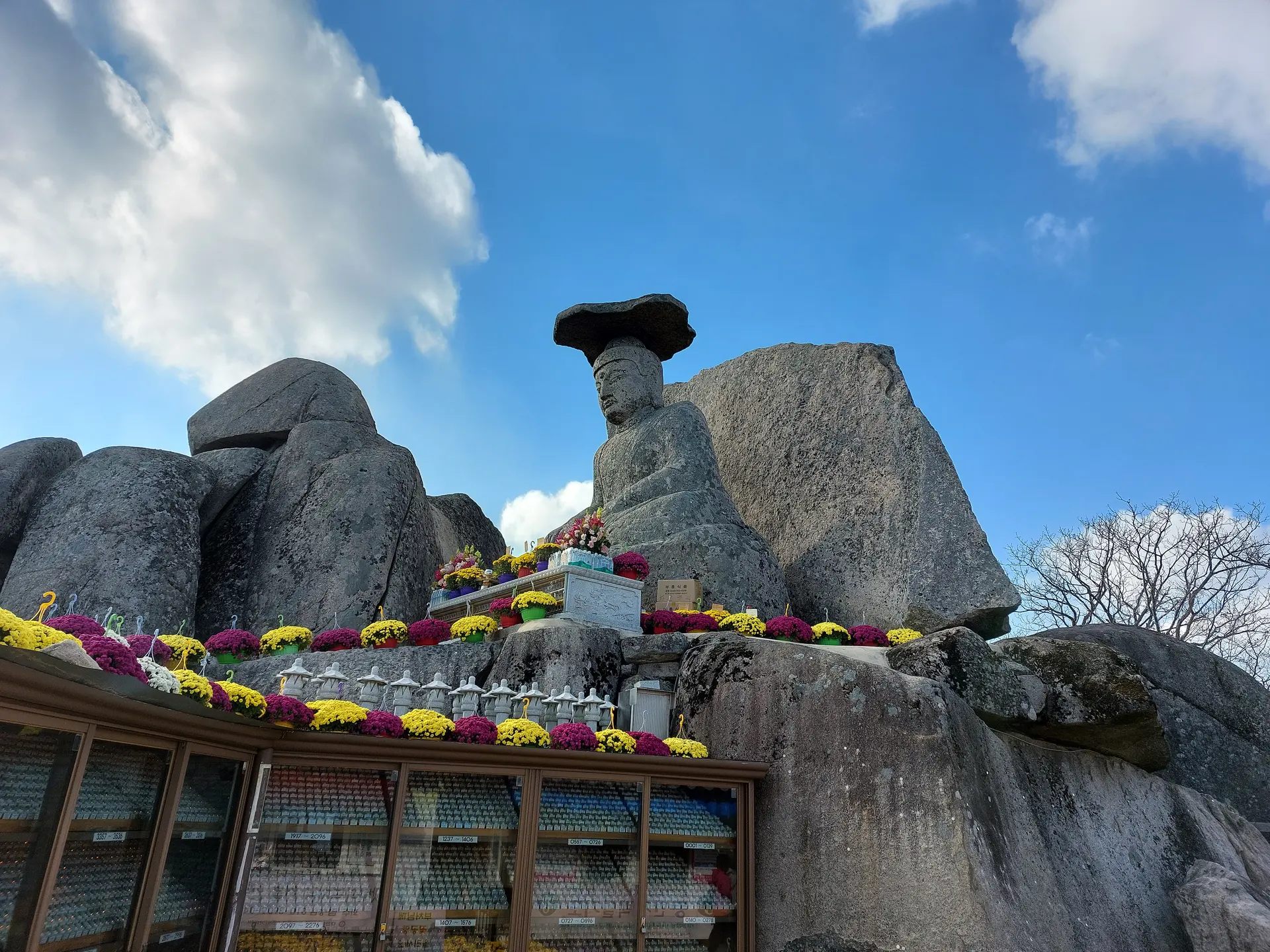
Photo gallery
6 curated photos
Pilgrim glossary
- Sutra
- A canonical Buddhist scripture, often chanted as part of practice.
- Sangha
- The community of Buddhist practitioners, traditionally monks and nuns.
- Dharma
- The teachings of the Buddha; also the universal law underlying them.
Share a photo
Help visitors recognize The Temple of Haeinsa, Gaya-san. Every submission is reviewed before publication.