Konsen-ji
Look into the Long Life Well at Temple 3 — your reflection answers
Understand sacred places, explore living traditions, and learn how to engage respectfully with Pilgrim Map.
Access has not been verified. Check current local guidance before planning a visit.
Itano, Tokushima Prefecture, Japan
Read the sources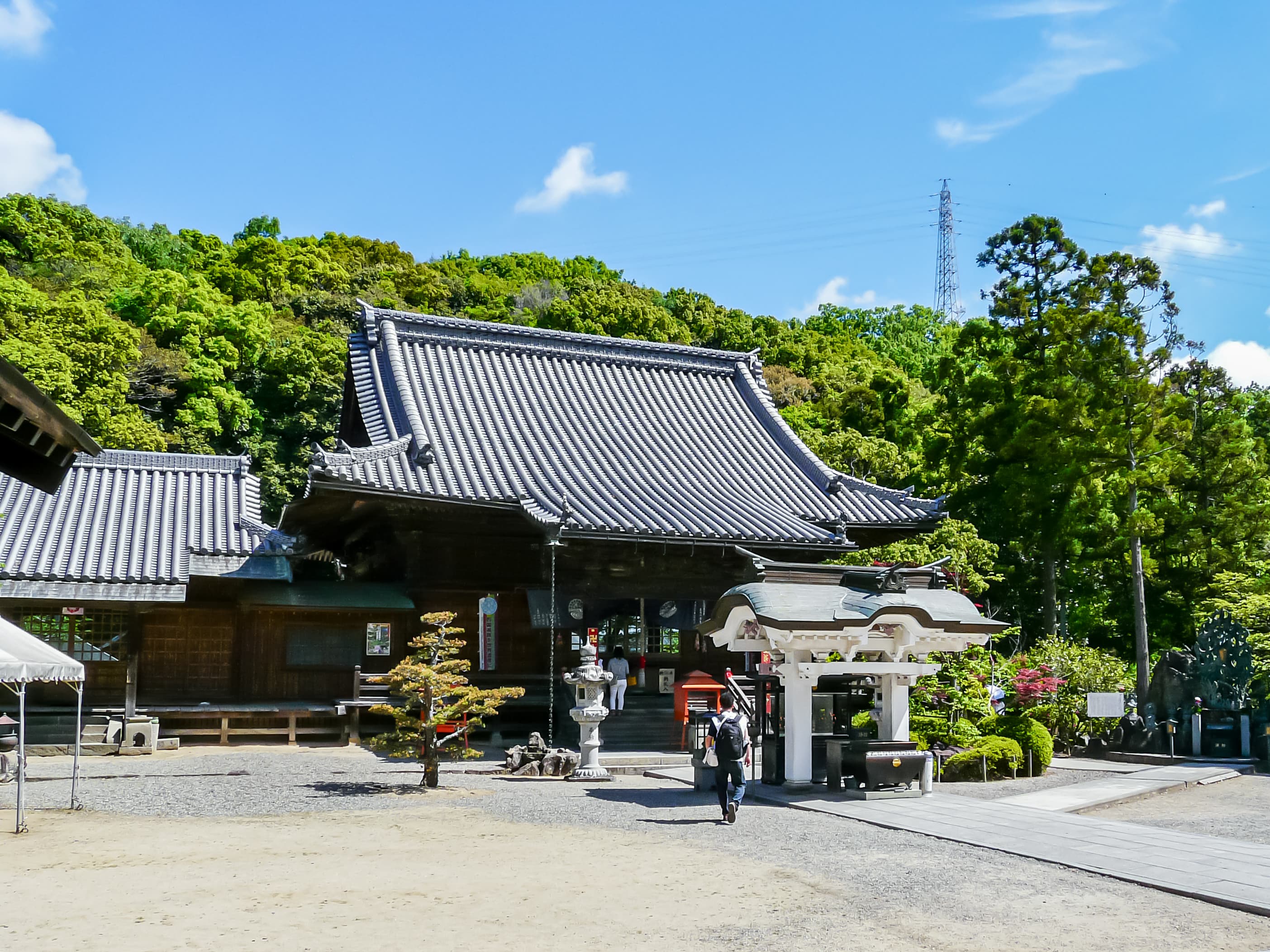
Image of Konsen-ji (金泉寺). Image source · CC-BY-SA-4.0
Station 3 of 88
Shikoku 88 Temple PilgrimageVisit essentials
A quick read before you go
- Duration
- 30-45 minutes for a standard visit including the formal ritual, the well, and Benkei's stone.
- Access
- About 2.5 km west of Gokuraku-ji; the henro route between the two is well-marked and easily…
Overview
Three kilometers west of Gokuraku-ji, the henro route crosses a flat agricultural plain to Konsen-ji's wooded precinct and large Niōmon. The 'Golden Spring Temple' takes its name from a courtyard well. During a drought around 810, tradition says Kūkai found the wells dry and rice failing, dug a new well, and saw its water shine gold in the morning.
The stone-rimmed Chōmei-no-i, or Long Life Well, remains: pilgrims look for their reflection, traditionally promised long life if it appears clearly and ominous implications if it is dim or absent.
Emperor Kameyama lodged here during his 13th-century Shikoku pilgrimage and gave the mountain its name. He later founded a hall modeled on Kyoto's Sanjūsangendō and filled it with a thousand thousand-armed Kannon. The precinct also holds Benkei no chikara-ishi, a stone associated with warrior-monk Benkei and his master Yoshitsune that pilgrims still try to lift. Behind the great gate, the Hondō and Daishi-dō and the wooded grounds draw many henro into a longer pause than the standard ritual requires.
Why this place is sacred
The well at Konsen-ji is divinatory in form but contemplative in function. Looking down into the water for one's reflection is a brief structured pause — a literal reflection, performed only seventy or so minutes' walk from where the pilgrimage began. It is the first temple on the route where the henro is asked to confront the duration of the journey ahead and, by extension, the duration of a life.
Pilgrims who cannot see themselves clearly typically laugh, look again, and walk on. But the practice has its own gravity. Beneath the well-mirror, Konsen-ji holds layers of patronage that extend its sacred presence: the imperial connection through Emperor Kameyama, the Genpei-period warrior associations through the Minamoto family and Benkei, and the ordinary continuity of Shingon parish life. The composite gives the precinct a slightly heavier, more historical atmosphere than its immediate neighbors.
Tradition assigns Konsen-ji's first founding to Gyōki in the 8th century, who is said to have carved the principal Shaka Nyorai image at Emperor Shōmu's request. Kūkai's renaming around 810 redefined the site as the Golden Spring Temple, with the well as the central sacred feature.
Emperor Kameyama's stay here during his Shikoku pilgrimage in the 13th century brought imperial patronage, the mountain name 'Kameyama,' and the Sanjūsangendō-modeled hall of one thousand Kannon. The Hondō was destroyed by Chōsokabe Motochika in 1582 and rebuilt during the Edo period. The temple is today a Kōyasan Shingon parish temple within the Shikoku 88 network.
Experience and orientation
Approaching from Gokuraku-ji or from JR Itano Station, the temple announces itself with a sizeable Niōmon — older than the present Hondō and one of the more imposing gates of the early route. Inside, the precinct expands into a wooded courtyard. The chōzuya is to the right of the gate, the bell to one side, the Hondō facing the entrance, and the Daishi-dō at an angle.
The Long Life Well sits in its own small enclosure, often signed in Japanese and English as Chōmei-no-i. A wooden cover or bars protect the shaft; pilgrims lean over and look down. The water is dark; in the right light a face appears. Most pilgrims hold the view for a moment, then straighten up and continue. The Benkei stone — a heavy, dimpled boulder of dark rock — is to one side of the path.
People who have read the legend often try to lift it, then laugh, then put it down. At the Hondō the standard ritual unfolds: candle, three incense sticks, osamefuda slip, coin, the Heart Sutra, the Shaka mantra, and the Mantra of Light. The same at the Daishi-dō. The stamp office is staffed and unhurried. Most henro spend thirty to forty-five minutes here, longer if they linger at the well.
From Gokuraku-ji, walk west about 2.5 km along the henro markers; from JR Itano Station, walk about fifteen minutes north. By car, free parking is at the gate. Bow at the Niōmon. Visit the well after the chōzuya purification but before the formal ritual at the halls if you wish to begin with the divinatory mirror; otherwise complete Hondō and Daishi-dō first and pause at the well on the way out.
Context and lineage
Kūkai is said to have arrived during a drought, dug a well in the precinct, and watched the water rise gold in the morning sun. He renamed the temple Konsen-ji to commemorate the miracle. Centuries later, Emperor Kameyama lodged at the temple during his own Shikoku pilgrimage and built a hall modeled on Kyoto's Sanjūsangendō, with a thousand thousand-armed Kannon, naming the mountain Kameyama in the process.
Konsen-ji is a parish temple of the Kōyasan Shingon-shū. Its imperial and warrior-class patronage layers it more heavily into Japanese political history than most of its early-route neighbors. The Long Life Well, the imperial mountain name, and the Benkei stone together preserve a thirteenth-century stratum of devotion within the standard 88-temple ritual frame.
Kūkai (Kōbō Daishi)
Renamer of the temple after digging the Long Life Well
Gyōki
Traditional original founder
Emperor Kameyama
13th-century imperial patron
Benkei (Musashibō Benkei)
Warrior-monk associated with the precinct's strength stone
Chōsokabe Motochika
16th-century destroyer
Traditions and practice
At each of the two halls the standard sequence applies: chōzuya purification, one bell stroke on arrival, candle from the temple flame, three incense sticks, osamefuda slip, coin, sutra recitation. The Shaka Nyorai mantra is chanted at the Hondō and the Kōbō Daishi mantra at the Daishi-dō. The Long Life Well practice is older than written henro records and continues unchanged: the pilgrim leans over the well and looks for their own face in the water.
A clear reflection is taken as a sign of long life; an unclear one is taken seriously but not as final. A small donation is customary, dropped into a separate offering box at the well.
Daily Shingon liturgy continues. The stamp office issues the third inscription in the henro stamp book. Pilgrim ritual at the well is unsupervised and self-guided. The Benkei stone is freely accessible; lifting it is informal.
If you are walking the route, do the chōzuya, ring the bell once, and complete the formal ritual at both halls before approaching the well. At the well, do not hurry. Lean over, give your eyes a moment to adjust to the dark water, and look. Whatever you see, take it as a partial answer rather than a final one — three temples is too early to be certain of anything.
If you are inclined, attempt the Benkei stone afterward; the gesture is more about the laugh than the lift.
Shingon Buddhism (Kōyasan branch)
ActiveTemple 3 of the Shikoku Pilgrimage. The mountain name 'Kameyama' was given by Emperor Kameyama, who stayed here during his Shikoku pilgrimage in the 13th century. The temple's identity is anchored by the Long Life Well dug by Kūkai during a drought.
Daily Shingon liturgy at Hondō (Shaka Nyorai) and Daishi-dō. Pilgrims chant the Heart Sutra, the Shaka mantra, and the Daishi mantra; many also practice well-mirror divination at the Chōmei-no-i.
Perspectives and open questions
The Long Life Well at Konsen-ji invites several readings simultaneously — historical, doctrinal, folk-religious, and psychological — and each reading produces a different relationship to the gesture of looking down into the water.
Scholarly perspective
The Kūkai-as-well-digger trope appears at multiple temples on the Shikoku route and is read as folk-religious motif as much as historical event. Whether the present well shaft predates or postdates Kūkai cannot be determined. Imperial patronage by Emperor Kameyama is documented in temple records and appears more historically substantive than the typical Kūkai-foundation story; the Yoritomo, Yoshitsune, and Benkei donations are traditional and not independently documented.
Living and traditional perspectives
Shingon tradition emphasizes Kūkai's compassion for drought-stricken farmers and reads the well as a continuing miracle still accessible to pilgrims. The water's golden color is taken as the visible sign of the miracle, and the divinatory practice is understood as an authentic continuation of Heian-period devotion.
Alternative interpretations
Read through Shingon's mikkyō lens, water-mirror divination at the Long Life Well echoes wider East Asian katoptric practices in which reflective surfaces test the soul's clarity. The well becomes a microcosmic mandala of self-knowledge — a small instrument for the larger work the henro practice undertakes. Folk tradition connects the practice to broader Japanese well-veneration, in which clear water is seen as a manifestation of kami-presence and clarity of reflection as a sign of moral or physical health.
Open questions
The age of the well shaft has not been independently dated. The historical accuracy of the Benkei stone tradition is unverifiable. Whether Emperor Kameyama's thousand-Kannon hall corresponds in any precise way to a surviving structure on the grounds is unclear; subsequent destruction and reconstruction have made the architectural lineage difficult to trace.
Plan your visit
Access and arrival
About 2.5 km west of Gokuraku-ji; the henro route between the two is well-marked and easily walked in 30-40 minutes. From JR Itano Station on the Kōtoku Line, about a 15-minute walk north. Free parking on site. Address: 66 Daiji, Itano-chō, Itano-gun, Tokushima Prefecture.
No shukubo at Konsen-ji. Hotels and minshuku in Itano and Tokushima City. Most walking henro continue along the route to either a guesthouse in Itano or onward to the shukubo of Anraku-ji at Temple 6.
Respectful visit
Pilgrim whites are traditional and welcomed. Modest casual dress is acceptable. There is no specific dress requirement at the well.
Permitted in the open precinct. The Niōmon, the bell tower, and the well's outer enclosure are popular subjects. Avoid flash inside the halls. Do not photograph another pilgrim's face appearing in the well's water.
At each hall: coins, candle, three incense sticks, and an osamefuda slip. At the well, a small donation in the well-side box is customary; this is separate from the main hall offering. At the Benkei stone, no offering is made — the engagement is the attempt to lift.
Do not drink from the Long Life Well. Do not draw water for any purpose. Do not enter behind the altars. Do not pluck leaves or flowers from the precinct's plantings. Observe any photography restrictions inside the inner halls.
Do not draw water from the Long Life Well for drinking. The well is treated as a ritual mirror only; the water is not certified potable. Do not drop objects into the well or try to retrieve coins. Do not climb on the Benkei stone. Do not light your candle from another pilgrim's flame.
Current practical details
Address
Konsenjihigashi-66 Kawabata, Itano, Itano District, Tokushima 779-0102, Japan
Phone
Hours
Hours, fees, and access can change — verify on the official source before you travel. Practical details last checked Jun 2026.
Location
Map loads as you approach this section.
Pilgrim reflections
A portrait of encounter, not a score
Pilgrims describe what they felt, how present they could become, and whether the place would shape a journey. There are no stars and no ranking of traditions.
No reviewed reflections yet
The first pilgrims can help describe the character of being here.
Share a reflection
Available after an account-backed “Been there.” Every reflection is reviewed before publication.
Watch deeper
Films, episodes, and recorded talks for visitors who want more context before or after a visit. Speculative and alternative-history entries are labelled as perspectives, not as sources for established claims.
Nearby sacred places
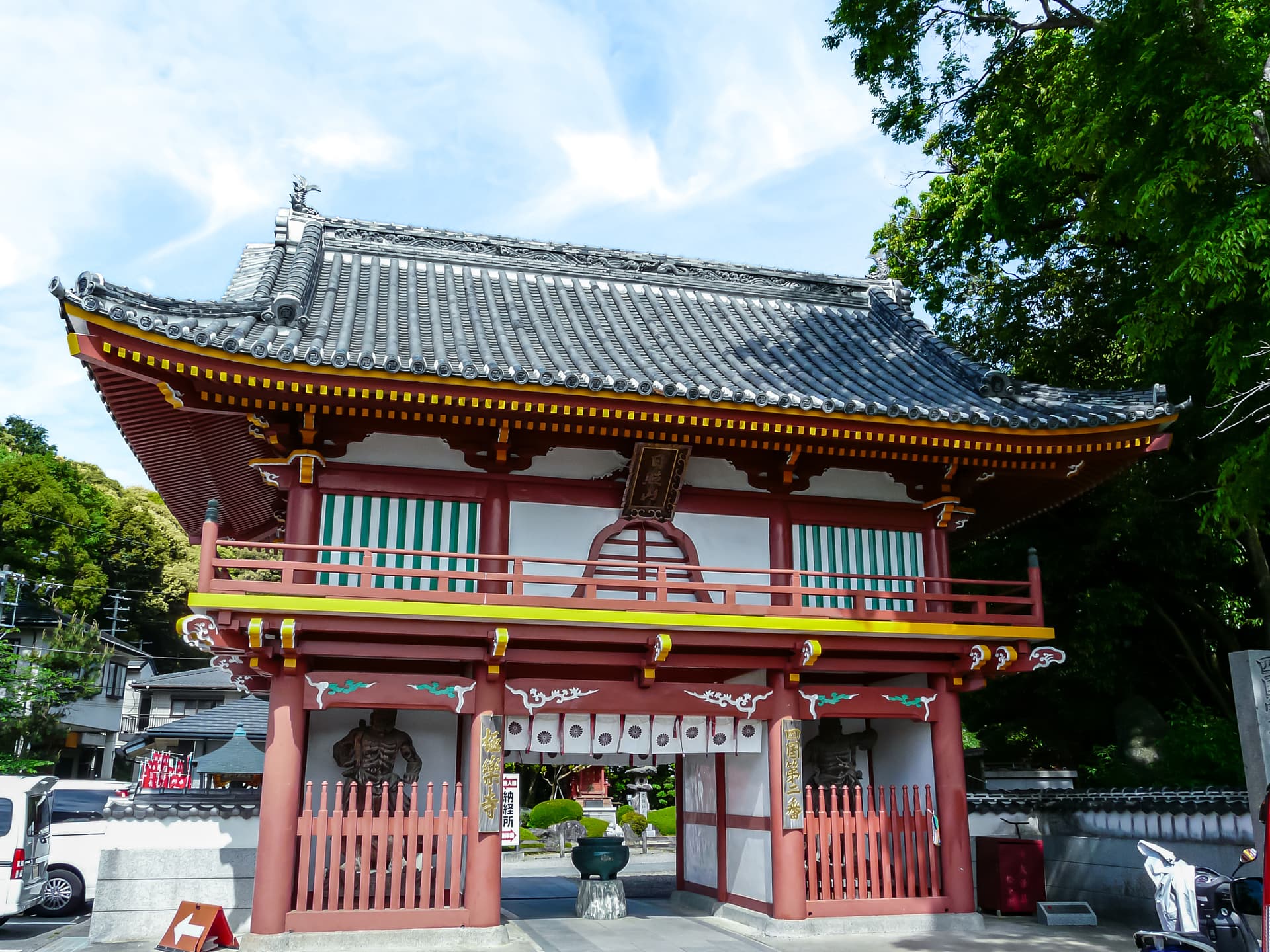
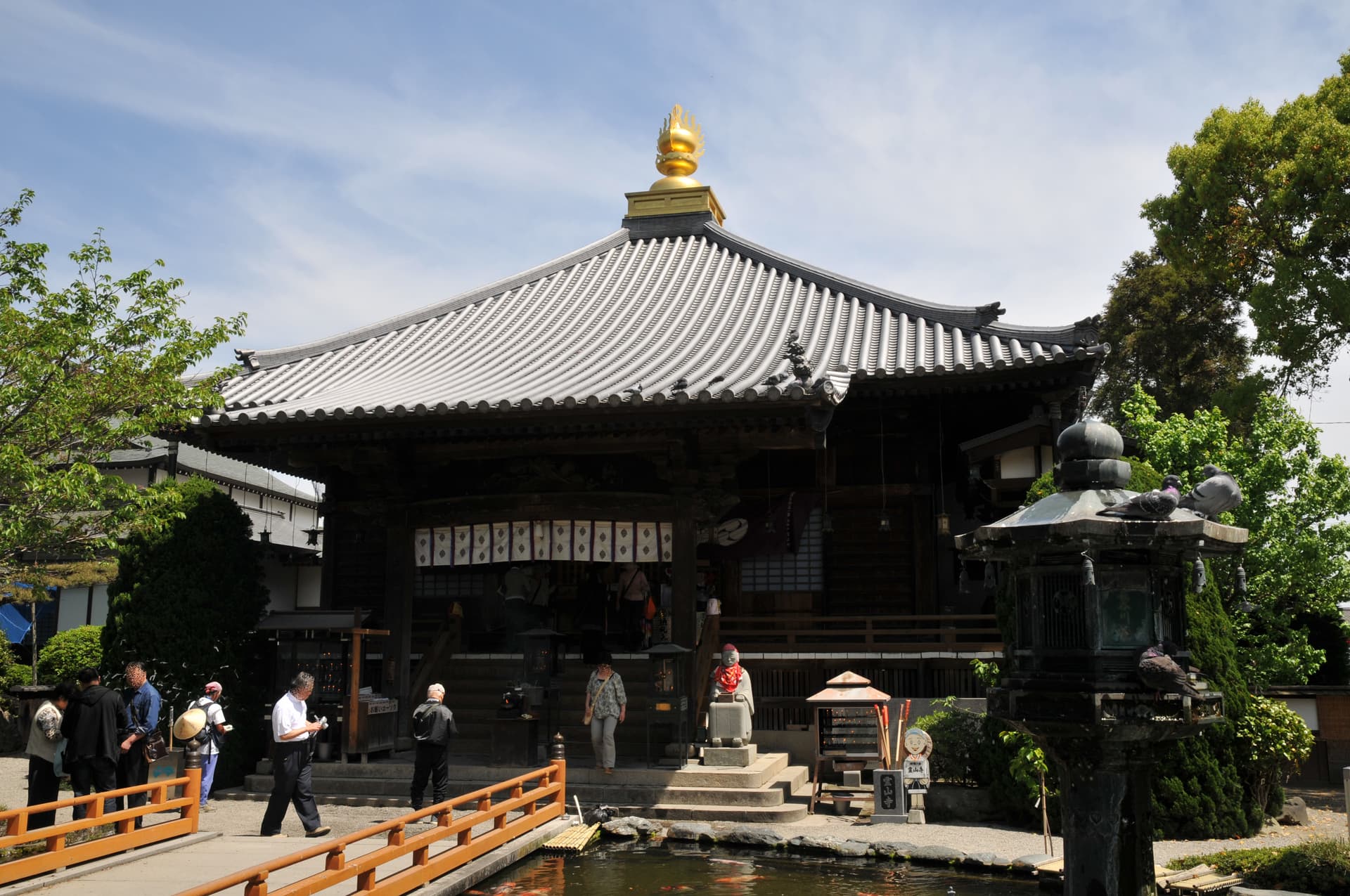
Explore other sacred places in the region. Proximity does not establish access or travel time; check each place’s guidance.


References
Sources consulted for this page. Source categories describe the publication, not a guarantee that every claim is verified. Traditional accounts and outside interpretations may differ.
- 01Konsenji – Itano, Tokushima Prefecture, Shikoku — Henro.orgguideDetailed historical entry
- 02Customs and Etiquette of the Shikoku Pilgrimage — Henro.orgguidePilgrim ritual standard
- 03Konsen-ji (Itano) — WikipediaencyclopediaCross-referenced with henro.org
- 04Konsen-ji, Shikoku Pilgrimage's Third Temple — Setouchi ExplorerguideTravel guide with practical detail
- 05Temple 03, Konsen-ji — Shikoku ToursguideOperator with verified site visits
Pilgrim glossary
- Kannon
- The bodhisattva of compassion, central to many East Asian pilgrimage routes.
- Mandala
- A symbolic diagram of the cosmos used in meditation and ritual.
- Sutra
- A canonical Buddhist scripture, often chanted as part of practice.
- Mantra
- A sound, word, or phrase repeated as part of meditation or ritual.
- Shingon
- An esoteric Japanese Buddhist school emphasizing ritual, mantra, and mandala practice.
Share a photo
Help visitors recognize Konsen-ji. Every submission is reviewed before publication.