Kabusan-ji
Japan's first Bishamonten enshrinement, set among 400 maples
Understand sacred places, explore living traditions, and learn how to engage respectfully with Pilgrim Map.
Access has not been verified. Check current local guidance before planning a visit.
Osaka Prefecture, Japan
Read the sources
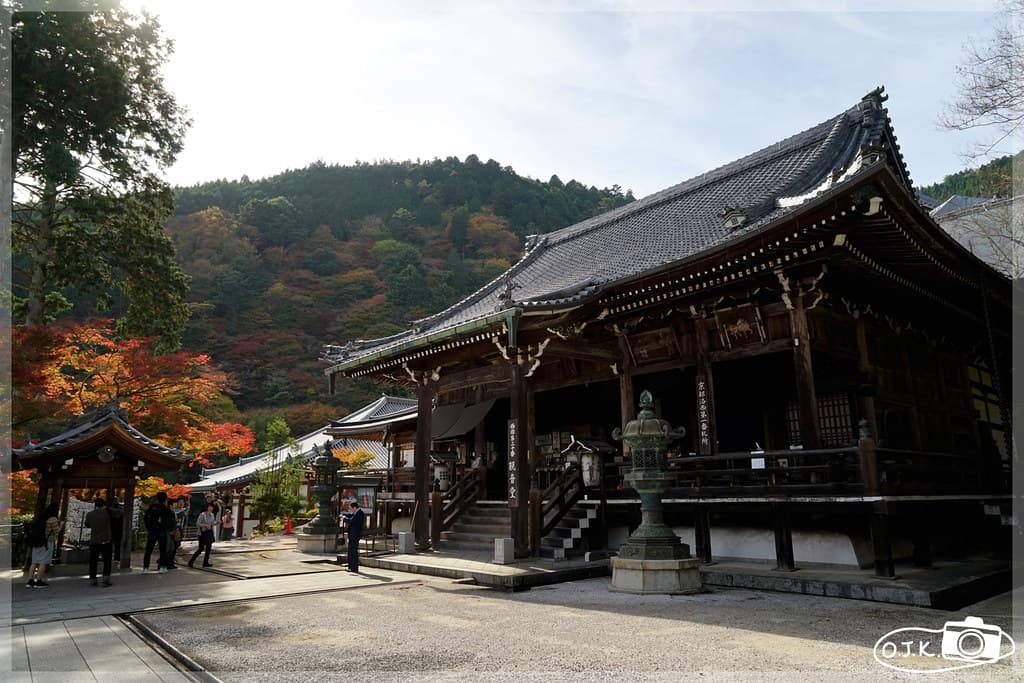
Image of Kabusan-ji. Image source · CC-BY-2.5
Station 14 of 33
New Saigoku Kannon PilgrimageVisit essentials
A quick read before you go
- Duration
- 60 to 90 minutes for the precincts; add 30 minutes for the Nine-Headed Dragon Waterfall trail.
- Access
- JR Takatsuki Station → Takatsuki City Bus #53 to 'Kabusan-guchi' (~20 minutes, ¥220) → 25-minute…
Overview
Set on the wooded shoulders of Mount Konpon (根本山, 'Source Mountain') above Takatsuki, Kabusan-ji holds an unusual position in Japanese Buddhist iconographic history. Tradition credits En no Gyōja — the legendary 7th-century Shugendō founder — with carving the original Bishamonten on this mountain in 697 CE during his ascetic practice, establishing the temple as Japan's first Bishamonten enshrinement.
The principal hall houses three forms of Bishamonten — Heavenly King of the North, guardian of dharma — including the rare Tobatsu Bishamonten, an early Japanese iconographic form derived from Central Asian models. The triad flanks a Shō Kannon (Holy Avalokiteśvara) image that serves as the New Saigoku #14 honzon. The Bishamonten triad is hibutsu — a secret Buddha — opened annually in late November, traditionally synchronized with the temple's autumn foliage season.
The wider precinct holds approximately 400 maple trees, producing one of north Osaka's foremost koyō landscapes in late autumn.
Daily ritual centers on the Bishamon-Fudō goma — a fire offering combining Bishamonten and Fudō Myōō for prosperity, family safety, and fulfilled vows. Monthly Bishamon-e on the 8th and Kannon-e on the 18th provide the year's regular full chanted services. The Nine-Headed Dragon Waterfall on the precincts has historically been used for Shugendō water-purification training; the surrounding habitat is a national natural monument for the Forest Tree Frog (mori-ao-gaeru).
Kabusan-ji is the largest of three sister Tendai mountain temples in the Hokusetsu hills, with Ankō-ji and Honzan-ji as its companions further along the same mountain road.
Why this place is sacred
The temple sits at a working altitude — neither high mountain nor low foothill, but the wooded shoulder where formal Tendai liturgy and Shugendō mountain practice have coexisted for over a millennium. Daily goma drums sound from the main hall; the chanting reaches the outer precinct through the cedars. Forest Tree Frogs (a national natural monument species) occupy the wet ravines in early summer; the mid-November koyō turns the long approach into a corridor of red maple canopy.
The Bishamonten triad is the temple's deep center. Tradition credits En no Gyōja with carving the original image during his ascetic practice on the mountain — making this, by Japanese tradition, the first place Bishamonten was enshrined in the islands. The triad includes the rare Tobatsu Bishamonten form, derived from Central Asian iconographic models that traveled the Silk Road into early Japan.
As hibutsu the images are not visible most of the year; the annual late-November opening synchronizes the maples and the secret-Buddha viewing into a single short window.
The Nine-Headed Dragon Waterfall on the precincts continues to function as a kanjō (water-purification) site of long standing. Shugendō practitioners on the Ōmine and Hokusetsu circuits visit regularly. For visitors not engaged in formal ascetic practice, the waterfall trail simply offers a thirty-minute extension of the temple visit into the deeper mountain forest behind the main precinct.
Founded 697 CE by En no Gyōja during his Shugendō practice on the mountain, with the carved Bishamonten as principal image. The site became Japan's foundational Bishamonten enshrinement.
Saichō's Tendai followers extended the temple's esoteric programme during the Heian period, integrating Bishamonten-Fudō goma ritual into the daily liturgy. The temple has continued as an active Tendai mountain center with sustained Shugendō connections; the New Saigoku #14 station was established as part of the modern pilgrimage.
Experience and orientation
From JR Takatsuki Station, Takatsuki City Bus #53 climbs north to the 'Kabusan-guchi' stop in roughly 20 minutes. From there a 25-minute uphill walk along the temple road brings the gate into view through cedars. The approach itself is part of the experience: in mid-November the maples form a near-continuous canopy over the road; on a still morning the goma drums from the main hall become audible before the gate is in sight.
The precinct opens to a broad courtyard. The Niōmon and main hall sit forward; the Nine-Headed Dragon Waterfall trail branches off to the side. Inside the main hall, the Bishamonten triad — three forms including the rare Tobatsu Bishamonten — flanks the Shō Kannon honzon. As hibutsu the Bishamonten images are visible only during the annual late-November opening; the Shō Kannon receives standard pilgrim devotion year-round. Two wooden standing Kannon Bodhisattvas, both Important Cultural Properties, are also enshrined.
Daily mornings bring the goma fire offering. Pilgrims may light incense and observe from a distance; gomagi (prayer wood) can be purchased and submitted for inclusion in the daily fire. Monthly Bishamon-e on the 8th and Kannon-e on the 18th provide the fullest chanted services of the regular calendar. During the autumn foliage season the temple collects a modest environmental preservation fee (around ¥300) reflecting the cost of maintaining the precinct in peak conditions.
The Nine-Headed Dragon Waterfall trail extends the visit. The path is short but steep; the waterfall itself is small but holds visible ritual significance — offerings, prayer wood, occasional sounds of practitioners performing ascetic water training. In early summer (mid-June to mid-July) the wetland habitat around the waterfall is a Forest Tree Frog observation site.
From the bus stop, walk uphill 25 minutes along the temple road through the maple corridor. Begin at the main hall and observe the goma fire if mid-morning. After the main precinct, take the side trail to the Nine-Headed Dragon Waterfall. Mid-November is optimal for combined koyō and hibutsu opening.
Context and lineage
En no Gyōja — the legendary 7th-century Shugendō founder, also called En no Ozunu — practised mountain austerities on Mount Konpon (Source Mountain) in 697 CE during the reign of Emperor Monmu. According to tradition he carved the original Bishamonten image on the mountain, establishing the site as the first place Bishamonten was enshrined in Japan. The temple developed during the Heian period as a major Tendai monastery, with Saichō's followers extending its esoteric programme.
Across the medieval and early-modern periods Kabusan-ji functioned as a regional Tendai mountain center with sustained Shugendō connections, anchored by its claim to the foundational Bishamonten enshrinement.
Tendai Buddhism, with sustained Shugendō ritual practice in the En no Gyōja line. Kabusan-ji is the largest of three sister Tendai mountain temples in the Hokusetsu hills, alongside Ankō-ji and Honzan-ji.
Traditions and practice
Bishamon-Fudō goma — a daily fire offering pairing Bishamonten (guardian deity) with Fudō Myōō (immovable wisdom king) — is the temple's defining traditional practice. Bishamon-e on the 8th and Kannon-e on the 18th of each month follow the standard Esoteric monthly cycle. The annual hibutsu kaichō opening of the Bishamonten triad continues a long-standing autumn devotional pattern.
Daily morning service and goma continue. Pilgrim stamps for the New Saigoku #14 station and other circuits are issued at the office. The annual autumn hibutsu opening is the year's most concentrated devotional and visitor window.
Time the visit to mid-to-late November if possible — the koyō and hibutsu opening converge in a single window. On any morning, observe the goma fire from the public position and consider purchasing a gomagi for inclusion in the daily fire. After the main hall, follow the side trail to the Nine-Headed Dragon Waterfall; the path takes about thirty minutes round trip and connects the temple's ritual life to the wider mountain landscape it draws on.
Tendai Buddhism
ActiveSole nationally recognised 'Japan's first Bishamonten' temple — reputedly the earliest enshrinement of Bishamonten in the Japanese islands. The principal hall houses three forms of Bishamonten (including the rare Tobatsu Bishamonten) flanking a Shō Kannon (Holy Avalokiteśvara) that is the New Saigoku #14 honzon. Daily Bishamon-Fudō goma maintains the temple's Tendai-Esoteric ritual life.
Shugendō (En no Gyōja lineage)
ActiveFounding tradition attributes the temple to En no Gyōja in 697 CE; the Shugendō ascetic association persists through the Nine-Headed Dragon Waterfall water-purification site and ongoing connections to the Ōmine and Hokusetsu mountain circuits.
Perspectives and open questions
Kabusan-ji's record combines documented late-Heian and medieval architectural and devotional history with foundational Shugendō legend. The 697 CE En no Gyōja founding is hagiographic; the temple's continuous active life as a mountain monastery from at least the late Heian period is securely attested.
Scholarly perspective
Architectural and stylistic dating of the surviving sculpture confirms the temple as a continuously active mountain monastery from at least the late Heian period, even if the 697 CE founding tradition is hagiographic. The wooden seated Amida Buddha (1912 ICP designation) and the two wooden standing Kannon Bodhisattvas are well-documented Important Cultural Properties.
Living and traditional perspectives
Hokusetsu temple lore positions Kabusan-ji as the apex of a three-temple complex (with Ankō-ji and Honzan-ji) rooted in En no Gyōja's mountain practice. The claim to be Japan's first Bishamonten enshrinement is the temple's defining traditional identity and a recurrent theme in its devotional literature.
Alternative interpretations
Practitioners on the Ōmine and Hokusetsu Shugendō circuits treat the Nine-Headed Dragon Waterfall as a kanjō (water-purification) site of long standing. The Tobatsu Bishamonten form preserved here connects the temple to early Japanese contact with Central Asian Buddhist iconography via the Silk Road.
Open questions
The provenance and dating of each of the three Bishamonten icons in the hibutsu triad have not been conclusively established by published art history. Exact dates of the autumn hibutsu opening vary year to year and need confirmation from the temple's annual schedule.
Plan your visit
Access and arrival
JR Takatsuki Station → Takatsuki City Bus #53 to 'Kabusan-guchi' (~20 minutes, ¥220) → 25-minute uphill walk along the temple road. By car, exit Meishin Expressway at Ibaraki and follow Route 79 (~20 minutes).
Day-trip access from Osaka or Kyoto is straightforward. Limited local lodging in Takatsuki; most pilgrims base in Osaka or Kyoto.
Respectful visit
Comfortable walking shoes for the rising stone path. Modest layered clothing year-round; mountain temperatures are several degrees lower than central Takatsuki.
Permitted in the precincts; not permitted of the secret Bishamonten triad in the inner sanctum.
Incense, candles, gomagi prayer wood, monetary saisen.
A modest environmental preservation fee (around ¥300) is collected during peak autumn foliage | Dogs allowed only in the outer precincts | Inner-sanctuary photography prohibited
The Bishamonten triad is hibutsu — visible only during the annual autumn opening. Inner-sanctuary photography is prohibited. A modest environmental preservation fee (around ¥300) is collected during peak autumn foliage. Dogs are allowed only in the outer precincts. Mountain temperatures are several degrees lower than central Takatsuki — bring layers.
Current practical details
Address
3301-1 Hara, Takatsuki, Osaka 569-1051, Japan
Phone
Hours
Hours, fees, and access can change — verify on the official source before you travel. Practical details last checked Jun 2026.
Location
Map loads as you approach this section.
Pilgrim reflections
A portrait of encounter, not a score
Pilgrims describe what they felt, how present they could become, and whether the place would shape a journey. There are no stars and no ranking of traditions.
No reviewed reflections yet
The first pilgrims can help describe the character of being here.
Share a reflection
Available after an account-backed “Been there.” Every reflection is reviewed before publication.
Nearby sacred places
Explore other sacred places in the region. Proximity does not establish access or travel time; check each place’s guidance.



References
Sources consulted for this page. Source categories describe the publication, not a guarantee that every claim is verified. Traditional accounts and outside interpretations may differ.
- 01Kabusanji Temple — OSAKA-INFO (Osaka Convention & Tourism Bureau) — Osaka Convention & Tourism BureauofficialOfficial tourism authority; confirms 697 CE founding by En no Gyōja, Bishamonten primacy, and ritual calendar.
- 02神峯山寺 official site — Kabusan-jiofficialTemple's own e-commerce / information portal (limited but authoritative for hibutsu schedule).
- 03神峯山寺 — Wikipedia (Japanese) — Wikipedia contributorsacademicSource for coordinates, mountain name, sect, ICP listings.
- 04Kabusan-ji Temple directions and highlights — Japan's Travel Manual — Japan's Travel ManualguideVisitor practicalities and ritual schedule.
Pilgrim glossary
- Honzon
- The principal Buddhist deity enshrined as a temple's central object of worship.
- Kannon
- The bodhisattva of compassion, central to many East Asian pilgrimage routes.
- Dharma
- The teachings of the Buddha; also the universal law underlying them.
- Tendai
- A Japanese Buddhist school based on the Lotus Sutra, foundational to many later traditions.
Share a photo
Help visitors recognize Kabusan-ji. Every submission is reviewed before publication.