Mimuroto-ji
Saigoku temple 10: a working Senju Kannon hall in the Kansai pilgrimage round
Understand sacred places, explore living traditions, and learn how to engage respectfully with Pilgrim Map.
Access has not been verified. Check current local guidance before planning a visit.
Uji, Kyoto Prefecture, Japan
Read the sources
Station 10 of 33
Saigoku Kannon PilgrimageVisit essentials
A quick read before you go
- Duration
- 1.5 to 2 hours for an unhurried visit including Main Hall, pagoda, and gardens; longer during…
- Access
- Approximately 15 minutes' walk (or 5 minutes by taxi) from Mimurodo Station on the Keihan Uji…
Overview
Mimuroto-ji is temple 10 of the thirty-three-station Saigoku Kannon Pilgrimage, a route that has organised Kansai Kannon devotion for more than a thousand years, a working Senjū Kannon hall, and the special head temple of Honzan Shugen-shū. Temple tradition says Emperor Kōnin saw golden light at a waterfall north of the Uji River; an attendant sent to investigate saw a Thousand-Armed Kannon manifest in the cascade and become a golden statue.
At the emperor's request, Gyōhyō, a Daian-ji monk from the Heijō capital, founded the temple in 770 CE to enshrine it. The principal Senjū Kannon remains a hibutsu, or hidden Buddha. Honzan-ha Shugendō, associated with Onjō-ji (Mii-dera) and Tendai, integrates Buddhism, indigenous mountain veneration, and esoteric ritual and traces its line through Zōyo and Enchin.
Cloistered Emperor Kazan resided here while restoring the Saigoku pilgrimage; the temple's imperial-villa history and Uji hillside setting join Heian cultivated retreat with mountain ascetic practice. Long imperial and aristocratic patronage, a landscape evoking The Tale of Genji, and seasonal offerings of 20,000 azaleas, 10,000 hydrangeas, 1,000 rhododendrons, lotus, and autumn foliage shape its continuing identity.
Why this place is sacred
Mimuroto-ji joins the tenth station of Japan's oldest pilgrimage circuit, a hidden Thousand-Armed Kannon revealed in waterfall tradition, and the special head temple of a Shugendō lineage. Cloistered Emperor Kazan's association links the temple to the Heian-period Saigoku revival, while The Tale of Genji's Uji chapters deepen its literary setting.
Its Uji hillside, ascetic associations, and seasonal 'flower mandala' of 20,000 azaleas, 10,000 hydrangeas, 1,000 rhododendrons, lotus, and autumn foliage present the landscape as a continuing offering rather than scenery alone.
Experience and orientation
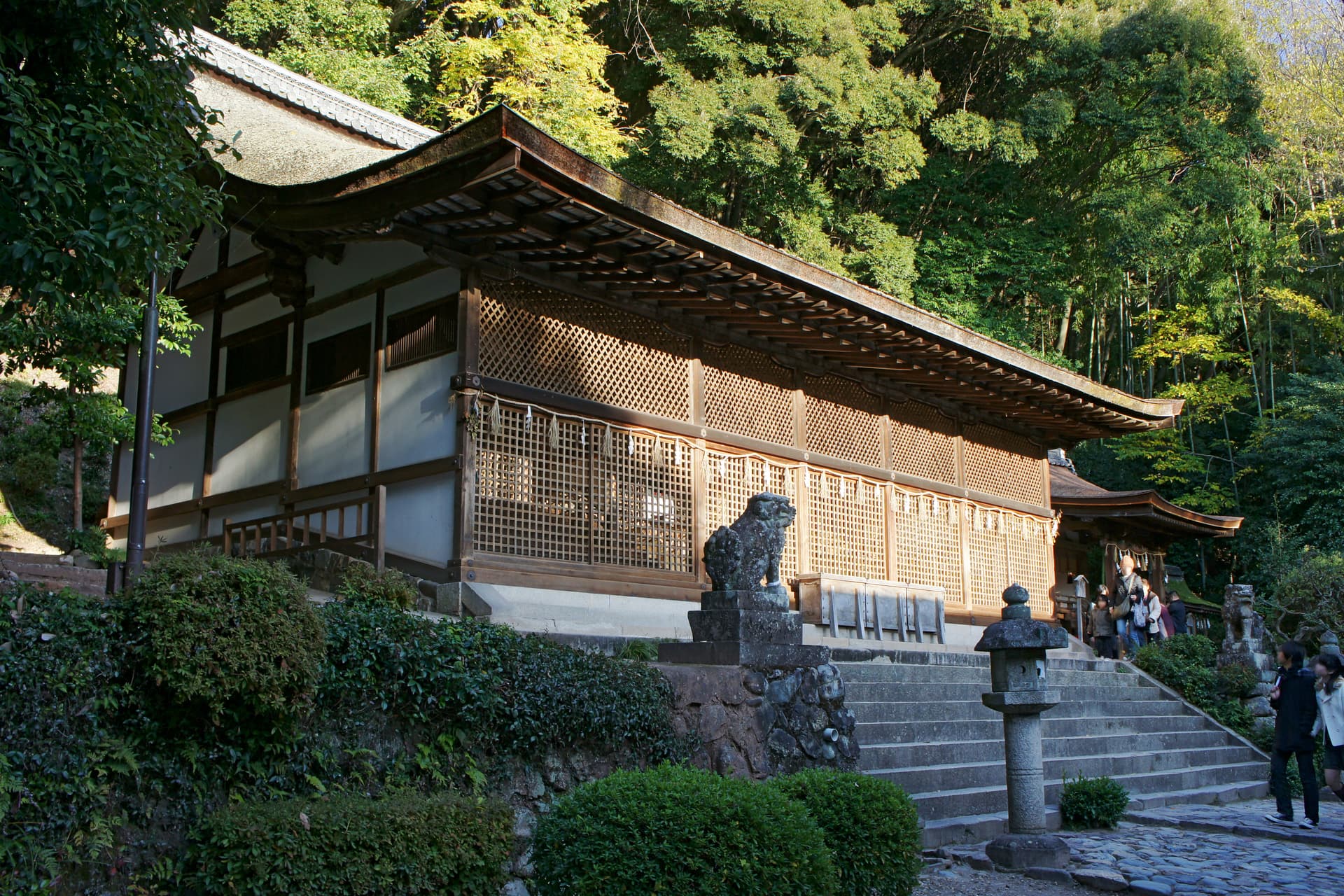
Visitors describe Mimuroto-ji as a 'flower temple' — for many, the gardens are the primary memory: rolling fields of hydrangeas in June (with night illumination on weekends in season), azaleas in late April-May, lotus in summer, and brilliant autumn maples. The Main Hall rises above a pond garden; a triple-storied pagoda sits on the hillside.
Context and lineage
Traditionally founded in 770 CE by the monk Gyōhyō (a monk of Daian-ji in the Heijō capital) at the request of Emperor Kōnin. Temple legend: Emperor Kōnin saw a vision of a golden light at the foot of a waterfall north of the Uji River; an investigating attendant had a vision of a Thousand-Armed Kannon, which transformed into a golden statue, and the temple was founded to enshrine it. Founder: Gyōhyō (行表), under imperial patronage of Emperor Kōnin.
Emperor Kōnin saw a vision of a golden light shining from the waterfall in the hills north of the Uji River.
Traditions and practice
Annual Saigoku pilgrimage cycle observances, Kannon-related liturgical days, flower festivals during peak blooms (azalea festival, hydrangea festival including night illumination, lotus viewing), and Shugen-affiliated annual rites.
Honzan Shugen-shū (Honzan-ha Shugendō, branch of Tendai-affiliated mountain ascetic Buddhism)
ActiveMimuroto-ji is the special head temple of the Honzan Shugen sect, a Shugendō lineage that grew from associations with Onjō-ji (Mii-dera) and the Tendai school. Shugendō integrates Buddhism, indigenous mountain veneration, and esoteric ritual; the Honzan-ha line traces back to Zōyo and to Enchin's lineage at Onjō-ji. Mimuroto-ji's location at the foot of an Uji-region hillside, its long ascetic associations (cloistered Emperor Kazan resided here while restoring the Saigoku pilgrimage), and its imperial-villa history all reflect this dual identity as cultivated Heian retreat and mountain ascetic center.
Shugendō yamabushi-style mountain training (historically; ceremonial today); Senjū Kannon devotion and Saigoku pilgrim reception; Esoteric rituals affiliated with the Tendai-Shugen liturgical system; Annual flower festivals as offerings (hana-matsuri sensibility); Goshuin inscription
Perspectives and open questions
Mimuroto-ji can be understood through distinct scholarly, temple-traditional, and Shugendō lenses. Scholarship distinguishes documented patronage and buildings from hagiographical elements in the early history. Temple tradition centers the Senjū Kannon's revelation in cascading water and golden light. Shugendō interpretation reads the mountain setting, waterfall, and thousand-armed form through ascetic practice.
Scholarly perspective
Mimuroto-ji's traditional founding in 770 by Gyōhyō under Emperor Kōnin's patronage is widely transmitted, although its early history blends documented patronage with hagiographical legend. Later prominence is well attested through cloistered Emperor Kazan's villa and his role in reviving the Saigoku pilgrimage. The current Main Hall dates to 1814 in the Edo period, and Honzan Shugen-shū affiliation is documented. Literary records corroborate Heian-period imperial and aristocratic patronage.
Living and traditional perspectives
Within temple tradition, Mimuroto-ji is the place where the Senjū Kannon revealed herself in the cascading waters and golden light — a vision-of-Kannon-from-waterfall narrative that is iconic in mountain Buddhist hagiography. The ongoing flower offerings function as continuous offering to the Kannon, a 'living mandala' across the year.
Alternative interpretations
Shugendō interpretation reads the temple as a lower-mountain sōkanjo (training ground) tied to the Tendai-Shugen ascetic axis; the waterfall origin myth is read as a tradition of takigyō (waterfall ablution practice). The thousand arms of Senjū Kannon are read as the thousand peaks and streams of mountain practice.
Plan your visit
Access and arrival
Approximately 15 minutes' walk (or 5 minutes by taxi) from Mimurodo Station on the Keihan Uji Line. From Kyoto, take JR Nara Line or Keihan Main Line to Chūshojima then transfer; total travel ~45-60 minutes. Operating hours: April 1 to October 31, 8:30-16:30 (last admission 15:40); November 1 to March 31, 8:30-16:00 (last admission 15:10). Standard admission ¥500 adults, ¥300 children; during hydrangea season (June 1 to July 7) ¥800 adults, ¥400 children. Closed August 11-17 and December 29-31.
Respectful visit
Permitted throughout the gardens and of exterior architecture. Photography of the principal Senjū Kannon (a hibutsu, normally not displayed) is restricted; observe Main Hall signage.
Osaisen at the saisen-bako, incense at the exterior censer. Goshuin offering typically ¥300-500. Garden admission is the main offering during flower season.
The hydrangea garden is open only during the blooming period (approximately June 1 to early July; check current dates). The principal Kannon is a hibutsu and not displayed publicly. The temple closes August 11-17 and December 29-31, and during weather warnings.
Current practical details
Address
Shigatani-21 Todo, Uji, Kyoto 611-0013, Japan
Phone
Hours
Hours, fees, and access can change — verify on the official source before you travel. Practical details last checked Jun 2026.
Location
Map loads as you approach this section.
Pilgrim reflections
A portrait of encounter, not a score
Pilgrims describe what they felt, how present they could become, and whether the place would shape a journey. There are no stars and no ranking of traditions.
No reviewed reflections yet
The first pilgrims can help describe the character of being here.
Share a reflection
Available after an account-backed “Been there.” Every reflection is reviewed before publication.
Nearby sacred places
Explore other sacred places in the region. Proximity does not establish access or travel time; check each place’s guidance.


References
Sources consulted for this page. Source categories describe the publication, not a guarantee that every claim is verified. Traditional accounts and outside interpretations may differ.
- 01Mimuroto-ji — Wikipedia contributorsencyclopediaStandard reference
- 02Mimuroto-ji – Uji, Kyoto Prefecture — Henro.orgguideSaigoku pilgrimage guide
- 03Mimurotoji Temple - Kyoto Uji Sightseeing Map — Uji Chamber of CommerceofficialOfficial Uji tourism
- 04Mimurotoji Temple - Uji Travel — Japan GuideguideHours, admission, access
- 05Mimurotoji — Another Kyoto Official Travel GuideofficialHydrangea seasonal information
- 06Mimuroto-ji — Discover KyotoguideKyoto-focused guide
Pilgrim glossary
- Kannon
- The bodhisattva of compassion, central to many East Asian pilgrimage routes.
- Mandala
- A symbolic diagram of the cosmos used in meditation and ritual.
- Tendai
- A Japanese Buddhist school based on the Lotus Sutra, foundational to many later traditions.
Share a photo
Help visitors recognize Mimuroto-ji. Every submission is reviewed before publication.