Shōhō-ji (Iwama-dera)
Saigoku temple 12: a working Senju Kannon hall in the Kansai pilgrimage round
Understand sacred places, explore living traditions, and learn how to engage respectfully with Pilgrim Map.
Access has not been verified. Check current local guidance before planning a visit.
Otsu, Shiga Prefecture, Japan
Read the sources
Station 12 of 33
Saigoku Kannon PilgrimageVisit essentials
A quick read before you go
- Duration
- 1-1.5 hours for the temple itself, plus 1-2 hours for transit each way from the nearest station.
- Access
- Closest station is Ishiyamadera on the Keihan Ishiyama-Sakamoto Line, approximately 7 km from…
Overview
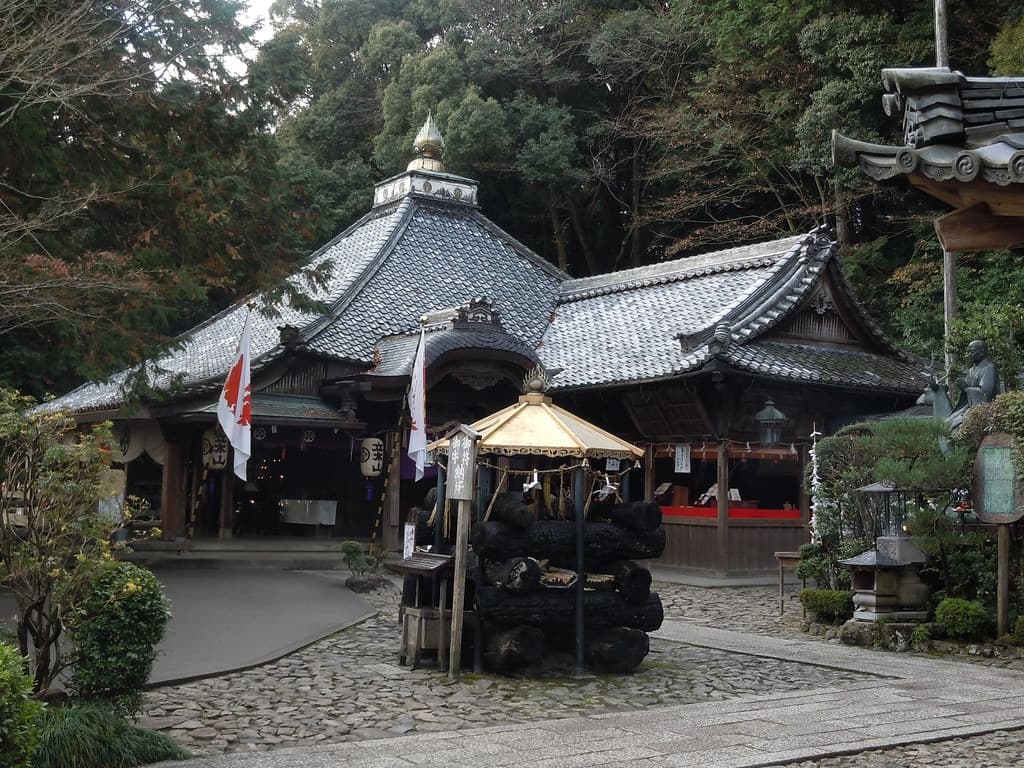
To approach Shōhō-ji (Iwama-dera) is to enter a working Senju Kannon hall on the Saigoku Kannon Pilgrimage — temple 12 in a thirty-three station route that has organised Kansai Kannon devotion for more than a thousand years. Iwama-dera is sacred as the twelfth station of that pilgrimage and as the home of one of Japan's most distinctive Kannon legends — the 'Sweating Kannon' (Asekaki Kannon), said to descend nightly through the hells to relieve suffering.
Founded in 722 CE by the priest Taichō (泰澄, 682-767), at the request of Empress Genshō, after Taichō's prayers were credited with curing her illness. According to temple legend, Taichō discerned a holy presence in a katsura tree on Mount Iwama and carved a life-sized statue of Senjū Kannon from within its living wood, enshrining the empress's personal Buddha (a gilt-bronze Senjū Kannon) within the carved image.
As a Shingon-shū Daigoji-ha (Shingon Buddhism, Daigoji branch) site, Iwama-dera shares the lineage of nearby Daigo-ji (Saigoku #11), the same Daigo-ha line that transmits Shingon esoteric ritual through Shōbō (Rigen Daishi); within that branch it serves as a quieter mountain station compared to the larger urban Daigo-ji complex.
Beyond the Sweating Kannon legend, the temple is sought as a 'Boke-fuji' (dementia-prevention) Kannon, carries continuous imperial patronage (Genshō, Go-Shirakawa, Go-Uda, Ōgimachi), and is linked by tradition to Matsuo Bashō's hermitage and the famous 'old pond' frog haiku.
Why this place is sacred
Iwama-dera is sacred as the twelfth station of the Saigoku Kannon pilgrimage and as the home of one of Japan's most distinctive Kannon legends — the 'Sweating Kannon' (Asekaki Kannon). According to tradition, every night at sunset the principal Senjū Kannon image leaves its altar and travels through 136 hells to deliver beings from suffering, returning at sunrise drenched in sweat.
This vivid image of compassion as night-labor has made Iwama-dera a particularly resonant site for those who pray for the suffering of others. The temple is also widely sought as a 'Boke-fuji Kannon' — a Kannon for the prevention of dementia and the preservation of mental clarity. Its mountain setting on Mount Iwama, its association with the seventh-century-eighth-century pioneer Taichō, also associated with Hakusan, and its longstanding imperial patronage further deepen its sacred standing.
Empress Genshō fell ill; Taichō was summoned and his prayers were credited with her recovery. Walking on Mount Iwama, Taichō sensed a sacred presence in a great katsura tree and carved a life-sized statue of the Thousand-Armed Kannon from within the living wood, placing the empress's own gilt-bronze Senjū Kannon within the new image as an inner sanctum. The temple was founded on this spot.
Experience and orientation
Visitors describe Iwama-dera as remote, quiet, and contemplative — a marked contrast to busier urban Saigoku temples. The mountain access (the closest station is over an hour away on foot once the bus connection ends) means pilgrims often feel they have earned the temple.
Context and lineage
Founded in 722 CE by the priest Taichō (泰澄, 682-767), at the request of Empress Genshō, after Taichō's prayers were credited with curing her illness. According to temple legend, Taichō discerned a holy presence in a katsura tree on Mount Iwama and carved a life-sized statue of Senjū Kannon from within its living wood, enshrining the empress's personal Buddha (a gilt-bronze Senjū Kannon) within the carved image.
Founder: Taichō (泰澄), an early Nara-period mountain ascetic also associated with the founding of Hakusan worship and other temples in the Hokuriku region. Empress Genshō fell ill; Taichō was summoned and his prayers were credited with her recovery.
Traditions and practice
Annual Saigoku pilgrimage observances; Kannon liturgical days; Boke-fuji (dementia-prevention) prayer rites; goma fire rituals tied to Shingon Daigo-ha calendar.
Shingon-shū Daigoji-ha (Shingon Buddhism, Daigoji branch)
ActiveIwama-dera is a temple of the Daigoji branch of Shingon, the same lineage as nearby Daigo-ji (Saigoku #11). The Daigo-ha line transmits Shingon esoteric ritual through the lineage of Shōbō (Rigen Daishi); in this branch, Iwama-dera serves as a quieter mountain station compared to the larger urban Daigo-ji complex. The temple's identity is shaped by the Senjū Kannon's 'Sweating Kannon' legend (compassion as nightly labor through hells) and by its association with mountain-ascetic practice on Mount Iwama.
Senjū Kannon devotion and Saigoku pilgrim reception; Boke-fuji (dementia-prevention) prayer practice; Esoteric Shingon ritual and goma fire ceremony; Goshuin inscription; Mountain ascetic associations (Mount Iwama)
Perspectives and open questions
Iwama-dera's traditional 722 founding by Taichō is consistent with Taichō's broader documented activity as an early Nara-period mountain ascetic. Within temple tradition, the principal Senjū Kannon embodies an active, laboring compassion that does not rest by day or night.
Scholarly perspective
Iwama-dera's traditional 722 founding by Taichō is consistent with Taichō's broader documented activity as an early Nara-period mountain ascetic. The temple's affiliation with Shingon-shū Daigoji-ha is established, with the current Main Hall dating to 1577 (Sengoku period) and subsequent Edo-period repairs. The temple's inclusion as Saigoku #12 is documented from the Muromachi period.
The 'Sweating Kannon' legend is a long-transmitted devotional tradition central to the temple's identity; it is hagiographical rather than historical-factual but is the heart of the temple's spiritual significance.
Living and traditional perspectives
Within temple tradition, the principal Senjū Kannon embodies an active, laboring compassion that does not rest by day or night. The image's status as a hibutsu carved from a sacred living katsura tree, with the empress's personal Buddha enshrined within its inner sanctum, is read as a layering of imperial protection, natural sanctity (the tree), and dharmic liberation (the carved Kannon). The 'Boke-fuji' (dementia-prevention) tradition extends this active-compassion model into care for cognitive vulnerability in old age.
Alternative interpretations
Esoteric Shingon-Daigo-ha interpretation reads the thousand arms of Senjū Kannon, descending nightly through the 136 hells, as a vivid mandala of compassionate emanation: each arm a path of intervention into suffering. The katsura-tree origin story ties the Kannon to a single living being whose form is preserved within the carving — a teaching on Buddha-nature inhabiting all sentient (and arguably plant) beings.
Plan your visit
Access and arrival
Closest station is Ishiyamadera on the Keihan Ishiyama-Sakamoto Line, approximately 7 km from the temple. A local bus runs partway up the mountain (covering less than half the distance), leaving a roughly one-hour uphill walk. On selected days a free shuttle bus runs from Ishiyamadera Station to the temple — check current schedules. Driving with parking on-site is the fastest option. Admission approximately ¥500.
Respectful visit
Permitted on grounds, gardens, and exterior architecture. Photography of the principal Senjū Kannon (treated as a hibutsu) is restricted. Observe Main Hall signage.
Osaisen at the saisen-bako, incense at the exterior censer, candles when available. Goshuin offering typically ¥300-500. Boke-fuji amulets available for additional offering.
Quiet behavior expected throughout. Do not touch statues. The principal Kannon is generally not displayed; respect the hibutsu tradition. Mountain access may be limited by weather.
Current practical details
Address
82-82 Ishiyamauchihatachō, Otsu, Shiga 520-0869, Japan
Phone
Hours
Hours, fees, and access can change — verify on the official source before you travel. Practical details last checked Jun 2026.
Location
Map loads as you approach this section.
Pilgrim reflections
A portrait of encounter, not a score
Pilgrims describe what they felt, how present they could become, and whether the place would shape a journey. There are no stars and no ranking of traditions.
No reviewed reflections yet
The first pilgrims can help describe the character of being here.
Share a reflection
Available after an account-backed “Been there.” Every reflection is reviewed before publication.
Nearby sacred places
Explore other sacred places in the region. Proximity does not establish access or travel time; check each place’s guidance.


References
Sources consulted for this page. Source categories describe the publication, not a guarantee that every claim is verified. Traditional accounts and outside interpretations may differ.
- 01Shōhō-ji (Ōtsu) — Wikipedia contributorsencyclopediaStandard reference for sect, founding, statue legend
- 02Iwama-dera Temple (Iwamaseiho-dera Temple) — Biwako Otsu Travel GuideofficialOfficial Ōtsu tourism reference
- 03Shohoji Temple — The Encyclopedia of Biwako Otsu's HistoryencyclopediaLocal cultural-heritage reference
- 04Iwamadera Temple — Japan Tourism AgencyofficialOfficial tourism database
- 05Iwama-dera Temple, the Temple of the Sweating Statue — Kansai OdysseyguideDetailed pilgrim experience
- 06Iwama-san Shōhō-ji Temple, the 12th Holy Site of the Saikoku 33 Kannon Pilgrimage — TabiiroguideSaigoku pilgrim guide
- 07Iwama-dera – A Peaceful Temple in the Mountain of Ōtsu — Visit Japan VegetarianguidePilgrim experience and access
Pilgrim glossary
- Kannon
- The bodhisattva of compassion, central to many East Asian pilgrimage routes.
- Mandala
- A symbolic diagram of the cosmos used in meditation and ritual.
- Shingon
- An esoteric Japanese Buddhist school emphasizing ritual, mantra, and mandala practice.
Share a photo
Help visitors recognize Shōhō-ji (Iwama-dera). Every submission is reviewed before publication.